Headline promises of “no tax on Social Security” have energized political rallies, but the tax code tells a different story. While President Donald Trump recommitted to ending these levies, current law offers a targeted deduction rather than full repeal.
The 2025 One Big Beautiful Bill Act created historic relief, yet it left the underlying benefit tax formula untouched. Assuming your benefits are completely tax-free could lead to an unpleasant surprise when you file your return.
Understanding how these rules operate allows you to protect your retirement income and capture every dollar you deserve. Here is what these federal shifts mean for your monthly budget and your long-term plan.
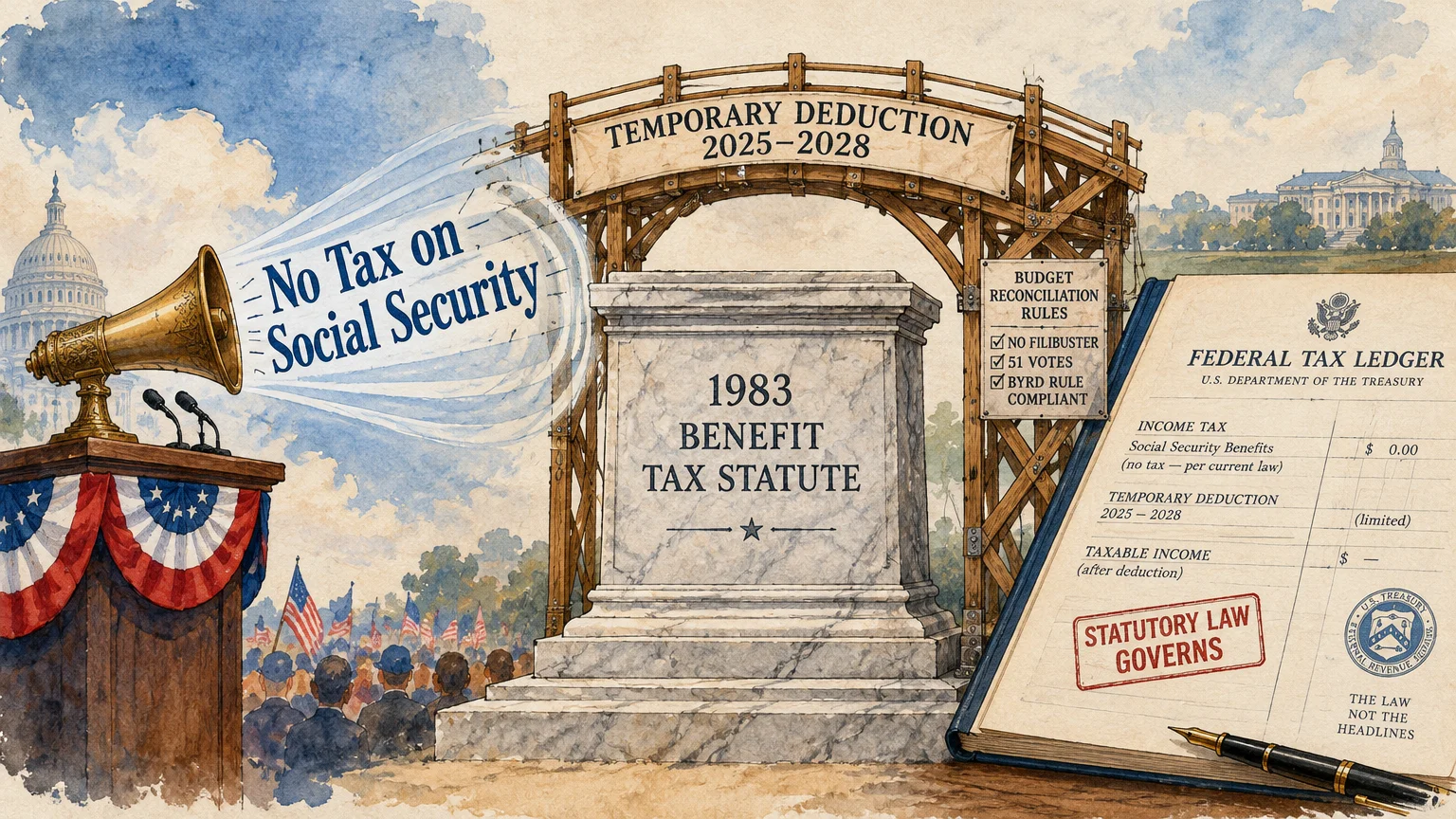
Campaign Promises vs. Reality: What the Law Actually Changed
Campaign speeches often promise a clean end to federal taxes on retirement benefits. In practice, the legislative reality looks quite different.
President Trump signed the One Big Beautiful Bill Act into law on July 4, 2025. While public statements described it as tax elimination, the legislation did not repeal the underlying tax statute.
To pass through Congress under budget reconciliation rules, lawmakers avoided repealing the benefit tax provisions directly. Eliminating those provisions outright would have violated procedural rules that protect trust fund financing.
Instead, Congress created a temporary below-the-line deduction for older Americans. This mechanism delivers substantial retiree tax relief while keeping the original 1983 tax framework fully intact.
Even though the administration continues to advocate for Trump Social Security taxes elimination, that goal requires additional legislation. Until new legislation passes both houses of Congress, retirees must navigate the current deduction framework.
Understanding this distinction protects you from assuming your checks are automatically exempt from taxation. You must still account for Social Security benefits taxes when planning your annual income strategy.
You can monitor official benefit payment rules directly through the Social Security Administration. Staying informed ensures your retirement budget remains accurate and compliant.