A comfortable retirement demands more than matching your pre-retirement paycheck; it requires protecting your cash flow against hidden expenses that standard budgets overlook. Many retirees discover sudden budget shortfalls only after stepping away from full-time work, when fixed income meets escalating taxes, unexpected medical obligations, and strict withdrawal rules. Uncovering these common retirement income planning gaps early allows you to safeguard your nest egg, restructure your assets, and eliminate costly surprises before they jeopardize your lifestyle. By identifying where your financial plan remains vulnerable, you can implement targeted tax, healthcare, and claiming strategies that preserve your wealth for decades to come.
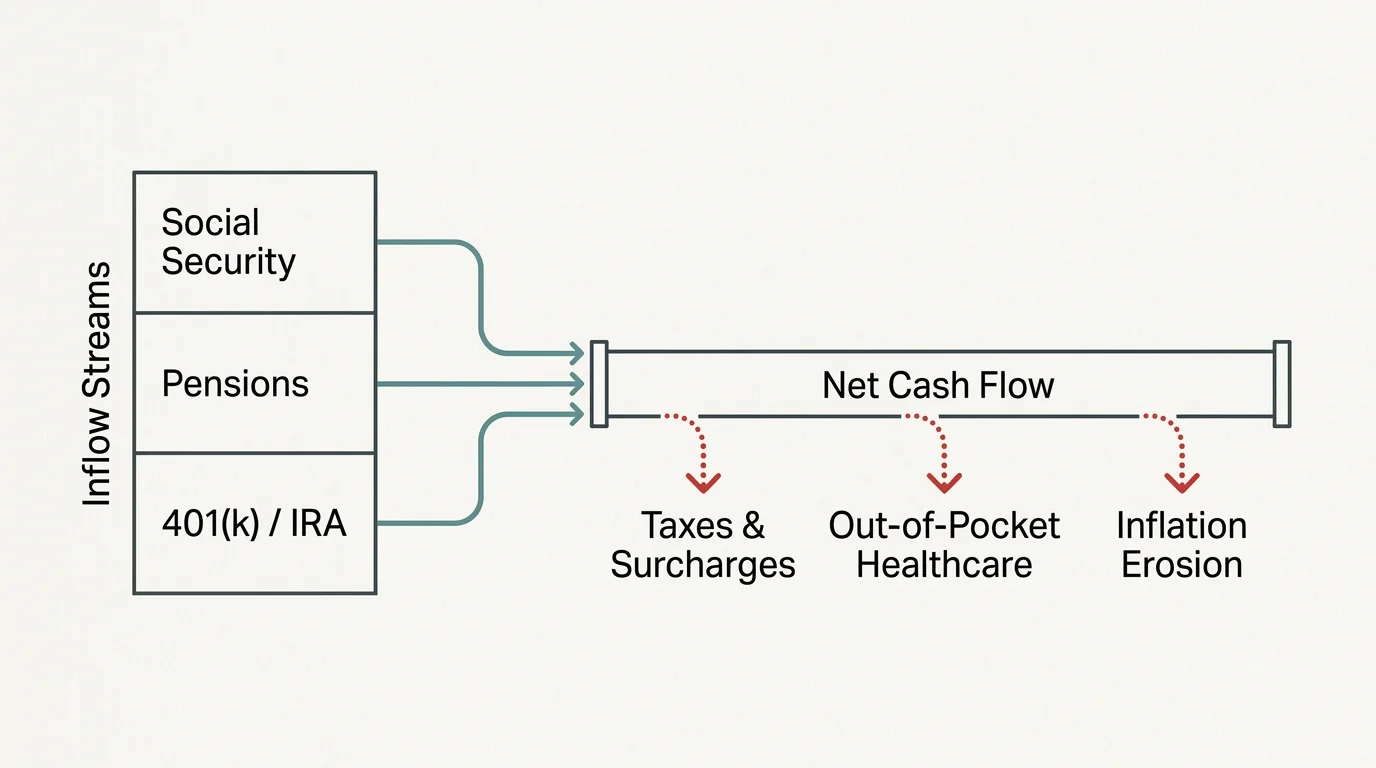
Understanding Why Retirement Cash Flow Breaks Down
Retirement changes your relationship with money. During your career, you manage a steady inflow; in retirement, you orchestrate multiple income streams while navigating complex federal regulations. Many new retirees build their spending projections around basic living expenses—food, utilities, transportation, and leisure—assuming their current tax bracket and healthcare coverage will stay roughly identical. Unfortunately, this straightforward math frequently fails.
Financial blindspots rarely announce themselves years in advance. Instead, they surface as sudden spikes in out-of-pocket costs or unexpected reductions in net income. Identifying the signs of a retirement income gap requires looking beyond your monthly checking account balance to see how taxes, healthcare rules, and inflation interact over a 20-to-30-year timeframe.
“The goal of retirement is to live off your assets—not live off your regrets.”

1. The Long-Term Custodial Care Blindspot
Perhaps the most devastating financial shock facing modern retirees is the assumption that Medicare covers long-term elder care. Standard Medicare (Parts A and B) only pays for medically necessary, skilled nursing care or short-term rehabilitative therapy following an inpatient hospital stay. It pays nothing for non-skilled custodial care—the daily help with bathing, dressing, eating, and mobility that millions of older adults eventually require.
According to Genworth’s Cost of Care data, the national median annual cost for an assisted living facility stands at $70,800 ($5,900 per month). If you require assistance at home, a home health aide averages $77,792 annually; a private room in a skilled nursing home averages an astonishing $127,750 per year. When an unexpected health event occurs, paying these bills out of personal savings can drain a lifetime of accumulated wealth in just two or three years.
To avoid this pitfall, incorporate long-term care contingencies into your plan before health issues arise. You can research community-based support services through the Eldercare Locator, evaluate asset-based hybrid life/long-term care policies, or maintain dedicated liquid reserves earmarked specifically for non-medical assistance.
2. Out-of-Pocket Healthcare and Dental Expenses
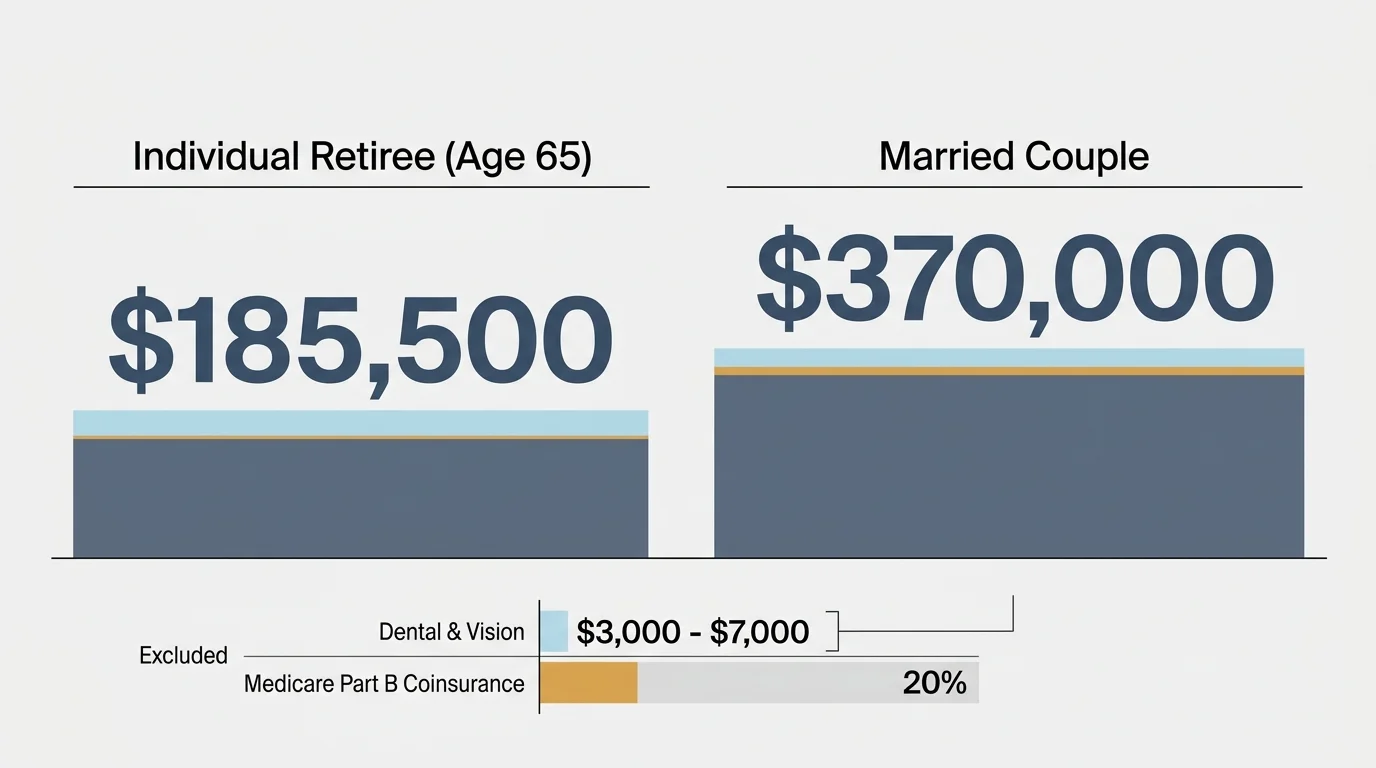
Many individuals enter retirement expecting Medicare to eliminate their medical bills. In reality, healthcare remains one of the largest ongoing expenses you will manage. Fidelity’s Retiree Health Care Cost Estimate indicates that an average 65-year-old retiring today can expect to spend approximately $185,500 out-of-pocket on medical expenses throughout retirement—surpassing $370,000 for a married couple.
Original Medicare includes deductibles, 20% coinsurance under Part B with no annual out-of-pocket maximum, and zero standard coverage for routine dental cleanings, root canals, dentures, comprehensive eye exams, glasses, or hearing aids. Replacing a single dental bridge or purchasing modern hearing aids can easily trigger a sudden $3,000 to $7,000 out-of-pocket expense.
Planning for this retirement income shortfall requires a proactive healthcare strategy:
- Evaluate Medicare Supplement (Medigap) plans against Medicare Advantage options at Medicare.gov during your initial enrollment period to cap catastrophic medical out-of-pocket exposure.
- Maintain a dedicated Health Savings Account (HSA) reserve if you accumulated funds before enrolling in Medicare; you can withdraw these funds tax-free for qualified dental, vision, and out-of-pocket medical bills.
- Budget an annual dental and vision sinking fund of at least $1,500 to $2,500 per person to absorb non-covered routine procedures without disrupting your day-to-day income stream.
3. The Social Security “Tax Torpedo”
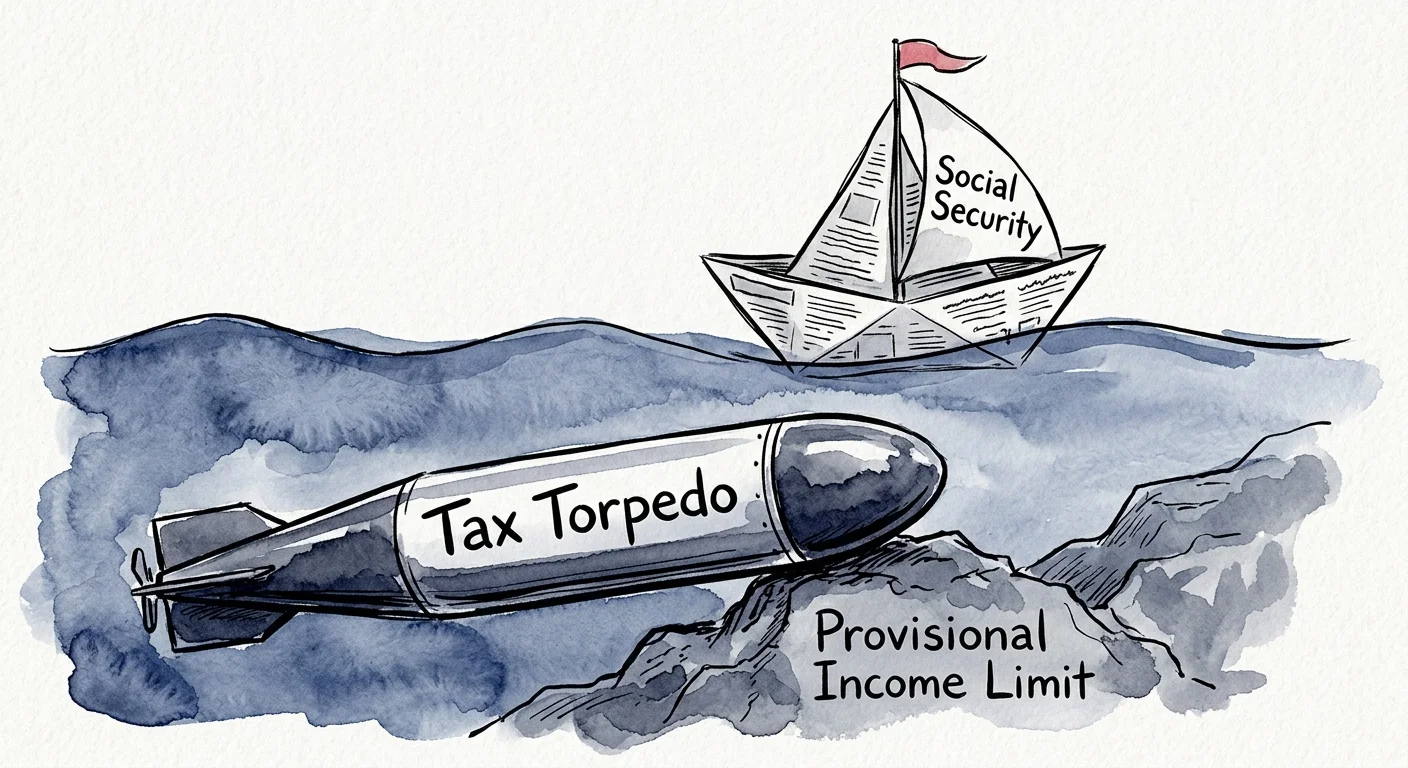
Many retirees anticipate that their Social Security benefits will arrive completely tax-free. However, federal rules can trigger heavy income taxes on your monthly checks through a calculation known as provisional income (your Modified Adjusted Gross Income plus non-taxable interest plus 50% of your Social Security benefit).
The provisional income thresholds have remained frozen without inflation adjustments since 1983 and 1993:
- Single Filers: Between $25,000 and $34,000, up to 50% of your benefits are taxable; above $34,000, up to 85% of your benefits become subject to federal income tax.
- Married Filing Jointly: Between $32,000 and $44,000, up to 50% of your benefits are taxable; above $44,000, up to 85% of your benefits become subject to federal income tax.
Because these thresholds do not rise with inflation, even modest withdrawals from traditional 401(k) or IRA accounts push you over the limits. This creates the “tax torpedo”—a sharp escalation where every additional dollar withdrawn from a traditional retirement account not only incurs its own income tax, but also exposes another 50 to 85 cents of previously untaxed Social Security benefits to taxation. The resulting effective marginal tax rate can catch retirees completely off guard.

4. The “Widow’s Penalty” and Household Benefit Loss
Married couples often base their retirement spending on two concurrent Social Security benefit checks. When one spouse passes away, the surviving spouse inherits the higher of the two monthly payments, but the smaller benefit check disappears entirely. A household that previously relied on two checks—for instance, $2,600 and $1,800 per month—suddenly loses $21,600 in annual gross income overnight.
To compound this loss, the surviving spouse’s tax status changes from Married Filing Jointly to Single in the tax year following the death. As a single filer, the standard deduction is cut nearly in half, and tax brackets compress significantly. A single retiree earning the same overall pension and investment income as before will pay considerably higher federal taxes while simultaneously managing fixed household overhead with one less Social Security check.
“The best time to plan for retirement was 20 years ago. The second best time is today.”
5. Early Claiming Reductions and Longevity Risk
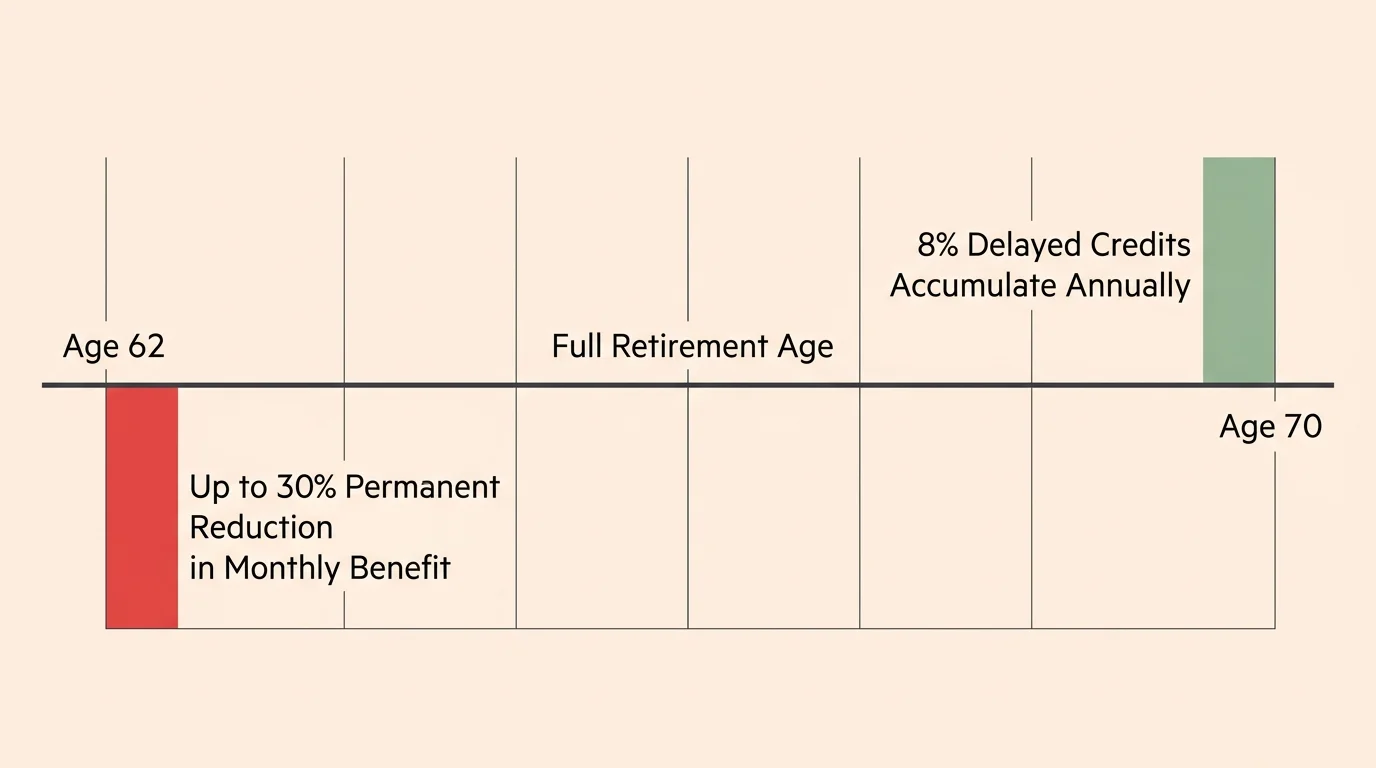
Electing to claim Social Security at age 62 provides immediate liquidity, but it locks in a permanent lifetime reduction that creates severe income shortfalls in your late 70s and 80s. For everyone born in 1960 or later, Full Retirement Age (FRA) is 67. Claiming at age 62 permanently slashes your monthly benefit by up to 30% compared to your FRA entitlement.
Conversely, waiting past your FRA earns you delayed retirement credits of 8% per year until age 70—delivering a permanent 24% boost above your base benefit. When you claim early, you forfeit this guaranteed, inflation-adjusted income stream. You can verify your personalized benefit tiers directly through the Social Security Administration (SSA) to model the compounding lifetime cost of an early filing decision.
6. Medicare IRMAA Surcharges on Income Spikes
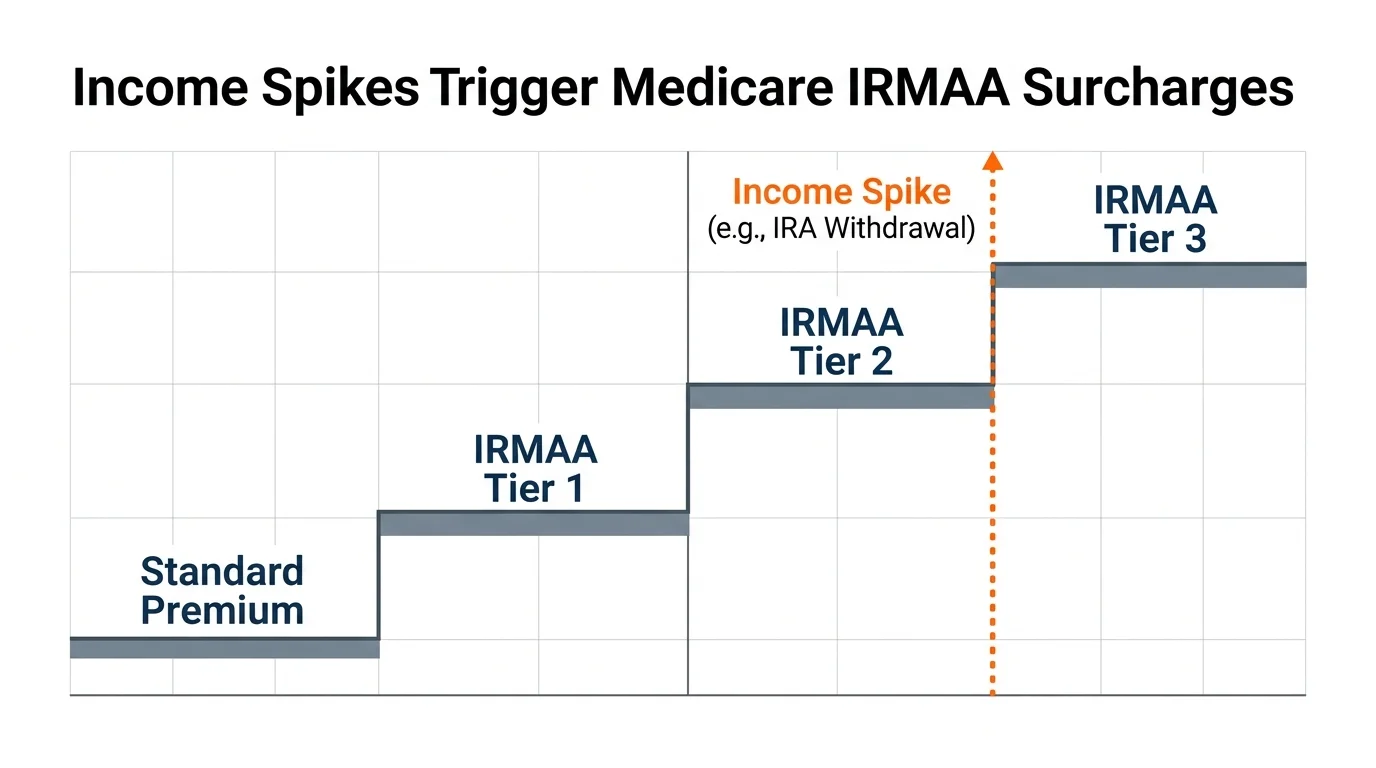
Higher-income retirees frequently encounter unexpected spikes in their Medicare Part B (medical insurance) and Part D (prescription drug) premiums due to Income-Related Monthly Adjustment Amounts (IRMAA). The federal government calculates these surcharges using your tax return from two years prior.
If you execute a large Roth IRA conversion, sell a piece of real estate, or realize substantial capital gains, that one-time financial move can catapult your modified adjusted gross income across an IRMAA bracket. Two years later, the Social Security Administration automatically deducts steep monthly surcharges from your benefit check. Because IRMAA brackets are sharp cliff thresholds—where exceeding a limit by just one dollar triggers the full annual surcharge—failing to track your two-year lookback income can drain thousands of dollars from your net cash flow.
7. The Required Minimum Distribution (RMD) Tax Cliff
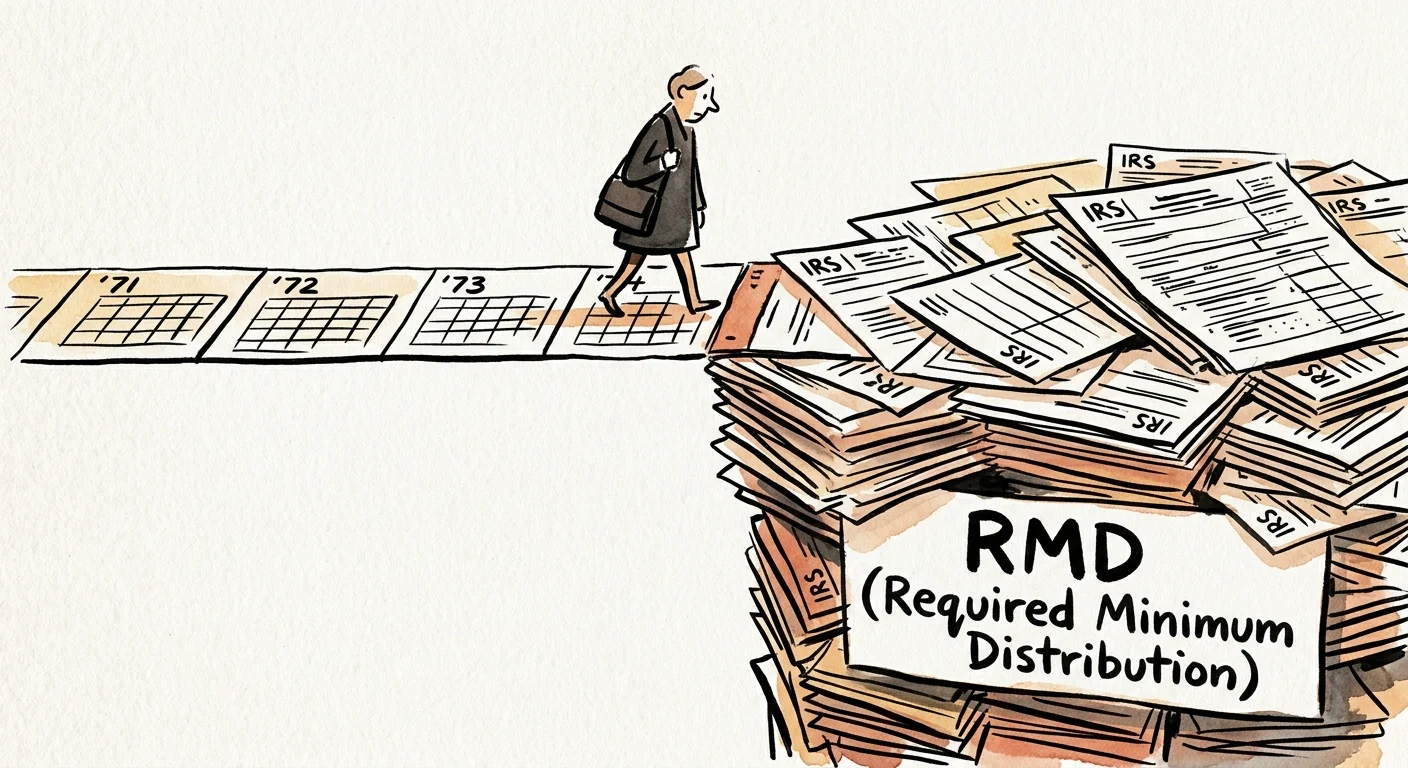
Tax-deferred accounts like traditional IRAs and 401(k)s allow your wealth to grow unhindered by annual taxes for decades. However, the IRS eventually requires you to begin liquidating those accounts. Under the SECURE 2.0 Act, the starting age for Required Minimum Distributions (RMDs) is 73 for those born between 1951 and 1959, and rises to age 75 beginning in 2033 for individuals born in 1960 or later.
If you have accumulated substantial balances across tax-deferred plans, mandatory distributions can force significant taxable income onto your tax return, pushing you into higher federal and state tax brackets, accelerating Social Security taxation, and activating IRMAA surcharges. Failing to take an RMD incurs a stiff 25% penalty on the amount not withdrawn (which can drop to 10% if corrected in a timely manner). Reviewing distribution thresholds on the IRS Retirement Plans portal helps ensure you draw down accounts without triggering punitive penalties.

8. Unbudgeted Home Capital Replacements and Property Tax Creep
Many pre-retirees assume that paying off their 30-year mortgage eliminates housing as a major budget threat. While eliminating principal and interest payments provides substantial breathing room, non-mortgage housing expenses continue to climb throughout retirement.
Major mechanical and structural repairs do not stop occurring simply because you retire. Replacing a roof ($10,000 to $20,000), updating an HVAC system ($8,000 to $15,000), or addressing plumbing failures can rapidly wipe out cash reserves. Simultaneously, rising municipal property assessments and surging homeowners insurance premiums quietly increase your fixed monthly overhead, eroding discretionary spending power year after year.
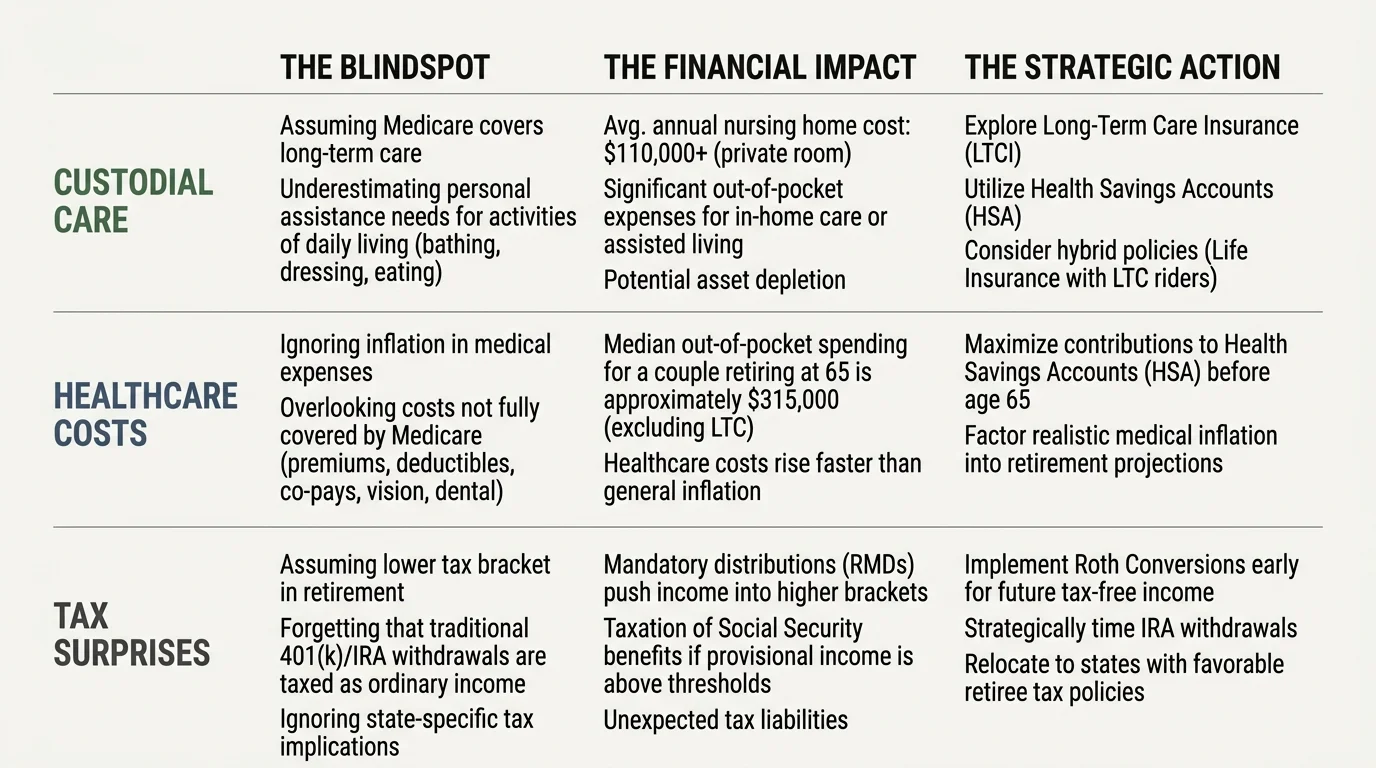
Comparison of Common Retirement Income Gaps
To help you evaluate your current plan, the table below highlights how these overlooked retirement income shortfalls operate and what actions you can take to neutralize them.
| Income Gap | Primary Trigger | Financial Consequence | Mitigation Strategy |
|---|---|---|---|
| Custodial Care | Non-skilled assistance needs (ADLs) | $70,000–$127,000+ per year in out-of-pocket bills | Hybrid long-term care insurance; dedicated reserves |
| Medical/Dental | Medicare coverage exclusions & copays | $185,500 average lifetime out-of-pocket cost | Comprehensive Medigap/Advantage; dental sinking fund |
| Tax Torpedo | Provisional income exceeding $25k/$32k | Up to 85% of Social Security becomes taxable | Roth conversions; strategic drawdown order |
| Widow’s Penalty | Death of first spouse | Loss of smaller check; shift to single tax rates | Delay primary earner claim to 70; life insurance |
| Early Claiming | Filing for Social Security at age 62 | Permanent 30% cut in monthly guaranteed income | Bridge early years with taxable savings; delay claiming |
| IRMAA Surcharges | One-time income spikes (2-year lookback) | Steep surcharges added to Medicare B & D | Multi-year distribution planning; SSA-44 appeals |
| RMD Tax Spike | Mandatory distributions at age 73/75 | Unwanted income pushing brackets higher | Qualified Charitable Distributions (QCDs); Roth conversions |
| Housing Maintenance | Aging home infrastructure & rising taxes | Sudden five-figure repairs and escalating bills | 1–2% annual home value maintenance sinking fund |

Errors That Cost Retirees Thousands
Navigating these retirement income gaps to watch for requires avoiding common behavioral and tactical missteps. When structuring your assets, steer clear of these expensive mistakes:
- Taking Large Lump-Sum IRA Withdrawals in a Single Tax Year: Withdrawing large sums to remodel a home or buy a vehicle can push you into a higher tax bracket, trigger the Social Security tax torpedo, and cause an IRMAA surcharge two years later. Spread large withdrawals across multiple calendar years instead.
- Ignoring Qualified Charitable Distributions (QCDs): If you donate to charity and are age 70½ or older, donating directly from a traditional IRA via a QCD (up to the annual IRS limit) satisfies RMD requirements without adding a single dollar to your Adjusted Gross Income.
- Failing to Appeal IRMAA After Life-Changing Events: If an income spike occurred due to a qualifying life-changing event—such as marriage, divorce, or work stoppage/reduction—you can file Form SSA-44 with the Social Security Administration to request an immediate reduction of your Medicare premium surcharges rather than waiting for outdated tax returns to clear.
- Treating Social Security as an Emergency Fund: Filing early simply to build up a cash cushion locks in a permanent monthly reduction for life. Rely on taxable liquid reserves first before tapping your guaranteed lifetime benefit.

When to Get Expert Help
Comprehensive retirement planning involves balancing overlapping tax codes, healthcare rules, and claiming strategies. Working with qualified specialists can help you protect your nest egg from costly oversights:
- State Health Insurance Assistance Program (SHIP) Counselors: Access free, unbiased, localized guidance to evaluate Medicare Part D drug formularies, Medigap policies, and Medicare Advantage options without sales pressure.
- Fee-Only Fiduciary Financial Advisors: A fiduciary advisor operating on a flat-fee or hourly basis can run multi-year tax projections, model optimal Roth conversion schedules, and coordinate multi-account withdrawal strategies tailored to your goals.
- Elder Law Attorneys: An elder law specialist can draft healthcare directives, establish powers of attorney, and construct asset-protection trusts to preserve family assets against long-term care complications.
- Social Security Claiming Specialists: For married couples with disparate earnings histories, divorced individuals, or surviving spouses, a claiming specialist ensures you maximize spousal and survivor benefit coordination.
Frequently Asked Questions
Can I undo my Social Security claiming decision if I filed too early?
Yes, but strict conditions apply. If you change your mind within 12 months of your initial claim, you can execute a one-time “withdrawal of application” using SSA Form 521. You must repay all benefits received by you and your family members on your record. Your benefit will then reset as if you never filed. If more than 12 months have passed, you cannot withdraw the claim, but you can suspend your benefits once you reach Full Retirement Age to earn delayed retirement credits up to age 70.
How does a Qualified Charitable Distribution (QCD) help lower retirement taxes?
A QCD allows individuals aged 70½ and older to transfer funds directly from a traditional IRA to a qualified 501(c)(3) charity. The transferred amount counts toward your annual Required Minimum Distribution (once RMDs begin) but is excluded entirely from your gross income. This keeps your Adjusted Gross Income lower, helping you avoid higher tax brackets, IRMAA surcharges, and increased taxes on your Social Security benefits.
Does a Medicare Advantage plan protect me from custodial long-term care costs?
No. While some Medicare Advantage plans offer minor supplemental benefits—such as limited meal deliveries following a hospital discharge or a few hours of basic companion care—they do not cover ongoing custodial assistance. If you require continuous help with activities of daily living in an assisted living facility or nursing home, Medicare Advantage does not cover those room and board or custodial care costs.
How far in advance should I plan for RMDs to avoid the tax cliff?
The optimal window for RMD planning begins between your retirement date and age 70. This period often represents your lowest lifetime tax brackets. By executing partial, systematic Roth IRA conversions during these lower-income years, you gradually reduce the taxable balance in your traditional IRAs, significantly shrinking mandatory RMDs and their corresponding tax consequences once you turn 73 or 75.
Taking Action on Your Retirement Income Plan
Uncovering these common retirement income planning gaps today gives you the leverage to build a resilient, shock-resistant financial future. Review your current asset allocation across taxable, tax-deferred, and Roth accounts, map out your anticipated healthcare coverage, and calculate your projected provisional income before filing for benefits. Taking measured, proactive steps now ensures that your hard-earned assets support your lifestyle throughout every stage of retirement.
This article is for informational purposes only and does not constitute financial, legal, or medical advice. Medicare rules, Social Security benefits, and tax laws change regularly—verify current details at Medicare.gov, SSA.gov, or with a licensed professional.
Last updated: February 2026. Medicare and Social Security rules change annually—always verify current details at official government sources.