Choosing between an age-restricted neighborhood and a traditional street comes down to more than lifestyle—it reshapes your monthly budget for decades. The right decision protects your retirement savings from surprise bills.
Many retirees focus heavily on the home’s purchase price while overlooking rising HOA dues, homeowners insurance spikes, and future remodeling bills. Those ongoing costs often reverse which option is actually cheaper.
Below is a clear, numbers-backed comparison of 55 plus communities and regular neighborhoods so you can see exactly where your money goes.
What You Need to Know
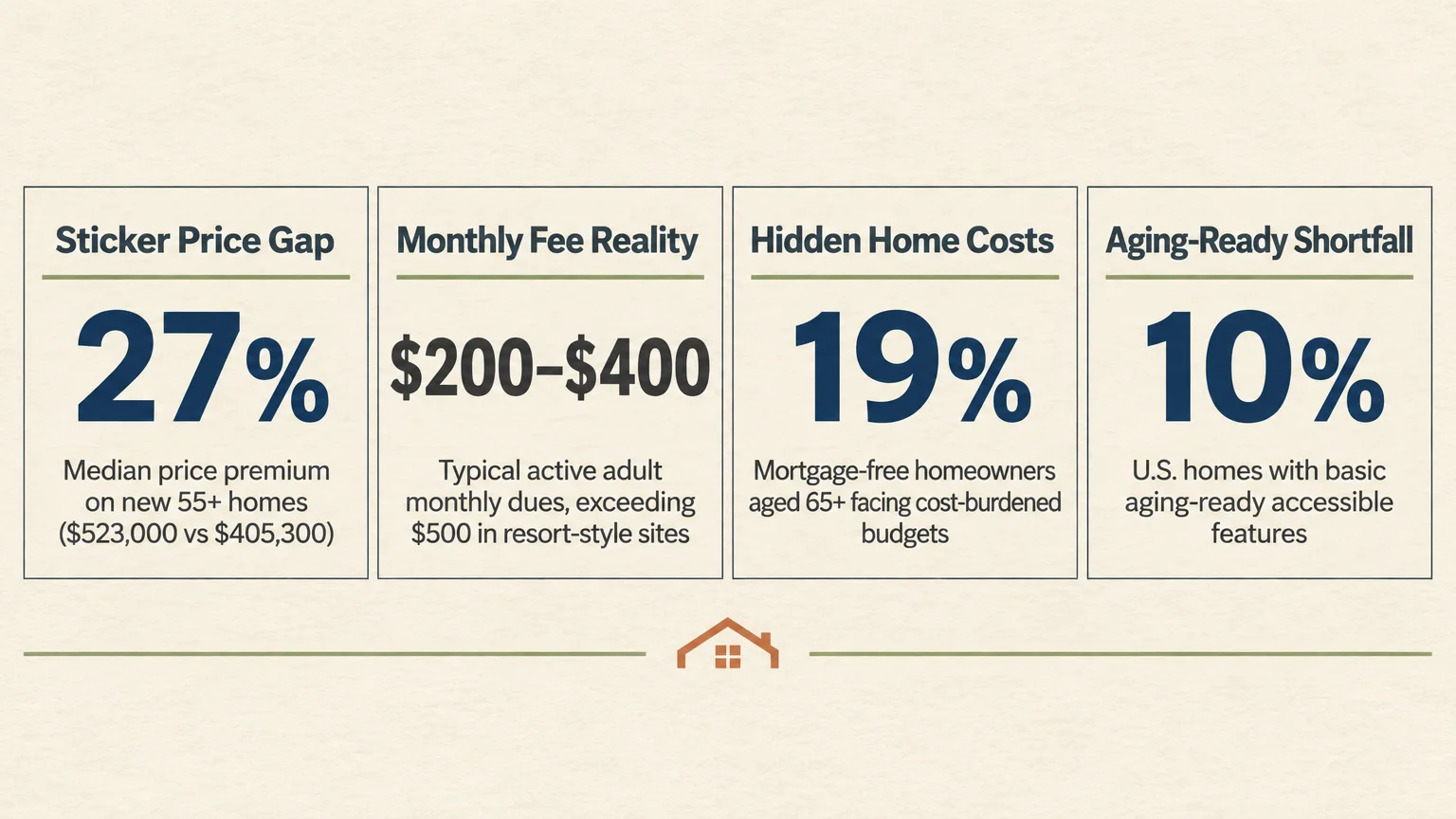
Before diving into the details, look at the four biggest financial realities shaping where to retire today.
- Sticker price gap: Newly built 55+ homes carry a median price roughly 27% higher than comparable non-age-restricted new construction.
- Monthly fee reality: Dues in active adult communities commonly run $200 to $400 per month—and exceed $500 in resort-style developments—plus upfront initiation fees.
- Hidden regular-home costs: Nearly 19% of mortgage-free homeowners aged 65+ remain cost-burdened because of property taxes, utilities, maintenance, and rising insurance premiums.
- Aging-ready shortfall: Only 10% of U.S. homes have basic aging-ready features, leaving many traditional homeowners facing thousands of dollars in uncovered remodeling bills later.
Purchase Prices and Financing: Why 55 Plus Communities Cost More Upfront
If you compare listing prices side by side, age-restricted living usually demands more capital on day one. According to National Association of REALTORS® data from late 2026, the median U.S. existing-home price sits at $416,700.
By contrast, newly built 55+ homes carried a median price of $523,000 in 2026, based on 55places market tracking. That represents roughly a 27% premium over non-age-restricted new construction, whereas the overall median new single-family home stood at $405,300 in late 2025 per U.S. Census Bureau and NAHB figures.
Scarcity drives much of that markup. Only 16% of builder members reported constructing age-restricted housing for adults 55+, according to the National Association of Home Builders 2025 Member Census.
Meanwhile, demand keeps climbing as older buyers dominate the market. Baby Boomers aged 61 to 79 accounted for 42% of all homebuyers and 55% of sellers in the 2026 NAR Generational Trends Report, pushing the median U.S. buyer age to 58.
How you pay for that home also changes the math dramatically. Freddie Mac reported average 30-year fixed mortgage rates at 7.11% in mid-November 2026.
Borrowing at rates above 7% magnifies every extra dollar you spend on a premium 55+ floor plan or clubhouse lot. That is why over half of Boomer buyers tap equity from selling a previous home to fund their next purchase.
If you sell a paid-off family home and buy in cash, you dodge high mortgage interest altogether. If you finance a large balance, however, a traditional existing neighborhood often gives you significantly more square footage per borrowed dollar.
A retirement housing decision is never just about the sticker price—it is a ten-year commitment to a specific cost structure, fee trajectory, and care plan.
HOA Fees Seniors Pay vs. Regular Neighborhood Maintenance
Monthly association dues sit at the center of the debate over retirement community costs. Across the country, homeowners associations have grown far more common—over 77 million Americans, or 33.6% of the population, live in community associations, and 43.6% of U.S. homes for sale in 2025 carried an HOA fee.
In standard neighborhoods, fees stay relatively modest when they exist at all. U.S. Census Bureau 2024 American Community Survey data places the national median HOA fee at $135 per month across fee-paying households, or $184 per month among mortgage-free owners.
Typical single-family HOAs average closer to $200 to $300 per month, or roughly $291 monthly nationwide. Many older traditional neighborhoods charge nothing at all because they have no association.
In 55 plus communities, your baseline monthly fee rises substantially to cover shared infrastructure and amenities. According to 55places and AssistedLiving.org data, monthly dues in active adult communities commonly run $200 to $400.
Full-amenity or resort-style developments regularly exceed $500 per month and can climb to $800 per month depending on pools, golf facilities, security gates, and exterior upkeep.
You also face one-time entry charges that rarely appear in regular neighborhoods. Many 55+ associations charge an upfront initiation or capital contribution fee ranging from $100 to a full year’s worth of dues at closing.
Do not assume those monthly HOA fees seniors pay will stay frozen once you unpack. A March 2026 LendingTree survey found that 82% of HOA residents experienced fee increases over the prior three years, including 44% who called the hike significant.
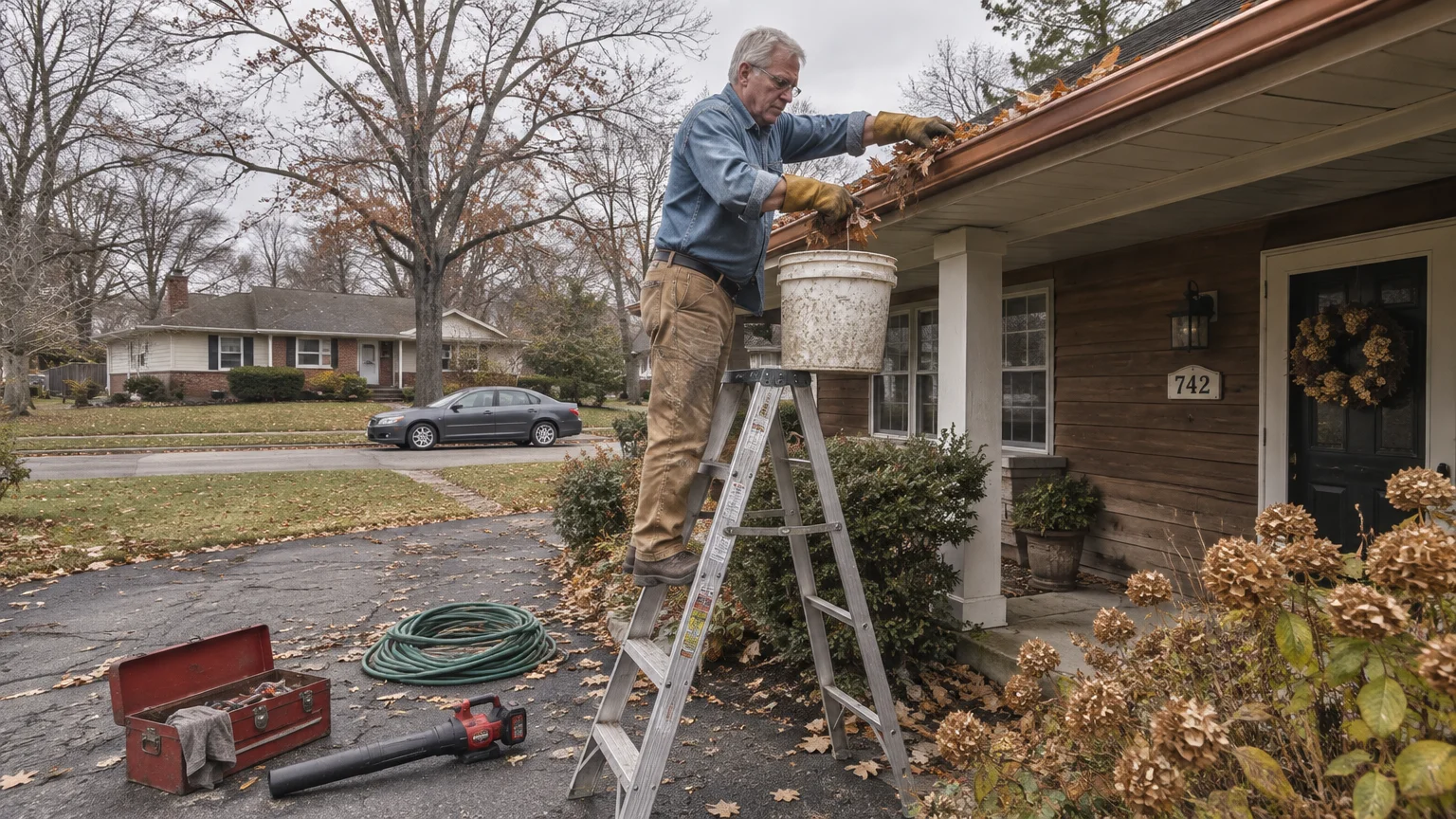
Still, regular neighborhoods are far from free to operate. Homeowners in non-HOA streets pay every dollar for lawn care, snow removal, exterior painting, roof replacement, driveway repairs, and trash service out of pocket.
In fact, Harvard Joint Center for Housing Studies research from January 2026 shows that nearly 19% of homeowners aged 65+ who own their homes outright are still housing cost-burdened—spending over 30% of their income on housing—because of taxes, insurance, utilities, and upkeep.
To judge which path wins for your wallet, add up what your HOA actually replaces. If $350 a month eliminates lawn care, exterior siding repairs, roof reserves, and a separate gym membership, it may rival or beat what you spend maintaining an aging regular house.
If that same $350 only covers a gated entrance, landscaped medians, and a clubhouse you rarely visit, you are paying extra on top of your own home repairs.
Side-by-Side Financial Comparison: 55+ Community vs. Regular Neighborhood
Seeing how each housing path handles major retirement expenses helps clarify your trade-offs before you tour properties.
| Financial Factor | 55+ Active Adult Community | Regular Neighborhood |
|---|---|---|
| Upfront Home Price | Often higher; $523,000 median for 55+ new construction in 2026 | Broader range; $416,700 U.S. existing-home median in late 2026 |
| Monthly HOA Dues | Commonly $200–$400/month; $500–$800/month in resort developments | $0 in non-HOA streets; $135/month national median where HOAs exist |
| Upfront Entry Fees | Common initiation fees from $100 up to one full year of dues | Rare outside gated or condo developments |
| Routine Exterior Upkeep | Frequently bundled into dues (varies by single-family vs. condo/villa) | 100% out-of-pocket for yard work, snow removal, and exterior repairs |
| Accessibility Readiness | Often built with single-level layouts or post-1991 multifamily access rules | Only 10% of U.S. homes meet basic three-part aging-ready standards |
| Resale Buyer Pool | Restricted by law (at least 80% of units must include someone 55+) | Open to families, younger workers, retirees, and investors |
| On-Site Medical Care | Not provided; independent living only | Not provided; requires hired home care or a later move |
Hidden Risks in Condos, Reserves, and Home Insurance
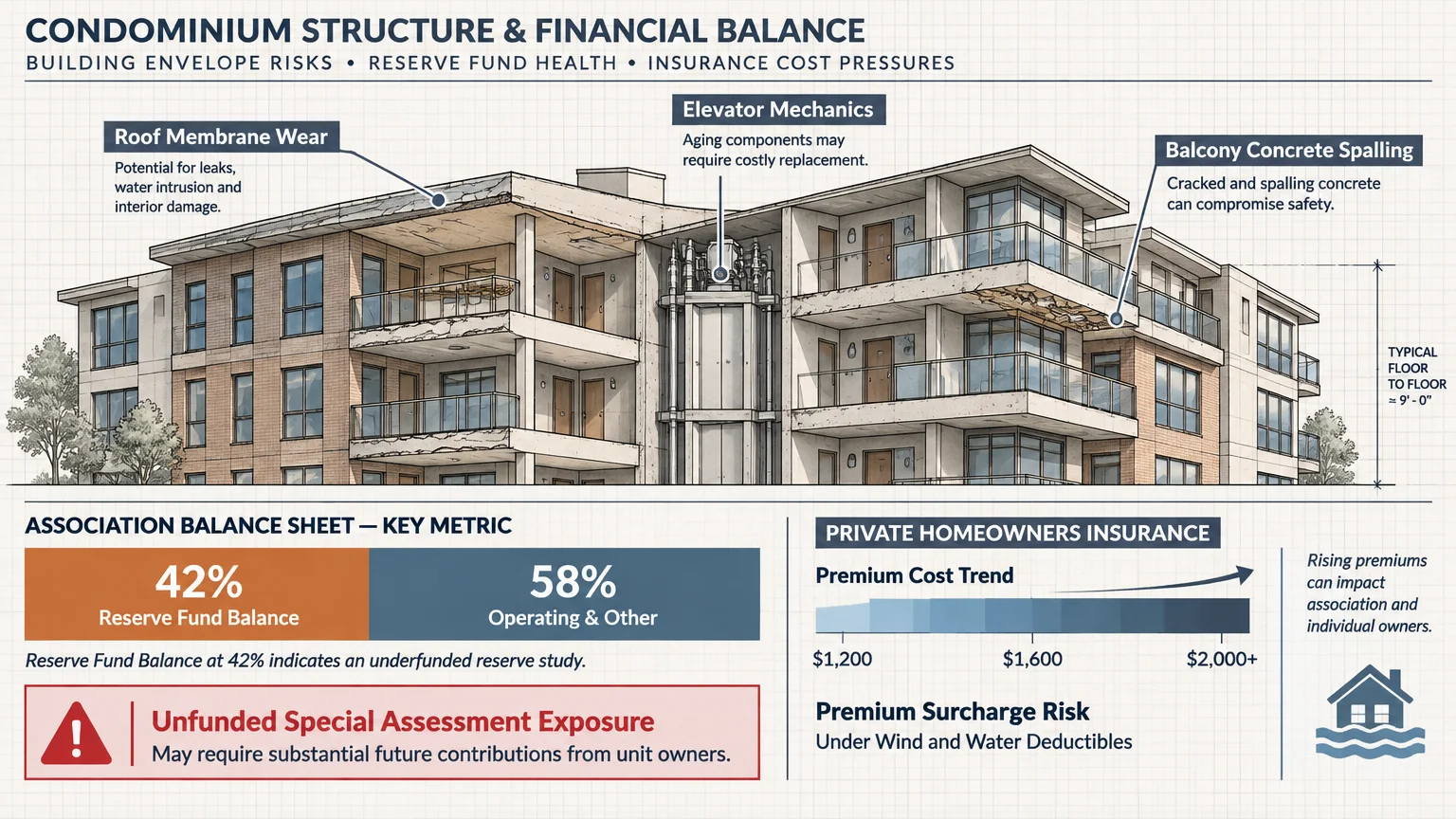
Whether you choose an age-restricted villa or a regular neighborhood condo, structural reserves and property insurance can trigger sudden five-figure shocks.
Consider what happened in Florida following the 2021 Surfside condo collapse. State law mandated milestone structural inspections for condo buildings 30 years or older—or 25 years near the coast—every decade, alongside rules barring boards from waiving structural reserves.
With more than 912,000 Florida condos sitting at 30 years old or older, underfunded associations hit owners with special assessments ranging from tens of thousands of dollars to more than $100,000 per unit.
Florida’s HB 913, effective July 1, 2025, softened some immediate deadlines by extending structural reserve studies to the end of 2025 or 2026 alongside milestone inspections, raising the reserve-item threshold from $10,000 to $25,000, and limiting mandates to buildings three habitable stories or taller.
The law even lets associations pause reserve funding for up to two budgets through December 31, 2028, with majority owner approval. Yet deferring reserves only delays the bill—someone eventually pays for concrete, roofs, and elevators.
Homeowners insurance delivers a second major variable when comparing older regular neighborhoods against newer active adult communities. NerdWallet’s 2026 Home Insurance Rates Report shows the typical U.S. premium reached $2,564 per year in early 2026, up 24%—or $496—from early 2023.
Age of construction plays a massive role in what insurers charge you. In early 2026, a home built in 1984 cost 81.2% more—an extra $1,149 per year—to insure than brand-new construction, widening sharply from a 59.2% gap in 2023.
Geography multiplies that spread even further. Insurify data from November 2026 places the national average for $300,000 in dwelling coverage at $2,772 annually, while Florida tops the nation at $6,324 per year and Vermont sits lowest.
Buying a newer single-level home inside a well-reserved community can cut individual insurance costs compared with holding an aging 1980s house. Conversely, buying an older 55+ condo with depleted reserves exposes you to steep master-policy jumps and special assessments.
The True Cost of Aging in Place: Remodeling vs. Moving
Most older adults strongly prefer staying put in a familiar community. An AARP 2024 Home and Community Preferences Survey found that 75% of adults aged 50+ want to stay in their current homes and 73% want to stay in their neighborhoods.
Still, desire collides with physical reality. In that same AARP survey, 50% lacked confidence their community could meet their needs as they age, and 44% expected to move for more affordable housing—you can explore local aging-in-place tools through AARP.
The structural problem starts inside the house itself. U.S. Census Bureau American Housing Survey data reveals that just 10% of U.S. homes meet basic aging-ready standards—a step-free entry, a first-floor bedroom and full bath, plus at least one bathroom accessibility feature—and only 18% even have bathroom grab bars.
If your regular neighborhood home lacks these features, staying put eventually requires writing large checks to contractors. Angi’s 2026 data puts an average wheelchair accessibility remodel at $4,367 to $4,378, while extensive structural renovations run $2,000 to $75,000.
Individual upgrades stack up quickly once mobility changes:
- Bathroom conversions: Turning a standard tub into a walk-in shower runs $3,000 to $8,000, full accessible shower remodels cost $14,000 to $24,000, and complete accessible bathroom renovations reach $25,000.
- Stairways and entryways: Basic or modular ramps cost $100 to $1,000—or $1,500 to $3,000 installed—while widening doorways runs $300 to $800 per door and up to $2,500 or more when plumbing, wiring, or load-bearing walls sit in the way.
- Multi-level access: A straight stair lift averages around $4,500, curved or multi-level lifts range up to $20,000, and installing a residential elevator costs $30,000 to $60,000.
Do not count on federal health coverage to absorb these remodeling invoices. Original Medicare typically does not pay for home remodeling or accessibility modifications, so you can verify coverage limits directly at Medicare.gov.
Many active adult communities bake single-story layouts, zero-step entries, and wider hallways into their initial construction. Under Fair Housing Act rules enforced by HUD, multifamily buildings with four or more units first occupied after March 13, 1991, must also include baseline wheelchair accessibility and reinforced bathroom walls for grab bars.
Paying more upfront for a move-in-ready, single-level 55+ villa can save you substantial future retrofitting bills—plus the disruption of living through construction in your seventies or eighties.
What Neither Option Covers: Long-Term Care Expenses
One costly misunderstanding trips up countless families comparing retirement community costs: mistaking a 55+ neighborhood for senior care.
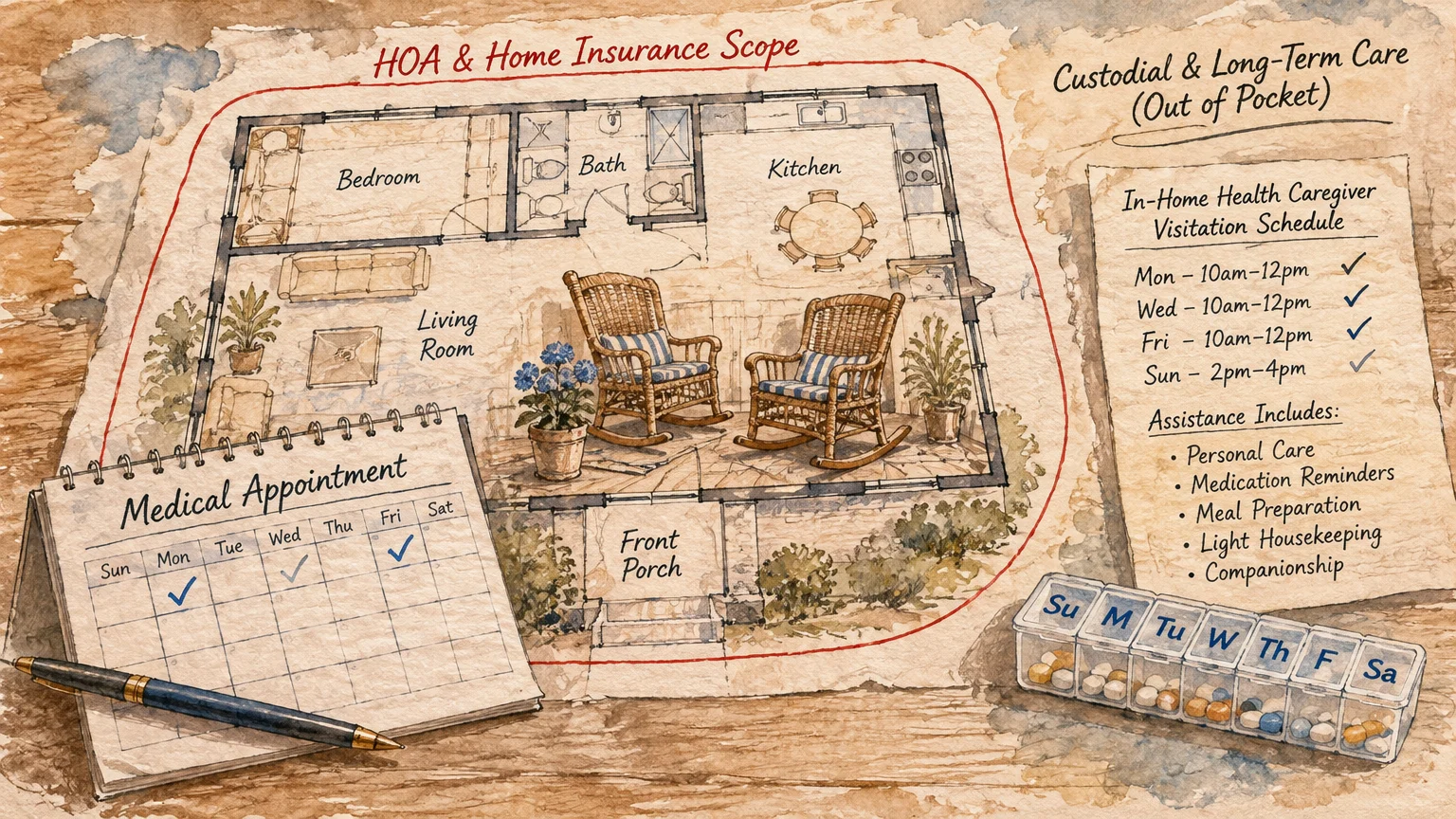
Active adult communities are residential neighborhoods for independent living only. They do not provide on-site medical care, nursing staff, or daily personal assistance.
Under the Housing for Older Persons Act of 1995, qualifying 55+ developments legally exclude families with minor children under 18 as long as at least 80% of occupied units include one resident aged 55 or older. Up to 20% of units may house younger adults—such as younger spouses, adult caregivers, or heirs—depending on association bylaws.
Communities designated 62+ follow stricter rules and require every resident to be at least 62. Neither designation turns your HOA into a healthcare provider.
Eventually, most retirees face care bills regardless of zip code. CareScout’s Cost of Care Survey—released March 2, 2026—estimates that 7 out of 10 people will require long-term care during their lifetime.
Those prices can overwhelm a fixed income whether you live in an age-restricted cul-de-sac or your longtime family house:
- In-home non-medical caregiver: $35 per hour national median, totaling $80,080 per year at 44 hours weekly.
- Adult day health care: $24,700 per year national median.
- Assisted living community: $6,200 per month, or $74,400 per year national median.
- Private nursing home room: $355 per day, or $129,575 per year national median.
Here is the hidden financial link between housing and care: if you overspend on a luxury 55+ house with $700 monthly HOA dues, you tie up home equity and shrink the liquid savings you may later need for $35-per-hour home care.
To research local support services, respite programs, and care options in advance, use the federal Eldercare Locator.
Resale Value, Liquidity, and the Buyer Pool Math
Your exit strategy matters just as much as your move-in budget, especially if you or a spouse eventually need assisted living or want to leave equity to heirs.
Traditional neighborhoods give you the widest possible buyer pool. Families with children, remote workers, young professionals, retirees, and investors can all bid on your home when you sell.
In a 55+ community, HOPA’s 80/20 occupancy cap limits who can purchase or move in. Even when bylaws allow up to 20% of units to house younger buyers, many associations keep tighter rules to protect their federal age-restricted status.
During soft real estate markets, narrowing your eligible buyer pool can stretch days on market or limit bidding wars. Across the broader U.S. market, national home price growth cooled to 1.8% from late 2024 to late 2025 per the FHFA House Price Index, and Fannie Mae projected modest 0.6% national appreciation for 2027.
At the same time, demographic demand helps support well-located active adult neighborhoods. A 2025 55places.com survey found that 53% of older adults want to move to a 55+ community, and Boomers already account for more than two in five U.S. homebuyers.
You also need to model how housing costs behave if one spouse passes away first. Harvard JCHS data from May 2026 shows that female-headed households aged 65+ have a median income of $48,000—two-thirds that of male-headed households—dropping to $36,000 after age 79.
Overall, 12.8 million households aged 65+, or roughly 1 in 3, spend more than 30% of income on housing, and nearly 7 million spend over 50%. Among older female renters living alone, 66% are cost-burdened.
A surviving spouse on a reduced Social Security and pension income can absorb a modest utility bill more easily than an unstoppable $600 monthly HOA assessment—unless that community’s bundled maintenance lets them avoid high-cost emergency repairs.

Don’t Make These Mistakes
Even financially savvy retirees stumble when comparing 55+ neighborhoods against traditional streets. Avoid these five expensive missteps before signing a purchase contract.
- Skipping the HOA reserve study and meeting minutes: Never buy into an HOA or condo without reviewing its reserve funding balance, recent engineering inspections, and three-year fee history—otherwise you risk inheriting a five-figure special assessment.
- Ignoring upfront capital and initiation fees: Ask early about one-time transfer fees, capital contributions, and mandatory club memberships, which can add a full year of dues to your closing table costs.
- Overbuying amenities you will rarely use: Paying $500+ a month for championship golf, tennis complexes, and staffed ballrooms drains cash fast if you mostly want quiet walks and low-maintenance living.
- Assuming your regular home will stay cheap forever: Owning mortgage-free does not shield you from $1,149 higher annual insurance bills on older construction, rising property taxes, or $25,000 bathroom accessibility remodels.
- Treating a 55+ move as your final care plan: Because active adult communities offer independent living only, keep liquid assets earmarked for future in-home caregivers or assisted living.
When Professional Advice Is Worth It
Because housing represents your largest asset and your biggest fixed retirement expense, paying a few hundred dollars for specialized review often prevents tens of thousands in mistakes.
Consult a fee-only financial planner before selling your current house if you need to see how a cash purchase, a 7.11% mortgage, or $400 monthly HOA dues affect your portfolio withdrawal rate and tax brackets. The Consumer Financial Protection Bureau offers free worksheets to help you prepare those numbers before meeting an advisor.
Hire a local real estate attorney when buying into an HOA or condominium association—especially in coastal states or buildings 25 to 30 years old. An attorney can spot weak reserve funding, pending special assessments, strict rental caps, and restrictive 80/20 inheritance rules buried in the bylaws.
Finally, sit down with an elder law attorney if you and your spouse want to plan for long-term care costs, power of attorney, or how a younger spouse or adult child could keep living in a 55+ home after an owner passes away.
Frequently Asked Questions
Are HOA fees in 55 plus communities tax-deductible?
For a primary residence, standard HOA dues are generally treated as nondeductible personal living expenses under federal tax rules. Exceptions typically apply only if you rent out the property as an investment or qualify for specific home-office business deductions, so confirm your situation with a tax professional.
Can someone under 55 live in or inherit a home in a 55+ community?
Federal law allows up to 20% of occupied units in a qualifying 55+ community to house residents under 55, such as a younger spouse, live-in caregiver, or heir. However, individual HOA bylaws often enforce stricter age floors or prohibit heirs under 55 from moving in, even if they can inherit and sell the property.
Is it cheaper to stay in a paid-off house or move to a retirement community?
Staying in a paid-off regular home usually wins on monthly cash flow if your house is already single-level, recently updated, and located in a low-tax, low-insurance area. Moving to a 55+ community can make better financial sense if selling your current home frees up substantial equity and saves you from major roof, insurance, and accessibility remodeling bills.
Does Medicare pay for accessibility modifications or 55+ community fees?
Original Medicare typically does not cover home remodeling, stair lifts, walk-in showers, or monthly HOA dues in 55 plus communities. Retirees usually pay for home modifications and independent living expenses out of savings, though select state Medicaid waivers or Veterans Affairs programs may help eligible applicants.
Your Next Financial Step
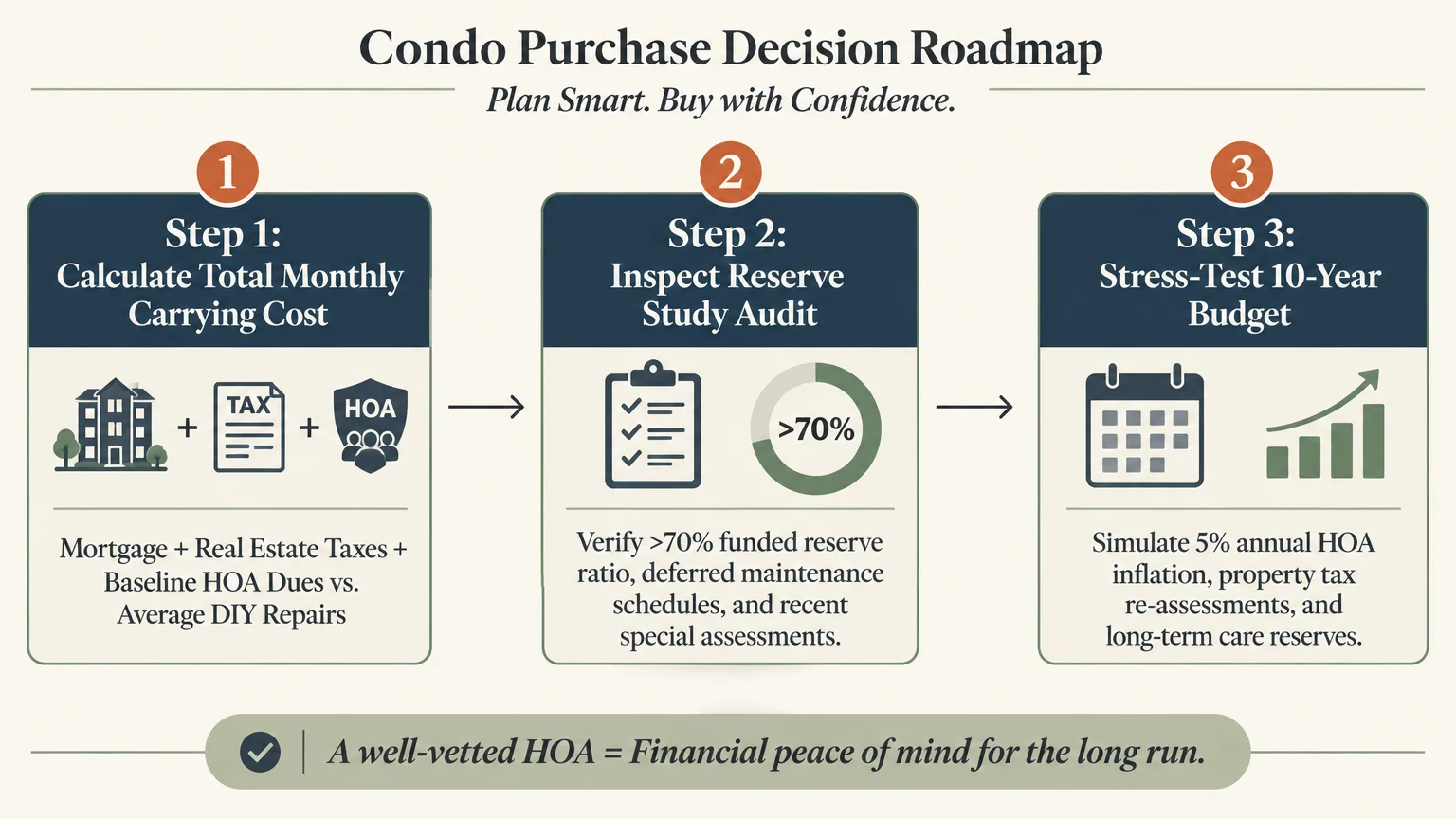
Before visiting another model home, build a simple five-year cost worksheet comparing your current house against one specific 55+ community and one regular single-level neighborhood. Include property taxes, homeowners insurance quotes, realistic HOA dues increases, initiation fees, and any accessibility upgrades each home still needs.
Seeing those real totals side by side turns an emotional lifestyle choice into a confident, sustainable decision about where to retire.
This article is for informational purposes only and does not constitute financial, legal, or medical advice. Medicare rules, Social Security benefits, and tax laws change regularly—verify current details at Medicare.gov, SSA.gov, or with a licensed professional.
Last updated: November 2026. Medicare and Social Security rules change annually—always verify current details at official government sources.