If you entered the workforce decades ago, you probably remember a clear promise. Stay loyal to one company, work hard, and your employer would protect your retirement and healthcare.
Most of those workplace benefits have quietly disappeared or shifted onto your own shoulders. Understanding what vanished helps you spot dangerous gaps in your retirement budget before they catch you off guard.
Below, you will see the 12 old company perks employers rarely offer today and practical steps you can take to protect your income, health coverage, and peace of mind.
What You Need to Know About Disappearing Job Perks
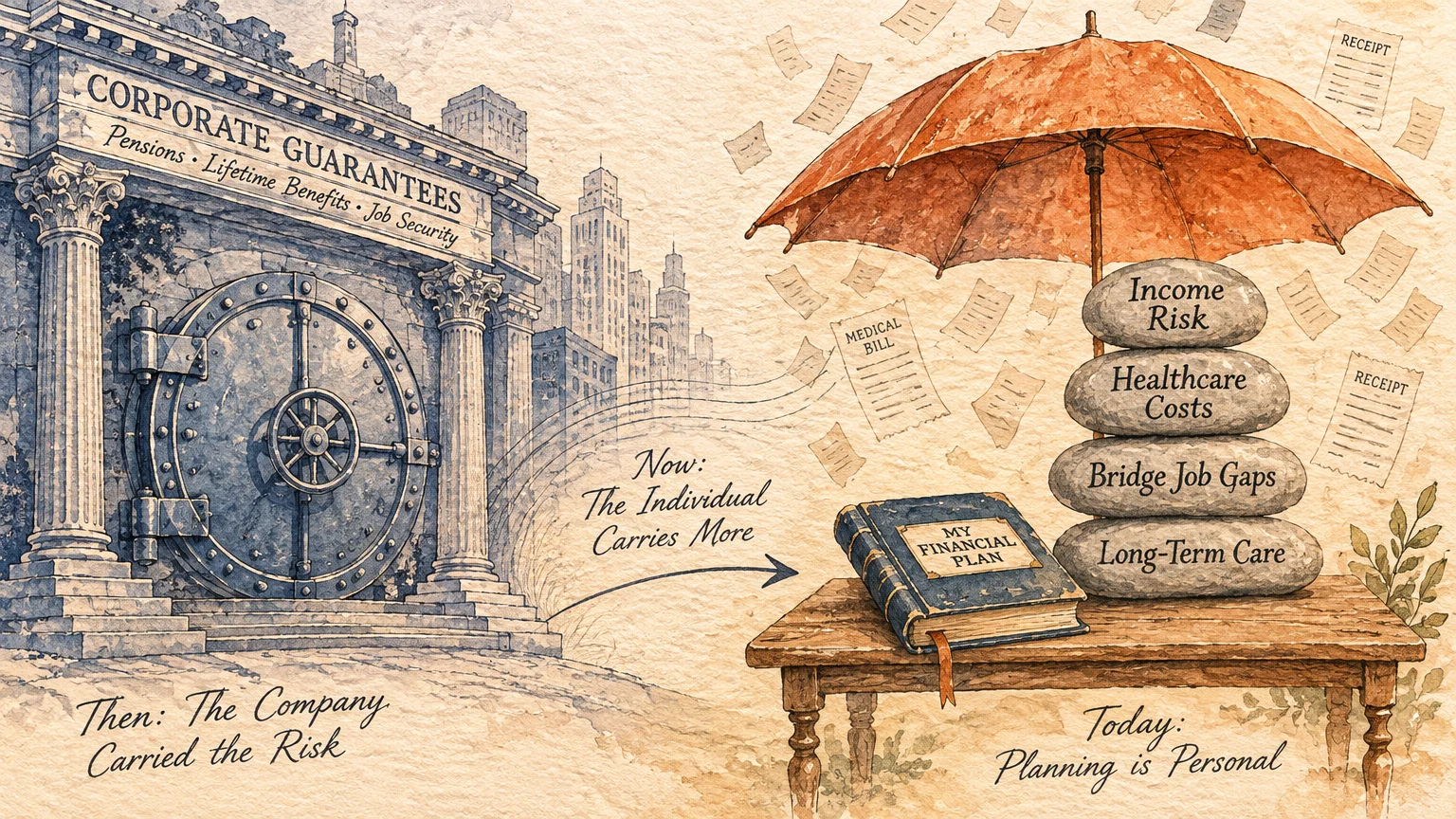
Looking at employee benefits history reveals a massive transfer of financial risk from corporations to individual workers. Instead of guaranteeing lifetime income or medical care, modern employers favor defined budgets and short-term incentives.
Keep these four core shifts in mind as you review your retirement readiness:
- Income risk moved to you: Traditional pensions have largely been replaced by self-funded 401(k) accounts, making your savings rate and investment choices critical.
- Healthcare costs rose sharply: Retiree medical plans and 100% employer-paid premiums are rare today, leaving you to budget for premiums and deductibles.
- Bridge jobs carry hidden traps: Part-time work in your 60s often excludes you from medical insurance and meaningful retirement contributions.
- Long-term care is self-funded: Most employers dropped group long-term care policies, so families pay assisted living costs out of pocket or rely on Medicaid.
Retirement Income and Pension Benefits That Faded Away
The biggest change in workplace benefits involves how you fund life after your final paycheck. Guaranteed monthly checks have given way to personal investment accounts and strict eligibility rules.
1. Traditional Defined Benefit Pensions
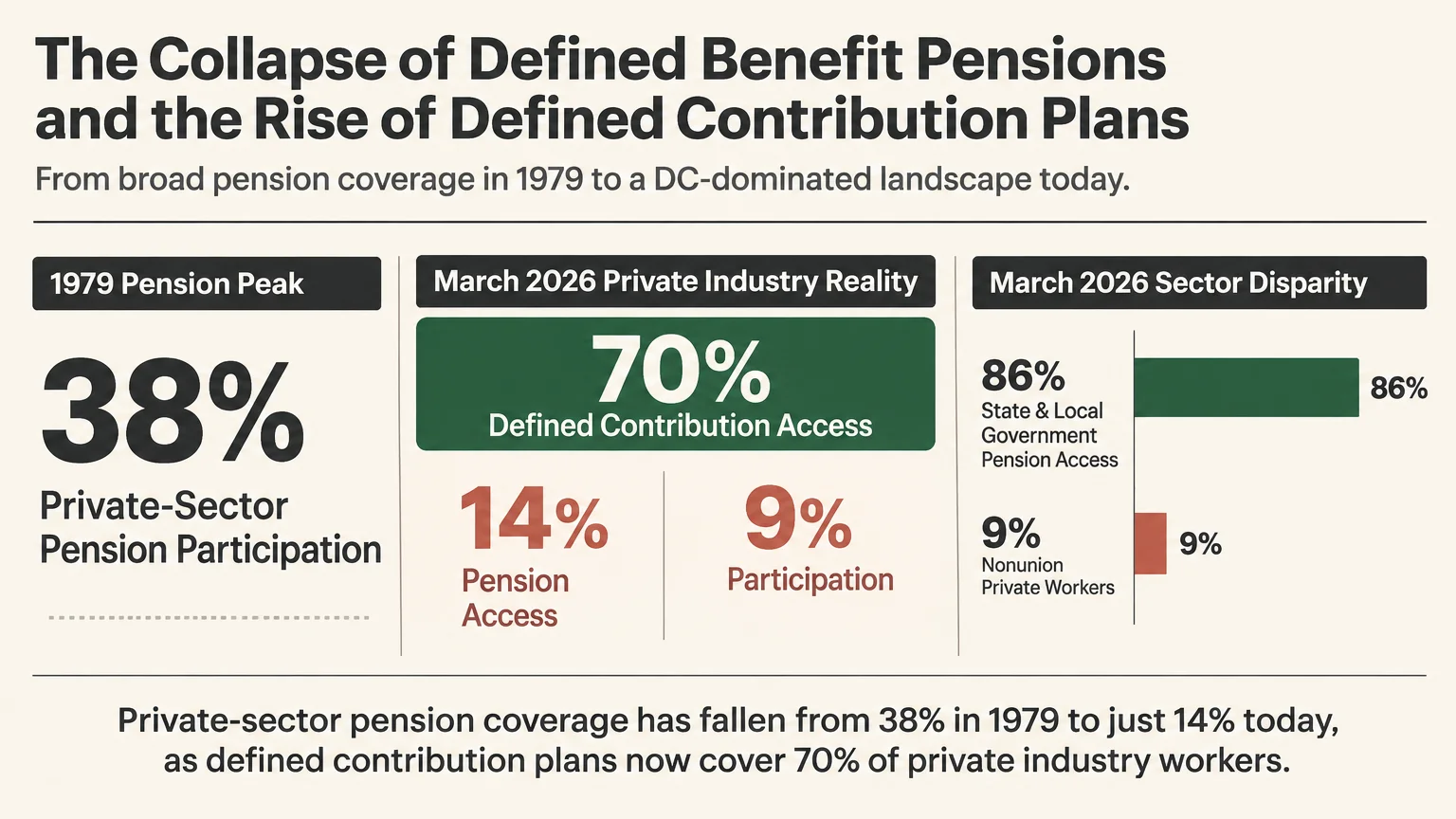
In 1979, 38% of private-sector workers participated in a traditional defined benefit pension, with participation peaking at 39% in 1980 according to the Employee Benefit Research Institute. By March 2026, U.S. Bureau of Labor Statistics (BLS) data showed only 14% of private industry workers even had access to a pension, and just 9% participated.
Meanwhile, defined contribution plans like the 401(k) became the standard across America. By March 2026, 70% of private industry workers had access to a defined contribution plan, compared with only 7% who held a standalone defined contribution plan in 1979.
The divide in pensions vs 401k access depends heavily on where you worked. In March 2026, 86% of state and local government workers still had pension access, and 64% of unionized private workers had access compared with only 9% of nonunion private workers.
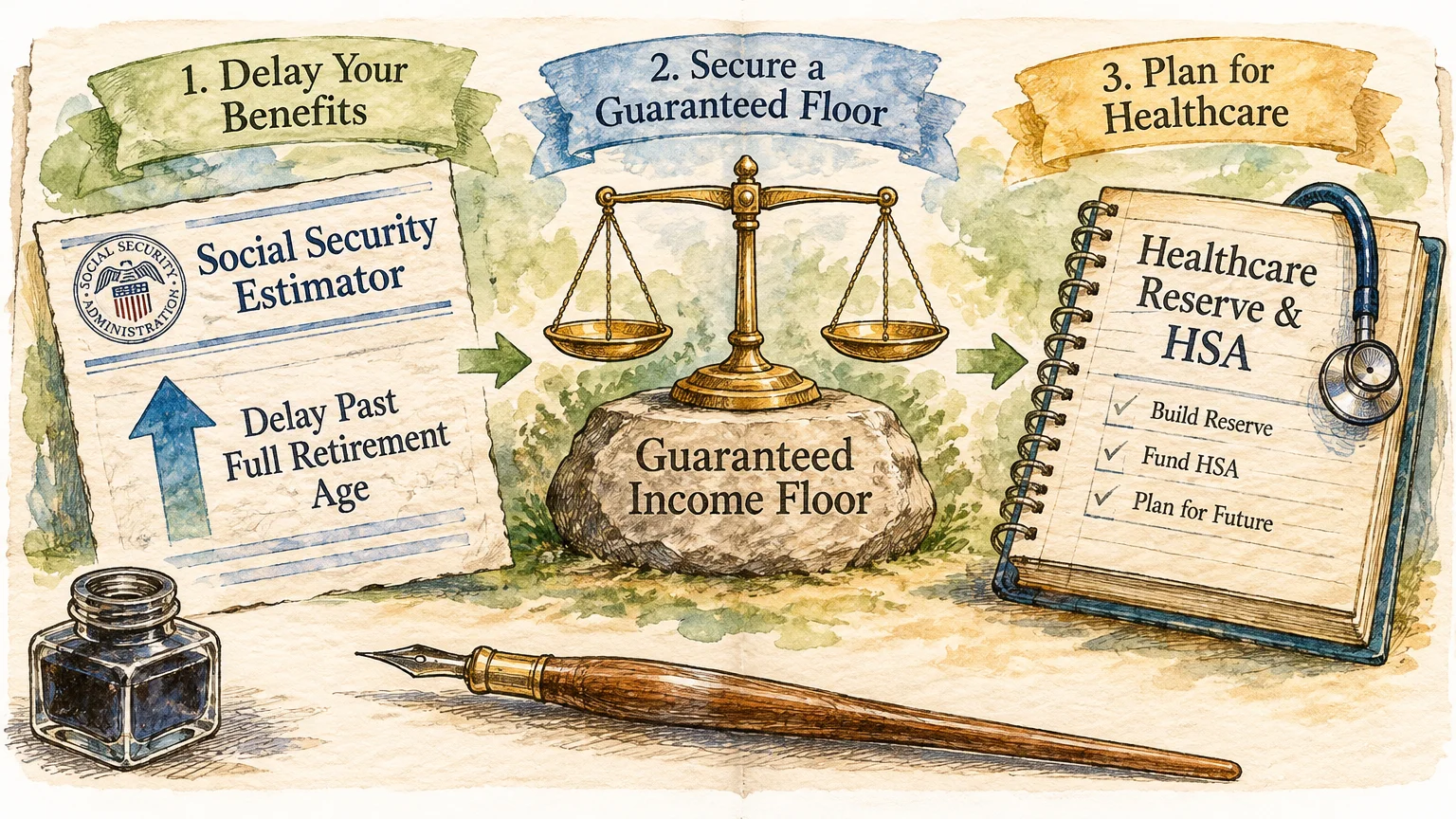
What you can do: If you lack a pension, verify your projected Social Security check at the Social Security Retirement Estimator before setting your retirement date. Consider delaying benefits past full retirement age to build a larger guaranteed income floor.
2. Guaranteed 401(k) Employer Matches
Employers told workers that 401(k) matches would replace lost pensions, yet those matches are never permanently guaranteed. While 93% of employers offered traditional 401(k) plans and 85% of that group offered a match averaging 6.30% in the 2025 SHRM Employee Benefits Survey, companies still cut contributions during tight budgets.
In late 2025 and 2026, major organizations—including Sherwin-Williams, TTEC across 16,000 U.S. workers, and the U.S. Postal Service with its FERS contribution suspension—rolled back or paused retirement matches. Even temporary suspensions hurt workers in their peak earning years.
Many Americans aged 55 and older feel that squeeze directly. The Federal Reserve’s 2025 Survey of Consumer Finances found that 37% of families aged 55 to 64 hold no retirement account at all, while those with accounts have a median total balance of $239,000.
What you can do: Take full advantage of catch-up rules before you leave the workforce. For 2026, the standard IRS retirement plan limits allow $24,500 in 401(k) deferrals and $7,500 in IRA contributions, plus additional catch-up contributions if you are 50 or older.
3. Automatic Public-Sector Pension COLAs
Public employees still enjoy stronger pension access than private workers, but automatic cost-of-living adjustments (COLAs) have eroded. State and local pension actuarial funded ratios fell from 101.9% in 2001 to 71.9% in 2019, according to Cornell and NBER research.
To close those funding gaps, many state and municipal systems froze, capped, or eliminated annual COLAs for retirees. Without regular inflation adjustments, a fixed pension loses substantial purchasing power over a 20-year or 30-year retirement.
What you can do: Request an official benefit statement from your pension administrator and confirm whether your COLA is guaranteed, tied to investment performance, or suspended. Build a side reserve in a Roth IRA or taxable brokerage account to absorb rising grocery and utility bills.
4. Full Retirement and Medical Perks for Part-Time Bridge Jobs
Many retirees plan to ease out of full-time careers by taking a lighter part-time job in their 60s. Unfortunately, part-time roles rarely offer the workplace benefits you enjoyed as a full-time employee.
BLS data from March 2026 shows only 23% of part-time private industry workers had access to employer medical benefits, compared with 87% of full-time workers. In March 2025, only 47% of part-time private workers had access to any retirement plan, versus 81% of full-time staff.
Part-time hours can also penalize long-term pension formulas dramatically. A September 2026 Pew Charitable Trusts study found that working part-time over a 35-year public-sector career slashes annual pension payouts by 75%, compared with a 50% reduction in a defined contribution plan.
What you can do: Never assume a bridge job provides health insurance before age 65. Price coverage through the Affordable Care Act marketplace or your spouse’s employer plan before reducing your full-time schedule.
Healthcare and Insurance Protections Now Shifted to You
Medical inflation forced employers to retreat from lifetime health promises faster than almost any other benefit. If you are approaching 65 or helping aging parents plan ahead, these four disappearing job perks require careful budgeting.
5. Employer-Sponsored Retiree Health Insurance
Decades ago, retiring early meant keeping your company health card until Medicare kicked in—and often keeping generous supplemental coverage afterward. According to the KFF Employer Health Benefits Survey, the share of large firms (200 or more workers) offering retiree health benefits plunged from 66% in 1988 to 24% in 2024.
Even among large employers that still offer coverage to Medicare-eligible retirees, the structure has changed completely. In 2024, 56% of those firms delivered benefits through a Medicare Advantage contract—covering roughly 5 million retirees—more than double the 26% share seen in 2017.
If you retire before 65 without retiree coverage, you must bridge the gap yourself. An unexpected illness during those uninsured or underinsured years can drain retirement savings fast.
What you can do: Compare your employer’s retiree plan—if one exists—against open-market options using Medicare Plan Finder once you turn 65. Check doctor networks and prescription drug formularies carefully, because employer-sponsored Medicare Advantage plans still carry network rules.
6. 100% Employer-Paid Health Insurance Premiums
For active workers in their late 50s and early 60s, paying nothing out of pocket for health premiums is nearly extinct. According to KFF’s 2026 Employer Health Benefits Survey, only 5% of covered workers at large firms and 29% at small firms receive 100% employer-paid single coverage.
Family coverage without a paycheck deduction is even rarer today. Just 2% of covered workers at large companies and 9% at small companies have their full family premium paid by an employer.
Meanwhile, total annual premiums climbed to $9,804 for single plans and $28,303 for family plans in 2026. Workers contributed an average of $1,672 per year for single coverage and $7,471 for family coverage, while facing an average single deductible of $1,955.
What you can do: If your employer pairs a high-deductible health plan with a Health Savings Account (HSA), maximize your contributions before enrolling in Medicare. HSA funds grow tax-free and pay for qualified medical expenses and Medicare Part B premiums later in life.
7. Employer-Sponsored Long-Term Care Insurance
Most families do not realize Medicare does not pay for ongoing custodial nursing home or assisted living care. Years ago, larger corporations offered voluntary group long-term care (LTC) insurance to help employees prepare, with 31% of employers offering it in 2010 before that share dropped to 24% by 2014 per SHRM data.
Since then, most major insurers exited the standalone LTC market due to surging care costs and longer lifespans. Today, research from LIMRA, KFF Health News, and Morningstar shows only 3% to 4% of Americans aged 50 and older own a private LTC policy.
That leaves a massive funding gap for aging adults. Federal estimates indicate 70% of people aged 65 and older will need long-term care services, yet Inland Investments reported in 2026 that 97.0% of independent and assisted living residents pay out of pocket, while Medicaid covered 42% of national LTC spending in 2022.
What you can do: Talk with your spouse and adult children now about how you would fund two to four years of memory care or in-home assistance. Explore hybrid life-and-LTC policies in your late 50s or early 60s while your health still qualifies you for underwriting.
8. Broad Private-Sector Life and Disability Coverage
Working into your 60s carries real physical risks, yet employer-paid disability and life insurance are far from universal in the private sector. In March 2026, BLS figures showed 59% of private industry workers had access to employer life insurance, compared with 84% of state and local government employees.
Disability protection is even scarcer for private-sector workers. Only 44% of private industry workers had short-term disability access and just 37% had long-term disability coverage in March 2026.
Company size plays a major role in who gets protected. In March 2025, life insurance access sat at 87% at firms with 500 or more workers, but fell to just 42% at small firms with fewer than 100 employees.
What you can do: Check whether your workplace life insurance ends or converts to expensive rates the day you retire. If a spouse depends on your income, verify how your Social Security survivor benefit and private term policies cover that gap.
Pay, Leave, and Daily Workplace Perks That Disappeared
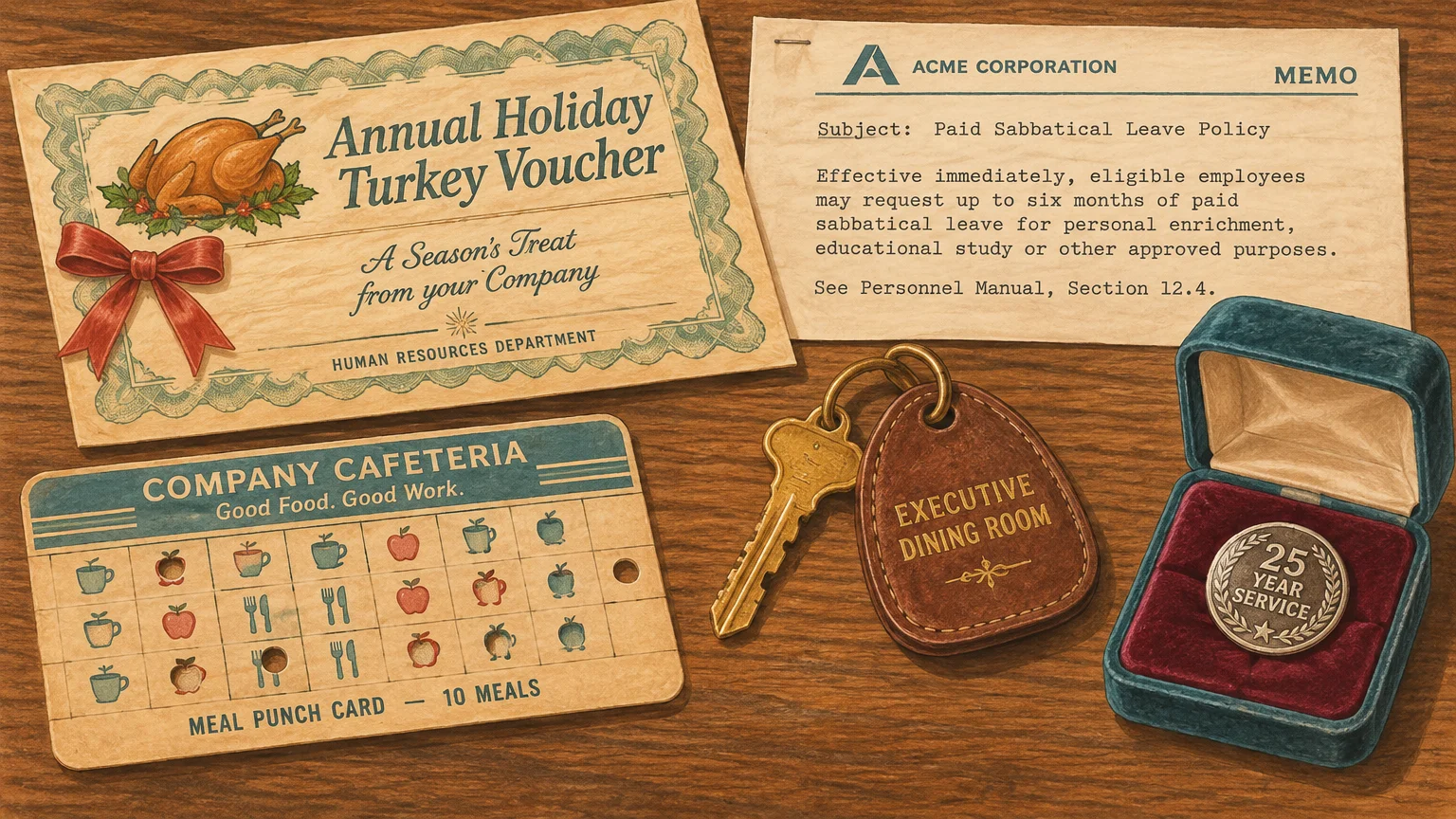
Not every vanishing benefit shows up on a retirement statement. Everyday policies around sick time, bonuses, scheduling, and family support also shifted dramatically—affecting how smoothly you transition out of your career.
9. Separate Paid Sick Leave Banks
Older workers often remember accruing dedicated vacation weeks alongside separate, protected sick days—sometimes banking unused sick leave toward a cash payout or extra service credit at retirement. Today, most companies have merged those buckets into a single Paid Time Off (PTO) pool.
In March 2026, 81% of private industry workers had access to paid sick leave, yet 34% received it through a consolidated PTO plan rather than separate sick leave, per BLS data. The 2025 SHRM survey found 68% of employers now combine vacation and sick leave into PTO, while just 6% offer open or unlimited PTO.
Consolidated PTO often penalizes older employees managing chronic conditions or medical appointments, because every doctor visit eats into family vacation time. Unlimited PTO plans also eliminate accrued unused-time payouts when you retire.
What you can do: Read your employee handbook carefully during your final working year to see whether unused PTO is paid out upon departure. Schedule elective surgeries, dental work, and routine screenings while your workplace coverage and PTO bank remain active.
10. Flat Holiday and Christmas Bonuses
A generation ago, employees across every department could count on a flat holiday or Christmas bonus each December simply for being part of the team. According to BLS data analyzed by SmartAsset, the share of workers receiving flat holiday bonuses fell from 9% in 2010 to 5% in 2020.
Even broad annual bonuses have shrunk sharply over the past few years. Payroll processor ADP reported roughly 44% of workers received a holiday or annual bonus in 2021, but Indeed Hiring Lab tracked U.S. job postings mentioning year-end or annual bonuses dropping from 1.65% to 0.74% year-over-year by late 2025.
Today, bonuses skew heavily toward performance metrics and higher-tier roles. In March 2026, nonproduction bonus access in private industry reached 61% in management and professional jobs but only 37% in service occupations.
What you can do: Base your retirement savings rate and debt-payoff plan strictly on your guaranteed base pay. If you do receive an annual performance bonus, route it directly into your emergency fund or catch-up retirement accounts.
11. Unconditional Flexible Hours and Hybrid Schedules
Many workers in their late 50s and 60s hoped flexible schedules and remote work would let them stay employed comfortably until age 67 or 70. However, employer priorities are shifting away from open-ended schedule flexibility.
SHRM’s June 2026 Employee Benefits Survey showed flextime during core hours dipped 6 percentage points and hybrid work dipped 3 percentage points compared with 2025. Over that same year, employers sharply expanded paid parental leave (from 39% to 46%) and AI tool subscriptions (up 17 percentage points to 33%).
Strict return-to-office mandates and rigid core hours make it harder for older workers with long commutes or caregiving duties to remain on the payroll. Being forced into early retirement just two or three years sooner reduces both your savings and your Social Security calculation.
What you can do: If commuting daily becomes unsustainable, propose a formal, metric-driven flexible schedule before resigning. Staying employed even 12 months longer lets you delay Social Security and preserve investment principal.
12. Employer-Subsidized Childcare Support
Workplace support for family caregiving has always lagged behind worker needs, affecting multiple generations at once. In March 2025, only 13% of private industry workers had access to employer childcare benefits, ranging from 8% at firms under 100 workers to 30% at companies with 500 or more employees.
For Americans aged 55 to 75, that gap hits closer to home than you might expect. Millions of older adults step in to watch grandchildren so their adult children can keep working, often sacrificing their own paid hours or retirement leisure.
While paid parental leave expanded to 46% of employers in 2026, ongoing childcare subsidies remain rare. Without clear boundaries, grandparents sometimes drain their own retirement savings helping younger relatives cover care expenses.
What you can do: Support your adult children with time or clear schedules that protect your own health and financial independence. Encourage working family members to check pre-tax Dependent Care FSAs at work, and explore caregiving resources through the National Council on Aging.
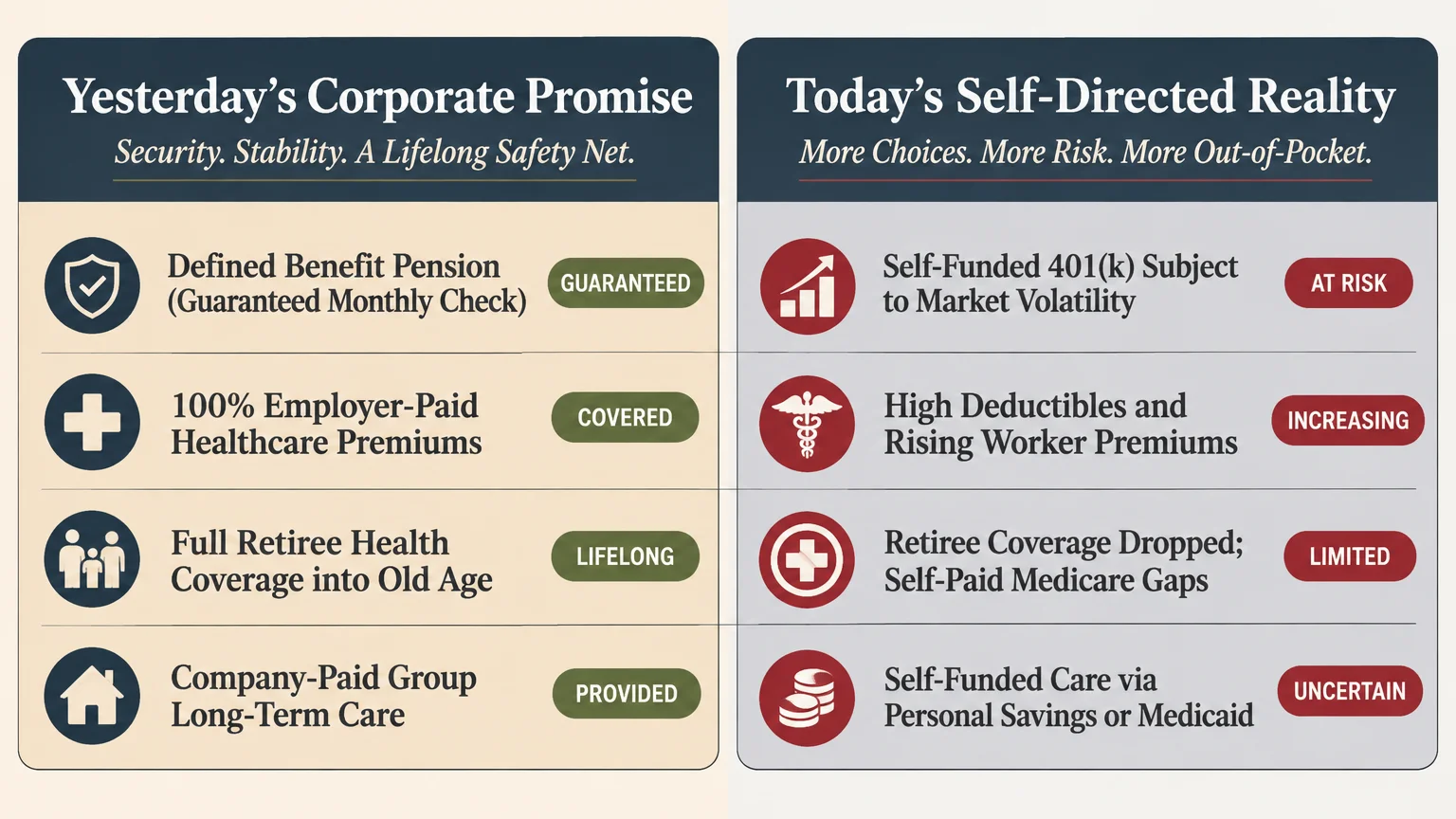
Comparing Yesterday’s Workplace Benefits With Today’s Reality
Seeing these shifts side by side makes it easier to spot where your personal retirement plan needs reinforcement. The table below contrasts old company perks with the realities retirees face today.
| Benefit Area | Traditional Employer Promise | Modern Workplace Reality | Your Planning Priority |
|---|---|---|---|
| Retirement Income | Defined benefit pension paying monthly checks for life | 401(k) accounts where 14% of private workers have pension access | Maximize catch-up savings and optimize Social Security timing |
| Retiree Health Care | Employer-paid retiree medical plan (66% of large firms in 1988) | Rare (24% of large firms in 2024); 56% use Medicare Advantage contracts | Budget for Medicare Part B, Part D, and Medigap or Advantage costs |
| Active Health Premiums | 100% employer-paid coverage for workers and families | Only 5% of covered workers at large firms get 100% employer-paid single coverage; $1,955 average deductible | Fund an HSA before age 65 to shelter future medical dollars |
| Long-Term Care | Voluntary group LTC plans offered through employers | Most insurers exited; 97.0% of assisted living residents pay out of pocket | Create an LTC funding or family care plan in your late 50s |
| Part-Time Bridge Work | Pro-rated benefits for reduced schedules | Only 23% private part-time medical access; steep pension penalties | Secure independent health coverage before cutting hours |
When guaranteed workplace safety nets vanish, your retirement security depends on replacing predictable paychecks with your own diversified income plan.
Don’t Make These Mistakes When Planning Around Lost Perks
Knowing which workplace benefits disappeared is only half the battle. Pre-retirees frequently lose thousands of dollars by assuming outdated rules still apply to their exit strategy.
- Retiring before confirming health coverage: Leaving your job at 62 without checking retiree health eligibility or marketplace premiums can cost tens of thousands before Medicare starts at 65.
- Overestimating your 401(k) balance: Vanguard’s How America Saves 2026 report found a median 401(k) balance of $107,269 for participants aged 55 to 64—far below what many assume it takes to replace a pension.
- Ignoring your spouse’s survivor needs: If your company life insurance ends at retirement and you claim Social Security too early, a surviving spouse could face a steep income drop.
- Assuming Medicare covers assisted living: Medicare covers short-term skilled rehabilitation, not long-term custodial care, leaving families exposed if no LTC plan exists.
- Forgetting to verify pension vesting and payouts: Mergers, freezes, and part-time transitions alter final benefit formulas, so always request a written calculation before giving notice.
Reviewing your household numbers using tools from the Consumer Financial Protection Bureau helps you catch these blind spots early. A two-hour audit today can save years of financial stress later.

When Professional Advice Is Worth It
Replacing old company perks with self-directed plans involves complex tax, healthcare, and legal rules. You do not have to untangle every detail alone, and timely guidance often pays for itself.
- State Health Insurance Assistance Program (SHIP): Contact a free, unbiased SHIP counselor through Medicare.gov about six months before turning 65 to compare employer retiree offers against Medigap and Medicare Advantage.
- Fee-only fiduciary financial planner: Work with a fiduciary advisor in your late 50s or early 60s to stress-test your 401(k) withdrawal rate, tax brackets, and Social Security claiming strategy.
- Elder law attorney: Consult an estate and elder law specialist if you lack long-term care insurance and want to protect assets, update powers of attorney, or understand Medicaid rules.
Frequently Asked Questions About Disappearing Workplace Benefits
Why did most companies replace traditional pensions with 401(k) plans?
Traditional pensions required employers to guarantee fixed monthly payouts for decades, regardless of stock market drops or rising lifespans. Switching to 401(k) plans capped employer costs and transferred investment, inflation, and longevity risk directly onto employees.
Are there any jobs that still offer traditional pensions and retiree health insurance?
Yes, though they are concentrated in specific sectors. State and local government jobs, public schools, federal agencies, and unionized private-sector roles still offer defined benefit pensions and retiree health access far more often than nonunion corporate employers.
How can I replace a lost pension if I am already in my late 50s or 60s?
Start by maximizing 401(k) and IRA catch-up contributions while trimming high-interest debt before your retirement date. Delaying Social Security toward age 70 also acts like buying a larger, inflation-adjusted government pension for life.
What happens to my employer life insurance and HSA when I retire?
Most group term life policies terminate when your employment ends, or allow expensive conversion to an individual policy. By contrast, your Health Savings Account belongs to you permanently, and you can spend those tax-free dollars on qualified healthcare throughout retirement.
Your Next Step for a Stronger Retirement Plan
Pull your latest Social Security statement, your 401(k) or pension summary, and your employer’s current benefits guide this week. Confirm exactly which benefits end on your last day of work and price your replacements while you still hold a steady paycheck.
This article is for informational purposes only and does not constitute financial, legal, or medical advice. Medicare rules, Social Security benefits, and tax laws change regularly—verify current details at Medicare.gov, SSA.gov, or with a licensed professional.
Last updated: November 2026. Medicare and Social Security rules change annually—always verify current details at official government sources.