Your monthly Social Security check and prescription drug costs depend directly on which party holds the gavel in Capitol Hill committee rooms. The upcoming 2026 midterm elections will decide who controls the United States Senate and shapes senior policy.
Republicans currently hold a 53–47 majority, meaning a swing of just a few seats alters the balance of power. Lawmakers will soon decide how to address trust fund shortfalls and manage Medicare pricing rules.
Understanding these high-stakes contests helps you anticipate federal policy shifts before they reach your household budget. Twelve pivotal races across the country will ultimately determine the outcome.

The Math Behind the 2026 Battle for Senate Control
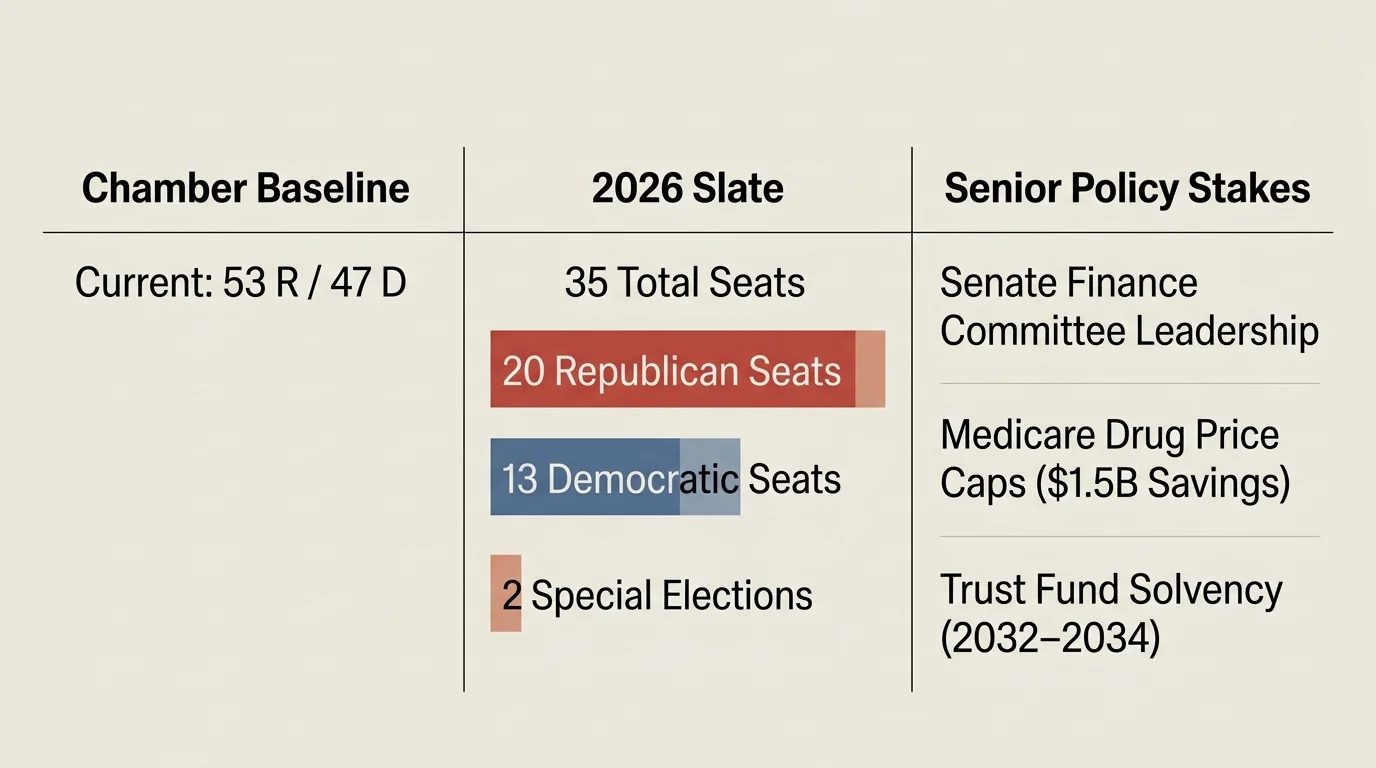
The 2026 midterm elections take place on Tuesday, November 3, 2026. Voters will decide 35 Senate seats across the nation.
The slate features 33 regularly scheduled Class 2 seats alongside two high-profile special elections in Florida and Ohio. Republicans defend 20 seats, while Democrats defend 13.
Republicans enter the cycle with a 53–47 advantage in the 119th Congress. This coalition includes 53 Republicans facing 45 Democrats and two allied Independents.
Democrats need a net gain of four seats to reach 51 and claim outright chamber control. The Republican Vice President breaks any 50–50 ties, limiting alternate paths.
Republicans maintain control even if they lose two seats. Consequently, competitive Senate races explained by razor-thin margins will determine the legislative agenda.
What Senate Control Means for Your Social Security and Medicare
Senate majorities dictate committee leadership, particularly on the powerful Senate Finance Committee. This committee oversees federal taxation, Social Security solvency, and public health programs.
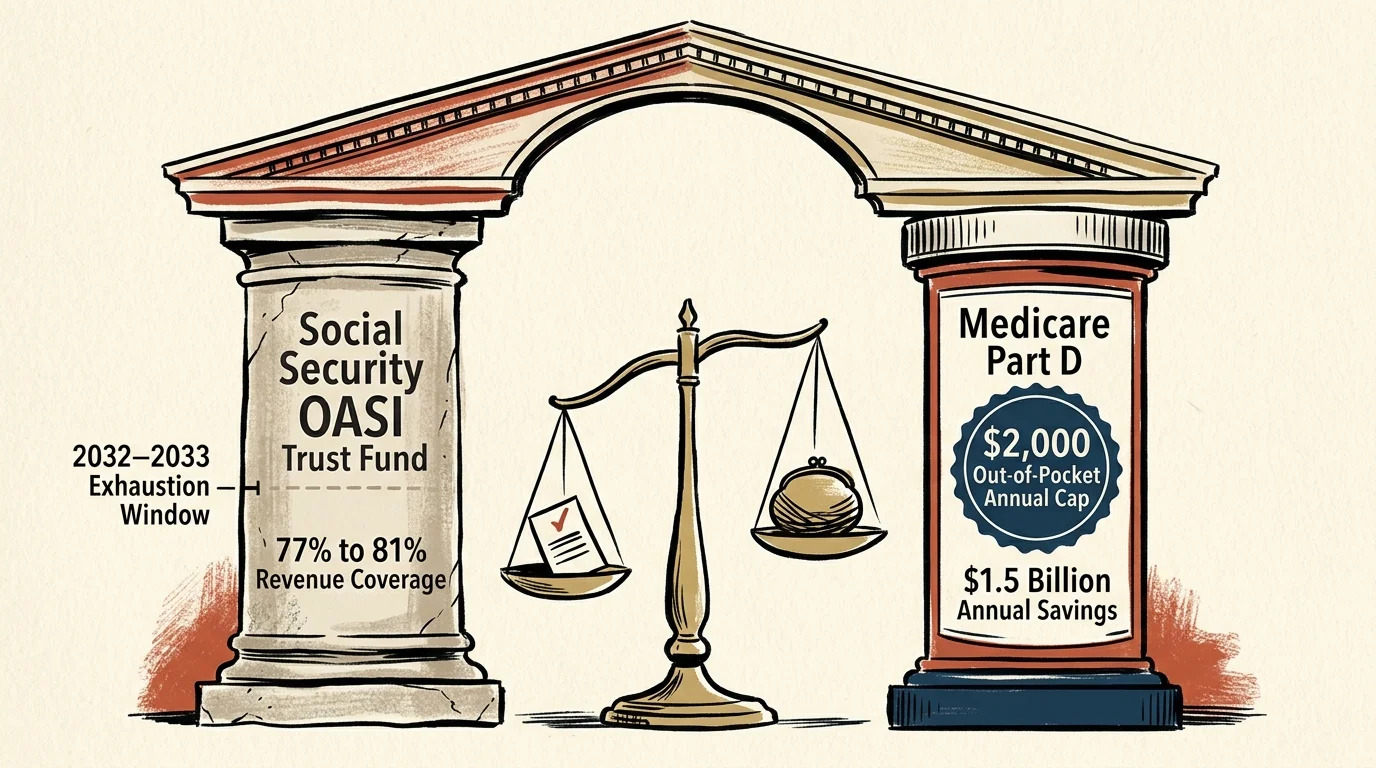
Official projections from the Social Security Administration (SSA) highlight urgent timelines. The Old-Age and Survivors Insurance (OASI) Trust Fund faces reserve exhaustion between 2032 and 2033.
The combined OASDI fund faces depletion around 2034. Without legislative updates, incoming tax revenues will cover only 77% to 81% of scheduled benefits.
The party running the Senate decides whether solutions involve lifting payroll tax caps, raising claiming ages, or altering cost-of-living adjustments. Your claiming strategy requires close attention to these debates.
Medicare rules also hang in the balance. On January 1, 2026, historic lower negotiated prices took effect for the first 10 Medicare Part D medications.
These initial price caps target widely prescribed drugs, including Eliquis, Jardiance, and Xarelto. Independent estimates show these discounts will deliver $1.5 billion in annual out-of-pocket savings for seniors.
Federal regulators at Medicare.gov selected an additional 15 Part B and Part D drugs for price negotiations. These revised prices take effect in 2028.
The incoming Senate will decide whether to protect or repeal these negotiation rules. They will also determine the fate of the landmark $2,000 annual out-of-pocket prescription cap.
“It’s not how much money you make, but how much money you keep, how hard it works for you, and how many generations you keep it for.” — Robert Kiyosaki

The 12 Battleground Senate Seats to Watch
Twelve specific battleground Senate seats will decide the Senate majority 2026 outcome. These contests feature seasoned incumbents, contentious open seats, and volatile special elections.
1. Maine: Susan Collins Faces a Tough Defense
Five-term Republican Senator Susan Collins faces one of her career’s most challenging re-election campaigns. Maine voters frequently back divided government but trended blue in recent presidential cycles.
Collins faces Democratic nominee Troy Jackson, the former Maine State Senate President. Jackson brings strong working-class appeal and rural backing to the race.
Healthcare access and prescription drug availability remain front-and-center issues for Maine’s aging population. Collins relies on her independent reputation to retain split-ticket voters.
2. Michigan: High Stakes in an Open Great Lakes Seat
Democratic Senator Gary Peters announced his retirement, creating an open-seat battleground in Michigan. Both national parties view this contest as essential for Senate control midterms.
Former state health official Abdul El-Sayed secured the Democratic nomination. He squares off against former Republican U.S. Representative Mike Rogers.
El-Sayed emphasizes aggressive consumer protections and expanded healthcare benefits. Rogers focuses his campaign on domestic manufacturing, border security, and economic inflation.
3. Texas: A Fiery Lone Star Clashing
Republican Attorney General Ken Paxton defeated longtime incumbent John Cornyn in a combative GOP primary runoff. Paxton’s victory established a high-stakes ideological clash in Texas.
Paxton faces Democratic nominee James Talarico, an energetic state lawmaker and former public educator. Talarico aims to build a broad coalition across expanding suburban districts.
The race centers on federal border policies, energy infrastructure, and retirement tax protections. National donors are pouring unprecedented capital into this contest.
4. Ohio: The High-Profile Vance Vacancy Special Election
Ohio voters head to the polls to fill the remaining four years of Vice President JD Vance’s term. This special election serves as a direct referendum on federal policy priorities.
Former Democratic Senator Sherrod Brown returns to the ballot, bringing high statewide name recognition. Brown built his political brand around defending manufacturing workers and pension security.
Brown faces prominent Republican Jon Husted, who emphasizes conservative fiscal management. This race stands as one of the most expensive key Senate races 2026 will produce.
5. Georgia: Jon Ossoff Defends a Changing Battleground
First-term Democratic Senator Jon Ossoff must defend his seat in a state carried by Republicans in 2024. Georgia remains divided down the middle across suburban Atlanta communities.
Ossoff campaigns heavily on clean energy investments, veteran healthcare access, and protecting federal entitlement programs. High turnout among seniors will prove decisive here.
Republicans view Georgia as their premier offensive opportunity on the 2026 map. Mobilizing older rural voters remains central to the GOP offensive strategy.
6. North Carolina: Thom Tillis Navigates Narrow Margins
Republican incumbent Thom Tillis prepares for another razor-thin contest in North Carolina. The Tar Heel State consistently yields statewide races decided by single percentage points.
Tillis emphasizes his bipartisan legislative work on infrastructure and veterans’ affairs. However, he faces pressure from both conservative purists and energized Democratic challengers.
Retirees moving to North Carolina coastal and mountain communities represent an influential voting bloc. Healthcare affordability and property tax stability top their legislative concerns.
7. New Hampshire: An Open Granite State Showdown
Veteran Democratic Senator Jeanne Shaheen chose not to seek re-election, opening a fiercely independent seat. New Hampshire voters routinely deliver volatile, late-shifting election results.
Democratic U.S. Representative Chris Pappas launched a bid to succeed Shaheen. Pappas points to his pragmatic record on small-business support and constituent services.
He faces Republican nominee John E. Sununu, carrying a prominent political family name. The debate centers on federal spending caps, energy prices, and Social Security protections.
8. Alaska: Dan Sullivan and Ranked-Choice Dynamics
Republican incumbent Dan Sullivan seeks another term representing Alaska. The state’s nonpartisan primary and ranked-choice general election create unique electoral dynamics.
Former Democratic U.S. Representative Mary Peltola challenges Sullivan with a broad coalition. Peltola retains deep popularity among Alaska Native communities and independent voters.
Resource development, maritime economies, and federal healthcare subsidies dominate northern campaign debates. Ranked-choice balloting means secondary candidate preferences could determine the winner.
9. Iowa: Joni Ernst Retires, Creating a Heartland Battle
Republican Senator Joni Ernst surprised observers by announcing her retirement from Capitol Hill. Her departure transforms Iowa into an unexpected battleground.
Republican U.S. Representative Ashley Hinson leads the GOP effort to preserve the seat. Hinson emphasizes rural healthcare funding, agricultural stability, and lower income taxes.
She faces Democratic state lawmaker Josh Turek, a decorated Paralympian advocate. Turek focuses heavily on disability protections, rural hospital preservation, and long-term care infrastructure.
10. Florida: Special Election for Rubio’s Unexpired Term
Florida hosts a high-profile special election following Marco Rubio’s appointment as U.S. Secretary of State. The winner serves the final two years of the term.
Florida has trended decisively conservative over recent election cycles. However, the state’s massive retiree population pays acute attention to healthcare debates.
Candidates must navigate fierce arguments over Medicare Advantage rules and Social Security trust fund stability. Senior voter turnout in Florida exceeds almost every other state.
11. Minnesota: Peggy Flanagan Fights for an Open Seat
Democratic Senator Tina Smith’s retirement opened up a pivotal Upper Midwest contest. Minnesota has backed Democratic statewide candidates for decades, but margins have tightened.
Lieutenant Governor Peggy Flanagan secured the Democratic nomination to retain the seat. Flanagan focuses on child care credits, elder care subsidies, and public transit.
Republicans are mounting an aggressive campaign targeting inflation, energy costs, and business regulations. Greater Minnesota rural communities could counterbalance Twin Cities urban margins.
12. Montana: An Open Frontier Battle
Republican Senator Steve Daines is stepping down, leaving an open seat in Big Sky country. Montana voters prize political independence and local conservation issues.
Republican nominee Kurt Alme aims to keep the seat firmly in GOP hands. Alme highlights border security, resource independence, and strict fiscal oversight.
Democrats aim to build a coalition of public-land advocates, healthcare workers, and suburban voters. Access to rural veterans’ clinics remains a major talking point across the state.
Battleground Overview: Key 2026 Senate Races at a Glance
Compare the competitive Senate races shaping congressional control in the summary table below. Each contest carries distinct policy stakes for American seniors.
| State & Status | Incumbent / Open | Key Candidates | Primary Senior Stake |
|---|---|---|---|
| Maine | Incumbent Defense | Susan Collins (R) vs. Troy Jackson (D) | Prescription drug subsidies; rural clinic funding |
| Michigan | Open Seat | Abdul El-Sayed (D) vs. Mike Rogers (R) | Medicare drug price expansion; manufacturing jobs |
| Texas | GOP Primary Turnover | Ken Paxton (R) vs. James Talarico (D) | Retirement income taxation; energy infrastructure |
| Ohio | Special Election | Sherrod Brown (D) vs. Jon Husted (R) | Private pension backing; manufacturing stability |
| Georgia | Incumbent Defense | Jon Ossoff (D) vs. GOP Challenger | Social Security solvency; veteran medical services |
| North Carolina | Incumbent Defense | Thom Tillis (R) vs. Democratic Challenger | Medicare Advantage rules; coastal storm recovery |
| New Hampshire | Open Seat | Chris Pappas (D) vs. John E. Sununu (R) | Home heating energy costs; federal spending caps |
| Alaska | Incumbent Defense | Dan Sullivan (R) vs. Mary Peltola (D) | Native health funding; ranked-choice outcomes |
| Iowa | Open Seat | Ashley Hinson (R) vs. Josh Turek (D) | Rural hospital preservation; long-term care rules |
| Florida | Special Election | GOP Nominee vs. Democratic Nominee | Prescription price negotiations; property insurance |
| Minnesota | Open Seat | Peggy Flanagan (D) vs. GOP Nominee | State-federal caregiving credits; healthcare access |
| Montana | Open Seat | Kurt Alme (R) vs. Democratic Nominee | Rural veteran healthcare; public land protections |

How Congressional Decisions Impact Your Retirement Income
The party holding the Senate gavel wields massive power over your personal financial blueprint. They determine tax policies that directly impact retirement distributions and investment income.
Consider the tax treatment of Social Security benefits. Depending on provisional income thresholds, up to 85% of your benefits may face federal income taxation.
These income thresholds have remained unindexed for inflation since 1984. Senate lawmakers can vote to adjust these brackets, delivering direct tax relief to retirees.
Legislation also affects required minimum distributions (RMDs) from tax-deferred IRAs and 401(k) accounts. Congressional committees frequently debate shifting mandatory withdrawal ages and penalty structures.
Consumer protections supported by nonpartisan groups like the National Council on Aging (NCOA) depend on stable committee funding. Legislative priorities influence everything from elder abuse enforcement to affordable senior housing.
“The goal of retirement is to live off your assets—not live off your regrets.”

Costly Mistakes to Avoid During Major Election Cycles
Election seasons generate sensational headlines that can derail your financial planning. Protect your hard-earned savings by avoiding these common retirement missteps.
- Overhauling your investment portfolio based on political fears: Markets fluctuate regardless of which party holds legislative power. Dumping equities into cash due to election anxiety often locks in real losses.
- Claiming Social Security benefits prematurely out of panic: Trust fund warnings lead some workers to claim benefits at age 62. Claiming early permanently slashes your monthly benefit by up to 30%.
- Overlooking Medicare Part D drug formulary updates: Federal price negotiations shift insurer formularies every autumn. Review your coverage during annual enrollment to ensure your prescriptions remain covered affordably.
- Ignoring state-level tax rule adjustments: While federal Senate races dominate headlines, state legislatures set local retirement tax exemptions. Keep track of both federal and state tax code changes.
Policy changes unfold through lengthy committee hearings, floor debates, and regulatory implementation phases. You have time to adjust your financial roadmap thoughtfully rather than reacting impulsively.

Don’t DIY These Decisions: Professional Guidance Matters
Navigating federal program changes requires expertise. As Senate majorities shift policies, relying on certified professionals keeps your retirement plan secure.
Work with an accredited State Health Insurance Assistance Program (SHIP) counselor for Medicare choices. These counselors offer objective, localized advice without insurance sales commissions.
Consult a fee-only fiduciary financial advisor when updating retirement distribution timelines. A fiduciary legally prioritizes your best interests, shielding you from partisan market speculation.
Elder law attorneys assist with estate planning, trusts, and long-term care Medicaid structures. Their guidance prevents costly administrative penalties when transfer rules change.
Relying on qualified specialists ensures your long-term roadmap withstands legislative swings in Washington. Professional advisors interpret complicated policy language so you don’t have to guess.
Frequently Asked Questions About the 2026 Senate Races
When will the 2026 midterm elections take place?
The 2026 midterm general election takes place nationwide on Tuesday, November 3, 2026. Early voting and mail-in balloting options open weeks earlier based on individual state laws.
How many Senate seats do Democrats need to win to take the majority?
Democrats need a net gain of four seats to reach a 51-seat majority. Republicans currently hold 53 seats, and the Republican Vice President holds the tie-breaking vote.
Will the 2026 Senate election affect my current Social Security checks?
No immediate cuts will occur to your current monthly Social Security checks. However, the elected Senate will debate funding reforms to prevent reserve shortfalls projected for 2033–2034.
Can Congress repeal the $2,000 Medicare out-of-pocket prescription cap?
Any modification to the $2,000 Part D prescription cap requires passing legislation through both chambers of Congress. Senate committee leadership dictates whether repeal bills reach the floor.
Protecting Your Retirement Blueprint
Federal elections influence everything from prescription drug prices to retirement account rules. Follow these Senate contests closely, but keep your financial planning grounded in proven long-term strategies.
Review your healthcare coverages annually, consult trusted fiduciary advisors, and maintain a diversified investment plan. Information in this article reflects current rules as of the publication date and may change. Always confirm benefit details directly with Social Security Administration, Medicare.gov, or relevant government agencies before making decisions.
Last updated: February 2026. Medicare and Social Security rules change annually—always verify current details at official government sources.