Solvency Risks: Why Benefit Taxes Fund Your Future Checks
Tax cuts provide immediate relief, but they also introduce serious long-term consequences for Social Security’s stability. Federal taxes collected on Social Security benefits do not vanish into general government funds.
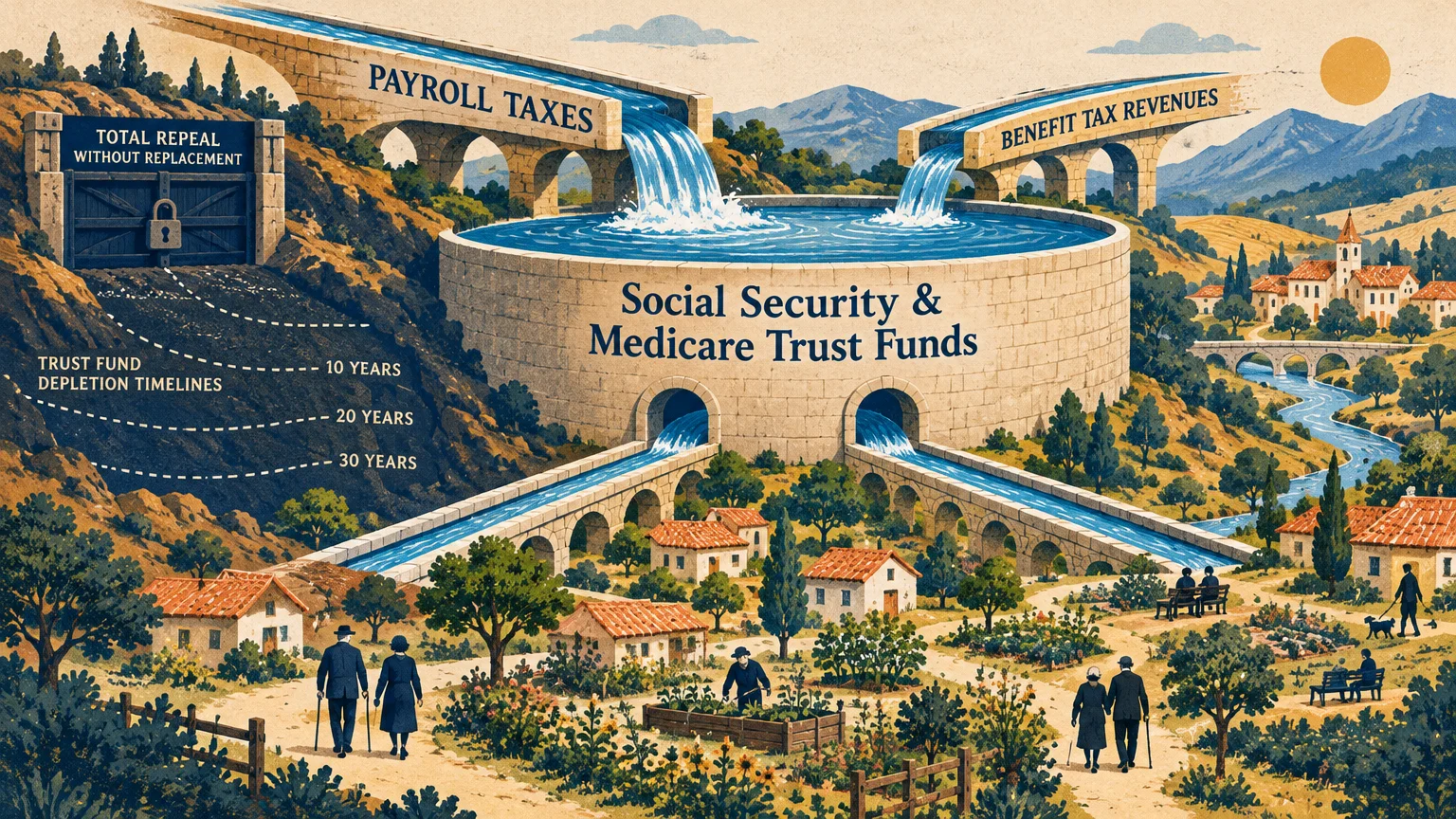
By law, revenue from benefit taxation is deposited directly into the program trust funds. Taxes from the 50 percent tier support Social Security, while taxes from the 85 percent tier fund Medicare.
When senior tax liabilities drop, the trust funds lose billions in anticipated annual revenue. The June 2026 Social Security Trustees Report confirmed that this lost revenue has accelerated the program’s insolvency timeline.
The Old-Age and Survivors Insurance (OASI) retirement fund is now projected to exhaust its reserves in the fourth quarter of 2032. This moves the depletion date up from the 2033 projection in the 2025 report.
If the OASI trust fund runs out of reserves in 2032, incoming tax revenue will cover only 78 percent of scheduled benefits. That would result in an automatic 22 percent benefit reduction for all retirees.
When combined with the Disability Insurance fund, OASDI reserves last until 2034, paying 83 percent of scheduled benefits. The Medicare Hospital Insurance trust fund faces its own depletion in 2033.
These structural deficits guarantee that Social Security tax changes will remain a heated political issue. Lawmakers must ultimately address revenue shortfalls before the 2032 deadline arrives.
Costly Mistakes to Avoid
Misunderstanding the new tax landscape can disrupt an otherwise sound retirement plan. Steer clear of these common and expensive pitfalls.
- Assuming All Benefits Are Automatically Tax-Free: The One Big Beautiful Bill Act created a deduction, not an outright repeal. Forgetting to file Schedule 1-A or earning above phase-out caps can trigger an unexpected tax bill.
- Filing Early Without Factoring In the Age Gap: Claiming benefits between ages 62 and 64 denies you the $6,000 deduction while leaving benefits exposed to provisional income taxes.
- Ignoring the 2028 Deduction Sunset: The Enhanced Senior Deduction is temporary and expires at the end of 2028. Failing to plan for 2029 could push your retirement income into higher tax brackets.
- Mismanaging Required Minimum Distributions: Mandatory distributions from traditional IRAs at age 73 or 75 increase your MAGI. High distributions can eliminate your $6,000 deduction through the 6 percent phase-out rule.
- Neglecting Medicare IRMAA Surcharges: Generating excessive income to take advantage of tax deductions can spike your Medicare Part B and Part D premiums two years later.
Avoiding these common traps keeps your hard-earned savings working for you rather than going toward unnecessary penalties. Proactive tax management pays dividends every single year.