Opening your mailbox during tax season in January feels different in retirement. Instead of one paycheck summary from an employer, your retiree taxes depend on a stack of envelopes from banks, brokerages, and government agencies.
Knowing which tax forms retirees receive—and when each statement must arrive—keeps you from filing too early or triggering IRS notices. For the 2026 tax year, a calendar quirk pushes most January deadlines to Monday, February 1, 2027.
Here is what to watch for in your mailbox, how to read key boxes on Form SSA-1099 and Form 1099-R, and which documents arrive later in spring.
Why January Tax Deadlines Shift for the 2026 Filing Season
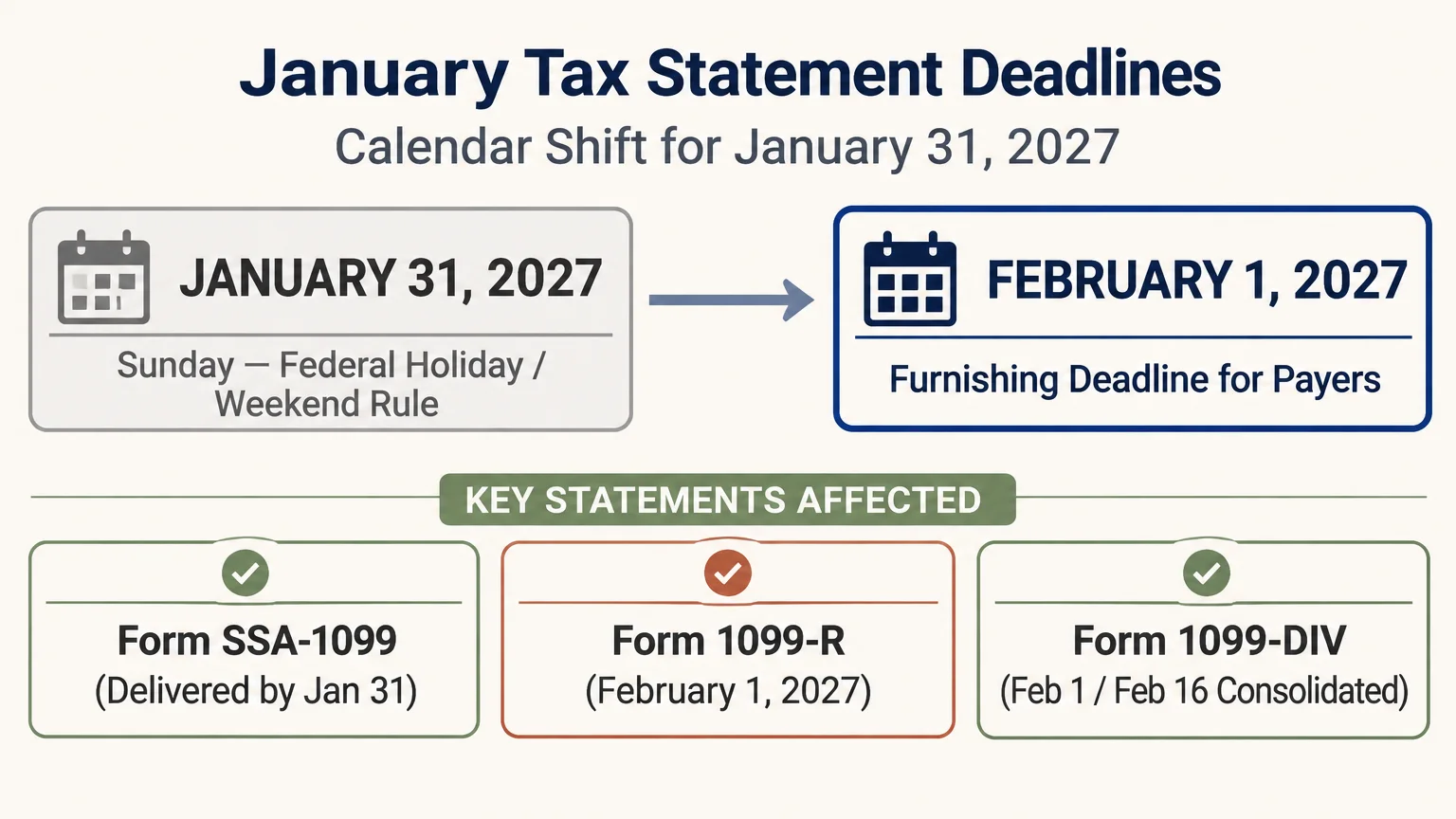
In a typical year, financial institutions and government payers must send most income statements by January 31. Because January 31, 2027 falls on a Sunday, the IRS moves that furnishing deadline to Monday, February 1, 2027.
Electronic delivery often beats paper mail by a week or two, so check your online bank and brokerage portals in mid-January. Still, avoid filing your return until you confirm every payer has posted its final version.
The table below maps out the six core tax documents retirees should expect for early-year tax prep, along with when each form triggers.
| Tax Form | Income or Benefit Reported | Minimum Trigger | 2027 Furnishing Deadline |
|---|---|---|---|
| Form SSA-1099 | Social Security retirement, survivor, or SSDI benefits | Any taxable benefit paid | Delivered by January 31, 2027 |
| Form 1099-R | IRA, 401(k), pension, and annuity distributions | $10 or more | February 1, 2027 |
| Form 1099-INT | Bank, credit union, CD, and bond interest | $10 or more | February 1, 2027 |
| Form 1099-DIV | Dividends and capital gain distributions | $10 or more | February 1, 2027 (February 16 if consolidated) |
| Form 1099-NEC / Form W-2 | Part-time wages or freelance consulting | $2,000 (1099-NEC) / any wages (W-2) | February 1, 2027 |
| Form 1099-G / 1099-SA / 1099-LTC / 1095-A | State refunds, HSA payouts, LTC benefits, Marketplace plans | $10 (1099-G) / any distribution (SA, LTC) | February 1, 2027 |
1. Form SSA-1099: Your Social Security Benefit Statement
The Social Security Administration (SSA) mails Form SSA-1099 first class between January 3 and January 24 so it reaches you by January 31. Noncitizens who receive benefits get Form SSA-1042S instead.
If your only benefit is Supplemental Security Income (SSI), you will not receive an SSA-1099 because SSI payments are not taxable. Anyone receiving retirement, survivor, or disability benefits should keep this statement in a dedicated tax folder.
Lost your paper copy or moved recently? Starting February 1, you can download a replacement for the most recent year—plus the prior six years—through a personal account on the Social Security Administration website.
You can also request a copy by calling the SSA automated phone line at 1-800-772-1213 (TTY 1-800-325-0778) after January 31. Having that PDF handy saves days of waiting during busy filing weeks.
Reading Box 5 and Calculating Combined Income
Look closely at Box 5, which shows your net Social Security benefits after subtracting any amounts you repaid. Tax software uses Box 5 inside the IRS combined income formula—your adjusted gross income, plus tax-exempt interest, plus half of your Social Security benefits.
Under IRS Notice 703 and Publication 915, your federal benefits stay tax-free if combined income falls below $25,000 for single filers or $32,000 for joint filers. Between $25,000 and $34,000 (single) or $32,000 and $44,000 (joint), up to 50% becomes taxable.
Above $34,000 (single) or $44,000 (joint), up to 85% of your benefits can be taxed. Married couples filing separately while living together face that 85% ceiling starting at $0.
Voluntary Withholding and State Taxes
Social Security never withholds federal income tax automatically unless you ask. You can submit IRS Form W-4V to withhold 7%, 10%, 12%, or 22% from future monthly checks—useful if quarterly estimated payments feel like a hassle.
State tax rules also vary by address. After West Virginia finished its phase-out in January 2026, only eight states—Colorado, Connecticut, Minnesota, Montana, New Mexico, Rhode Island, Utah, and Vermont—still tax Social Security benefits in 2026.
2. Form 1099-R: Retirement Accounts, Pensions, and Annuities
Every custodian or pension administrator that paid you $10 or more in gross distributions must issue Form 1099-R by February 1, 2027. Note that the new $2,000 reporting threshold for freelance forms does not apply to retirement withdrawals.
You will receive a separate Form 1099-R from each IRA custodian, 401(k) plan, annuity company, or defined-benefit pension that sent money during 2026. Even a direct rollover between accounts generates a 1099-R, though a specific distribution code tells the IRS you owe no tax.
For guidance on how the IRS classifies rollovers and plan distributions, review the official IRS Retirement Plans portal before preparing your return.
New 2026 Layout and Distribution Codes
Check the distribution codes carefully because the 2026 IRS Instructions for Forms 1099-R and 5498 change the box numbering. Former Box 7 is now Box 7a, while the IRA/SEP/SIMPLE checkbox moves to Box 7b.
The IRS also added Boxes 7c and 7d for Trump Accounts on the 2026 form. Meanwhile, Code Y in Box 7a remains optional for custodians flagging Qualified Charitable Distributions (QCDs).
Because Code Y is optional, your custodian might report a charitable IRA gift as a normal taxable distribution. Always keep charity acknowledgment letters so you can subtract QCDs properly on Form 1040 or Form 1040-SR.
RMDs, QCD Limits, and Withholding Forms
Under the SECURE 2.0 Act, Required Minimum Distributions (RMDs) begin at age 73, rising to age 75 in 2033 for people born in 1960 or later. Your first RMD is due by April 1 of the following year, and later RMDs are due December 31.
Missing an RMD triggers a 25% excise tax on the shortfall, dropping to 10% if you fix the mistake within two years and report it on Form 5329. Roth IRAs and designated Roth workplace accounts carry no RMDs during the owner’s lifetime.
If you give to charity directly from an IRA, IRS Notice 2025-67 sets the 2026 annual QCD limit at $111,000 per person, including a one-time $55,000 split-interest election. That strategy satisfies your RMD without inflating your taxable income.
Review Boxes 4 and 14 on every Form 1099-R to confirm taxes already withheld. Going forward, periodic pensions use Form W-4P for withholding changes, while nonperiodic IRA withdrawals and rollovers use Form W-4R (10% default adjustable from 0% to 100%, or a 20% minimum default on eligible rollovers).
3. Form 1099-INT: Bank, Credit Union, and CD Interest
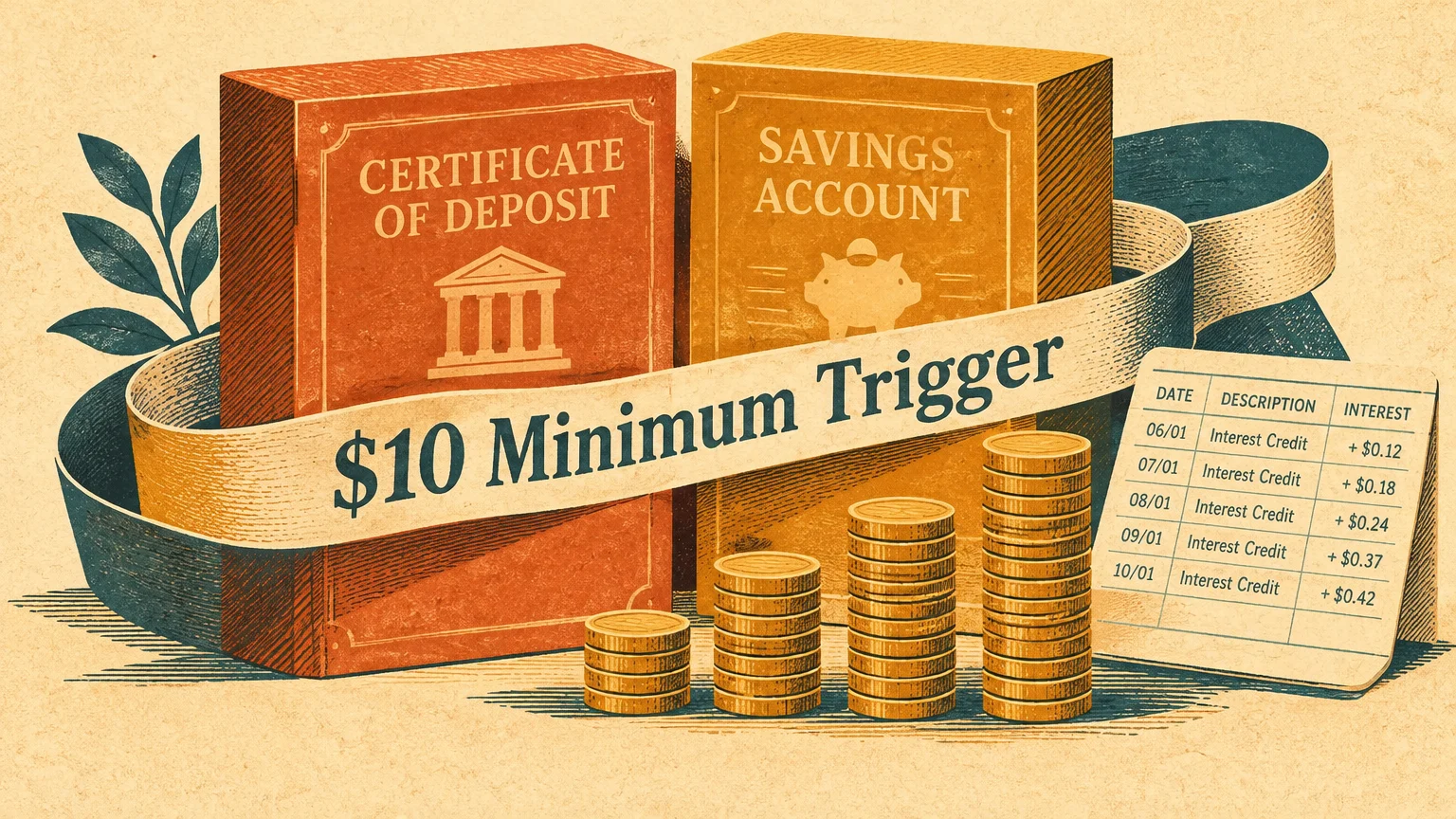
Banks, credit unions, and bond issuers send Form 1099-INT by February 1, 2027 whenever you earn $10 or more in interest. They must also issue one for smaller amounts if backup or foreign taxes were withheld.
Look at Box 1 for taxable interest from savings accounts, money market funds, and certificates of deposit. Check Box 8 for tax-exempt interest from municipal bonds.
Do not ignore Box 8 just because municipal bond interest escapes regular federal income tax. The IRS adds tax-exempt interest back into your combined income calculation when deciding how much of your Social Security gets taxed.
Under IRS Topic No. 404 and Rev. Proc. 2025-32, you must attach Schedule B to your return if your combined taxable interest and ordinary dividends top $1,500. Keeping a simple list of every savings account ensures no small 1099-INT slips past your radar.
4. Form 1099-DIV: Investment Dividends and Fund Distributions
Mutual funds and brokerage firms issue Form 1099-DIV for dividends and capital gain distributions of $10 or more, or $600 and above for liquidation payouts. Standalone 1099-DIV forms are due by February 1, 2027.
Inside Box 1a, you will see total ordinary dividends, while Box 1b breaks out qualified dividends that enjoy lower tax rates. Box 2a lists long-term capital gain distributions from mutual funds—even if you reinvested every penny into new shares.
In 2026, qualified dividends and long-term capital gain distributions are taxed at favorable rates of 0%, 15%, or 20%, depending on your taxable income. Remember that Box 1a counts toward the $1,500 Schedule B threshold alongside your Form 1099-INT totals.
5. Form 1099-NEC and Form W-2: Part-Time and Consulting Work
Many retirees stay active through seasonal jobs, board stipends, or consulting projects. If you worked as a regular employee, expect Form W-2 from each employer by February 1, 2027.
Freelance and independent contractor rules look noticeably different for 2026 payments. Under the One Big Beautiful Bill Act (P.L. 119-21), the reporting threshold for Form 1099-NEC and Form 1099-MISC jumped from $600 to $2,000, with inflation indexing starting in 2027.
Royalties still trigger a 1099-MISC at $10, and attorney gross proceeds stay at $600. Most 1099-NEC and 1099-MISC statements share the February 1, 2027 deadline.
Keep in mind that a higher paperwork threshold does not make smaller side income tax-free. If a client paid you less than $2,000 and skipped sending a 1099-NEC, you still report those earnings on your return.
Selling crafts or collectibles through payment apps or online marketplaces? Federal Form 1099-K reporting applies at $20,000 and 200 transactions, though several states—including Maryland, Massachusetts, Virginia, New Jersey, Illinois, and Arkansas—enforce much lower thresholds.
6. Form 1099-G, 1099-SA, 1099-LTC, and 1095-A: Special Retiree Forms
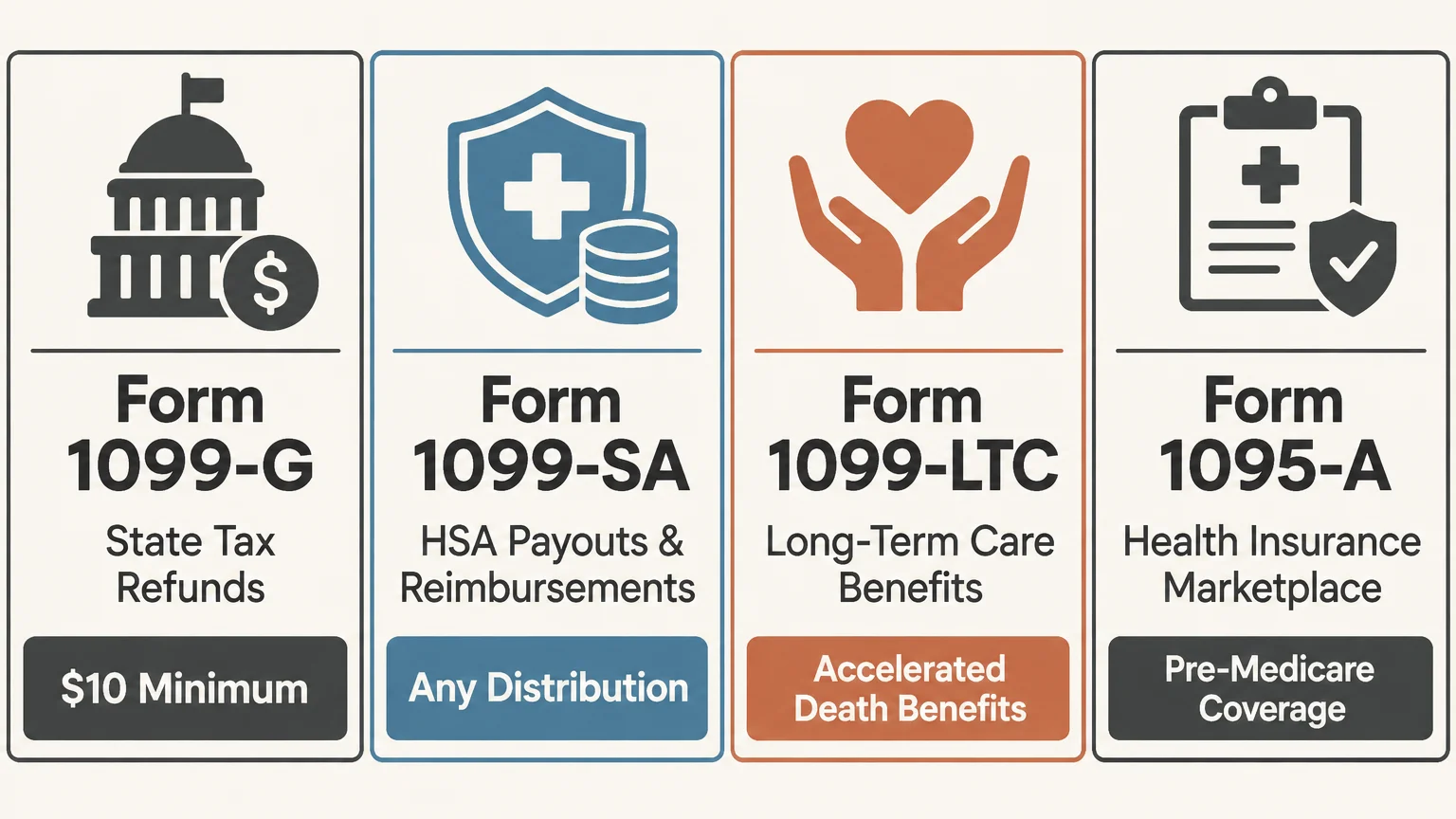
Your sixth January envelope depends on your state tax history, healthcare setup, and insurance coverage. Four specialized forms share the February 1, 2027 deadline and catch many retirees off guard:
- Form 1099-G: State and local tax agencies issue this form for income tax refunds of $10 or more and for unemployment benefits. Your refund is generally taxable only if you itemized deductions the year before.
- Form 1099-SA: Health Savings Account (HSA) custodians send this statement whenever you take money out of an HSA or Medical Savings Account. Remember that once you enroll in Medicare, you can spend existing HSA funds tax-free on qualified care, though you cannot make new contributions.
- Form 1099-LTC: Insurers issue this form for any long-term care insurance payouts or accelerated death benefits, with no $600 minimum. Keep your care receipts to show benefits stayed within tax-free limits.
- Form 1095-A: Early retirees under age 65 who buy health insurance through the ACA Marketplace need Form 1095-A to reconcile premium tax credits on Form 8962.
Forms That Arrive After January (Wait Before You File)
Receiving six clean documents by early February does not always mean you are ready to submit your return. Several critical investment and health forms follow later deadlines.
If you sold stocks, bonds, or mutual funds in a taxable brokerage account, Form 1099-B—often bundled inside a consolidated 1099—has a standard February 15 deadline. Because February 15, 2027 is Presidents’ Day, IRS Publication 1099 moves that deadline to Tuesday, February 16, 2027.
Brokerages frequently issue corrected consolidated statements in late February or March as fund companies reclassify dividends. Waiting until late February saves you the headache of filing an amended return.
Employer and private insurer coverage notices—Forms 1095-B and 1095-C—carry an extended deadline of March 2, 2027. Under the Paperwork Burden Reduction Act, providers may simply post a notice on their website rather than mailing paper copies unless you request one.
Finally, do not wait around for Form 5498 in January or February. While IRA custodians send year-end fair market value and RMD notices by early February, official Form 5498 arrives in late May or by June 1 because you have until April 15 to make prior-year IRA contributions.
2026 Senior Deductions That Shape Your Return
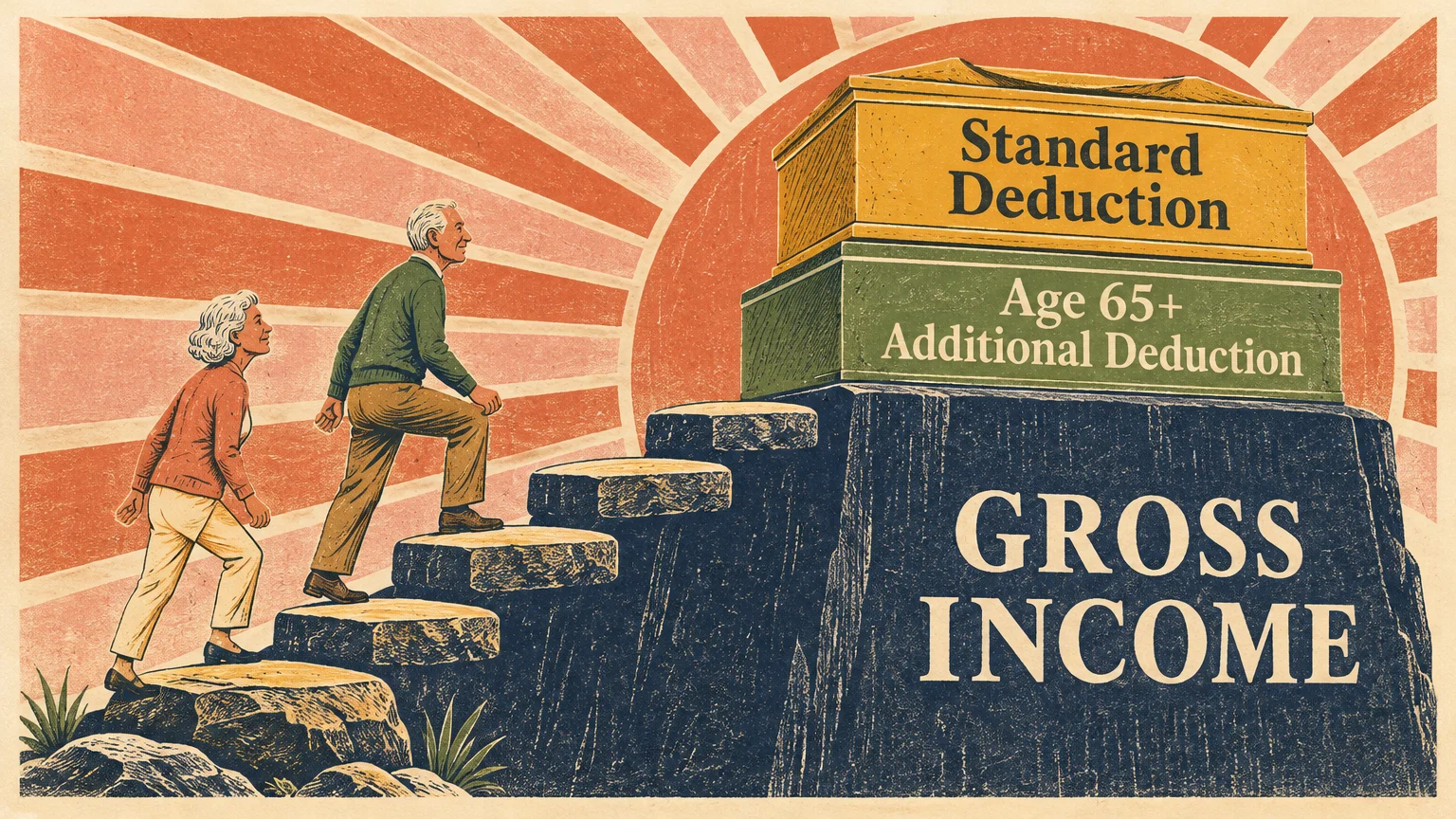
Gathering your forms is only half the equation; applying updated senior deductions keeps more money in your pocket. Under IRS Rev. Proc. 2025-32, base standard deductions for 2026 stand at $16,100 for single or married-filing-separately taxpayers, $32,200 for joint filers, and $24,150 for heads of household.
Once you reach age 65, you also receive the existing additional standard deduction of $2,050 if single or head of household, or $1,650 per qualifying spouse on a joint return.
On top of those amounts, the One Big Beautiful Bill Act created a new $6,000 Enhanced Senior Deduction for 2025 through 2028, claimed on Schedule 1-A. Taxpayers age 65 or older by December 31, 2026 can claim $6,000 per person—or $12,000 if both joint spouses qualify—whether they itemize or take the standard deduction.
This extra deduction phases out by 6% per dollar once modified adjusted gross income exceeds $75,000 for single filers or $150,000 for joint filers. It disappears completely at $175,000 (single) or $250,000 (joint), and married couples filing separately cannot claim it.
Keeping track of your January tax forms is not about loving paperwork—it is about protecting your retirement income from penalties, missed deductions, and unnecessary surprises.
Errors That Cost Retirees Thousands
Small oversights during tax season in January often turn into expensive letters from the IRS months later. Watch out for five common traps before signing your return:
- Filing before consolidated 1099-Bs arrive: Submitting Form 1040 in early February often leaves out stock sales and adjusted cost basis reported on February 16, forcing an amended return.
- Paying tax on Qualified Charitable Distributions: Because Code Y in Box 7a of Form 1099-R is optional, your tax preparer or software may treat an entire IRA distribution as taxable unless you flag your charity gifts.
- Overlooking municipal bond interest on Form 1099-INT: Leaving Box 8 off your return distorts your combined income calculation and understates taxable Social Security benefits.
- Missing your RMD window: Failing to withdraw your full RMD by December 31 triggers a 25% excise tax on the shortfall, though fixing it within two years on Form 5329 lowers the penalty to 10%.
- Spending HSA funds without matching receipts: Reporting a Form 1099-SA distribution without confirming every dollar paid qualified medical bills exposes the payout to income tax.
When to Get Expert Help
You do not have to untangle multi-account retiree taxes on your own. Several trustworthy resources offer free or specialized assistance depending on how complex your year looked.
If your return is straightforward, check out the IRS Tax Counseling for the Elderly (TCE) and VITA programs by calling 800-906-9887, tailored for taxpayers age 60 and older or those with low-to-moderate income. You can also connect with AARP Foundation Tax-Aide by calling 888-227-7669 for free in-person or virtual preparation.
Consider hiring a Certified Public Accountant (CPA), Enrolled Agent, or fee-only financial advisor when you face complex triggers. Multi-state moves, large Roth conversions, inherited IRAs, missed RMDs, or tricky QCD tracking all justify paid expertise.
Need broader help coordinating benefits, income rules, and federal retirement programs? Bookmark USA.gov Retirement Resources for plain-language guides across government agencies.
Your 2026 Form 1040 or Form 1040-SR is due April 15, 2027. If late brokerage corrections hold you up, file Form 4868 for an automatic extension to October 15, keeping in mind any tax owed is still due April 15.
Frequently Asked Questions About January Retiree Tax Forms
What if my Form SSA-1099 or 1099-R does not arrive by February 1?
Log into your online Social Security account or financial custodian portal first, since digital PDFs post faster than paper mail. If nothing appears after the first week of February, call the payer directly to confirm your mailing address and request a duplicate.
Do I still report income if I did not receive a 1099-NEC or 1099-INT?
Yes, federal tax law requires you to report all taxable income even when earnings fall below a form’s threshold. For example, consulting income under $2,000 or bank interest under $10 still belongs on your return.
Why did I get Form 1099-R for a direct IRA rollover?
Every movement of funds out of a retirement account triggers Form 1099-R reporting to the IRS. Check Box 7a for distribution code G, which confirms a tax-free direct rollover rather than a taxable cash withdrawal.
Should I wait for Form 5498 before filing my taxes?
No, Form 5498 arrives in late May or by June 1 because taxpayers have until April 15 to make prior-year IRA contributions. Use your year-end account statement or January fair market value notice when preparing your return.

Your Next Step for a Smooth Filing Season
Set up a single physical folder or digital drive today and label a checklist with every bank, brokerage, pension, and government payer you expect to hear from. As each form lands by February 1 or February 16, check it off before scheduling time with your preparer or opening your tax software.
Retirement rules and benefit amounts vary based on individual work history, income, and circumstances. This article provides general guidance only. Consult a SHIP counselor, financial advisor, or elder law attorney for advice specific to your situation.
Last updated: November 2026. Medicare and Social Security rules change annually—always verify current details at official government sources.