Protecting Your Overlapping State and Federal Benefits
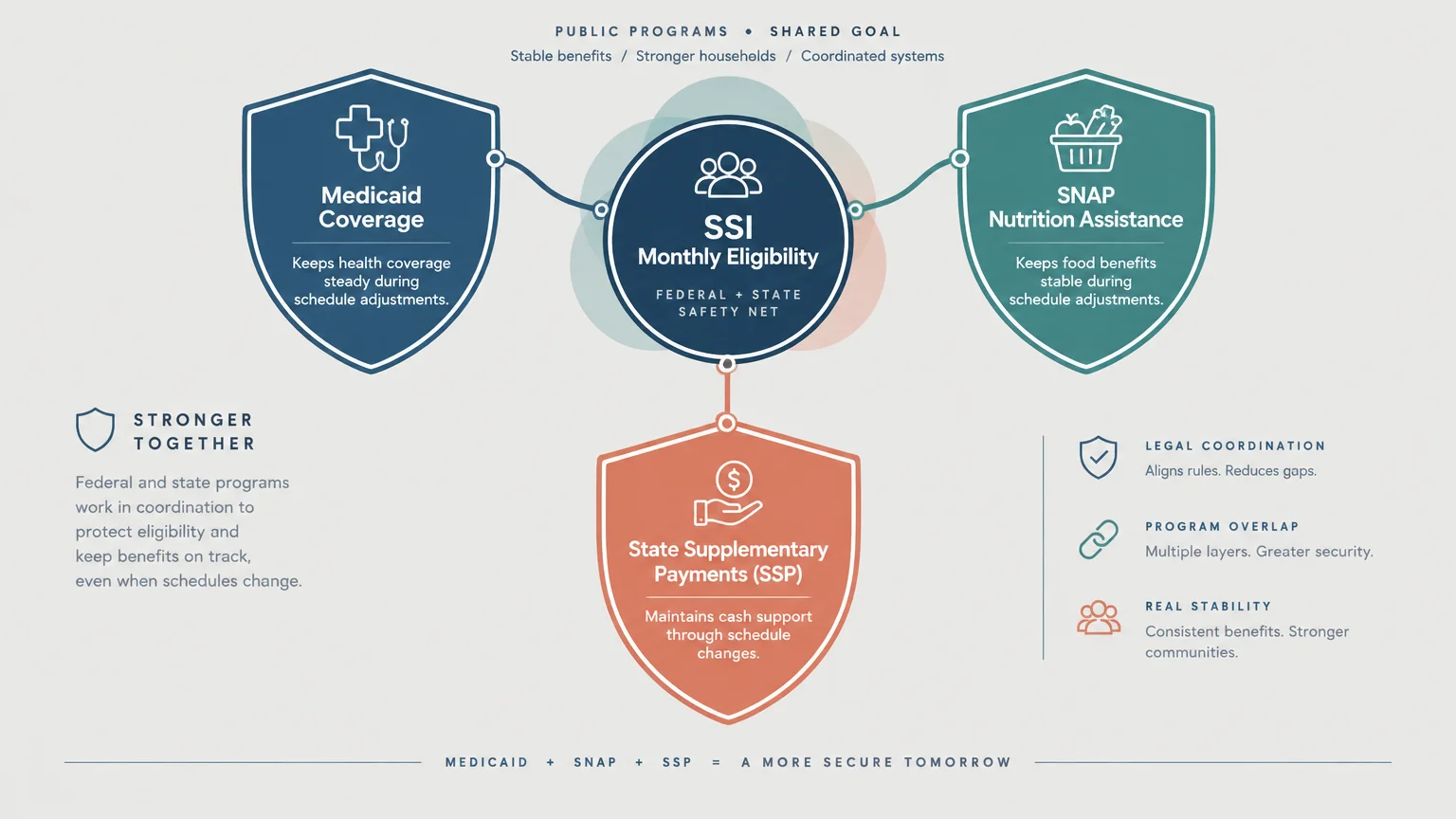
SSI eligibility frequently serves as a direct gateway to critical public assistance programs. In most states, qualifying for SSI guarantees automatic enrollment in full Medicaid coverage.
Maintaining Medicaid requires strict adherence to monthly income and asset limitations. An administrative misunderstanding regarding early payment dates should never jeopardize your access to doctor visits and prescriptions.
Supplemental Nutrition Assistance Program benefits follow their own distinct distribution schedules. Your SNAP card refills on its standard monthly date regardless of when your SSI arrives.
Keep your SNAP case manager informed if your living arrangements or household income change. Accurate reporting prevents overpayment notices and ensures you receive the maximum allowable food allocation.
Several states provide State Supplementary Payments that augment standard federal benefit amounts. Depending on your state, these supplemental checks may arrive separately from federal direct deposits.
Confirm your state’s distribution schedule to know when those additional dollars will post. Local social service agencies can explain how state supplements operate in your region.
You can evaluate your complete benefit landscape by visiting BenefitsCheckUp, a service developed by the National Council on Aging. This comprehensive tool identifies overlooked public assistance programs for older Americans.

What to Do If Your Payment Does Not Arrive
Electronic direct deposits typically appear in bank accounts by 9:00 AM on scheduled delivery dates. If your deposit fails to appear on Friday, October 30, remain calm and follow established protocols.
Start by contacting your bank or credit union directly to check for pending electronic transfers. Financial institutions occasionally experience internal processing delays before posting incoming federal deposits.
If your bank confirms that no deposit arrived, check your personal profile on the official government portal. Your online dashboard will display active payment records and any notices regarding benefit suspensions.
Federal regulations instruct beneficiaries to wait three mailing days before reporting missing disbursements. Because your payment date is October 30, wait through Wednesday, November 4, before contacting government staff.
Once three mailing days elapse, call the agency directly at 1-800-772-1213. Agency representatives can trace missing funds and initiate emergency replacement disbursements when necessary.
Beneficiaries facing immediate financial hardship can request urgent in-person appointments at local field offices. Bringing identification and current bank statements accelerates the resolution process.

When to Get Expert Help
Navigating government benefit programs often demands professional insight and personalized advocacy. Knowing when to engage an expert prevents costly errors and protects your monthly safety net.
Consult a State Health Insurance Assistance Program counselor if date shifts affect your healthcare co-pays. SHIP counselors provide free, unbiased guidance regarding Medicare and Medicaid coordination through Medicare.gov resources.
Elder law attorneys can establish qualifying special needs trusts to protect critical income streams. If you expect an inheritance or legal settlement, legal counsel prevents disqualification from SSI.
Seek immediate legal aid if you receive an agency overpayment notice or benefit termination letter. Non-profit legal clinics frequently represent low-income beneficiaries in administrative appeals at no cost.
You can locate trusted local specialists through the Eldercare Locator network. This public service connects older adults and families with vetted community resources and legal assistance.
Partnering with accredited experts ensures you make confident financial choices throughout retirement. Clear professional counsel eliminates confusion when federal guidelines shift.
Frequently Asked Questions About November SSI Payments
Did SSI recipients get a bonus check in October 2026?
No, the second check arriving on October 30 is not a bonus or supplemental payment. It is your regular November benefit payment issued early due to the weekend calendar shift.
What should I do if my deposit does not arrive on October 30, 2026?
First, verify with your bank whether an electronic direct deposit is currently pending. The SSA asks recipients to wait three mailing days before calling 1-800-772-1213 to report missing funds.
Will receiving two payments in October make me lose my Medicaid?
No, early SSI payments do not count as excess income or disqualifying resources for that calendar month. Your Medicaid eligibility remains protected as long as your standard monthly finances meet program guidelines.
When will the 3.6 percent COLA raise take effect for SSI?
The 3.6 percent COLA boost takes effect for the January 2027 benefit cycle. Because January 1 is a holiday, your first boosted check arrives on Thursday, December 31, 2026.
Does the November date change affect regular Social Security retirement checks?
No, regular Social Security retirement payments follow their standard schedule based on beneficiary birth dates. Only Supplemental Security Income payments move forward to Friday, October 30.
Taking Control of Your Financial Calendar
Mark Friday, October 30, on your personal calendar and plan your November expenses ahead of time. Taking control of your monthly cash flow provides financial security and peace of mind.
Verify your direct deposit details on your online government portal to ensure seamless processing. Simple proactive steps keep your retirement finances stable and secure all season long.
Retirement rules and benefit amounts vary based on individual work history, income, and circumstances. This article provides general guidance only. Consult a SHIP counselor, financial advisor, or elder law attorney for advice specific to your situation.
Last updated: October 2026. Medicare and Social Security rules change annually—always verify current details at official government sources.