You can replace a lost Social Security card quickly and without paying a single penny. The Social Security Administration lets most retirees complete the entire replacement process online from home.
Knowing the correct steps prevents unnecessary delays and protects your identity against fraudulent activity. Getting an official replacement requires zero fees, though strict federal rules govern how often you can request one.
Whether you need a card for a driver’s license renewal or personal records, simple pathways exist. Here is how to navigate the system efficiently and avoid costly third-party pitfalls.
Do You Actually Need a Physical Replacement Card?
Many retirees assume that a missing card requires an immediate replacement order. In reality, you rarely need to show the physical paper document in daily retirement life.
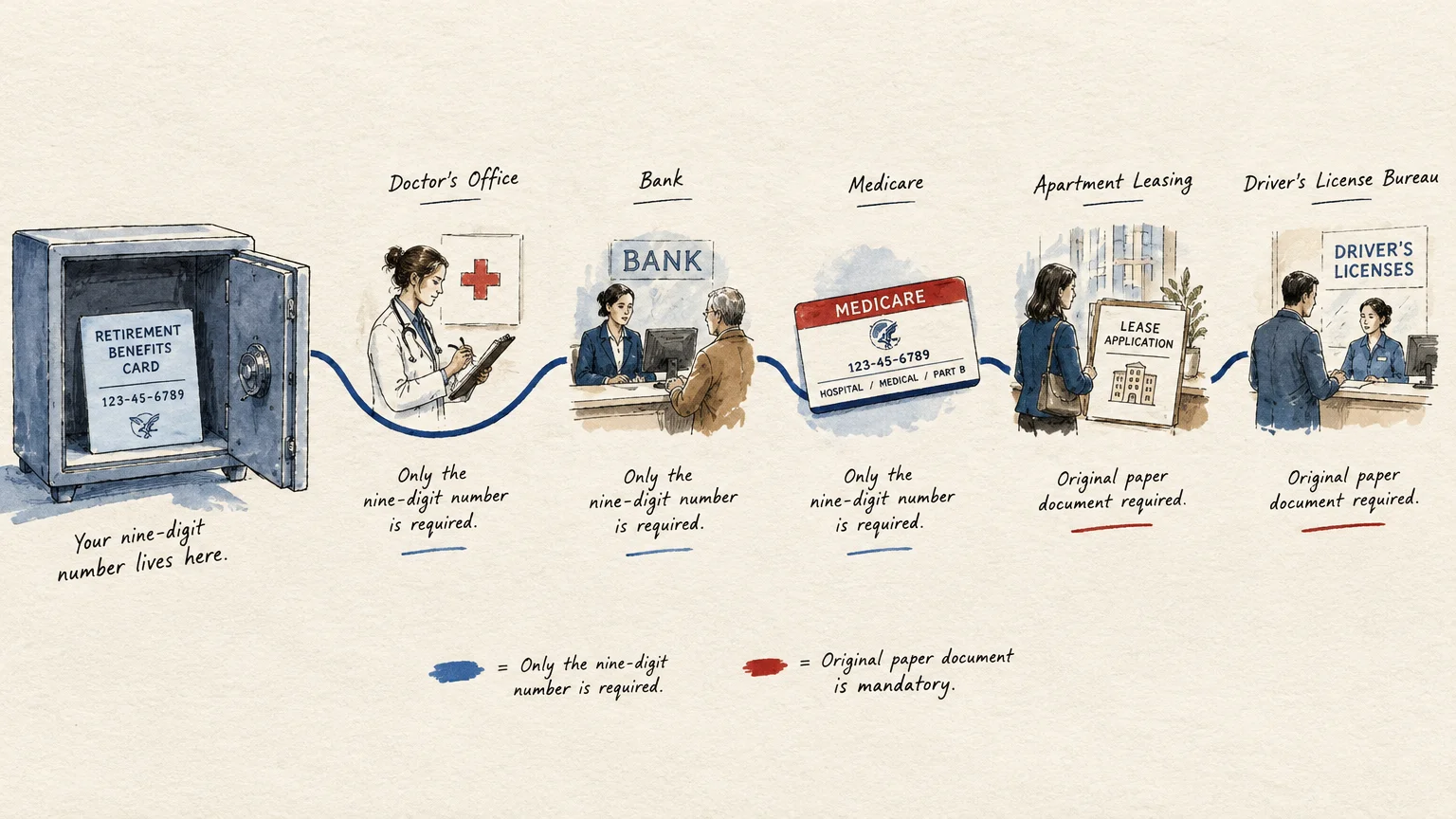
Your nine-digit Social Security number matters far more than the blue paper certificate itself. Most federal and state agencies only need you to provide the number for electronic verification.
Medicare enrollments and routine health care services never require you to present the original card. Your red, white, and blue Medicare card functions completely independently of your Social Security card.
Most financial institutions also confirm your identity electronically when you open standard banking or retirement accounts. They cross-check your number against credit bureaus and government records automatically.
However, certain milestone transactions still demand the physical paper card. Applying for a state driver’s license or a REAL ID credential often requires an original card as secondary identity proof.
Some mortgage lenders and senior housing communities also request the physical card when executing property transactions. Their compliance guidelines mandate visual inspection of the original document.
If you decide to pursue part-time work or consulting in retirement, federal immigration laws require original documentation. Employers must inspect qualifying identity documents to complete mandatory Form I-9 verification.
If none of these specific circumstances apply to your immediate plans, you can wait. Refraining from ordering an unneeded card prevents unnecessary wear and tear on your lifetime replacement limits.
Federal Replacement Limits and the Zero-Cost Rule
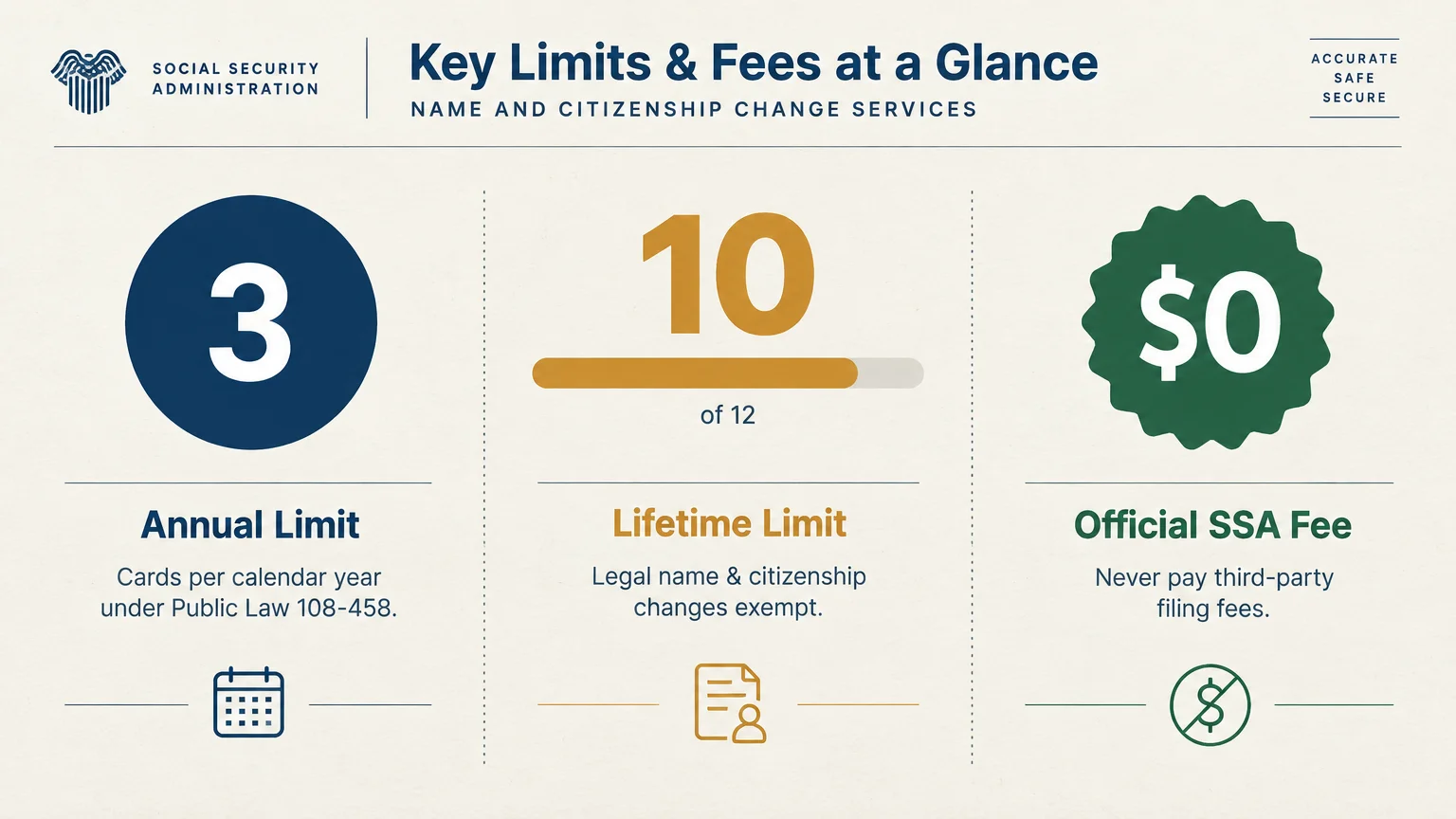
Federal law establishes strict caps on how frequently you can replace your card. Under Public Law 108-458, every individual is limited to three replacement cards per calendar year.
The statute also imposes a lifetime limit of ten replacement cards total. These rules prevent card misuse and reduce administrative costs across the agency.
Because of these statutory limits, you should safeguard your replacement card once it arrives. Exhausting your lifetime allotment creates significant bureaucratic hurdles when future emergencies arise.
Fortunately, Congress established specific legal exceptions to these replacement caps. Official name changes resulting from marriage, divorce, or court decrees do not count toward your annual or lifetime limits.
Changes to your citizenship status or work authorization legends are also excluded from these limits. If you must adjust your legal records, your replacement card will not penalize your lifetime total.
Ordering an official replacement card is completely free. The Social Security Administration never charges a fee for processing applications or issuing new cards.
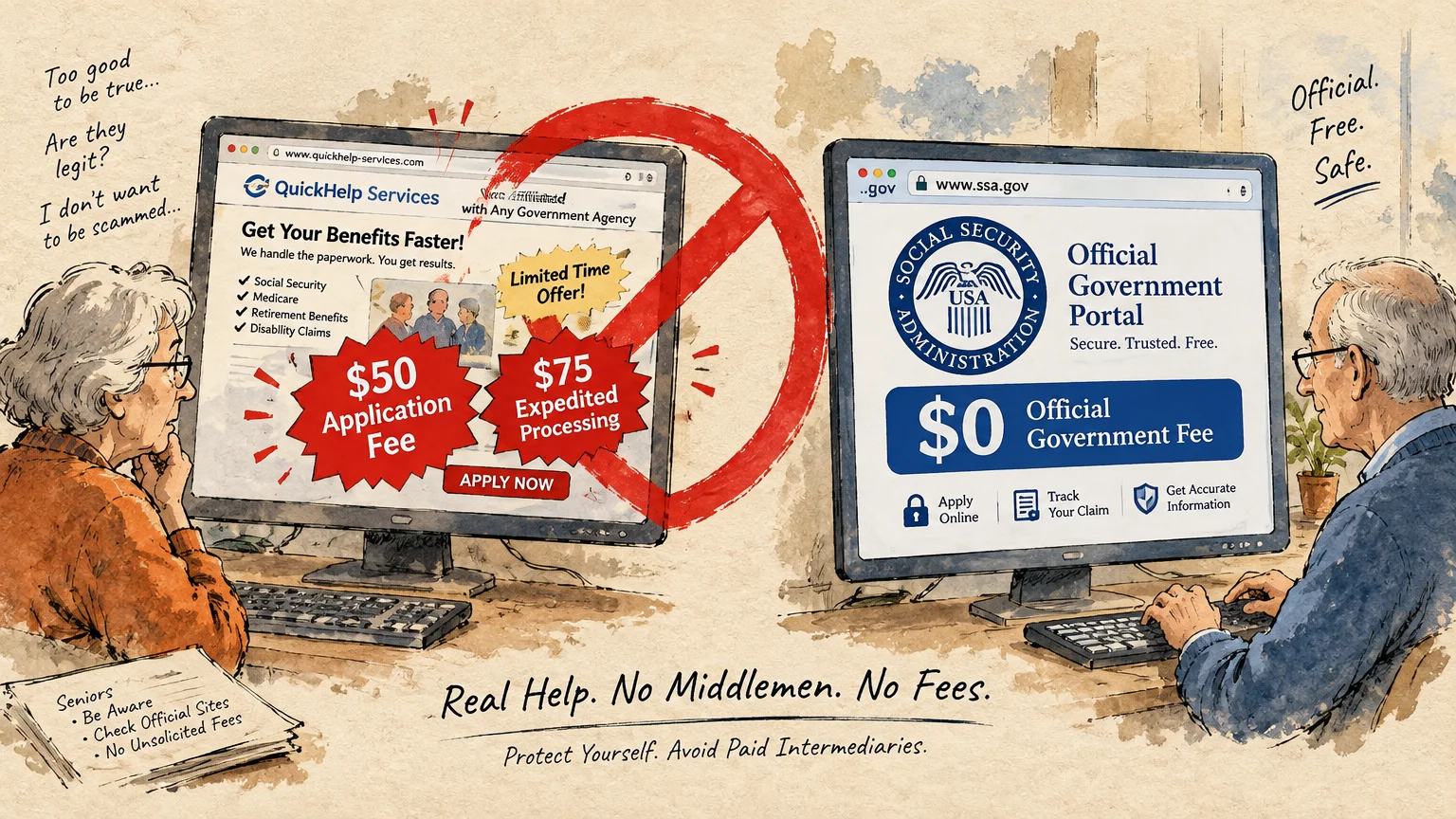
Any online service asking for an application fee or handling charge is a private commercial entity. Paying an outside vendor wastes your retirement money on a service you can perform yourself for free.

How to Replace Your Social Security Card Online
Most Americans can request a replacement card from home using the agency’s secure website. The agency updated its digital system at ssa.gov/number-card to simplify the application process.
To complete the process 100% online, you must satisfy strict eligibility standards. You must be a United States citizen who is at least 18 years old.
You also need a valid U.S. mailing address, which includes military APO, FPO, and DPO addresses. The postal service will not deliver your replacement card to unverified overseas forwarding addresses.
Furthermore, you must hold a valid driver’s license or state-issued identification card from a participating state or the District of Columbia. The agency’s digital system verifies your identity directly against state motor vehicle databases.
Finally, your replacement request cannot involve any changes to your personal information. If you need to change your name or update citizenship records, you cannot complete your application online.
If you meet these conditions, the online workflow takes less than fifteen minutes. The system guides you through basic verification questions before submitting your request directly to agency databases.
Once the agency approves your digital request, your card is printed and dispatched through the mail. Most recipients receive their new card within 7 to 14 business days.
Credential Requirements: Navigating Login.gov and ID.me
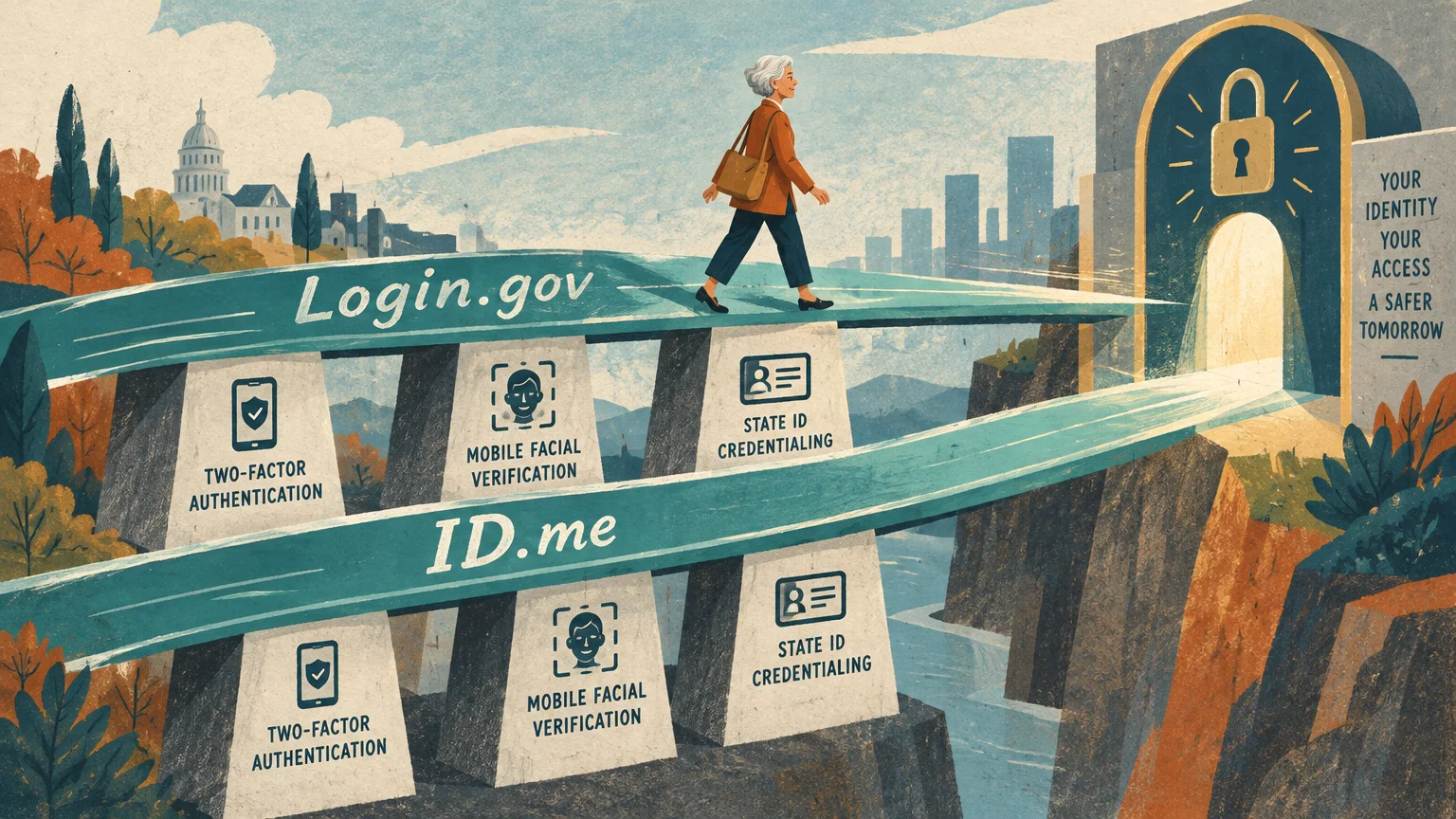
Accessing your personal online account requires a modern, secure login credential. The agency now requires all account holders to sign in through either Login.gov or ID.me.
Older username and password combinations created before September 18, 2021, have been completely retired. If you have not logged in recently, you must transition your account to one of these two verified platforms.
Login.gov is the official digital identity service provided by the federal government. It allows you to access multiple federal agency portals using a single secure username, password, and two-factor code.
ID.me is a federally credentialed private identity network used by government agencies and commercial organizations. Many retirees already use ID.me to access Veterans Affairs or state unemployment systems.
Creating either credential requires a verified email address, a mobile phone number, and proof of your identity. You will likely take a photo of your driver’s license using a smartphone during initial setup.
Setting up these accounts adds a vital protective layer to your federal retirement benefits. Modern multi-factor authentication prevents cybercriminals from gaining unauthorized access to your earnings records and direct deposit data.

The Appointment Mandate and In-Person Visits
Not everyone can complete the card replacement procedure through digital channels. If you do not have a qualifying state ID, you must complete your request through an agency office.
Visiting an agency field office now requires advance coordination. Effective January 6, 2025, the agency transitioned nationwide to an appointment-based service model.
Walk-in customer visits are no longer standard procedure at local Social Security offices and Card Centers. If you arrive without a pre-scheduled appointment, staff will ask you to schedule one before receiving assistance.
Fortunately, the agency’s updated Online Social Security Number Application helps you prepare before your visit. You can enter your personal details online and submit your application electronically from your computer.
If the online portal determines that you must present physical documents, a self-scheduling calendar appears. You have 45 calendar days from your initial online submission to visit the local office and show your documents.
During those 45 days, the local office retains your electronic application draft in its secure queue. When you arrive for your appointment, the representative pulls up your record immediately, saving valuable time.
If you prefer to schedule by telephone, call the national customer service line at 1-800-772-1213. Representatives are available Monday through Friday from 8:00 a.m. to 7:00 p.m. local time.
Hearing-impaired applicants can contact the agency using the TTY service at 1-800-325-0778 during the same operating window. Agents can locate your nearest field office and reserve an open appointment time.
Form SS-5 and Strict Document Verification Rules
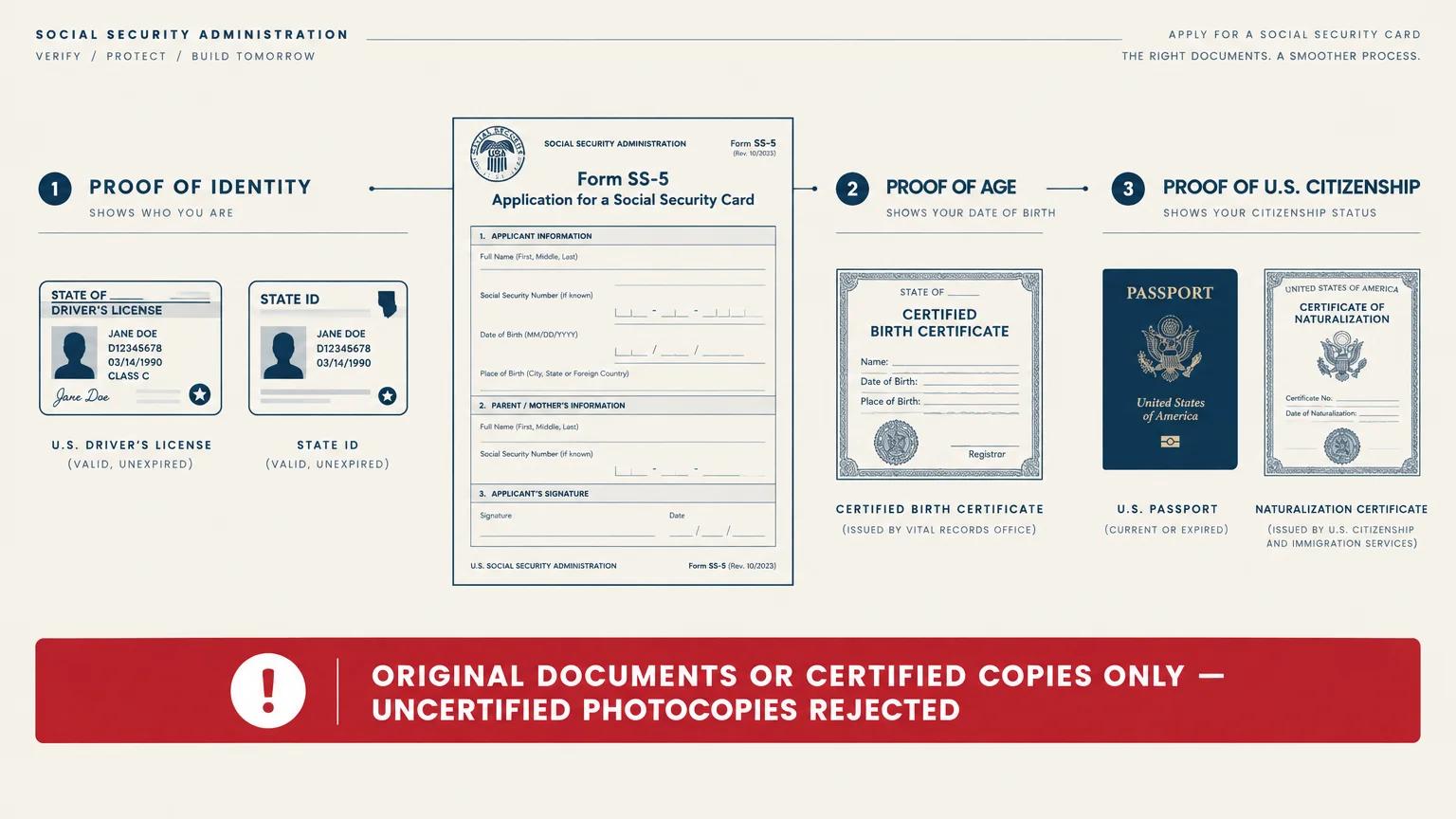
If you apply by mail or enter a field office without starting online, you must complete Form SS-5. The official application is titled Application for a Social Security Card, with edition 12-2024 currently in effect.
Federal regulations require you to submit pristine evidentiary documentation with every paper application. You must present original documents or copies certified directly by the agency that issued the original record.
The agency strictly rejects uncertified photocopies and digital printouts of your records. Even a photocopy stamped by a licensed public notary will be turned down without exception.
To prove your identity, the agency prefers an unexpired U.S. driver’s license, a state-issued non-driver ID card, or an unexpired U.S. passport. These primary documents satisfy identity standards immediately.
If you lack those primary documents, the agency allows specific secondary identity records. You can submit an employee identification card, a health insurance card, a U.S. military ID, or a certified medical record.
Any secondary document you submit must display your legal name and confirming biographical information. It should show either your photograph or your verified date of birth.
If you choose to apply through the mail, you must mail these valuable original documents to the agency. Field offices inspect your original paperwork and mail everything back once processing finishes.
Because mailing valuable original documents carries the risk of postal loss, scheduling an in-person appointment is usually safer. An agent inspects your passport or driver’s license at the service window and returns it immediately.
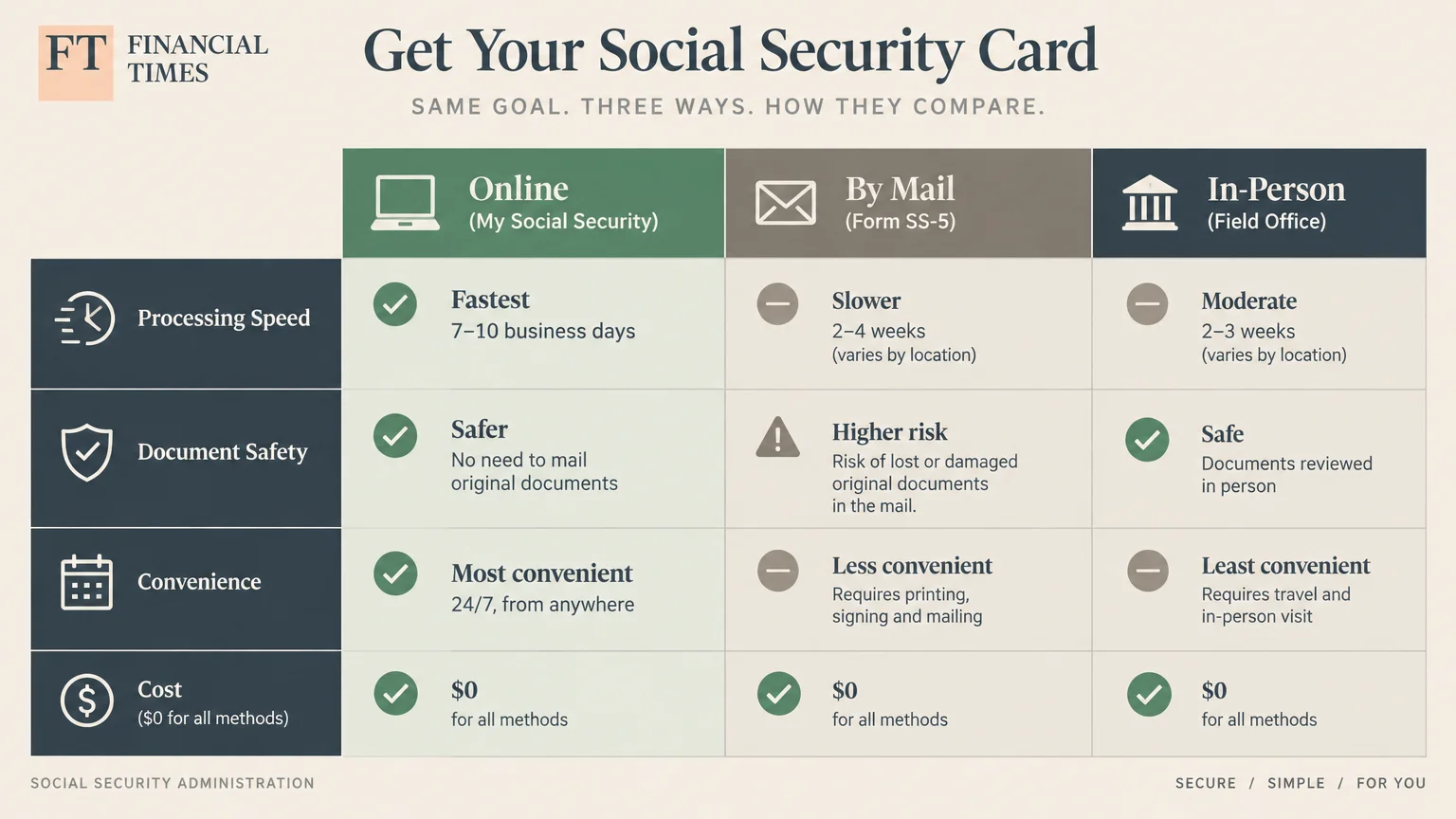
Application Methods Compared
Choosing the right application channel depends on your current identification documents and technical comfort level. Review the comparison below to identify the most practical route for your situation.
| Application Channel | Eligibility Requirements | Document Submission | Estimated Delivery | In-Person Visit Needed? |
|---|---|---|---|---|
| 100% Online Portal | U.S. citizens 18+ with valid driver’s license or state ID; no record changes | Verified electronically through state motor vehicle databases | 7 to 14 business days | No |
| Hybrid (Online Draft + Office Visit) | Applicants needing document verification or making legal record corrections | Physical originals or certified copies reviewed at appointment | 7 to 14 business days after appointment | Yes (Booked within 45 days of online submission) |
| Full In-Person Appointment | Individuals without internet access or secondary identity documents only | Paper Form SS-5 and unexpired original physical documents | 7 to 14 business days after appointment | Yes (Scheduled via 1-800-772-1213) |
| Mail-In Application | Applicants unable to travel who are willing to mail original documents | Paper Form SS-5 mailed alongside original physical certificates | 2 to 4 weeks (accounting for two-way transit) | No (Involves postal transit risks) |
Selecting the digital portal provides the fastest turnaround while keeping your personal documents safely in your possession. Use in-person visits whenever you must present sensitive certificates or change your legal name.
Errors That Cost Retirees Thousands
Falling prey to third-party document processing scams is one of the most common pitfalls retirees encounter. In March 2026, the SSA Office of the Inspector General issued a formal consumer alert regarding these deceptive practices.
Unscrupulous companies create lookalike websites that charge anywhere from $40 to $100 for replacement assistance. Section 1140 of the Social Security Act strictly prohibits misleading representations that imply federal affiliation or fee requirements.
These scam services charge money simply to send you blank forms that the government provides for free. Never provide your credit card number or personal financial details to any non-governmental card replacement service.
Another expensive error involves sending irreplaceable personal documents through standard first-class mail without tracking. If your passport or certified birth record disappears in transit, replacing them requires substantial time and expense.
If you must mail paperwork, invest in United States Postal Service Certified Mail with Return Receipt requested. Tracking your shipment ensures that your sensitive documents do not vanish in the postal system.
Misplacing your card also creates a severe window of vulnerability for identity theft and financial fraud. Imposters who obtain your nine-digit number can open credit accounts, file false tax returns, or manipulate public benefits.
To verify that your earnings record remains untainted, check your statement on the Social Security Retirement Estimator. Spotting inaccurate earnings records early protects your future monthly benefit calculations from costly administrative disruptions.
Retirees can also review comprehensive financial protection recommendations on USA.gov Retirement Resources. Taking proactive defensive steps shields your nest egg from sophisticated identity thieves.
Defending Your Identity If Your Card Was Stolen
If you suspect that someone stole your Social Security card, treat the incident as a financial emergency. Swift intervention stops thieves before they can inflict lasting damage on your credit rating.
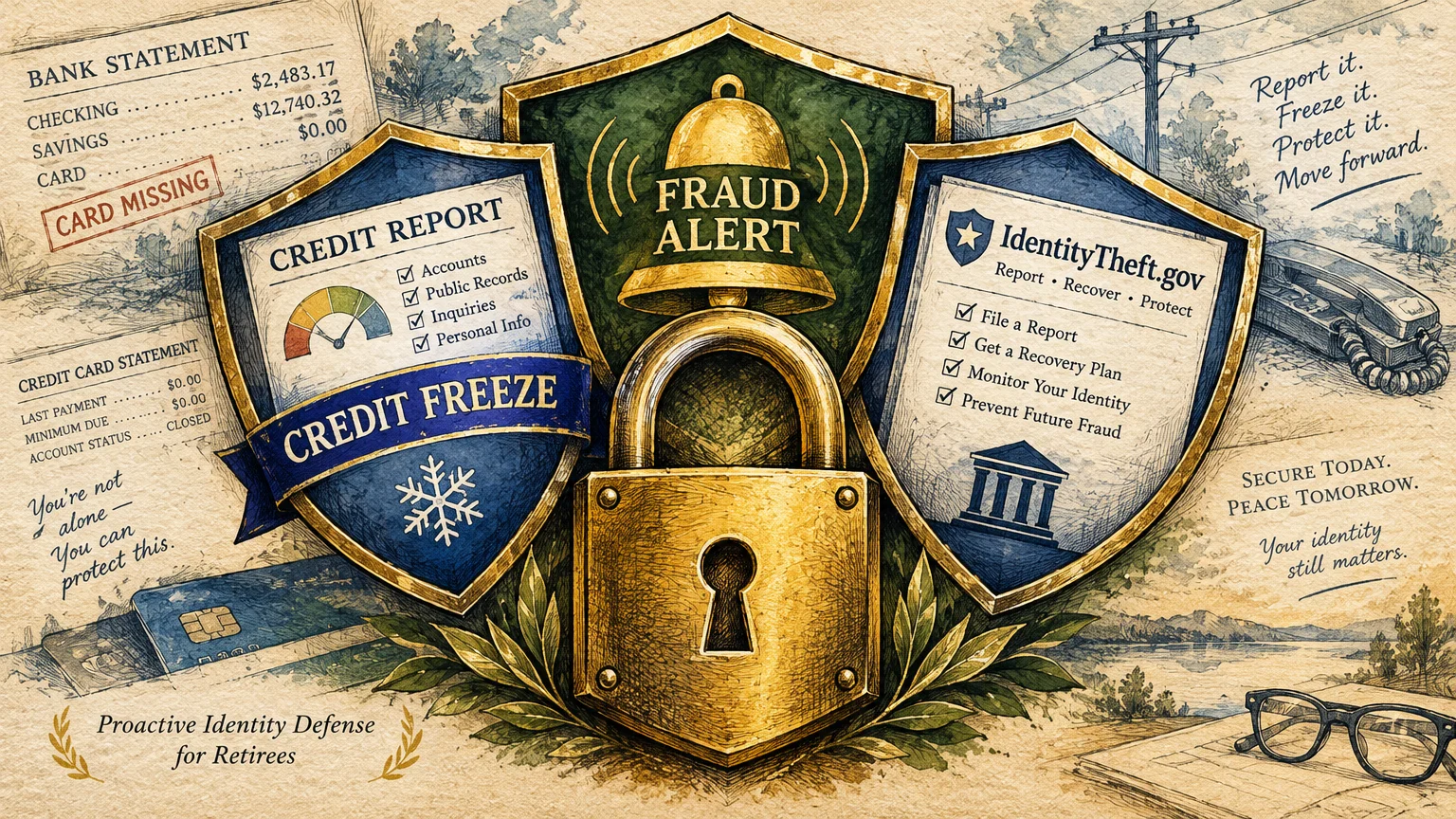
Your first defensive action should be placing a fraud alert on your national credit files. Contacting one of the three major credit bureaus automatically triggers a fraud alert across all three agencies.
A fraud alert forces prospective lenders to contact you directly before opening new accounts in your name. This alert remains active on your credit reports for one full year at no charge.
For superior security, execute a complete credit freeze with Equifax, Experian, and TransUnion individually. A credit freeze locks down your credit report, preventing anyone from inspecting your file or extending credit.
Federal law guarantees that freezing and unfreezing your credit is 100% free at every bureau. You can easily thaw your credit temporarily whenever you choose to apply for a legitimate loan.
The Consumer Financial Protection Bureau (CFPB) — Retirement platform provides step-by-step guidance on managing credit freezes. Following their instructions ensures that you maintain full control over your financial identity.
Report the theft to the Federal Trade Commission by visiting their specialized identity theft portal. The FTC provides an official Identity Theft Report that helps you dispute fraudulent debts with banks and credit agencies.
You should also report the lost card to the Social Security Administration’s fraud hotline. Alerting federal authorities creates a formal record that helps protect your retirement benefits against unauthorized redirection.
“The goal of retirement is to live off your assets—not live off your regrets.”
Legal Name Changes and Special Rules for Seniors
Changing your legal name in retirement requires updating your federal Social Security card. Many older adults change names after remarrying, divorcing, or returning to a prior family surname.
On June 14, 2024, the agency updated its Program Operations Manual System regarding legal name change documentation. These streamlined rules clarify which legal instruments satisfy identity requirements for court-ordered middle or surname updates.
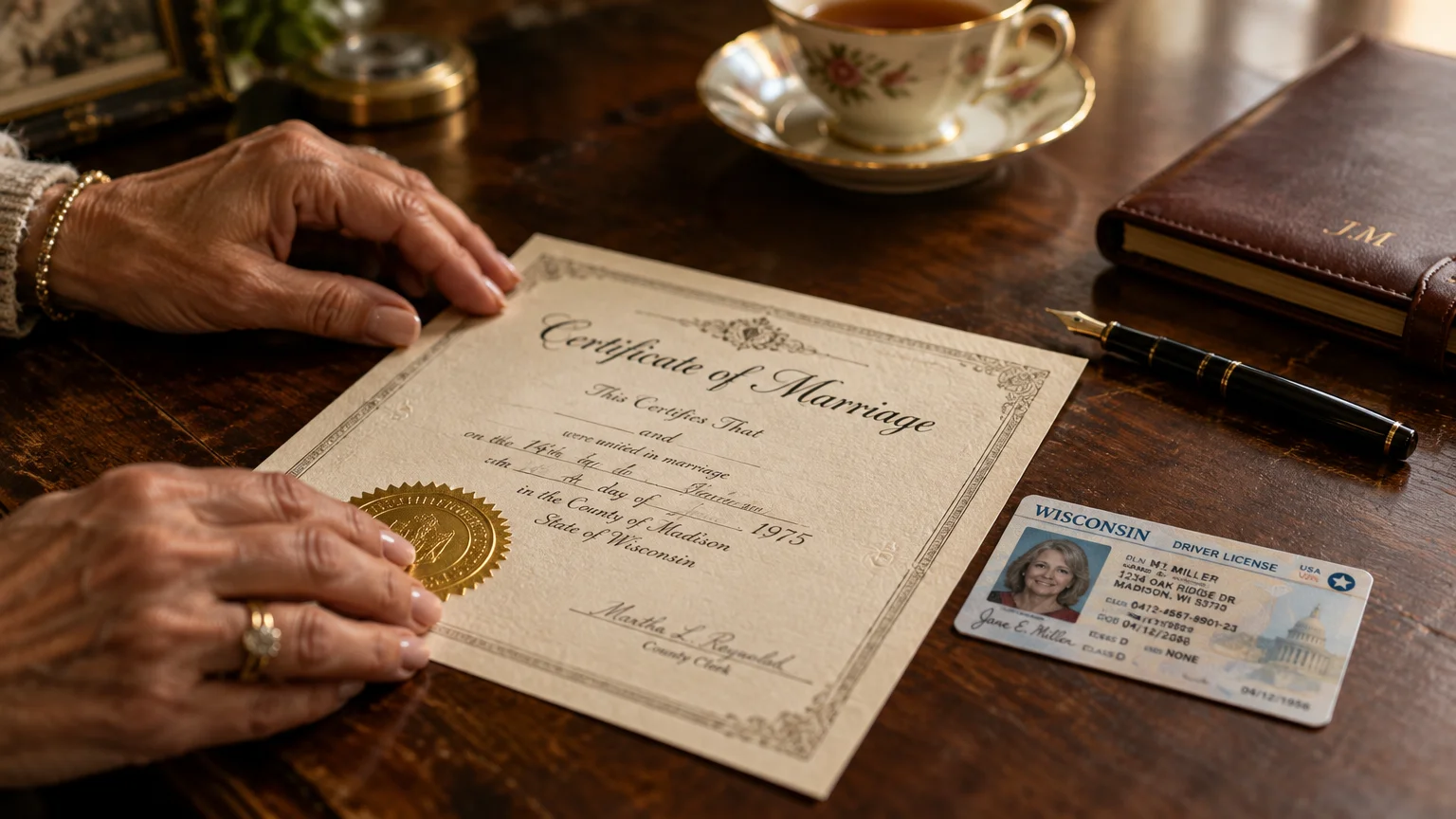
To execute a name change, you must present a certified marriage certificate, a divorce decree, or a court order. The document must explicitly link your former name to your new legal name.
In addition to the legal name change document, you must prove your current identity and U.S. citizenship. Presenting your valid U.S. passport or driver’s license satisfies this federal requirement.
You cannot submit a legal name change through the purely online self-service portal. The agency mandates in-person inspection or secure mailing of the original legal documents before changing records.
When the agency processes your name change, your nine-digit number stays exactly the same. The agency simply updates its internal database and issues a new card reflecting your legal name.
This administrative update ensures that your future Medicare reimbursements, tax records, and monthly benefit checks align perfectly. Mismatched names between agencies can delay medical claims and tax refunds.
Best Practices for Storing Your Replacement Card
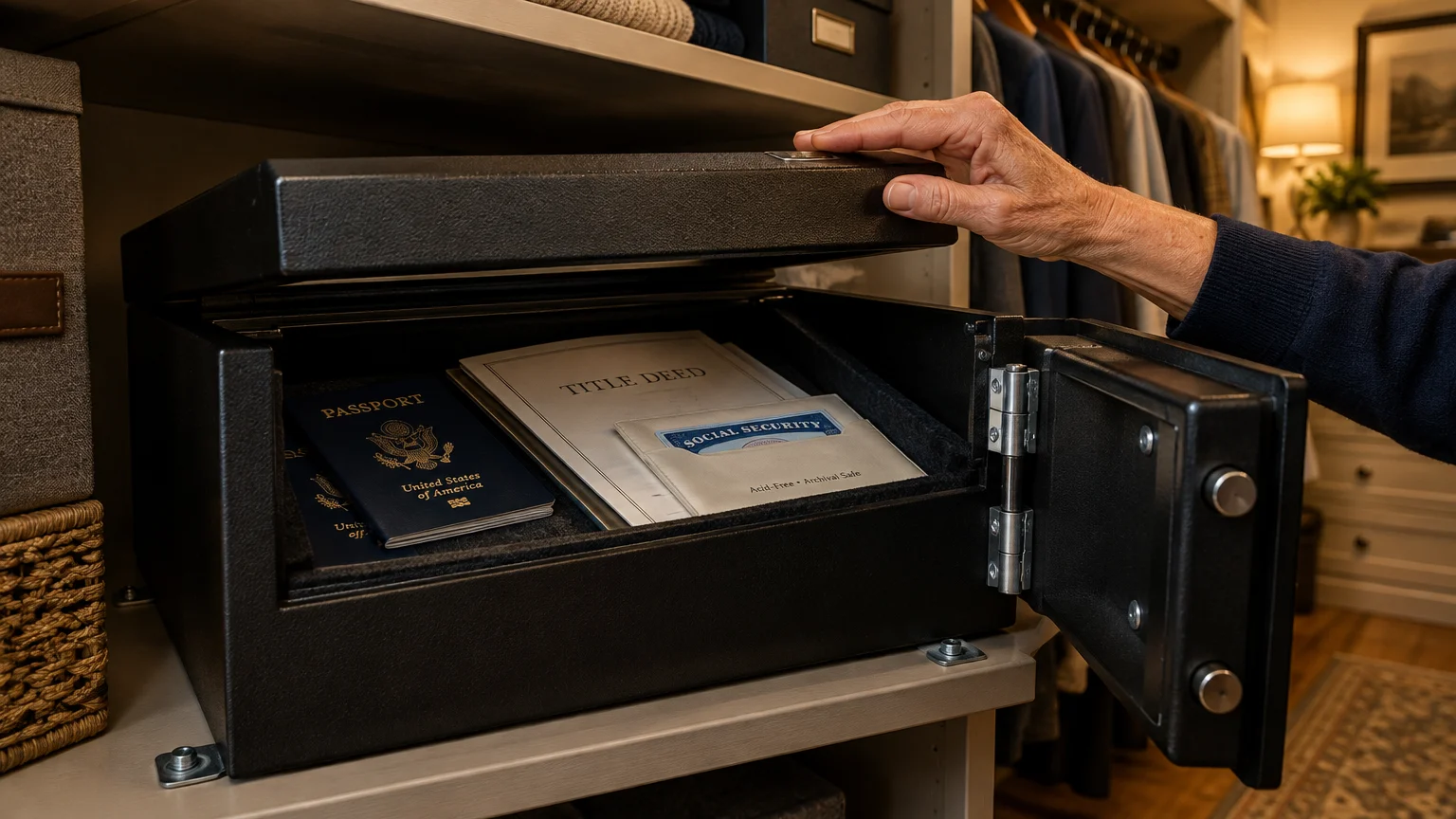
Once your new card arrives, handling it correctly prevents future administrative headaches. The most important rule is never to carry your Social Security card in your daily purse or wallet.
Wallets and handbags are prime targets for pickpockets and are easily lost during routine errands. Storing your card inside your wallet exposes you to catastrophic identity theft if your bag is lost.
Instead, store your card in a secure, fireproof home safe or a bank safe deposit box. Only remove the card when you must present it for an official, verified appointment.
Many people wonder whether they should laminate their card to keep the paper crisp and clean. The Social Security Administration strongly advises against laminating your card under any circumstances.
Modern cards contain microscopic security fibers and tactile features that heat lamination permanently damages. If an agency examiner cannot verify these anti-counterfeiting elements, they may reject the card as invalid.
If you want to protect your paper card from physical wear, place it in a removable plastic sleeve. Transparent archival sleeves shield the delicate cardstock from dust and moisture without compromising its security features.
Keep a private written inventory of your important retirement documents and their precise storage locations. Letting a trusted family member or executor know where you keep your card ensures smooth estate management.
Frequently Asked Questions About Card Replacement
Can I laminate my Social Security card to protect it from damage?
No, you should never laminate your Social Security card. Lamination obscures vital anti-counterfeiting security features built into the banknote paper and can cause officials to reject the card.
If you want to protect the paper from tearing or water damage, store it inside a removable plastic sleeve. This keeps the document pristine while allowing examiners to inspect the card directly.
Does getting a replacement card change my Social Security number?
No, a replacement card retains your exact nine-digit Social Security number. The agency only issues a brand-new number under rare circumstances involving severe, ongoing identity theft that cannot be resolved otherwise.
A standard replacement simply provides an updated paper document that matches your existing federal records. Your accumulated earnings credits and monthly retirement benefits remain completely unaffected by receiving a replacement card.
How long does it take for a replacement card to arrive in the mail?
Once the agency processes your request, your replacement card typically arrives within 7 to 14 business days. The agency produces cards at central facilities and dispatches them via first-class mail.
If you complete your request online, processing begins almost immediately. Requests submitted through local field offices or by mail might take slightly longer depending on staff review times.
What should I do if my replacement card does not arrive within 14 business days?
If two weeks have passed and your card has not arrived, log in to your personal online account to check your application status. The portal indicates whether your card was printed and dispatched.
If the status shows that the card was mailed, contact your local postal delivery branch to ensure they have not held your mail. You can also call the agency at 1-800-772-1213 to confirm your mailing address.
Taking Your Next Steps
Replacing a misplaced Social Security card is an entirely manageable administrative task when you understand the rules. By relying on official agency channels, you can secure your replacement quickly without spending a dollar.
Take a few moments today to log into your account through Login.gov or ID.me to verify your profile information. Having active digital access ensures that you can handle future document requests with confidence.
Information in this article reflects current rules as of the publication date and may change. Always confirm benefit details directly with Social Security Administration, Medicare.gov, or relevant government agencies before making decisions.
Last updated: October 2026. Medicare and Social Security rules change annually—always verify current details at official government sources.