The 32-Day Stretch: How the November Gap Works
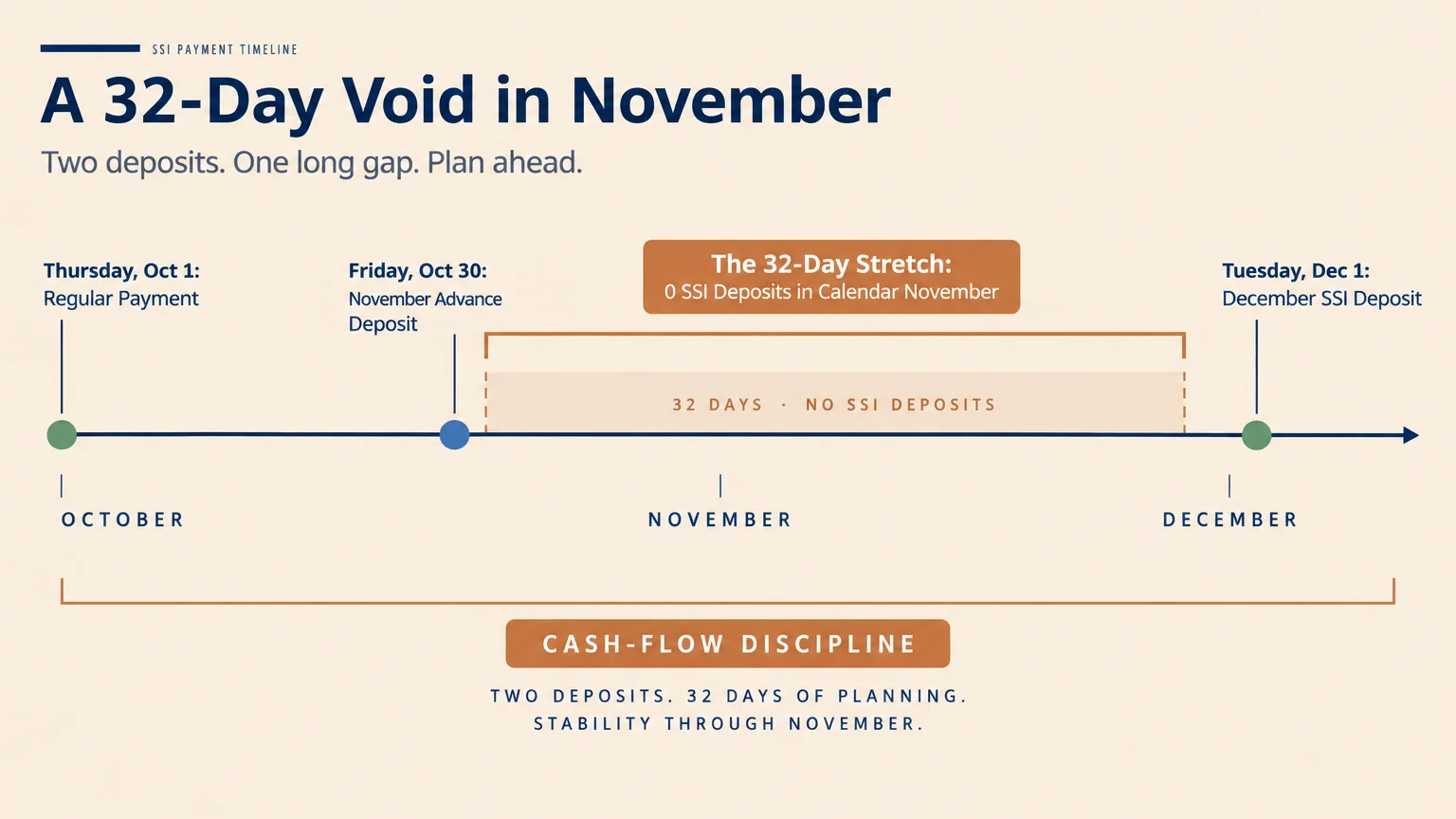
Because of this timing shift, October becomes an unusual double-payment month. You receive your regular October payment on Thursday, October 1, and your November payment on Friday, October 30.
That second check is not supplemental funding or an unexpected government bonus. It represents your November living money arriving roughly forty-eight hours ahead of schedule.
This schedule creates a complete payment void during the following month. You will not receive any SSI deposit during the entire calendar month of November.
Your subsequent benefit check will not arrive until Tuesday, December 1. Normal scheduling resumes on that date because December 1 falls on a regular Tuesday.
That timeline creates a demanding thirty-two-day stretch between your deposits. You must make the funds deposited on October 30 last all the way to December 1.
Many households survive on fixed monthly incomes with very narrow financial margins. An extended stretch without incoming funds can quickly strain your household cash flow.
Treating the October 30 deposit as standard monthly cash prevents shortfalls later in the season. Consistent discipline keeps your bills current and protects you from painful overdraft fees.