The dream of waking up to the sound of crashing waves and salt air doesn’t require a multi-million dollar retirement portfolio. While famous coastal hubs have priced out everyday Americans, dozens of hidden-gem beach towns still offer a high quality of life for $1,800 a month or less. You can secure a comfortable coastal retirement by leveraging geographic arbitrage—moving from high-cost areas to states with lower property taxes, affordable healthcare, and senior-friendly tax exemptions. Whether you want the emerald waters of the Florida Panhandle, the tranquil charm of the Carolina coast, or the laid-back rhythm of the Gulf, affordable waterfront living is entirely within reach. You just need to know exactly where to drop your anchor.
Why a $1,800 Budget Works in the Right Markets
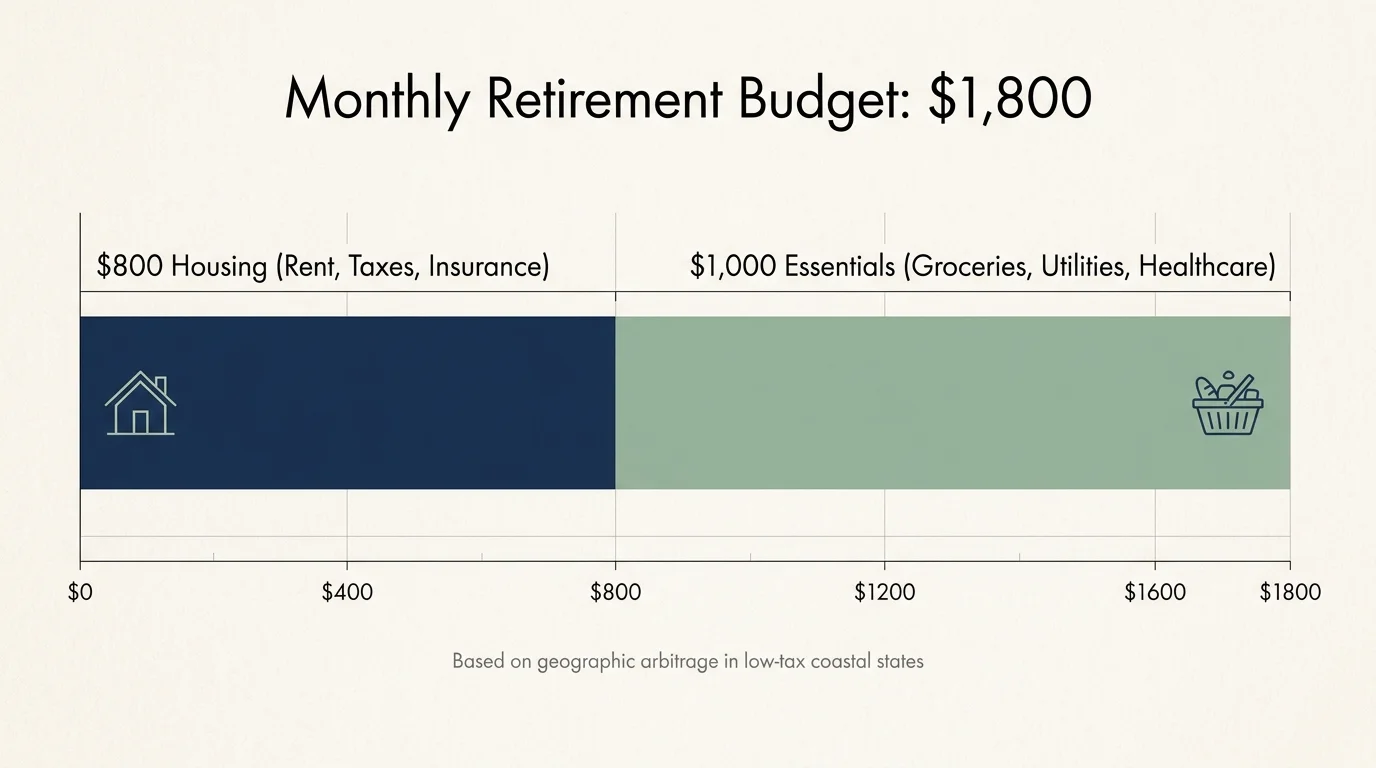
Living near the ocean on a fixed income comes down to simple math and strategic geography. The average Social Security benefit provides a steady baseline of income, but the power of that check fluctuates wildly depending on your zip code. If your total monthly take-home is $1,800, you need your housing costs—rent, or taxes and insurance on a paid-off home—to stay well under $800. This leaves you with $1,000 for groceries, utilities, Medicare premiums, and recreation.
“The goal of retirement is to live off your assets—not live off your regrets.” — RetireesInUSA Principle
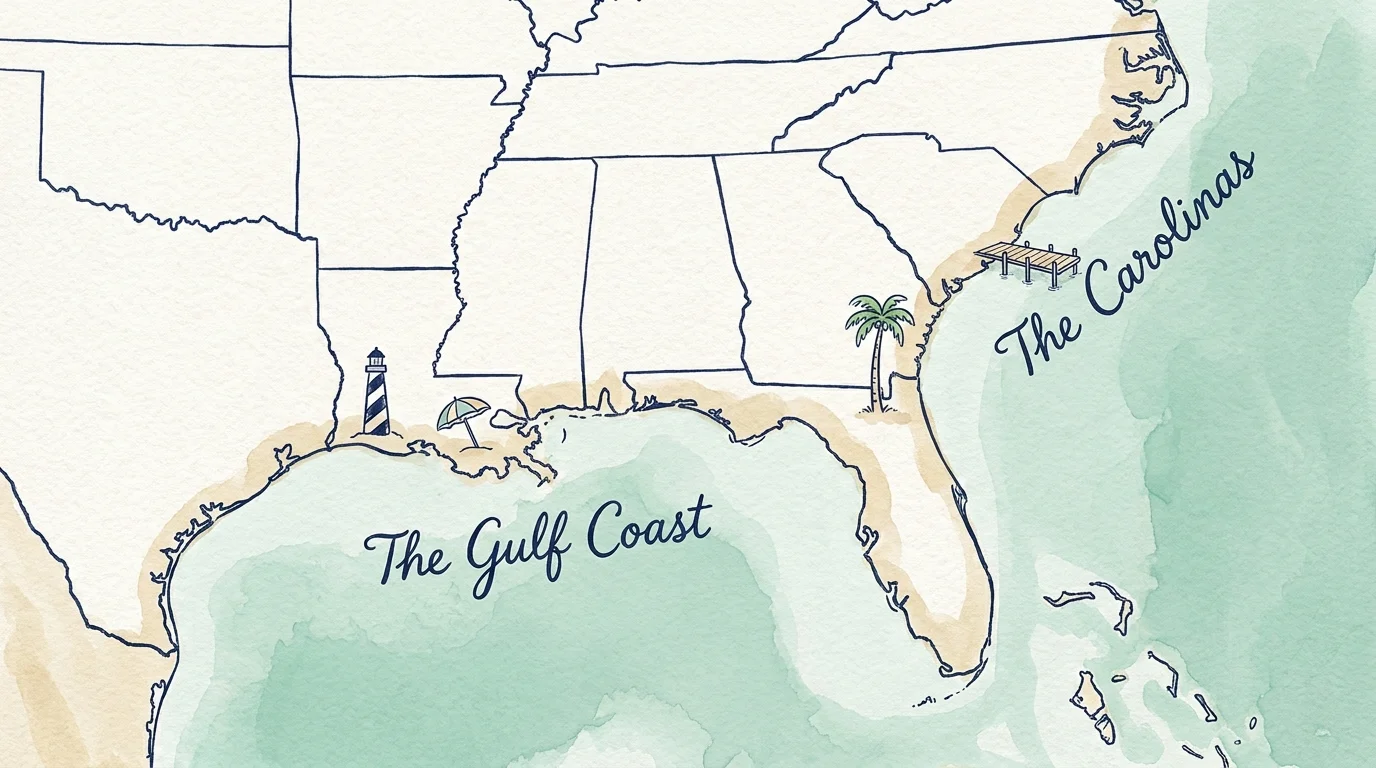
You cannot achieve this in California or traditional South Florida without extreme sacrifice. You can, however, comfortably hit these numbers by targeting the Gulf Coast and the Carolinas. By selecting a town with an overall cost of living below the national average and locating yourself in a state that offers aggressive tax exemptions for seniors, your budget naturally expands to cover a rich, fulfilling lifestyle.
10 Affordable Coastal Havens for Your Retirement

1. Gulfport, Mississippi
The Mississippi Gulf Coast delivers tremendous value for retirees who want immediate access to the water without the crippling costs of traditional East Coast destinations. Gulfport boasts a cost of living approximately 15 percent below the national average. More importantly, housing costs sit around 31 percent lower than the rest of the country. For a budget of $1,800 a month, you can secure a comfortable rental or maintain a paid-off home while still having ample funds for groceries, healthcare, and recreation. You can spend your mornings walking the sprawling waterfront parks and your afternoons enjoying fresh seafood. Mississippi completely exempts qualified retirement income from state taxes, leaving more of your hard-earned money in your own pocket.

2. Pensacola, Florida
Florida remains a classic retirement destination, but the soaring prices in Miami and Naples have pushed many budget-conscious seniors out. Pensacola offers a brilliant alternative. Tucked into the Florida Panhandle, this historic city features stunning sugar-white sand beaches and emerald green waters. The overall cost of living frequently hovers just below the national average, making it highly attractive for retirees on a fixed income. Renters can find modest apartments, and homeowners benefit from Florida’s famous lack of state income tax. Furthermore, Pensacola hosts robust healthcare infrastructure, including excellent civilian and military medical facilities—a major perk for retired veterans looking to maximize their healthcare benefits while soaking up the sun.

3. Myrtle Beach, South Carolina
Myrtle Beach operates as much more than a bustling summer vacation hotspot; it serves as a thriving, year-round haven for retirees. The local cost of living consistently ranks about 7 percent below the national average. Because the area has developed specifically to accommodate seniors, you will find an abundance of low-maintenance condos and 55-plus communities. South Carolina treats retirees exceptionally well when tax season arrives, completely exempting Social Security benefits from state income tax and offering generous deductions on other retirement income. When you pair these tax advantages with off-season rental deals and affordable golf courses, an $1,800 monthly budget stretches remarkably far along the Grand Strand.

4. Calabash, North Carolina
If you prefer a quiet fishing village over a bustling resort city, Calabash deserves your immediate attention. Proudly known as the seafood capital of the world, this tranquil North Carolina town sits right near the South Carolina border. The cost of real estate has cooled significantly in recent years, allowing retirees to find comfortable properties that fit perfectly within a tight monthly limit. Rent and everyday living expenses sit well below national norms. You get the benefit of a small-town atmosphere while remaining just a short drive from the major medical facilities and entertainment venues of Myrtle Beach. North Carolina also features a flat income tax rate and completely exempts Social Security benefits.

5. Corpus Christi, Texas
For those who prefer the rugged beauty of the western Gulf Coast, Corpus Christi provides a phenomenal balance of big-city amenities and cheap beach living. Housing costs here fall significantly below the national average, making it entirely feasible to cover rent, utilities, and groceries on your strict budget. Retirees enjoy miles of pristine shoreline, excellent fishing, and a relaxed, welcoming culture. Texas famously levies no state income tax, meaning your pension checks arrive fully intact. You must remain vigilant about property taxes in Texas, as they tend to run high, but securing a senior homestead exemption can dramatically lower your annual burden.

6. Bay St. Louis, Mississippi
A short drive from Gulfport sits Bay St. Louis, a quirky, artsy coastal town that feels like a well-kept secret. This area combines a vibrant local culture with an extraordinarily low cost of living. Retirees flock here for the walkable downtown, friendly neighbors, and gorgeous views of the bay. Securing a small coastal cottage or an apartment on a fixed budget is highly achievable here. The town moves at a gentle pace, stripping away the stress of daily life. Paired with Mississippi’s stellar tax exemptions for seniors, Bay St. Louis serves as a financial safe harbor for anyone looking to maximize a modest monthly income.

7. Daytona Beach, Florida
Daytona Beach proves that you can still retire on the Atlantic coast of Florida without burning through your savings. While insurance premiums across the state have surged, Daytona Beach maintains a lower barrier to entry than coastal cities further south. The city offers a vast inventory of affordable condominiums that cater specifically to retirees who want ocean views without multi-million dollar price tags. Groceries and everyday utilities run close to the national average, but the substantial savings in housing help you stay firmly under your $1,800 monthly cap. The area also boasts excellent hospitals and countless social clubs to keep your calendar full.

8. Pascagoula, Mississippi
If raw affordability drives your relocation strategy, Pascagoula is difficult to beat. With a cost of living nearly 20 percent below the national average and median home prices sitting at exceptionally low levels, your retirement dollar commands immense purchasing power here. Pascagoula is a working coastal town with deep roots in the maritime industry, offering a genuine, unpretentious community for retirees. You can spend your days fishing, boating, or exploring the untouched bayous. Healthcare access remains steady, and everyday expenses like groceries and transportation will barely dent your budget. It represents the perfect spot for an outdoorsy retiree looking to live simply and comfortably.

9. Foley, Alabama
While technically situated a few miles inland, Foley provides the ultimate coastal compromise. By residing just north of Gulf Shores, you avoid the exorbitant beachfront property prices and the most punishing wind and flood insurance premiums. Yet, you remain only a fifteen-minute drive from some of the most beautiful white sand beaches in the country. Foley offers excellent medical facilities, massive outlet shopping, and a booming community of active retirees. Alabama features some of the lowest property taxes in the United States and fully exempts Social Security and traditional pension income from state taxes, making your $1,800 a month feel substantial.

10. South Padre Island, Texas
Nestled near the southern tip of Texas, South Padre Island operates as a certified retirement community with a median resident age hovering around 59. While direct waterfront housing carries a premium, the island offers plenty of budget-friendly condos and inland apartments perfectly suited for a fixed income. The area is famous for its vibrant population of “Winter Texans,” ensuring a robust calendar of social events and senior activities year-round. Utilities and daily necessities remain inexpensive. The warm, tropical climate allows you to ditch the heavy winter coats entirely, significantly cutting down on seasonal clothing and home heating expenses.
Comparing Coastal Tax Landscapes
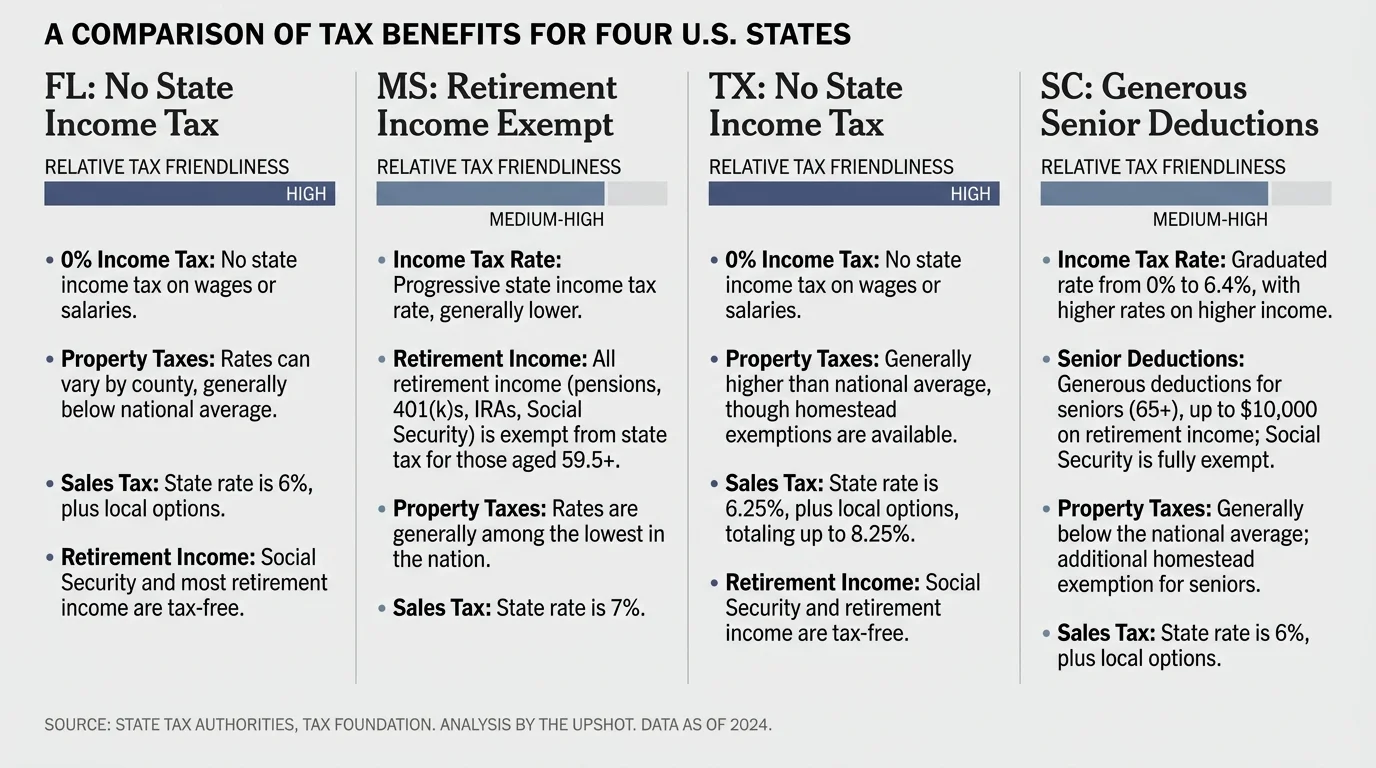
To maintain a strict $1,800 monthly budget, state tax policy carries just as much weight as the price of a local fish taco. You have to keep what you earn. Review this breakdown of how these featured coastal states handle retirement taxation to ensure your budget aligns with local laws.
| State | Social Security Tax? | State Income Tax Environment | Property Tax Burden |
|---|---|---|---|
| Mississippi | No | Exempts qualified retirement income | Very Low |
| Florida | No | No state income tax | Moderate (High coastal insurance) |
| South Carolina | No | Extremely generous deductions for seniors | Low |
| Alabama | No | Exempts traditional pensions | Very Low |
| Texas | No | No state income tax | High (Senior homestead exemptions help) |

Costly Mistakes to Avoid
Moving to the beach requires careful financial defense. A tight budget can easily derail if you ignore the hidden costs of coastal living. Guard your monthly cash flow by keeping a close eye on these specific line items:
- Underestimating Coastal Insurance: Wind, hail, and flood insurance can triple your monthly housing expenses compared to an inland home. Always get a hard quote for comprehensive coverage before finalizing a housing budget.
- Overlooking Saltwater Maintenance: The ocean breeze rapidly corrodes HVAC units, vehicles, and outdoor fixtures. Set aside a modest monthly emergency fund specifically for appliance repair and replacement.
- Ignoring Surging HOA Fees: Beachfront condos look inexpensive until you discover the $600 monthly Homeowners Association fee covering building maintenance and roof reserves. Verify HOA rules and historical fee increases before signing any paperwork.

Don’t DIY These Decisions
Relocating your entire life on a fixed income leaves zero room for guesswork. Map out your exact income utilizing the Social Security Retirement Estimator to verify exactly what your monthly cash flow will be before signing a new lease or mortgage.
Furthermore, navigating out-of-state health coverage requires expert guidance. Relocating across state lines triggers a Special Enrollment Period, and you will likely need to change your Medicare Advantage or Part D prescription plan to ensure your new local doctors are in-network. Before committing to a move, connect with a dedicated counselor through the Eldercare Locator or your State Health Insurance Assistance Program (SHIP). A quick evaluation using the Medicare Plan Finder tool alongside a trained counselor will prevent a disastrous lapse in your medical coverage.

Making Your Coastal Retirement a Reality
The water is waiting. Take a close look at your monthly budget and pick two or three of the towns on this list that fit your financial profile. Book an off-season rental for a month in your top choices to test the local culture, check grocery prices, and experience the day-to-day lifestyle before committing to a permanent move. Information in this article reflects current rules as of the publication date and may change. Always confirm benefit details directly with Social Security Administration, Medicare.gov, or relevant government agencies before making decisions.
Last updated: May 2026. Medicare and Social Security rules change annually—always verify current details at official government sources.