Thousands of Americans miss out on substantial Social Security lump-sum payments simply because they do not know these past-due funds exist. Whether you delayed filing for retirement past your Full Retirement Age, endured months waiting for a disability decision, or lost a spouse, the Social Security Administration frequently owes retroactive back pay. These one-time disbursements can range from a modest statutory death benefit to tens of thousands of dollars in accumulated disability or retirement back pay. Understanding the rules governing retroactive payments ensures you collect every dollar you earned without unintentionally jeopardizing your long-term monthly retirement income.
What You Need to Know
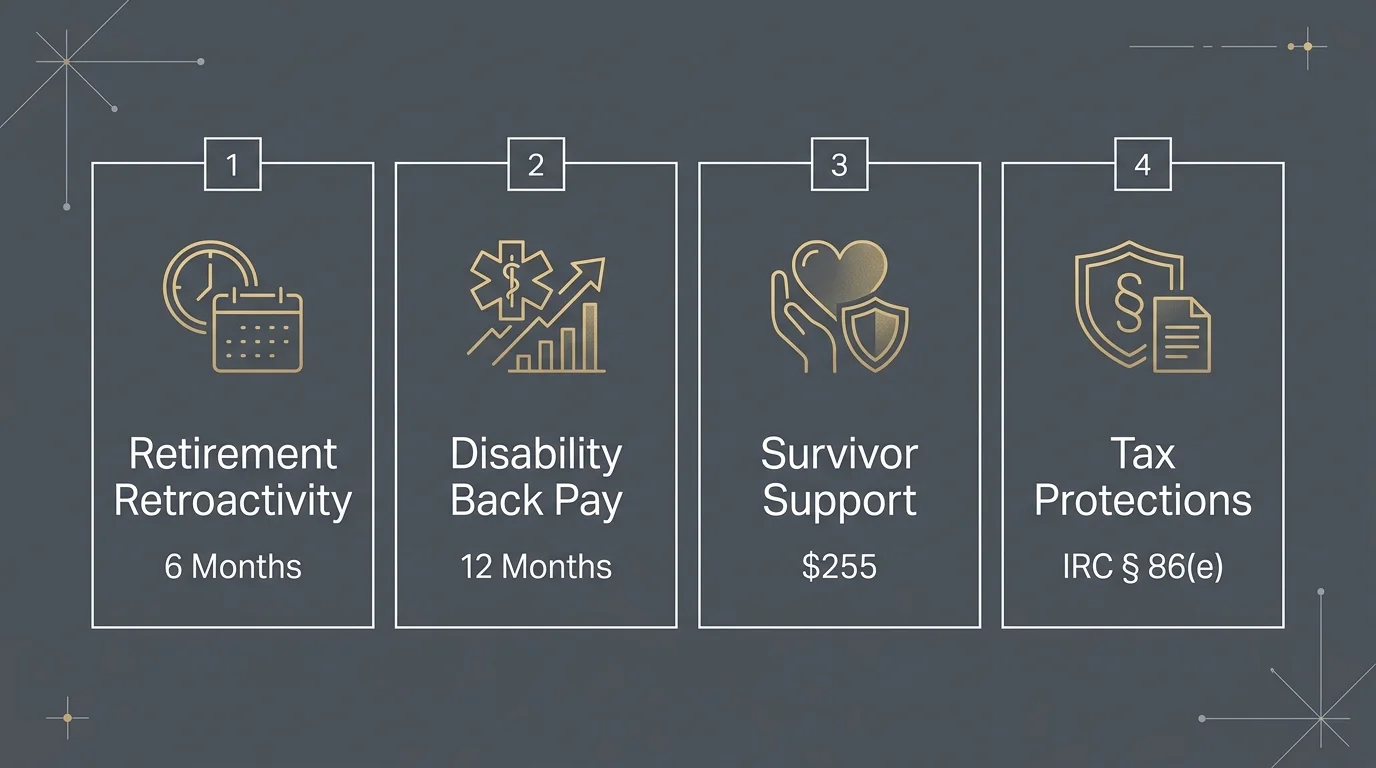
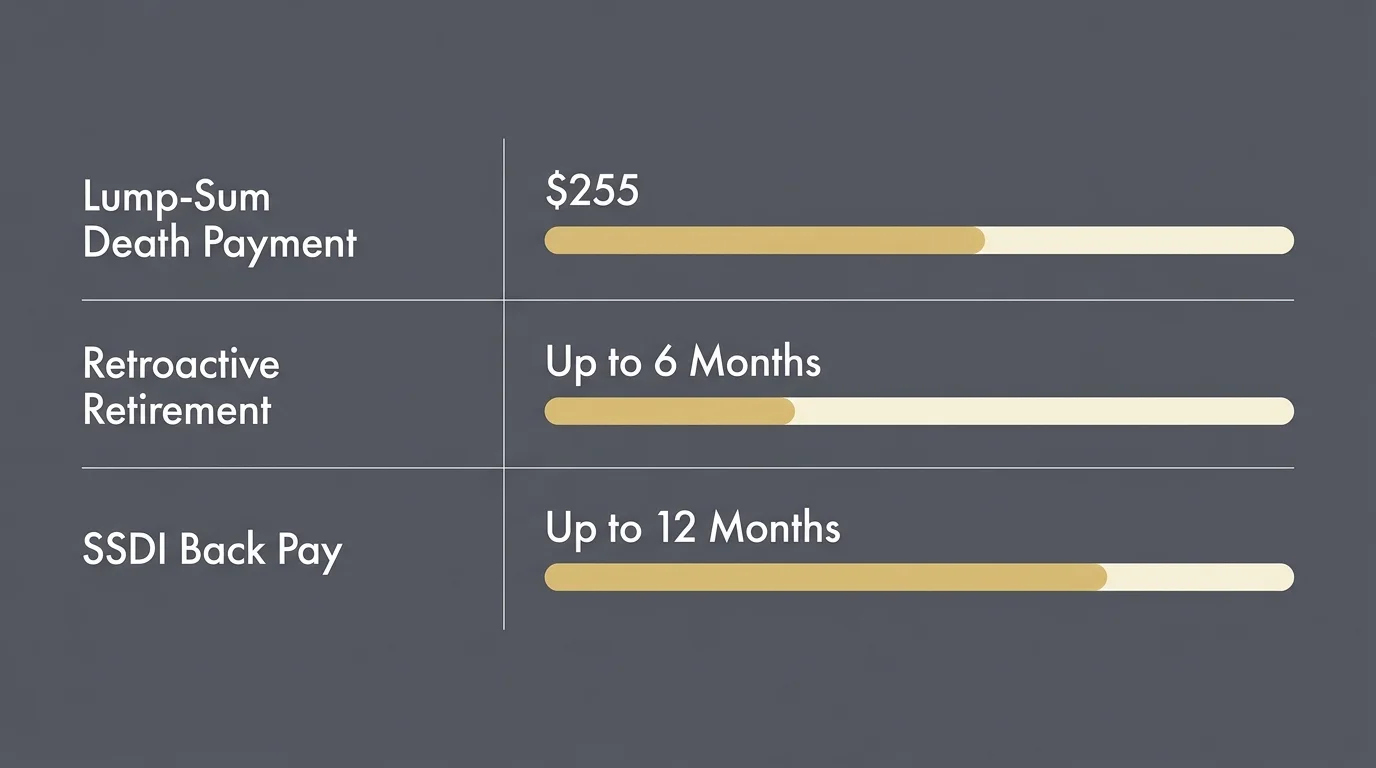
- Retirement Retroactivity: If you claim retirement benefits past your Full Retirement Age (FRA), you can elect up to six months of retroactive benefits in a single lump sum, but doing so permanently reduces your future monthly checks.
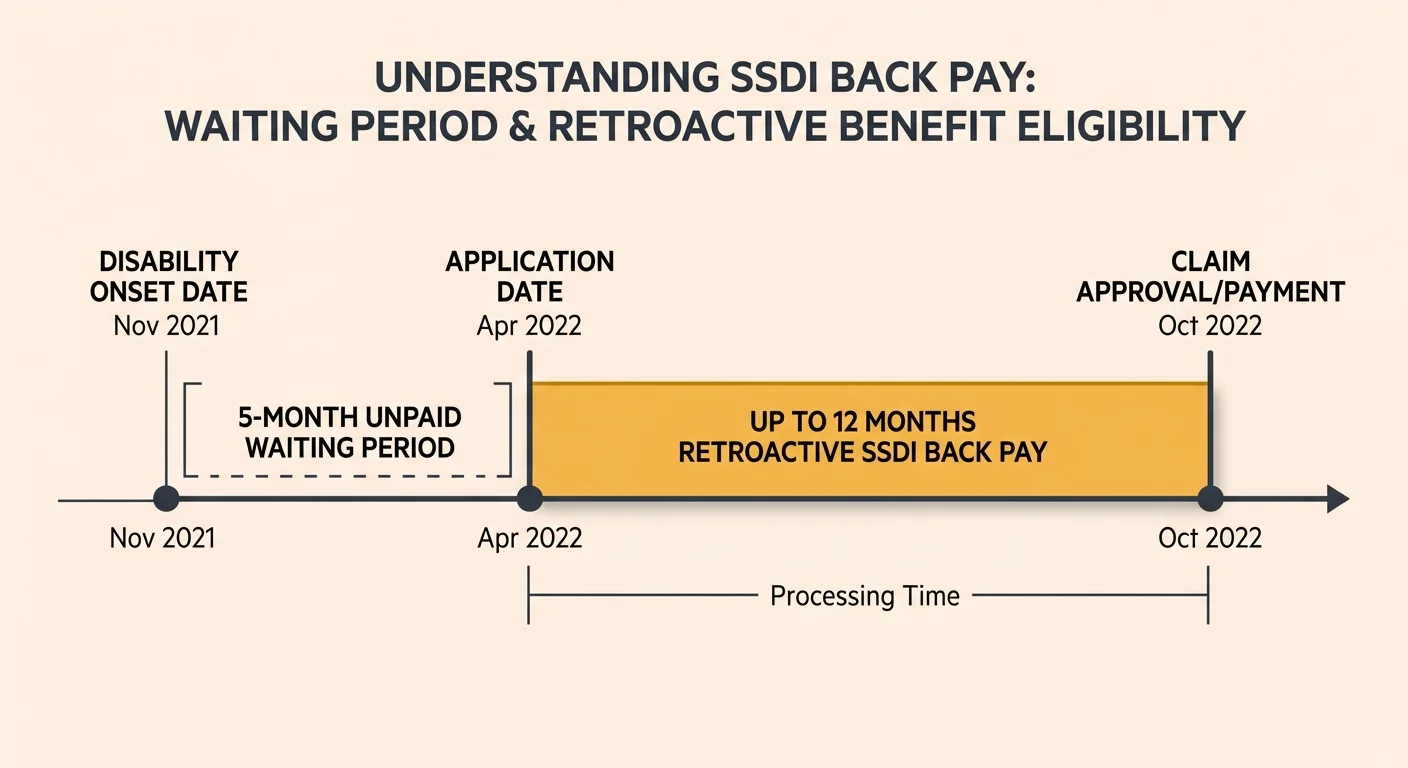
- Disability Back Pay: Social Security Disability Insurance (SSDI) claimants can receive up to 12 months of retroactive pay before their application date, provided they satisfy the statutory five-month unpaid waiting period.
- Survivor Support: Surviving spouses or dependent children may claim a statutory $255 Lump-Sum Death Payment, provided they apply within two years of the worker’s death.
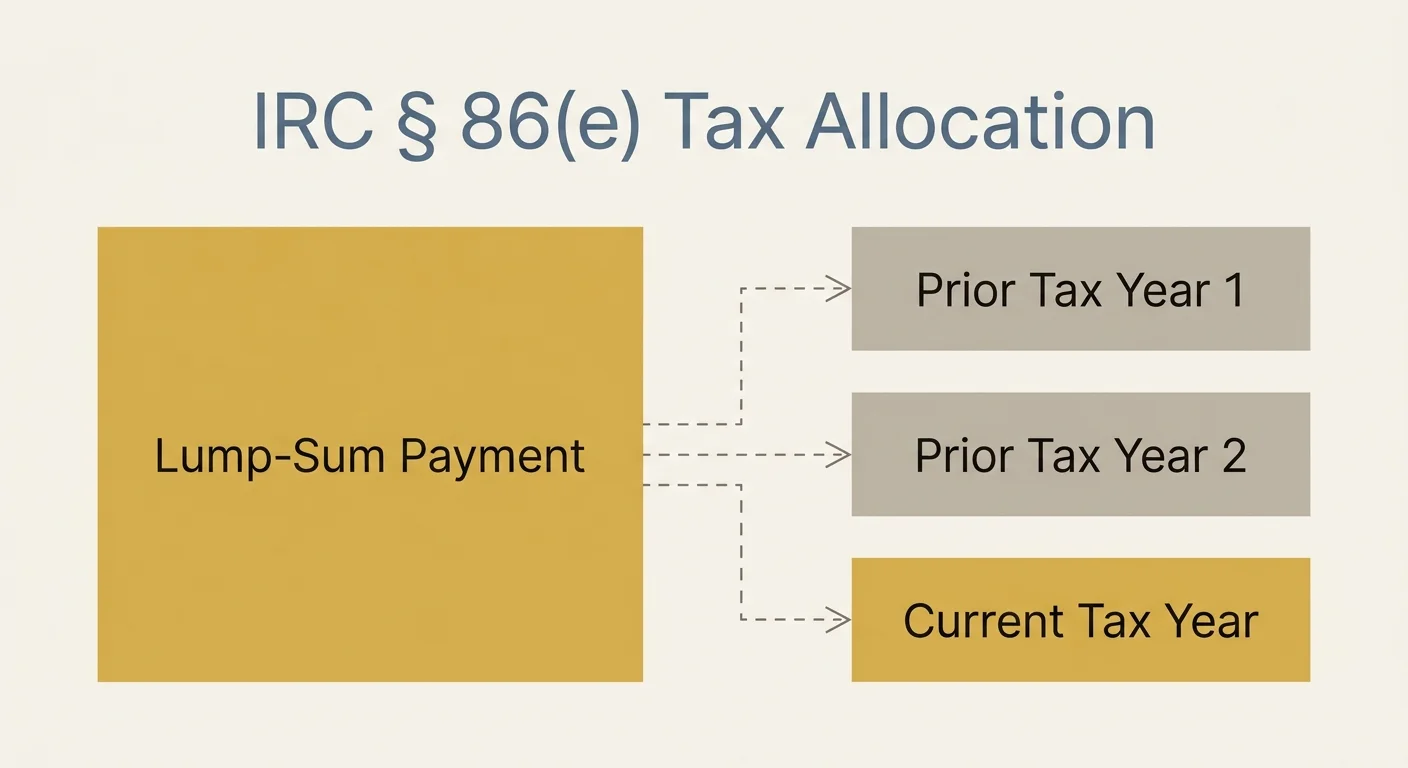
- Tax Protections: Internal Revenue Code Section 86(e) allows you to allocate lump-sum back pay to prior tax years, preventing an artificial spike in your current taxable income.

Understanding Social Security Lump-Sum and Retroactive Payments
The term “lump-sum payment” within the Social Security system refers to three distinct types of financial distributions: statutory death benefits, retroactive entitlement payments, and accrued back pay from lengthy administrative reviews. The rules governing each category differ significantly based on the program—whether you claim standard retirement benefits, Social Security Disability Insurance (SSDI), or Supplemental Security Income (SSI).
Retroactive benefits represent money you were eligible to receive before you officially filed your paperwork. In contrast, back pay represents monthly payments that accumulated while you waited for the Social Security Administration (SSA) to process your application or review an appeal. Because the federal government processes millions of claims annually, processing backlogs frequently convert monthly entitlements into substantial, single-deposit checks.
“The goal of retirement is to live off your assets—not live off your regrets.”
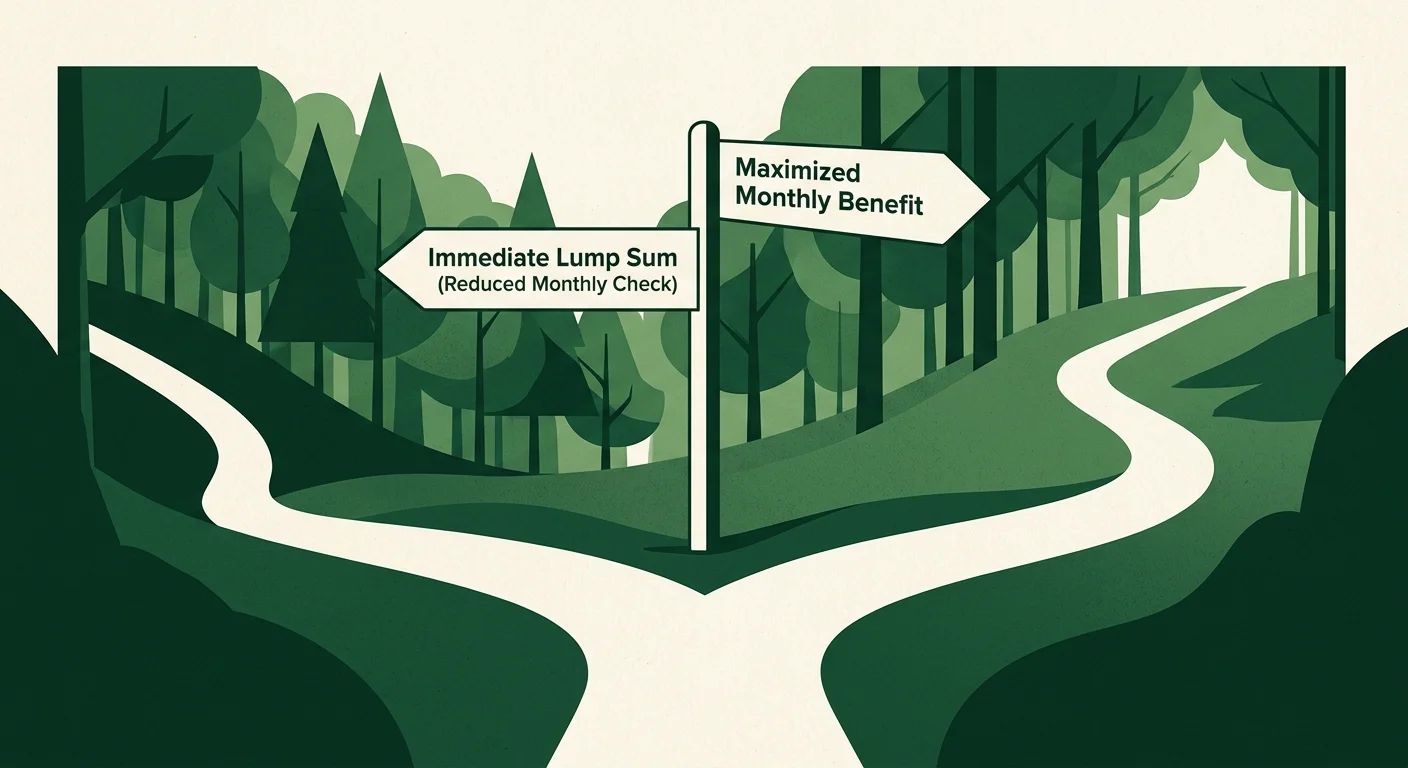
Navigating these rules requires balancing immediate liquidity against lifelong income security. While a large deposit can immediately eliminate debt, fund home modifications, or bolster an emergency reserve, certain retroactive options come with lifelong trade-offs that permanently reduce your monthly benefit check.

1. You Applied for Retirement Benefits Past Your Full Retirement Age
If you delay claiming Social Security retirement benefits beyond your Full Retirement Age (FRA)—which ranges from 66 to 67 depending on your birth year—federal regulations permit you to claim up to six months of retroactive payments in a single lump sum. This provision acts as a financial lookback window for individuals who intended to file earlier or who suddenly need an infusion of capital.
Under federal Social Security lump sum payment rules, this lookback window cannot pre-date the exact month you achieved FRA. For instance, if your FRA is 66 and eight months, and you file at age 67, you can request the full six-month retroactive lump sum. However, if you file two months after your FRA, your retroactive payment is capped at two months.
The critical trade-off involves Delayed Retirement Credits (DRCs). For every month you delay claiming benefits past your FRA until age 70, your benefit grows by two-thirds of 1% (8% per year). When you elect a six-month retroactive lump sum, the SSA resets your permanent claiming date back six months. Consequently, you forfeit six months of DRCs, permanently slashing your ongoing monthly benefit by up to 4% for the rest of your life.

2. You Won an SSDI Appeal After Prolonged Processing Delays
Securing Social Security Disability Insurance (SSDI) rarely happens overnight. Many applicants face initial denials followed by requests for reconsideration and lengthy waits for hearings before an Administrative Law Judge (ALJ). The entire appeals process frequently stretches from 12 to 36 months.
When an ALJ finally overturns an initial denial and approves your claim, you are entitled to back pay Social Security benefits for every month that elapsed between your established entitlement date and your approval date. Because these funds accrued while the agency adjudicated your case, the SSA releases the entire accrued balance as a single, combined lump-sum payment shortly after issuing your Notice of Award.
For individuals awarded monthly disability benefits of $1,800 after a 24-month administrative delay, this back-pay distribution can exceed $40,000 in a single deposit. These funds represent earned benefits that were delayed purely due to administrative processing times.
3. Your Disability Onset Date Pre-Dates Your SSDI Application
When you file for SSDI, the SSA determines your Established Onset Date (EOD)—the exact day your medical condition prevented you from performing Substantial Gainful Activity (SGA). If your medical records demonstrate that your disability began well before you submitted your paperwork, you meet the criteria for qualifying for retroactive Social Security benefits.
Federal law caps retroactive SSDI payments at a maximum of 12 months prior to your application filing date. However, calculating this lump sum requires factoring in the mandatory five-month unpaid waiting period. Under federal law, cash benefits do not begin until the sixth full calendar month following your EOD.
To capture the full 12-month retroactive lump sum, your EOD must have occurred at least 17 full months prior to the date you submitted your application (12 months of retroactive benefits plus the 5-month waiting period). If your onset occurred 10 months prior to filing, your retroactive lump sum covers five months of benefits after deducting the mandatory five-month waiting period.

4. You Received a Medical Diagnosis of Amyotrophic Lateral Sclerosis (ALS)
Historically, all SSDI applicants had to endure the statutory five-month unpaid waiting period before cash payments or retroactive benefits could accrue. This rule imposed significant hardship on individuals diagnosed with rapid-progression conditions.
The passage of the ALS Disability Insurance Access Act eliminated the five-month waiting period specifically for individuals diagnosed with Amyotrophic Lateral Sclerosis (ALS). If you or a family member receives an ALS diagnosis, SSDI cash entitlement begins immediately on the first full month following the Established Onset Date.
This exception directly expands lump-sum eligibility. If you apply for SSDI several months after an ALS diagnosis, your retroactive payment includes every month back to your onset date (up to the standard 12-month pre-application cap) without losing five months of benefits to the standard waiting period.

5. You Lost a Fully Insured Spouse or Parent
When an insured worker passes away, their surviving family members often face immediate out-of-pocket costs. Under Section 202(i) of the Social Security Act, the SSA issues a one-time statutory payment known as the Special Lump-Sum Death Payment (LSDP) in the amount of $255.
Eligibility for this payment follows a strict legal hierarchy:
- A surviving spouse who was living in the same household with the deceased worker at the time of death.
- A surviving spouse who was not living in the same household but was eligible to receive spousal or survivor benefits on the deceased worker’s record during the month of death.
- If no surviving spouse exists, the $255 payment is divided equally among surviving children who were eligible for benefits on the worker’s record during the month of death.
Claimants must file an application (Form SSA-8) for the lump-sum death benefit within exactly two years of the worker’s date of death. Failure to submit the application within this two-year window permanently forfeits the payment, except in narrow circumstances involving military service abroad.

6. You Worked While Collecting Benefits and Replaced a Lower Earnings Year
Many beneficiaries continue to work part-time or full-time after initiating Social Security benefits. Your monthly benefit amount is calculated based on your highest 35 years of wage-indexed earnings. If you work while receiving benefits and your current annual income is higher than the lowest earnings year in your historical 35-year calculation, your Primary Insurance Amount (PIA) increases.
The SSA detects these wage updates through an automated process called the Automatic Earnings Recomputation Operation (AERO). When the agency processes your tax year earnings from the IRS, it recalculates your monthly benefit amount. If an increase is due, the agency applies the higher benefit retroactively to January of the year following the earnings.
Because the SSA often runs these automated recomputations late in the calendar year, beneficiaries frequently receive an unexpected lump-sum deposit representing the back-adjusted difference for all months dating back to January. The agency then permanently adjusts future monthly payments upward to reflect the new earnings baseline.
7. The SSA Rectified an Administrative or Historical Calculation Error
Administrative errors, misreported earnings records, and misapplied offset rules can lead to beneficiaries receiving less than their statutory entitlement for months or even years. Common triggers include:
- Unrecorded wages from prior employers due to transposed Social Security numbers.
- Improper application of the Government Pension Offset (GPO) or Windfall Elimination Provision (WEP).
- Clerical miscalculations of auxiliary benefits for spouses or dependent children.
- Delayed processing of dependent additions to an existing disability or retirement claim.
When an error is discovered—either through a beneficiary-initiated audit or internal agency quality reviews—the SSA must make the claimant financially whole. The agency issues a one-time restitution lump sum covering the entire cumulative difference between what you were paid and what you should have received, dating back to the exact month the underpayment began.

8. You Were Awarded Past-Due Supplemental Security Income (SSI)
Supplemental Security Income (SSI) provides monthly financial support to aged, blind, and disabled individuals with strictly limited income and resources. When an SSI claim takes several months or years to approve, substantial past-due benefits accumulate.
However, the SSA treats large SSI back-pay balances differently from SSDI. Under the SSI installment rule, if your past-due SSI benefits exceed three times the maximum Federal Benefit Rate (FBR), the agency does not distribute the funds in a single check. Instead, it pays the back pay in up to three separate installments spaced six months apart.
You qualify for an immediate, full lump-sum distribution of past-due SSI benefits under specific conditions:
- Your total past-due amount is equal to or less than three times the monthly Federal Benefit Rate.
- You demonstrate an imminent need for funds to cover life-sustaining medical treatments or specialized medical equipment.
- You face immediate housing loss, such as an active eviction notice, foreclosure, or severe debts for shelter, clothing, or food.
- You have a medically documented terminal illness with a life expectancy of 12 months or less.
9. You Filed for Retroactive Survivor or Spousal Benefits Past Your FRA
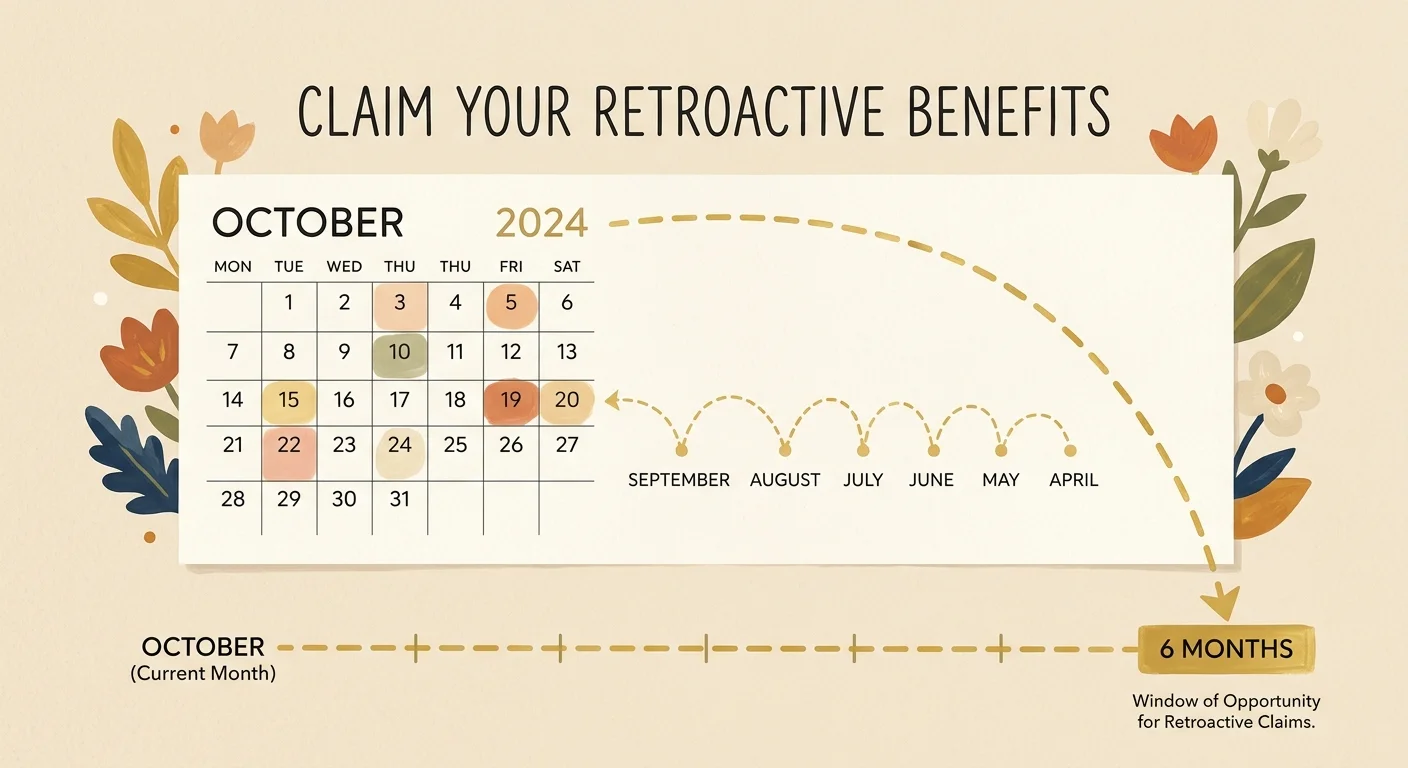
Spouses and surviving spouses who reach their Full Retirement Age before claiming benefits can access the same six-month retroactive window available to retired workers. For surviving spouses claiming survivor benefits, this option is particularly advantageous.
Unlike standard retirement benefits, survivor benefits do not accrue Delayed Retirement Credits past your survivor Full Retirement Age. Once you reach your survivor FRA (which may differ slightly from your retirement FRA), your survivor benefit maxes out at 100% of the deceased worker’s basic benefit. Delaying your claim past survivor FRA provides no permanent monthly increase.
Consequently, if you delayed filing for survivor benefits past your survivor FRA, requesting the full six months of retroactive benefits in a lump sum provides immediate cash without sacrificing any future benefit growth. The SSA simply issues a check for the preceding six months and establishes your maximum ongoing monthly survivor benefit.
Social Security Lump-Sum and Retroactive Benefit Comparison
The following table outlines the key parameters, waiting periods, and long-term implications across major Social Security lump-sum payment categories.
| Payment Category | Maximum Retroactive Period | Mandatory Waiting Period | Impact on Future Monthly Payments | Distribution Method |
|---|---|---|---|---|
| Retroactive Retirement (Post-FRA) | 6 months | None (must be past FRA) | Permanently reduces monthly benefit (forfeits up to 4% in DRCs) | Single lump sum |
| SSDI Retroactive Benefits | 12 months pre-application | 5 calendar months from Onset Date | None (monthly rate remains unchanged) | Single lump sum |
| SSDI Appeal Back Pay | All months from entitlement to approval | 5 calendar months from Onset Date | None (monthly rate remains unchanged) | Single lump sum |
| Special Lump-Sum Death Payment | Must file within 2 years of death | None | None ($255 statutory fixed amount) | Single lump sum |
| Automatic Earnings Recomputation (AERO) | Back-adjusted to January of previous year | None | Permanently increases future monthly benefit | Single lump sum adjustment |
| Past-Due SSI Benefits | Back to application date | None | None (subject to resource limit rules) | 3 installments (or lump sum if under threshold/exempt) |
10. under (11)
11. IRC (12)
12. Section (13)
13. 86(e) (14).
Total: 14 words (if lump-sum is 1 word) or 15 words (if lump-sum is 2 words).
Tax Implications: Managing Lump-Sum Payments Under IRC § 86(e)
Receiving a large lump-sum Social Security payment can trigger unintended tax consequences. Under standard federal tax accounting, income is generally taxed in the calendar year it is received. If you receive $30,000 in accrued SSDI back pay or retroactive retirement benefits in a single tax year, that influx can artificially inflate your Provisional Income, pushing up to 85% of your Social Security benefits into taxable territory and elevating you into a higher marginal tax bracket.
“It’s not how much money you make, but how much money you keep, how hard it works for you, and how many generations you keep it for.” — Robert Kiyosaki
To protect beneficiaries from this tax spike, Internal Revenue Code Section 86(e) provides a specialized accounting mechanism known as the Lump-Sum Election method. As detailed by the Internal Revenue Service, this rule allows you to apportion past-due benefits to the prior tax years in which they were actually owed, rather than taxing the full amount in the year of receipt.
Crucially, electing Section 86(e) treatment does not require filing amended tax returns (Form 1040-X) for prior years. Instead, you perform a calculation on your current tax return (using IRS Publication 915 worksheets) to determine the incremental tax that would have been due in those prior years. You then pay that lower calculated tax on your current return, legally minimizing your overall tax liability.
Don’t Make These Mistakes
Navigating Social Security lump sum eligibility signs requires careful attention to statutory rules and long-term consequences. Avoid these common missteps:
- Sacrificing Lifetime Compounding for Short-Term Cash: Electing a six-month retroactive retirement payment after FRA provides instant liquidity, but it locks in a lower monthly check for life. If you live into your late 80s or 90s, the cumulative loss from forfeited Delayed Retirement Credits will significantly exceed the initial lump sum.
- Missing the Two-Year Death Benefit Deadline: Many surviving spouses assume the $255 death payment is applied automatically. You must submit Form SSA-8 with proof of relationship within two years of the date of death, or the benefit is lost forever.
- Assuming Suspended Benefits Can Be Paid as a Lump Sum: Prior to 2016, beneficiaries who voluntarily suspended benefits at FRA could later request a lump sum for all suspended months. The Bipartisan Budget Act of 2015 eliminated this option; voluntary suspension no longer permits retroactive lump-sum payouts.
- Failing to Utilize IRS Section 86(e): Reporting a substantial back-pay award as regular single-year income without utilizing the lump-sum tax election often results in paying thousands of dollars in unnecessary income taxes.
- Violating SSI Asset Caps with Back Pay: Past-due SSI installments must be spent down or placed into protected accounts (such as an ABLE account or special needs trust) within nine months, or the excess cash will disqualify you from ongoing SSI and Medicaid benefits.

When Professional Advice Is Worth It
While standard Social Security claims are straightforward, retroactive benefits and multi-year back-pay awards introduce complex interactions between tax brackets, Medicare premiums, and spousal protections. Consulting a professional is highly recommended in the following scenarios:
- Large Back-Pay Tax Planning: A Certified Public Accountant (CPA) or Enrolled Agent (EA) can run the multi-year tax calculations under IRC § 86(e) to ensure your lump sum does not trigger an unexpected tax bill or phase you out of deductions.
- Medicare IRMAA Surcharges: A sudden income spike from a lump-sum payment can trigger Income-Related Monthly Adjustment Amounts (IRMAA) on your Medicare Part B and Part D premiums two years later. You may need to consult resources at National Council on Aging or work with a financial planner to file an SSA-44 life-changing event appeal.
- Longevity and Spousal Protection Analysis: If you are the higher-earning spouse, taking a six-month retroactive payment permanently lowers not only your own benefit but also the survivor benefit your spouse will inherit. A fee-only financial planner can calculate your household break-even horizon.
Frequently Asked Questions
How long does it take to receive a Social Security lump-sum payment after approval?
Once the SSA issues a formal Notice of Award for retroactive retirement or SSDI back pay, electronic funds are typically deposited directly into your bank account within 15 to 60 days. In complex cases involving SSI offsets, workers’ compensation reductions, or attorney fee withholding, processing may take up to 90 days.
Can I get a retroactive lump sum if I claim Social Security at age 62?
No. Under federal law, retroactive retirement payments are strictly prohibited for any period before you reach your Full Retirement Age. If you claim benefits at age 62 or anytime before your FRA, your monthly entitlement begins no earlier than the month of your application.
Will a lump-sum Social Security payment increase my Medicare Part B premiums?
It can. Medicare calculates your Part B and Part D premiums using your Modified Adjusted Gross Income (MAGI) from two years prior. If a large taxable lump sum pushes your MAGI above statutory thresholds (for example, over $106,000 for single filers or $212,000 for married couples filing jointly in recent tax years), you will owe IRMAA surcharges unless you qualify for an administrative appeal.
Does taking a six-month retroactive retirement payment affect my spouse’s survivor benefit?
Yes. A surviving spouse’s maximum survivor benefit is anchored to the actual monthly benefit the deceased worker was receiving (or entitled to receive) at death. By taking a six-month retroactive lump sum, you forfeit six months of Delayed Retirement Credits, permanently reducing the baseline monthly income your surviving spouse can inherit.
Next Steps for Your Social Security Strategy
If you suspect the Social Security Administration owes you past-due benefits or if you are weighing a retroactive claiming decision past Full Retirement Age, access your personal account at SSA.gov. Review your complete earnings record for historical reporting gaps, audit your formal Notice of Award, and run the long-term mathematical projections before trading lifetime monthly income for an immediate lump sum.
Retirement rules and benefit amounts vary based on individual work history, income, and circumstances. This article provides general guidance only. Consult a SHIP counselor, financial advisor, or elder law attorney for advice specific to your situation.
Last updated: February 2026. Medicare and Social Security rules change annually—always verify current details at official government sources.