Splitting parents’ estate can fracture even the closest families if you rush to distribute assets without ground rules. Establishing clear financial agreements upfront protects both your lifelong relationships and your inheritance.
Grief magnifies old childhood rivalries and unhealed resentments; an informal process easily invites expensive sibling inheritance disputes. Most estate conflicts stem from communication breakdowns rather than malicious intentions.
You can prevent bitter legal battles by aligning on practical decisions before signing paperwork or liquidating accounts. Settle these eight crucial issues together to preserve your family harmony and honor your parents’ legacy.
1. Executor Responsibilities and Fair Compensation
When parents name one child as personal representative, that sibling assumes heavy legal and financial duties. Clarifying expectations immediately prevents non-executor siblings from feeling excluded or suspicious.
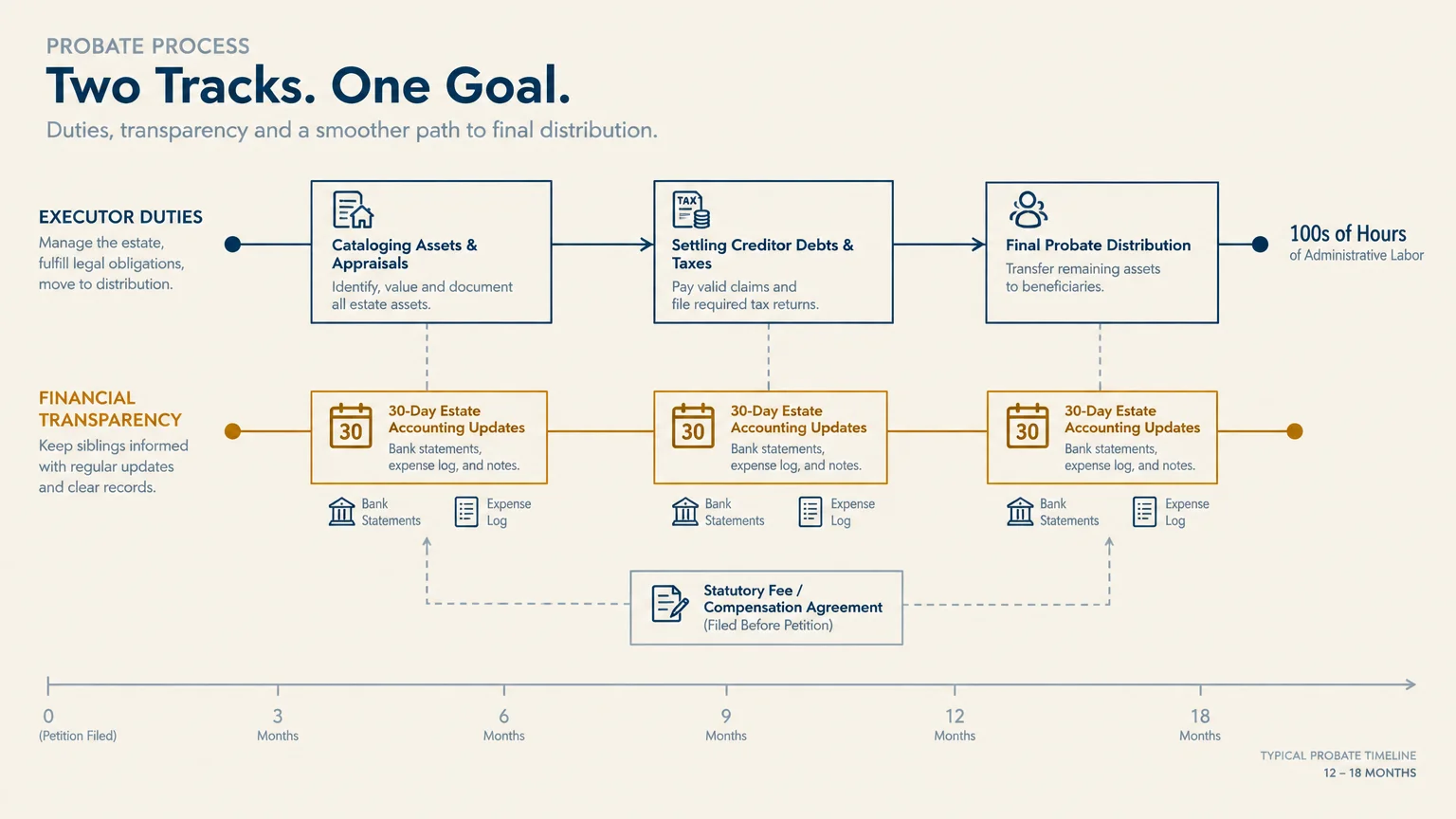
Under state laws, executor responsibilities include cataloging assets, paying creditors, filing tax returns, and distributing funds. This complex administrative workload can easily consume hundreds of hours over twelve to eighteen months.
Siblings must discuss whether the executor will accept a statutory fee authorized by probate law. While some executors waive compensation to preserve family goodwill, others need the fee to offset lost wages.
Agreeing on fair compensation upfront eliminates quiet resentment between the sibling doing the labor and those observing from afar. Put this financial agreement in writing before the executor files the initial probate petition.
Establish standard reporting windows so everyone sees the estate accounting in real time. Providing bank statements and expense logs every thirty days builds total trust among heirs.

2. The Future of the Family Home
The family residence often represents the largest financial asset and the deepest emotional attachment. Sibling inheritance disputes erupt quickly when one heir wants to sell while another desires to move in.
You must decide together whether to list the property publicly or arrange an internal buyout. Relying on rough online home estimates will only spark arguments over true property value.
Hire an independent, state-certified real estate appraiser to determine fair market value. Both siblings should review the appraiser’s credentials and agree to abide by the valuation figure.
If one sibling decides to buy out the other, establish a strict sixty-day financing deadline. The buying sibling must secure mortgage pre-approval rather than relying on informal payment plans.
You must also determine how to split ongoing holding costs during the transition period. Property taxes, homeowners insurance, and lawn maintenance require steady funding until closing day.
| Factor | Open Market Sale | Sibling Buyout |
|---|---|---|
| Valuation Method | Determined by active market buyers and bids | Requires formal independent appraisal |
| Liquidity Timeline | Cash distributed upon closing (30–90 days) | Requires buyer to secure separate mortgage financing |
| Closing Costs | Standard broker commissions and transfer fees apply | Avoids broker fees; legal and title fees still apply |
| Family Dynamics | Clean emotional break from physical property | Risk of lingering disputes over future property gains |

3. Distribution of Heirlooms and Sentimental Personal Property
Emotional conflicts rarely stem from bank certificates; they flare over sentimental keepsakes like photo albums, jewelry, and furniture. Dividing inheritance equitably means separating monetary worth from subjective emotional attachment.
Begin by conducting a comprehensive walk-through of the home together to catalog every meaningful item. Photograph all furniture, art, and collectibles before anyone packs a single box.
Never permit family members to remove items quietly or claim verbal promises made in private. Unauthorized removal of personal property creates instant suspicion and damages sibling trust permanently.
Implement a transparent selection protocol, such as a round-robin draft or a points-allocation system. In a draft, siblings take turns selecting one item per round until all designated property is distributed.
For items carrying significant monetary value, hire an independent antique appraiser before selection begins. Siblings can then equalize high-value physical assets against their respective shares of the liquid estate.

4. Accounting for Past Financial Support and Caregiver Sacrifices
Many families encounter deep tension when one sibling provided eldercare while other siblings lived far away. The caregiving sibling often sacrificed personal income, career advancement, and emotional health to support aging parents.
Resources from the Eldercare Locator emphasize the immense financial toll placed on family caregivers. Acknowledging this labor openly prevents bitter arguments over final estate allocations.
Without a formal personal care agreement signed by parents during life, retroactive caregiver compensation cannot legally bind the estate. However, siblings can mutually agree to award the caregiving sibling an additional lump-sum distribution.
Similarly, address any substantial financial gifts or personal loans that parents gave to specific siblings over the years. Determine whether those past payments should count as an advancement against that sibling’s inheritance share.
If no written promissory notes exist, treat undocumented financial transfers as completed gifts rather than debts. Arguing over decades-old informal gifts will paralyze probate and multiply legal bills.
5. Division of Non-Probate and Beneficiary-Designated Accounts
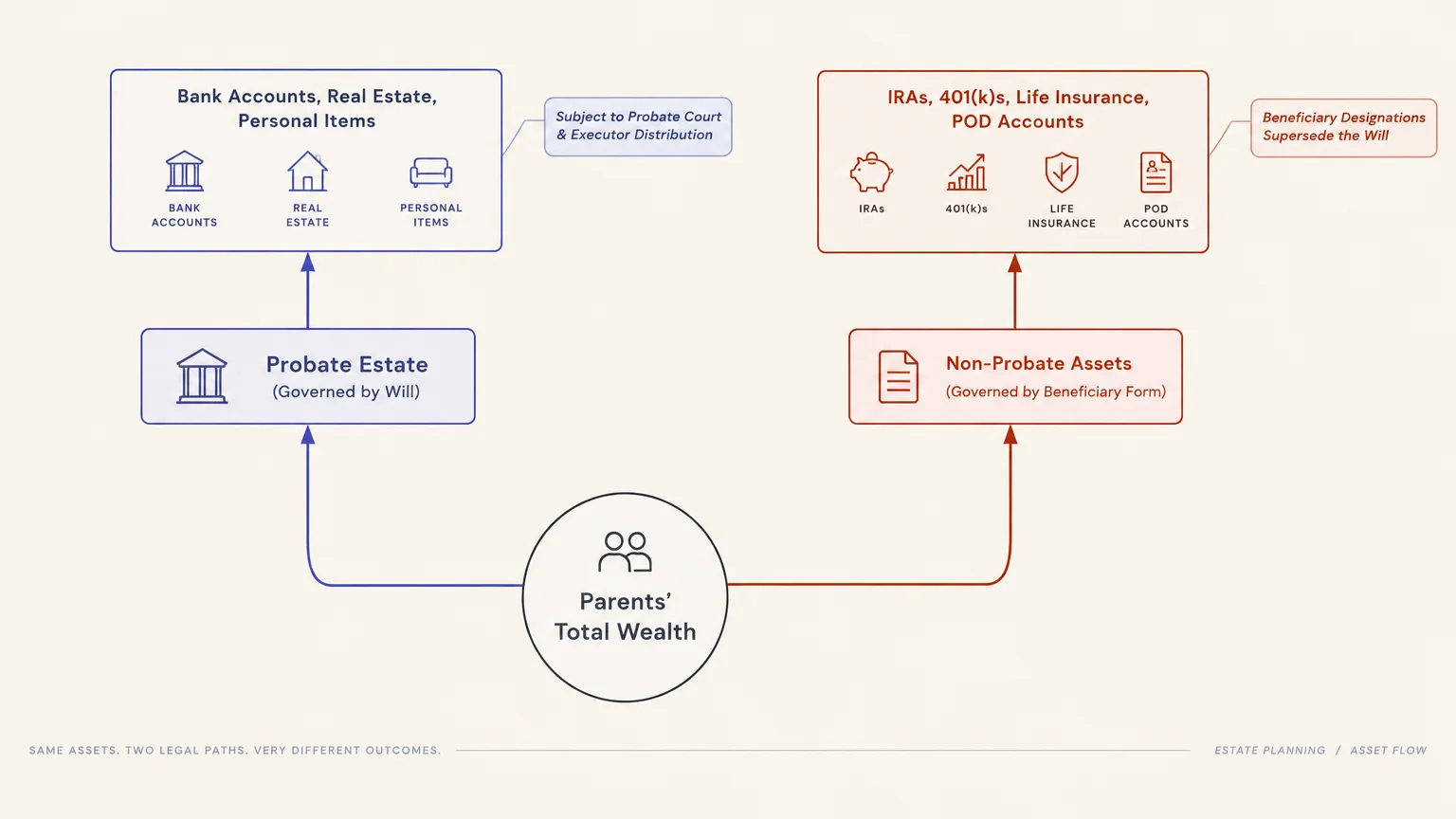
Many heirs do not realize that beneficiary designations on life insurance and retirement accounts supersede instructions in a will. If an outdated form names only one child, the financial institution must pay that sibling directly.
Guidance from the IRS Retirement Plans section clarifies that designated beneficiaries become outright owners of qualified accounts. Settle whether the named sibling will voluntarily equalize those proceeds with their brothers or sisters.
Remember that direct transfers of non-probate funds can trigger unexpected gift tax reporting requirements. A named beneficiary cannot simply hand fifty thousand dollars to a sibling without understanding tax rules.
Additionally, evaluate the tax nature of each inherited asset before splitting parents estate accounts. Receiving a traditional pre-tax IRA carries heavy ordinary income tax obligations, whereas inheriting cash or a stepped-up home does not.
Equalizing dollar amounts without accounting for embedded tax liabilities leaves one sibling with significantly less net wealth. Always consult a tax professional before balancing pretax retirement accounts against post-tax cash reserves.
“It’s not how much money you make, but how much money you keep, how hard it works for you, and how many generations you keep it for.” — Robert Kiyosaki

6. Handling Immediate Carrying Costs, Debts, and Estate Expenses
Settling an estate requires continuous cash flow long before assets are liquidated and proceeds distributed. Mortgages, utility accounts, property taxes, and funeral bills arrive relentlessly during the initial weeks of grief.
Decide immediately who will front these out-of-pocket costs until the executor establishes a formal estate checking account. Never mix personal funds with estate finances without detailed written records.
The executor should open a dedicated estate account using the estate’s federal tax identification number. All debts must be paid strictly through this account to establish an undeniable audit trail.
Siblings must also establish a formal reimbursement policy for administrative expenses incurred on behalf of the estate. Keep every paper receipt for postage, court filing fees, travel mileage, and necessary home repairs.
Agree on a spending ceiling above which the executor must obtain written approval from all siblings. For example, capping independent repair expenditures at one thousand dollars prevents disputes over renovation choices.

7. Hiring Independent Professional Advisors
Attempting to settle an estate using one sibling’s personal attorney or friend breeds immediate suspicion. In estate planning siblings must insist on neutral, independent professionals who represent the estate rather than individual heirs.
Hire a dedicated probate attorney whose sole legal duty is guiding the personal representative according to state law. The attorney must clarify in writing that they represent the estate as an entity.
Engage a certified public accountant (CPA) experienced in filing fiduciary income tax returns and final individual returns. Filing incorrect tax forms can result in penalties that diminish the total pool of inheritance.
Siblings should also interview and select a neutral real estate agent who specializes in probate sales. An agent with probate experience navigates court confirmation requirements and local pricing effectively.
Authorize all professional fees to be paid directly from the estate’s liquid assets before distributions occur. Clear contracts prevent arguments over who covers legal and accounting bills.
8. Communication Protocols and Dispute Resolution Rules
Poor communication sparks more sibling inheritance disputes than actual dollar discrepancies. Informal text messages often lead to misunderstandings, defensive reactions, and escalating family hostility.
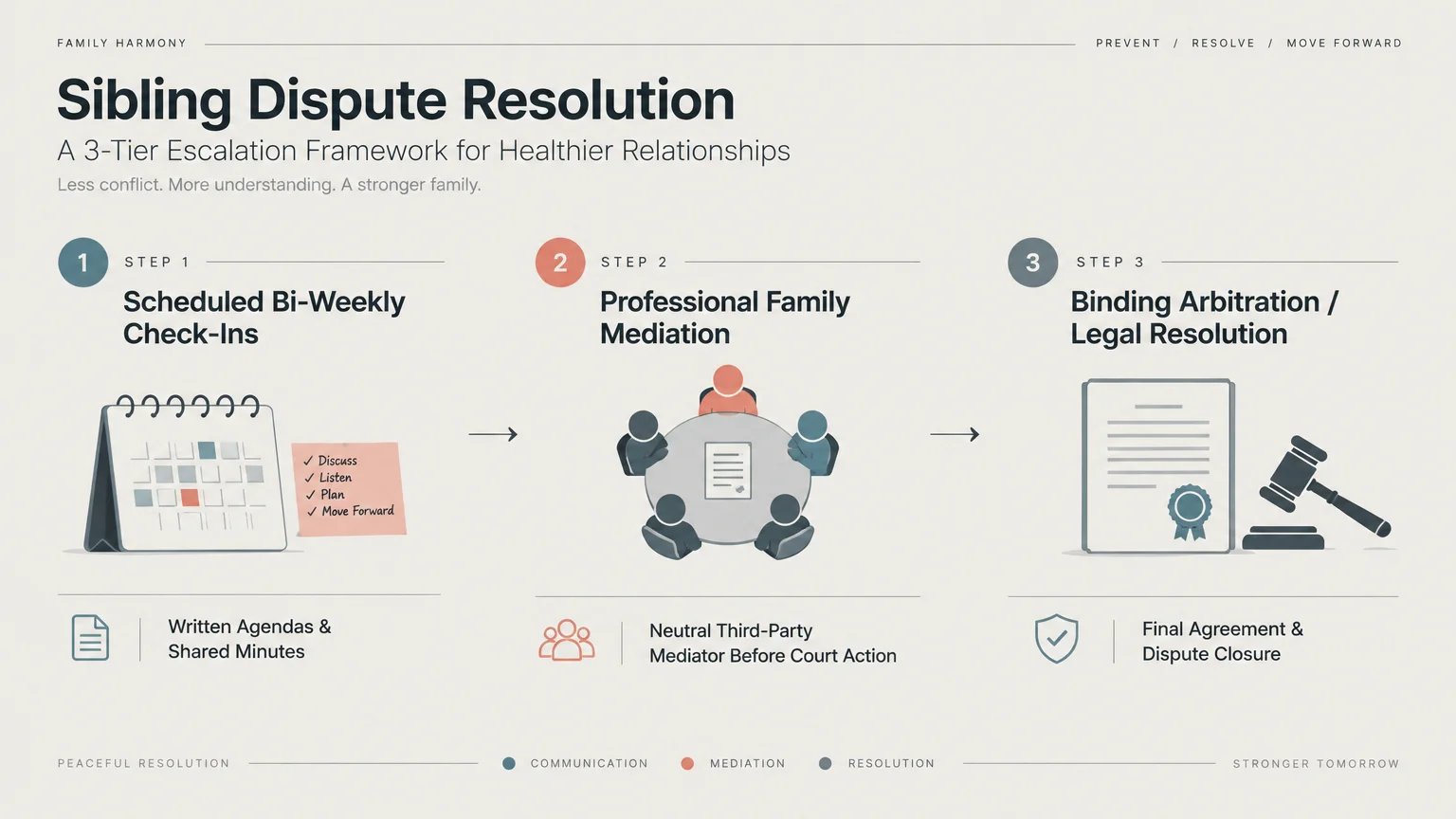
Establish an official communication channel, such as a bi-weekly email update or a shared digital folder. Centralizing documents, appraisals, and legal filings ensures that all siblings access identical information simultaneously.
Agree upon a decision-making framework for issues not explicitly addressed in your parents’ estate documents. For instance, decide whether minor property decisions require a simple majority or unanimous sibling consent.
Sign a written pledge committing to professional mediation before anyone hires a probate litigation attorney. A certified estate mediator costs a fraction of a lawsuit and preserves delicate family relationships.
Protracted court battles enrich litigators while depleting the wealth your parents worked a lifetime to accumulate. Setting mediation as your default dispute mechanism protects both your inheritance and your family bond.

Costly Mistakes to Avoid
Sidestep these common pitfalls during estate administration to preserve your peace of mind and family relationships:
- Rushing the Physical Cleanout: Clearing a home before completing an appraisal risks discarding valuable collectibles or heirlooms. Take time to inspect belongings thoroughly before hiring a removal service.
- Relying on Verbal Agreements: Unwritten understandings collapse when grief and financial stress alter recollections. Always draft formal written agreements signed by all siblings for major property decisions.
- Distributing Funds Prematurely: Paying heirs before satisfying creditor claims and tax debts exposes the executor to personal liability. Settle all estate liabilities completely before issuing final inheritance checks.
- Ignoring Tax Consequences: Failing to differentiate between taxable retirement accounts and tax-free life insurance creates massive financial imbalances. Always account for future tax liability when dividing inheritance portfolios.

Don’t DIY These Decisions
Administering an estate involves intricate probate codes, fiduciary liability, and complex tax regulations. While handling everyday sorting yourself saves money, certain critical inflection points demand professional guidance.
Reviewing retirement resources from the Consumer Financial Protection Bureau (CFPB) highlights the risks of unguided wealth transfers. Bringing in qualified specialists shields your family from expensive legal missteps.
Consult a licensed probate attorney whenever real estate title issues arise or when family members threaten legal action. An attorney protects the executor from personal lawsuits while maintaining adherence to state probate deadlines.
Work with an elder law specialist if Medicaid estate recovery notices appear against the parental home. State agencies frequently file claims against real property to recoup long-term healthcare expenses.
Engage a fee-only fiduciary financial advisor when dividing inheritance assets across multiple generations. Organizations like AARP provide tools to help heirs make prudent investment and claiming choices.
Frequently Asked Questions
Can an executor sibling take whatever personal items they want?
No, an executor sibling has a legal fiduciary duty to manage and preserve estate assets for all beneficiaries. Taking personal items without mutual consent or probate court approval constitutes a direct breach of fiduciary duty.
What happens if siblings cannot agree on selling the parents’ house?
If siblings cannot agree on a buyout or a sale price, any co-owner can file a partition lawsuit. The probate court will then order a forced sale of the property, which significantly reduces proceeds through legal costs.
Are inheritance distributions taxed as regular income to siblings?
Most cash inheritances and life insurance proceeds are not subject to federal income tax. However, distributions from inherited traditional IRAs or 401(k) accounts are taxed as ordinary income as withdrawals occur.
How can siblings handle caregiving compensation retroactively?
Siblings can draft a private family settlement agreement that allocates an extra lump sum to the primary caregiver. All named beneficiaries must sign this agreement voluntarily before the executor releases estate funds.
Schedule an open, calm family meeting with an agreed agenda before signing court filings or touching personal property. Open communication today ensures that your parents’ legacy brings your family together rather than driving you apart.
This article is for informational purposes only and does not constitute financial, legal, or medical advice. Medicare rules, Social Security benefits, and tax laws change regularly—verify current details at Medicare.gov, SSA.gov, or with a licensed professional.
Last updated: February 2026. Medicare and Social Security rules change annually—always verify current details at official government sources.