Working past age 65 protects your financial independence, but keeping your job changes how your health coverage works. Understanding how your workplace policy coordinates with Medicare shields you from lifelong premium penalties and unpaid medical bills.
Many older professionals assume their corporate human resources department understands federal Medicare regulations. Unfortunately, bad timing or incorrect assumptions about employer insurance and medicare can trigger devastating coverage gaps.
Navigating medicare while working requires knowing when to enroll and when to delay medicare enrollment safely. These ten rules will help you protect your healthcare access and your retirement savings.
1. The 20-Employee Rule Determines Who Pays First
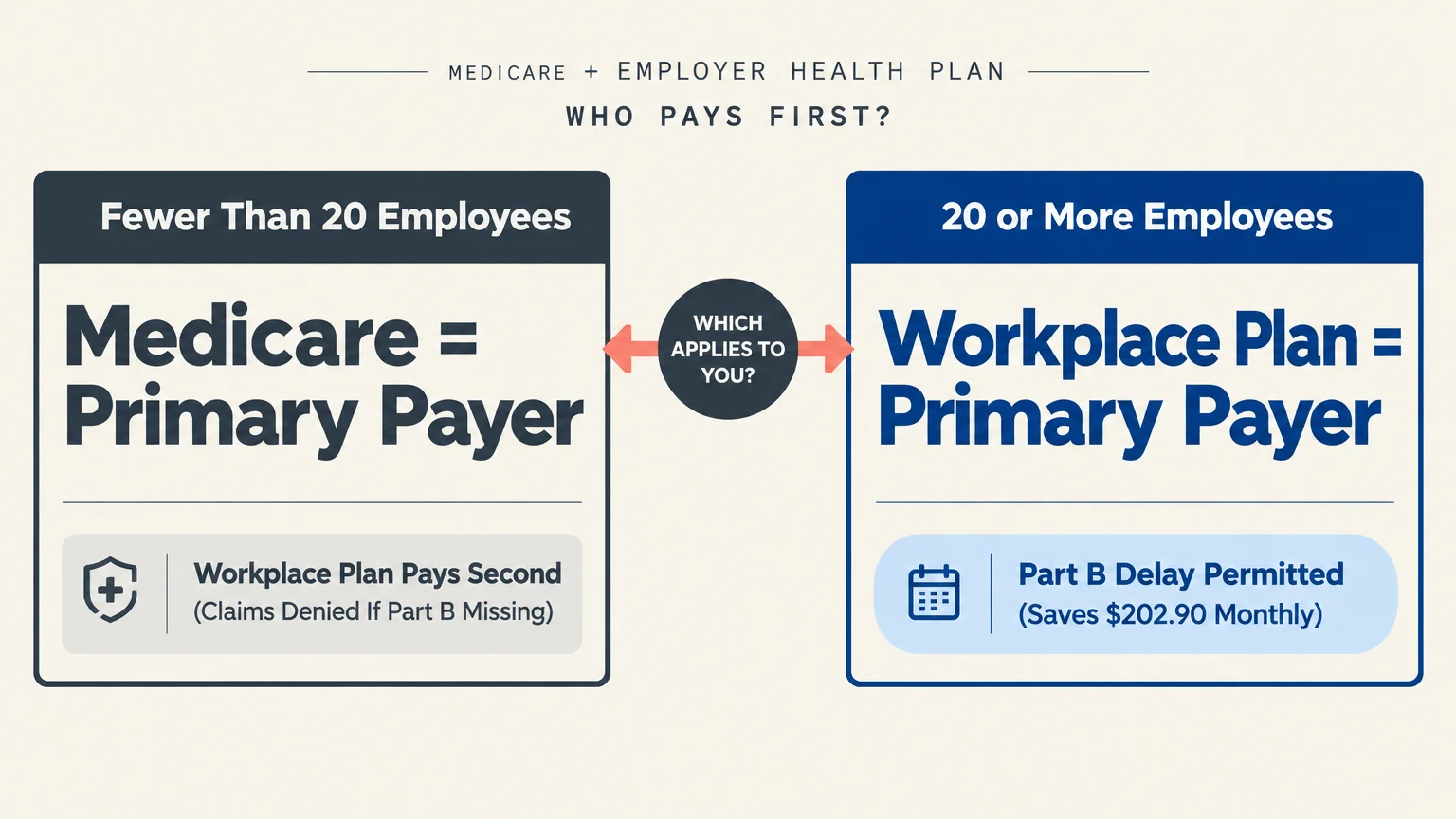
Your employer’s total headcount determines whether Medicare or your workplace insurance pays your medical bills first.
When your company employs 20 or more workers, your group health plan serves as your primary payer. In this arrangement, Medicare functions as secondary coverage.
Because your job-based policy pays first, you can safely delay Part B without incurring any financial penalties. Postponing enrollment saves you the standard monthly Part B premium of $202.90.
You do not need to enroll in Part B just to have secondary insurance. Most workers at large companies skip Part B because their employer plan already covers outpatient care.
The situation flips if your employer has fewer than 20 employees. At smaller companies, Medicare automatically becomes the primary payer the month you turn 65.
If you skip Medicare enrollment while working for a small business, your employer plan can deny claims. The private insurer will refuse payment on any expense Medicare would have covered.
For example, a worker at an 18-person firm who breaks an ankle could face tens of thousands in unpaid hospital bills. Always verify your company’s official headcount directly with your benefits administrator.
Do not rely on informal estimates of office staff. The federal government counts full-time and part-time workers across all corporate locations to establish the 20-employee threshold.
2. Premium-Free Part A Freezes Your Health Savings Account
Most Americans qualify for premium-free Medicare Part A after completing 40 quarters of covered employment. While free hospital insurance sounds appealing, signing up creates an immediate tax conflict for active workers.
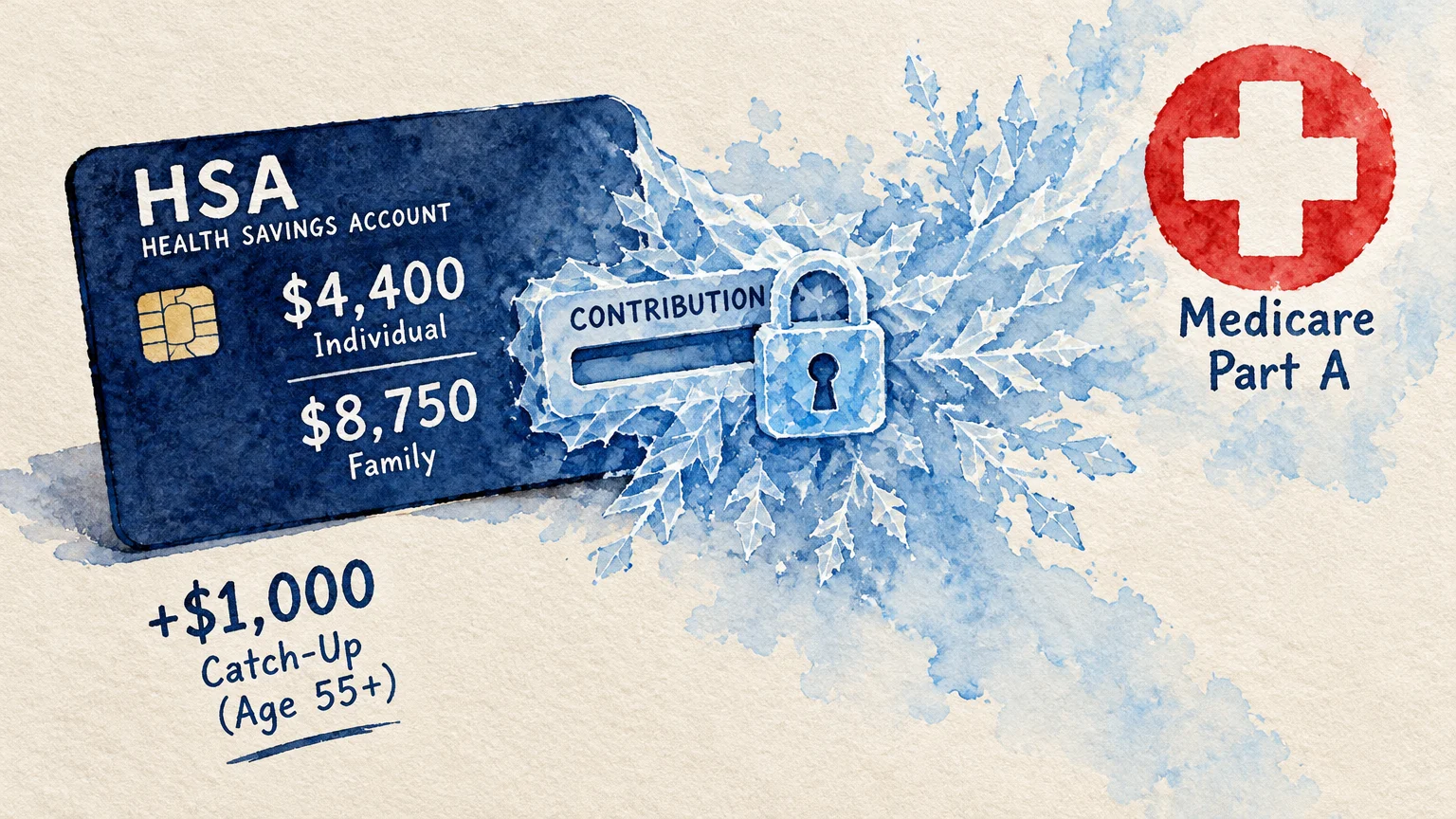
Internal Revenue Service regulations prohibit anyone enrolled in any part of Medicare from contributing to a Health Savings Account (HSA). Having Part A invalidates your eligibility, even if you keep your workplace high-deductible plan.
Active workers who delay Medicare can build substantial tax-advantaged savings through an HSA. Annual contribution limits allow individuals to deposit up to $4,400 for self-only coverage and $8,750 for family coverage.
Those contribution caps rise to $4,500 for self-only and $9,000 for family plans in subsequent tax years. Workers aged 55 and older can contribute an additional $1,000 annual catch-up amount.
To qualify, your high-deductible health plan must carry a minimum annual deductible of $1,700 for individual coverage or $3,400 for families. If building HSA assets remains your priority, delay Part A enrollment entirely.
Remember that enrolling in Medicare does not freeze existing funds. You can invest existing HSA assets and spend them tax-free on copays, deductibles, and qualified medical expenses.
You can even use accumulated HSA dollars to pay your Medicare Part B and Part D premiums tax-free once you retire. The legal ban restricts new deposits, not your existing balance.
3. The 6-Month Retroactive Coverage Trap Can Trigger IRS Fines
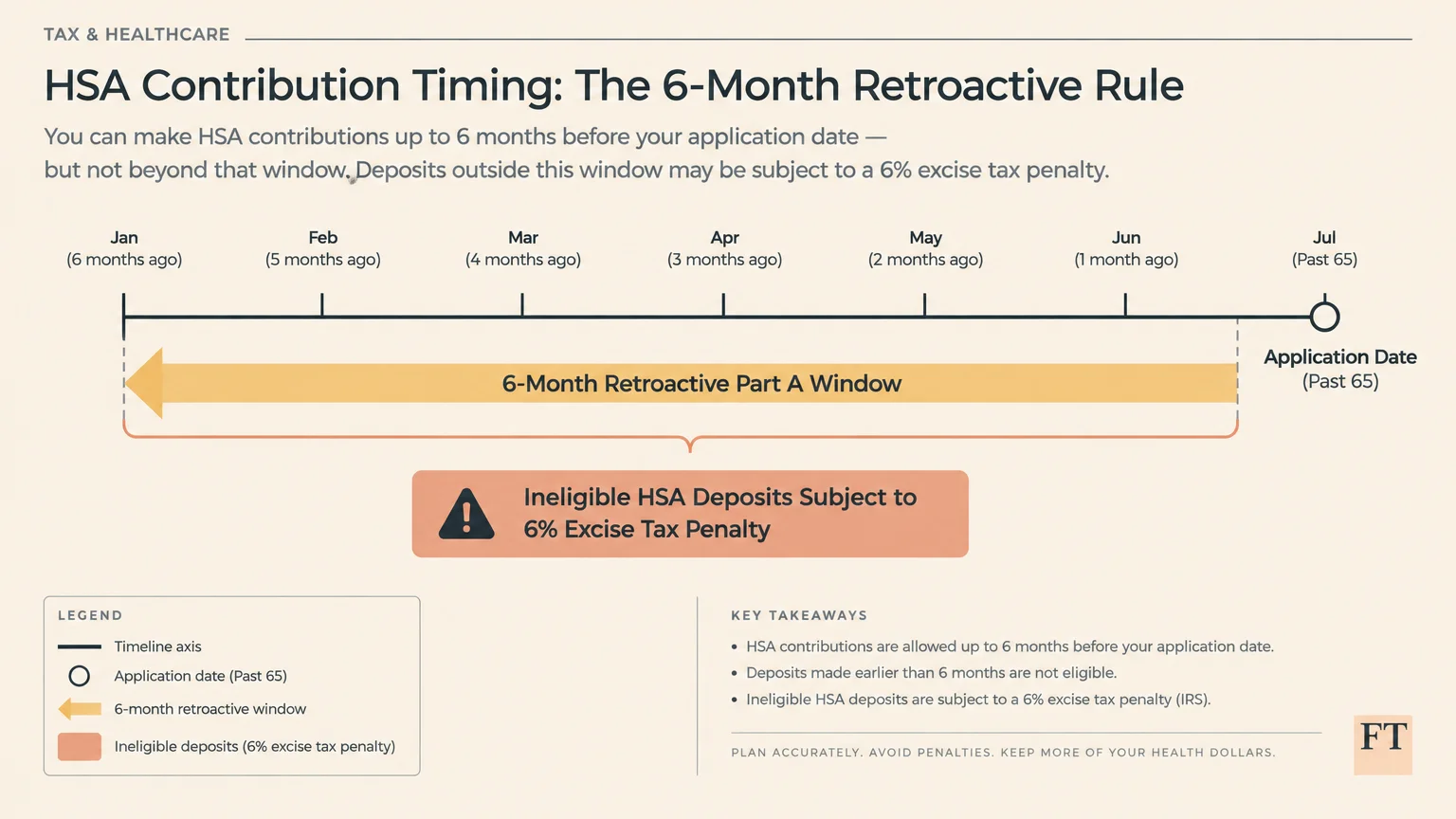
Delaying Medicare enrollment past age 65 introduces a little-known technical rule called the six-month lookback period. When you eventually apply for Part A, the government automatically backdates your coverage by six months.
This retroactive start date cannot precede the month you turned 65. However, it retroactively covers you during months when you may have actively funded your workplace HSA.
Because the IRS bans HSA contributions during active Medicare coverage, those retroactive months turn your legitimate contributions into illegal excess deposits. The government assesses a 6% excise penalty every year until you fix the error.
To prevent this penalty, stop all HSA contributions at least six full months before submitting your Medicare application. Coordinate your payroll deductions early to ensure clean tax filings when you retire.
If you accidentally contribute during the retroactive window, contact your HSA custodian immediately. You must withdraw the excess contributions and their earnings before the tax filing deadline to avoid the 6% annual tax.
You must report these corrective distributions on IRS Form 5329. Taking immediate action prevents recurring penalties from eroding your hard-earned retirement assets.
4. Claiming Social Security Forces Automatic Part A Enrollment
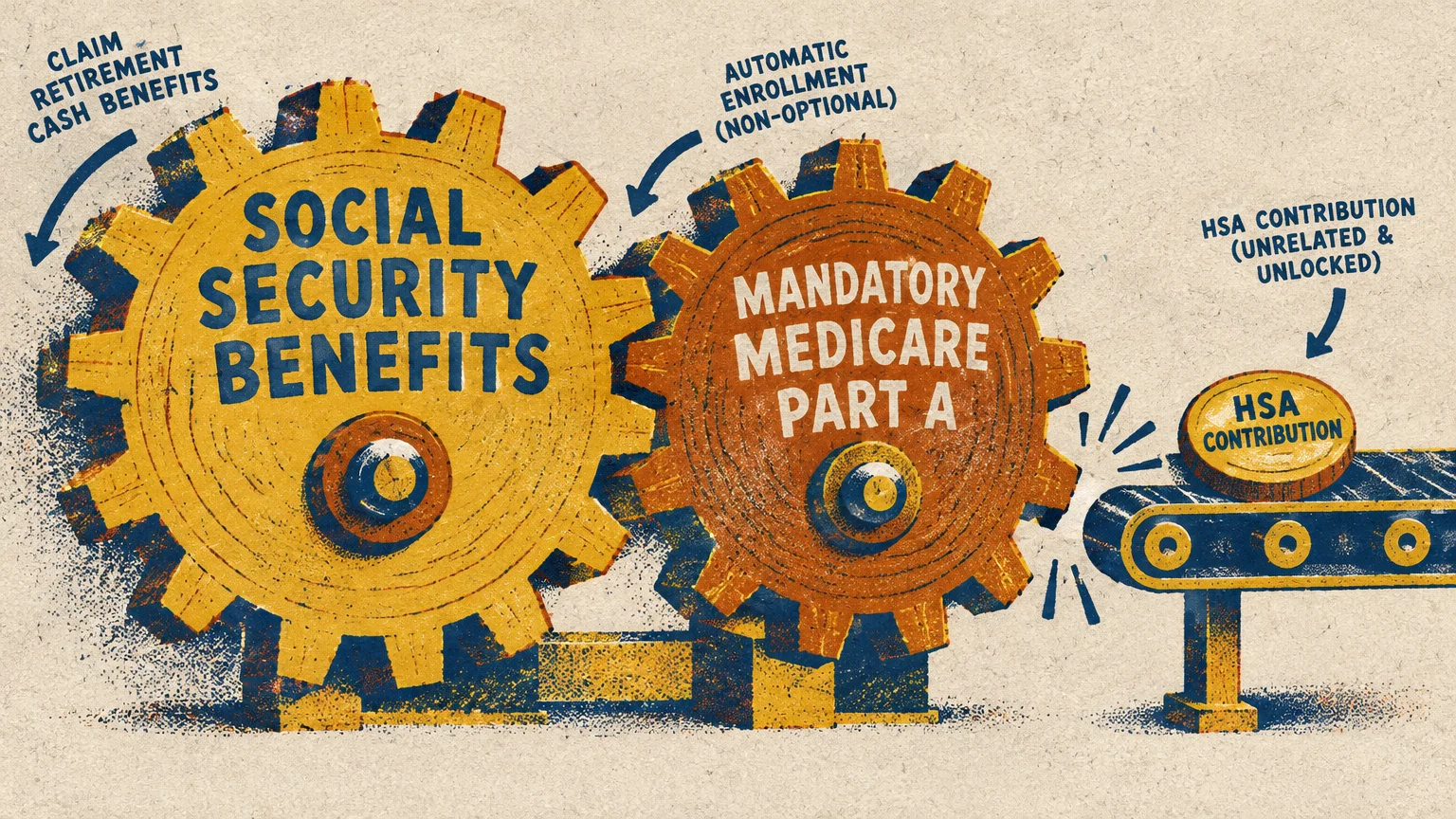
Many seniors decide to collect Social Security benefits while continuing to work full-time or part-time. If you apply for Social Security at age 65 or older, you cannot decline Medicare Part A.
Federal law inextricably links Social Security monthly retirement checks to Medicare Part A enrollment. The Social Security Administration automatically enrolls every applicant who has reached age 65.
This automatic enrollment instantly triggers the six-month retroactive coverage rule. As a direct result, your eligibility to make HSA contributions ends immediately.
If you are already receiving Social Security payments when you turn 65, enrollment happens without your consent. Your Medicare card will arrive in the mail roughly three months before your 65th birthday.
Workers who want to continue funding an HSA past 65 must postpone their Social Security retirement claims. Aligning both decisions prevents unintended tax penalties on your healthcare savings.
Delaying Social Security also boosts your future guaranteed income by earning delayed retirement credits until age 70. This approach provides higher lifetime benefits alongside continued HSA tax savings.
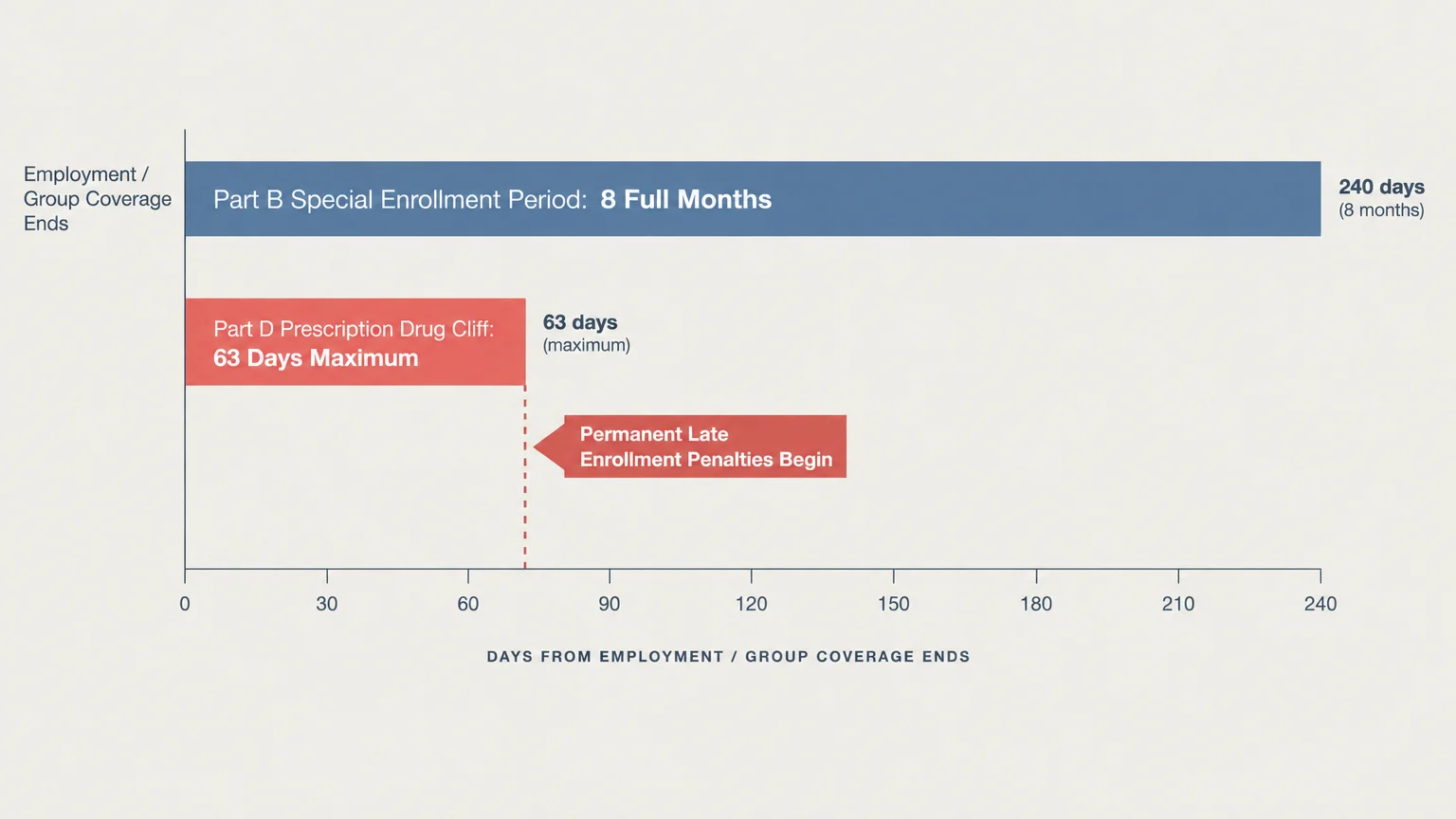
5. The 8-Month Part B Window Differs From the 63-Day Part D Cliff
Leaving active employment triggers a Medicare special enrollment period, but different parts of Medicare run on completely different clocks.
You receive an eight-month window to enroll in Part B without facing late enrollment penalties. This eight-month clock starts the month after your employment ends or your group coverage terminates, whichever happens first.
Prescription drug coverage operates under a far stricter deadline. You have only 63 consecutive days after losing employer drug coverage to enroll in a Medicare Part D plan.
Missing the 63-day deadline triggers permanent Part D late enrollment penalties that last for life. The government adds 1% of the national base beneficiary premium ($38.99) for each uncovered month.
To activate your Part B special enrollment period, you must submit two government forms. You will complete Form CMS-40B, and your employer’s human resources office must complete Form CMS-L564.
Compare available prescription drug policies well before your retirement date using the Medicare Plan Finder tool. Securing drug coverage promptly shields your nest egg from compounding surcharges.
Do not wait for the final weeks of your special enrollment period to submit paperwork. Processing backlogs at local Social Security offices can leave you without active coverage for weeks.

6. COBRA and Severance Plans Do Not Protect You From Penalties
Leaving your job often comes with an offer to continue your workplace insurance through COBRA. Relying on COBRA coverage past age 65 is one of the most expensive traps in retirement planning.
Medicare regulations do not recognize COBRA continuation coverage or severance packages as active employment coverage. Your eight-month special enrollment period starts when active work ends, not when COBRA expires.
If you stay on COBRA for 18 months before applying for Medicare, your eight-month enrollment window has long passed. You will face a permanent 10% Part B premium penalty for every 12-month period missed.
You also lose the right to enroll immediately, forcing you to wait for the next General Enrollment Period. During that waiting period, COBRA may refuse to pay claims that Medicare should have covered.
Retiree health insurance plans carry the exact same restriction as COBRA policies. While retiree coverage can supplement Medicare as secondary insurance, it never excuses you from enrolling in Part B at 65.
Enroll in Medicare Part B as soon as your active job concludes, even if your former employer subsidizes COBRA. Active group coverage remains the only qualifying defense against lifelong penalties.
“The goal of retirement is to live off your assets—not live off your regrets.”
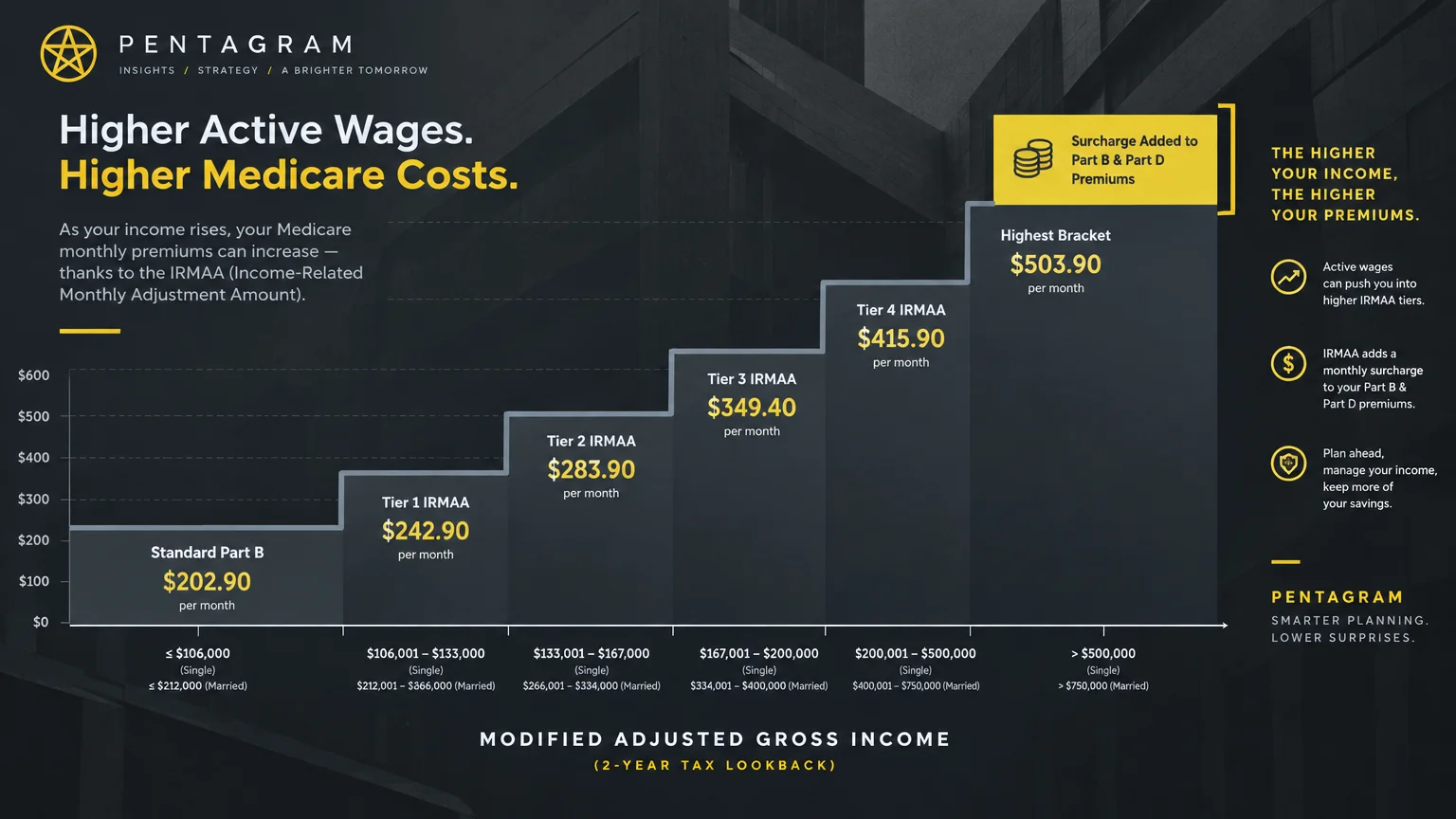
7. Ongoing Wages Can Trigger Steep IRMAA Surcharges
Continuing to work often generates a strong salary that pushes you into higher tax brackets. High-earning workers who enroll in Medicare face the Income-Related Monthly Adjustment Amount, or IRMAA.
The government calculates IRMAA surcharges using your modified adjusted gross income from two tax years prior. Surcharges kick in when income exceeds $109,000 for single filers or $218,000 for married couples filing jointly.
Standard Part B coverage costs $202.90 per month, but IRMAA surcharges significantly increase that figure. High earners pay total Part B premiums ranging between $284.10 and $689.90 every month.
Part D drug plans also incur monthly IRMAA surcharges ranging from $14.50 to $91.00 above the plan premium. Active professionals must factor these substantial extra expenses into their annual healthcare budgets.
One-time income spikes—such as selling real estate or exercising company stock options—can also trigger IRMAA. Plan large financial transactions carefully while enrolled in Medicare to avoid bumping into higher premium brackets.

8. Filing Form SSA-44 Can Erase IRMAA Surcharges After You Stop Working
Working seniors often worry that their peak career earnings will lock them into elevated Medicare premiums after they retire. Fortunately, federal regulations provide a direct administrative remedy.
You can request an immediate reduction of your IRMAA surcharges by documenting a qualifying life-changing event. The Social Security Administration recognizes several specific events that drastically reduce your household income:
- Work stoppage (full retirement from employment)
- Work reduction (transitioning from full-time to part-time hours)
- Loss of income-producing property or pension rights
- Marriage, divorce, or the death of a spouse
Submit Form SSA-44 to the Social Security Administration along with documentation showing your income drop. Acceptable proof includes a retirement confirmation letter from your employer or an updated tax estimate.
Once approved, the agency bases your monthly premiums on your current reduced income rather than your earnings from two years ago. This simple administrative step can save you thousands of dollars in your first year of retirement.
File Form SSA-44 as soon as your work status changes. Processing times range from several weeks to months, but approved adjustments will refund any excess premiums withheld.

9. Employer Drug Coverage Must Meet the Creditable Standard
Staying on an employer health plan requires you to confirm that your prescription drug coverage meets federal standards. Coverage is considered creditable only if it pays at least as much as standard Medicare Part D.
Federal law mandates that employers send you an official Notice of Creditable Coverage each year before October 15. Save these annual verification letters in your records to prove continuous coverage when you eventually leave your job.
If your workplace drug coverage is non-creditable, delaying Part D triggers a permanent late enrollment penalty. That penalty compounds at 1% of the $38.99 national base premium for every uncovered month.
Medicare Part D caps annual out-of-pocket prescription drug spending at $2,100, with a maximum deductible of $615. Because of this protective spending ceiling, Medicare Part D may offer better financial value than your employer’s plan.
Compare your employer prescription formulary against standalone Part D plans at Medicare.gov. Evaluating your drug costs ensures you do not overpay while remaining on a workplace plan.
Many corporate plans feature high coinsurance rates on specialty medications. The $2,100 Medicare cap makes enrolling in Part D financially attractive for employees managing chronic conditions.

10. Working Spousal Coverage Grants the Same Protections
You do not need to work personally to delay Medicare Part B without incurring late penalties. You can qualify for an enrollment exemption through your spouse’s active employment.
To qualify, your spouse’s employer must maintain at least 20 active employees. When your spouse eventually stops working or leaves the plan, your eight-month special enrollment period begins.
Verify that your spouse’s workplace plan covers older dependents as primary insured individuals. Certain corporate health policies require dependents aged 65 and older to enroll in Medicare regardless of spousal employment.
If your spouse works for a small business with fewer than 20 employees, spousal delay rules do not apply. You must enroll in Medicare at age 65 to ensure your medical claims get paid.
Monitor your spouse’s employment plans closely as retirement approaches. If your spouse reduces hours to part-time status and loses group health coverage, your enrollment clock begins immediately.
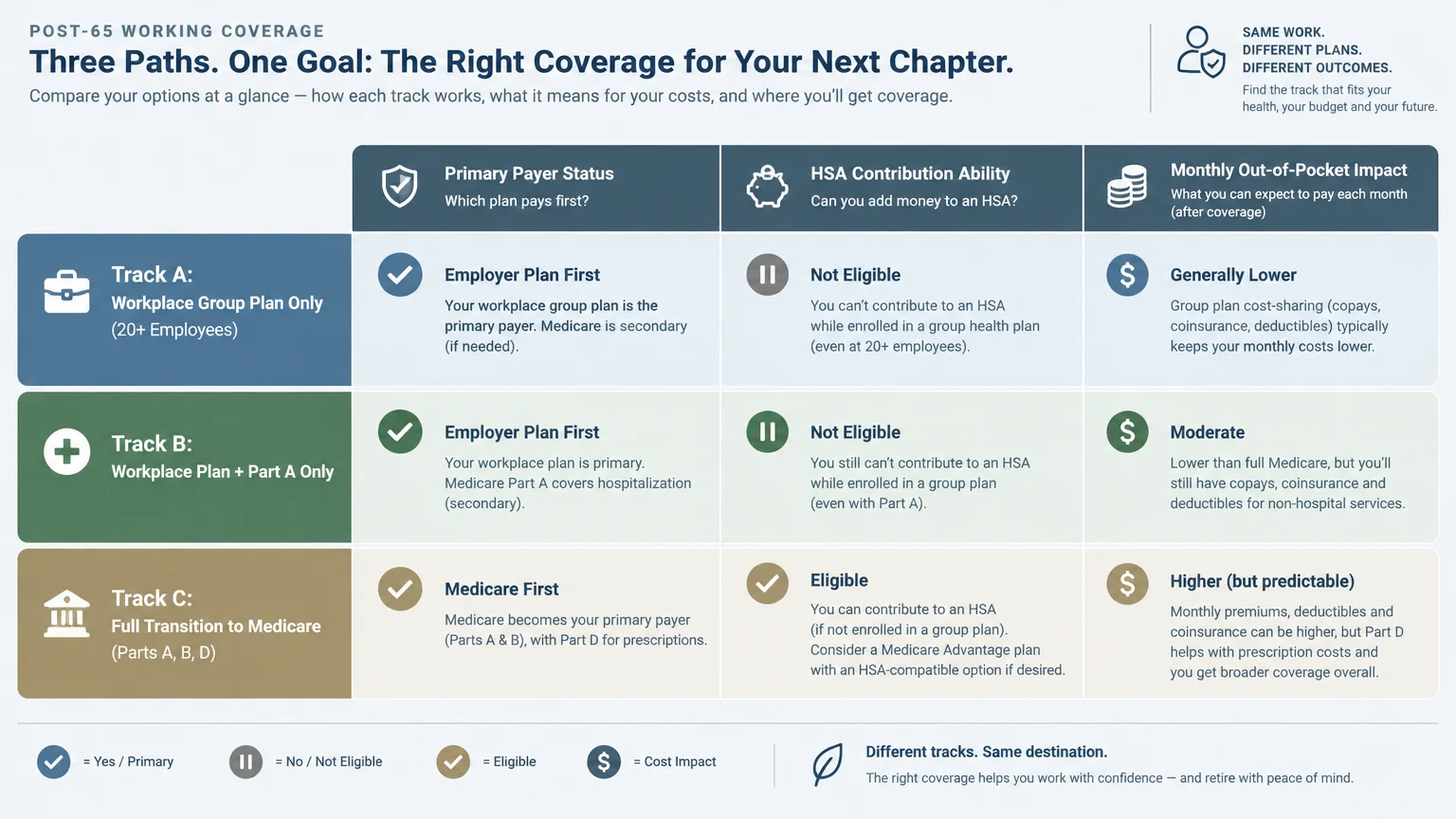
Comparing Health Coverage Options When Working Past 65
Deciding whether to keep employer insurance or transition into Medicare requires analyzing your company structure and personal finances. The wrong assumption can trigger permanent premium surcharges or catastrophic out-of-pocket claims.
Use the table below to review how different employment arrangements determine your primary insurer, penalty risks, and enrollment deadlines.
| Coverage Arrangement | Primary Payer | Safe to Delay Part B? | Can You Fund an HSA? | Enrollment Window After Coverage Ends |
|---|---|---|---|---|
| Large Employer (20+ employees, active work) | Employer Group Health Plan | Yes, without penalties | Yes (only if zero Medicare parts are active) | 8 months for Part B; 63 days for Part D |
| Small Employer (Fewer than 20 employees) | Medicare | No, must enroll at age 65 | No (Medicare enrollment is required) | Initial Enrollment Period (IEP) at age 65 |
| COBRA Continuation Coverage | Secondary to Medicare | No, penalties accrue | No (Medicare must be primary) | None (SEP begins when active work ends) |
| Retiree Health Insurance Plan | Secondary to Medicare | No, penalties accrue | No (Medicare must be primary) | None (must enroll during Initial Enrollment) |
| Working Spouse Plan (20+ employees) | Spouse’s Employer Plan | Yes, without penalties | Yes (if neither spouse has Medicare) | 8 months after spouse stops working |
This table highlights why understanding primary versus secondary payer rules is vital. Large group health plans allow flexibility, whereas small business and continuation plans require prompt Medicare enrollment.
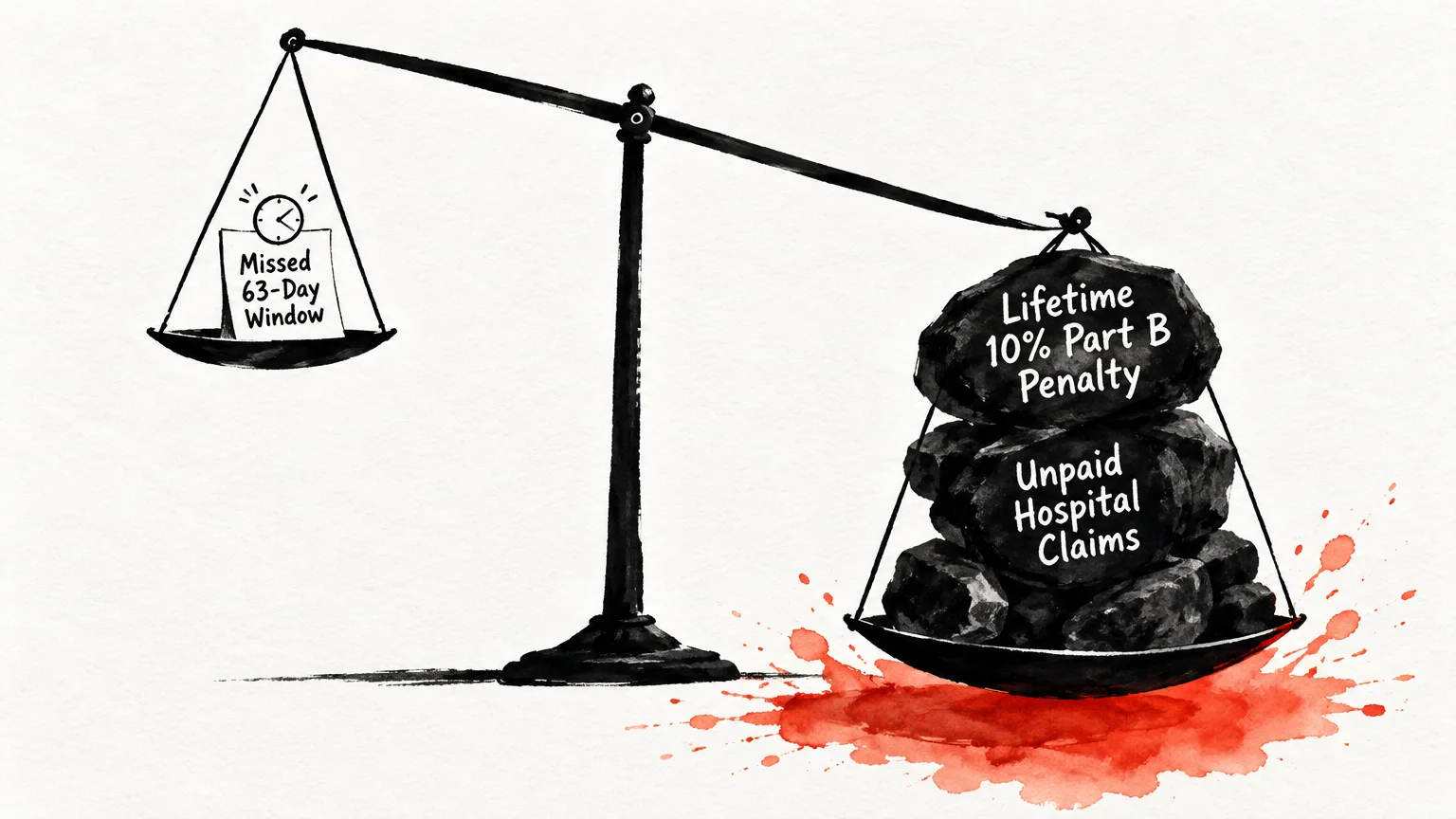
Errors That Cost Retirees Thousands
Even experienced professionals make critical errors when coordinating workplace benefits with Medicare rules. Avoiding these frequent missteps protects your healthcare security and preserves your retirement capital.
One costly mistake involves funding an HSA after enrolling in premium-free Part A. Many workers assume Part A is harmless because it costs nothing, but it immediately creates unlawful HSA deposits.
A second major error is relying on human resources representatives for Medicare advice. Benefits staff understand company policies well, but they rarely know intricate federal Medicare coordination statutes.
A third misstep involves electing COBRA instead of enrolling in Part B right after leaving a job. When the eight-month SEP expires during COBRA, you face lifelong penalties and months without insurance coverage.
Workers also fail to recognize the difference between Part B and Part D deadlines. Waiting eight months to address prescription coverage leaves you facing permanent Part D late enrollment penalties.
Retirees also forget to collect official employment verification forms before company human resources records archive. You must secure signed Form CMS-L564 from your employer to prove active coverage and waive penalties.
Without proof of qualifying coverage, you face the $1,736 Part A inpatient deductible and the $283 Part B deductible alone. Never leave an employer without securing written verification of your continuous health benefits.
“The best time to plan for retirement was 20 years ago. The second best time is today.”

When to Get Expert Help
Navigating the intersection of workplace benefits, tax rules, and Medicare requires personalized analysis. Several specialized professionals can guide your decisions without sales pressure.
Contact your State Health Insurance Assistance Program (SHIP) for objective, local Medicare counseling. SHIP counselors provide free guidance and do not sell insurance or earn commissions.
You can identify local support organizations and assistance programs using BenefitsCheckUp. This confidential tool connects older adults with verified community and federal resources.
Consult a fee-only financial advisor if your salary triggers significant IRMAA premium adjustments. A skilled advisor can time your retirement bonuses, stock options, and retirement account rollovers to minimize surcharges.
Speak with an elder law attorney if you own a closely held business or manage complex family trusts. Legal counsel ensures your healthcare coverage transition coordinates smoothly with your succession and estate planning.
Consider consulting an independent insurance broker to evaluate supplemental policies. Independent agents represent multiple carriers and can compare Medicare Supplement and Medicare Advantage options objectively.
Frequently Asked Questions About Working Past 65 and Medicare
Do I have to sign up for Medicare at 65 if I am still working?
You do not have to enroll if you work for an employer with 20 or more employees and have active group coverage. However, if your employer has fewer than 20 workers, you must enroll during your Initial Enrollment Period.
Workers at small companies must enroll because Medicare serves as primary insurance. Failing to sign up leaves you vulnerable to unpaid claims.
Can I keep contributing to my HSA if I work past 65?
You can continue contributing to an HSA only if you delay all parts of Medicare, including Part A. Enrolling in any Medicare part terminates your eligibility to make tax-favored HSA deposits.
Remember to halt contributions six months before applying for Medicare to account for the retroactive lookback period. This prevents triggering the 6% annual excise tax.
What forms do I need to enroll in Medicare when I retire?
You need Form CMS-40B to apply for Part B and Form CMS-L564 completed by your employer to verify continuous active coverage. Submitting both forms to Social Security ensures you avoid late penalties.
Submit these documents to your local Social Security office up to three months before your retirement date. Planning ahead prevents coverage gaps during your transition.
How does working past 65 affect my Medicare Part B premium?
If your modified adjusted gross income exceeds $109,000 for single filers or $218,000 for joint filers, you will owe an IRMAA surcharge. Total Part B premiums range from $284.10 up to $689.90 depending on earnings.
Once you stop working or reduce hours, file Form SSA-44 to request a premium recalculation. This lowers your monthly cost based on current retirement income.
Can I enroll in Medicare Part A only and decline Part B while working?
Yes, you can enroll in premium-free Part A and decline Part B if you have qualifying employer coverage. However, doing so immediately ends your ability to contribute to a Health Savings Account.
If you do not utilize an HSA, taking Part A provides secondary hospital coverage at zero monthly premium cost. Evaluate your savings goals before making this election.
Continuing your career past age 65 provides financial resilience and personal fulfillment, but managing your healthcare transition requires active planning. Review your workplace coverage, track your deadlines, and protect your nest egg from unnecessary expenses.
Retirement rules and benefit amounts vary based on individual work history, income, and circumstances; this article provides general guidance only. Consult a SHIP counselor, financial advisor, or elder law attorney for advice specific to your situation.
Last updated: October 2026. Medicare and Social Security rules change annually—always verify current details at official government sources.