Ignoring your annual healthcare mailings can quietly drain your retirement nest egg. Insurance providers alter their monthly premiums, clinical networks, and prescription drug formularies every single autumn.
You have a vital opportunity between October 15 and the December 7 deadline to optimize your coverage. Reviewing your current policy protects your budget against unexpected out-of-pocket costs on January 1.
Following these eight actionable Medicare open enrollment tips will help you compare Medicare plans with confidence. Take charge today so you can lock in dependable, affordable care for the coming year.

1. Review Your Annual Notice of Change Immediately
Your current insurance carrier must send you an Annual Notice of Change (ANOC) by late September. This document outlines every single adjustment to your plan for the upcoming calendar year.
Many enrollees toss this document aside because it looks like generic marketing junk mail. Discarding it without a thorough review can lead to unpleasant surprises at the pharmacy counter.
Open the ANOC and look specifically at the prescription drug tier assignments. A medication you take daily could move from a Tier 2 preferred generic to a higher tier.
Tier shifts dramatically increase your copayments or coinsurance costs. In some instances, an insurer may drop your medication from its approved formulary entirely.
Examine the provider network section with equal diligence. Insurers routinely renegotiate terms, meaning your primary physician or trusted regional hospital system could be out of network next year.
Review any alterations to maximum out-of-pocket limits and office copays. Even small copay increases for specialist visits can add up quickly over twelve months of care.
2. Calculate Your Drug Costs Under the New $2,400 Spending Cap
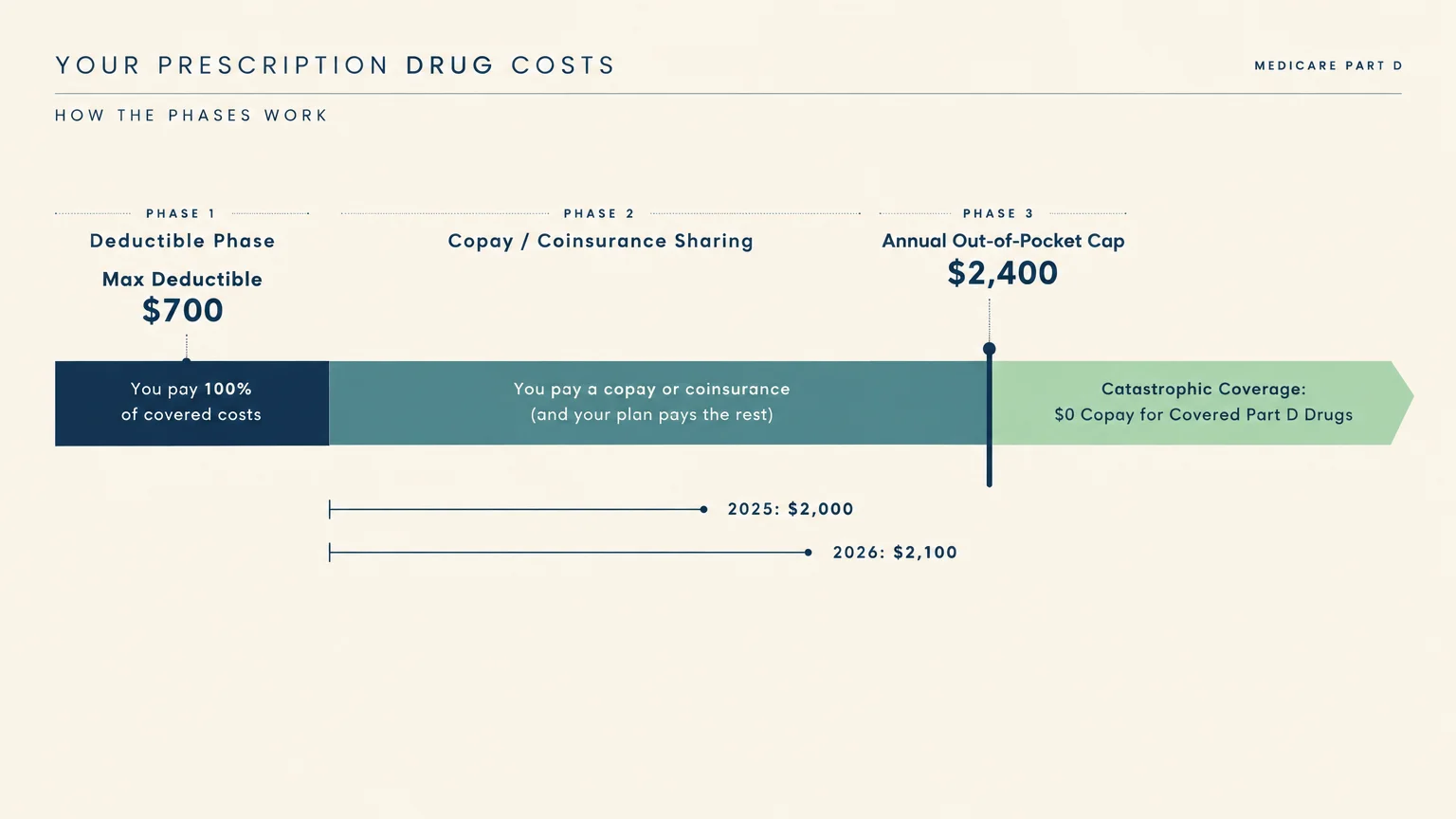
Prescription drug rules feature major consumer protections you must factor into your calculations. For 2027, the annual out-of-pocket spending cap for covered Part D medications is $2,400.
This threshold rose from $2,100 in 2026 and $2,000 in 2025. Once your qualifying spending hits this $2,400 maximum, you pay $0 for covered Part D drugs for the remainder of the year.
Deductibles, copays, and coinsurance all count toward reaching this annual maximum. This cap provides critical relief if you take expensive brand-name medications or specialty therapies.
However, the maximum allowable annual deductible for Part D plans increases to $700 in 2027. Some plans charge less or waive the deductible, but carriers can charge up to that limit.
You must evaluate the total financial math rather than focusing on premiums alone. Combine the annual plan premium, the deductible, and your projected copayments up to the $2,400 limit.
Consider enrolling in the Medicare Prescription Payment Plan if you face high upfront pharmacy bills. This voluntary option allows you to spread out-of-pocket prescription expenses into capped monthly payments throughout the year.
3. Watch for Vanishing Stand-Alone Prescription Plans
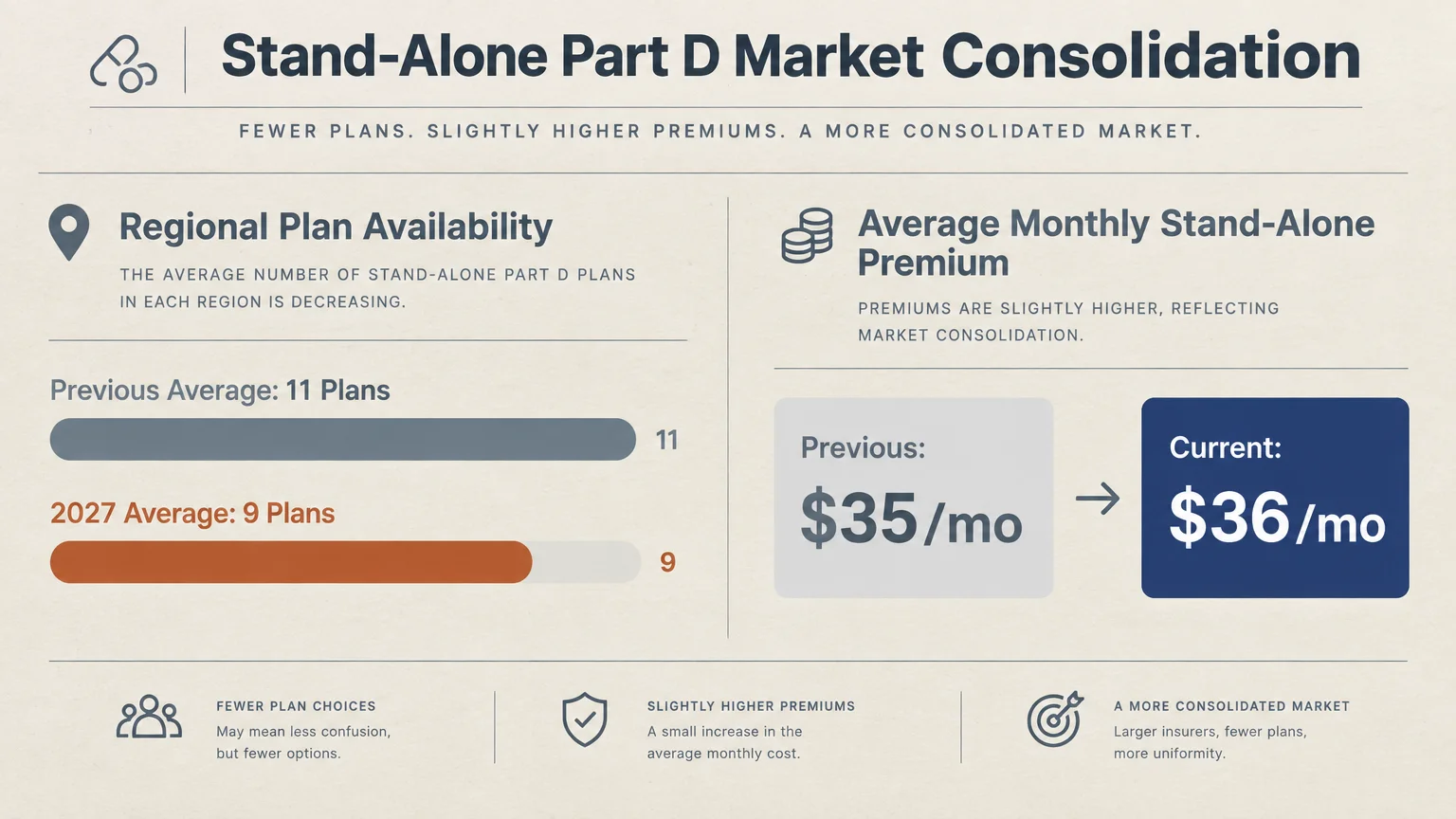
If you pair Original Medicare with a stand-alone Part D plan, your choices look different this season. The average number of stand-alone drug plans per region has dropped to 9, down from 11.
Consolidation among major private insurers has reduced your available options. Furthermore, regular $0-premium stand-alone Part D plans outside of the Extra Help program have been eliminated entirely.
According to federal projections, the average monthly premium for stand-alone Part D plans is $36. That represents a modest $1 increase from the previous year’s $35 average.
Be careful if your current stand-alone carrier decides to discontinue your specific plan. When a plan exits the market, the carrier often automatically moves you into a costlier companion plan.
This automatic transition, known as a plan crosswalk, can cause your monthly premium to jump substantially. Never allow a carrier to pick your next plan without your explicit review and consent.
Check the marketplace to verify that your preferred local pharmacy remains in your plan’s preferred network. Standard network pharmacies often charge significantly higher copayments for the exact same pills.

4. Use Medicare Plan Finder with Verified Portal Logins
The official online search engine remains your single best tool to compare Medicare plans. You can access this free comparison software directly through the official Medicare Plan Finder tool.
Avoid running generic, anonymous searches that rely on zip codes alone. Logging into your personal account pulls your real prescription history directly into the software.
Medicare has updated its account security protocols to better protect your medical identity. You can now securely access your portal using credentials from ID.me, CLEARme.com, or Login.gov.
Enter the exact dosages, frequencies, and package sizes for every prescription you take. Small differences in pill strength can alter formulary coverage and pricing tiers dramatically.
Compare total annual estimated costs rather than sorting results solely by monthly premiums. The plan with the lowest monthly fee often carries the highest total out-of-pocket costs.
Test both retail brick-and-mortar pharmacies and mail-order delivery options within the tool. Mail-order programs occasionally provide three-month supplies at a fraction of retail pharmacy pricing.
5. Verify Doctor Networks and Prior Authorization Rules
Never rely on verbal assurances or glossy promotional brochures when checking your medical network. Insurance marketing materials are frequently printed months in advance and contain outdated provider rosters.
Contact your physician’s billing office directly before selecting any managed care policy. Provide the office manager with the exact plan name and specific identification code to verify participation.
Ask whether your specialists and preferred surgical facilities remain fully contracted for the coming year. A doctor might accept a carrier’s broad network while rejecting their specific HMO or PPO plan.
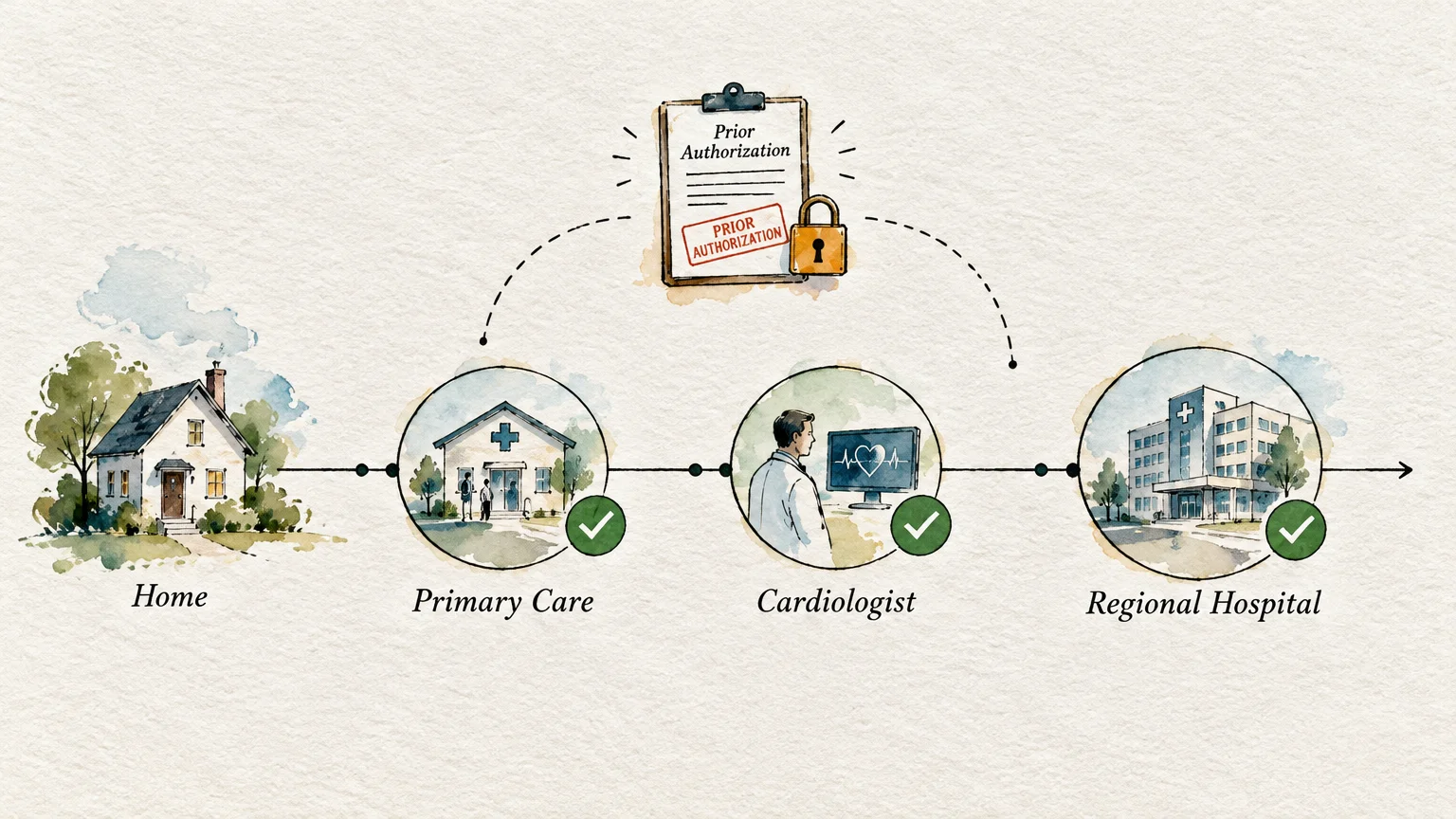
Investigate the plan’s prior authorization requirements for ongoing treatments or upcoming procedures. Medicare Advantage plans often require your doctor to obtain formal administrative permission before delivering specialized care.
These bureaucratic reviews can delay critical tests, prescription refills, or physical therapy sessions. If you value direct access to specialists without insurance roadblocks, take these restrictions seriously.
Original Medicare with a supplemental Medigap policy rarely imposes prior authorization barriers. Any doctor nationwide who accepts Medicare will treat you without requiring insurer approval.
6. Weigh Medicare Advantage Savings Against Network Limits
Medicare Advantage plans continue to draw enrollees with low premiums and bundled convenience. The projected average monthly premium for Medicare Advantage plans drops to $12.00, down from $14.37.
Roughly 70% of Medicare Advantage plans that include prescription drug coverage will charge an attractive $0 plan premium. Additionally, the drug coverage portion of these bundled plans averages just $7.00 after rebates.
Star ratings offer a helpful quality benchmark as you review your regional options. For 2027, about 37% of Advantage contracts earned four stars or higher, representing 71% of current enrollees.
However, low upfront premiums come with distinct operational trade-offs you must understand. You must usually receive routine medical care exclusively within a restricted local network of contracted providers.
Traveling outside your regional service area generally leaves you without coverage, except in acute medical emergencies. Supplemental Medigap policies, by contrast, travel with you anywhere across the entire United States.
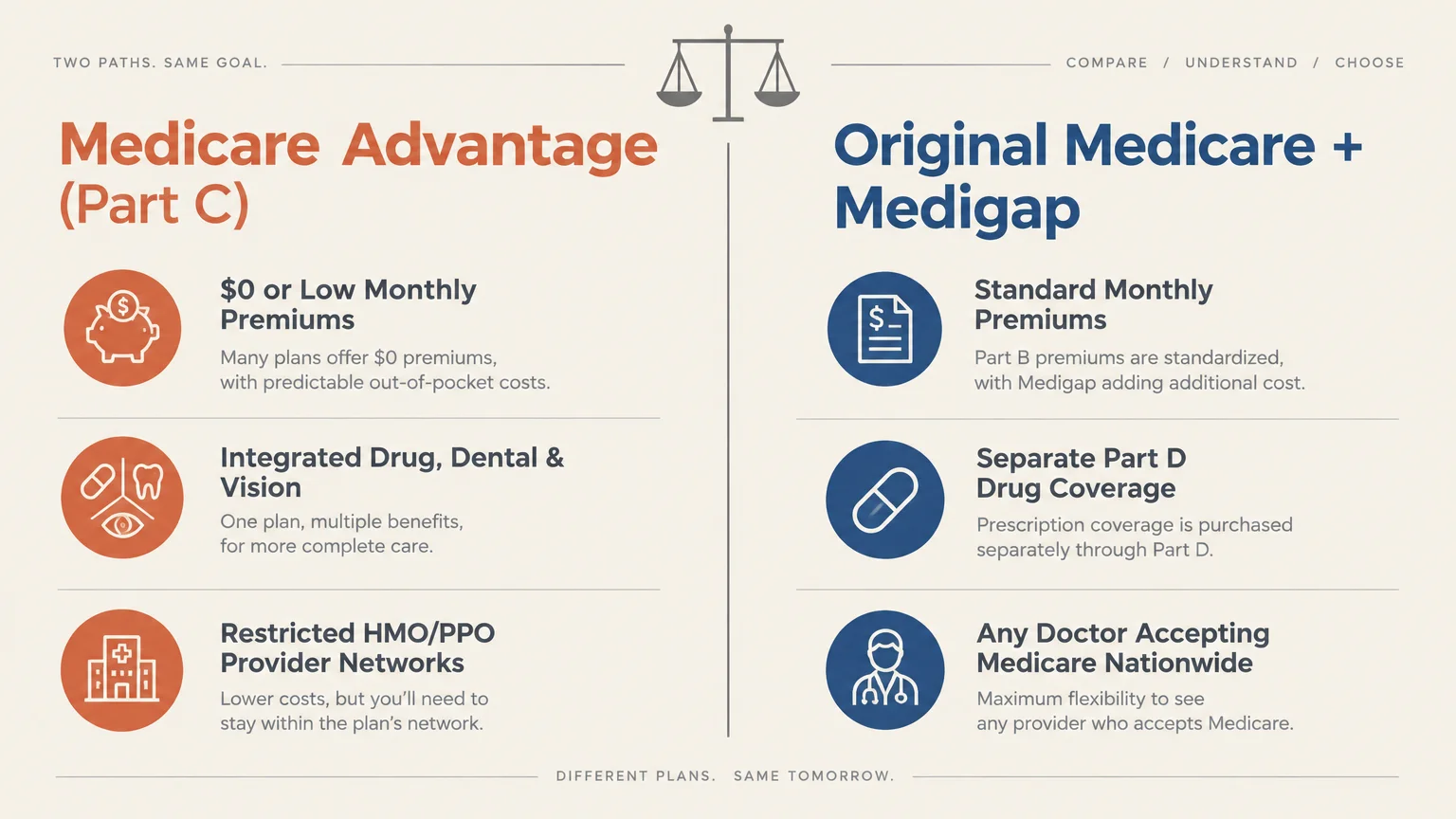
Examine how both paths handle routine expenses, specialist referrals, and catastrophic health events. The following comparison highlights the major structural differences between these two paths.
| Feature | Original Medicare + Medigap | Medicare Advantage (Part C) |
|---|---|---|
| Provider Choice | See any provider nationwide who accepts Medicare. No network restrictions. | Generally restricted to local HMO or PPO networks. Out-of-network care costs more or is excluded. |
| Prior Authorizations | Almost never required for medically necessary Medicare-covered services. | Frequently required for diagnostic scans, hospital stays, specialist care, and therapies. |
| Average Plan Premium | Higher monthly premiums for Medigap (varies by age, gender, and zip code). | Low or $0 monthly plan premium (projected national average is $12.00). |
| Out-of-Pocket Cap | Comprehensive Medigap plans (like Plan G) cover virtually all out-of-pocket costs. | Mandatory out-of-pocket cap applies, but enrollees pay copays until reaching it. |
| Drug Coverage | Requires a separate stand-alone Part D plan (projected average premium $36). | Usually bundled directly into the plan (Part D portion averages $7.00 after rebates). |
| Extra Benefits | Does not include routine dental, routine vision, hearing aids, or gym memberships. | Often includes limited dental allowances, vision hardware credits, and fitness perks. |
Carefully balance the appeal of bundled dental and vision allowances against strict provider rules. A serious illness can make provider flexibility far more valuable than an inexpensive gym membership.
Evaluate your personal health status, travel frequency, and risk tolerance before picking your path. Your selection should match your lifestyle rather than simply following what your neighbors choose.

7. Explore New 2027 Benefits Like the ACCESS Model and Drug Discounts
The federal government continues to implement new cost-saving measures across Medicare programs. Fifteen additional high-cost medications now carry lower, Medicare-negotiated prices under the Inflation Reduction Act.
This expansion covers vital treatments, including widely prescribed GLP-1 medications like Ozempic and Wegovy. These negotiated rates help shield your household budget from predatory retail drug markups.
Beneficiaries also gain access to the newly launched Medicare GLP-1 Bridge program. Under this initiative, qualifying enrollees can access certain GLP-1 medications for weight loss and health improvement for a $50 monthly copay.
Original Medicare enrollees can also take advantage of the groundbreaking ACCESS Model launching this year. This voluntary program targets chronic conditions such as diabetes, high blood pressure, and depression.
Participants receive low-cost or no-cost clinical support, including wearable diagnostic devices and personalized health coaching. It brings progressive chronic disease management directly into traditional fee-for-service Medicare.
The federal handbook also references TrumpRx.gov as a free comparison portal for cash-price prescription discounts. However, use extreme caution before buying medications outside your regular insurance plan.
Prescription purchases made using cash discount cards do not count toward your Medicare Part D deductible. They also do not count toward your $2,400 out-of-pocket spending cap.
“The goal of retirement is to live off your assets—not live off your regrets.”
Review every new federal initiative carefully to determine whether your medical profile qualifies. Proactive research allows you to claim every available discount and service established by law.

8. Mark the December 7 Deadline on Your Calendar
The annual Medicare open enrollment deadline is December 7, without exception. The federal government does not grant grace periods for forgotten paperwork or technical difficulties.
Submitting your enrollment changes before the deadline ensures your new coverage takes effect January 1. Waiting until the final hours risks system slowdowns and customer service delays.
Budget for your standard Part B premium as you finalize your household expenses. Trustees project the standard monthly Part B premium at approximately $209.50, up by $6.60 from $202.90.
Most retirees have their Part B premium deducted automatically from their monthly Social Security checks. You can monitor your benefit deductions directly through the Social Security Administration web portal.
If you miss the deadline, you generally remain locked into your current plan for all of next year. That means you are stuck with any premium increases or network cuts your plan enacted.
A safety valve exists exclusively for Medicare Advantage enrollees between January 1 and March 31. During this Medicare Advantage Open Enrollment Period, you can switch Advantage plans or return to Original Medicare.
However, returning to Original Medicare during that winter period does not guarantee you a Medigap policy. In most states, Medigap underwriters can deny you coverage based on pre-existing conditions.
Locking in the correct coverage during the fall period remains the safest financial strategy. Visit the central resources at Medicare.gov early to submit your selections smoothly.
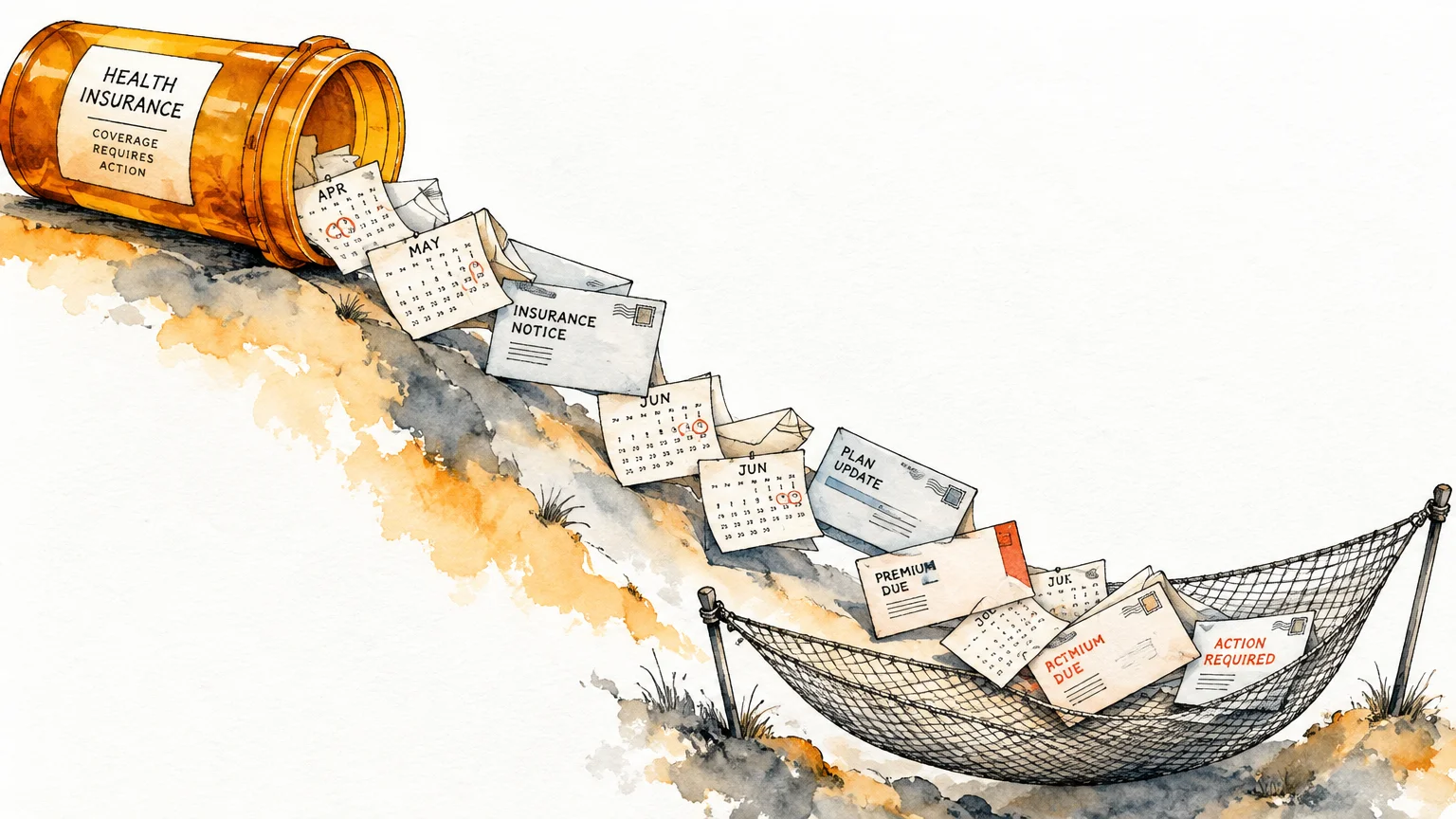
Costly Mistakes to Avoid
The most frequent and costly mistake is assuming your current plan will remain unchanged. Insurers modify copays, pharmacy affiliations, and formularies annually to protect their profit margins.
Another common misstep is selecting a plan based solely on its attractive $0 monthly premium. High copays, narrow hospital networks, and expensive drug tiers quickly erase any upfront savings.
Never rely on recommendations from friends, siblings, or well-meaning neighbors when choosing your coverage. Their prescription needs, preferred physicians, and financial resources are completely different from yours.
Avoid buying prescriptions through third-party discount coupons without calculating the long-term impact. Paying cash outside your plan prevents those expenses from reducing your $2,400 catastrophic threshold.
Finally, never assume you can easily purchase a Medigap plan whenever you become sick. Outside of your initial enrollment window, private Medigap insurers can charge higher rates or reject your application.

Don’t DIY These Decisions
Navigating dozens of insurance choices across multiple carriers can easily become overwhelming. Fortunately, you do not have to tackle these complex Medicare plan changes alone.
The State Health Insurance Assistance Program (SHIP) provides completely free, unbiased, one-on-one counseling. Their federally trained counselors sell no insurance products and have zero financial incentives.
You can locate your local SHIP counselor through the national directory at shiphelp.org. They can help you decipher complex ANOC notices and run unbiased plan comparisons.
Low-income retirees should explore financial assistance options through the National Council on Aging portal. Their tools identify state programs that help pay Part B premiums and drug costs.
If you have substantial assets, consult a fee-only financial planner alongside an elder law attorney. These professionals help coordinate health coverage with your broader long-term care and estate plan.
Frequently Asked Questions
Can I change my Medicare plan after the December 7 deadline?
If you miss the deadline, your options depend on your current enrollment status. Enrollees in a Medicare Advantage plan can make one change between January 1 and March 31.
Those with Original Medicare must wait until the next open enrollment period unless they qualify for a Special Enrollment Period. Moving to a new service area or losing employer coverage triggers a special window.
How does the $2,400 prescription drug spending cap work?
The $2,400 cap limits your annual out-of-pocket spending on covered Part D prescription drugs. It includes money spent on deductibles, copayments, and coinsurance amounts.
Once your total out-of-pocket costs reach $2,400, your plan pays 100% of covered drug costs. You pay nothing for covered Part D medications for the remainder of that calendar year.
Will switching Medicare Advantage plans affect my existing doctors?
Yes, changing plans can alter your provider network and access to specialists. Every Medicare Advantage insurance carrier establishes its own unique network of contracted physicians and hospitals.
Always verify with your doctor’s billing coordinator before enrolling in a new plan. Provide the exact plan name and contract code to confirm your doctor participates.
Do cash pharmacy discount cards count toward my Medicare Part D deductible?
No, medications purchased using cash discount coupons or discount websites do not count toward Medicare deductibles. They bypass your insurance coverage entirely.
These cash payments also fail to accumulate toward your $2,400 annual out-of-pocket spending cap. Only claims processed through your official Part D plan count toward that threshold.
Take decisive action today by gathering your current medication list and reviewing your annual mailings. Comparing your options now guarantees you enter the new year with dependable, cost-effective healthcare coverage.
This article is for informational purposes only and does not constitute financial, legal, or medical advice. Medicare rules, Social Security benefits, and tax laws change regularly—verify current details at Medicare.gov, SSA.gov, or with a licensed professional.
Last updated: February 2026. Medicare and Social Security rules change annually—always verify current details at official government sources.