You can transfer significant wealth to your grandchildren today without triggering federal gift taxes or complex legal hurdles. Knowing the current rules ensures your generosity creates lasting financial freedom rather than unexpected tax bills.
Whether you want to fund an education, help with a home down payment, or seed a retirement nest egg, smart planning protects your savings. Strategic gifting maximizes the financial impact for your family while keeping your retirement secure.
Recent tax updates offer unprecedented gifting opportunities, but navigating the strict limits requires careful timing. Here is what you must understand before writing a check to your grandchildren this year.

1. The Annual Exclusion Sets Your Baseline Limit
For 2026, the individual annual gift tax exclusion 2026 stands at $19,000 per recipient. You can give up to this amount to as many grandchildren as you want each calendar year without reporting it to the IRS.
If you give $19,000 each to five grandchildren, you successfully remove $95,000 from your taxable estate. None of these transactions trigger gift tax returns or eat into your lifetime exemption.
Your grandchild pays zero federal income tax on the received funds. The IRS treats genuine gifts as non-taxable transfers for the recipient regardless of the child’s age or tax bracket.

2. Married Couples Can Double Their Financial Gifts to Family
Spouses can pool their allowances to double their impact when making financial gifts to family. Together, you and your spouse can transfer up to $38,000 per grandchild every calendar year without triggering taxes.
When you write a single check from a joint account or split gifts from separate accounts, you may need to file IRS Form 709. This standard disclosure simply confirms that both partners agreed to the joint gift.
Even if you exceed the annual threshold, you will rarely owe immediate out-of-pocket tax. The excess simply reduces your lifetime estate and gift tax exemption, which stands at $15 million per individual in 2026.
3. Direct Payments for Tuition and Medical Care Have No Limits
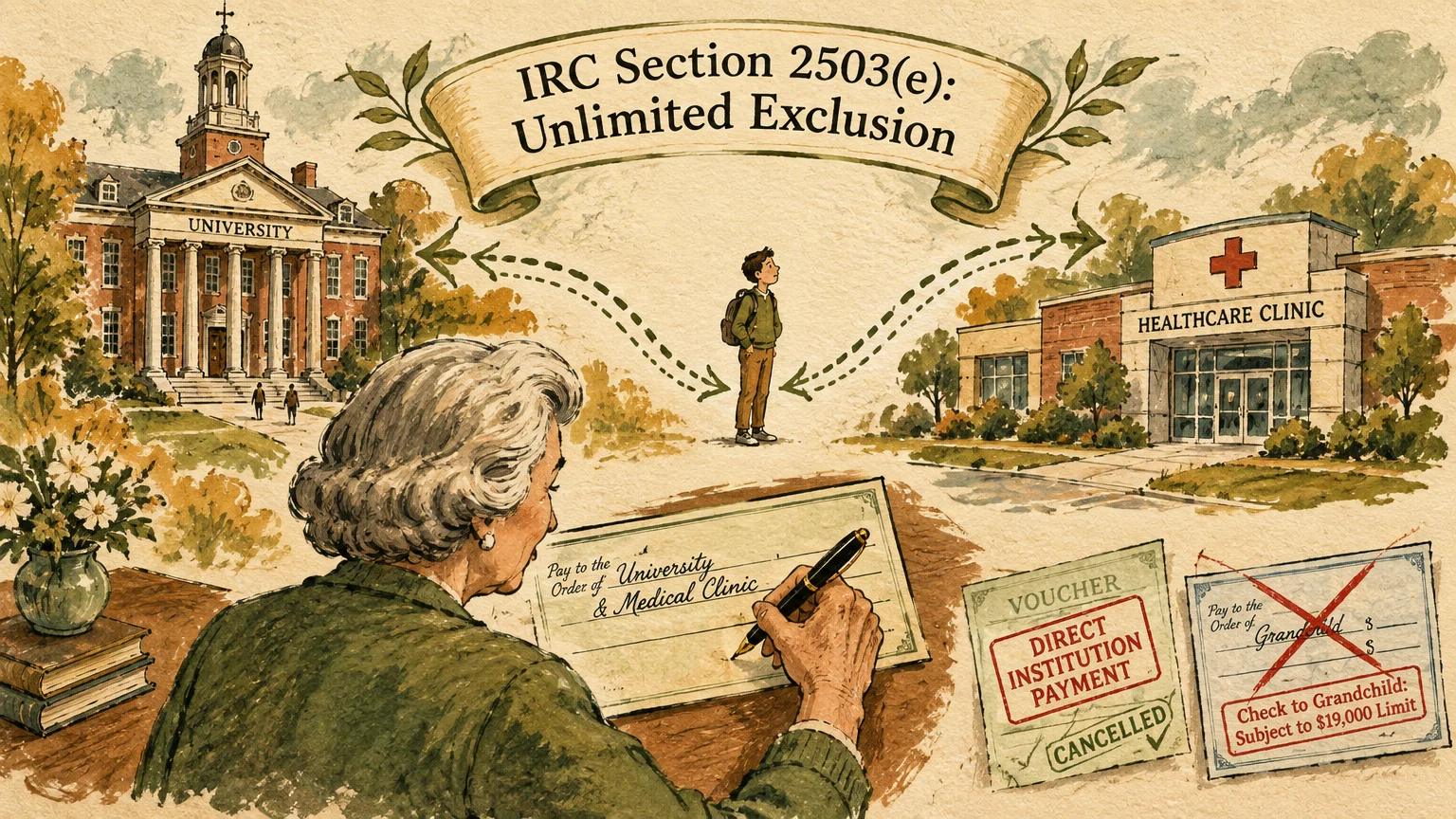
You can bypass standard gift tax limits entirely by paying educational or healthcare institutions directly. Under Internal Revenue Code Section 2503(e), these direct payments enjoy an unlimited tax exclusion.
To qualify, you must send tuition payments directly to the certified college, university, or primary school. If you write the check directly to your grandchild to reimburse their tuition, the payment counts toward your annual limit.
The same principle applies to medical, dental, and hospital expenses. Paying the medical provider directly allows you to provide crucial financial support without exhausting your annual $19,000 exclusion for other gifts.
4. Superfunding a 529 Plan Front-Loads Five Years of Giving
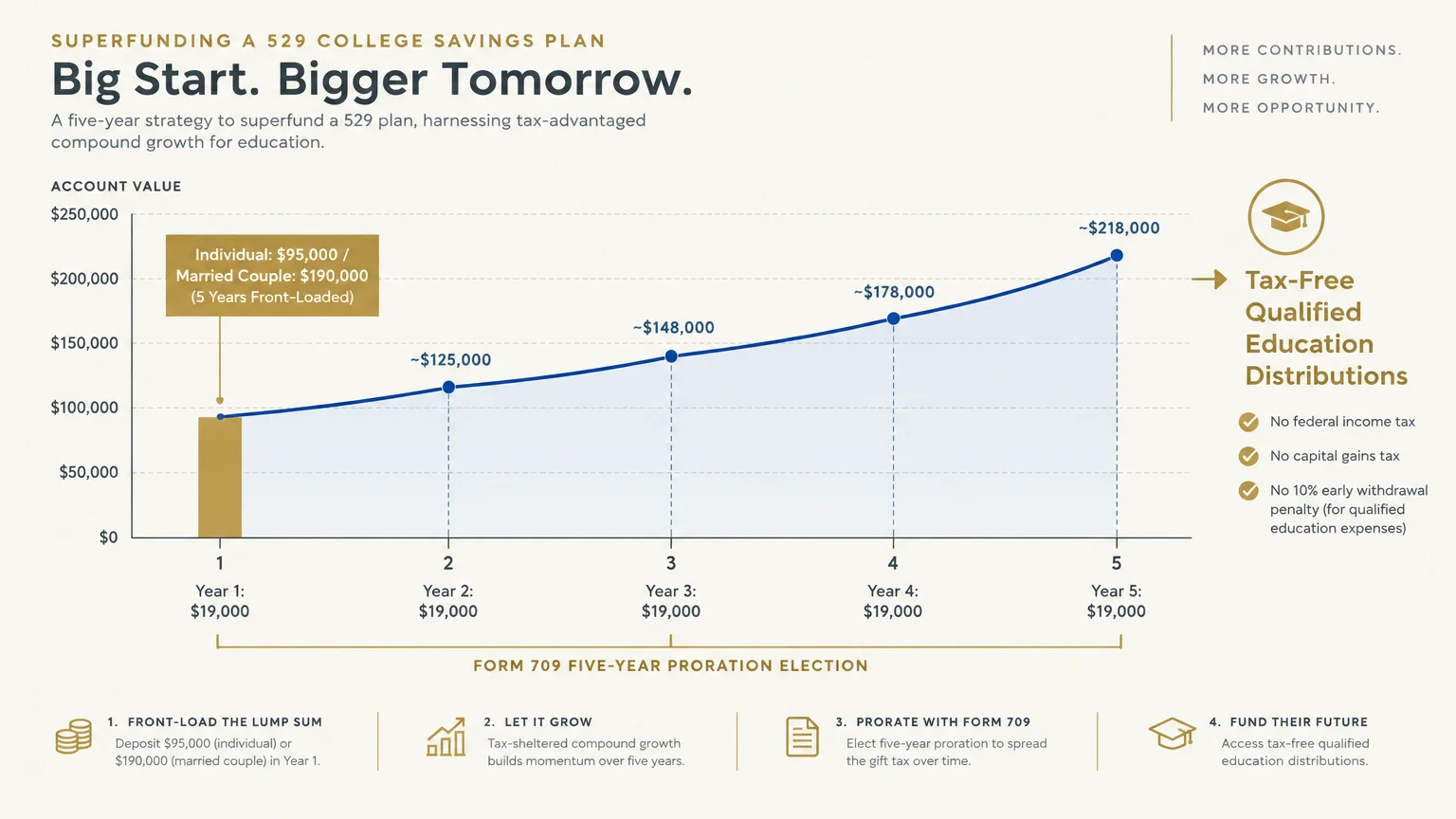
If you want to fund higher education immediately, explore superfunding a 529 plan for grandchildren. Federal regulations allow you to front-load five years of annual gift tax exclusions into a single contribution.
An individual grandparent can contribute up to $95,000 into a 529 account in 2026 without paying gift taxes. A married couple splitting gifts can contribute up to $190,000 per grandchild at once.
This lump sum enjoys immediate compound growth, sheltering all future investment gains from federal taxes when used for qualified education. You must file Form 709 to elect this five-year spread across your tax records.

5. FAFSA Simplification Protects Need-Based Financial Aid
In past years, distributions from grandparent-owned 529 accounts counted against a grandchild’s financial aid eligibility. Previous rules treated those withdrawals as untaxed student income, reducing aid eligibility by up to 50% of the distribution value.
Federal updates through the FAFSA Simplification Act eliminated this penalty completely for federal aid calculations. Grandparent-owned 529 plans do not appear as student or parent assets, and distributions no longer reduce federal aid eligibility.
Keep in mind that roughly 200 private colleges still use the CSS Profile when awarding institutional aid. Some private institutions still consider grandparent-owned accounts when calculating institutional grants and scholarships.
6. Leftover College Funds Can Seed a Roth IRA
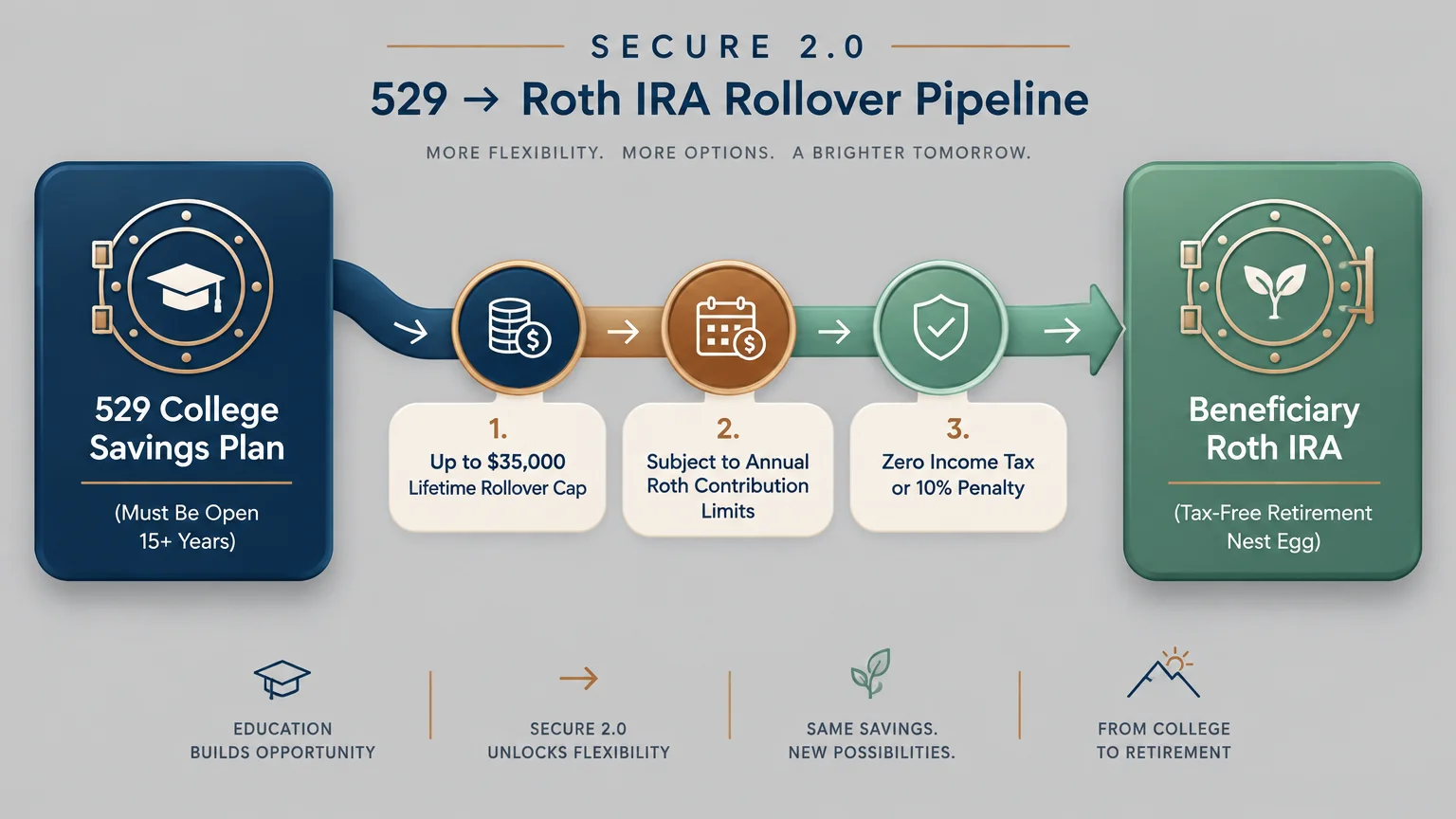
Many grandparents hesitate to open college accounts, fearing unused money might face stiff surrender penalties. The SECURE 2.0 Act established a practical solution for unspent educational savings.
A beneficiary can roll over up to $35,000 lifetime from an unused 529 plan directly into a Roth IRA. This provision ensures your gift provides long-term financial security even if your grandchild chooses not to attend college.
To qualify, the 529 account must remain open for at least 15 years before initiating rollovers. Rollovers remain subject to standard annual Roth IRA contribution limits and require the grandchild to have taxable earned income.
“It’s not how much money you make, but how much money you keep, how hard it works for you, and how many generations you keep it for.” — Robert Kiyosaki

7. Gifting Appreciated Stock Brings Hidden Tax Traps
You might consider gifting appreciated shares from your brokerage portfolio instead of cash. While this removes valuable assets from your estate, it passes your original cost basis along to your grandchild.
When your grandchild eventually sells the gifted stock, they will owe capital gains taxes on all accumulated growth since your purchase date. This carryover basis can create an unexpected tax bill for a young adult.
If you hold those appreciated shares until death, your heirs receive a step-up in basis to fair market value. For highly appreciated assets, leaving an inheritance through an estate plan usually beats lifetime gifting.

8. Custodial Accounts (UTMA/UGMA) Limit Your Control
Custodial accounts established under Uniform Transfers to Minors Act (UTMA) laws seem easy to open at banks. However, gifting money to grandchildren through a custodial account comes with significant legal and financial consequences.
All transfers to a UTMA or UGMA account are permanent and irrevocable. Once your grandchild reaches the legal age of majority—typically 18 or 21 depending on state law—they gain complete legal ownership of the money.
In addition, federal financial aid formulas assess student-owned assets at a heavy 20% rate toward the Student Aid Index. A large custodial account can significantly lower your grandchild’s need-based college financial aid packages.

9. Custodial Roth IRAs Require Documented Earned Income
Opening a custodial Roth IRA provides an incredible wealth-building foundation for a working teenager. Compound interest over four or five decades can turn modest early contributions into immense tax-free retirement wealth.
To fund this account legally, your grandchild must have verified, taxable earned income during the calendar year. Annual contributions cannot exceed the grandchild’s total earned wages from summer jobs, babysitting, or W-2 employment.
You can supply the actual cash for the contribution while your grandchild banks their earnings. Review account contribution rules at the IRS Retirement Plans portal before setting up automatic deposits.
10. The Medicaid Five-Year Look-Back Rule Can Derail Care
Many seniors mistakenly believe that staying beneath IRS gift tax thresholds shields their money from long-term care rules. This dangerous misconception can destroy your eligibility for essential nursing home care.
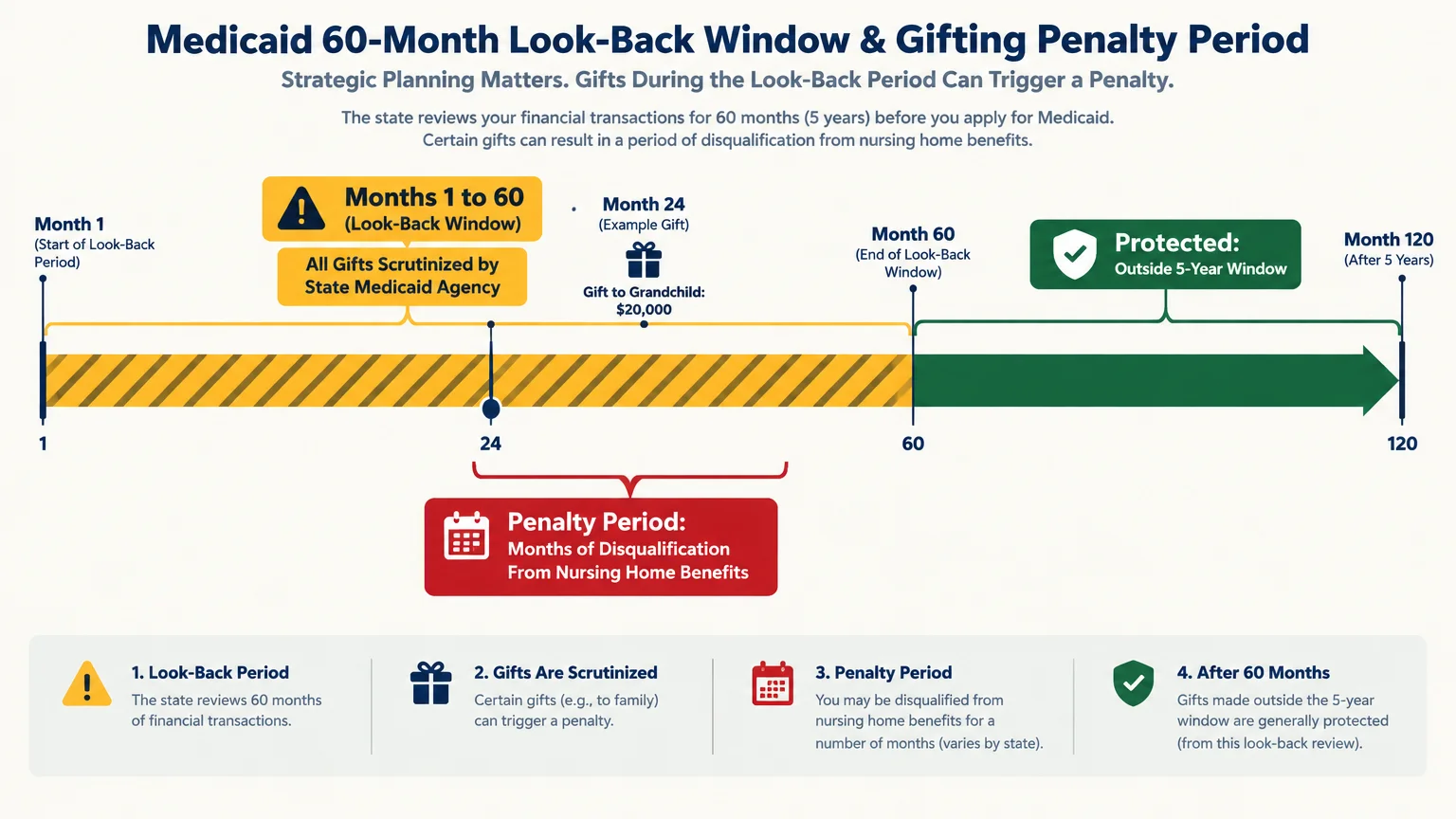
Medicaid examines all financial transactions across a strict 60-month look-back window prior to your application date. Any uncompensated transfers or gifts made during these five years trigger penalty periods of denied coverage.
Even an annual $5,000 birthday gift to a grandchild counts as an uncompensated transfer under Medicaid guidelines. If you anticipate needing long-term skilled nursing care within five years, pause non-essential gifting to protect your personal safety.

Comparing Popular Gifting Strategies for Grandchildren
Choosing the right gifting vehicle depends on your grandchild’s age, educational aspirations, and your personal financial objectives. The table below outlines how common gifting strategies compare across critical financial categories.
| Gifting Vehicle | 2026 Annual Limit | Impact on Federal Aid (FAFSA) | Grandchild Asset Control | Primary Advantage |
|---|---|---|---|---|
| Direct Cash Gift | $19,000 per donor | Low (unless held in student bank account) | Immediate full control | Ultimate spending flexibility |
| 529 College Savings Plan | $19,000 ($95,000 superfund) | None (no longer counted on FAFSA) | Grandparent maintains ownership | Tax-free educational growth |
| Direct Tuition / Medical Pay | Unlimited (IRC § 2503(e)) | None | None (paid to provider) | Preserves annual gift exemption |
| Custodial Account (UTMA/UGMA) | $19,000 per donor | High (assessed at 20% student rate) | Full control at age 18 or 21 | Simple setup with no spending limits |
| Custodial Roth IRA | Lesser of earned income or limit | None (retirement assets excluded) | Control transfers at legal majority | Decades of tax-free growth |
Costly Mistakes to Avoid
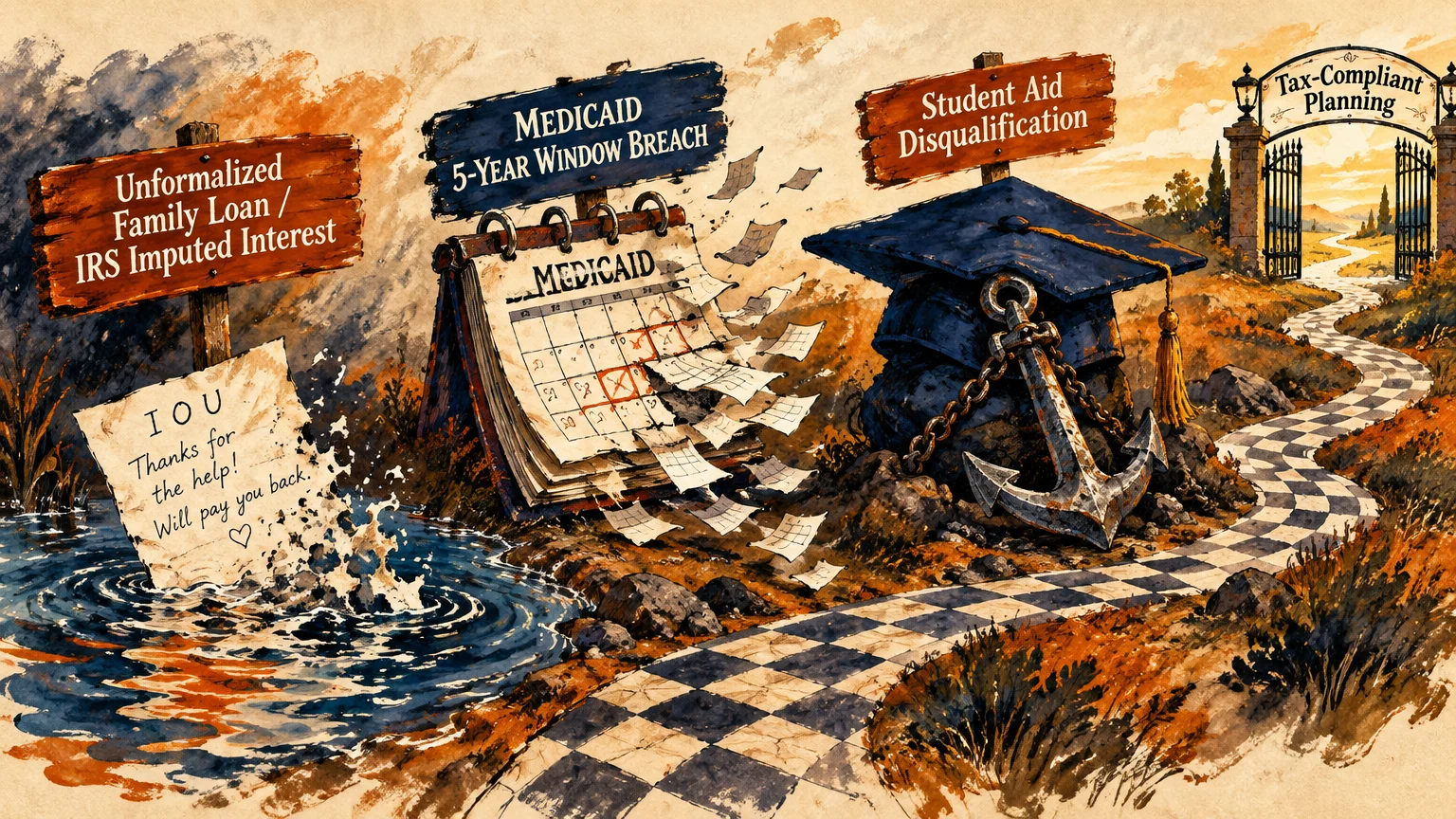
Writing a tuition check directly to your grandchild remains one of the most common gifting errors. Doing so subjects the payment to annual gift limits, whereas sending the payment to the school bursar provides an unlimited exemption.
Another major mistake involves failing to file IRS Form 709 when splitting gifts with your spouse. The IRS requires this informational filing to confirm both partners consented to allocating their separate exemptions.
Never prioritize gifting over your own financial independence and long-term healthcare needs. Explore retirement budgeting tools at the Consumer Financial Protection Bureau to ensure your core assets remain intact.
Finally, remember that state tax laws do not always mirror federal guidelines. While federal law offers generous lifetime exemptions, states like Connecticut enforce distinct state-level gift taxes that require localized planning.
“The goal of retirement is to live off your assets—not live off your regrets.”

Don’t DIY These Decisions
Transferring substantial wealth to younger generations requires careful coordination among several legal and tax disciplines. An unexpected oversight can trigger penalties, reduce college aid, or delay necessary medical care.
Consult an elder law attorney if you anticipate needing Medicaid or long-term nursing assistance within the next five years. You can locate accredited eldercare specialists through the National Council on Aging network.
Work with a Certified Financial Planner or CPA when structuring 529 superfunding elections or large trust transfers. Professional guidance ensures your generosity enriches your grandchildren without compromising your personal lifestyle.
Frequently Asked Questions
Do my grandchildren have to pay income taxes on cash gifts?
No, recipients do not pay federal income taxes on gifts. The IRS places all gift tax reporting and payment responsibilities on the donor rather than the grandchild receiving the funds.
Can I give money to my child to pass along to my grandchild?
You can gift up to $19,000 to your adult child and another $19,000 directly to your grandchild. However, you cannot use an adult child as a pass-through entity to bypass individual gift tax caps.
What happens if I give more than $19,000 to one grandchild?
Gifting more than $19,000 requires filing IRS Form 709 to report the excess transfer. You will not owe out-of-pocket tax unless your cumulative lifetime gifts exceed the $15 million lifetime exemption.
Does giving money to grandchildren reduce my Social Security benefits?
No, gifting money never affects your earned Social Security retirement benefits. Social Security payments depend strictly on your lifetime earnings history and claiming age, not your personal savings or gifting habits.
Next Steps for Your Family Wealth Plan
Start by auditing your personal cash flow to confirm how much you can comfortably gift without endangering your future care. Once you establish your comfort level, match your financial goals with the appropriate vehicle, whether that means writing a direct check or funding a 529 plan.
Retirement rules and benefit amounts vary based on individual work history, income, and circumstances. This article provides general guidance only. Consult a SHIP counselor, financial advisor, or elder law attorney for advice specific to your situation.
Last updated: February 2026. Medicare and Social Security rules change annually—always verify current details at official government sources.