When the annual Social Security cost-of-living adjustment makes national news, it often sounds like an unexpected cash windfall. Yet your monthly bank deposit rarely matches the cheerful percentage broadcast on television.
Rising healthcare costs, hidden tax traps, and outdated calculation formulas quietly erode those gains before you ever spend a dollar. Understanding these mechanics helps you protect your household cash flow against unexpected budget deficits.
A headline rate never reflects what actually lands in your checking account. Here is what really happens behind the scenes when Washington calculates your annual benefit increase.
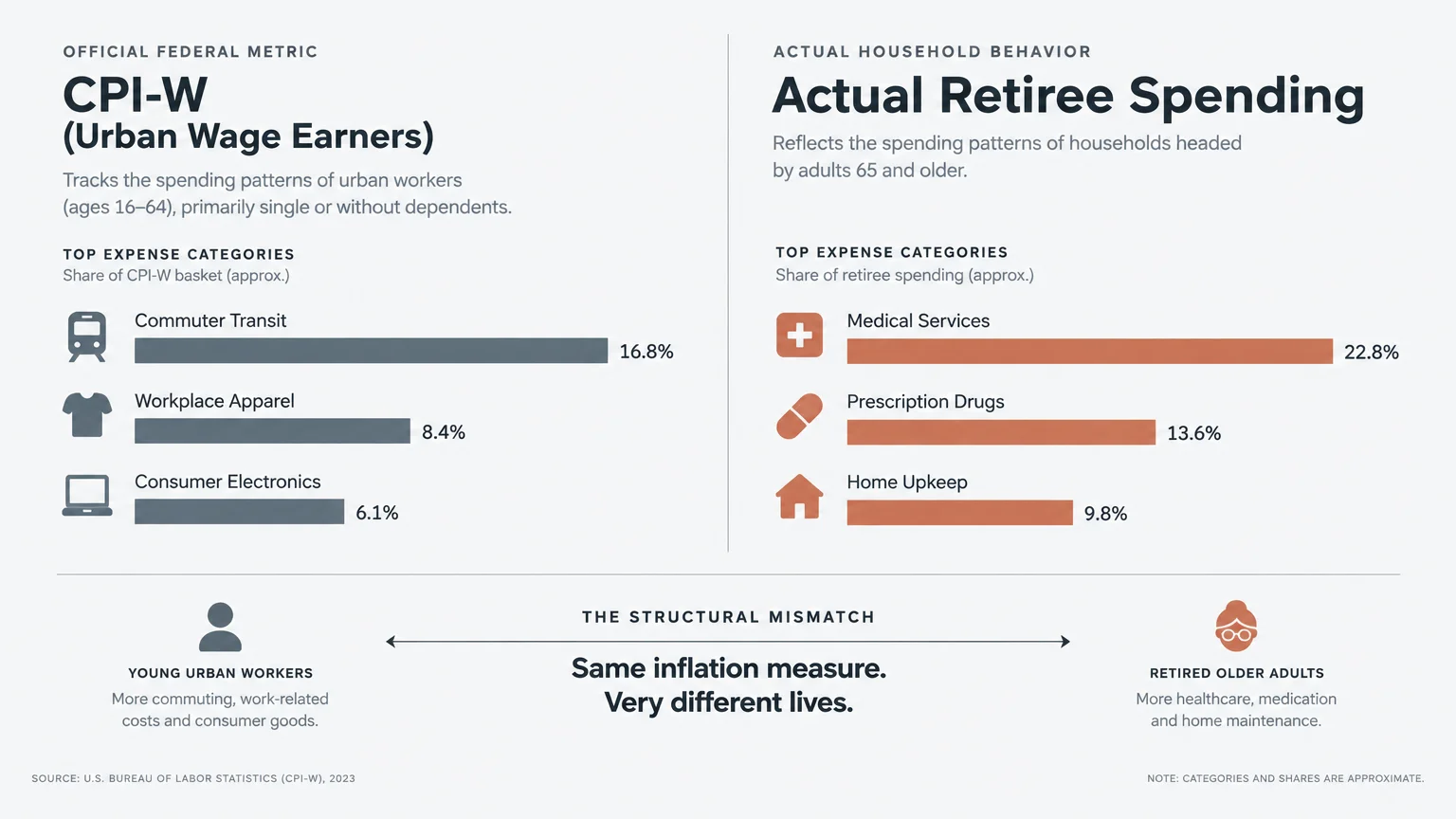
1. The CPI-W Benchmark Tracks Working Families Instead of Retirees
Federal law requires the government to calculate your annual boost using the Consumer Price Index for Urban Wage Earners and Clerical Workers (CPI-W). Congress established this standard under the Social Security Act decades ago.
The CPI-W measures the purchasing habits of younger, employed individuals living in urban centers. These workers spend a large portion of their monthly earnings on commuter transit, workplace apparel, and consumer electronics.
Most retirees spend their money entirely differently. You likely devote far less of your budget to daily commuting expenses and career clothing than someone in their thirties.
Because the index tracks working households, it assigns heavier weights to categories where prices often stabilize quickly. Meanwhile, the index minimizes the specific categories where older adults spend the majority of their retirement income.
When economists discuss having social security COLA explained accurately, this formula mismatch always sits at the core of the problem. Your personal inflation rate looks nothing like the inflation rate of an urban delivery driver or office manager.
2. The Healthcare Spending Disconnect Skews True Living Expenses
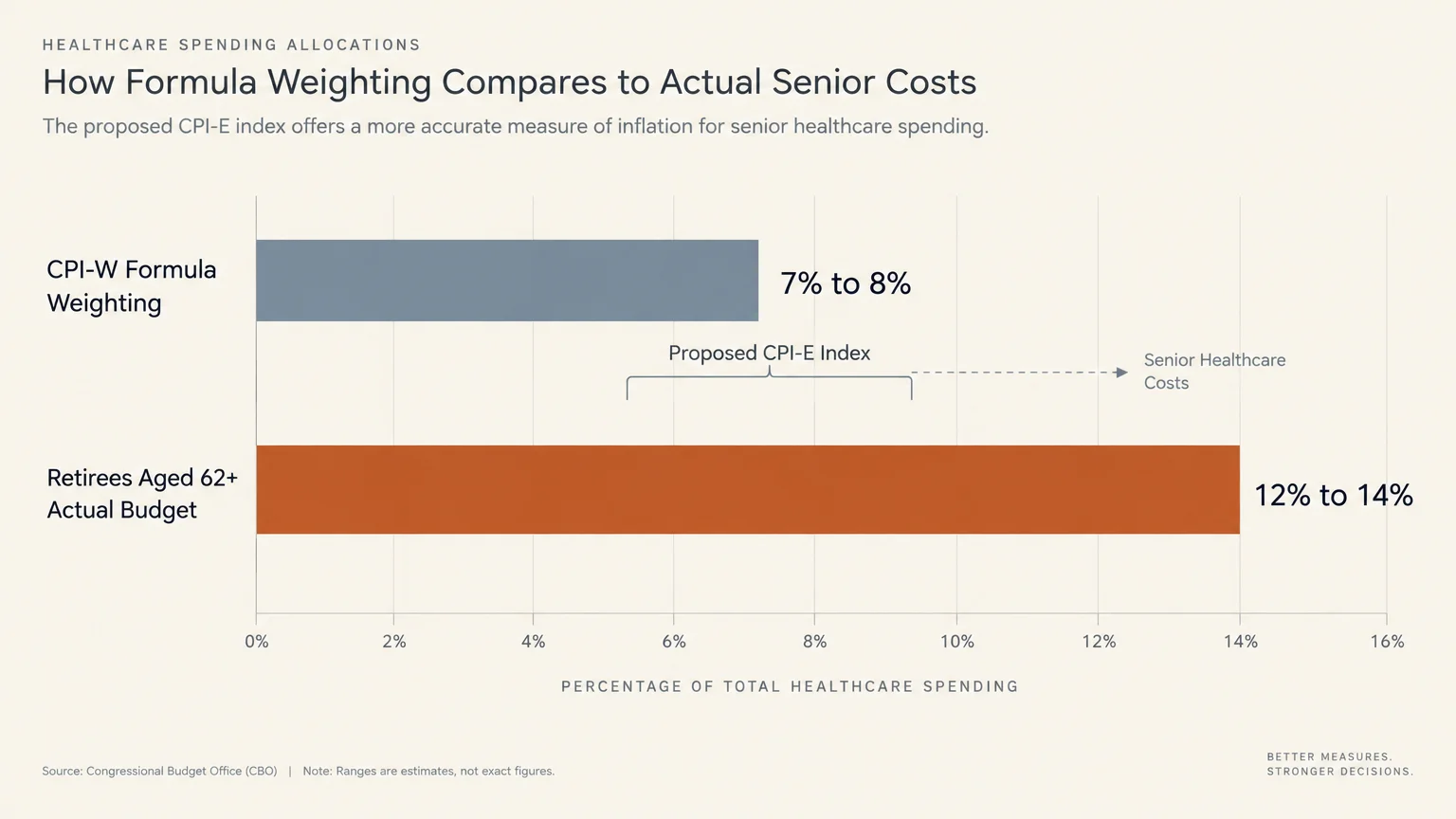
Healthcare represents the largest discrepancy between national inflation statistics and actual household expenses for retirees. Medical bills consume roughly 12% to 14% of the average budget for Americans aged 62 and older.
In stark contrast, the CPI-W formula assigns a weighting of only 7% to 8% for medical care. When prescription drugs, specialist copays, and dental treatments jump in price, the official formula captures only half of that pain.
Advocacy groups frequently urge lawmakers to adopt the Consumer Price Index for the Elderly (CPI-E). This experimental index assigns much higher weights to medical services and senior housing needs.
Congress has studied the CPI-E for years, but legislators have not yet enacted it into law. Until that statutory change happens, your annual adjustment will continually underestimate rapid increases in doctor bills and prescription therapies.
This persistent discrepancy means medical inflation absorbs your nominal raise before you can allocate money toward routine home repairs or family visits. You fall behind even when government reports claim your benefit matches inflation.
3. Medicare Part B Deductions Silently Shrink Your Benefit Bump
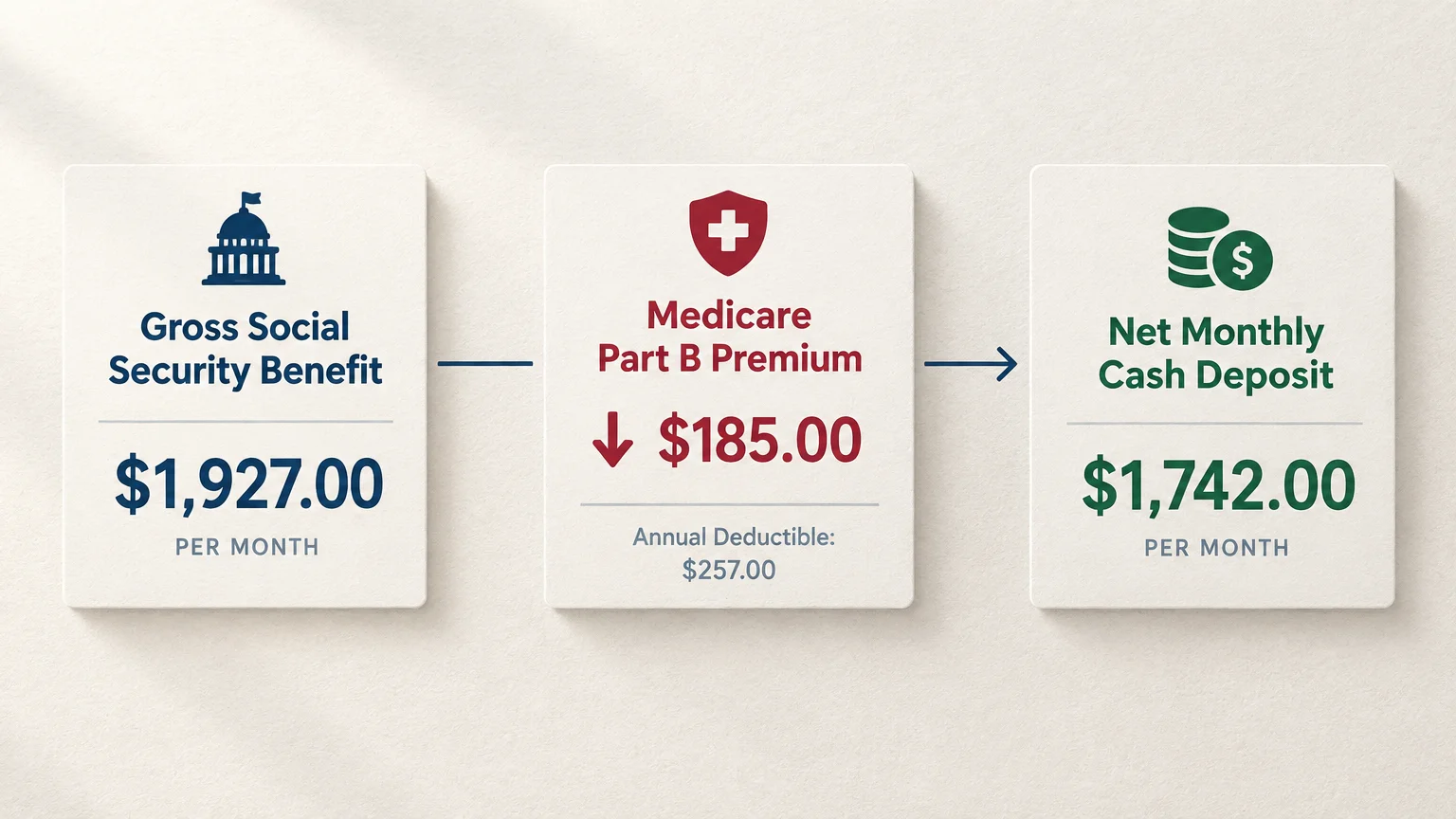
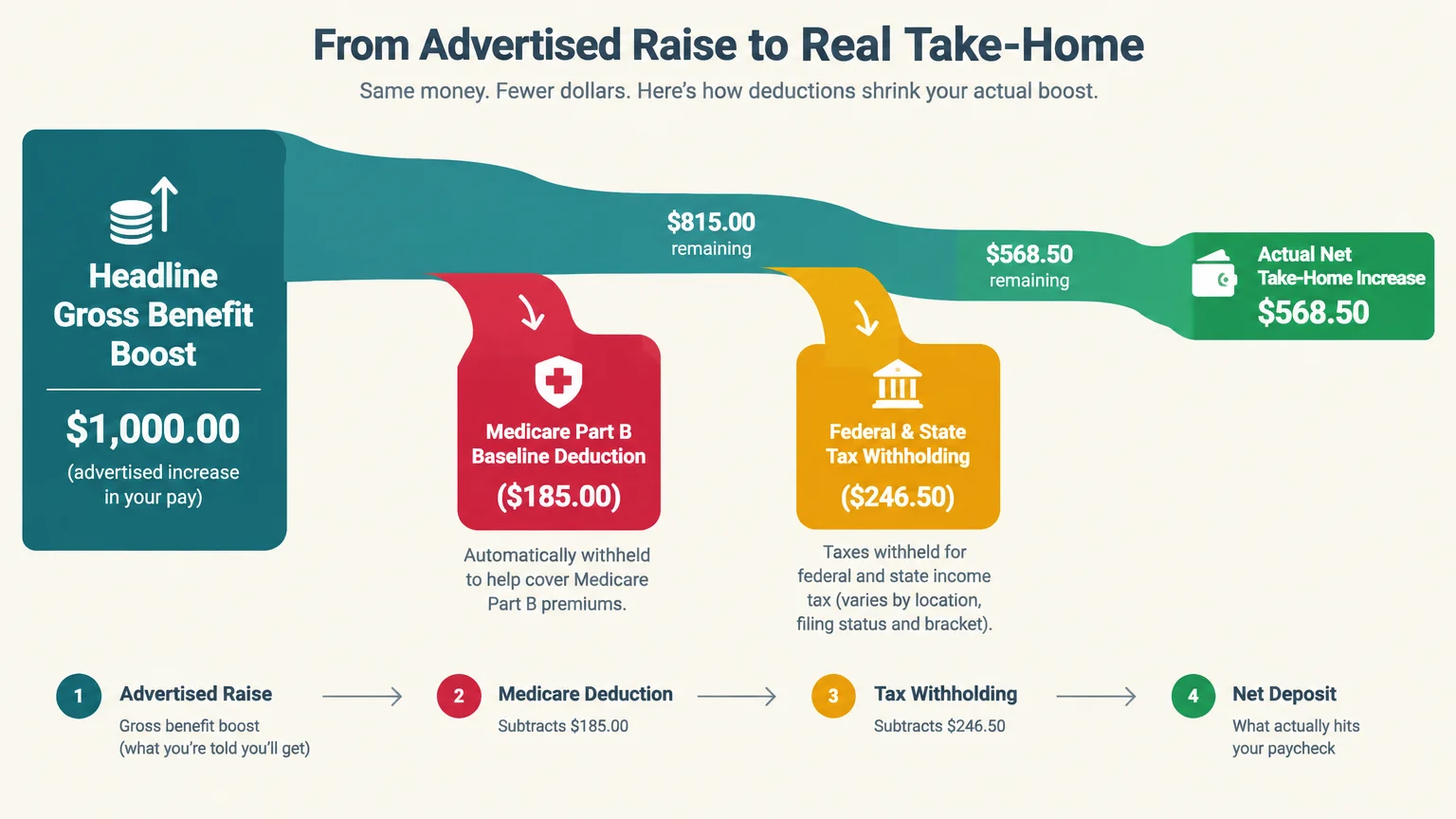
Most retirees have their Medicare Part B premiums deducted automatically from their gross Social Security payments. When Part B premiums climb, that automatic deduction captures a sizable chunk of your annual raise.
The standard Medicare Part B monthly premium sits at $185.00, alongside an annual deductible of $257.00. That premium baseline represents a significant recurring expense for anyone managing a fixed monthly retirement budget.
Because healthcare inflation regularly outpaces broader consumer price indexes, Part B premiums often surge by higher percentages than your gross benefit adjustment. This dynamic creates friction between headline announcements and real deposits.
Examining the intersection of COLA and medicare premiums reveals why your net deposit often barely budges. A fifty-dollar monthly gross increase can quickly dwindle once the government subtracts higher medical premiums.
Federal law includes a statutory protection known as the Hold Harmless Rule under Section 1839(f) of the Social Security Act. This provision prevents Medicare from reducing your net monthly payment below the previous year’s dollar amount.
However, the Hold Harmless Rule only preserves your nominal dollar floor; it provides zero protection against lost purchasing power. Your net deposit remains unchanged while the cost of groceries and utilities continues to rise around you.
4. Frozen Federal Tax Brackets Trigger Unintended “Bracket Creep”
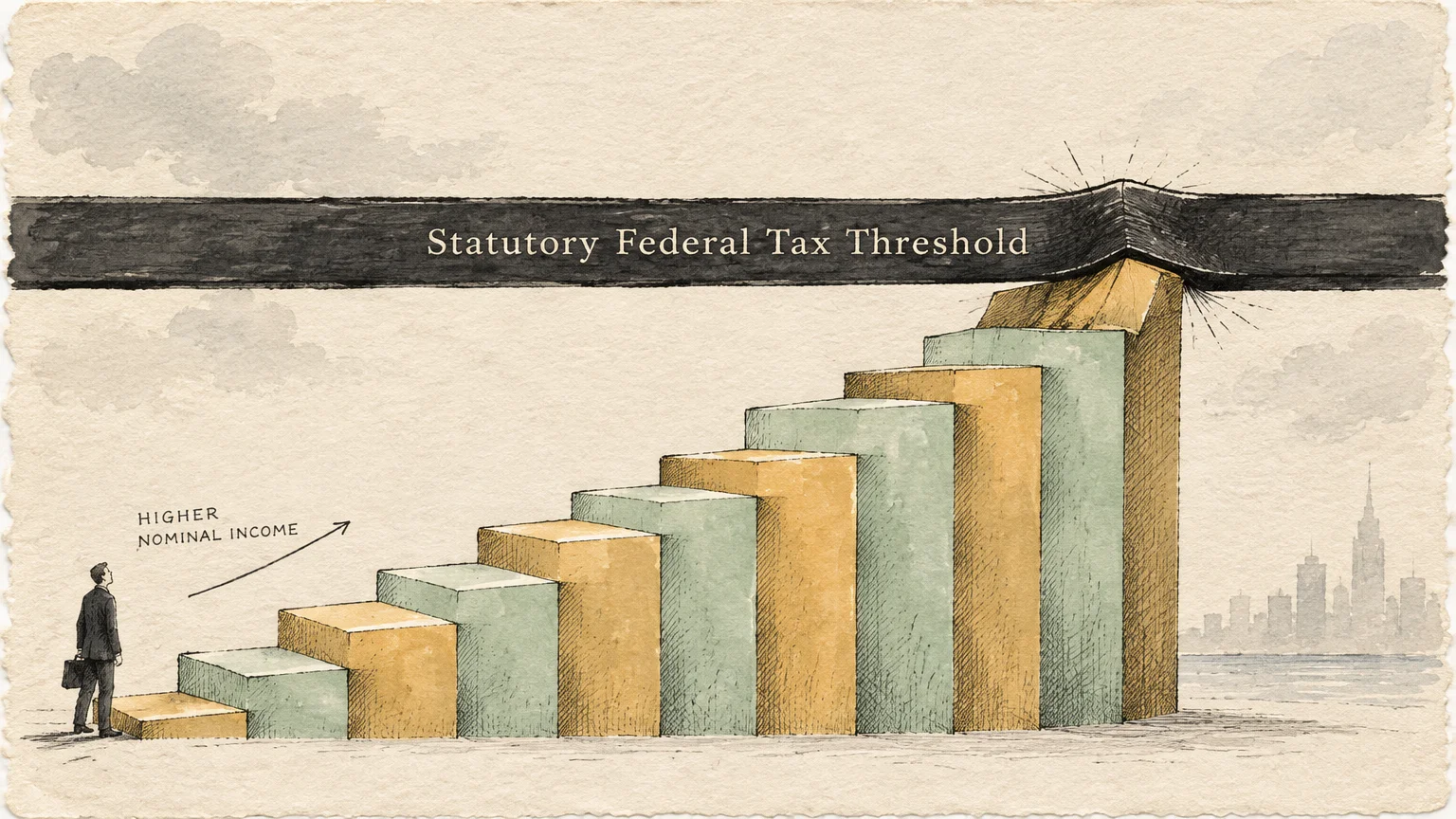
Every time you receive a benefit increase, you run the risk of handing more of your monthly income back to the Internal Revenue Service. Congress designed the taxation formula for Social Security benefits in 1983 and 1993.
Lawmakers established strict income thresholds at that time, but they failed to index those figures for future inflation. Four decades later, those exact same dollar thresholds remain entirely unchanged.
To determine if you owe taxes, the IRS calculates your provisional income. You find this figure by adding your adjusted gross income, nontaxable interest, and exactly half of your gross Social Security benefit.
- Single filers pay federal tax on up to 50% of benefits between $25,000 and $34,000, and up to 85% above $34,000.
- Married couples pay tax on up to 50% of benefits between $32,000 and $44,000, and up to 85% above $44,000.
In 1984, fewer than 10% of beneficiaries paid federal income taxes on their Social Security checks. Today, due to unindexed brackets, roughly 50% of all beneficiaries surrender part of their benefits to the IRS.
Every nominal bump in your check pushes your provisional income closer to or further beyond those static lines. You end up paying taxes on money intended solely to keep up with everyday grocery prices.
5. Unexpected IRMAA Surcharges Create Sudden Benefit Cliffs
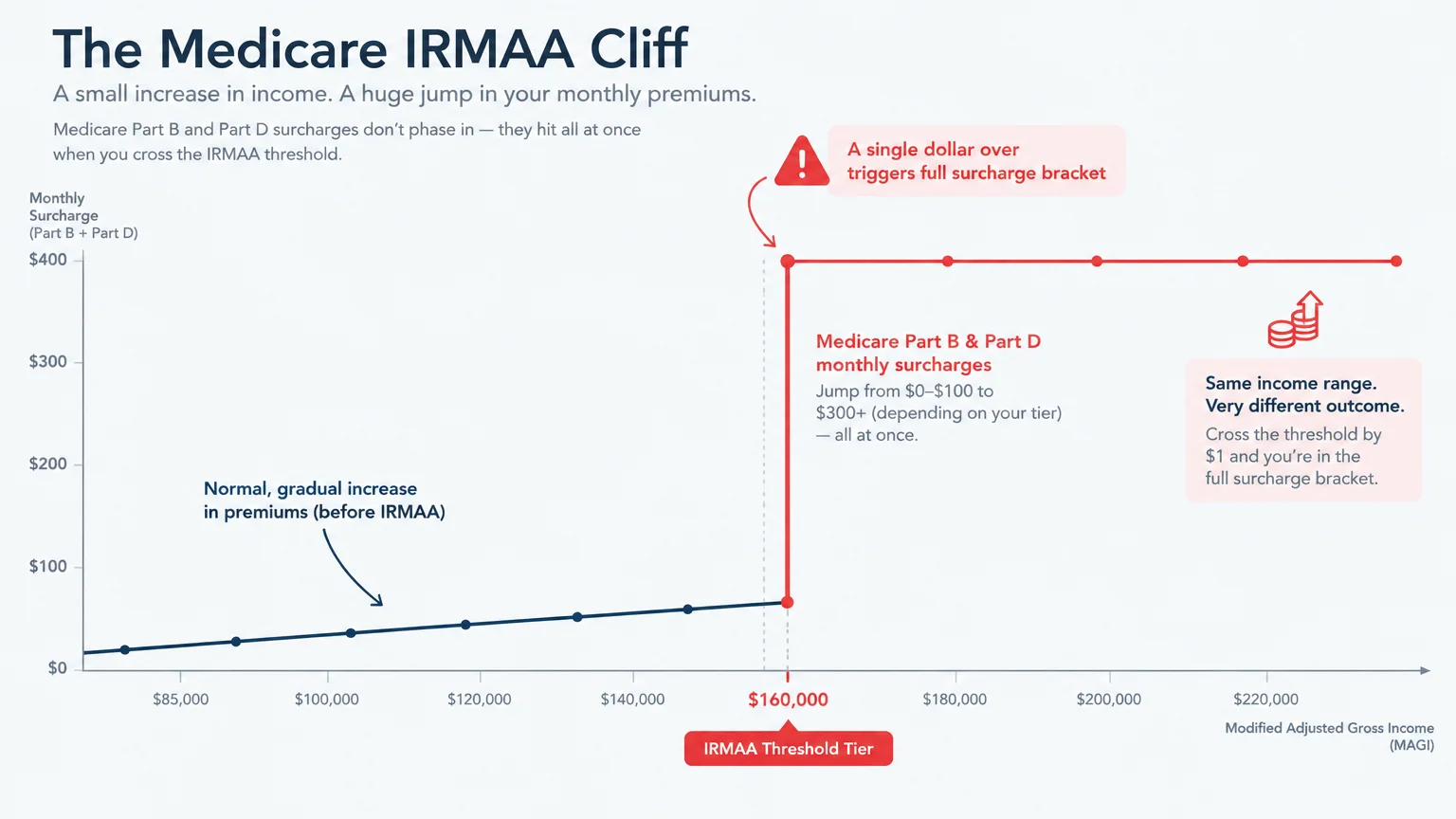
Higher-income retirees face another hidden cost called the Income-Related Monthly Adjustment Amount (IRMAA). This surcharge increases your monthly Medicare Part B and Part D premiums if your income exceeds strict tiers.
The government calculates IRMAA using a two-year lookback window on your tax returns. For example, your 2026 premiums depend directly on the modified adjusted gross income you reported for the 2024 tax year.
Unlike standard tax brackets where higher rates only apply to dollars above the line, IRMAA functions as a financial cliff. Exceeding a tier threshold by a single dollar triggers the entire surcharge for the full calendar year.
A modest Social Security adjustment combined with required minimum distributions can easily push your gross earnings over a boundary. You might gain twenty dollars a month in benefits while triggering hundreds of dollars in annual surcharges.
Understanding these thresholds allows you to plan your retirement withdrawals carefully. Proactive tax management prevents a routine cost-of-living adjustment from triggering an expensive healthcare surcharge.

6. Modest Hikes Can Jeopardize Essential Need-Based Assistance
Low-income seniors often rely on federal and state programs to afford basic nutritional and healthcare necessities. These safety net programs include SNAP food benefits, LIHEAP utility grants, and Medicaid coverage.
Many retirees also depend on Medicare Savings Programs to pay their monthly Part B premiums. These vital programs enforce strict monthly income limits that do not always adjust alongside Social Security increases.
A small gross benefit bump can push an individual just five dollars over the qualification line for food or utility assistance. Losing those benefits costs far more each month than the small cash raise you received.
A senior who loses fifty dollars in monthly food stamps to gain thirty dollars in gross Social Security suffers a net household loss. You can check your benefit boundaries through National Council on Aging screening resources.
When national headlines celebrate an upcoming adjustment, vulnerable retirees often face difficult bureaucratic hurdles. Maintaining qualification for state-administered assistance requires constant vigilance whenever your gross earnings fluctuate.

7. Headline Percentages Disguise Modest Real Dollar Gains
News reports naturally emphasize large percentages because percentages create catchy headlines. However, percentages do not pay for prescriptions, car tires, or homeowners insurance premiums at the cash register.
The real value of COLA comes down to the actual dollars deposited into your account. The average retired worker in the United States receives approximately $1,900 to $2,000 per month.
A headline adjustment of 2.5% sounds respectable when announced on the evening news. Yet for that average worker, 2.5% translates to roughly $48 to $50 per month before mandatory deductions.
Once you subtract higher Part B premiums and federal tax withholding, that raise shrinks to pocket change. A net increase of twenty dollars per month rarely offsets the actual cost increases at your local supermarket.
High earners receiving the maximum benefit see significantly larger nominal dollar bumps than lower earners. This math creates an unavoidable disparity where the retirees who need help most receive the smallest dollar increases.
“The goal of retirement is to live off your assets—not live off your regrets.”
Keeping this principle in mind helps you build personal cash reserves rather than depending entirely on government adjustments. Self-directed savings give you breathing room when official calculations fail to cover your bills.
8. Cumulative Purchasing Power Continues a Steady Long-Term Slide
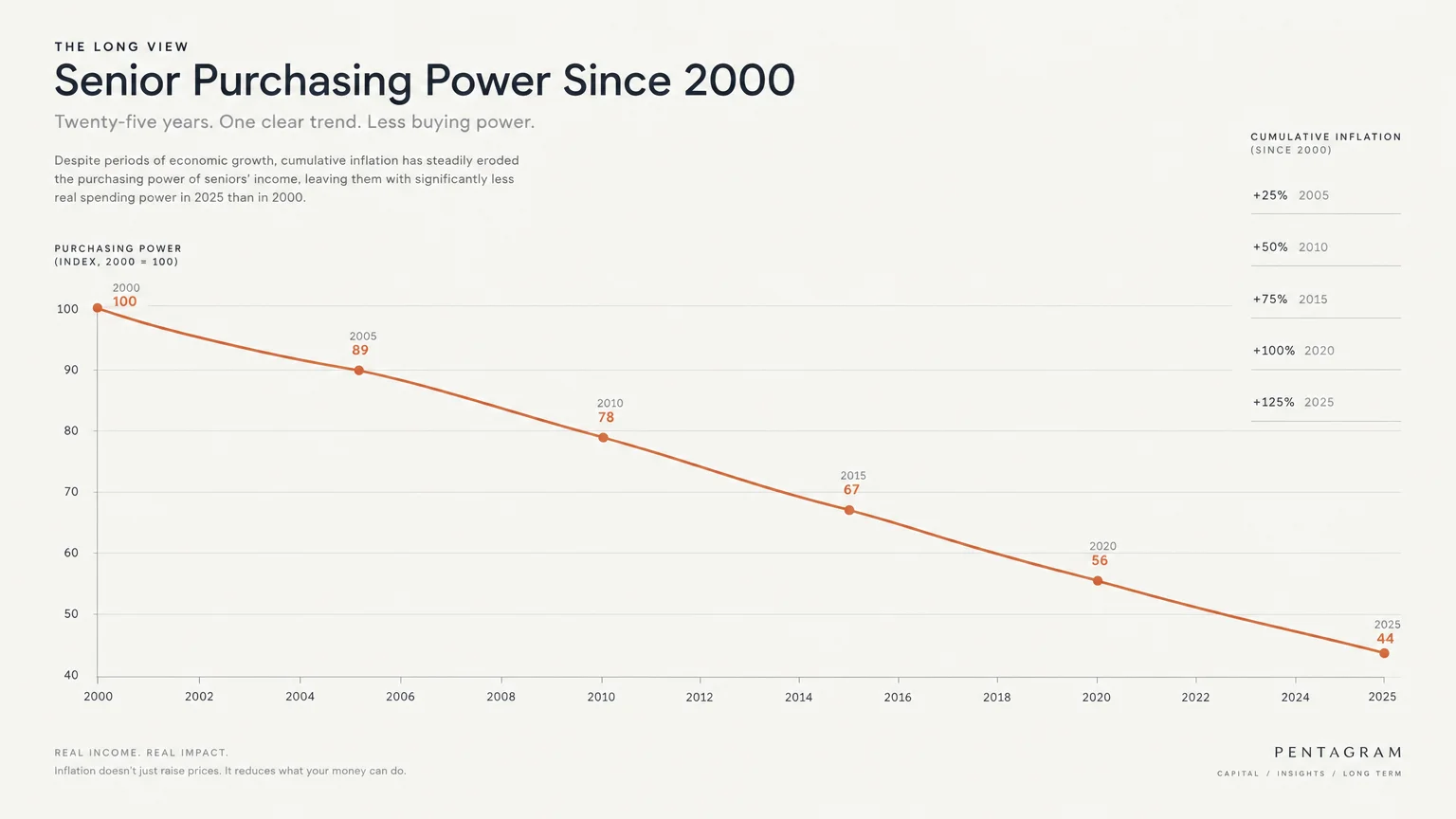
A single inadequate adjustment might seem manageable over twelve months, but the compounding impact over a full retirement is devastating. Research from nonpartisan senior organizations demonstrates a continuous erosion of living standards.
Studies conducted by The Senior Citizens League reveal that Social Security benefits have lost between 20% and 30% of their purchasing power over the past two decades. Essential expenses have surged far faster than the CPI-W index.
Property taxes, home insurance policies, dental procedures, and basic groceries have risen dramatically over that period. Because the annual calculation undercounts these specific categories, your check buys less with each passing decade.
Retirees who entered retirement twenty years ago find that their checks no longer stretch to cover basic necessities. Even though their checks have received regular percentage bumps, their standard of living has steadily declined.
Relying solely on Washington to preserve your purchasing power exposes your budget to persistent losses. You must actively defend your financial plan with outside investments and strategic tax management.

9. Backward-Looking Formulas Lag Behind Current Economic Pressure
The timing mechanism used by the Social Security Administration creates a frustrating lag for household budgets. The annual adjustment is backward-looking by statutory design.
The government calculates the rate by comparing third-quarter inflation data—covering July, August, and September—against the third quarter of the previous year. Officials announce the final number in mid-October, and you receive the payment in January.
If fuel or food prices surge during the spring and summer, you must absorb those elevated costs out of pocket for months. By the time your raise arrives in January, consumer prices may have climbed even higher.
Conversely, if inflation cools down right before winter, you might receive an adjustment that feels disconnected from current conditions. The calculation measures where the economy was months ago, not where your expenses stand today.
This structural lag makes long-term forecasting difficult for older adults planning future budgets. Analysts are already evaluating early projections for the social security raise 2027 based on macroeconomic trends.
While discussing the anticipated 2027 COLA offers helpful context for long-range planning, headline projections often shift rapidly. You cannot build a dependable household budget around speculative projections published months in advance.
Comparing the Headline COLA to Your Net Take-Home Check
Seeing how outside factors reduce your annual raise clarifies why your bank deposits rarely match initial expectations. The following table illustrates how statutory deductions and tax rules diminish headline adjustments.
| Factor Influencing Raise | How the Mechanism Works | Impact on Monthly Cash Flow |
|---|---|---|
| CPI-W Calculation | Tracks spending habits of urban wage earners rather than older adults. | Systematically undercounts senior housing and out-of-pocket medical expenses. |
| Medicare Part B Offsets | Premiums deduct automatically from gross monthly Social Security payments. | Absorbs a major portion of your nominal dollar raise immediately. |
| Frozen Tax Brackets | Provisional income thresholds have remained unindexed for inflation since 1983. | Pushes more of your monthly check into taxable brackets over time. |
| IRMAA Surcharges | Medicare surcharges apply if income crosses strict thresholds by even $1. | Can trigger hundreds of dollars in unexpected annual healthcare surcharges. |
| Means-Tested Cliffs | Gross income increases can disqualify seniors from SNAP, LIHEAP, or Medicaid. | Can eliminate vital assistance that exceeds the value of the raise. |

Errors That Cost Retirees Thousands
Failing to plan for the ripple effects of an annual adjustment can cause severe financial damage. Many retirees make costly mistakes simply because they focus exclusively on the gross headline percentage.
One widespread mistake involves ignoring provisional income thresholds when planning distributions from traditional retirement accounts. Taking an extra thousand dollars from a traditional IRA can inadvertently trigger taxation on your Social Security benefits.
You can avoid this trap by coordinating withdrawals with a qualified tax professional. Utilizing Roth accounts or timing distributions carefully keeps your provisional income below statutory taxation lines.
Another expensive error occurs when beneficiaries fail to appeal improper IRMAA surcharges following major life changes. If you experienced a qualifying life event, you can appeal the surcharge using Form SSA-44.
- Qualifying events include retirement, marriage, divorce, or the death of a spouse.
- Loss of income-producing property or the loss of pension benefits also qualifies for an appeal.
- Filing an appeal prompts Medicare to recalculate your premiums based on current income rather than past tax returns.
Finally, many seniors make the mistake of adjusting their spending upward the moment Washington announces an adjustment. Increasing your discretionary spending before verifying your net January deposit often leads to immediate cash shortages.

When to Get Expert Help
Navigating the interaction between Social Security benefits, Medicare premiums, and IRS tax codes can become overwhelming. Seeking professional guidance helps you avoid costly missteps and protects your retirement assets.
You should contact a State Health Insurance Assistance Program (SHIP) counselor if you struggle to manage Medicare premiums. These trained counselors provide free, unbiased guidance on plan options and Medicare Savings Programs.
Consider consulting a fee-only financial planner or certified public accountant if your provisional income hovers near tax thresholds. A skilled advisor can structure withdrawals from taxable, tax-deferred, and Roth accounts to minimize unnecessary taxes.
If you or an aging parent rely on Medicaid or need-based community assistance, consult an elder law attorney. These legal specialists understand local income caps and can protect eligibility for critical long-term care programs.
Frequently Asked Questions About the Annual COLA
What is Social Security COLA and how is it calculated?
The cost-of-living adjustment is an annual adjustment designed to protect Social Security benefits from inflation. The government calculates it by comparing average third-quarter CPI-W inflation figures from the current year to the prior year.
Can higher Medicare Part B premiums make my Social Security check decrease?
For most current beneficiaries, the statutory Hold Harmless Rule prevents Medicare Part B increases from reducing your net monthly check below the prior year’s level. However, this rule does not prevent inflation from eroding your purchasing power.
Why do so many retirees pay federal taxes on their Social Security raise?
Retirees pay federal taxes on benefits because Congress has never adjusted the provisional income thresholds for inflation since establishing them decades ago. As your nominal benefits rise, your earnings cross those static thresholds, subjecting your benefits to taxation.
How will future adjustments like the 2027 COLA handle healthcare inflation?
Unless Congress updates the statutory formula to adopt the CPI-E, the 2027 adjustment will continue using the standard CPI-W index. That means healthcare costs will remain underweighted compared to what retirees actually spend.
Taking Control of Your Retirement Cash Flow
Do not let optimistic headlines dictate how you manage your monthly household budget. Take time each December to review your official Social Security benefit statement and calculate your true take-home pay.
Build a flexible spending plan that accounts for rising healthcare deductibles, local property taxes, and grocery costs. By anticipating tax thresholds and Medicare deductions in advance, you maintain steady control over your personal financial future.
Information in this article reflects current rules as of the publication date and may change. Always confirm benefit details directly with Social Security Administration, Medicare.gov, or relevant government agencies before making decisions.
Last updated: February 2026. Medicare and Social Security rules change annually—always verify current details at official government sources.