Retiring frees you from rush-hour gridlock, but it also alters how auto insurers calculate your premiums. If you keep your pre-retirement policy settings, you will overpay every month.
Federal data shows most drivers cut their annual road travel in half after leaving the workforce. That shift alone creates an immediate opportunity to lower your monthly expenses.
From low-mileage thresholds to state-mandated discounts, how retirement affects car insurance depends on proactive updates. Review these eleven policy changes to protect your wallet and retirement savings.

1. Your Daily Commute Disappears into Pleasure Driving
During your working career, your insurer classified your primary vehicle for daily commuting. That classification accounted for five days of high-risk driving in heavy morning and evening traffic.
Once you retire, you can reclassify your vehicle for pleasure use. Insurers view leisure trips as significantly safer than navigating congested highways during peak rush hours.
Calling your carrier to switch from commute to pleasure use generally reduces premiums by 5% to 10%. It takes five minutes on the phone to lock in these immediate savings.
2. Your Annual Mileage Drops Below Rating Thresholds
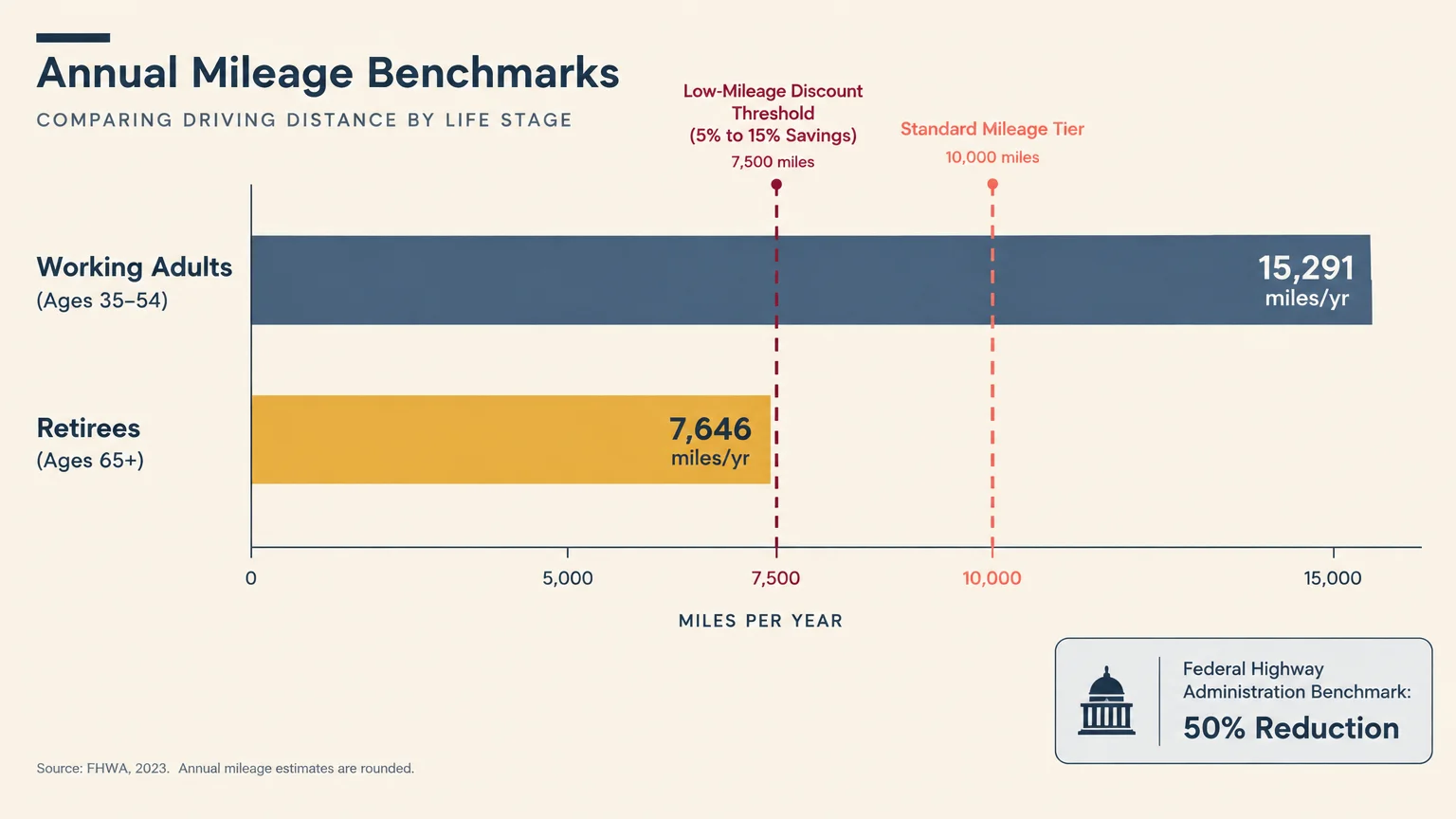
Data from the Federal Highway Administration reveals drivers aged 65 and older average 7,646 miles per year. By comparison, workers aged 35 to 54 log 15,291 miles annually.
Most major insurers maintain low-mileage discount tiers for drivers traveling fewer than 7,500 to 10,000 miles each year. Dropping beneath these limits can slash your premiums by 5% to 15%.
Car insurance after retirement should mirror your actual odometer readings. Check your annual mileage trends and report the updated estimate to your carrier immediately.
3. Pay-Per-Mile Telematics Programs Become Cost-Effective
Traditional insurance policies charge flat rates regardless of how often you leave your driveway. For retirees who drive occasionally, this structure forces you to subsidize higher-mileage motorists.
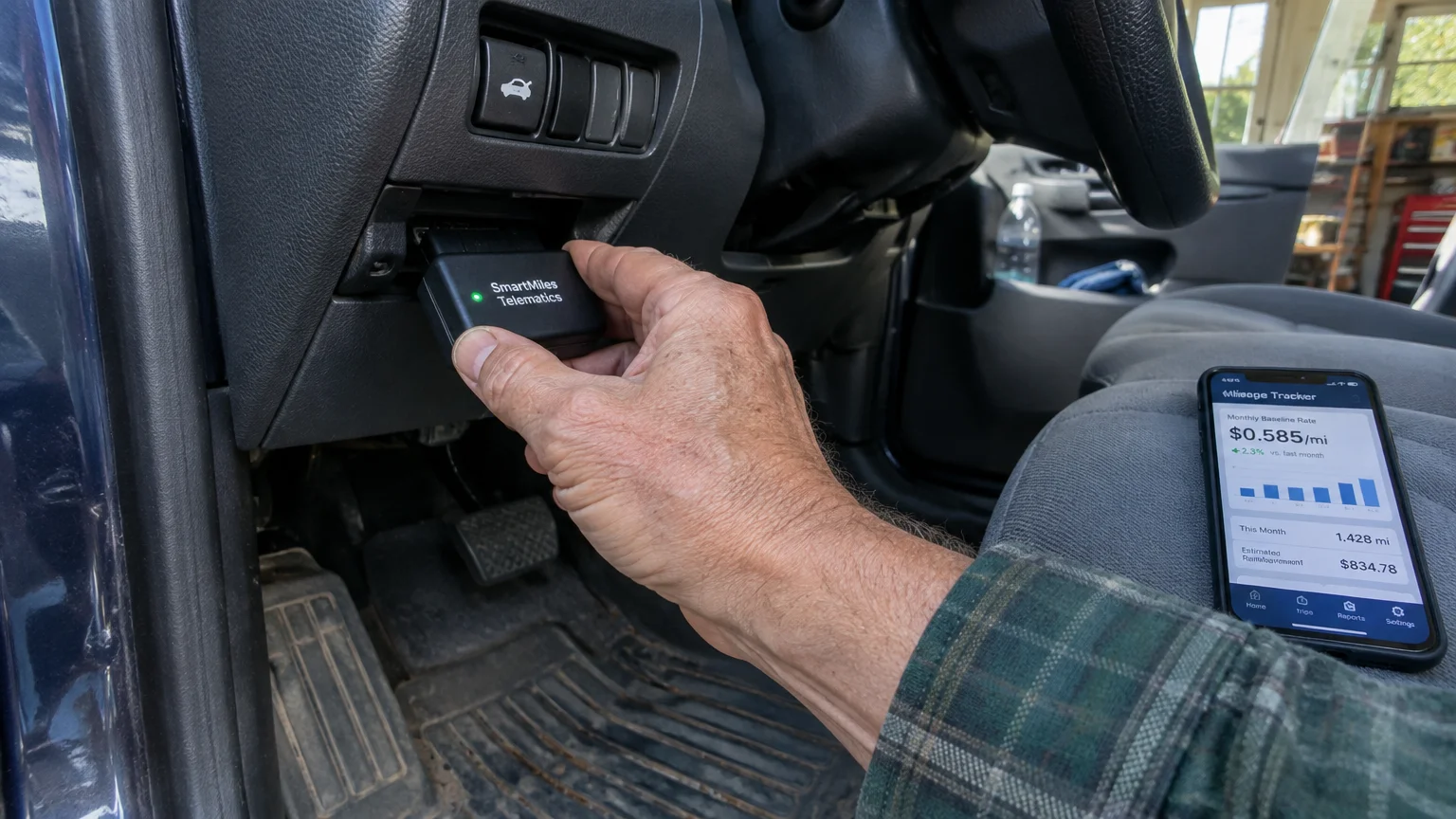
Low mileage insurance for seniors often works best through pay-per-mile programs. Services like Nationwide SmartMiles or Mile Auto track your mileage with a small device or smartphone app.
You pay a modest monthly base rate alongside a few cents per mile driven. If you travel only 4,000 miles a year, this option can save you hundreds annually.
4. Premium Rates Enter the U-Shaped Pricing Curve
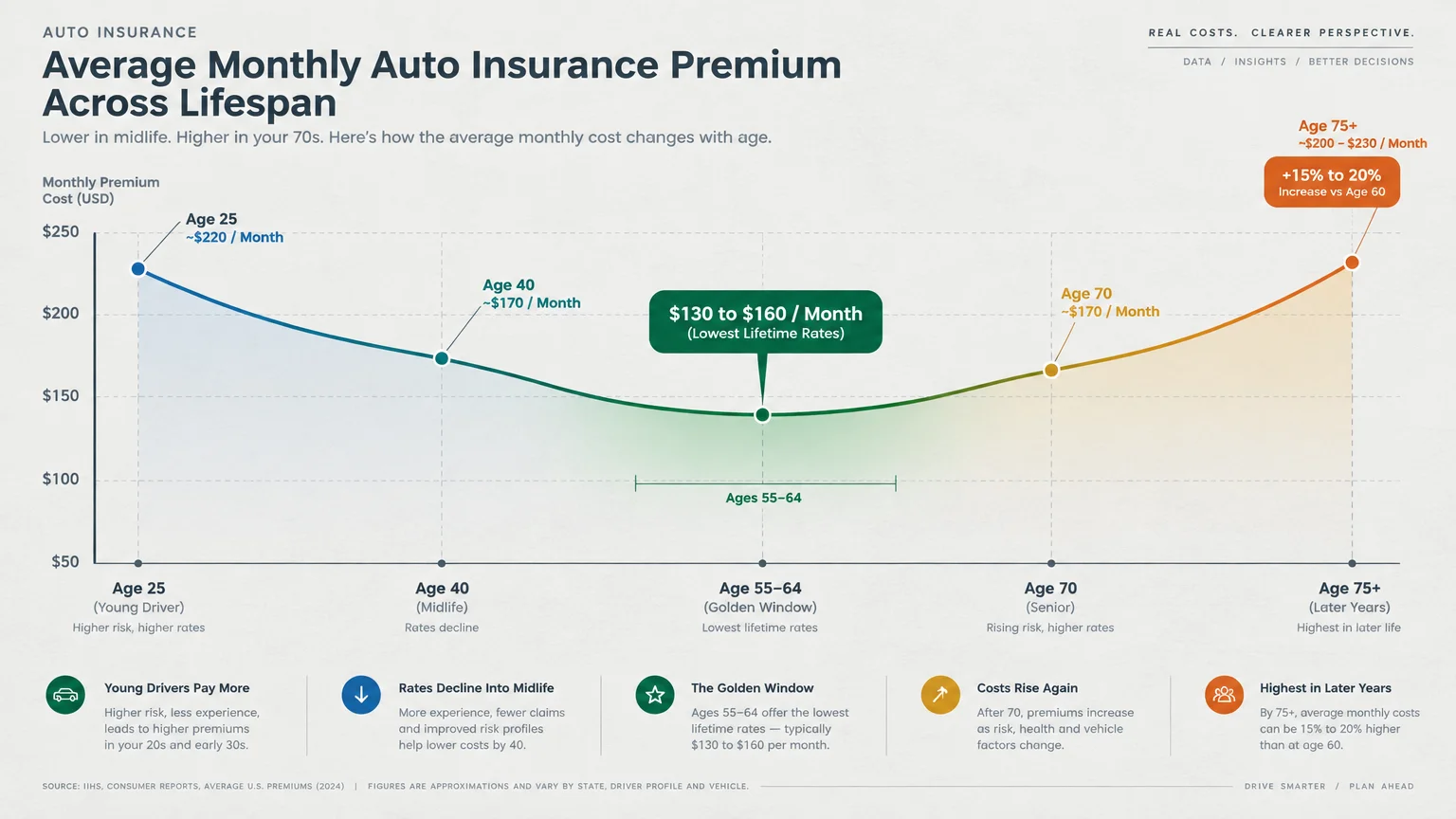
Auto insurance premiums follow a distinct U-shaped curve across an adult’s lifespan. Rates drop steadily through adulthood and reach their lowest point between ages 55 and 64.
During this golden window, full coverage averages roughly $130 to $160 per month. Insurers reward your decades of road experience and stable driving habits.
Senior auto insurance rates begin creeping upward between ages 70 and 75. By age 75, average premiums run 15% to 20% higher than rates for 60-year-olds.

5. State-Mandated Mature Driver Discounts Become Available
Over 30 states and Washington, D.C., require insurance companies to provide discounts to older drivers. You qualify by completing an approved defensive driving course.
Programs such as the AARP Smart Driver course or AAA RoadWise satisfy these state requirements. Insurers typically grant a 5% to 15% discount upon completion.
These statutory savings remain active for three consecutive years before requiring a brief refresher course. Most states allow you to complete the entire class online from home.

6. Senior Affinity Memberships Deliver Exclusive Group Rates
Retirement opens the door to affinity group memberships that offer dedicated automobile insurance programs. These partnerships leverage massive collective bargaining power to secure lower rates.
For example, AARP partners with The Hartford to provide member discounts of up to 10% on auto premiums. Their policy also includes guaranteed lifetime renewability.
Retiree car insurance discounts extend to alumni networks, retired military organizations, and union associations. Always ask your agent to cross-reference every organization you belong to.
“Retirement is not the end of the road. It is the beginning of the open highway.”

7. Physical Fragility Changes Your Underwriting Risk Profile
Mature drivers maintain safe habits; they wear seatbelts consistently and rarely drive recklessly. However, the Insurance Institute for Highway Safety notes fatal crash rates per mile increase after age 70.
The Centers for Disease Control and Prevention explains this rise stems from physical fragility rather than reckless driving. An impact that bruises a younger driver can cause fatal complications for an older motorist.
Insurers price this medical vulnerability into senior auto insurance rates. Choosing a vehicle with exceptional crash-test ratings and modern driver-assist features helps counteract these actuarial increases.
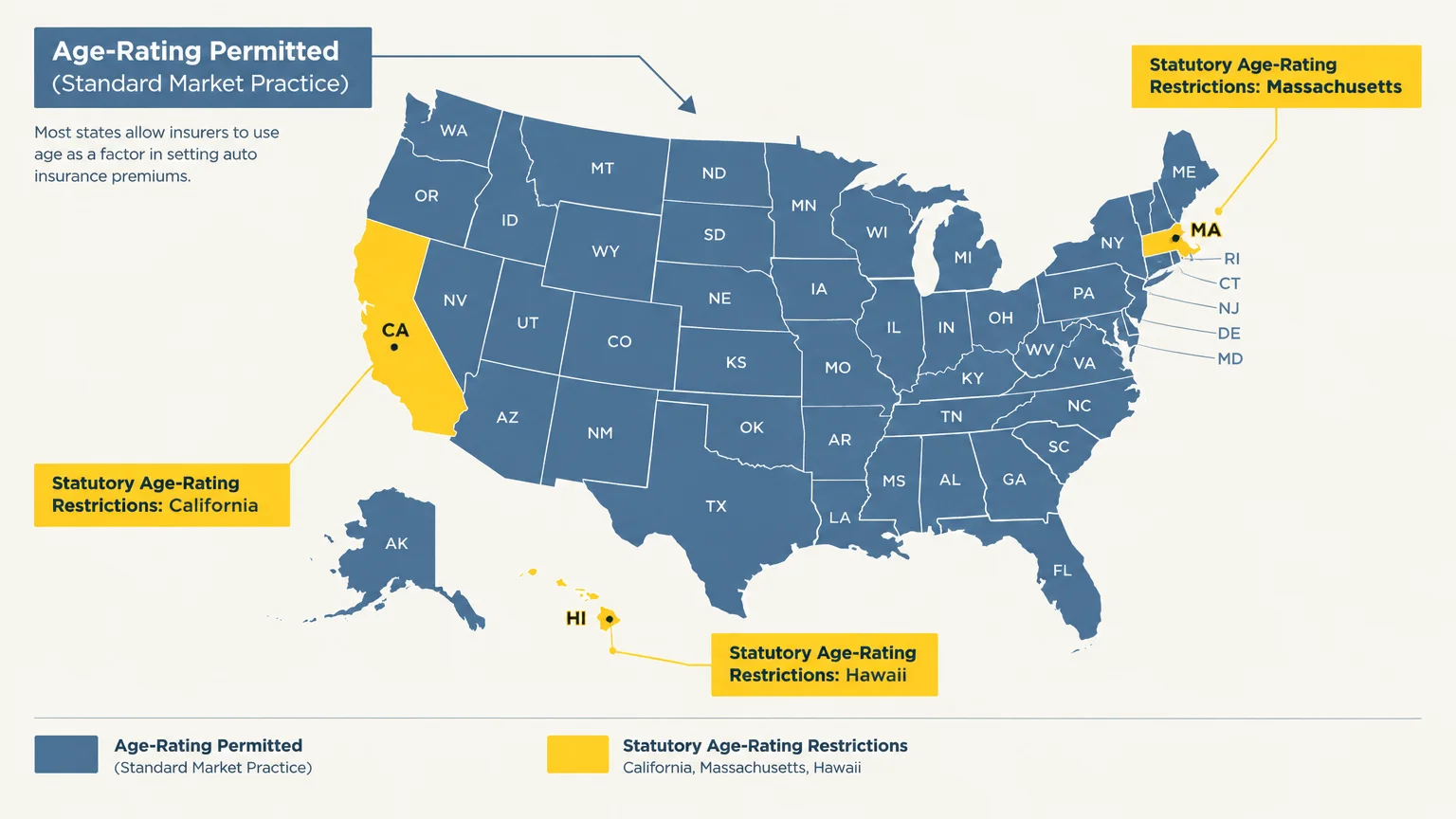
8. Your State Laws Determine Whether Insurers Can Rate by Age
Where you live dramatically affects how insurers evaluate your age. Certain states restrict companies from hiking premiums purely because you celebrate another birthday.
California, Hawaii, and Massachusetts prohibit insurers from using chronological age directly as a rating factor. California insurers must evaluate your years of driving experience instead.
If you relocate during retirement, your insurance costs may shift dramatically. Review local rating regulations whenever you plan an interstate move to avoid unexpected premium shocks.
9. Downsizing Vehicles and Garaging Locations Shift Costs
Many couples transition from two commuter cars down to a single reliable vehicle after retiring. Eliminating a vehicle erases an entire premium while trimming annual registration and maintenance costs.
Moving to an active adult community or rural suburb also alters your zip code risk profile. Garaging your car in an area with lower theft and vandalism rates yields instant savings.
Ensure you inform your carrier whenever you change parking locations. Failing to update your garage address can lead to denied claims if an accident occurs.
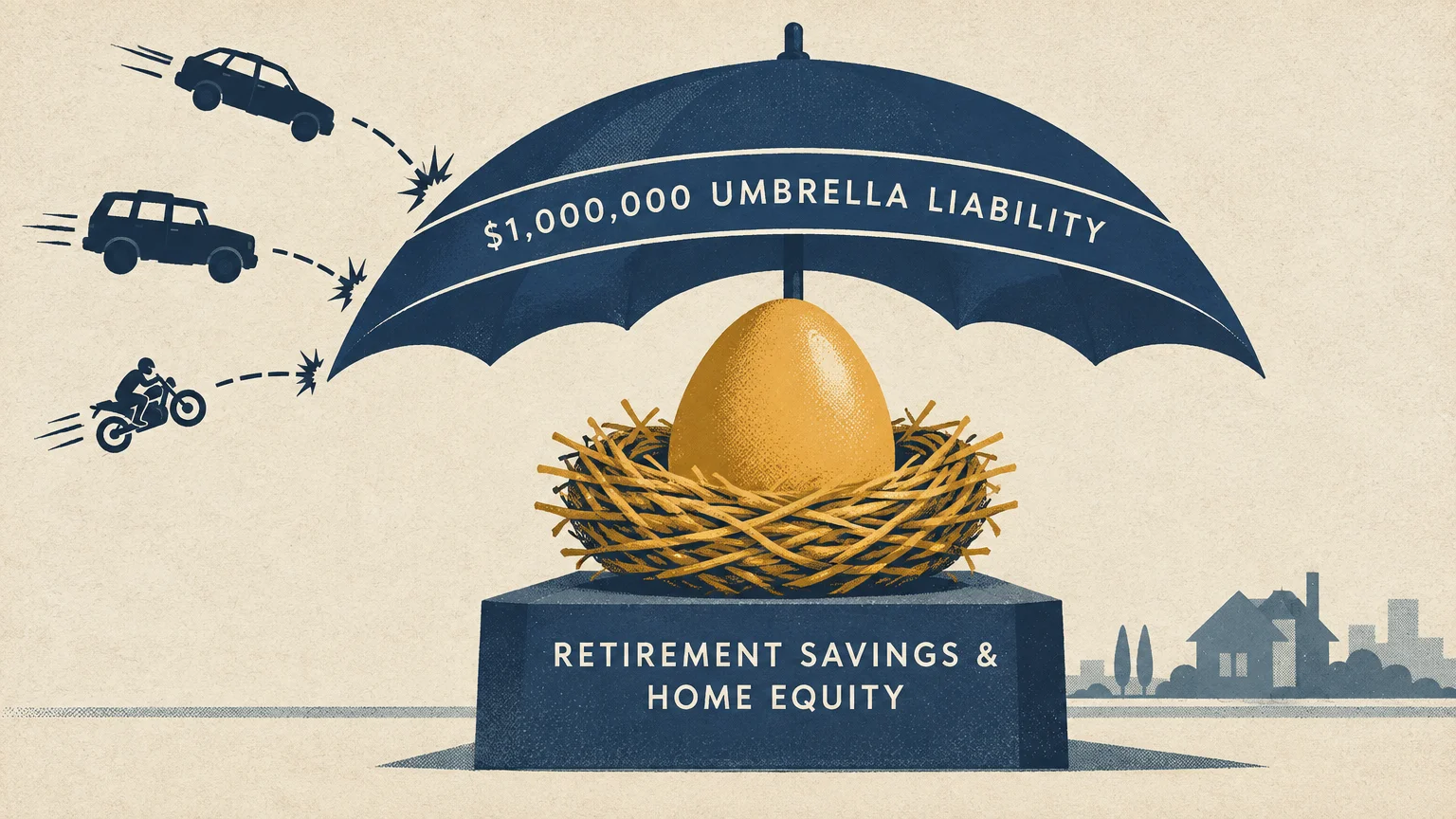
10. Protecting Accumulated Wealth Demands Stronger Liability Coverage
Many retirees carry state-minimum liability limits to keep their premiums as low as possible. This approach leaves your lifetime retirement assets dangerously exposed to catastrophic lawsuits.
If you cause a multi-car collision, your state minimums will evaporate in seconds. Injured parties can target your taxable savings and investment portfolios to settle remaining medical judgments.
The Consumer Financial Protection Bureau advises older adults to protect their accumulated nest eggs diligently. Purchasing an umbrella policy provides extra liability coverage affordably.
“The goal of retirement is to live off your assets—not live off your regrets.”

11. Health Changes and Prescriptions Require Proactive Management
Natural aging can bring shifts in vision, joint mobility, reaction speeds, and prescription medications. Certain medications can impair alertness and increase your collision risk on busy streets.
Maintaining a spotless driving record requires recognizing when to modify your driving routines. Limiting nighttime travel and avoiding severe weather preserves both your safety and your preferred insurance tier.
Some state licensing departments require periodic vision tests for mature motorists. Keeping up with regular eye exams ensures your license and auto insurance stay in good standing.
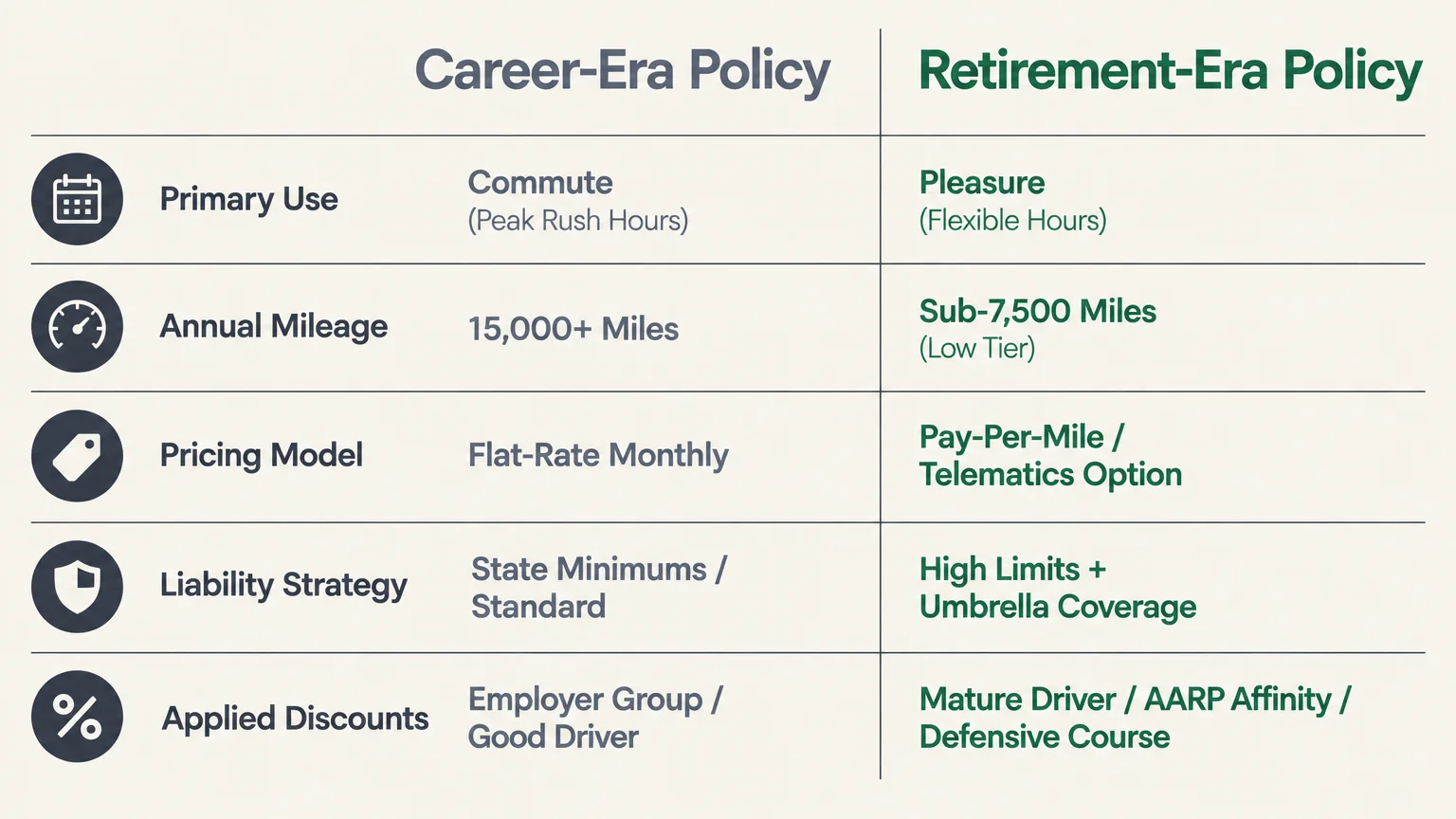
Comparing Career-Era Policies with Retirement Policies
Your driving profile changes noticeably when you leave the workforce. The table below illustrates how key policy factors shift between your career years and retirement.
| Policy Element | Working-Age Policy | Retirement Policy | Typical Financial Impact |
|---|---|---|---|
| Vehicle Use Category | Daily Commute (10–30+ miles/day) | Pleasure Use (under 10 miles/day) | 5% to 10% premium reduction |
| Annual Mileage | 12,000 to 15,000+ miles/year | Under 7,500 miles/year | 5% to 15% discount or pay-per-mile savings |
| Age-Based Risk Tier | Steady, experience-based rates | U-shaped curve (lowest at 55–64, rises past 70) | Lowest baseline rates, gradual increases past 75 |
| Education Discounts | Good student or defensive driver | State-mandated mature driver safety courses | 5% to 15% reduction for 3 years |
| Liability Priorities | Income replacement protection | Asset preservation via umbrella coverage | Modest premium increase to safeguard net worth |
Updating these details promptly ensures your insurance coverage reflects your actual driving habits rather than outdated assumptions.
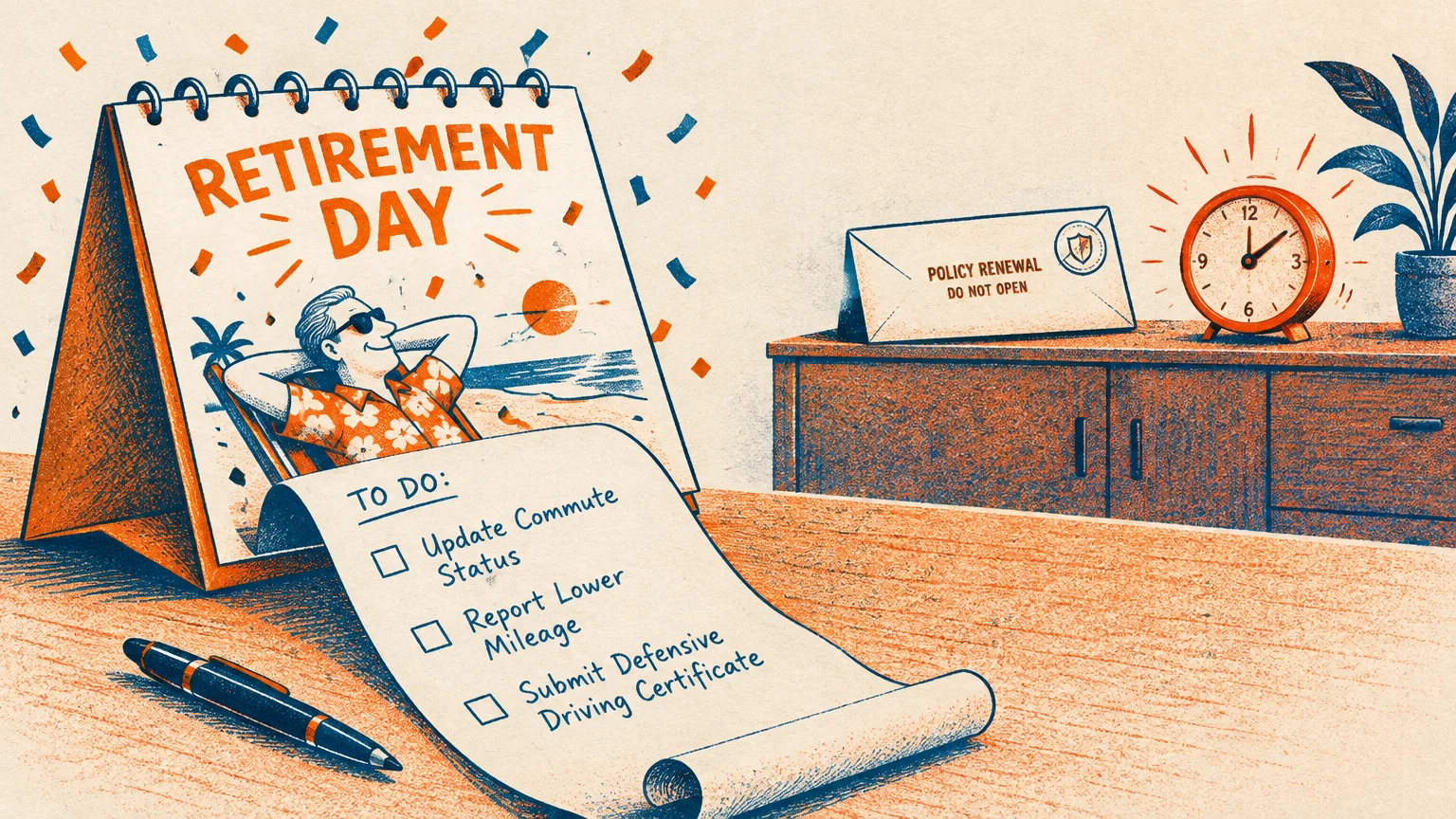
Don’t Make These Common Retiree Insurance Mistakes
Retirees often leave substantial money on the table through simple administrative oversights. Avoiding these frequent missteps will keep your household budget balanced.
- Failing to report low annual mileage to your insurance carrier after stopping work.
- Leaving your vehicle classified as a daily commuter car instead of pleasure use.
- Dropping bodily injury liability limits to the state minimum to save a few dollars.
- Forgetting to renew your mature driver defensive driving certificate every three years.
- Neglecting to compare insurance quotes across multiple carriers every two years.
A quick annual policy review protects your retirement budget against unnecessary premium creep.

When Professional Advice Is Worth It
Navigating auto insurance options becomes complex when you must coordinate liability limits with your broader estate plan. Consulting an independent insurance broker can help you evaluate competitive carrier options.
An independent broker represents multiple insurance companies rather than a single brand. They can pinpoint the exact carriers that offer the most generous mature driver discounts in your state.
If you have substantial retirement assets, coordinate with your financial planner before adjusting liability limits. Federal resources at USA.gov provide guidance on locating accredited retirement professionals.
Frequently Asked Questions
Does car insurance automatically get cheaper when you retire?
No, your insurer will not lower your rates automatically. You must actively notify your carrier about your reduced mileage and retired status to receive discounts.
At what age does senior car insurance start increasing?
Rates typically begin climbing between ages 70 and 75 across most states. By age 75, average premiums run roughly 15% to 20% higher due to physical fragility concerns.
How much can a defensive driving course save a retired driver?
Most state-approved mature driver courses yield a 5% to 15% discount on liability and collision coverage. These discounts generally remain effective for three years before requiring renewal.
Should retirees drop collision and comprehensive coverage?
Dropping physical damage coverage makes financial sense only if your car’s market value falls below ten times your annual premium. Otherwise, keep comprehensive coverage to protect against storm damage or theft.
Take Control of Your Coverage Today
Reviewing your auto policy right after you retire takes less than an afternoon. Call your agent to update your annual mileage, switch to pleasure use, and confirm your mature driver discounts.
This article is for informational purposes only and does not constitute financial, legal, or medical advice. Medicare rules, Social Security benefits, and tax laws change regularly—verify current details at Medicare.gov, SSA.gov, or with a licensed professional.
Last updated: February 2026. Medicare and Social Security rules change annually—always verify current details at official government sources.