Cluttering your home with decades of paper receipts wastes space, while throwing away vital tax documents too early exposes you to costly IRS penalties and double taxation. The Internal Revenue Service enforces strict timeframes for record retention, ranging from three years for standard returns to indefinitely for unfiled forms or basis tracking. By understanding exact tax paperwork storage rules, you protect your retirement savings, lower audit risks, and clean out filing cabinets with confidence. Recognizing these seven warning signs helps you align your filing habits with official IRS tax record retention guidelines today.

Quick Reference: The IRS Recommended Record Keeping Period
Before examining individual scenarios, review this core summary of retention rules. The Internal Revenue Code (IRC) establishes specific timeframes based on how and when you filed your tax documents, as well as the underlying financial transaction.
| Document / Record Category | Recommended Retention Period | Governing Tax Code / Rule | Primary Purpose |
|---|---|---|---|
| Standard Tax Returns & W-2s / 1099s | 3 Years | IRC § 6501(a) | Protects against routine IRS audit window and assessment limits. |
| State Tax Returns (e.g., California) | 4 Years | State Statute (FTB Guidelines) | Meets longer state audit statutes that exceed federal timelines. |
| Underreported Income Records (>25%) | 6 Years | IRC § 6501(e) | Covers extended audit windows for substantial gross income omissions. |
| Bad Debt & Worthless Securities Loss Claims | 7 Years | IRC § 6511(d)(1) | Validates refund claims for uncollectible loans or worthless stock. |
| Property, Home Improvement & Real Estate Files | Ownership Term + 3 Years | IRC § 1012 & § 6501(a) | Proves original cost basis and lowers taxable gain upon sale. |
| Form 8606 (Nondeductible Traditional IRAs) | Account Lifetime + 3 Years | IRS Pub 590-B / IRC § 72 | Prevents double taxation on post-tax IRA distributions during retirement. |
| Unfiled Returns or Fraudulent Submissions | Indefinite (Keep Forever) | IRC § 6501(c) | No statute of limitations exists for missing or fraudulent tax filings. |
1. You Purge Basic Income Tax Returns After Only One Year
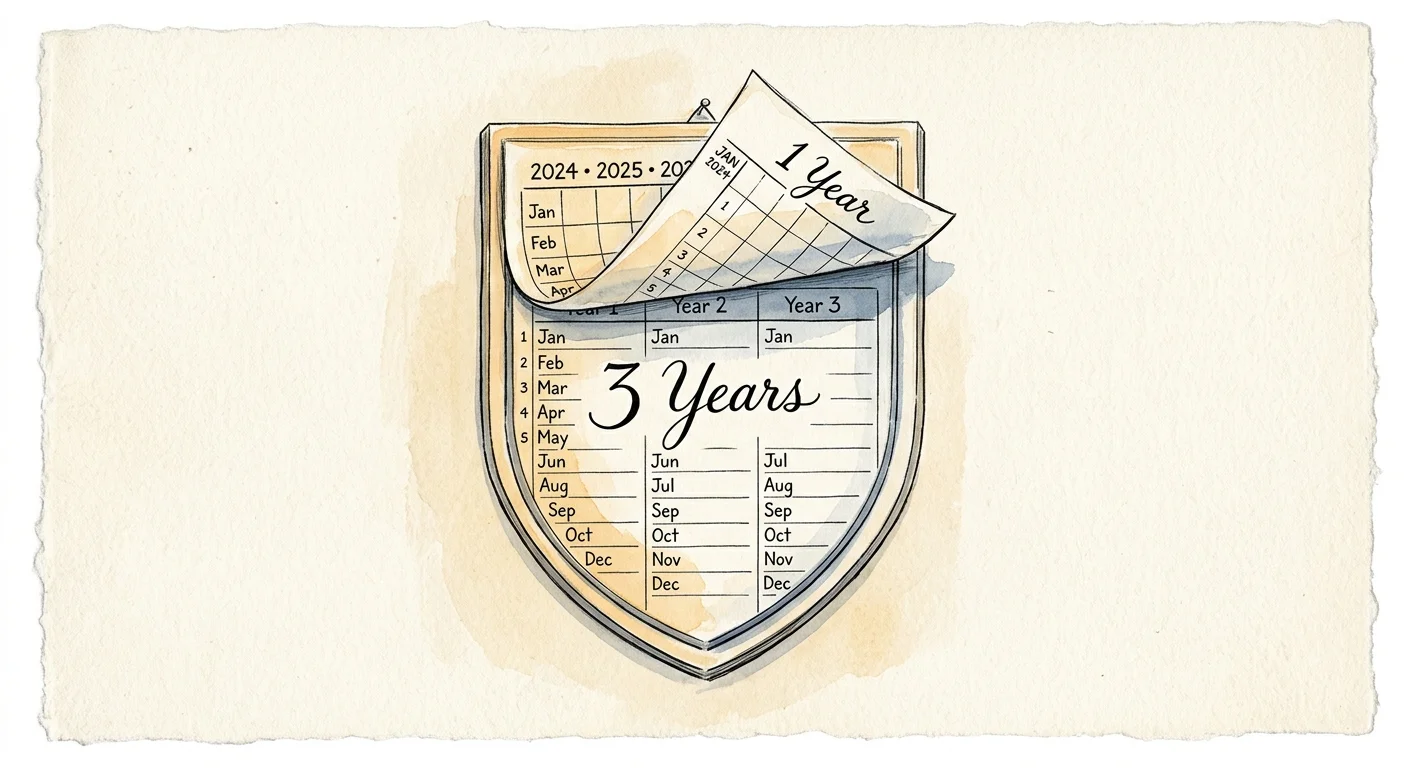
Throwing away your tax returns within twelve months leaves you entirely unprotected during a routine tax review. Under Internal Revenue Code § 6501(a), the standard statute of limitations for the IRS to audit a return and assess additional tax is three years from the date you filed or the return’s original due date—whichever comes later. If you filed your 2025 tax return on April 15, 2026, the standard audit window remains open until April 15, 2029.
You must keep full copies of your federal and state tax returns, along with corresponding Forms W-2, 1099, and interest statements, for at least three full years. In addition to answering IRS inquiries, maintaining these three-year records simplifies life when you apply for a mortgage, secure a reverse mortgage, or verify income for healthcare premium subsidies under the Affordable Care Act.

2. You Shredded Home Improvement Records Before Selling Your Residence
When you downsize or sell your family home in retirement, failing to produce capital improvement receipts can trigger a massive, unnecessary tax bill. Many homeowners know that the IRS allows married couples filing jointly to exclude up to $500,000 in capital gains ($250,000 for single filers) on a primary residence. However, if your home’s value skyrocketed over thirty years, your profit might exceed those thresholds.
Every dollar you spent on structural additions, room additions, upgraded roofing, new air conditioning units, or kitchen remodels adds directly to your home’s tax basis. Under IRC § 1012, higher basis translates directly to lower taxable capital gains. You must store all home improvement receipts, contractor invoices, and closing settlement statements for as long as you own the home—plus three years after filing the tax return that reports its sale.
3. You Threw Away IRS Form 8606 for Nondeductible IRA Contributions
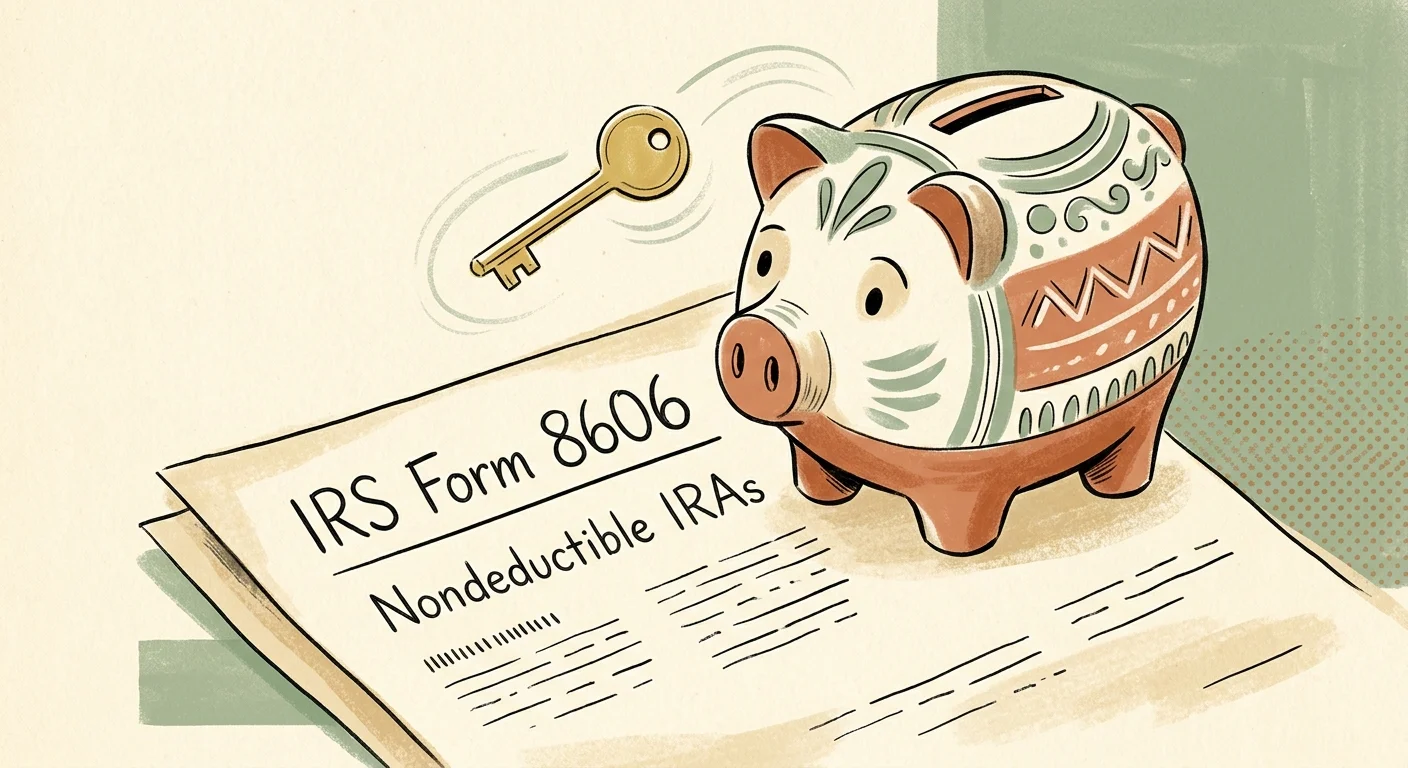
If you ever made non-deductible contributions to a Traditional IRA, discarding your historic tax forms causes severe financial harm. The IRS tracks after-tax IRA contributions on Form 8606. When you begin taking required minimum distributions (RMDs) or voluntary withdrawals in retirement, the non-deductible portions return to you tax-free under IRC § 72.
Without past copies of Form 8606 and Form 5498 showing your cumulative tax-paid balance, the IRS will treat 100% of your IRA distributions as taxable income. You must maintain these forms for every single year you made non-deductible contributions until you completely liquidate the IRA account, plus three years beyond the final distribution. You can verify official rules regarding account tracking through the IRS Retirement Plans online clearinghouse.
4. You Purged Files at Year Three, But You Live in California or Omitted Income
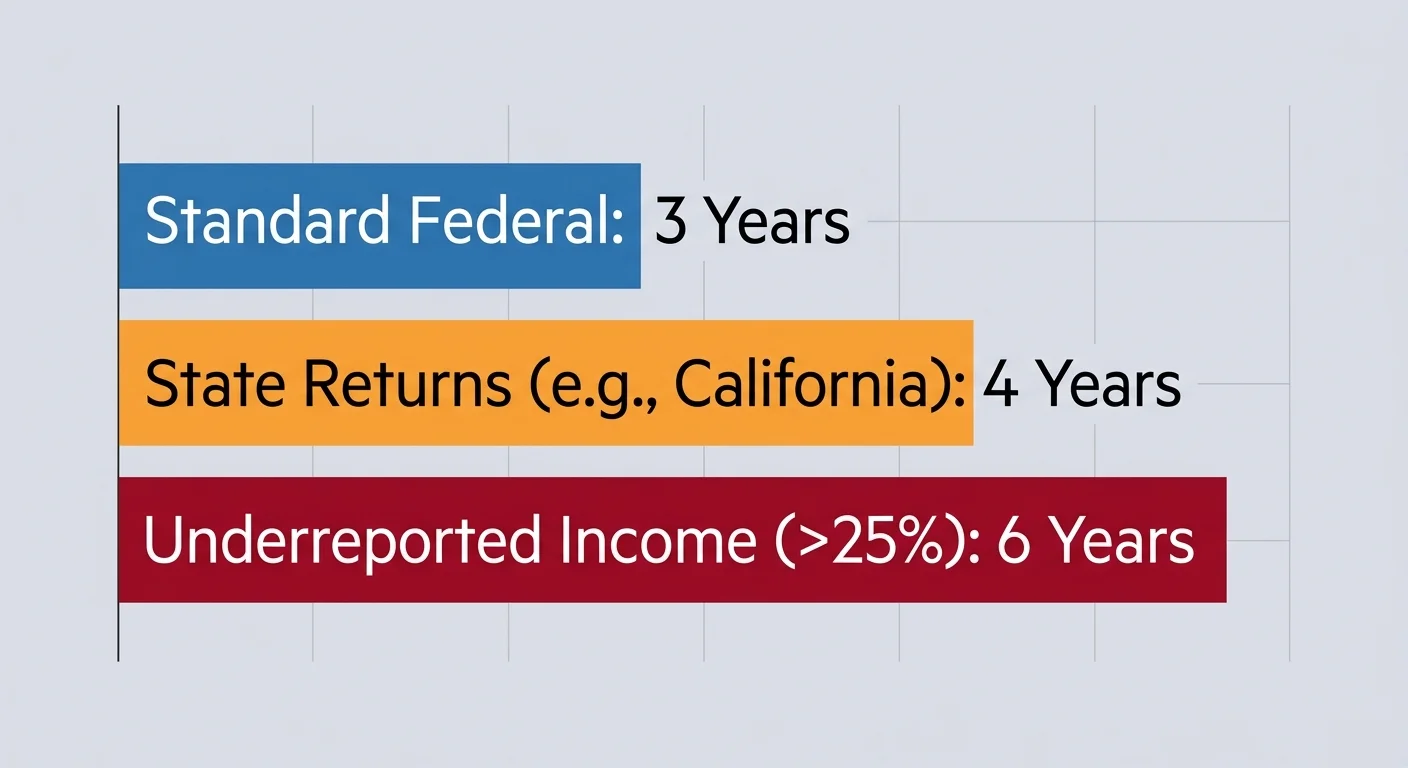
Assuming that every tax record expires at the three-year mark represents a dangerous miscalculation. Federal and state laws expand audit timelines dramatically under specific, common conditions:
- Substantial Gross Income Omissions: Under IRC § 6501(e), if you omit more than 25% of your gross income from a return, or fail to report more than $5,000 in income from foreign financial assets, the IRS audit statute expands from three years to six years.
- State Tax Statutes: Individual states establish their own statutes of limitations. For example, the California Franchise Tax Board (FTB) operates under a standard four-year statute of limitations to audit state income tax returns, outlasting the federal three-year rule.
- State Audit Adjustments: When the IRS adjusts your federal return, state tax authorities typically receive additional time—often one to two years from the final federal determination—to recalculate your state liability.
If you reside in a state with a four-year statute or handle complex investment income, maintaining general tax records for six years offers essential insulation against late-arriving state queries.
5. You Discarded Evidence of Worthless Securities or Uncollectible Bad Debts
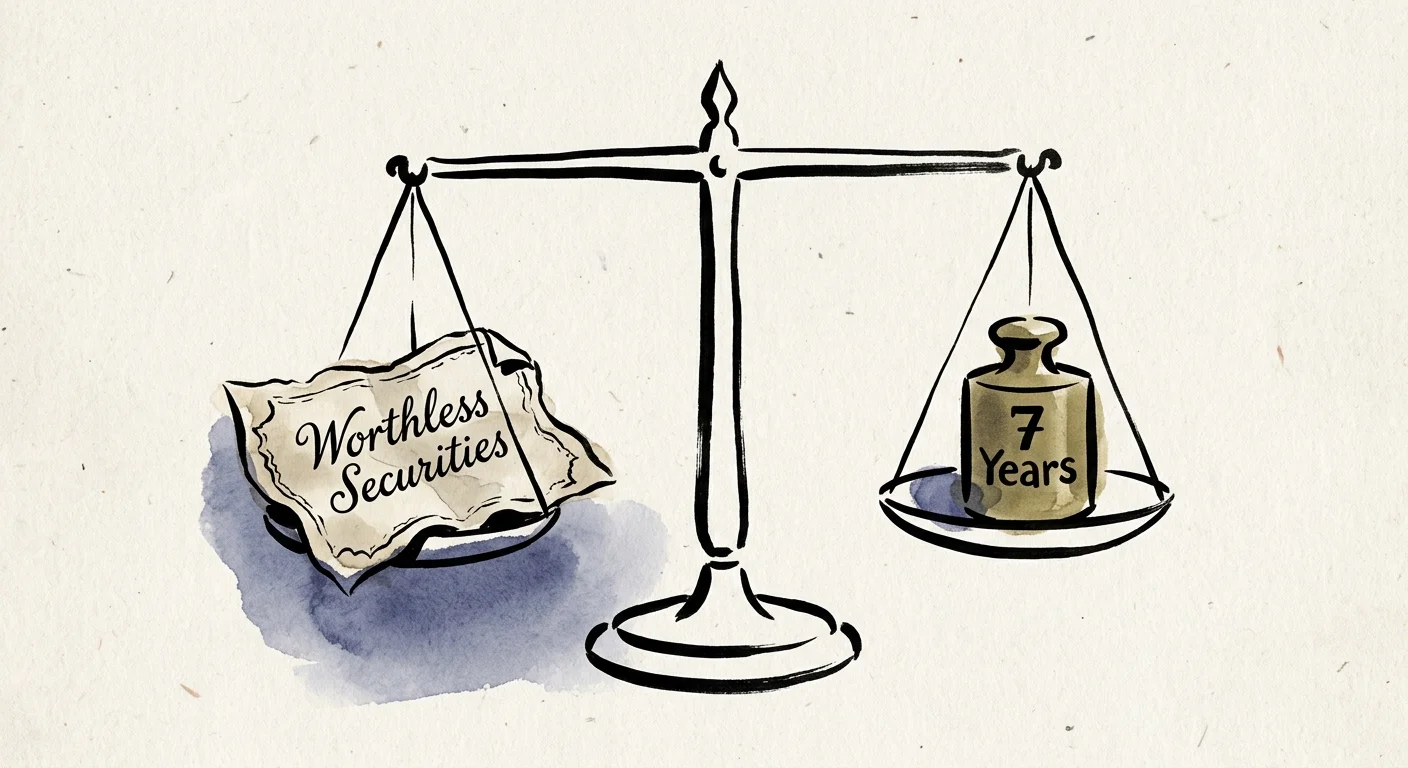
If you claimed a tax deduction for a personal loan that went unpaid or an investment in a private business that went completely belly-up, a standard three-year file retention schedule falls short. Recognizing losses on non-business bad debts or worthless corporate stock involves unique tax rules.
Internal Revenue Code § 6511(d)(1) grants taxpayers a specialized seven-year period from the return due date to file claims for tax refunds or credits resulting from bad debt deductions or losses on worthless securities. Because claims and audits regarding worthless investments frequently surface late, you should maintain all promissory notes, loan agreements, corporate bankruptcy notices, and documentation of collection efforts for seven full years.

6. You Destroyed Employment and Income Records Before Checking Social Security Statements
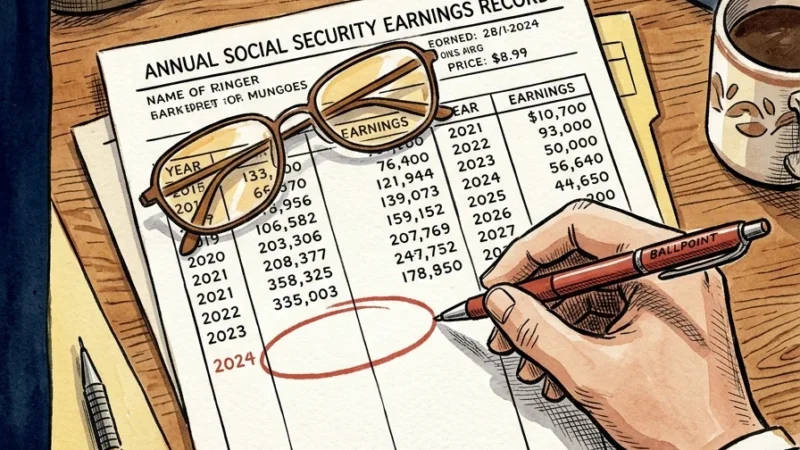
Employers must keep payroll and employment tax records for at least four years under IRS guidelines. Individual taxpayers, however, face a distinct long-term challenge regarding lifetime earnings records. Your eventual monthly benefit from Social Security depends directly on your highest thirty-five years of indexed earnings.
Before tossing annual W-2 forms or final pay stubs, cross-reference them against your personal earnings history at the Social Security Administration. If an employer underreported or failed to report your earnings decades ago, your monthly benefit will reflect an incorrect lower amount. Keep your annual Form W-2 or Social Security annual earnings statement permanently until you verify that your official earnings history matches your actual income records perfectly.
7. You Assume the “Seven-Year Rule” Protects Unfiled Returns or Fraud
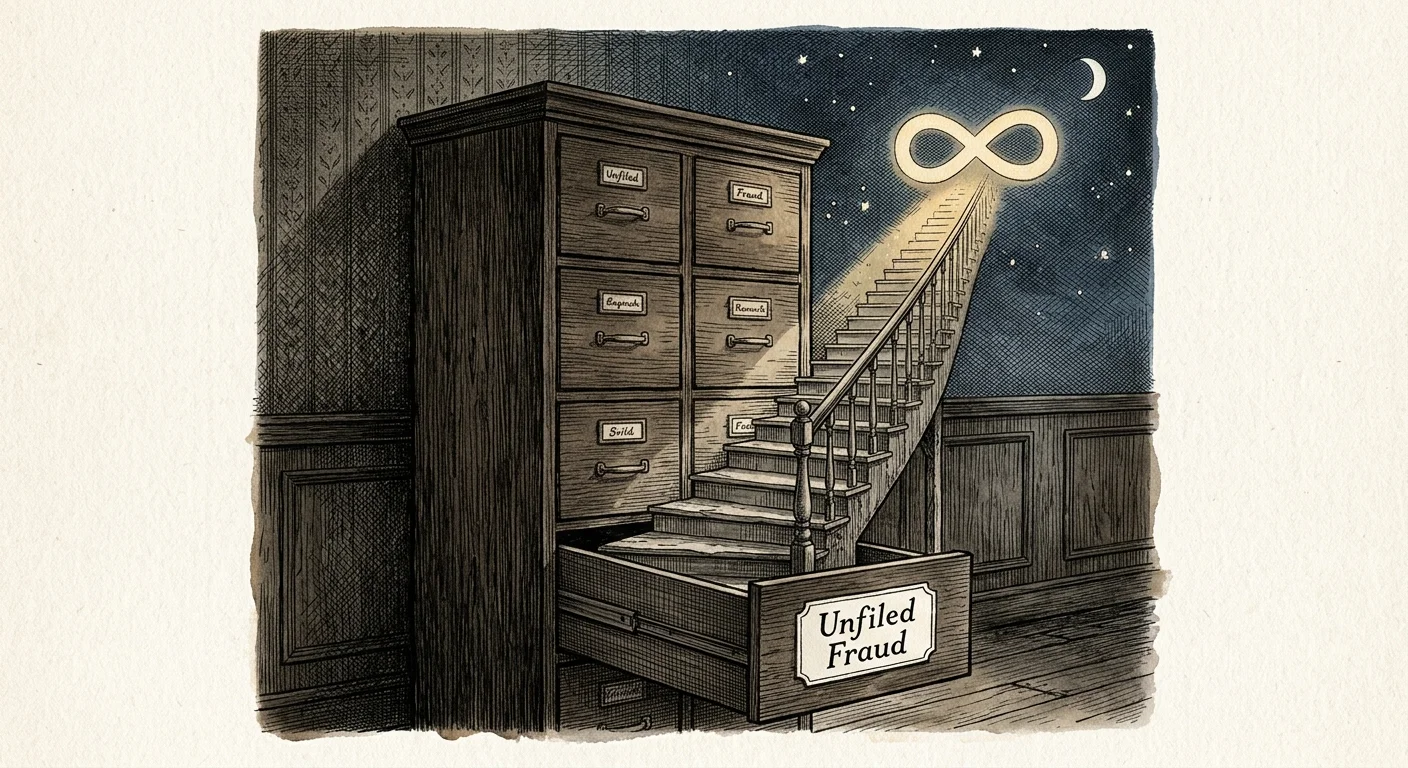
A widespread financial myth holds that the IRS loses all authority to audit or assess taxes after seven years pass, regardless of circumstances. In truth, under IRC § 6501(c), there is no statute of limitations if you fail to file a tax return, or if you submit a false or fraudulent return.
Court precedents enforce this strict rule strictly. In Murrin v. Commissioner (158 F.4th 527, 2025), the Third Circuit Court of Appeals confirmed that the IRS maintains an indefinite window to assess back taxes and civil penalties on fraudulent returns—even when a paid tax preparer committed the fraud without the taxpayer’s knowledge or consent. Keeping filed return copies and proof of electronic transmission permanently protects you against claims that a return was never received.
“It’s not how much money you make, but how much money you keep, how hard it works for you, and how many generations you keep it for.” — Robert Kiyosaki

Don’t Make These Mistakes with Your Retirement Tax Files
Avoid these frequent paper management errors that plague retirees and strain estate plans:
- Shredding Roth Conversion Documentation: Destroying Form 8606 or rollover statements after converting Traditional funds to Roth IRAs makes proving tax-free withdrawal eligibility difficult during early distributions.
- Tossing Estate and Gift Tax Records: Throwing away Form 709 (United States Gift Tax Return) prevents your heirs from proving lifetime gift tax exemption usage upon your passing.
- Mixing Property Records with Annual Tax Slips: Storing long-term home improvement receipts in standard annual tax folders leads to accidental shredding when the three-year mark arrives.
- Failing to Keep Digital Backups: Relying exclusively on paper exposes critical documents to water damage, house fires, or simple misplacement during late-life moves or downsizing.

When Professional Advice Is Worth It
Knowing how long to keep tax records becomes complex when managing trusts, liquidating major assets, or settling a late spouse’s estate. Consulting a Certified Public Accountant (CPA), Enrolled Agent (EA), or an elder law attorney proves invaluable during life transitions. A qualified tax professional helps establish formal record retention schedules, assists with reconstructing lost cost basis figures, and communicates directly with tax agencies if audits arise.
For general guidance on federal benefits, healthcare planning, and housing decisions in retirement, explore comprehensive educational resources provided by AARP and official government clearinghouses at USA.gov Retirement Resources.
Frequently Asked Questions About Tax Record Retention
Should I keep paper copies, or are digital tax records acceptable to the IRS?
The IRS explicitly accepts electronic tax records, provided they are legible, accessible, and accurately reflect original paper documents under Revenue Procedure 97-22. Store scanned files in PDF format across multiple secure locations, such as an encrypted cloud drive paired with an external hard drive.
How long should I keep tax records after a spouse passes away?
Keep income tax returns filed jointly for at least three to six years following the filing date. However, maintain all cost-basis records for inherited property, joint real estate, and investment accounts indefinitely until you sell those assets, as step-up in basis rules require historic asset valuation proof.
Does closing a bank account mean I can shred the tax-related statements?
No. Closing an account does not alter IRS record retention guidelines. Retain 1099-INT forms, interest summaries, and cancelled checks supporting deductions for three years from the date you filed the return reflecting those accounts.
How many years to keep tax documents if I am audited?
If the IRS initiates an audit, preserve all records pertaining to that tax year indefinitely until the IRS issues a formal audit closing letter (Form 4549 or Letter 987) confirming the inquiry is completely resolved.
Taking Action on Your Tax Paperwork Today
Managing your financial paperwork efficiently reduces mental stress and guards your hard-earned retirement nest egg. Take time this week to pull out older filing folders, create distinct files for permanent property basis documents, scan necessary historic papers to secure digital storage, and safely shred standard financial statements that have passed their required federal and state statute limits.
This article is for informational purposes only and does not constitute financial, legal, or medical advice. Medicare rules, Social Security benefits, and tax laws change regularly—verify current details at Medicare.gov, SSA.gov, or with a licensed professional.
Last updated: February 2026. Medicare and Social Security rules change annually—always verify current details at official government sources.