A 65-year-old couple retiring today will spend an average of $12,850 out of pocket on healthcare during their very first year alone. Building an accurate medical budget protects your nest egg from unexpected bills.
Out-of-pocket medical costs often catch new retirees off guard because coverage rules shift significantly once you transition from employer benefits. You need a systematic method to project expenses before bills arrive.
These eight practical strategies show you how to estimate medical expenses accurately and establish a dependable healthcare budget for the coming year.

1. Audit Your Past 12 Months of Healthcare Spending
Start your planning by gathering every medical receipt, pharmacy statement, and Explanation of Benefits statement from the past year.
Sort these records into clear categories: physician office copays, ongoing prescription drugs, dental visits, diagnostic testing, and specialist consultations.
This historical record reveals your family’s baseline medical consumption patterns and highlights regular out of pocket medical costs.
Next, adjust this total upward by 5% to 10% to account for general medical inflation and normal age-related changes in healthcare needs.
Reviewing past expenditures ensures you build your forecast on personal reality rather than national guesswork.
2. Calculate Fixed Premium Obligations for Medicare
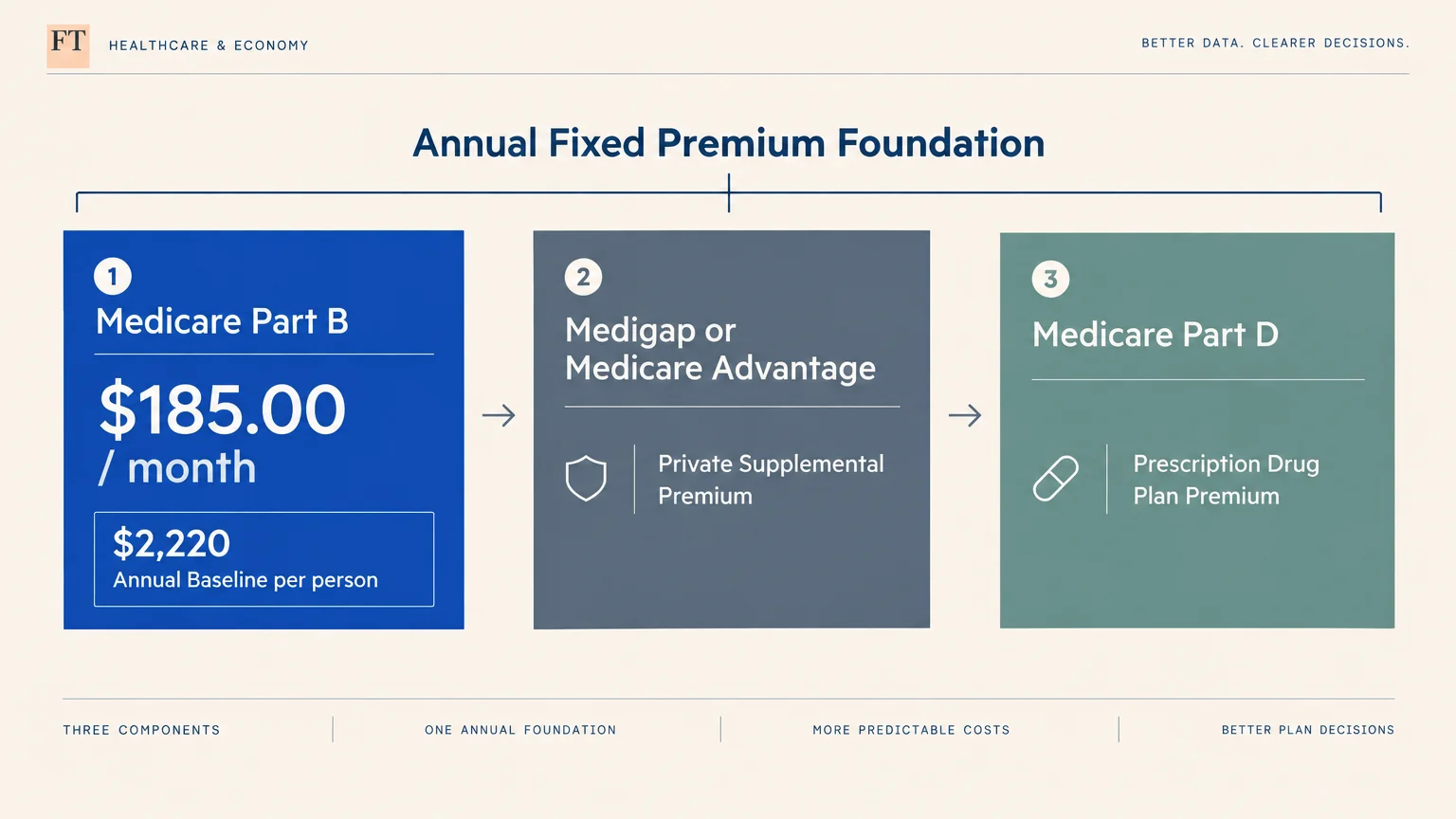
Predictable monthly insurance premiums form the structural foundation of any reliable medical budget for retirees.
In 2025, the standard Medicare Part B monthly premium is $185.00, which pays for outpatient care, doctor visits, and preventative services.
Multiply that baseline Part B amount across twelve months to budget an initial $2,220 per individual.
Add the annual premium totals for your private supplemental insurance, whether you choose a Medicare Supplement (Medigap) policy or a Medicare Advantage plan.
Include your standalone Medicare Part D prescription drug premium to complete your annual fixed insurance total.
“The best time to plan for retirement was 20 years ago. The second best time is today.”
3. Factor in the $2,000 Prescription Drug Out-of-Pocket Cap
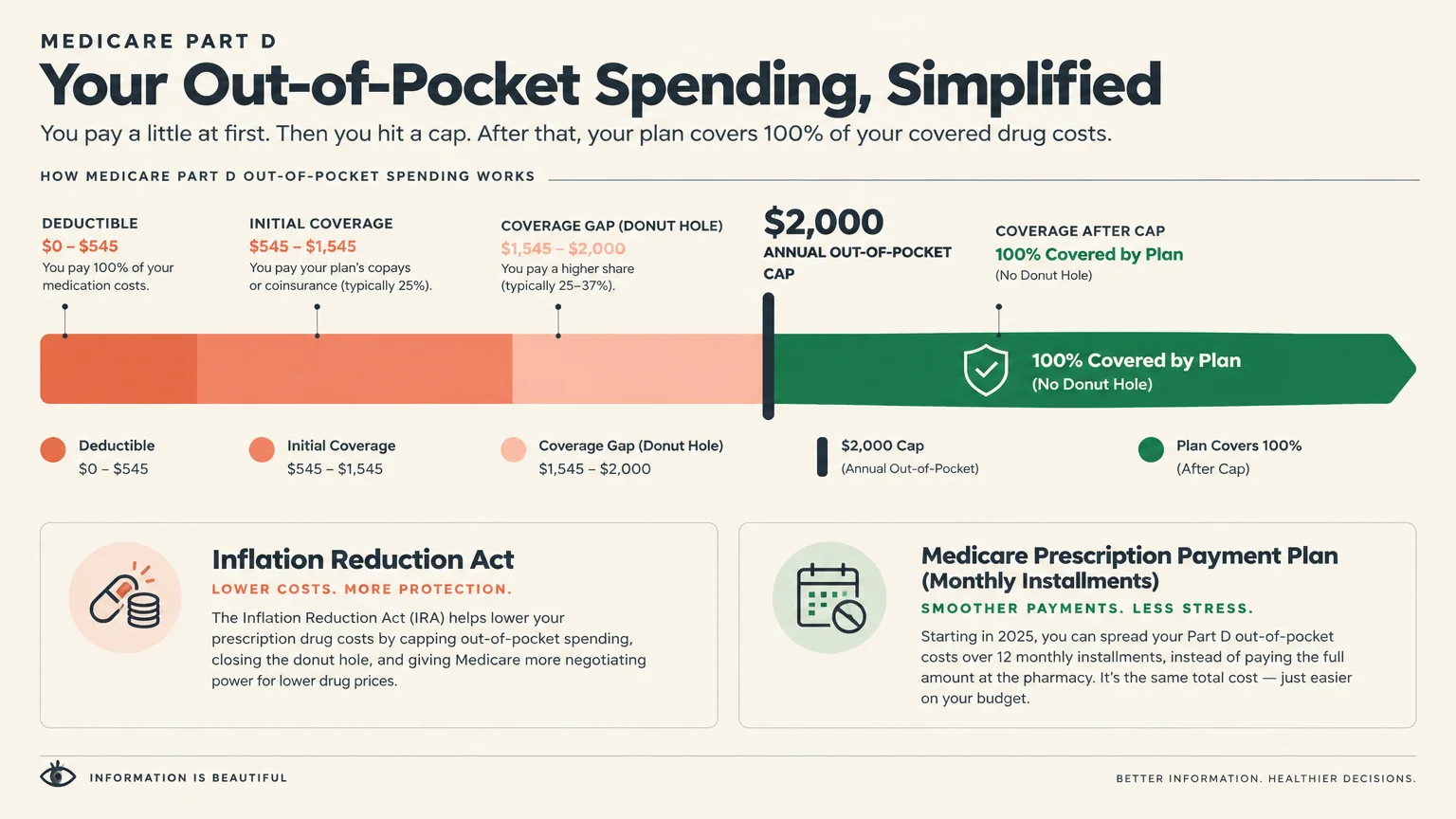
Under the Inflation Reduction Act, annual out-of-pocket prescription medication spending is capped at $2,000 per person for Medicare Part D enrollees.
This federal rule completely eliminated the historic coverage gap known as the donut hole.
If you take high-tier brand medications or specialty biologics, your drug expenses now stop increasing once you reach that $2,000 threshold.
You can also participate in the Medicare Prescription Payment Plan, which spreads out-of-pocket drug costs into capped monthly installments with zero interest.
Examine your current medicine list on the Medicare Plan Finder to see exactly how quickly your prescriptions will reach that annual cap.
4. Budget for Routine Dental, Vision, and Hearing Care
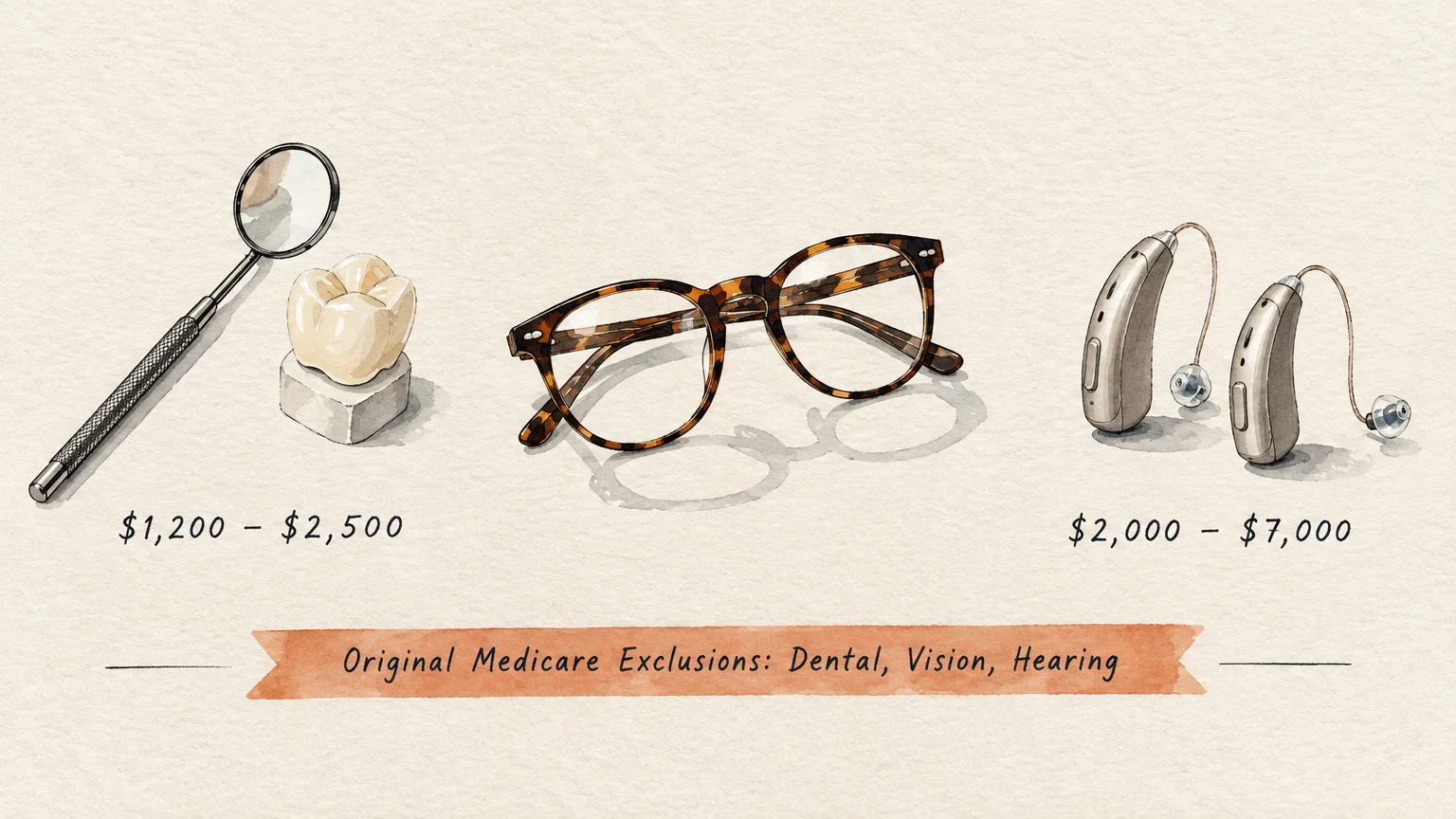
Original Medicare does not cover routine dental cleanings, restorative fillings, dentures, routine eye exams, glasses, or hearing aids.
You must pay 100% of these expenses directly unless you purchase separate private supplemental policies or join an Advantage plan.
Routine dental crowns and root canals routinely run between $1,200 and $2,500 per procedure, while dental implants can exceed $4,000.
A pair of prescription hearing aids averages between $2,000 and $7,000, with replacements typically required every three to five years.
Set aside a separate line item of $1,500 to $3,000 per year per spouse to cover these routine sensory and dental appointments.
5. Check for Income-Related Monthly Adjustment Amounts (IRMAA)
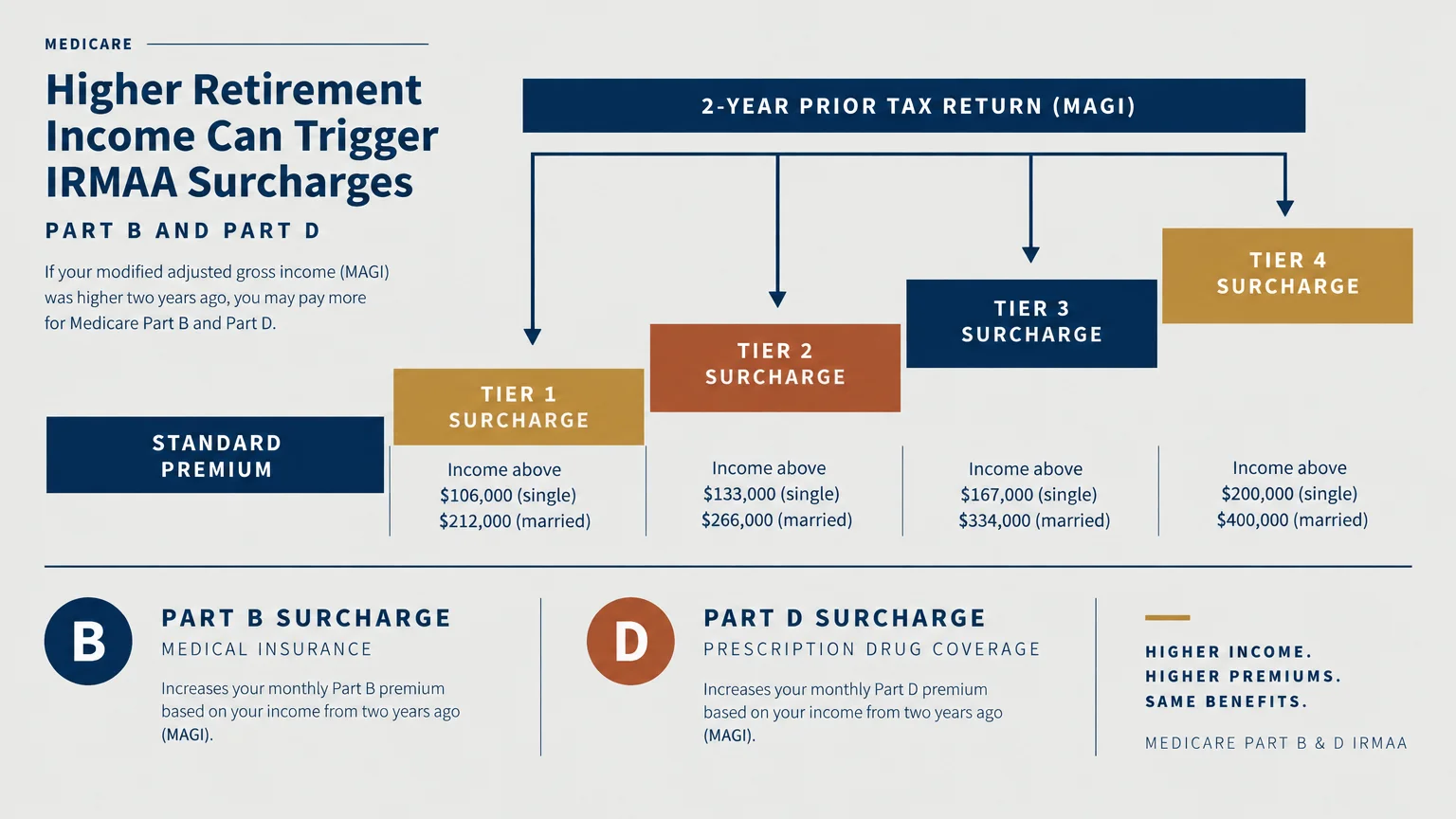
Retirees with higher retirement incomes pay mandatory federal surcharges on their Medicare Part B and Part D premiums.
The government calculates IRMAA surcharges using your Modified Adjusted Gross Income reported on federal tax returns from two years prior.
In 2025, IRMAA surcharges apply if your 2023 taxable income exceeded $106,000 for single filers or $212,000 for married couples filing jointly.
Exceeding a surcharge tier by even one dollar increases your premium cost for every remaining month of the calendar year.
If you executed large Roth conversions or sold primary real estate two years ago, prepare for higher monthly healthcare deductions from Social Security.
Review current income tiers on the Social Security Administration website to see if IRMAA will elevate your premium bills next year.

6. Maximize Health Savings Accounts (HSAs) Before Enrolling in Medicare
If you are between ages 55 and 64 and participate in a qualifying high-deductible health plan, fund your HSA aggressively.
For 2025, contribution limits stand at $4,300 for individual coverage and $8,550 for family plans, alongside a $1,000 catch-up contribution for savers 55 and older.
For 2026, those statutory caps rise to $4,400 for individuals and $8,750 for family policies, maintaining the identical $1,000 catch-up benefit.
HSAs provide unmatched triple tax savings: tax-deductible deposits, tax-sheltered investment compounding, and tax-free withdrawals for qualified medical bills.
Remember that you must stop all HSA contributions immediately upon enrolling in Medicare Part A or Part B to avoid steep IRS penalties.

7. Review Your Annual Notice of Change (ANOC) During Open Enrollment
Every September, private insurers send an Annual Notice of Change to individuals enrolled in Medicare Advantage and Part D plans.
This essential document outlines upcoming changes to plan premiums, deductible amounts, medication copay tiers, and physician network limitations.
The Medicare Annual Enrollment Period runs strictly from October 15 through December 7 each fall.
Use this enrollment window to ensure your preferred primary care doctors, specialists, and neighborhood pharmacies remain in-network for the upcoming year.
Switching plans during open enrollment often saves retirees hundreds of dollars in out of pocket medical costs.

8. Create a Dedicated Healthcare Reserve for Out-of-Pocket Cost-Sharing
The 25th annual Fidelity Retiree Health Care Cost Estimate indicates that a 65-year-old couple needs approximately $371,000 for medical costs across retirement.
Their research reveals that cost-sharing elements—including deductibles, copayments, and coinsurance—represent 48% of lifetime healthcare spending.
The standard annual Medicare Part B deductible is $257 in 2025, after which Medicare pays 80% of approved medical services.
Without Medigap insurance, you remain directly liable for the remaining 20% coinsurance without any statutory annual maximum limit.
Establish a liquid emergency fund in a high-yield savings account holding three to six months of potential out-of-pocket medical deductibles.
“The goal of retirement is to live off your assets—not live off your regrets.”
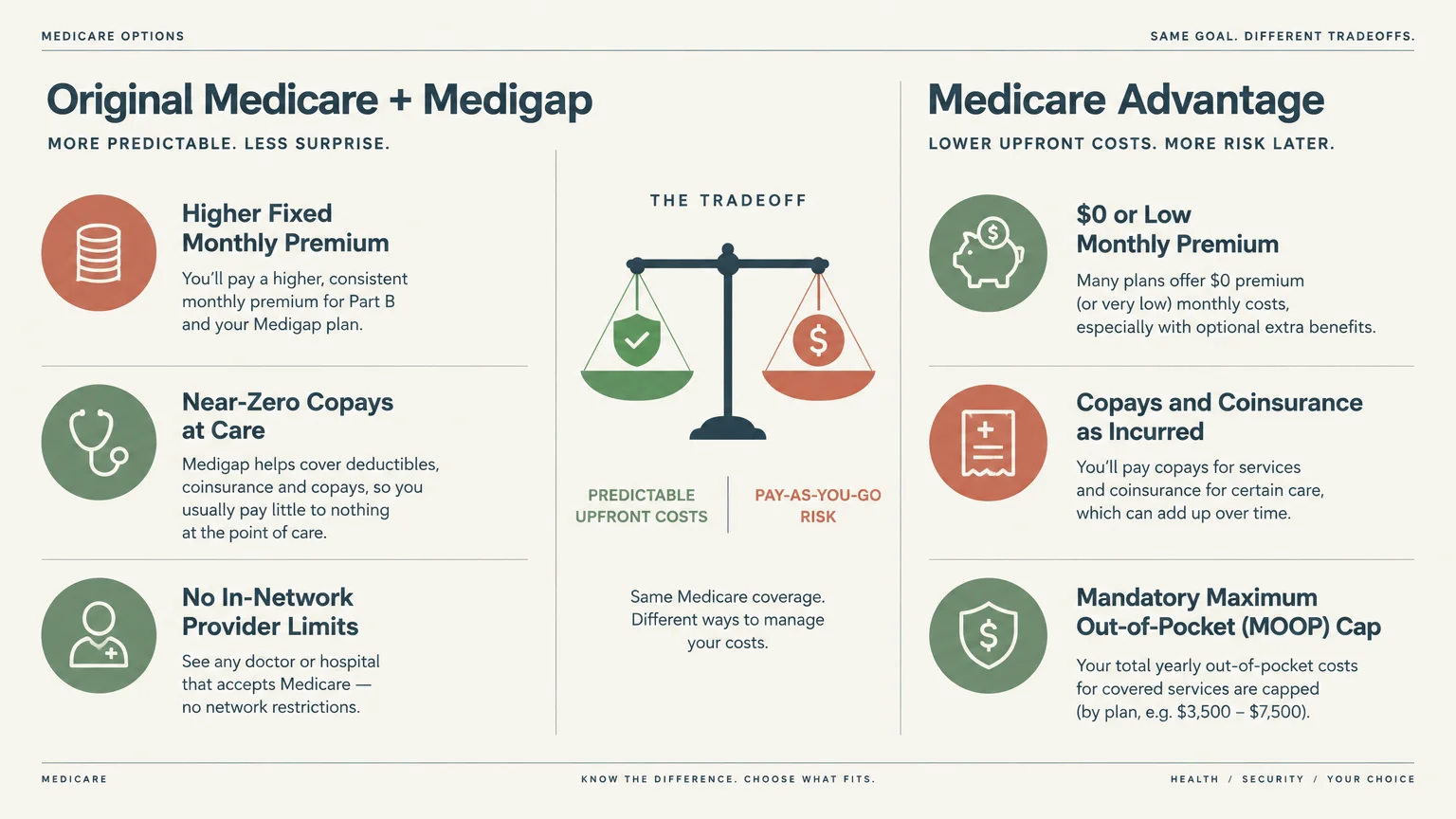
Comparing Out-of-Pocket Structures: Original Medicare vs. Medicare Advantage
Choosing an insurance framework directly influences how you plan your annual medical cash flow and calculate financial risk.
Original Medicare paired with Medigap requires higher fixed monthly payments but insulates you from sudden medical bills during illness.
Medicare Advantage plans feature lower monthly premiums while demanding variable copayments as you consume care throughout the year.
| Cost Category | Original Medicare with Medigap (Plan G) | Medicare Advantage (Part C) |
|---|---|---|
| Monthly Premiums | Higher predictable monthly outlay (Part B + Medigap + Part D) | Lower monthly outlay; many plans feature $0 additional premiums |
| Annual Medical Deductible | Fixed Part B deductible ($257 in 2025); hospital deductible covered | Varies by plan; separate medical and drug deductibles common |
| Out-of-Pocket Maximum | Virtually 100% of excess Part B medical costs covered after deductible | Mandatory annual safety net, typically ranging from $4,000 to $9,000+ |
| Dental, Vision, and Hearing | No routine coverage; requires out-of-pocket cash or separate policies | Often bundles basic preventive cleanings, exams, and hardware allowances |
| Provider Networks | Any physician or facility nationwide accepting Medicare patients | Restricted local HMO or PPO networks; pre-authorizations often required |
Selecting the right structure lets you decide whether you prefer predictable fixed expenses or lower monthly costs coupled with variable copayments.
Keep these structural differences at the center of your calculations whenever planning for healthcare costs.
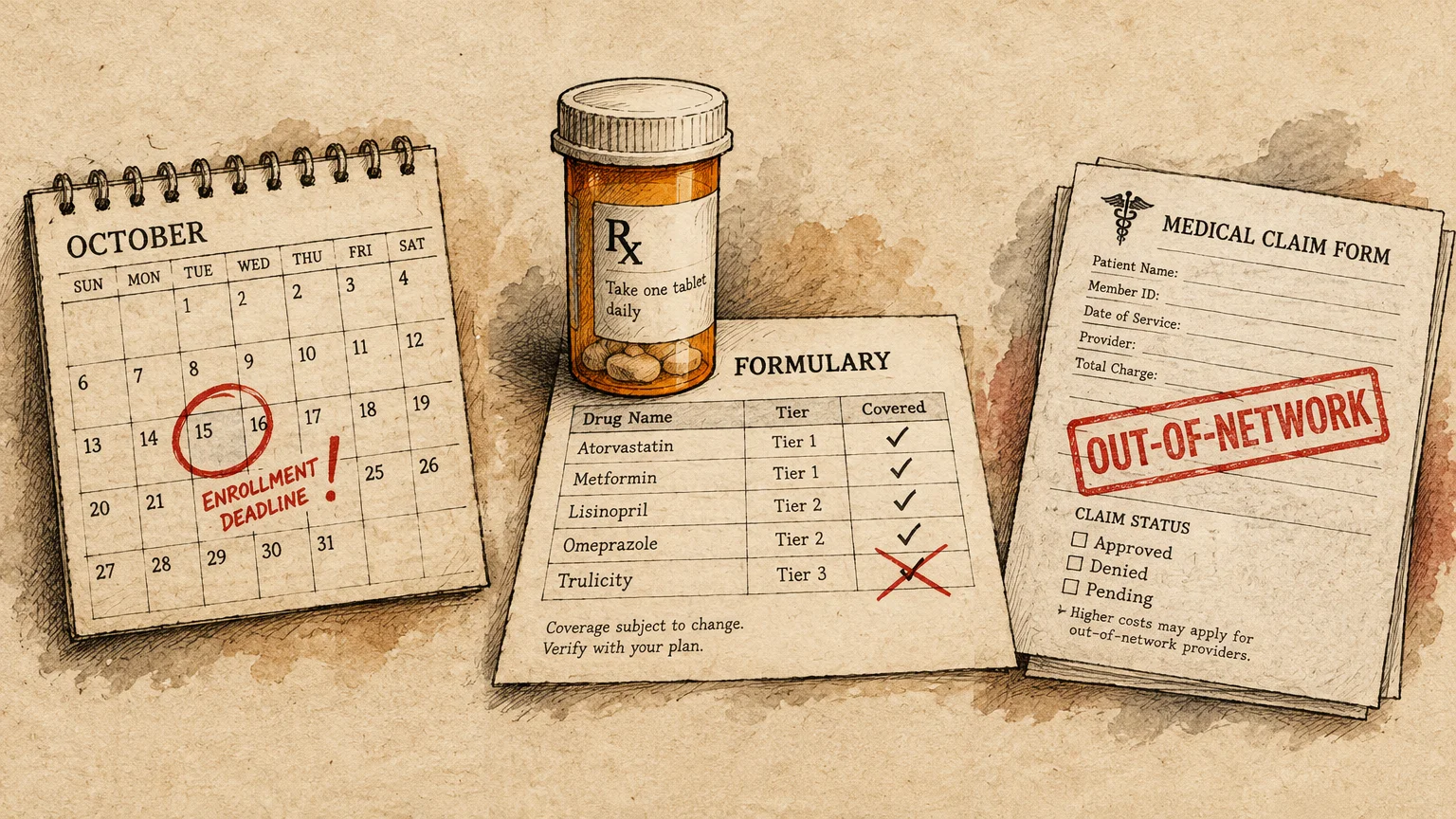
Errors That Cost Retirees Thousands
Many retirees falsely believe that Medicare covers all healthcare expenses, including long-term custodial assisted living and comprehensive dental work.
This oversight leaves households unprepared when chronic medical conditions demand home health aides or memory care assistance.
Another major mistake involves delaying Medigap enrollment past your initial six-month open enrollment window.
Missing this initial window allows private insurers to evaluate past health conditions, decline coverage, or charge dramatically higher rates.
Failing to review Part D formularies annually also drains retirement portfolios needlessly.
Insurers change drug coverage tiers every calendar year, which can suddenly transform an inexpensive generic pill into an expensive prescription.
Finally, forgetting to check the 2-year lookback rules for IRMAA can lead to unexpected spikes in Part B deductions from Social Security.

When to Get Expert Help
Navigating insurance choices and lifetime medical calculations can become overwhelming as policies and health conditions change.
You can contact your State Health Insurance Assistance Program (SHIP) for unbiased, one-on-one Medicare counseling free of charge.
Programs highlighted by the National Council on Aging offer direct support to help seniors identify low-income subsidies and state assistance options.
Fee-only financial planners help coordinate IRA distribution timing to keep your Modified Adjusted Gross Income beneath expensive IRMAA surcharge brackets.
Consult an elder law attorney if you need help designing legal directives, trusts, or Medicaid asset protection strategies for future long-term care needs.
Frequently Asked Questions About Estimating Healthcare Costs
How much should a couple budget for healthcare in their first year of retirement?
A typical 65-year-old couple should budget roughly $12,850 for their first retirement year. This estimate includes Medicare premiums, drug coverage, vision, dental, and normal out-of-pocket copayments.
Does Medicare cover routine dental exams and dentures?
Original Medicare does not cover routine dental exams, cleanings, extractions, fillings, or dentures. Retirees must pay out of pocket or purchase separate private dental coverage.
How does the $2,000 Part D prescription drug cap help retirees?
Starting in 2025, Part D enrollees pay no more than $2,000 per calendar year in out-of-pocket medication costs. Once you spend $2,000, your drug plan covers 100% of covered medications.
Can I contribute to an HSA if I am 65 or older?
You can contribute to an HSA past age 65 only if you have not enrolled in any portion of Medicare. Once Medicare enrollment begins, HSA contributions must cease immediately.
Taking Control of Your Retirement Healthcare Budget
Take time this week to review your last twelve months of medical bills and confirm your upcoming premium responsibilities.
Establishing an accurate medical budget protects your nest egg from market volatility and delivers peace of mind throughout your retirement years.
Retirement rules and benefit amounts vary based on individual work history, income, and circumstances. This article provides general guidance only. Consult a SHIP counselor, financial advisor, or elder law attorney for advice specific to your situation.
Last updated: February 2026. Medicare and Social Security rules change annually—always verify current details at official government sources.