
Historical Deductible Limits: A Five-Year Comparison
Examining recent history reveals how steadily this deductible has climbed. Inflation adjustments have pushed the out-of-pocket requirement up several hundred dollars over recent years.
The following table illustrates the trajectory of the high-deductible Medigap threshold since 2023. These adjustments reflect broader economic trends and healthcare cost inflation.
| Coverage Year | Annual Deductible | Year-Over-Year Increase | Percentage Increase |
|---|---|---|---|
| 2027 | $3,050 | +$100 | 3.40% |
| 2026 | $2,950 | +$80 | 2.79% |
| 2025 | $2,870 | +$70 | 2.50% |
| 2024 | $2,800 | +$100 | 3.70% |
| 2023 | $2,700 | +$210 | 8.43% |
Between 2023 and 2027, the deductible increased by a total of $350. That represents a cumulative jump of nearly 13% over four years.
Because the government indexes this limit to consumer inflation rather than healthcare wages, increases remain relatively moderate. However, retirees must incorporate these adjustments into long-term financial plans.
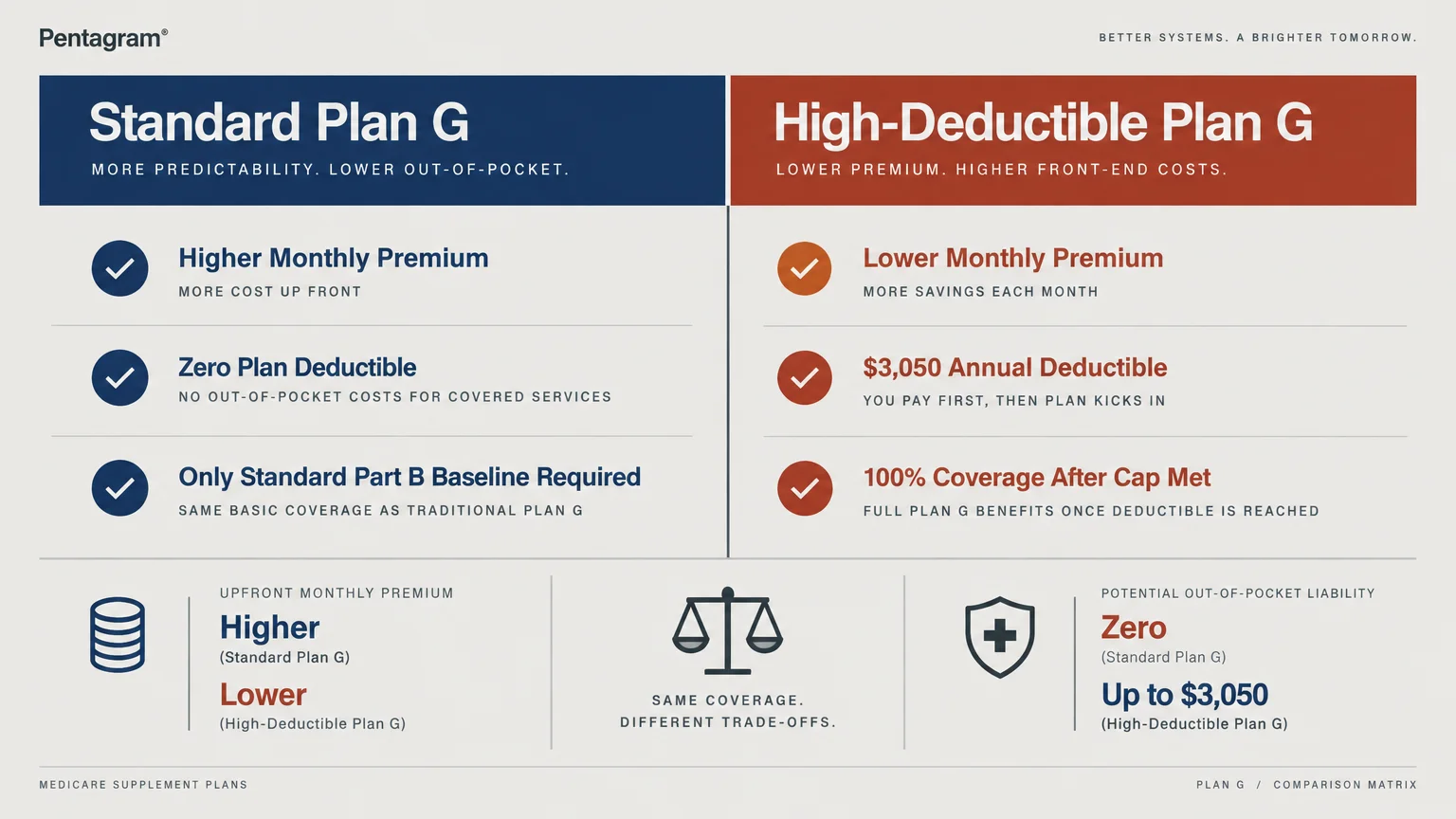
Standard Plan G vs. High-Deductible Plan G
Deciding between standard Plan G and High-Deductible Plan G involves comparing guaranteed premium savings against potential out-of-pocket risk. Both policies provide the exact same core benefits once deductibles are met.
Standard Plan G requires a much higher monthly premium. In exchange, it covers all Medicare-approved cost-sharing after you pay the annual Part B deductible.
High-Deductible Plan G offers significantly lower monthly premiums. However, you must be prepared to cover medical expenses up to the $3,050 threshold if serious health issues arise.
| Feature | Standard Plan G | High-Deductible Plan G (2027) |
|---|---|---|
| Average Monthly Premium | $140 – $220 | $40 – $75 |
| Annual Premium Cost | $1,680 – $2,640 | $480 – $900 |
| Annual Plan Deductible | None (Only Part B Baseline) | $3,050 |
| Part B Deductible Coverage | You pay out-of-pocket | You pay (Counts toward $3,050) |
| Part A Hospital Deductible | Paid 100% by Plan | You pay until reaching $3,050 |
| Copays After Deductible | $0 for approved care | $0 for approved care |
| Provider Freedom | Any doctor taking Medicare | Any doctor taking Medicare |
Many retirees save between $1,200 and $1,800 each year in premiums by selecting the high-deductible option. If you remain relatively healthy, that premium difference stays safely in your bank account.
Even during a year with heavy medical utilization, your maximum financial exposure remains capped. You can compare policy premiums across regional insurers using the official tool at the Medicare Plan Finder.