Selecting a Medicare prescription drug plan based solely on the lowest monthly premium often leads to unexpected pharmacy bills. You can easily spend thousands more on hidden deductibles, restricted drug formularies, and unfavorable copay tiers.
Evaluating total annual drug costs rather than premium stickers protects your retirement budget. A smart drug plan choice balances coverage, network access, and out-of-pocket protections.
Navigating these choices requires looking past marketing claims. Avoiding ten common traps will help you secure the lowest total cost for your medications.
The True Financial Hazard of Lowest Premium Part D Plans
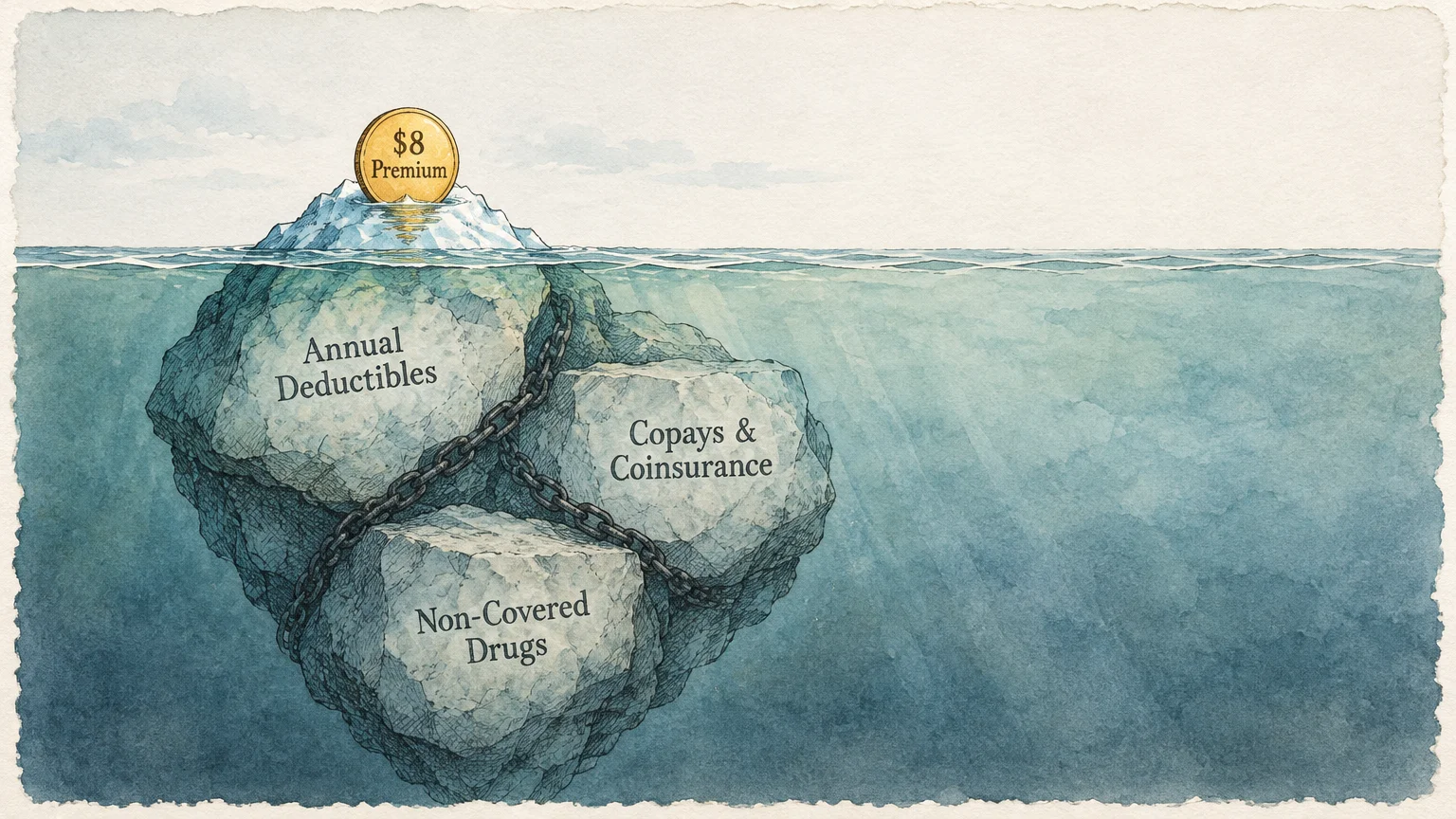
Many retirees sort available options on Medicare’s website from lowest to highest monthly premium. A policy advertising an $8 or $15 monthly rate sounds like an effortless win for your monthly budget.
However, premium payments represent only one slice of your total annual prescription expense. Your actual spending includes annual deductibles, copayments, coinsurance percentages, and non-covered drug costs.
When you evaluate plans, always calculate your total out-of-pocket exposure for the entire calendar year. Focusing exclusively on premiums often blindsides retirees with expensive pharmacy counter surprises in January.
A bargain plan with poor drug coverage can easily deplete retirement cash reserves faster than a plan with a higher monthly premium.
1. Ignoring the Maximum Annual Deductible
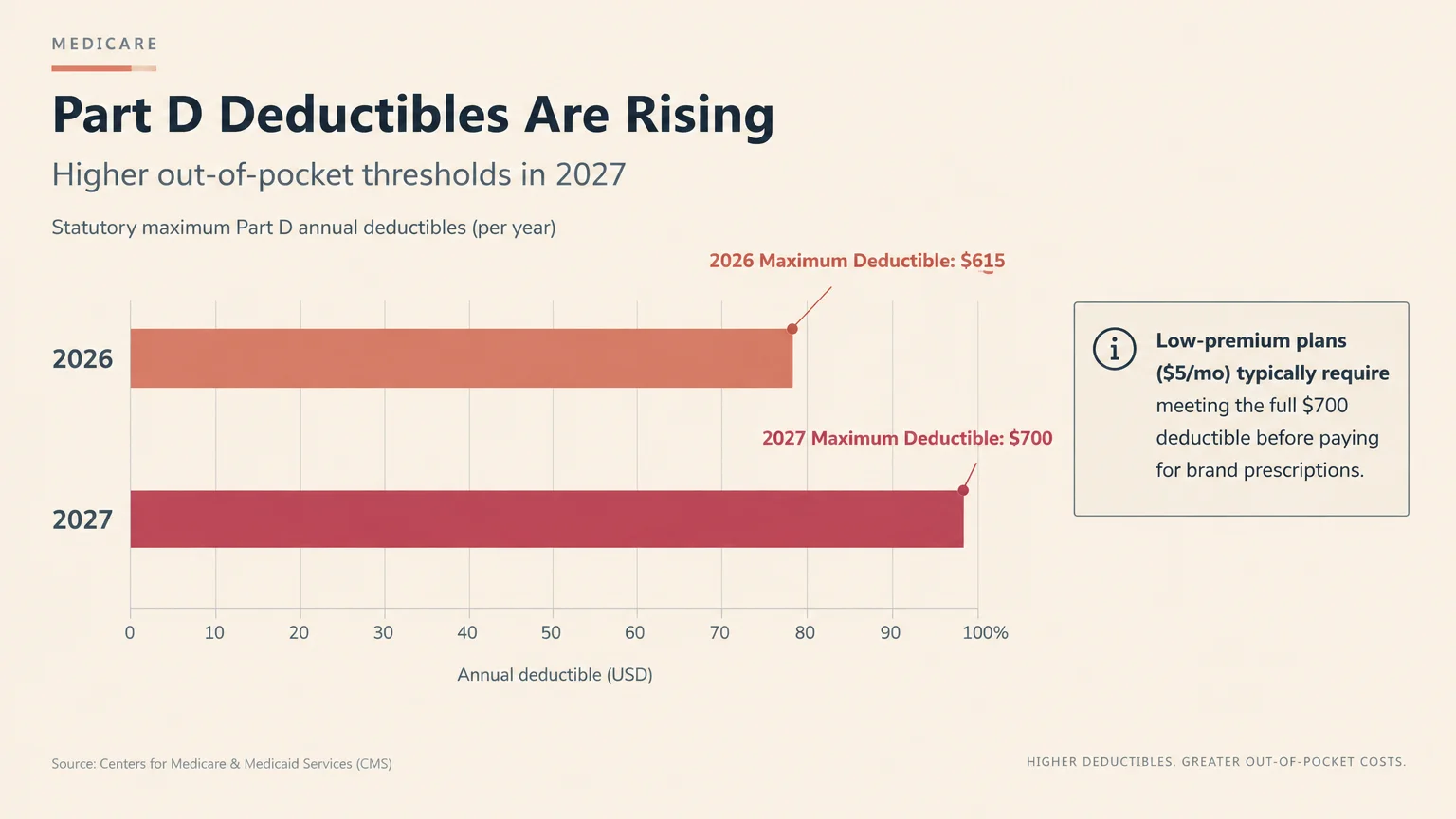
Plans with bare-bones premiums almost always compensate by charging the statutory maximum deductible. In 2026, the maximum Part D deductible reaches $615; by 2027, that cap climbs to $700.
If you choose a plan with a $5 monthly premium and a $700 deductible, you must pay $700 out-of-pocket before insurance pays anything toward your brand-name prescriptions.
In contrast, a plan charging a $35 monthly premium might waive the deductible entirely for generic medications. That feature delivers immediate savings starting with your very first refill of the year.
Saving $30 on a monthly premium costs you hundreds more if you immediately absorb a full $700 deductible at the pharmacy counter.
Always check which drug tiers are subject to the annual deductible before enrolling. Many plans apply the deductible only to brand-name medications while covering generics on day one.
2. Assuming Your Prescriptions Are on the Plan Formulary
Medicare drug plans maintain their own lists of covered medications, known as formularies. A low-premium plan might exclude the exact blood pressure or arthritis medication you depend on daily.
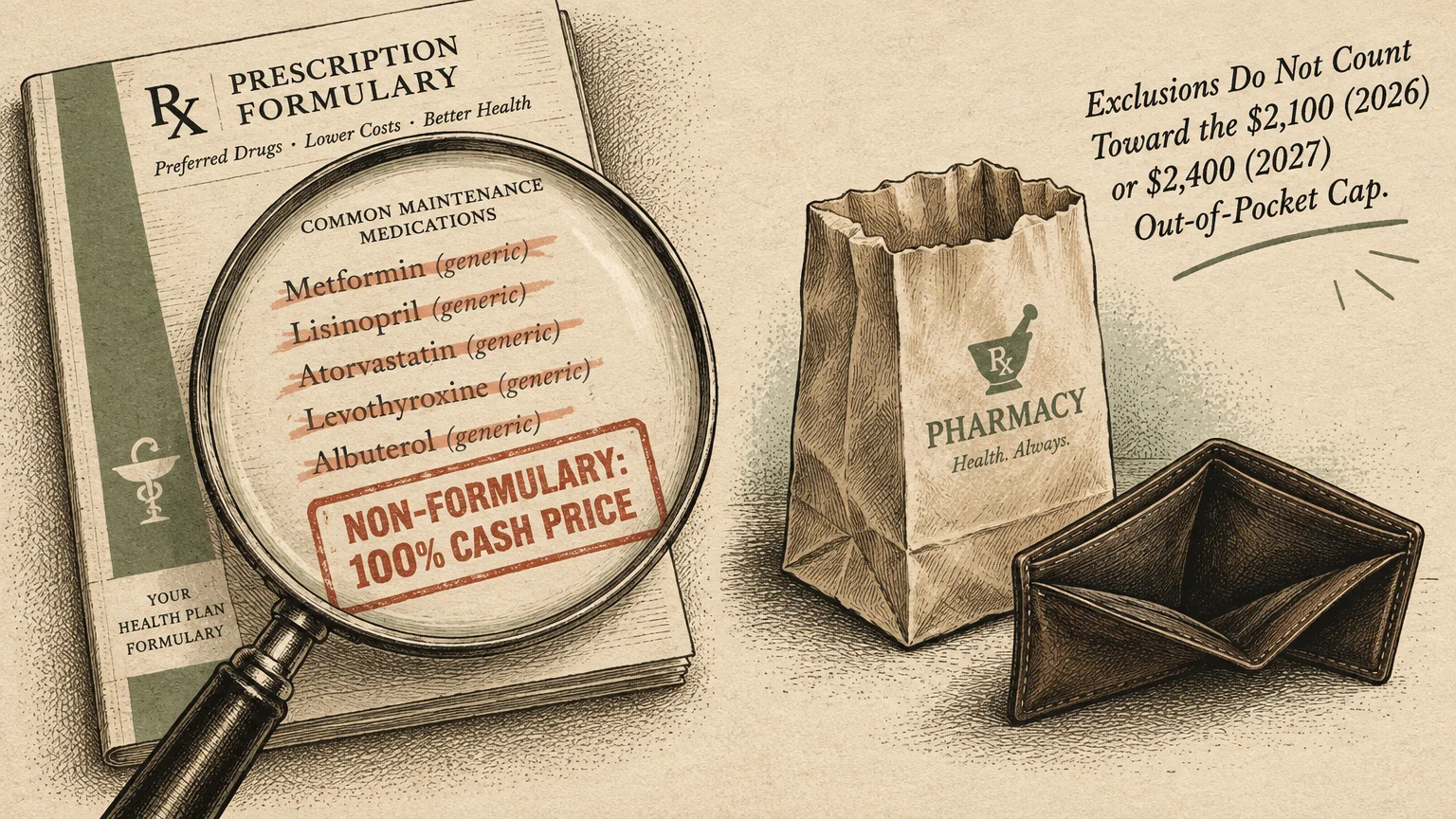
When a plan excludes your prescription, insurance pays zero dollars toward that medication. You must pay the full cash retail price out of your own pocket.
Worse still, money spent on non-formulary drugs does not count toward your annual out-of-pocket maximum. In 2026, that cap is $2,100; in 2027, it rises to $2,400.
A single excluded maintenance drug can easily wipe out an entire year of premium savings in just two refills.
Never assume two plans from the same insurer share identical formularies. Verify every single medication on your list against each prospective plan’s drug directory.
3. Misjudging Drug Tiers and Coinsurance Percentages
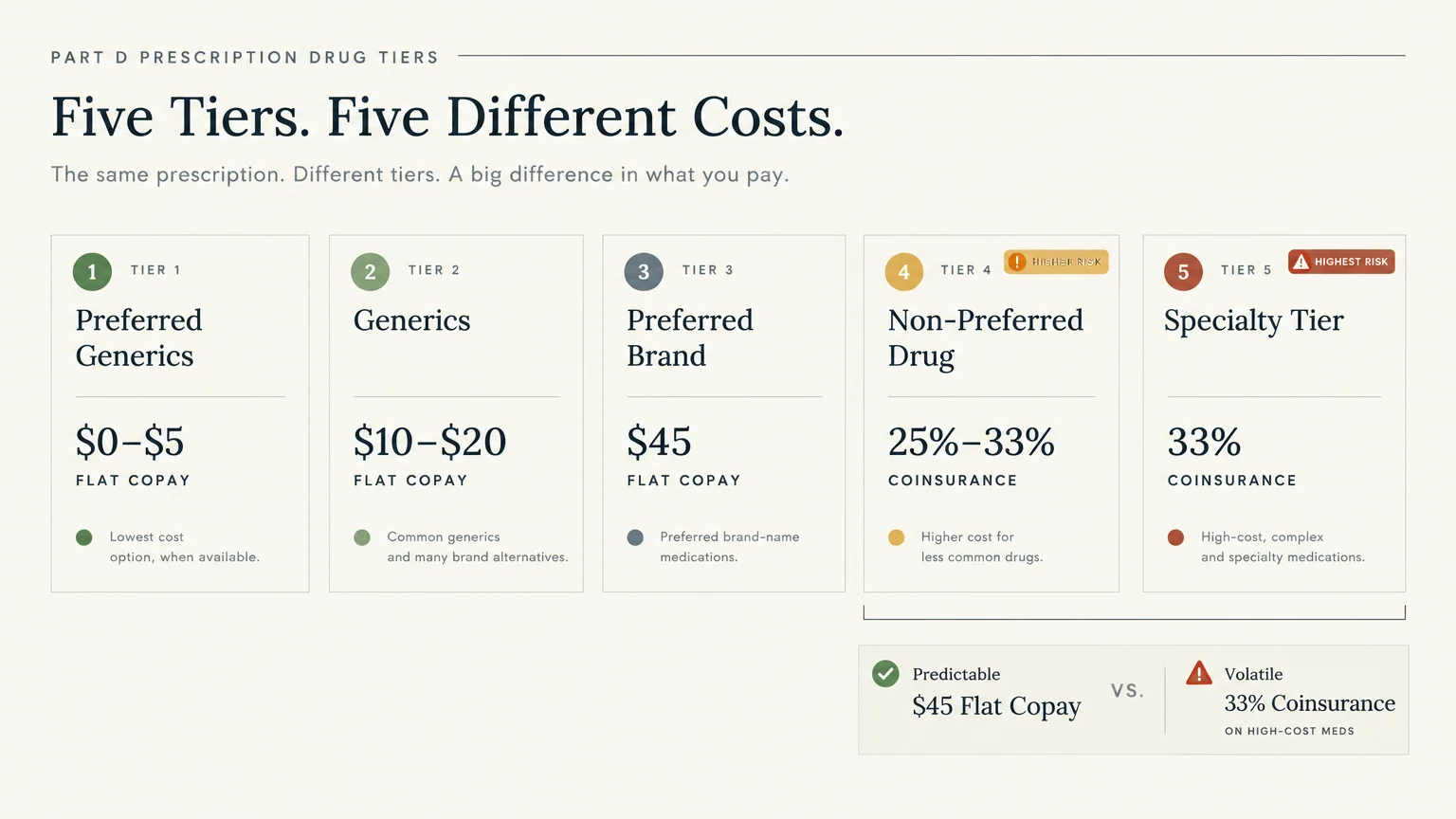
Part D plans categorize covered drugs into five or six distinct cost tiers. Tier 1 covers preferred generics with low flat copays, while Tier 4 and Tier 5 contain costly specialty drugs.
Budget plans frequently charge high percentage coinsurance rather than flat copayments on higher tiers. Paying 25% or 33% coinsurance on an expensive medication requires hundreds of dollars every month.
A comprehensive plan might charge a predictable $45 flat copay for that identical prescription. That flat copay structure shields your monthly cash flow from volatile drug pricing.
Compare tier assignments across competing options before choosing Part D plan options. A medication classified under Tier 2 on one plan could sit under Tier 4 on a bargain-priced alternative.
Small differences in tier placement often cause substantial shifts in what you owe at checkout.

4. Overlooking Preferred Pharmacy Networks
Prescription drug insurers contract with distinct pharmacy networks categorized as preferred, standard, or out-of-network. Where you fill your prescription matters just as much as what plan you select.
A plan advertising a rock-bottom premium may only provide deep discounts at a single retail chain or through exclusive mail-order fulfillment.
If you visit a standard non-preferred pharmacy around the corner, your copay could easily double. Filling a 90-day generic refill might cost $5 at a preferred pharmacy but $35 at a standard one.
Cross-reference your local pharmacy with the plan’s published network directory before committing. Maintaining convenience and affordable copays requires picking a plan aligned with your everyday shopping habits.
Driving across town to reach a preferred location wastes fuel and creates unnecessary frustration for seniors managing chronic conditions.
“The goal of retirement is to live off your assets—not live off your regrets.”
5. Believing the Out-of-Pocket Cap Covers Monthly Premiums
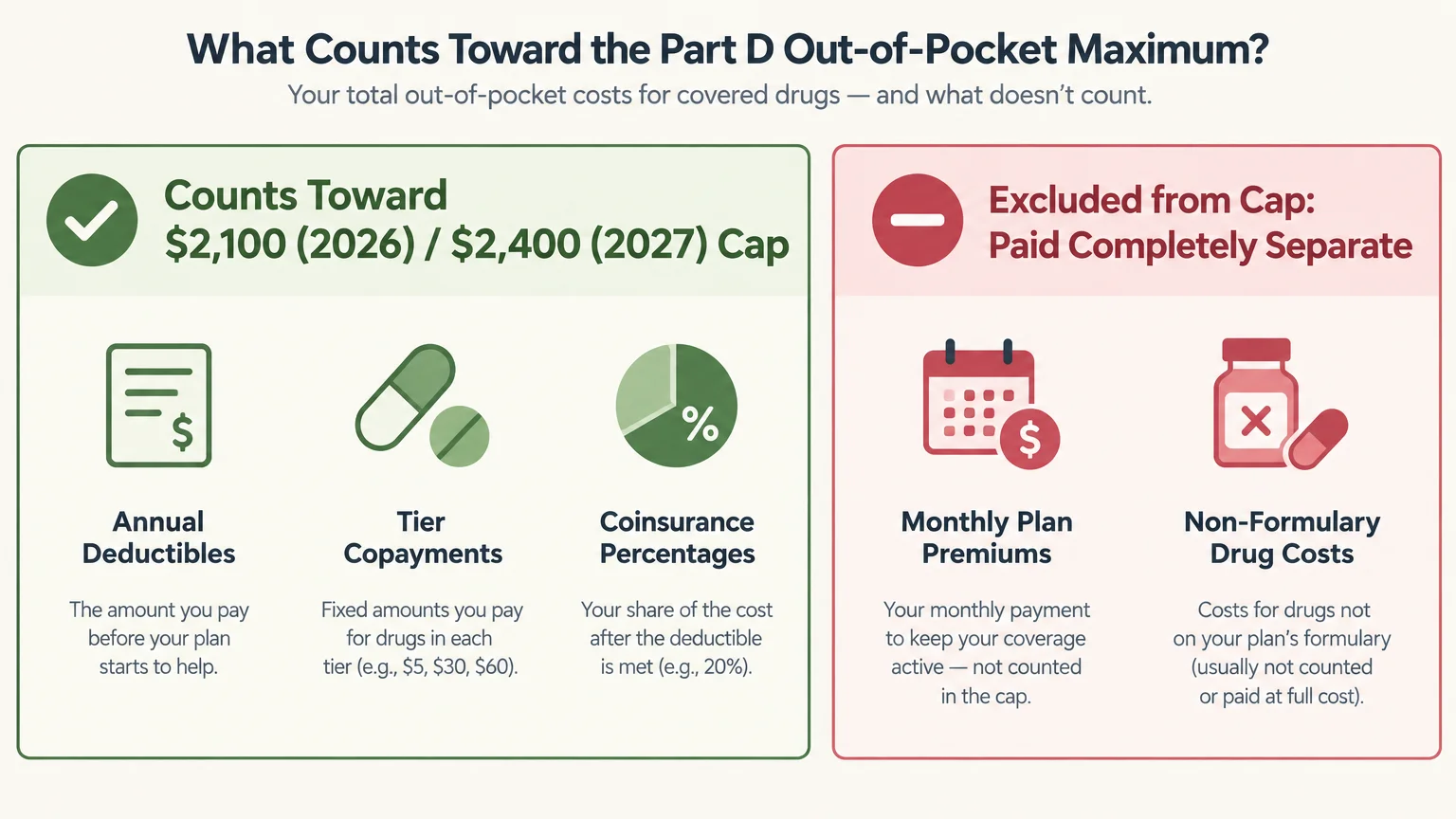
Federal law established a crucial safety net for Medicare beneficiaries: an annual out-of-pocket cap of $2,100 in 2026, rising to $2,400 in 2027. Once you reach this threshold, you pay $0 for covered drugs for the rest of the year.
Many retirees mistakenly believe their monthly plan premiums count toward this annual cap. Premiums never apply toward the $2,100 or $2,400 out-of-pocket maximum.
Only your actual deductible payments, copayments, and coinsurance for covered medications accumulate toward that safety threshold.
Money paid for excluded, non-formulary drugs also fails to count toward the cap. You could spend thousands on uncovered drugs without moving an inch closer to the catastrophic coverage stage.
Do not rely on the out-of-pocket cap to bail you out of an ill-fitting drug formulary.

6. Missing the Expiration of Premium Stabilization Subsidies
The standalone Part D marketplace is experiencing significant structural shifts. In July 2026, federal officials announced that the temporary Part D Premium Stabilization Demonstration will end after the 2026 plan year.
This federal demonstration held down standalone drug plan premiums by roughly $16 per month throughout 2026. Without that government cushion, insurers must price 2027 plans based on full market realities.
Retirees who leave their current low-cost plan on autopilot risk absorbing substantial premium hikes. According to data tracked by the National Council on Aging (NCOA), standalone drug plan choices are shrinking nationwide.
The number of standalone Part D plans available dropped from 360 plans in 2026 to 312 in 2027—a 55% decrease since 2024. Reduced competition makes an annual medicare drug plan comparison indispensable.
Ignoring these market changes leaves you vulnerable to sudden price spikes and modified formulary restrictions.
7. Relying on the $35 Insulin Cap Without Verifying Brand Coverage
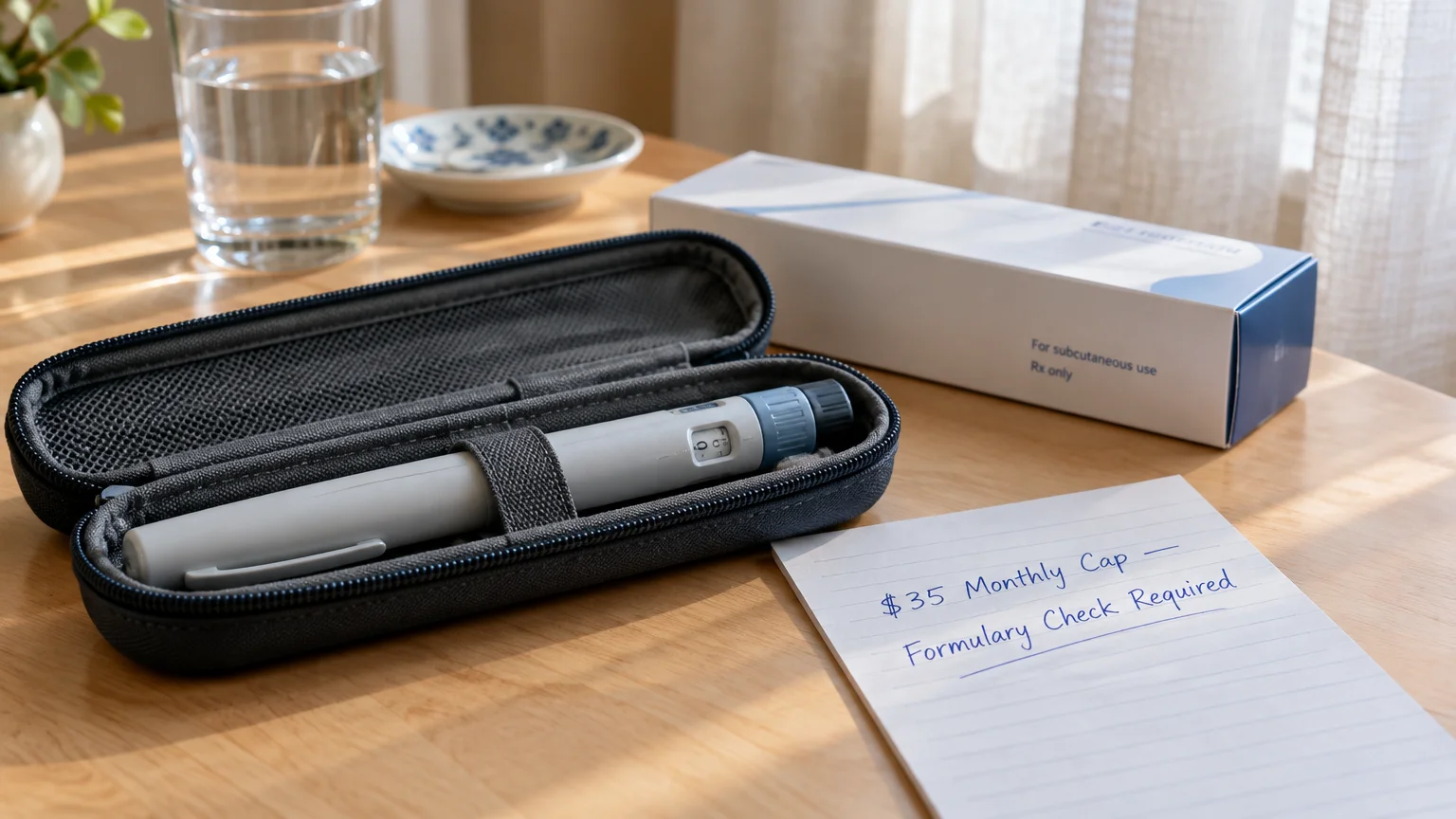
Medicare caps all covered insulin products at $35 for a 30-day supply, exempt from any deductible. This critical protection delivers immense financial relief to retirees managing diabetes.
However, the key operative term remains “covered.” Medicare regulations do not force every insurer to include every commercial insulin formulation on its specific formulary.
If you choose a budget plan that excludes your specific insulin pen or vial brand, you must pay full retail price. The $35 cap offers zero financial protection for non-formulary insulin.
Always verify that your exact insulin brand, strength, and delivery device appear on the insurer’s approved drug tier before enrolling.
Assuming that all insulin is universally protected at $35 under every plan is one of the most common part d premium mistakes.
8. Skipping the Medicare Prescription Payment Plan (MPPP)
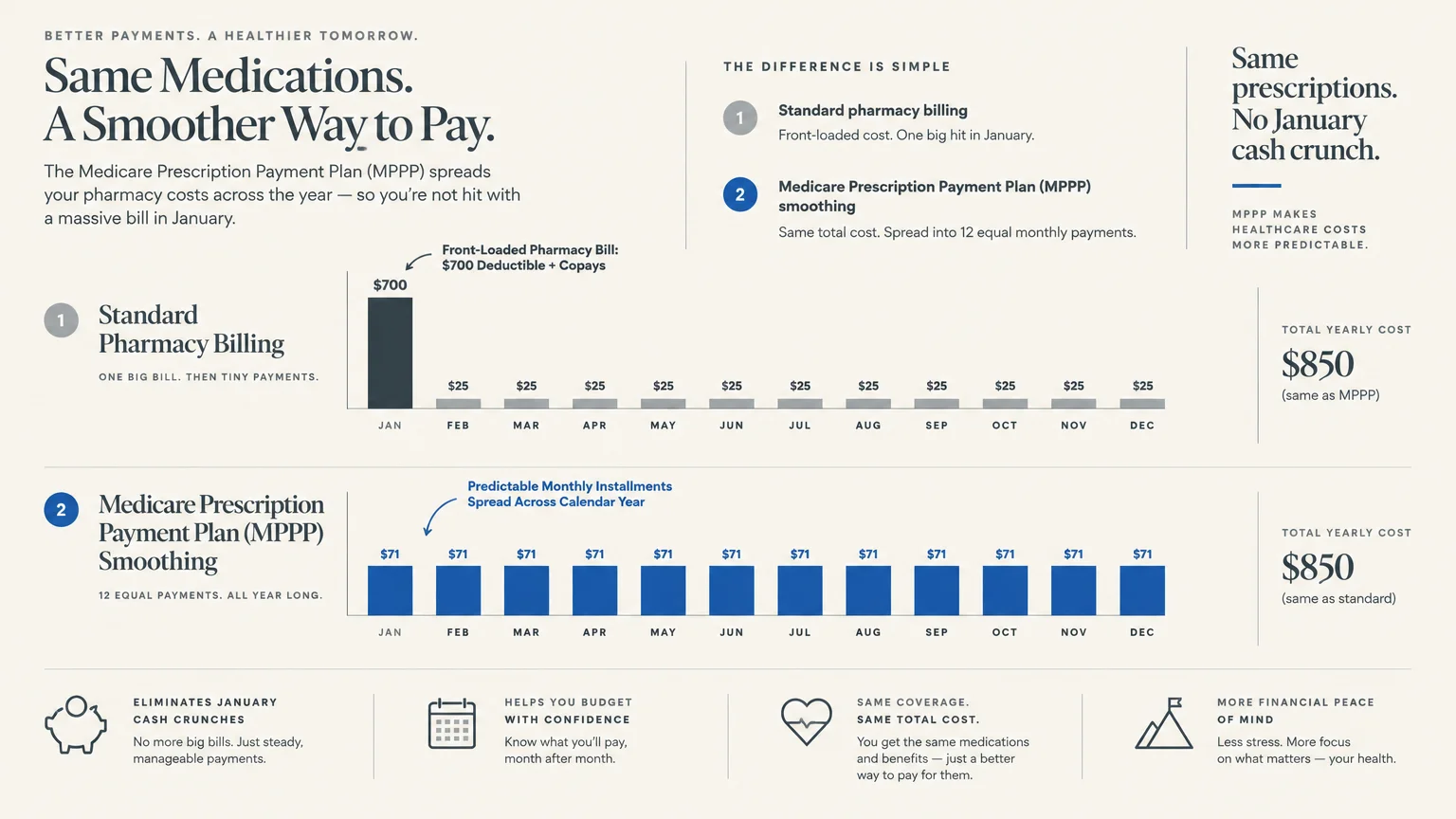
Part D enrollees face their heaviest prescription expenses in January when annual deductibles reset. In 2027, the standard maximum deductible rises to $700, creating immediate financial friction at the counter.
The Medicare Prescription Payment Plan allows you to spread out-of-pocket prescription expenses across monthly, interest-free installments throughout the calendar year.
Low-premium plans do not automatically enroll you in this payment option. You must actively opt into the program through your insurance provider to utilize monthly billing.
Spreading front-loaded deductible and coinsurance charges over twelve predictable monthly payments protects your retirement savings from painful early-year cash shortages.
This program does not lower your total annual drug cost, but it eliminates the stress of facing a massive pharmacy bill in January.

9. Expecting a Cheap Plan to Shield You from Part D IRMAA
Retirees with higher retirement incomes often assume picking an inexpensive drug plan avoids Medicare surcharges. That assumption proves costly when the monthly bill arrives from the Social Security Administration (SSA).
The Income-Related Monthly Adjustment Amount applies to all Part D enrollees exceeding specific modified adjusted gross income thresholds. The government assesses IRMAA regardless of which private insurer you choose.
In 2026, IRMAA surcharges begin at $109,000 for single tax filers and $218,000 for married couples filing jointly. Monthly surcharges add between $14.50 and $91.00 on top of your drug plan premium.
Even if your standalone Part D plan advertises a $0 or $5 base premium, you must still pay the mandatory monthly IRMAA surcharge directly to Medicare.
Selecting a subpar low-premium policy will never reduce your federal income-related surcharges.
“It’s not how much money you make, but how much money you keep, how hard it works for you, and how many generations you keep it for.” — Robert Kiyosaki

10. Treating Plan Enrollment as a “Set It and Forget It” Decision
Medicare drug plans modify their formularies, copay tiers, and pharmacy networks every single calendar year. Remaining on autopilot is among the costliest mistakes a retiree can make.
Insurance companies mail an Annual Notice of Change to policyholders each September. This document details upcoming adjustments to your premium, deductible, and covered drug lists for the following year.
A plan that delivered affordable coverage this year might drop your vital maintenance medication next year. It could also shift your generic medication into a higher, more expensive cost tier.
Review your coverage during the annual Open Enrollment Period from October 15 through December 7. Running a fresh comparison each autumn ensures your plan remains cost-effective.
Staying loyal to a brand or insurer without verifying yearly changes routinely costs retirees hundreds of avoidable dollars.
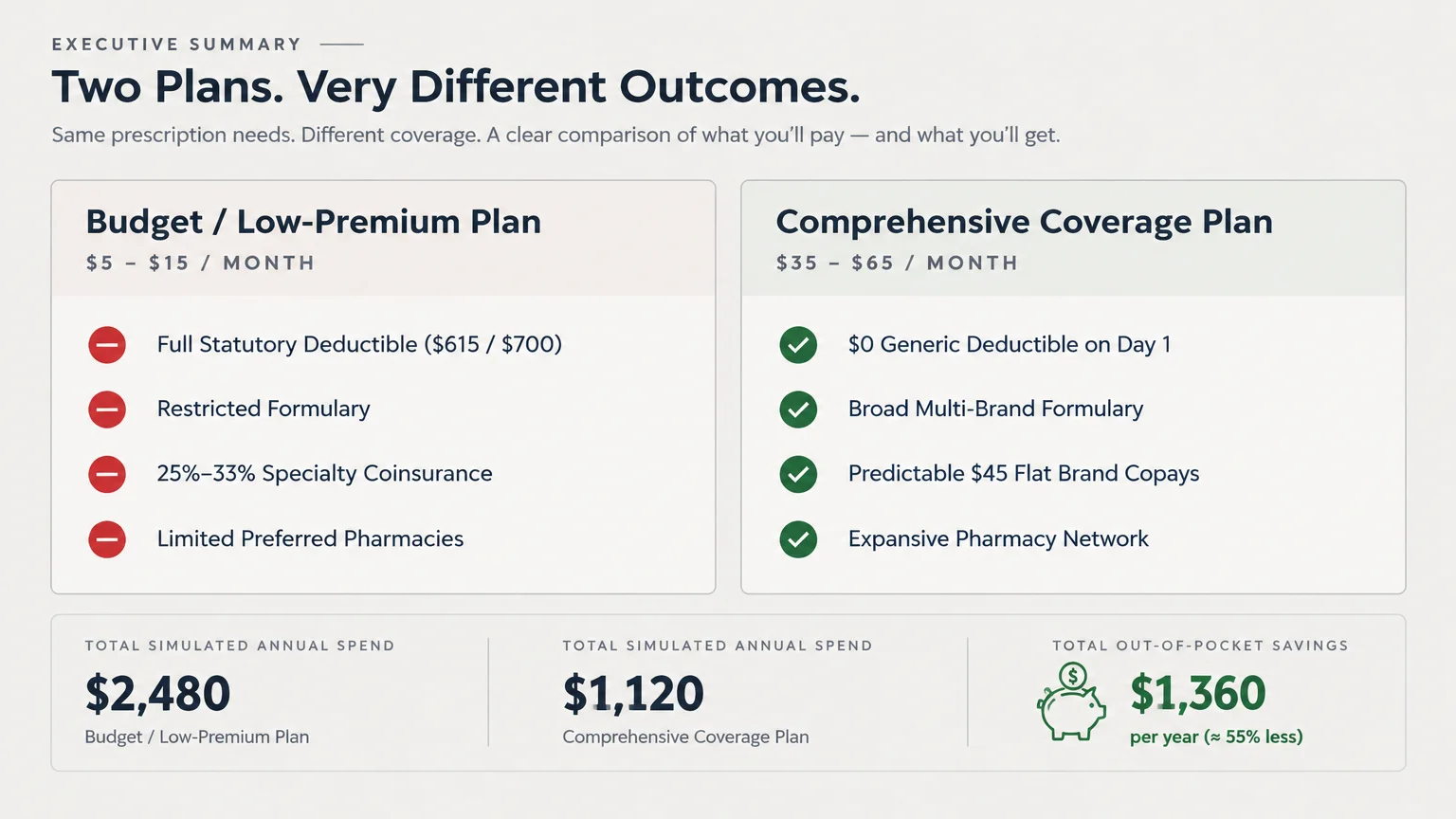
Comparing Low Premium vs. Comprehensive Part D Coverage
To see how premium trade-offs work in practice, examine how policy elements interact across different plan designs. A bargain premium often disguises higher out-of-pocket spending when health needs arise.
The table below illustrates key differences between a representative low-premium standalone plan and a comprehensive alternative.
| Plan Feature | Lowest Premium Part D Plan | Comprehensive Part D Plan | Key Considerations for Retirees |
|---|---|---|---|
| Monthly Premium | $5 – $15 per month | $35 – $65 per month | Low base premiums can hide steep cost-sharing at the pharmacy counter. |
| Annual Deductible | Full maximum ($615 in 2026; $700 in 2027) | $0 or waived on Tiers 1 and 2 | A high deductible requires immediate out-of-pocket spending on brand drugs. |
| Tier 1 & Tier 2 Generics | Subject to deductible or $10–$20 copays | $0–$5 copays on day one | Immediate generic savings often offset a higher monthly premium. |
| Tier 3 Brand Drugs | 25%–30% coinsurance after deductible | $35–$47 predictable flat copay | Coinsurance exposes you to volatile list prices on common brand drugs. |
| Pharmacy Network | Limited preferred chains or mail-order only | Broad preferred network of national & local pharmacies | Filling prescriptions at non-preferred stores can double your copays. |
| Out-of-Pocket Cap ($2,100 / $2,400) | Protects covered drugs only | Protects covered drugs only | Non-formulary medications never count toward the annual statutory cap. |
Evaluating these elements side by side demonstrates why lowest premium Part D options are not automatically the most economical choice. Your specific prescriptions determine the winning option.
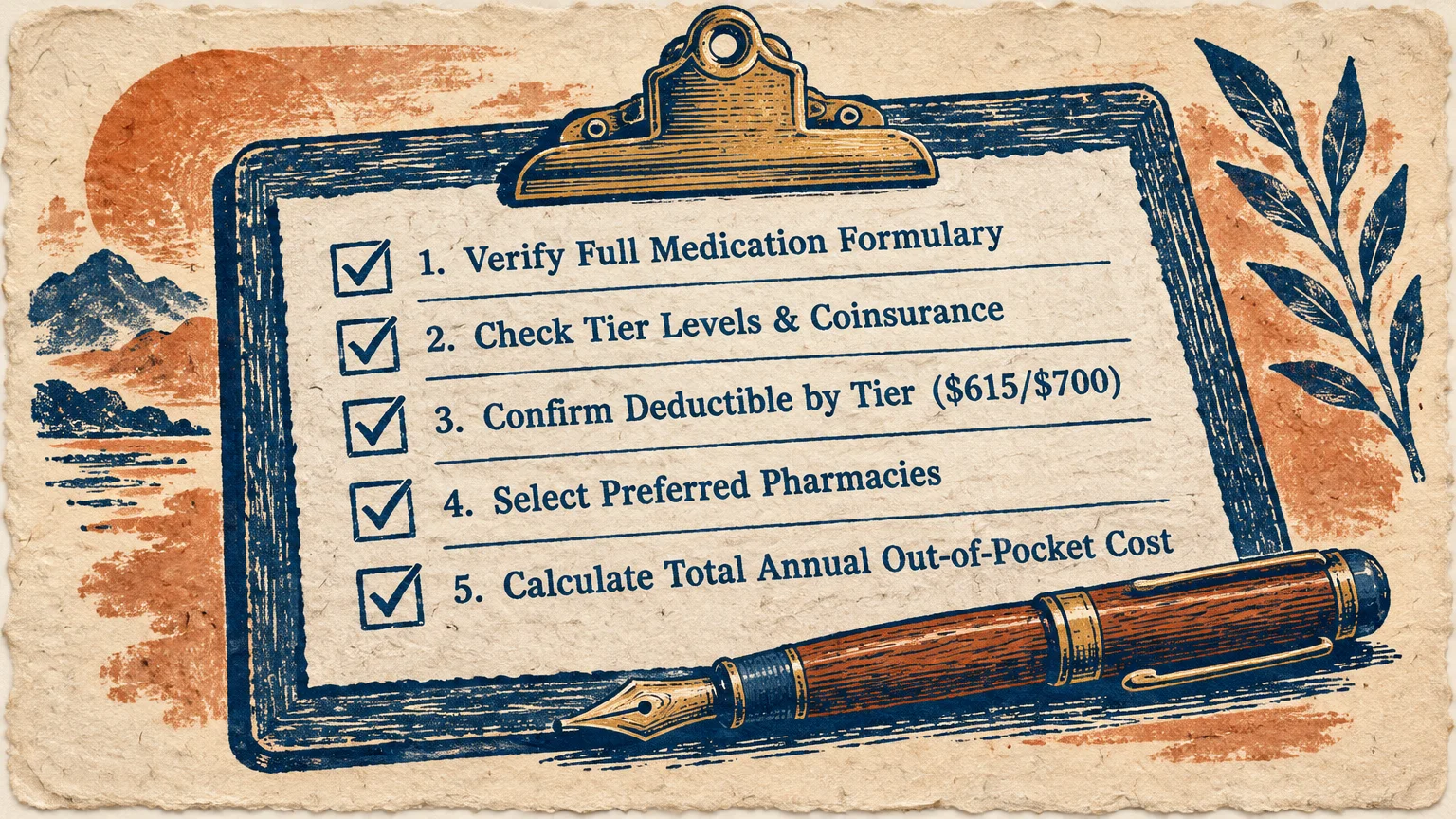
Don’t Make These Mistakes: A Plan Comparison Checklist
Before enrolling in any drug plan for the upcoming year, complete this practical self-audit to safeguard your retirement budget.
- List all current medications: Record exact drug names, dosages, and refill frequencies for every prescription you take.
- Check formulary inclusion: Confirm that every maintenance medication sits on the insurer’s active formulary.
- Review tier status: Identify whether your medications fall into preferred generic, non-preferred generic, or specialty tiers.
- Verify pharmacy alignment: Confirm that your favorite neighborhood pharmacy holds preferred status under the plan.
- Calculate total estimated cost: Add twelve months of premiums to your projected annual deductible and copays.
- Assess insulin coverage: Ensure your specific brand is covered so you benefit from the $35 monthly cap.
- Examine adult vaccine coverage: Verify $0 copay access for recommended vaccines like shingles and pneumonia.
- Consider the MPPP option: Decide whether smoothing upfront deductible charges into monthly payments benefits your monthly cash flow.
Completing this checklist before December 7 prevents unpleasant financial surprises when you visit the pharmacy next year.

How to Use the Medicare Plan Finder Effectively
The most reliable way to compare coverage is through the official Medicare Plan Finder tool on Medicare.gov.
Log into your personal account so the system automatically imports your current Medicare prescription drug history. This saves time and ensures dosage precision.
Once you input your medications, add up to three local pharmacies and your preferred mail-order options. The system calculates your total out-of-pocket costs for each plan across the entire calendar year.
Always sort your search results by “Lowest Drug + Premium Cost” rather than “Lowest Monthly Premium.” This simple sorting adjustment instantly highlights the plan providing the lowest total out-of-pocket expense.
Review the detailed cost breakdown for each month to understand when your deductible applies and how copayments shift across the year.

When Professional Advice Is Worth It
Navigating Medicare drug rules can feel daunting, especially when managing multiple chronic health conditions or complex medication regimens. In many situations, seeking qualified assistance saves time and prevents expensive mistakes.
State Health Insurance Assistance Programs offer free, unbiased, one-on-one counseling. Certified SHIP counselors receive extensive training on Medicare regulations and hold no financial incentives to enroll you in any specific plan.
You should consult a SHIP counselor or professional Medicare advisor if you face any of the following scenarios:
- You take multiple expensive brand-name medications or specialty biologic treatments.
- Your income qualifies you for Extra Help (Part D Low-Income Subsidy) or Medicare Savings Programs.
- You face a Part D late enrollment penalty from a prior gap in creditable drug coverage.
- You are retiring after age 65 and transitioning away from employer-sponsored creditable coverage.
- You must navigate complex drug tier exceptions or prior authorization appeals.
Independent counselors can identify financial assistance programs and navigate formulary transition rules that protect your access to vital treatments.
Frequently Asked Questions About Medicare Drug Plan Comparison
Can I switch my Part D plan if my current plan raises its premium?
Yes, you can switch plans every year during the Medicare Annual Enrollment Period from October 15 through December 7. Your new coverage takes effect on January 1.
Does my Part D monthly premium count toward the annual out-of-pocket maximum?
No, monthly premiums do not count toward the out-of-pocket cap of $2,100 in 2026 or $2,400 in 2027. Only deductibles, copayments, and coinsurance for covered medications count toward the cap.
What happens if I delay enrolling in a Part D plan when first eligible?
If you go 63 or more consecutive days without creditable drug coverage, Medicare assesses a permanent late enrollment penalty. The penalty adds 1% of the national base beneficiary premium for every uncovered month to your bill indefinitely.
How does the Medicare Prescription Payment Plan help with high deductibles?
The program spreads high out-of-pocket prescription expenses across capped, interest-free monthly payments throughout the calendar year. It helps prevent massive, front-loaded out-of-pocket expenses at the pharmacy counter in January.
Taking Action on Your Drug Coverage
Do not let an attractive $5 or $10 premium distract you from the true cost of your prescription drugs. Evaluate deductibles, formulary inclusions, pharmacy networks, and tier structures to protect your retirement cash flow.
Log into Medicare’s online comparison tool during the Annual Enrollment Period and run your personalized numbers. A few minutes spent reviewing your options this autumn will protect your health and your retirement savings all year long.
Retirement rules and benefit amounts vary based on individual work history, income, and circumstances. This article provides general guidance only. Consult a SHIP counselor, financial advisor, or elder law attorney for advice specific to your situation.
Last updated: October 2026. Medicare and Social Security rules change annually—always verify current details at official government sources.