Stepping onto cobblestone streets or standing where American independence was forged offers a tangible connection to our nation’s past that books simply cannot replicate. Exploring historic places in America provides an engaging, deeply enriching way to spend your newfound free time without the strenuous physical demands of rugged adventure tourism. Whether you prefer the coastal charm of colonial seaports, the architectural splendor of the Gilded Age, or the pivotal battlefields that shaped our country, the right destinations combine deep historical significance with excellent accessibility and modern amenities. This guide explores eleven historic towns to visit that cater specifically to older adults, prioritizing walkable districts, quality cultural preservation, and enriching educational experiences perfect for your next itinerary.

The Value of American Heritage Travel
Retirement provides the ultimate luxury of time—time to read every placard in a museum, linger over a regional meal, and fully immerse yourself in a new environment. Engaging with history does more than just fill your calendar; it actively stimulates your brain. Navigating new cities, learning about past eras, and socializing with local historians all contribute to cognitive resilience. According to resources from the National Institute on Aging, staying cognitively and physically active is one of the most effective ways to maintain your health as you age.
“Retirement is not the end of the road. It is the beginning of the open highway.” — Unknown
Heritage travel strikes the perfect balance for older adults. You dictate the pace. You can spend an entire morning exploring a single historic mansion or opt for a comfortable guided trolley tour that provides a comprehensive overview without requiring miles of walking. By selecting destinations renowned for their historical preservation, you guarantee an experience rich in culture and highly accommodating to your preferred travel style.

1. Colonial Williamsburg, Virginia
Step directly into the 18th century in Williamsburg. As the world’s largest living history museum, this 301-acre historic area features meticulously restored buildings, authentic tradespeople, and historical interpreters who bring the dawn of America to life. You can watch blacksmiths forge tools, listen to debates about independence, and dine in taverns serving period-accurate cuisine.
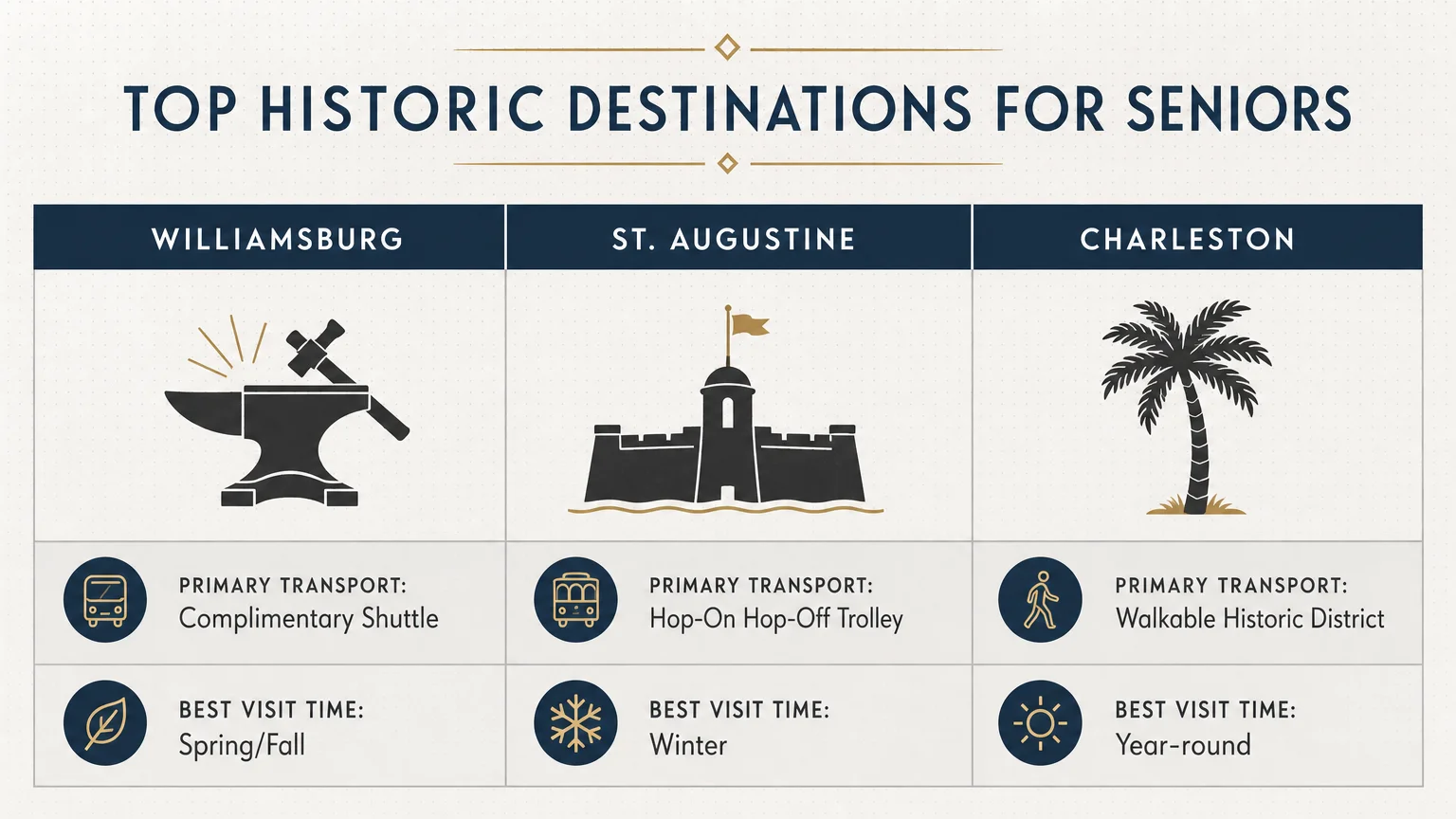
Retirees consistently rank Williamsburg among top senior travel destinations because of its exceptional accessibility. The historic district offers complimentary shuttle buses for ticketed guests, making it incredibly easy to move between major sites when you need a break from walking. The terrain is flat, though you will encounter dirt paths and some uneven brick walkways. Visit during the spring or fall to avoid the intense humidity of Virginia summers.
2. St. Augustine, Florida
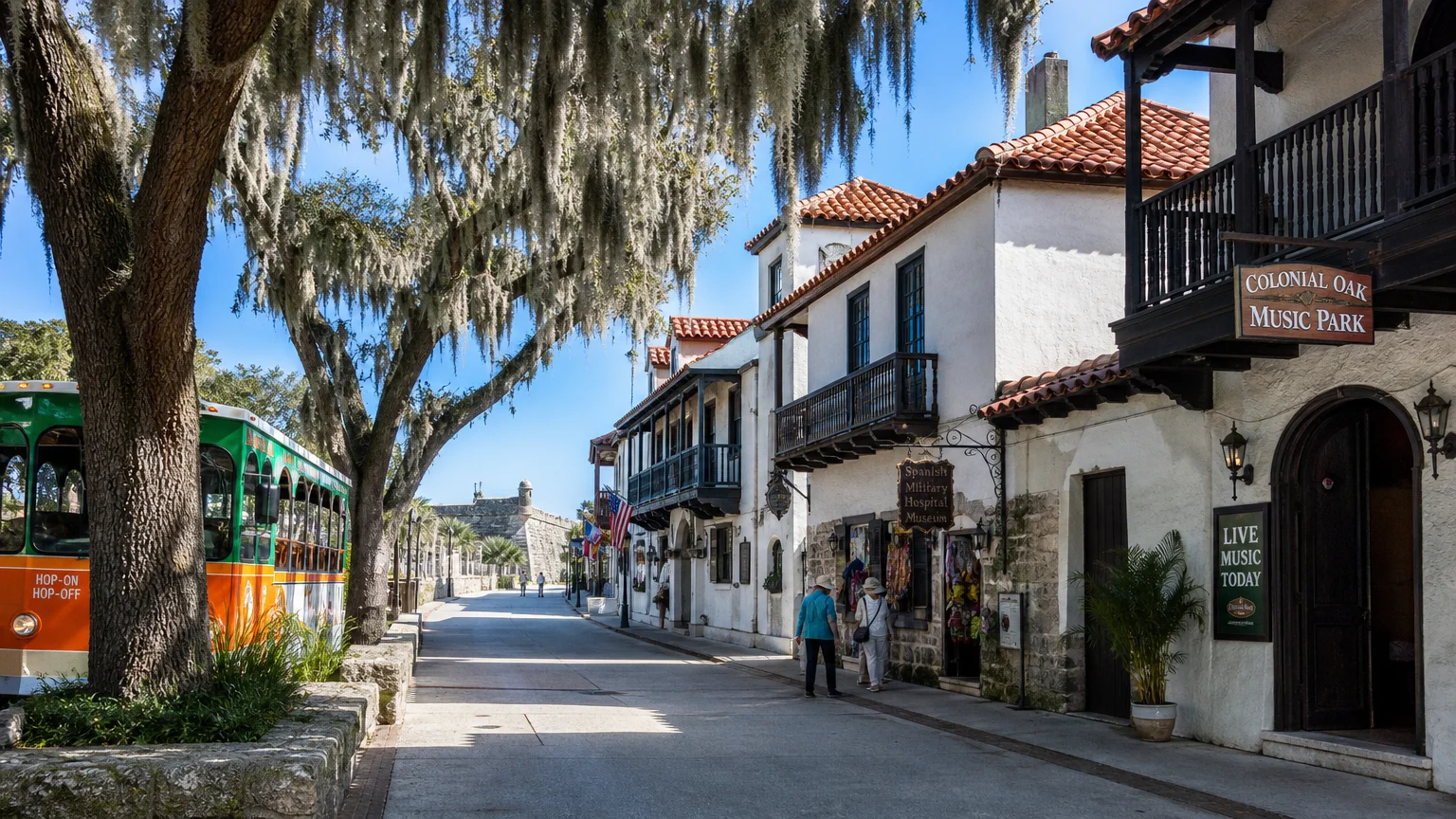
Founded by the Spanish in 1565, St. Augustine claims the title of the oldest continuously occupied European-established settlement within the borders of the continental United States. The city boasts striking Spanish Renaissance architecture, historic forts, and massive oak trees draped in Spanish moss.
The pedestrian-only St. George Street serves as the main artery of the historic district, lined with centuries-old buildings, boutiques, and bistros. If you want to cover ground quickly, the city offers excellent Hop-On Hop-Off trolley tours. These narrated rides allow you to see the Castillo de San Marcos and the Ponce de Leon Hotel (now Flagler College) while saving your energy for specific attractions. The warm winter climate makes St. Augustine an ideal escape for snowbirds looking for history combined with coastal relaxation.

3. Charleston, South Carolina
Charleston elegant architecture, thriving culinary scene, and deep historical roots make it a premier destination for American heritage travel. From the pastel-colored houses of Rainbow Row to the solemn history of Fort Sumter—where the first shots of the Civil War were fired—the city offers a dense concentration of historical narratives.
The city’s flat topography appeals to older travelers, though you must navigate occasional cobblestone streets and slate sidewalks. To experience the Battery and the historic waterfront without the footwork, book a traditional carriage tour. These guided rides provide fascinating context about the city’s complex past, including its history as a wealthy port and its role in the transatlantic slave trade. Treat yourself to low-country staples like shrimp and grits at one of the many renowned local restaurants after a day of touring.

4. Santa Fe, New Mexico
For a distinct departure from East Coast colonial history, Santa Fe offers a mesmerizing blend of Native American, Spanish, and Mexican heritage. Founded in 1610, it is the oldest state capital in the United States. The city revolves around the historic Plaza, where you can admire adobe architecture, visit the Palace of the Governors, and purchase authentic turquoise and silver jewelry directly from Native American artisans.
Santa Fe fosters a vibrant arts scene and a deeply spiritual atmosphere, highlighted by the famous Loretto Chapel and its mysterious spiral staircase. When planning your trip, factor in the altitude. Santa Fe sits at an elevation of 7,200 feet. Give yourself at least a day to acclimate, drink plenty of water, and plan for a slower pace to ensure you enjoy your visit without experiencing altitude sickness.
5. Boston, Massachusetts
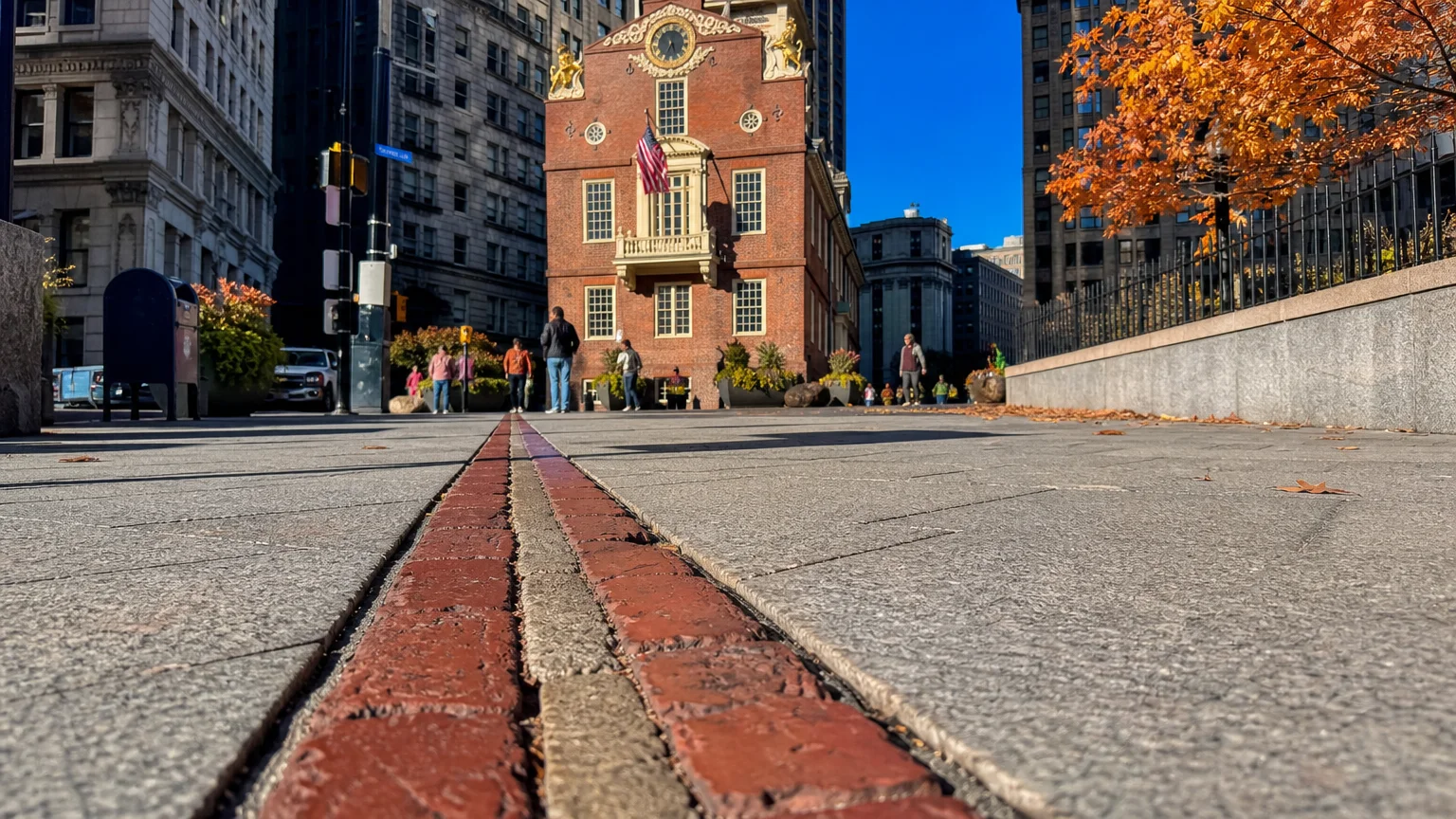
No list of historic places in America is complete without Boston. The city served as the crucible of the American Revolution, and it wears its history proudly. The defining feature for visitors is the Freedom Trail, a 2.5-mile red brick path that connects 16 historically significant sites, including the Paul Revere House, the Old North Church, and Faneuil Hall.
While walking the entire trail in one day might challenge your stamina, you can easily break it into smaller, manageable segments. Boston’s public transit system, the T, offers robust accessibility features for seniors, making it simple to navigate between neighborhoods. Take advantage of the comprehensive harbor cruises for a relaxing vantage point of the Boston Tea Party Ships and Museum.

6. Savannah, Georgia
Savannah feels like a city perfectly engineered for leisurely exploration. General James Oglethorpe designed the city layout in 1733 using a unique grid system built around 24 public squares. Today, 22 of these historic squares remain, shaded by massive live oaks and featuring ample park benches, fountains, and monuments.
These squares provide built-in resting spots every few blocks, making Savannah exceptionally walker-friendly for older adults. Explore the Mercer Williams House, stroll through Forsyth Park, and take time to appreciate the meticulously preserved antebellum architecture. Because Savannah sits directly on the coast, you often enjoy a pleasant breeze, though the summer months bring intense heat. Target April or October for the most comfortable weather.
7. Philadelphia, Pennsylvania
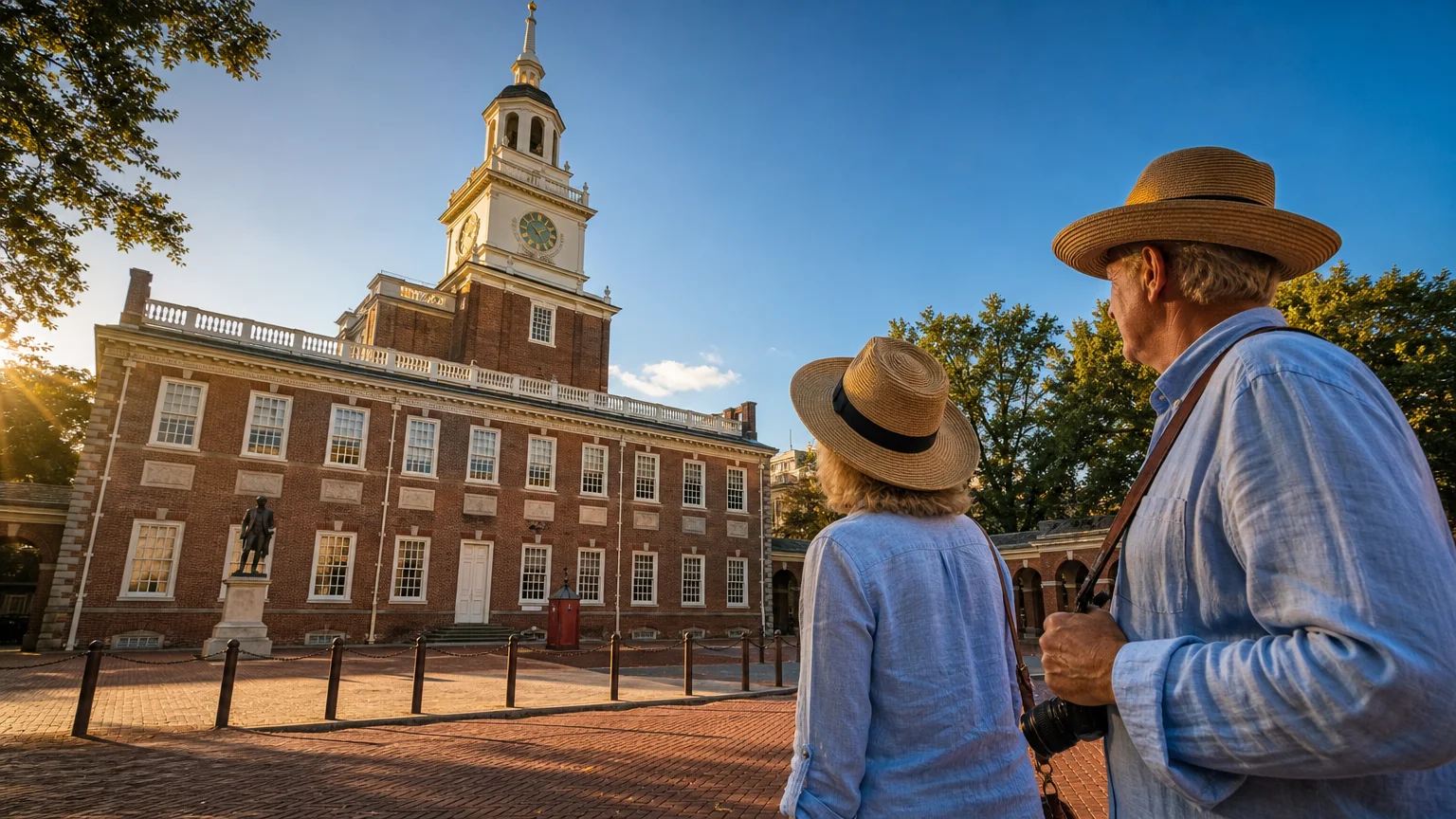
Philadelphia offers an unparalleled concentration of foundational American history located within a highly compact, walkable area. Independence National Historical Park houses both Independence Hall—where the Declaration of Independence and the Constitution were debated and signed—and the iconic Liberty Bell.
Retirees appreciate Philadelphia because the primary historic district is remarkably flat and prioritizes accessibility. The major museums, including the Museum of the American Revolution and the National Constitution Center, feature wide aisles, modern elevators, and plenty of seating. Secure your timed-entry tickets for Independence Hall well in advance, as they sell out quickly during peak travel seasons.

8. Newport, Rhode Island
If you find the Gilded Age fascinating, Newport belongs at the top of your list. This coastal city served as the summer playground for America’s wealthiest families at the turn of the 20th century. Families like the Vanderbilts built massive, opulent “summer cottages” overlooking the Atlantic Ocean.
You can tour several of these magnificent properties, including The Breakers and Marble House. The Preservation Society of Newport County has worked diligently to make these historic properties as accessible as possible. Many mansions now feature elevators or offer detailed virtual tours of the upper floors for those unable to climb the grand staircases. Combine your mansion tours with a scenic drive along Ocean Drive for a spectacular, low-impact afternoon.

9. San Antonio, Texas
San Antonio blends rich history with vibrant modern culture. The city’s most famous landmark, the Alamo, sits right in the heart of downtown. However, the Alamo represents just one of five Spanish colonial missions in the area. The San Antonio Missions National Historical Park holds the prestigious designation of a UNESCO World Heritage site.
Retirees highly recommend the San Antonio River Walk for its unique charm. This network of walkways sits one story beneath the streets, lining the San Antonio River with restaurants, shops, and lush landscaping. The city has installed numerous elevators providing easy access from street level down to the river. For a truly relaxing experience, take a guided riverboat cruise to learn about the city’s development while sitting comfortably on the water.

10. Gettysburg, Pennsylvania
For history enthusiasts eager to understand the Civil War, Gettysburg provides a sobering and deeply educational experience. The Battle of Gettysburg marked a turning point in the war, and the 6,000-acre battlefield is now a meticulously maintained national military park.
Gettysburg stands out as a phenomenal destination for those with limited mobility because it is primarily an auto-touring park. You can explore the battlefield from the comfort of your own vehicle. For an unforgettable experience, hire a Licensed Battlefield Guide. These certified experts will actually get into your car and direct you through the park, providing a customized, private tour detailing the exact troop movements and stories of the soldiers who fought there.
11. Mackinac Island, Michigan
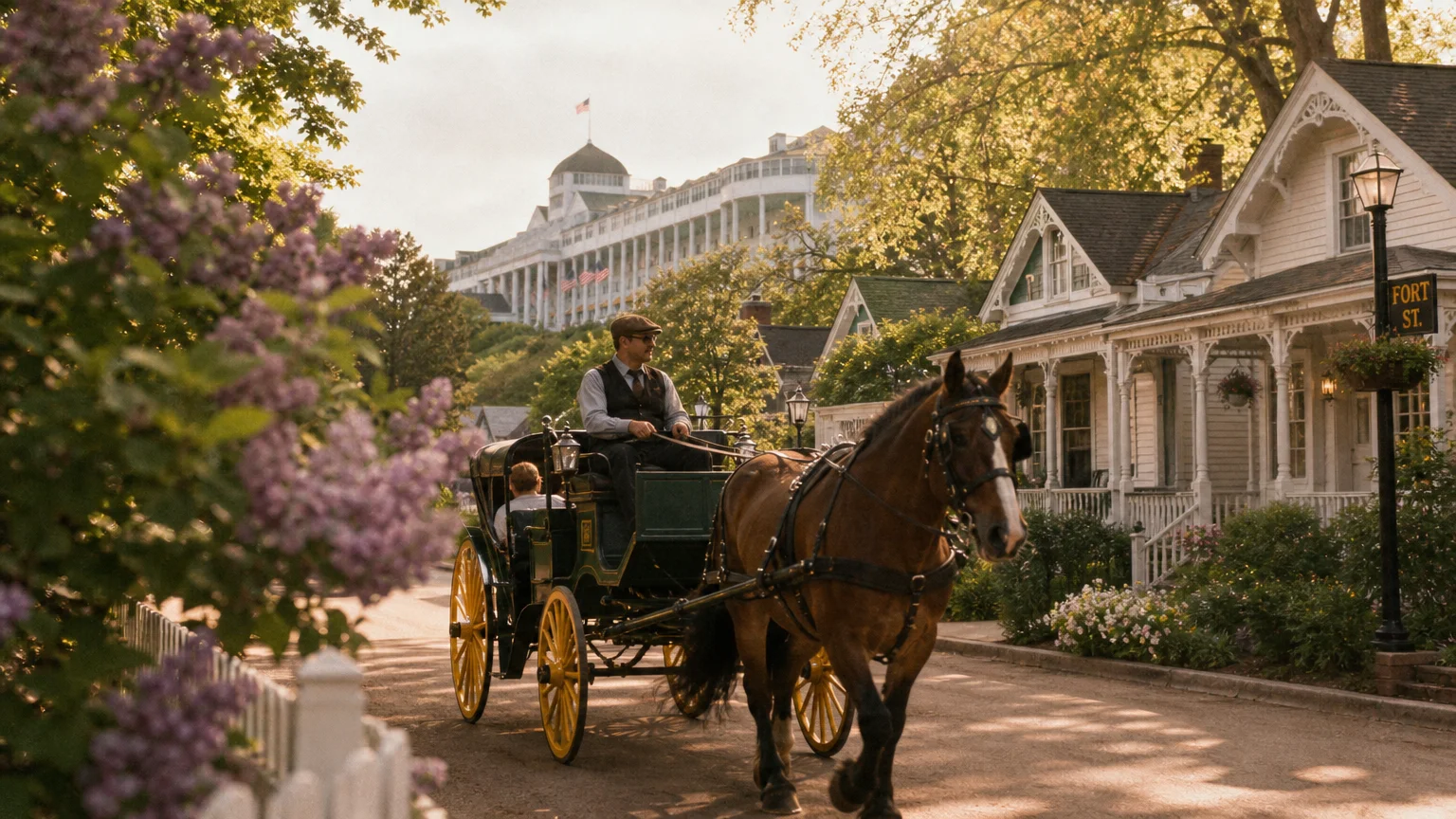
Mackinac Island offers a literal step back in time. Located in Lake Huron, this island famously banned all motor vehicles in 1898. Visitors arrive by ferry and navigate the island via horse-drawn carriages, bicycles, or on foot. The absence of cars creates a remarkably peaceful, quiet atmosphere.
Explore historic Fort Mackinac, a former British and American military outpost, and marvel at the stunning Victorian architecture that defines the island. Treat yourself to lunch or afternoon tea at the legendary Grand Hotel. The deliberate, slow pace of life on Mackinac Island forces you to relax, making it a perfect retreat for retirees seeking history without the hustle and bustle of a major city.
Comparing Top Senior Travel Destinations
Choosing the right destination depends heavily on your mobility preferences, climate tolerance, and specific historical interests. Use this comparison of five popular locations to help narrow down your options.
| Destination | Primary Era | Walkability & Terrain | Best Time for Seniors to Visit |
|---|---|---|---|
| Boston, MA | Revolutionary War | Moderate (some hills, historic cobblestones) | September to October |
| St. Augustine, FL | Spanish Colonial | Excellent (flat, pedestrian-only zones) | November to April |
| Savannah, GA | Antebellum / Civil War | Excellent (flat, frequent park benches) | March to May |
| Gettysburg, PA | Civil War | Auto-tour friendly (minimal walking required) | May or September |
| Santa Fe, NM | Native American / Spanish | Moderate (flat Plaza, but high altitude) | September to November |

Costly Mistakes to Avoid When Planning Your Trip
Traveling in retirement offers distinct advantages, primarily the flexibility of your schedule. However, failing to plan strategically can lead to unnecessary expenses and physical exhaustion. Avoid these common missteps to ensure a smooth journey.
- Booking During Peak Season: You no longer have to plan vacations around the school calendar. Avoid the summer crowds, peak pricing, and extreme heat by booking your travel during the shoulder seasons (spring and fall).
- Overpacking Your Itinerary: Historic sites require mental and physical stamina. Resist the urge to schedule three museums in one day. Plan one major morning activity, leave the afternoon open for a leisurely lunch or a trolley ride, and prioritize rest. According to the National Council on Aging (NCOA), pacing your physical exertion helps prevent fatigue-related falls and injuries.
- Ignoring Accessibility Details: Never assume a historic home or 18th-century tavern has an elevator. Call ahead to inquire about ramps, accessible restrooms, and wheelchair rentals to avoid frustrating surprises upon arrival.
- Leaving Discounts on the Table: Always ask about senior discounts at museums, hotels, and transit hubs. Keep your AARP card handy, and if you plan to visit federal historic sites or national parks, purchase the America the Beautiful Senior Pass for lifetime access.
Frequently Asked Questions
What is the best time of year for older adults to travel to historic sites?
Shoulder seasons—typically April through May and September through October—offer the best combination of mild weather and manageable crowds. Southern destinations like St. Augustine and Savannah are also excellent during the winter months to escape northern snow.
Are historic buildings legally required to be wheelchair accessible?
The Americans with Disabilities Act (ADA) requires reasonable accommodations, but strict historical preservation laws sometimes limit structural changes to heritage sites (like installing modern elevators in a 1700s home). Many historic sites provide alternative experiences, such as video tours of upper floors or ramp access to the main level. Always verify with the specific venue before your visit.
How can I get the best discounts on American heritage travel?
Leverage your age. Purchase the National Park Service Senior Pass (available for US citizens 62 and older) for discounted entry to federal lands and historical parks. Utilize AARP memberships for hotel and dining discounts, and always request the senior rate when booking museum tickets or guided tours.
Plan Your Historic Getaway Today
American history is vast, complex, and incredibly engaging when experienced in person. You have earned the time to explore these foundational cities at your own pace. Choose one destination from this list that sparks your curiosity, research dates in the upcoming shoulder season, and start building an itinerary that balances education with relaxation.
Funding your retirement travel dreams requires a solid income strategy and a clear understanding of your financial resources. Retirement rules and benefit amounts vary based on individual work history, income, and circumstances. This article provides general guidance only. Consult a SHIP counselor, financial advisor, or elder law attorney for advice specific to your situation.
Last updated: June 2026. Medicare and Social Security rules change annually—always verify current details at official government sources.