Stretching a fixed income while maintaining a vibrant lifestyle drives over 1.6 million American expats to call Mexico home—making it the top foreign retirement destination worldwide. Lower healthcare costs, warm weather, and rich local cultures draw retirees across the border, but navigating updated visa requirements, medical insurance, and real estate markets requires clear planning. In 2026, tighter financial solvency rules and changing local landscapes mean you must evaluate your options with precision before packing your bags. Discovering the ideal Mexican retirement town involves balancing your monthly budget, desired climate, healthcare access, and social preferences against real-world economic realities.
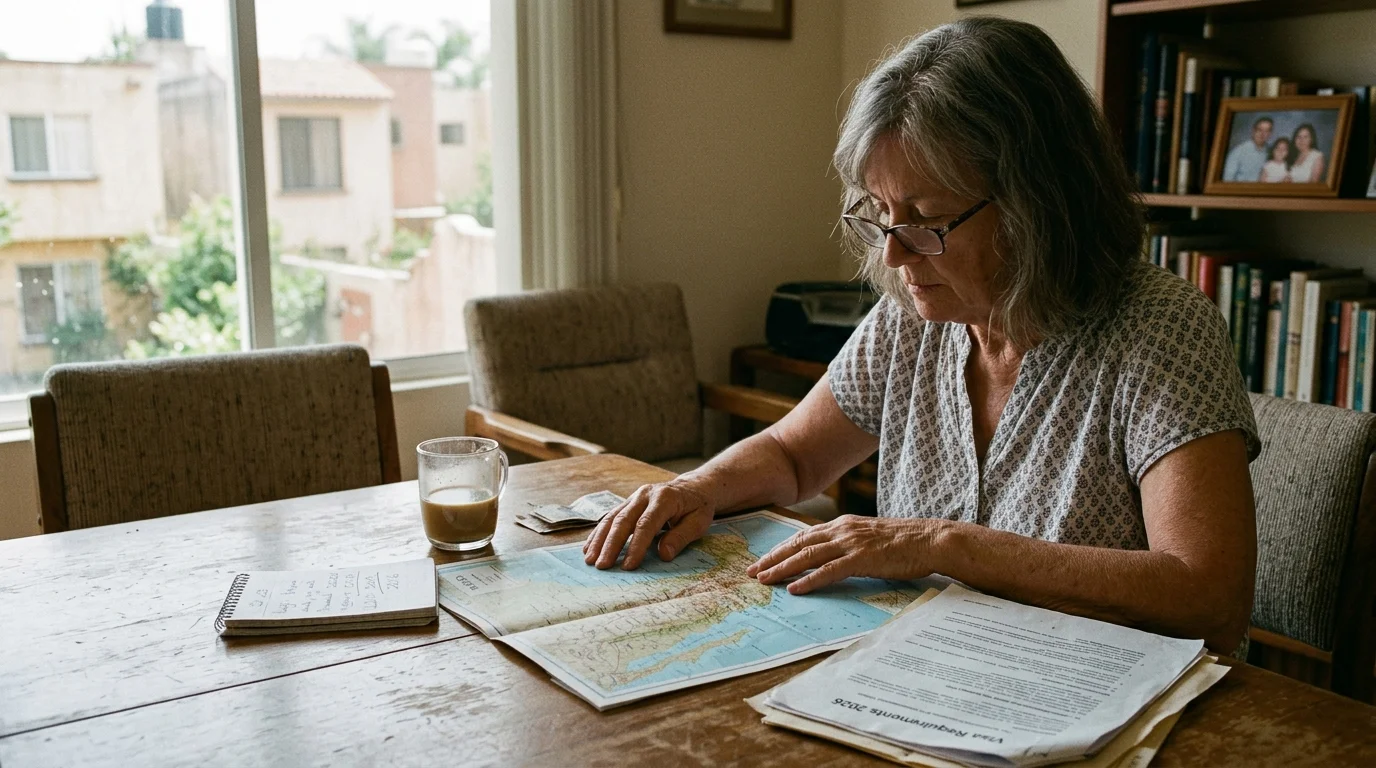
What You Need to Know for 2026
- Rising Solvency Thresholds: Mexico calculates visa income requirements using the 2026 UMA (Unidad de Medida y Actualización) daily rate of 117.31 MXN, pushing monthly income requirements for temporary residency to roughly $4,200–$4,400 USD.
- Residency Fee Increases: A legislative update increased four-year residency card government processing fees to over 50,000 MXN (approx. $2,700 USD).
- Healthcare Adjustments: U.S. Medicare does not cover medical treatment in Mexico; retirees must rely on private international insurance, out-of-pocket care, or Mexico’s IMSS public system.
- Top Destinations: Lake Chapala, San Miguel de Allende, and Puerto Vallarta remain the premier hubs for American expats Mexico retirement searches due to established English-speaking communities and top-tier medical facilities.
Why Mexico Remains the Premier Hub for American Expats
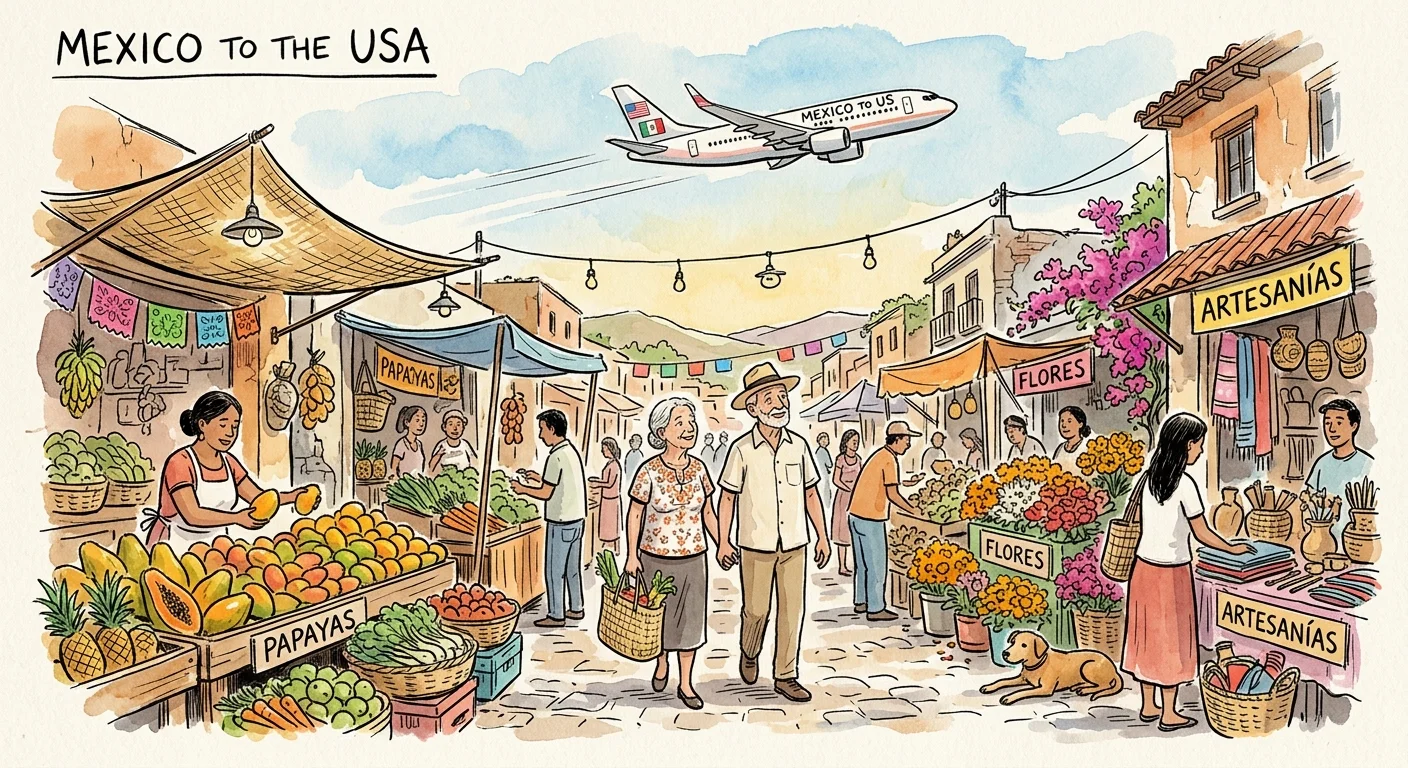
Retiring south of the border offers a unique blend of cultural familiarity and lower living costs. Proximity plays a major role; short flights connect major Mexican cities to U.S. hubs, allowing you to visit children and grandchildren without cross-oceanic jetlag. Beyond geographic convenience, the warmth of Mexican culture fosters strong social connections—a key component of long-term health and emotional well-being.
Financial flexibility also allows retirees to live far more comfortably than they could on equivalent budgets in the United States. Many expats hire household help, dine out regularly, and afford high-quality medical treatments while spending 30% to 50% less overall. As expert financial planners frequently observe, living comfortably on a fixed income isn’t just about spending less; it is about maximizing the value of every dollar you have saved.
“Don’t simply retire from something; have something to retire to.” — Harry Emerson Fosdick
Whether you seek an artistic mountain retreat, a coastal resort town, or a colonial historic center, finding the right location requires matching your health needs and lifestyle goals with local infrastructure. Exploring popular expat towns Mexico offers is the first step toward building your dream retirement lifestyle.
Mexico’s Most Popular Retirement Towns for 2026
1. Lake Chapala and Ajijic (Jalisco): The Premier Expat Haven
Situated in the central highlands just 45 minutes from Guadalajara International Airport, Lake Chapala hosts the largest concentration of North American retirees in the world. An estimated 12,000 to 25,000 foreign residents live along the north shore of Mexico’s largest lake, primarily concentrated in the colorful village of Ajijic.
The region’s primary draw remains its year-round “springtime” climate, featuring average daily temperatures in the mid-70s. The established expat community offers hundreds of English-language clubs, community service groups, and theater guilds; you will rarely struggle to make friends or find social activities here. Guadalajara’s world-class, JCI-accredited hospitals sit less than an hour away, providing high-end medical care at a fraction of U.S. prices.
2. San Miguel de Allende (Guanajuato): Colonial Charm and Culture
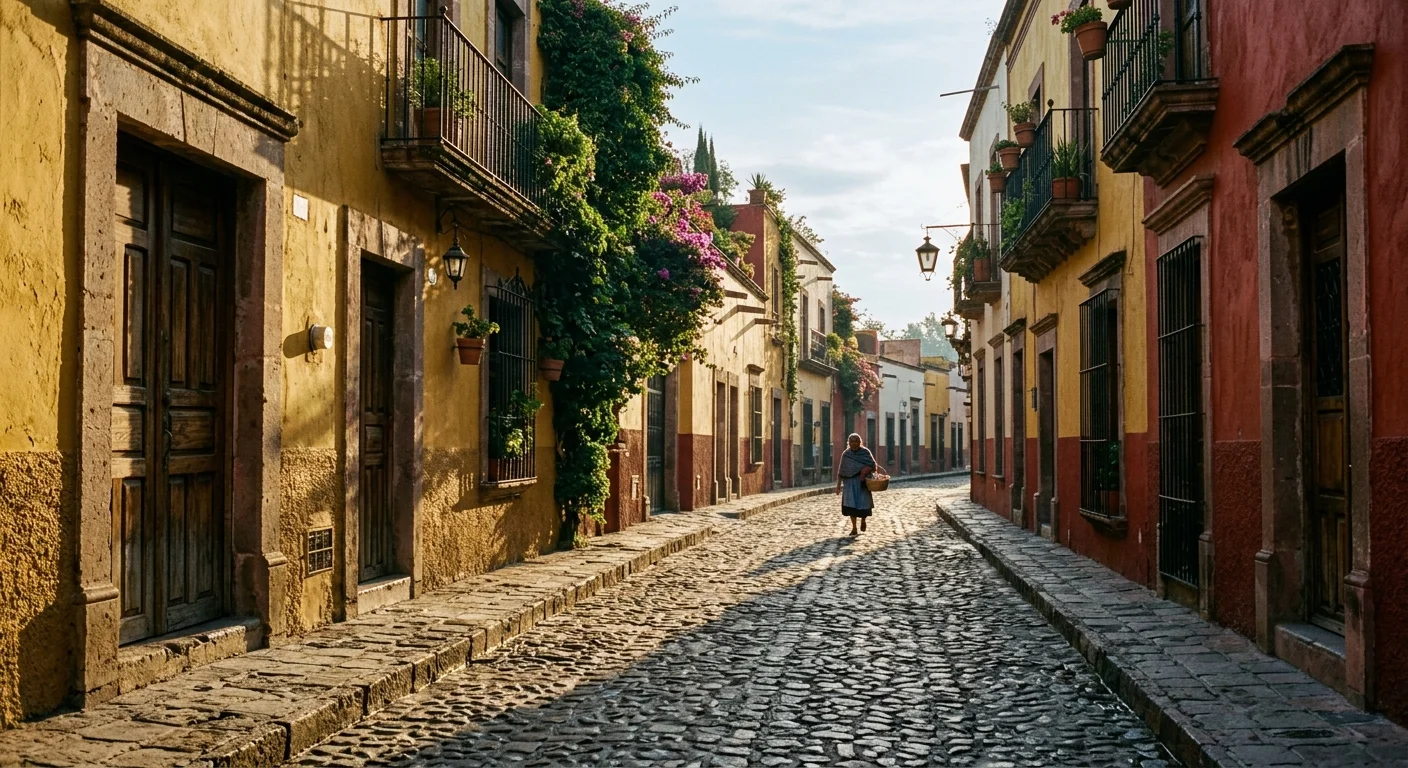
San Miguel de Allende stands out as a UNESCO World Heritage site known for its dramatic Spanish colonial architecture, cobblestone streets, and vibrant arts scene. Out of a regional population of roughly 140,000, San Miguel houses more than 10,000 American expats who enjoy its temperate climate and rich cultural events.
If you enjoy walking to art galleries, gourmet restaurants, and historic plazas, San Miguel delivers an unmatched lifestyle. However, popularity drives real estate costs higher than in most interior Mexican towns. Renting a modest two-bedroom home near the historic center often costs between $1,500 and $2,500 USD per month, though neighborhood choices further out drop costs substantially.
3. Puerto Vallarta and Banderas Bay (Jalisco / Nayarit): Tropical Beach Living
For retirees seeking a classic oceanfront lifestyle with modern conveniences, Puerto Vallarta offers the ultimate mix of beach beauty and high-end infrastructure. Set between the Pacific Ocean and the Sierra Madre mountains, Puerto Vallarta boasts established expat enclaves alongside fully modernized private hospitals, international dining options, and an active waterfront boardwalk (the Malecón).
Suburbs extending into the neighboring state of Nayarit—such as Nuevo Vallarta, Bucerías, and Cruz de Huanacaxtle—provide quieter, resort-style living with direct access to marina facilities and golf courses. Direct international flights connecting Puerto Vallarta to dozens of major U.S. cities make frequent family visits seamless.
4. Mérida (Yucatán): Unmatched Safety and Mayan Heritage
If safety, rich history, and low costs top your priority list, Mérida consistently ranks among the best places to retire in Mexico. Located in the Yucatán Peninsula, Mérida earns national and international recognition as Mexico’s safest major city, featuring crime rates comparable to top European municipalities.
Mérida features grand colonial architecture, a bustling local culinary scene, and close proximity to Gulf Coast beaches like Progreso. Housing costs remain exceptionally low; you can rent modern, comfortable homes for $600 to $1,200 USD per month. The trade-off is extreme summer heat and high humidity, making central air conditioning essential during the summer months.
5. Querétaro (Querétaro): Modern Infrastructure and Economic Growth
Located in central Mexico, Querétaro combines historic colonial districts with modern urban planning, ultra-modern shopping malls, and clean public infrastructure. While less tourist-heavy than neighboring San Miguel de Allende, Querétaro attracts retirees who prefer living alongside affluent locals in a booming, industrial-tech corridor.
Querétaro provides exceptional medical centers, high safety ratings, and mild weather throughout the year. Its proximity to Mexico City and the surrounding wine country makes it an excellent choice for active, mobile retirees who want convenience without sacrificing historic charm.
6. La Paz (Baja California Sur): Quiet Coastal Tranquility
Located on the Sea of Cortez, La Paz offers a peaceful alternative to the resort-heavy atmosphere of Cabo San Lucas. Celebrated for its tranquil coastal waters, world-class marine wildlife, and stunning waterfront malecón, La Paz appeals to retirees who love fishing, kayaking, and outdoor recreation.
La Paz retains an authentic Mexican city feel while hosting a friendly, growing expat community. Costs remain moderately low compared to Southern California or nearby Cabo, and the city’s modern hospitals handle standard surgical and specialized care effectively.
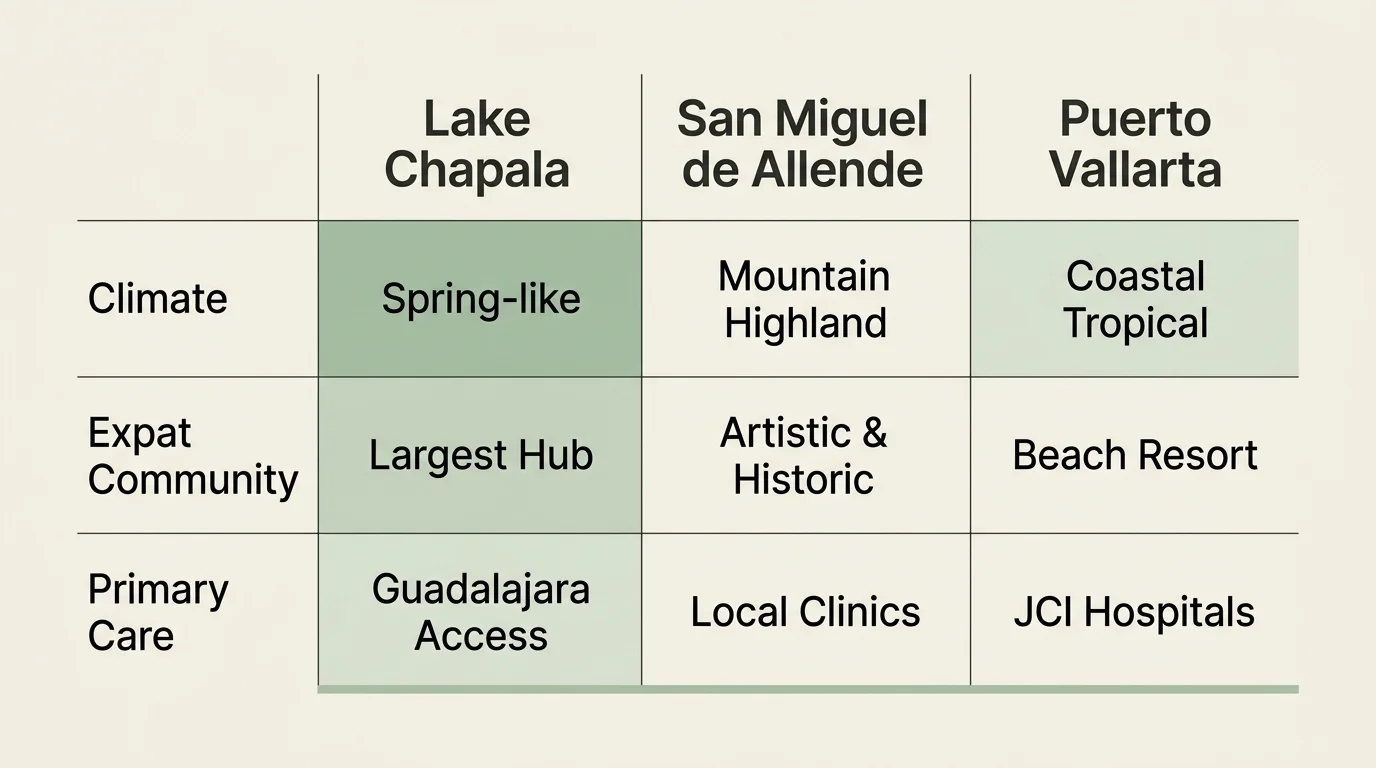
Side-by-Side Comparison of Top Expat Destinations
| Town / Region | Primary Vibe | Climate Profile | Est. Monthly Cost (Couple) | Healthcare Access |
|---|---|---|---|---|
| Lake Chapala / Ajijic | Active Expat Community | Temperate (70°F–80°F Year-Round) | $1,800 – $2,800 USD | Excellent (45 mins to Guadalajara) |
| San Miguel de Allende | Arts & Historical Culture | Mild High-Altitude Desert | $2,500 – $4,000 USD | Good local facilities; top care in Querétaro |
| Puerto Vallarta | Pacific Resort & Beach | Tropical (Hot/Humid Summers) | $2,200 – $3,800 USD | Excellent (Multiple modern private hospitals) |
| Mérida | Safe Colonial City | Hot & Tropical Peninsula | $1,500 – $2,500 USD | Outstanding (Major regional medical hub) |
| Querétaro | Modern City & Historic Center | Semi-Arid Mild Climate | $1,800 – $3,000 USD | World-Class modern private hospitals |
| La Paz | Relaxed Coastal / Eco-Outdoor | Dry Desert Coastal | $1,900 – $3,000 USD | Good local private hospitals |

Navigating Healthcare in Mexico: Costs and Coverage Realities
Healthcare planning represents one of the most critical aspects of relocating abroad. You must understand that original Medicare (Part A and Part B) does not cover non-emergency healthcare services received outside the United States. If you require medical care in Mexico, you must pay out-of-pocket, utilize private expat insurance, or enroll in Mexican public options.
Fortunately, private medical care in Mexico is highly professional and remarkably affordable. Many Mexican physicians completed residencies in the United States or Europe and speak fluent English. Routine office visits with a specialist cost between $40 and $80 USD, while major surgical procedures generally cost 50% to 70% less than equivalent operations in American facilities.
You have three primary avenues for managing your medical care in Mexico:
- Private Out-of-Pocket Payment: Many foreign retirees choose to pay directly for routine doctor visits, lab tests, and prescriptions while maintaining private emergency coverage or paying out-of-pocket for smaller health events.
- Private Health Insurance: Local Mexican insurance policies (such as GNP or AXA) or international expat health plans cover major catastrophic medical expenses, hospitalization, and emergency surgeries at private clinics. Premium costs scale based on your age and pre-existing medical conditions.
- Public Healthcare (IMSS): Legal foreign residents holding temporary or permanent residency status can apply for enrollment in the public Instituto Mexicano del Seguro Social (IMSS). IMSS coverage costs approximately $50 to $70 USD per month for seniors. However, IMSS excludes pre-existing conditions (such as diabetes or heart disease) during initial evaluation periods, and wait times for non-urgent procedures can be long.
Many retirees choose to maintain their Medicare Part B coverage even while living in Mexico. Retaining Medicare guarantees that if you develop a severe, long-term illness, you can return to the United States to receive fully covered care under your existing benefits.
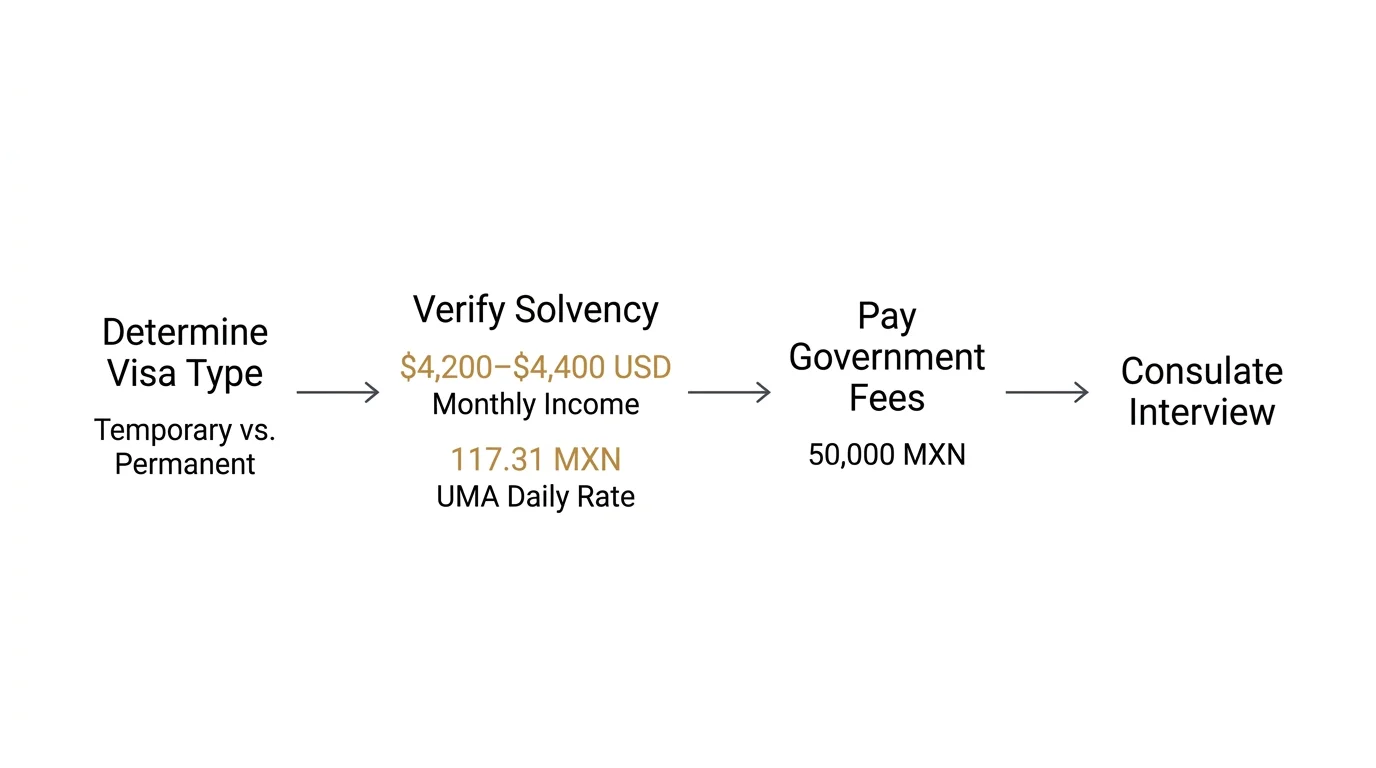
2026 Mexico Retirement Visa Requirements: Income and Solvency Updates
To reside in Mexico legally for more than 180 days per year, you must secure a residency visa rather than relying on a standard tourist passport stamp. Mexico offers two primary legal pathways for retirees: Temporary Residency (valid for up to four years) and Permanent Residency.
In mid-2025, Mexico published official residency solvency reforms in the Diario Oficial de la Federación, solidifying the use of the Unidad de Medida y Actualización (UMA) index to set financial requirements. For 2026, the daily UMA rate stands at 117.31 MXN (effective February 1, 2026 through January 31, 2027). This adjustment, combined with updated consular calculations, establishes clear monthly income and account balance thresholds.
Temporary Resident Visa Requirements (2026 Guidelines)
Temporary residency grants foreign citizens permission to live in Mexico for one to four years without requiring permanent commitment. To qualify under current 2026 financial thresholds, you must satisfy one of the following criteria at a Mexican consulate outside Mexico:
- Monthly Income Option (680× Daily UMA): You must show official bank statements or proof of pension income averaging roughly 79,771 MXN per month (approximately $4,200 to $4,400 USD/month, depending on real-time exchange rates) over the last 6 months.
- Savings or Investment Option (11,460× Daily UMA): You must provide investment or bank statements showing an average monthly balance of roughly 1,344,373 MXN (approximately $70,000 to $73,000 USD) over the preceding 12 months.
Permanent Resident Visa Requirements (2026 Guidelines)
Permanent residency grants lifetime legal status without requiring regular renewals. Consular policies for direct permanent residency applications carry high financial minimums:
- Monthly Pension Option (1,140× Daily UMA): Consulates require proof of monthly income averaging roughly 133,733 MXN per month (approximately $7,300 to $7,400 USD/month) over the last 6 months.
- Savings or Investment Option (45,850× Daily UMA): You must show an average investment or bank balance of roughly 5,378,664 MXN (approximately $290,000 to $300,000 USD) over 12 months.
Due to high financial thresholds for direct permanent residency, most American expats initially apply for temporary residency. After maintaining temporary resident status for four consecutive years, you can convert your status to permanent residency without showing financial solvency proof again.
Be aware that effective January 1, 2026, Mexican immigration processing fees increased substantially. Total government fees for four years of temporary residency processing now exceed 50,000 MXN (approximately $2,700 USD total over the four-year cycle), making immigration budget management more important than ever.

Managing Your Retirement Finances and Real Estate
Setting up your monthly finances in Mexico requires a multi-tier banking strategy. You can easily receive your monthly Social Security Administration payments directly via direct deposit into an American bank account or an approved Mexican institution. Maintaining a primary U.S. bank account allows you to write checks, pay home bills in the U.S., and transfer funds digitally using online platforms.
Managing your money properly involves reviewing guidelines provided by agencies such as the Consumer Financial Protection Bureau to avoid unexpected wire transfer fees and high currency-exchange markups. Utilizing peer-to-peer exchange services often saves retirees hundreds of dollars annually compared to traditional bank transfers.
“It’s not how much money you make, but how much money you keep, how hard it works for you, and how many generations you keep it for.” — Robert Kiyosaki
When approaching Mexican real estate, rent first before buying. Renting for 6 to 12 months allows you to test neighborhoods, experience local weather changes, and assess healthcare access without risking capital upfront. If you choose to purchase coastal or border property, Mexican law requires property ownership through a bank trust called a Fideicomiso. Under this legal arrangement, a Mexican bank holds the property title for your benefit, giving you full rights to build, lease, sell, or pass the property down to your heirs.
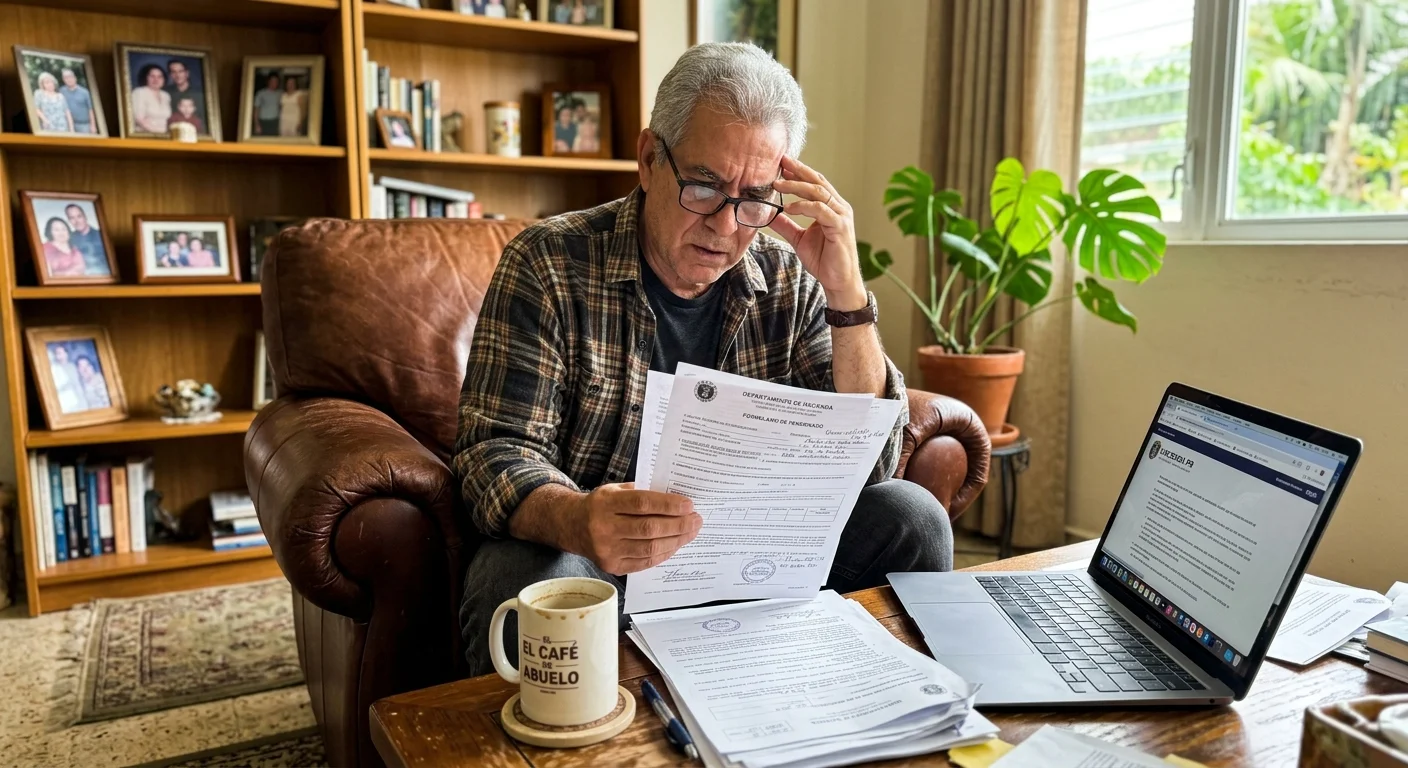
Common Retirement Traps to Avoid in Mexico
Avoiding critical errors ensures your move abroad remains smooth, secure, and stress-free. Pay close attention to these frequent pitfalls:
- Buying Real Estate Immediately: Many retirees fall in love with a coastal town during a short vacation, buy a home immediately, and later realize the humid summer climate or noisy neighborhood layout does not match their lifestyle. Always rent for several months first.
- Assuming Medicare Works Overseas: Failing to plan for international healthcare coverage leaves retirees vulnerable to sudden out-of-pocket medical bills if an emergency happens outside the U.S.
- Ignoring Consular Solvency Differences: Financial requirements vary slightly between individual Mexican consulates in the U.S. Always verify exact financial solvency criteria directly with your regional Mexican consulate before submitting paperwork.
- Failing to Account for Currency Fluctuation: If the U.S. Dollar weakens against the Mexican Peso, your purchasing power drops. Build a 15% financial buffer into your monthly retirement budget to absorb currency swings easily.
- Isolating Yourself from the Local Culture: Moving to foreign expat towns Mexico hosts without learning basic Spanish limits your social connections and makes everyday tasks like home repairs or local administrative errands frustrating.

When to Consult a Professional
Transitioning your lifestyle to another country involves legal, cross-border tax, and benefit considerations. Working with qualified experts prevents costly administrative errors and helps protect your wealth.
You should consider seeking expert counsel under these specific circumstances:
- Cross-Border Tax Specialists (CPAs): U.S. citizens must file annual income tax returns regardless of where they reside globally. A qualified expat tax CPA ensures you correctly report foreign bank accounts (FBAR compliance) and claim foreign tax credits appropriately.
- Mexican Immigration Attorneys (Gestores): Navigating consular appointments and local immigration offices (INAMI) can be complex. Certified legal specialists streamline application processing and ensure fee compliance.
- Medicare Advisors (SHIP): Consult a State Health Insurance Assistance Program (SHIP) counselor before canceling any existing Medicare policies to understand how maintaining or dropping Part B impacts your future return options. Access guidance through USA.gov Retirement Resources to find trusted counseling networks.
- Estate Planning Attorneys: Ensure your international assets are protected by establishing both a U.S. will and a Mexican will to transfer property efficiently to legal heirs.
Frequently Asked Questions
Can I receive Social Security direct deposits while living in Mexico?
Yes, the Social Security Administration routinely deposits monthly retirement benefits directly into U.S. bank accounts or participating Mexican financial institutions. Most retirees maintain their U.S. accounts and transfer spending funds into Mexican accounts as needed.
Do I need to speak fluent Spanish to retire in popular expat towns in Mexico?
While you can navigate daily life using English in major expat destinations like Lake Chapala, San Miguel de Allende, and Puerto Vallarta, learning basic conversational Spanish improves your experience, helps you integrate into local communities, and eases interactions with service providers.
What happens to my U.S. Medicare coverage if I relocate to Mexico?
Original Medicare does not pay for healthcare received in Mexico. Many retirees keep Medicare Part B active by paying standard monthly premiums so they remain fully covered whenever visiting or returning to the United States.
Can American retirees buy real estate near the ocean in Mexico?
Yes, foreigners can legally purchase property within the designated “restricted zone” (50 kilometers from coastal shorelines and 100 kilometers from international borders) using a 50-year renewable bank trust called a Fideicomiso. This legal structure grants you total rights to sell, modify, rent, or pass the property to named beneficiaries.
How does the 2026 UMA rate affect my visa eligibility?
Mexico calculates income and investment solvency minimums using official UMA multiples. The 2026 daily UMA rate of 117.31 MXN requires applicants to demonstrate roughly $4,200–$4,400 USD in monthly income for temporary residency or provide substantial account balance statements over 6 to 12 months.
Final Steps Toward Your Mexican Retirement
Planning a successful transition to Mexico begins long before you pack your bags. Start by identifying two or three prospective towns that match your budget and health preferences, then schedule extended scouting trips during both ideal and hot weather seasons. Renting a residence for six months offers invaluable first-hand experience without binding your long-term capital.
Retirement rules and benefit amounts vary based on individual work history, income, and circumstances. This article provides general guidance only. Consult a SHIP counselor, financial advisor, or elder law attorney for advice specific to your situation.
Last updated: February 2026. Medicare and Social Security rules change annually—always verify current details at official government sources.