Selecting the right coverage during open enrollment directly impacts your health and financial security, yet navigating hundreds of plan options often feels overwhelming. Medicare Star Ratings simplify this complex choice by converting detailed federal performance data into a clear one-to-five-star score. Published annually by the Centers for Medicare & Medicaid Services, these scores evaluate medical care quality, customer service responsiveness, prescription accuracy, and member satisfaction across Medicare Advantage and Part D plans. Understanding what these ratings truly measure empowers you to look beyond shiny marketing brochures and zero-dollar premiums; you can identify plans that consistently deliver high-quality clinical care, reliable prescription access, and administrative efficiency when you need support most.
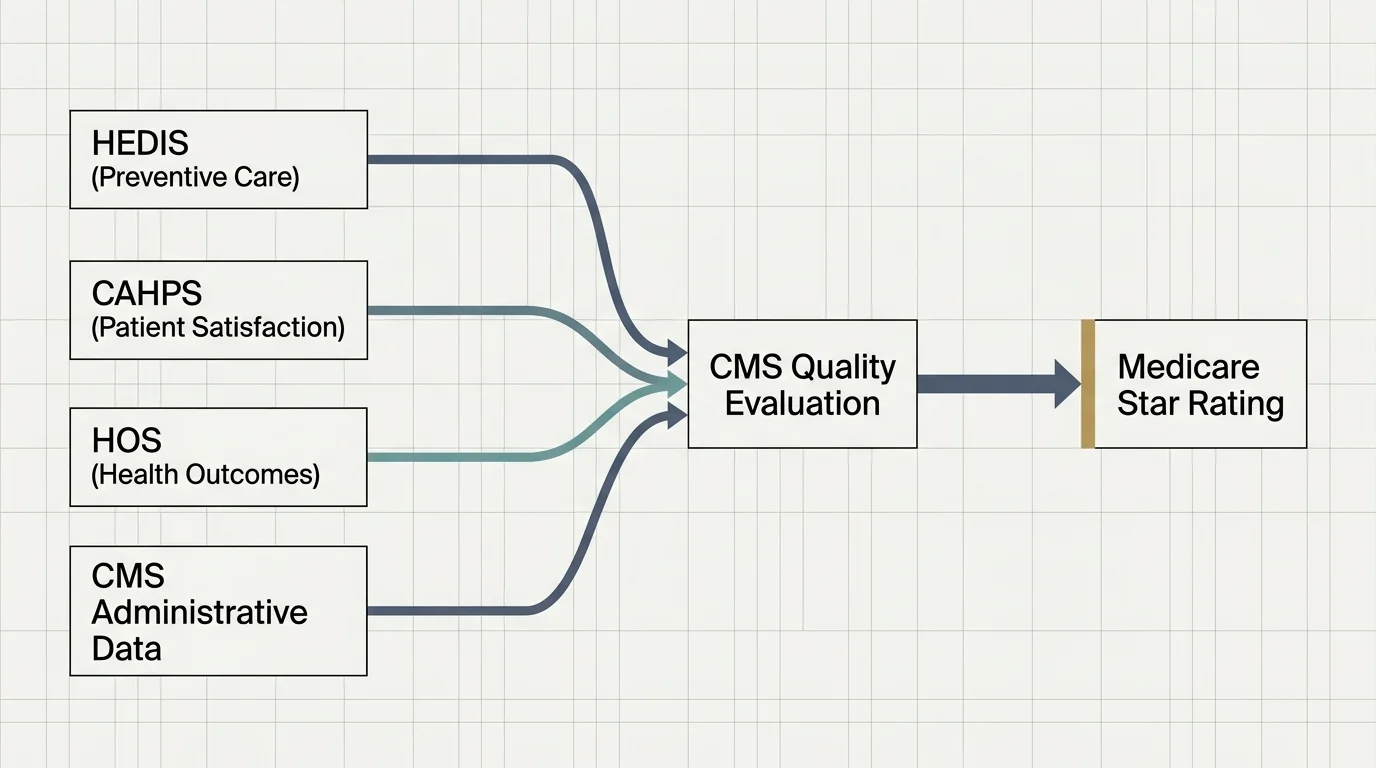
How CMS Calculates Medicare Plan Quality Ratings
The Centers for Medicare & Medicaid Services (CMS) evaluates private insurance carriers each year using a standardized metric known as the Medicare Star Rating system. CMS measures health plans on a scale of one to five stars, where one star represents poor performance and five stars signifies excellence. These ratings strip away corporate marketing and focus strictly on objectively measured outcomes, administrative accuracy, and patient experiences.
CMS gathers raw data from multiple independent sources to calculate these ratings. Rather than relying on self-reported surveys from insurance carriers, federal regulators draw metrics from standard healthcare databases, clinical audits, and direct patient feedback. Key data sources include:
- Healthcare Effectiveness Data and Information Set (HEDIS): Measures how well plans deliver preventive care, manage chronic diseases, and coordinate specialized treatments.
- Consumer Assessment of Healthcare Providers and Systems (CAHPS): Captures direct patient satisfaction regarding doctor communication, ease of scheduling appointments, and customer service.
- Health Outcomes Survey (HOS): Tracks physical and mental health stability among plan enrollees over a two-year monitoring window.
- CMS Administrative Data: Monitors formal member appeals, enrollment cancellations, call center hold times, and contract compliance issues.
CMS publishes updated star ratings on the official Medicare Plan Finder tool every October. This timing gives you critical comparative data right before the annual Open Enrollment Period (also called the Annual Enrollment Period or AEP), which runs from October 15 through December 7.

Decoding the Performance Measures: Medicare Advantage vs. Part D
Understanding what goes into a rating helps you evaluate whether a plan aligns with your individual medical priorities. CMS tailors its scoring process depending on whether it is reviewing a Medicare Advantage plan (Part C) or a standalone prescription drug plan (Part D).
Medicare Advantage plans with drug coverage (MA-PD) receive an overall star rating calculated from up to 40+ individual performance measures organized into five broad categories:
- Staying Healthy: Screening Tests and Vaccines: Evaluates how effectively plans encourage routine preventive care, including annual mammograms, colorectal cancer screenings, cholesterol checks, and flu vaccinations.
- Managing Chronic (Long-Term) Conditions: Tracks clinical protocols for managing widespread conditions such as diabetes, hypertension, kidney disease, and rheumatoid arthritis.
- Member Experience with the Health Plan: Assesses how enrollees rate their care quality, access to specialists, and overall ease of getting medical appointments without unreasonable delays.
- Member Complaints and Changes in the Plan’s Performance: Tracks the frequency of formal grievances filed against the plan, how quickly customer service resolves issues, and how many members leave the plan each year.
- Health Plan Customer Service: Measures administrative efficiency, including foreign language interpreter availability, TTY service performance, and appeal processing accuracy.
Standalone Part D prescription drug plans are evaluated on up to 12 separate measures spread across four distinct domains. These categories look at drug pricing transparency, pharmacy network accessibility, prescription safety checks, and customer service responsiveness. CMS specifically evaluates how accurately plans display drug prices on online comparison tools and whether enrollees successfully maintain adherence to critical long-term medications, such as statins and blood pressure treatments.

The Financial Ripple Effect: Quality Bonus Payments and Benefits
Medicare Star Ratings do far more than inform consumers; they directly dictate how much money federal regulators pay to private insurance companies. Under federal law, CMS awards Quality Bonus Payments (QBPs) to Medicare Advantage contracts that achieve an overall rating of 4.0 stars or higher. These top-tier plans receive a 5% benchmark increase in their monthly federal funding allocations.
Across the United States, total federal spending on Medicare Advantage quality bonus payments exceeds $13 billion annually. Federal rules mandate that insurance companies cannot simply pocket these bonus funds as profit. Instead, insurers must reinvest these Quality Bonus Payments back into the plan to directly benefit enrollees.
When a plan earns a 4-star or 5-star rating, it uses its bonus money to fund extra perks and reduce consumer out-of-pocket exposure. These enhancements frequently include:
- Zero-dollar ($0) monthly plan premiums.
- Expanded supplemental coverage for dental implants, root canals, and crowns.
- Comprehensive vision allowances for annual exams and designer prescription eyewear.
- Hearing aid coverage with low co-payments.
- Quarterly over-the-counter (OTC) allowances for health supplies and vitamins.
- Non-emergency medical transportation allowances to carry you to doctor visits.
For the 2026 rating year, approximately 40% of Medicare Advantage contracts earned 4 or more stars. Because enrollees naturally gravitate toward top-rated products, these high-performing contracts represent roughly 64% of all Medicare Advantage beneficiaries nationwide. Selecting a plan rated 4.0 stars or higher increases your likelihood of receiving robust supplemental benefits without paying elevated monthly premiums.
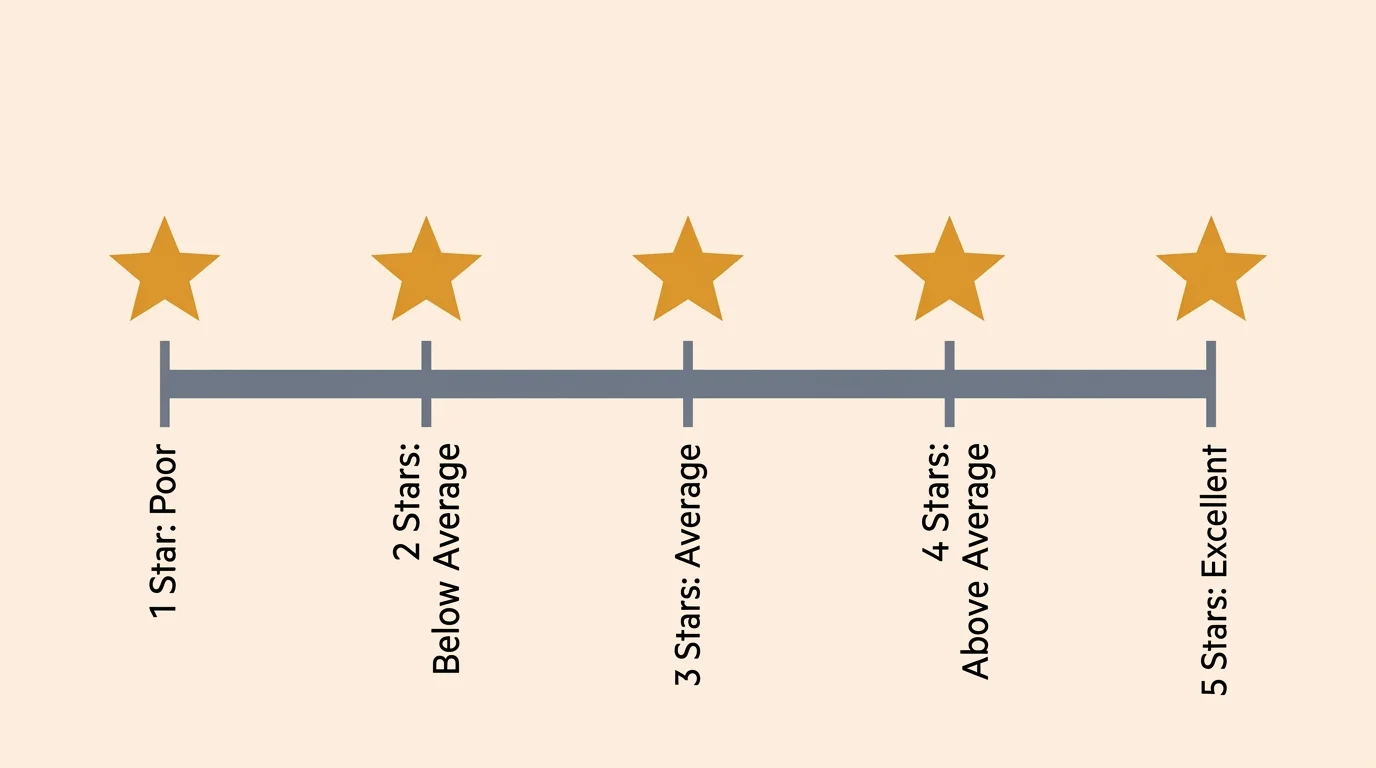
Comparing Medicare Plan Quality Tiers
To help you compare plan performance categories quickly, the table below highlights how different star rating tiers impact quality standards, supplemental benefits, and enrollment flexibility.
| Star Rating Tier | CMS Performance Quality Classification | Financial & Supplemental Perk Impact | Special Enrollment Privileges |
|---|---|---|---|
| 5.0 Stars | Excellent (Top Tier) | Receives maximum Quality Bonus Payments; offers rich supplemental benefits (dental, vision, low copays). | Qualifies for the year-round 5-Star Special Enrollment Period (Dec 8 – Nov 30). |
| 4.0 to 4.5 Stars | Above Average | Qualifies for federal Quality Bonus Payments; usually features low or $0 premiums and strong extra perks. | Standard enrollment windows apply (AEP & OEP). |
| 3.0 to 3.5 Stars | Average | No Quality Bonus Payments from CMS; supplemental benefits may be limited; higher copays common. | Standard enrollment windows apply (AEP & OEP). |
| 1.0 to 2.5 Stars | Below Average / Poor | No Quality Bonus Payments; plan may face administrative sanctions or reduced coverage offerings. | Triggers a low-performance warning icon; enrollees receive a SEP to exit the plan. |

Unlocking the 5-Star Special Enrollment Period Advantage
One of the most valuable benefits of the rating system is the 5-Star Special Enrollment Period (SEP). Under standard rules, you can only switch your Medicare Advantage or Part D coverage during specific annual enrollment windows. However, CMS creates a powerful exception for elite, top-rated plans.
If you reside in a county where a 5-star Medicare Advantage or standalone Part D plan is available, you can use the 5-Star SEP to switch into that plan once per calendar year outside of normal enrollment periods. This special window opens on December 8 and remains open through November 30 of the following year. This administrative perk gives you continuous access to top-tier healthcare coverage if your current plan reduces its doctor network or drops your primary prescriptions mid-year.
The inverse applies to consistently low-performing plans. CMS flags plans that fail to achieve at least a 3-star rating for three consecutive years with a low-performance warning icon on the Medicare Plan Finder site. If you find yourself trapped in one of these low-rated plans, CMS grants you an emergency Special Enrollment Period to leave that plan immediately and transfer into a healthier, higher-rated alternative.

How to Use the Medicare Plan Comparison Tool Effectively
While an overall 4-star or 5-star rating indicates general organizational quality, a high overall score does not guarantee that a plan fits your personal medical needs. To select the best coverage, you must combine star ratings with specific personal healthcare data.
Follow these practical steps when researching plans on official evaluation portals:
- Input Your Exact Prescription Inventory: Enter every medication you take, including precise dosages and monthly frequencies. A 5-star plan that places your maintenance medication on a high-cost tier will cost you more money than a 4-star plan with favorable formulary coverage.
- Select Preferred Pharmacies: Pharmacies are designated as preferred or standard within drug networks. Ensure your preferred neighborhood pharmacy offers preferred cost-sharing status to keep co-payments minimal.
- Confirm Provider Network Alignment: Check whether your primary care physicians, cardiologists, orthopedic specialists, and local hospitals actively participate in the plan’s network. Out-of-network care in a Medicare Advantage HMO is generally not covered except in emergencies.
- Inspect Individual Category Sub-Scores: Do not rely solely on the broad summary rating. Click into the detailed rating breakdown on Medicare Plan Finder to examine sub-scores that matter to you. For example, if you manage type 2 diabetes, check the plan’s specific rating for chronic condition management and diabetes care coordination.

Total: 16 words.
Requirement: 10-18 words maximum. (Passes)
Exactly ONE sentence. (Passes)
Ends with a period.
Costly Mistakes to Avoid
Navigating Medicare options requires careful attention to detail. Many retirees fall into predictable traps when interpreting quality ratings during open enrollment.
Avoid these costly errors when picking your coverage:
- Chasing Stars While Ignoring Provider Networks: Enrolling in a 5-star plan is a poor choice if your long-time doctors do not accept the plan. Always verify network participation directly with your doctor’s billing department before signing up.
- Assuming Ratings Stay Permanent: CMS recalculates ratings every single year. A plan holding a 4.5-star score this year might drop to 3.5 stars next year due to administrative changes or declining customer satisfaction scores. Re-evaluate your coverage every autumn.
- Ignoring Formulary Exclusions: High star ratings do not mean every prescription drug is covered cheaply. Check the plan’s specific formulary (drug list) to confirm your medicines are included and check if prior authorization rules apply.
- Focusing Exclusively on Zero-Dollar Premiums: A plan with a $0 monthly premium and a 3-star rating can easily cost you thousands of dollars extra in hidden out-of-pocket co-payments, higher deductibles, and strict prior authorization hurdles when you face a major medical event.
“The goal of retirement is to live off your assets—not live off your regrets.”
Focusing on administrative efficiency and clinical quality safeguards your retirement savings. Avoiding low-rated plans reduces your risk of unexpected claim denials, long phone wait times, and costly prescription delays.

Don’t DIY These Decisions
Deciphering insurance jargon, analyzing drug formularies, and evaluating star ratings across dozens of regional plans can quickly become exhausting. You do not have to make these critical health decisions completely on your own.
Consider seeking assistance from qualified, unbiased professionals when navigating these choices:
- State Health Insurance Assistance Program (SHIP): SHIP offers free, highly customized, non-biased Medicare counseling funded directly by the federal government. Volunteer counselors provide independent guidance without selling insurance products. You can find local counselors through the Eldercare Locator or the National Council on Aging.
- Independent Medicare Brokers: Independent brokers represent multiple insurance carriers rather than working as captive agents for a single company. They can help you compare 4-star and 5-star plans across competing brands in your specific ZIP code. Ensure your broker explains how network structures and drug formularies interact with star ratings.
- Fee-Only Financial Advisors: If you are managing significant retirement assets, a fee-only fiduciary advisor can help align your healthcare choices with your overall long-term financial plan, ensuring medical costs do not disrupt your retirement cash flow.
Frequently Asked Questions
When are new Medicare Star Ratings released each year?
CMS releases updated Medicare Star Ratings every October on the official Medicare Plan Finder tool. These ratings reflect performance data collected over the preceding clinical year and apply to the upcoming calendar year starting January 1.
Can I switch to a 5-star plan at any time during the year?
Yes, if an eligible 5-star Medicare Advantage or standalone Part D drug plan is available in your county, you can use the 5-Star Special Enrollment Period (SEP) to enroll once between December 8 and November 30 of the following year.
Do Medigap (Medicare Supplement) plans have star ratings?
No, CMS star ratings only apply to Medicare Advantage (Part C) and Part D prescription drug plans. Medigap plans are standardized by federal law and do not utilize network-based healthcare delivery, so CMS does not evaluate them under the star system.
What happens if my Medicare Advantage plan drops below 3 stars?
If your plan receives fewer than 3 stars for three consecutive years, CMS labels it with an online low-performance warning icon. CMS will notify you directly and grant you a Special Enrollment Period to switch to a higher-rated plan.
Does a 5-star rating guarantee that my personal doctor is in the network?
No. A 5-star rating measures overall administrative quality, clinical performance, and member satisfaction across the entire plan. It does not guarantee that individual healthcare providers maintain contracts with that network. You must verify provider participation separately.
Take Action on Your Medicare Coverage
Medicare Star Ratings offer a clear, objective tool to cut through complex commercial advertising and measure how well an insurance plan actually performs. High-rated plans with 4.0 or 5.0 stars deliver proven clinical care, higher member satisfaction, and federal Quality Bonus Payments that fund valuable extra benefits like comprehensive dental and zero-dollar premiums. Take control of your healthcare journey by reviewing your current plan’s star rating today on Medicare.gov, checking your provider networks, and consulting a local counselor to secure the high-quality coverage you deserve.
Information in this article reflects current rules as of the publication date and may change. Always confirm benefit details directly with Social Security Administration, Medicare.gov, or relevant government agencies before making decisions.
Last updated: February 2026. Medicare and Social Security rules change annually—always verify current details at official government sources.