Opening a government notice demanding repayment for past Medicare coverage causes instant stress, but acting quickly gives you control over the situation. Whether Social Security is threatening to withhold your monthly checks or a Medicare contractor claims an overpayment occurred, federal rules offer clear appeal paths and consumer protections. Recent policy updates cap standard Social Security overpayment withholding at 50% and offer streamlined fast-track waivers for amounts under $2,000. By understanding your deadlines and using the correct forms, you can pause collection efforts, challenge unfair errors, and protect your retirement income. Here is exact step-by-step guidance on how to handle a Medicare overpayment notice efficiently.

What You Need to Know
- Act within 30 days: Filing an appeal or waiver request within 30 days of the notice date automatically halts benefit withholding while the government reviews your case.
- New withholding caps protect your income: Social Security now defaults to withholding 50% of your monthly benefit check (reduced from 100%) to recover overpayments, preventing total check elimination.
- Fast-track waivers exist for small balances: If your overpayment is $2,000 or less and you were not at fault, you can request an expedited phone waiver without completing detailed financial statements.
- Billing errors cause many overpayments: Medical coding mistakes, duplicate billings, and delayed IRMAA income updates trigger frequent administrative overpayment demands that you can successfully dispute.
Understanding Why You Received a Medicare Overpayment Notice
A Medicare overpayment notice asserts that you, your doctor, or your healthcare provider received benefit funds or insurance adjustments to which you were not legally entitled. The federal government actively audits health claims; when administrative systems detect discrepancies, recovery mechanisms launch automatically. Understanding the origin of the overpayment helps you choose the correct strategy to resolve it.
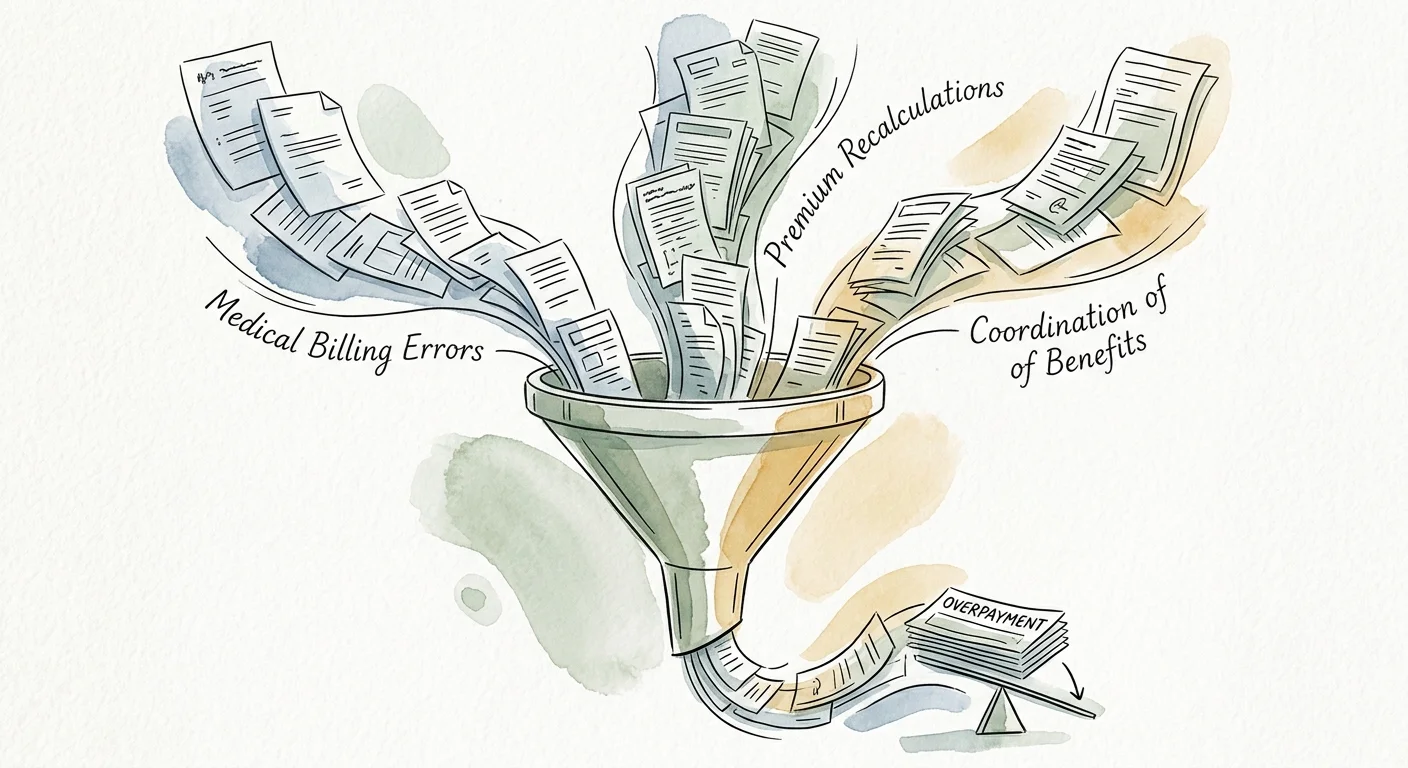
Overpayments usually stem from three main administrative categories:
- Medical Provider Billing Errors: A hospital, clinic, or physician’s office might submit incorrect Billing CPT codes, bill Medicare twice for a single service, or perform procedures that Medicare later deems medically unnecessary during a post-payment audit. Under the CMS 60-Day Overpayment Rule, healthcare providers must report and return self-identified overpayments within 60 days, but administrative delays often cause notices to land in your mailbox first.
- Social Security Premium Recalculations: The Social Security Administration handles Medicare Part B and Part D premium deductions. If the Internal Revenue Service updates your Income-Related Monthly Adjustment Amount (IRMAA) retroactively, or if Social Security delays updating your enrollment status, the system may calculate that you underpaid past premiums.
- Coordination of Benefits Conflicts: If you maintain employer coverage, VA benefits, or retiree health plans alongside Medicare, insurers sometimes debate who held primary payer responsibility. If Medicare pays a claim that your secondary insurance should have covered, Medicare demands reimbursement.
“The goal of retirement is to live off your assets—not live off your regrets.”

Step 1: Identify Who Sent the Notice and What They Want
Before filing paperwork or calling customer service, examine the top heading of your demand letter. Overpayment notices originate from two distinctly different entities, and each requires a specific legal procedure.
If the letter carries the heading of the Social Security Administration, the agency is seeking to recover money directly from your monthly retirement benefit check. This often happens because of retroactive Medicare premium recalculations or retroactive benefit entitlement changes. The notice will detail the total amount allegedly owed and explain how much Social Security plans to withhold from your upcoming checks.
If the letter comes from a Medicare Administrative Contractor (MAC)—such as Noridian, Palmetto GBA, Novitas, or WPS—or directly from Medicare.gov, the dispute centers on a specific medical service, hospital stay, or equipment claim. This notice will include an Explanation of Benefits (EOB) or a Summary Notice listing service dates, provider names, procedure codes, and the specific dollar figure in dispute.

Step 2: Know Your Core Timelines and Action Windows
Time is your most powerful asset when challenging a Medicare or Social Security overpayment. Federal agencies enforce strict deadlines that dictate whether you can freeze collection activities or preserve your appeal rights.
- The 30-Day Window (Immediate Freeze): Requesting a waiver or filing an appeal within 30 days of the date printed on the overpayment notice pauses all automatic recoupment actions. Social Security cannot reduce your benefit check, and Medicare contractors cannot begin collection efforts while your initial request undergoes review.
- The 60-Day Window (Formal Appeal Deadline): You have 60 calendar days from the date you receive the notice to file a formal appeal. The law presumes you received the letter 5 calendar days after the date printed on the notice, effectively giving you 65 days from the issue date to submit your paperwork.
- The 120-Day Window (Medicare Claims Redetermination): For fee-for-service Medicare claim disputes issued by a MAC, you have 120 calendar days from the date of the notice to file a Level 1 Redetermination request. However, waiting past day 40 allows the contractor to initiate financial recoupment actions even while you prepare your appeal.
How to Challenge Medicare Claims: The 5-Level Appeals Process
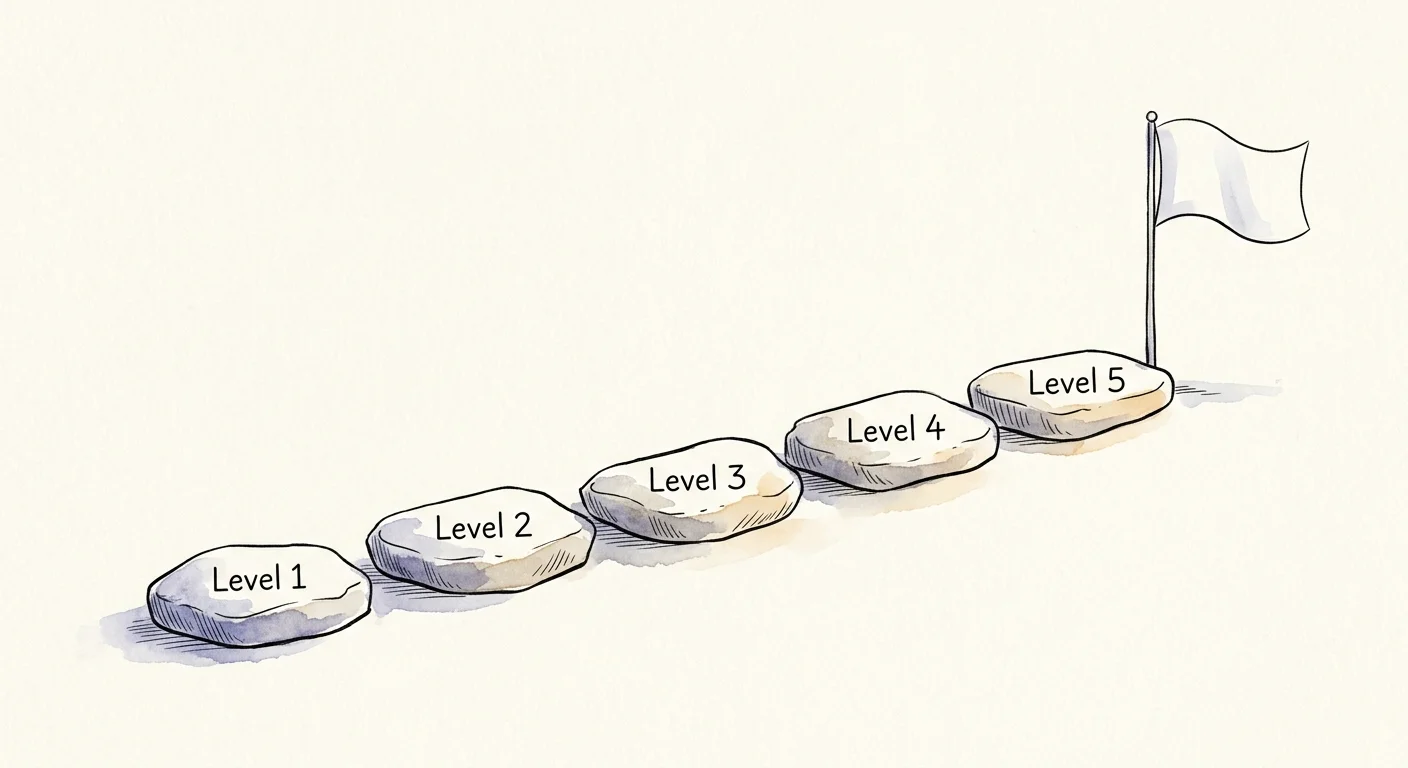
If your overpayment stems from a denied medical claim, procedure, or hospital service, federal law grants you five distinct levels of administrative appeal. You must move through these levels sequentially; you cannot skip a step.
Level 1: Redetermination by a Medicare Administrative Contractor (MAC)
File your written request within 120 calendar days of receiving the initial notice using Form CMS-20027 or by following the instructions on your Medicare Summary Notice. Submit medical records, supporting clinical notes from your physician, and a detailed letter explaining why the service was medically necessary. The MAC generally issues a decision within 60 days.
Level 2: Reconsideration by a Qualified Independent Contractor (QIC)
If the MAC denies your Level 1 appeal, you have 180 calendar days from receiving the denial to file for Level 2 Reconsideration. An independent panel of healthcare professionals and medical coders reviews your file. The QIC must render a decision within 60 days.
Level 3: Hearing by the Office of Medicare Hearings and Appeals (OMHA)
If you disagree with the QIC decision, you can request a formal hearing before an Administrative Law Judge (ALJ). You must file this request within 60 calendar days of receiving the Level 2 denial. For calendar year 2026, your disputed claim must meet a minimum Amount in Controversy (AIC) threshold of $200. An ALJ hearing offers an opportunity to present live testimony via telephone or video conference alongside your healthcare providers.
Level 4: Review by the Medicare Appeals Council
If the Administrative Law Judge rules against you, submit a written appeal to the Medicare Appeals Council within 60 calendar days. The Council evaluates whether the ALJ applied the law and clinical guidelines correctly.
Level 5: Judicial Review in Federal District Court
The final appeal stage involves filing an action in U.S. Federal District Court within 60 calendar days of the Medicare Appeals Council’s decision. To qualify for federal judicial review in 2026, the disputed claim must meet an Amount in Controversy threshold of $1,960.
Summary of Medicare Claim Appeal Levels
| Appeal Level | Reviewing Entity | Filing Deadline | 2026 Special Requirements |
|---|---|---|---|
| Level 1 | Medicare Administrative Contractor (MAC) | 120 days from notice date | File within 30–40 days to stop financial recoupment. |
| Level 2 | Qualified Independent Contractor (QIC) | 180 days from Level 1 decision | Independent medical review panel evaluates documentation. |
| Level 3 | Administrative Law Judge (ALJ) | 60 days from Level 2 decision | Requires minimum $200 Amount in Controversy threshold. |
| Level 4 | Medicare Appeals Council | 60 days from Level 3 decision | Formal legal review of ALJ administrative record. |
| Level 5 | U.S. Federal District Court | 60 days from Level 4 decision | Requires minimum $1,960 Amount in Controversy threshold. |

How to Address Social Security Medicare Overpayment Demands
When the Social Security Administration issues an overpayment notice regarding retroactively calculated Medicare premiums or benefit disbursements, you have rights that extend far beyond simply paying the bill. You can dispute the accuracy of the claim, ask the government to waive the debt entirely, or adjust the monthly payment schedule to protect your household budget.
Understanding the 50% Withholding Cap
Historically, when Social Security identified an overpayment, the agency routinely withheld 100% of a beneficiary’s monthly check until recovering the full balance—leaving retirees without basic living income. Under current policy rules implemented for notices issued on or after April 25, 2025, Social Security defaults to withholding a maximum of 50% of your monthly benefit check. While losing half of your check remains challenging, this default cap prevents total cash-flow elimination and grants you immediate leverage to request further reductions.
Utilizing the $2,000 Fast-Track Waiver Streamlining
If your total overpayment balance equals $2,000 or less, you may qualify for expedited processing. Under streamlined waiver procedures, if you were not at fault for the overpayment, you can call Social Security at 1-800-772-1213 and request an immediate verbal waiver. You do not need to fill out exhaustive personal financial disclosure statements on Form SSA-632-BK if the balance falls under this $2,000 threshold and your verbal statement confirms that repayment causes hardship.
Option A: Disputing the Claim (Form SSA-561-U2)
If you believe Social Security calculated your Medicare premiums incorrectly, misapplied IRMAA tiers, or charged you for an error made by a government agent, file **Form SSA-561-U2 (Request for Reconsideration)**. Submit this form within 60 calendar days of receiving the notice. If you submit it within 30 days, Social Security cannot reduce your monthly checks while evaluating your request.
Option B: Requesting a Debt Waiver (Form SSA-632-BK)
If you agree that an overpayment occurred, but you believe you should not have to pay it back, file **Form SSA-632-BK (Request for Waiver of Overpayment Recovery)**. To qualify for a complete waiver, you must establish two specific legal conditions:
- You were without fault: You did not intentionally provide false information, withhold material facts, or accept payments you knew were incorrect.
- Repayment causes financial hardship or violates equity: Paying back the money would prevent you from covering ordinary and necessary living expenses—such as housing, food, utilities, and prescription drugs—or would be unfair for other compelling reasons.
You can file Form SSA-632-BK at any time, even months or years after repayment begins. However, submitting it within 30 days of your initial notice freezes check reductions immediately.
Option C: Renegotiating Monthly Deductions (Form SSA-634)
If you do not qualify for a waiver but the default 50% check withholding strains your monthly cash flow, submit **Form SSA-634 (Request for Change in Overpayment Recovery Rate)**. Use this form to propose a much lower monthly payment—such as $10 or $25 per month. Social Security routinely approves extended repayment plans lasting up to 36 months or longer when you demonstrate that higher withholding impairs your daily living budget.
“It’s not how much money you make, but how much money you keep, how hard it works for you, and how many generations you keep it for.” — Robert Kiyosaki
Don’t Make These Mistakes
Handling an overpayment notice requires methodical record-keeping and strategic communication. Avoid these frequent missteps that routinely cost retirees thousands of dollars:
- Ignoring the letter: Ignoring an overpayment notice does not make it go away. Once the 30-day and 60-day response windows close, Social Security will automatically reduce your monthly checks, or Medicare will transfer your debt to the U.S. Department of the Treasury for aggressive collection actions, including tax refund offsets.
- Paying immediately out of panic: Never draft a check or approve a automatic bank transfer without first auditing the underlying claim. Many overpayment notices result from simple physician billing errors or temporary administrative processing backlogs that clear up upon review.
- Failing to document telephone conversations: Whenever you speak with a representative from Medicare, Social Security, or a health network, record the agent’s name, employee ID number, date, time, and exact summary of the conversation in a dedicated notebook. Follow up every verbal agreement with written confirmation.
- Mailing original documents: Always submit clear photocopies of your medical bills, financial records, and appeal forms. Send all physical paperwork using Certified Mail with Return Receipt Requested so you hold proof of the exact delivery date.

When Professional Advice Is Worth It
Navigating multi-layered government bureaucracies can feel overwhelming, especially when recovering from medical treatments. Knowing where to find free or low-cost expert guidance ensures you do not face these agencies alone.
Consider reaching out to these professional resources:
- State Health Insurance Assistance Program (SHIP): SHIP provides free, unbiased, one-on-one counseling to Medicare beneficiaries and their families. Local SHIP counselors specialize in untangling complex billing errors, guiding you through the 5-level appeal process, and organizing paperwork. Find your local program via the Eldercare Locator.
- National Area Agencies on Aging (AAA): Local aging agencies offer legal assistance programs tailored to seniors living on fixed incomes, helping you challenge improper debt collection or file financial hardship waivers.
- Elder Law Attorneys: If your overpayment demand involves large sums (exceeding $10,000), complex trust assets, or Medicaid estate recovery issues, consulting a qualified elder law attorney protects your financial assets and legal rights.
- Nonprofit Senior Advocacy Groups: Organizations like the National Council on Aging offer extensive tools and administrative guidance to help retirees navigate benefit disputes safely.
Frequently Asked Questions
Can Social Security take my entire monthly retirement check to recover a Medicare overpayment?
No. Under rules implemented for notices issued on or after April 25, 2025, Social Security caps default benefit withholding at 50% of your monthly check for overpayment recovery. Furthermore, you can request an even lower withholding rate down to $10 per month by submitting Form SSA-634 with proof of your monthly household expenses.
What happens if my doctor made the billing mistake that caused the overpayment?
If your doctor or hospital submitted incorrect billing codes or failed to attach required medical documentation, contact the provider’s billing department immediately. Request that they resubmit a corrected claim to Medicare. Simultaneously, file a Level 1 Redetermination appeal with Medicare noting that the provider is submitting corrected billing paperwork, which protects your legal appeal rights while the office fixes its mistake.
How does the fast-track overpayment waiver work for small balances?
If your total overpayment debt is $2,000 or less and you were not at fault for the error, Social Security offers a streamlined verbal waiver process. Call 1-800-772-1213 to speak with a representative. If you confirm over the phone that repaying the money causes financial hardship, the agent can approve your waiver immediately without requiring you to fill out Form SSA-632-BK.
What is the Amount in Controversy threshold for an Administrative Law Judge hearing in 2026?
Effective January 1, 2026, the minimum Amount in Controversy (AIC) required to appeal a denied Medicare claim to Level 3 (an Administrative Law Judge hearing) is $200. If your single claim does not meet $200, you can combine multiple claims that share similar legal or medical issues to satisfy the threshold.
Next Steps to Protect Your Income
Receiving a Medicare overpayment notice feels intimidating, but federal law provides robust consumer protections, strict procedural limits, and accessible waiver pathways. Take immediate action by identifying the source of the notice, marking your 30-day and 60-day deadlines on your calendar, and selecting the appropriate appeal or waiver form. By asserting your rights promptly, you can pause automated check deductions, challenge administrative mistakes, and keep your retirement security fully intact.
Information in this article reflects current rules as of the publication date and may change. Always confirm benefit details directly with Social Security Administration, Medicare.gov, or relevant government agencies before making decisions.
Last updated: February 2026. Medicare and Social Security rules change annually—always verify current details at official government sources.