Finding the perfect place to retire often means looking past the usual coastal hotspots to discover communities that actually stretch your fixed income while elevating your lifestyle. Many of the best retirement cities in the USA fly under the radar, offering world-class healthcare, vibrant cultural scenes, and affordable housing without the suffocating crowds of traditional snowbird destinations. When you expand your search criteria, you unlock surprising retirement destinations that deliver unexpected benefits, from tax-friendly policies to walkable downtowns. Relocating requires careful evaluation of healthcare access, cost of living, and social opportunities. Rather than following the herd to overcrowded retirement meccas, exploring these eight hidden gems can help you build a richer, more engaging next chapter.

Redefining the Ideal Retirement Destination
For decades, retiree relocation ideas centered on a narrow strip of beaches in Florida or golf courses in Arizona. Today, retirees prioritize different factors. You want walkability, robust medical infrastructure, opportunities for lifelong learning, and a cost of living that insulates your nest egg against inflation. You want a town that feels alive year-round, not a seasonal enclave that empties out in the summer.
“Don’t simply retire from something; have something to retire to.” — Harry Emerson Fosdick
Fosdick’s principle lies at the heart of a successful relocation. You are not just escaping high property taxes or shoveling snow; you are actively choosing a new community to engage with. The following eight cities consistently surprise newcomers by offering exceptional quality of life, strong economic fundamentals, and unique local character.

1. Greenville, South Carolina: The Upstate Oasis
Nestled in the foothills of the Blue Ridge Mountains, Greenville has transformed its downtown into a masterclass in urban planning. The centerpiece is Falls Park on the Reedy, a stunning green space featuring a natural waterfall right in the middle of the city, spanned by a pedestrian suspension bridge. Newcomers are routinely surprised by the sophistication of Greenville’s culinary scene, which rivals cities three times its size.
Beyond the aesthetics, Greenville offers practical benefits for retirees. The cost of living sits below the national average, and South Carolina offers generous tax breaks for seniors, including a full exemption on Social Security benefits and significant deductions for other retirement income. Healthcare is anchored by the Prisma Health system, providing comprehensive geriatric and specialized care. For intellectual stimulation, the Osher Lifelong Learning Institute (OLLI) at nearby Furman University boasts one of the most active senior learning communities in the country.

2. Huntsville, Alabama: The Rocket City
When you think of Alabama, high-tech aerospace engineering might not be the first thing that comes to mind. Yet Huntsville boasts one of the highest concentrations of engineers in the nation, thanks to the Redstone Arsenal and NASA’s Marshall Space Flight Center. This intellectual capital translates into a highly educated, diverse community with amenities you would typically only find in major metropolitan areas.
Huntsville is an exceptionally practical choice. Property taxes in Alabama are among the lowest in the United States, and the state does not tax Social Security benefits. The local economy is booming, which means the city continuously invests in infrastructure, parks, and the arts. Huntsville Hospital anchors the region’s medical care, offering top-tier cardiac and neurological departments. Retirees who visit are often stunned by the blend of Southern hospitality, affordable housing, and cutting-edge culture.

3. Ann Arbor, Michigan: The Intellectual Hub
Recommending a Midwestern city with real winters as a retirement destination might raise eyebrows, but Ann Arbor proves that a great retirement is about more than just sunshine. This classic college town provides an unmatched blend of culture, walkability, and world-class healthcare that makes enduring a few snowy months well worth the trade-off.
The primary draw for retirees is the University of Michigan. Beyond the infectious energy of college athletics and the thriving arts scene, the university houses Michigan Medicine—consistently ranked as one of the best hospital systems in the country. For older adults navigating complex health issues, having elite medical care minutes from home provides profound peace of mind. Furthermore, Ann Arbor’s downtown is highly walkable, featuring independent bookstores, renowned restaurants, and an extensive parks system. If you value intellectual engagement and four distinct seasons, Ann Arbor is a premier choice.

4. Roanoke, Virginia: The Blue Ridge Secret
Often bypassed in favor of Asheville or Charlottesville, Roanoke is a mountain city that delivers spectacular natural beauty at a fraction of the cost. Located in the Roanoke Valley and surrounded by the Blue Ridge Mountains, it serves as a regional hub for southwest Virginia. The iconic Roanoke Star overlooks a valley that features a vibrant, historic downtown market and miles of paved greenways.
The biggest surprise for newcomers is the scale of Roanoke’s medical infrastructure. The Carilion Clinic system transformed Roanoke from an old railroad town into a modern healthcare hub, establishing a medical school and research institute that draw top specialists to the area. Living in Roanoke gives you the charm of a mountain retreat with the medical security of a major city. Additionally, an Amtrak connection runs directly from downtown Roanoke to Washington, D.C., making it incredibly easy to travel or host visiting family.

5. Tulsa, Oklahoma: The Art Deco Bargain
Tulsa often shocks first-time visitors. Funded by the oil booms of the early 20th century, the city features one of the most impressive collections of Art Deco architecture in the nation. Today, it stands out as one of the most affordable mid-sized cities in America, allowing your retirement income to stretch incredibly far.
Tulsa has heavily invested in its public spaces. The Gathering Place is a staggering 100-acre riverfront park that has won numerous national awards, providing endless walking paths, gardens, and community events. Healthcare is anchored by the Ascension St. John and Saint Francis health systems. For retirees looking to right-size their housing budget without sacrificing arts, culture, or community amenities, Tulsa is an exceptional, under-the-radar option.

6. Las Cruces, New Mexico: The High Desert Haven
While Santa Fe captures the luxury retirement market, Las Cruces quietly offers the stunning landscapes and rich culture of New Mexico at a highly accessible price point. Situated in the Mesilla Valley with the jagged Organ Mountains serving as a dramatic backdrop, Las Cruces boasts more than 300 days of sunshine a year.
As the home of New Mexico State University, the city enjoys college-town perks, including collegiate sports, theater, and continuing education. Recent changes to New Mexico tax law have also made the state more friendly for retirees, exempting Social Security income for most middle-income earners. The pace of life here is relaxed, the winters are mild, and the local cuisine is legendary. Memorial Medical Center and MountainView Regional Medical Center provide solid local healthcare, while El Paso, Texas, is less than an hour away for major airport access and specialized medical needs.

7. Spokane, Washington: The Pacific Northwest Value
If you love the mountains, lakes, and pine forests of the Pacific Northwest but cannot stomach the cost of living in Seattle or Portland, Spokane is your answer. Located in eastern Washington, Spokane experiences four distinct seasons, receiving more sunshine and less rain than its coastal counterparts.
A major financial draw is Washington’s lack of a state income tax, which can save retirees thousands of dollars annually on pension and IRA withdrawals. The city is bisected by the Spokane River, which tumbles through downtown in a spectacular series of falls. Riverfront Park and Manito Park offer gorgeous landscapes for daily walks. More importantly, Spokane serves as the medical hub for the inland Northwest, with Providence Sacred Heart Medical Center offering comprehensive, high-level care that you would rarely find in a city of this size.

8. Winston-Salem, North Carolina: The Innovation Capital
Part of North Carolina’s Piedmont Triad, Winston-Salem beautifully balances historic charm with modern innovation. The city has aggressively transformed its old tobacco and textile warehouses into the Innovation Quarter—a thriving district of medical research, tech companies, and loft apartments.
For retirees, the presence of Wake Forest University and Atrium Health Wake Forest Baptist means you have access to a massive, leading-edge medical center right in your backyard. The cost of living remains surprisingly low compared to the explosive housing markets of Raleigh, Durham, or Charlotte. You can spend your weekends exploring the living history of Old Salem, wandering through local art galleries, or taking a short drive to the nearby Yadkin Valley wine country.
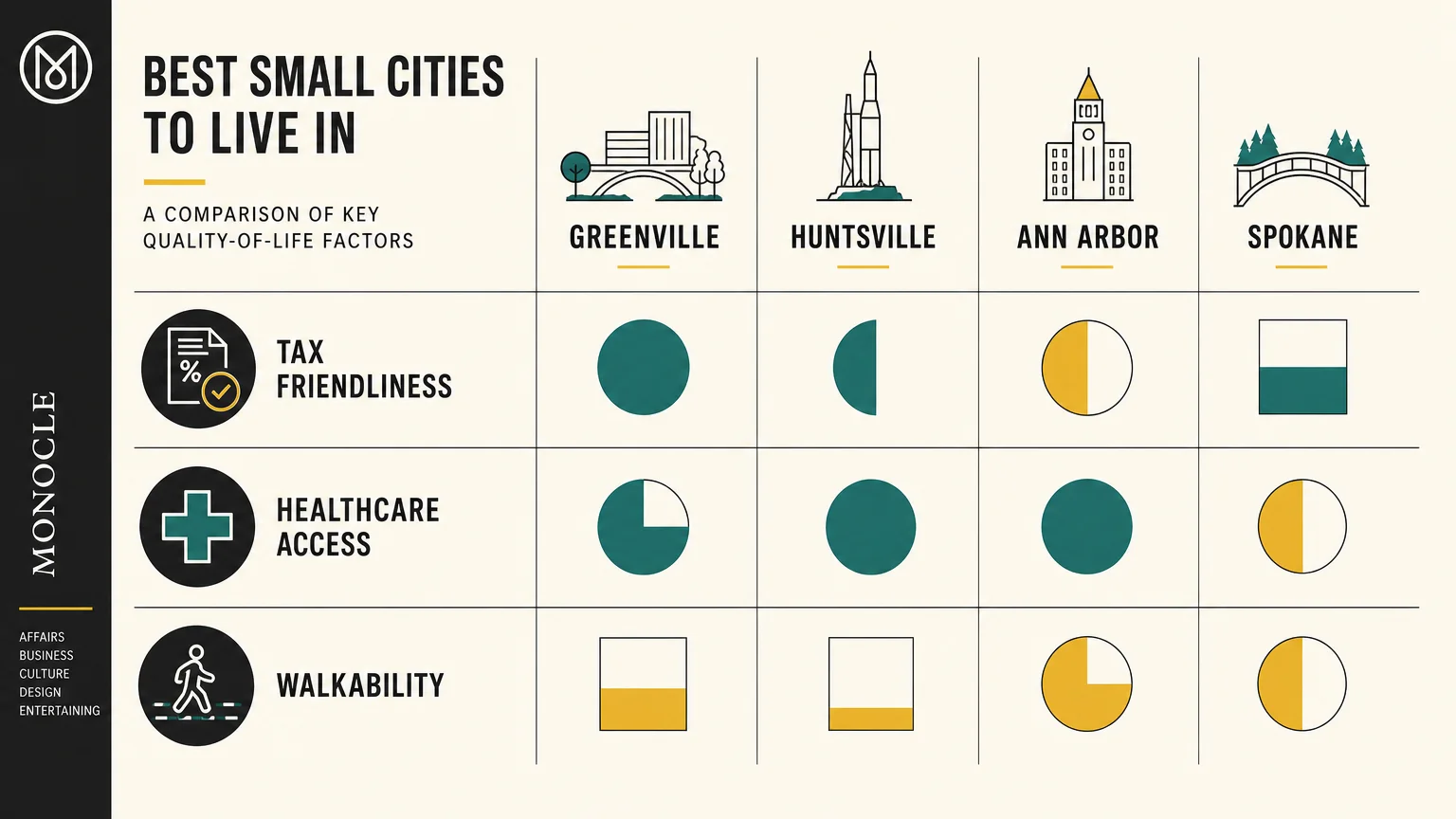
At-a-Glance: Comparing Your Relocation Options
When weighing places to retire, comparing the financial and practical realities of different cities helps narrow down your list. Below is a high-level comparison of our eight surprising retirement destinations.
| City & State | State Taxes Social Security? | Overall Vibe | Dominant Healthcare System |
|---|---|---|---|
| Greenville, SC | No | Upscale Southern, Foodie, Walkable | Prisma Health |
| Huntsville, AL | No | Brainy, Booming, Tech-Forward | Huntsville Hospital System |
| Ann Arbor, MI | No (State exempts SS) | Collegiate, Cultural, Four Seasons | Michigan Medicine |
| Roanoke, VA | No | Mountain Charm, Historic, Outdoorsy | Carilion Clinic |
| Tulsa, OK | No | Art Deco, Affordable, Arts-focused | Saint Francis / Ascension |
| Las Cruces, NM | Exempt for most mid-incomes | High Desert, Relaxed, Sunny | Memorial Medical Center |
| Spokane, WA | No (No state income tax) | Riverfront, Nature-centric, 4 Seasons | Providence Sacred Heart |
| Winston-Salem, NC | No | Historic, Innovative, Academic | Atrium Health Wake Forest Baptist |
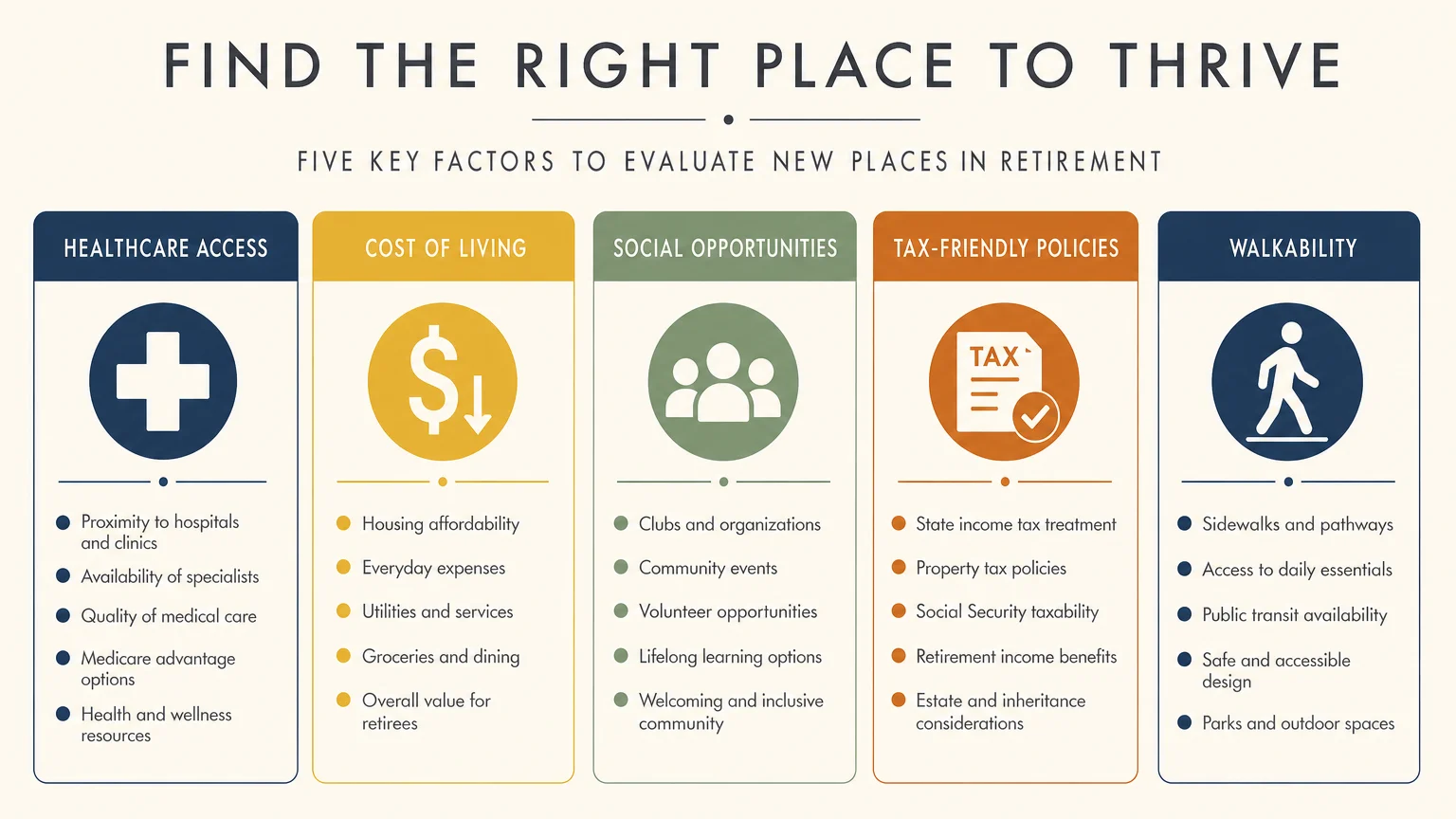
What to Evaluate Before You Pack Your Bags
A city might look perfect on paper, but a successful relocation requires boots-on-the-ground research. Before you commit to moving your life across state lines, systematically evaluate these key factors:
- Healthcare Network Continuity: Do not assume your current Medicare Advantage or Part D plan will travel with you. Moving out of your plan’s service area usually triggers a Special Enrollment Period, requiring you to select a new plan. Verify that your preferred new doctors accept the plans available in that specific zip code.
- Tax Treatment of All Income: A state might not tax Social Security, but how do they treat 401(k) withdrawals, military pensions, or capital gains? Look at your total tax burden, including local property taxes and sales taxes, to get the true picture of affordability.
- Airport Proximity: If you plan to travel frequently or want family to visit, calculate the real drive time to a major airport. A two-hour drive to a hub can quickly become a barrier to maintaining family connections.
- Aging in Place Infrastructure: Look beyond your current mobility level. Does the city have reliable public transit, robust senior services, and single-story housing stock? Resources like the AARP Livability Index can help you measure a community’s long-term viability for aging. Find more tools for evaluating senior community support at AARP.
- Climate Reality Checks: Spend time in your target city during its worst season. Visit the Southwest in August, or the Midwest in February. You need to know if the extreme months will trap you indoors.

Common Relocation Traps to Avoid
Relocating for retirement is a major life transition, and even careful planners can stumble into a few common pitfalls.
The Vacation Goggles Trap
It is easy to fall in love with a city when you are staying in a hotel and eating out every night. Living somewhere full-time is entirely different. Before buying property, rent for three to six months in your target city. Shop at the local grocery stores, navigate the rush hour traffic, and see how easy it is to book a routine doctor’s appointment.
The Healthcare Geography Trap
If you rely on original Medicare (Parts A and B) paired with a Medigap policy, you can see any doctor in the country who accepts Medicare. However, if you use a Medicare Advantage plan, your coverage is tied to local county networks. Moving to a new city often means losing your current coverage network. You must proactively use tools like the Medicare Plan Finder to ensure the new city has strong, affordable plan options that cover your necessary medications.
The Social Isolation Trap
Leaving behind a lifetime of friends and community connections is jarring. When evaluating retirement cities, aggressively research the social infrastructure. Are there active volunteer organizations? Does the local university allow seniors to audit classes? You must treat building a new social network with the same urgency you treat finding a new dentist.

When to Consult a Professional Before Moving
Moving across state lines in retirement involves complex moving parts that affect your taxes, estate plan, and healthcare. Consider building a team to ensure a smooth transition.
First, consult a tax professional or financial advisor to run a detailed tax projection. A state with low property taxes might make up for it with high sales taxes or taxes on your specific type of pension.
Second, update your estate plan. Wills, trusts, and advance healthcare directives are governed by state law. A power of attorney drafted in Illinois might cause administrative headaches for your family if you are living in South Carolina. Have an elder law attorney in your new state review your documents.
Finally, utilize free state resources. Before moving, look up the local Area Agency on Aging in your destination city using the Eldercare Locator. They can provide unbiased insight into local transportation, in-home care availability, and community support programs that you might need in the future.
Frequently Asked Questions About Retiring Out of State
Does moving to a new state affect my Social Security benefits?
No, moving to a different state does not change the gross amount of your federal Social Security benefit. However, the net amount you keep could change depending on how your new state taxes Social Security income. Always check the current tax laws of your destination state.
Do I have to notify Medicare if I move?
Yes. While original Medicare travels with you nationwide, you must update your address with the Social Security Administration, which manages Medicare enrollment. If you have a Medicare Advantage or Part D prescription drug plan, moving out of your current plan’s service area gives you a two-month Special Enrollment Period to switch to a plan in your new zip code.
What is the best way to test out a retirement city?
The most practical approach is the “snowbird” or short-term rental method. Rent a furnished apartment or home in the prospective city for at least a month during its least desirable season. Use this time to do everyday chores—go to the DMV, visit local clinics, and navigate the neighborhoods away from the tourist centers.
Making Your Next Move
Choosing your retirement destination is an opportunity to design the exact lifestyle you want for your next chapter. The cities on this list prove that you do not have to sacrifice excellent healthcare or vibrant culture to find an affordable, engaging place to live. Take the time to look beyond the obvious choices, run the financial numbers carefully, and prioritize the community elements that will keep you active and connected.
If you are serious about exploring new areas, start by picking two cities from this list that match your climate preferences and plan a two-week exploratory trip. For more guidance on organizing your finances ahead of a major move, explore the official tools at USA.gov Retirement Resources to ensure your federal benefits remain secure during your transition.
This article is for informational purposes only and does not constitute financial, legal, or medical advice. Medicare rules, Social Security benefits, and tax laws change regularly—verify current details at Medicare.gov, SSA.gov, or with a licensed professional.
Last updated: June 2026. Medicare and Social Security rules change annually—always verify current details at official government sources.