Mistake 3: Triggering the Earnings Test and Tax Traps
Retirement is no longer a hard stop at age 65. Many Americans transition into consulting, part-time work, or gig economy roles. A shocking number of early claimants discover too late that working while drawing Social Security before Full Retirement Age carries severe financial penalties.
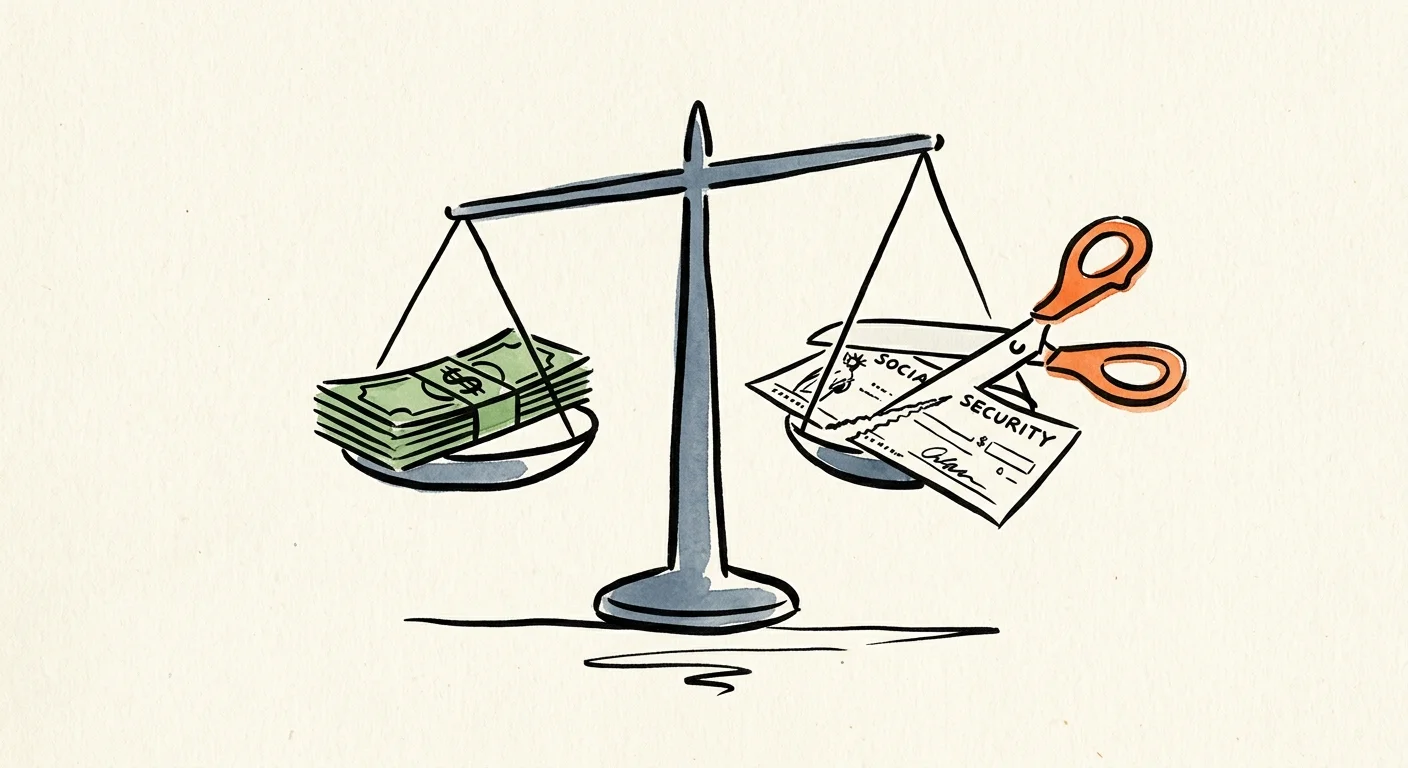
If you claim benefits before your FRA and continue to work, you will run into the Retirement Earnings Test. The SSA sets an annual earnings limit. If your earned income exceeds this threshold, the government withholds $1 in benefits for every $2 you earn above the limit. In the year you reach FRA, the rules are slightly more lenient, withholding $1 for every $3 earned, up to the month your birthday occurs. Once you reach Full Retirement Age, the earnings test disappears entirely, and you can earn millions without a single dime being withheld from your Social Security check.
The withheld money is not gone forever—the SSA recalculates your benefit once you reach FRA to account for the withheld months, slightly increasing your future checks. However, retirees relying on that immediate cash flow are often blindsided when their monthly deposits suddenly stop.
Beyond the earnings test, retirees frequently stumble into the “tax torpedo.” Social Security benefits are subject to federal income tax based on a formula called “provisional income.” To calculate your provisional income, add the following together:
- Your Adjusted Gross Income (AGI), which includes wages, pensions, and traditional IRA withdrawals
- Any non-taxable interest (such as municipal bond interest)
- 50% of your Social Security benefits
If your provisional income exceeds certain IRS thresholds, up to 85% of your Social Security benefits become taxable. Retirees who pull large sums from traditional 401(k)s or sell significant assets often inflate their provisional income, unexpectedly forcing their Social Security benefits into a taxable bracket. Careful tax planning—such as utilizing Roth IRA conversions in your early 60s—can help mitigate this burden.