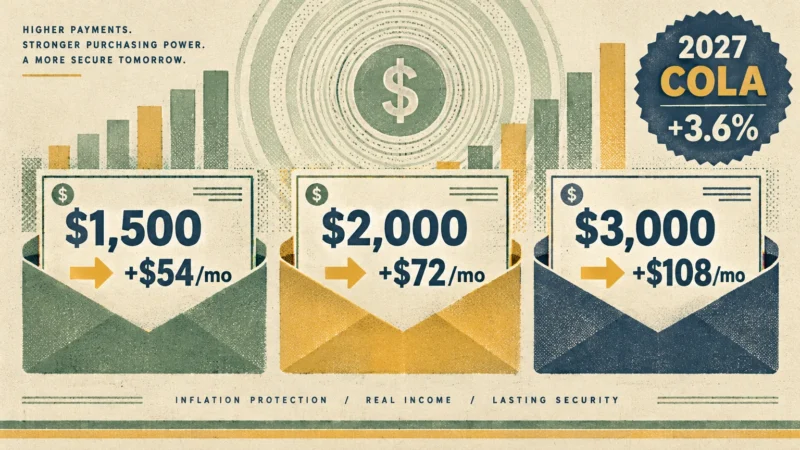
A monthly income of $3,000 gives you an annual retirement budget of $36,000. In some parts of America, that check delivers a comfortable lifestyle with money to spare; in others, it barely covers rent.
The average Social Security check pays roughly $1,976 to $2,033 per month. Bridging the gap to $3,000 with modest personal savings changes your geographic options dramatically.
We analyzed local housing, healthcare, groceries, and taxes across ten diverse states. Here is exactly what your money buys when you cross state borders.

The Bottom Line Up Front
Location dictates your purchasing power more than any investment return. The same fixed revenue creates financial freedom in one region and genuine hardship in another.
- To retire on $3000 a month, prioritize states with housing costs under $1,000 per month.
- The cheapest states to retire leave up to $800 each month for leisure, travel, and unexpected healthcare.
- High-cost coastal states create immediate monthly deficits of $500 to $700 on a $36,000 annual income.
- Fixed medical costs, like Medicare Part B, consume identical dollar amounts nationwide regardless of where you live.
Fixed Costs First: Setting the $3,000 Baseline
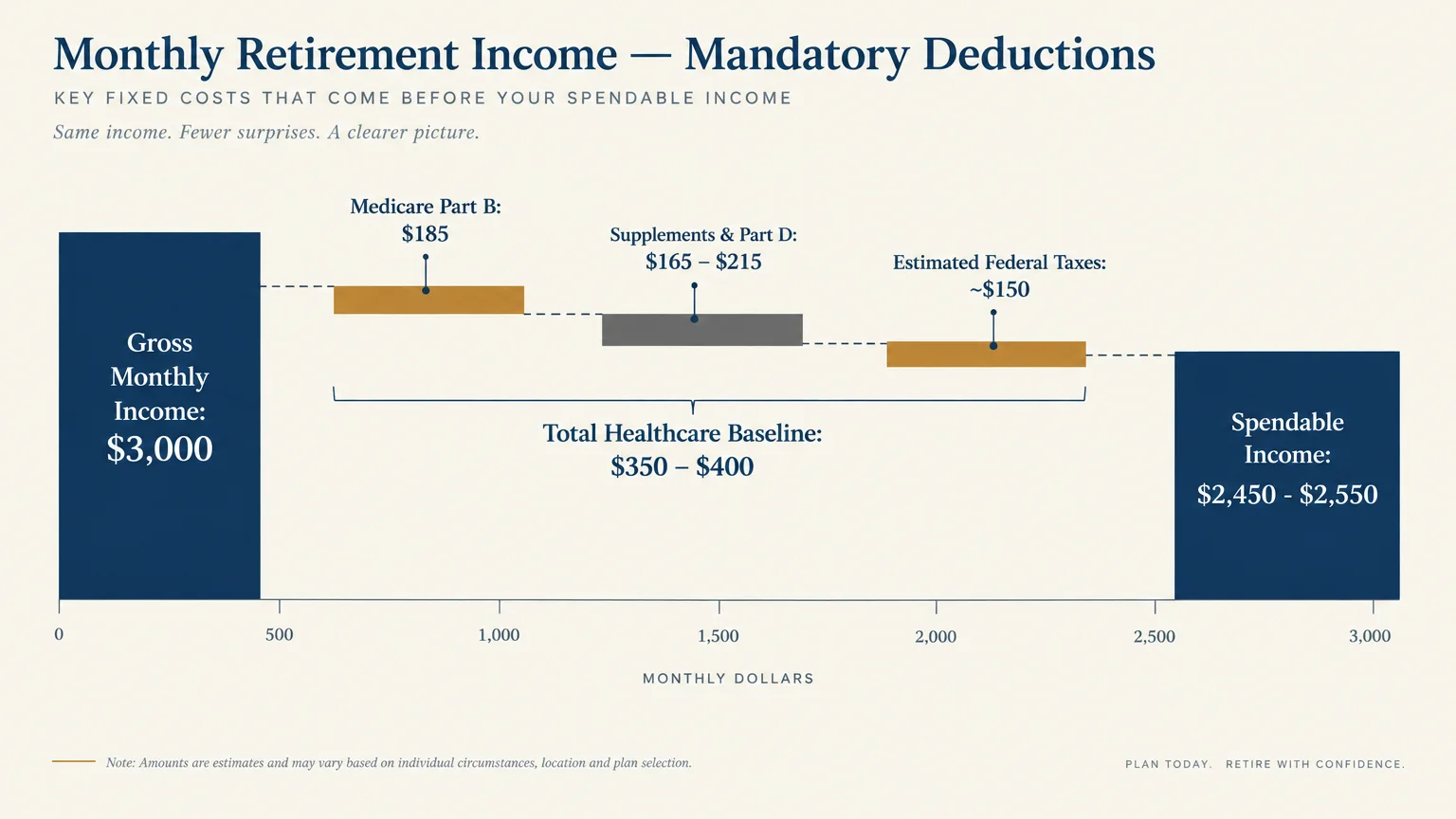
Before allocating money for rent or dining, non-negotiable federal expenses claim a share of your paycheck. Every retiree must account for healthcare and baseline federal income taxes.
The standard Medicare Part B premium equals $185 per month. That single line item consumes 6.2% of your entire gross budget.
Supplemental Medigap or Medicare Advantage plans, along with Part D drug coverage, typically add another $150 to $200 per month. You should expect basic healthcare to claim around $350 to $400 monthly.
At $36,000 per year, a single filer sits well below high-income surcharges. However, your combined income will likely subject 50% of your Social Security benefits to federal taxation.
After modest federal taxes and medical premiums, you have approximately $2,450 to $2,550 in spendable income. How that sum performs depends entirely on your chosen address.
“It’s not how much money you make, but how much money you keep, how hard it works for you, and how many generations you keep it for.” — Robert Kiyosaki

10 State Retirement Budgets Examined Side by Side
We evaluated ten states representing low-cost, moderate, and high-cost regions. Each scenario assumes an independent retiree renting a modest one-bedroom apartment.
1. Mississippi: Maximum Purchasing Power
Mississippi offers the lowest overall cost of living in the country. Your dollar stretches further here than anywhere else in the nation.
A comfortable one-bedroom apartment rents for roughly $780 per month. Groceries run 8% below the national baseline, leaving significant room in your checking account.
Estimated monthly allocation:
- Housing and basic utilities: $1,000
- Healthcare premiums and out-of-pocket costs: $385
- Food and everyday groceries: $380
- Local transportation: $350
- Taxes and miscellaneous fees: $80
- Remaining discretionary buffer: $805
A $3,000 budget provides genuine comfort in Mississippi. You can dine out weekly, maintain a reliable vehicle, and build your emergency savings.
2. West Virginia: Low-Cost Mountain Living
West Virginia ranks among the most affordable places to retire. Housing costs remain remarkably stable across smaller communities and mountain towns.
Rent averages $750 per month for a modest independent unit. The state also completed its phase-out of income taxes on Social Security benefits.
Estimated monthly allocation:
- Housing and basic utilities: $980
- Healthcare and prescriptions: $400
- Groceries: $370
- Transportation and maintenance: $340
- State and local fees: $60
- Remaining discretionary buffer: $850
Retirees enjoy a substantial safety cushion here. The $850 surplus protects you against sudden dental bills or auto repairs.
3. Arkansas: Budget-Friendly Natural Beauty
Arkansas combines scenic outdoor access with low property assessments and minimal consumer prices. The statewide cost index sits nearly 12% below the national average.
You can secure decent rental housing for $790 per month in cities like Fort Smith or Jonesboro. Utility costs stay low, though summer cooling bills require careful planning.
Estimated monthly allocation:
- Housing and cooling utilities: $1,000
- Medical care: $380
- Groceries: $360
- Auto insurance and fuel: $360
- Taxes: $90
- Remaining discretionary buffer: $810
This financial profile allows retirees to travel regionally and pursue hobbies without financial strain. It represents one of the strongest retirement budget by state options available.
4. Ohio: Affordable Healthcare and Mid-Sized Cities
Ohio demonstrates that the Midwest remains practical for retirees on fixed pensions. The state offers premier medical networks alongside reasonable rental rates.
Apartments in suburbs outside Columbus, Cleveland, or Dayton rent for around $920 monthly. Access to top-tier hospital systems provides outstanding value for aging adults.
Estimated monthly allocation:
- Housing and heating utilities: $1,160
- Healthcare and supplemental coverage: $390
- Groceries: $390
- Vehicle expenses: $370
- State and municipal taxes: $110
- Remaining discretionary buffer: $580
You maintain a healthy $580 monthly safety net. That balance easily supports modest entertainment and seasonal family visits.
5. Pennsylvania: Tax-Exempt Retirement Income
Pennsylvania exempts all public and private pensions from state income tax. It also excludes Social Security distributions from state-level levies.
Housing runs slightly higher, averaging $1,050 for a clean apartment outside major urban cores. High local grocery competition helps balance food expenses.
Estimated monthly allocation:
- Housing and utilities: $1,300
- Healthcare expenses: $410
- Food: $410
- Transportation: $380
- Local taxes: $80
- Remaining discretionary buffer: $420
A $420 monthly surplus keeps your finances balanced. You must manage heating bills carefully during cold Appalachian winters.
“The goal of retirement is to live off your assets—not live off your regrets.”
6. Florida: Sunbelt Living on the Margin
Many retirees dream of Florida, but rising property insurance and rent have shifted the math. Florida levies no personal income tax, yet everyday living expenses continue climbing.
Modest rentals now average $1,350 across central and northern counties. Coastal communities run significantly higher, pushing independent retirees inland.
Estimated monthly allocation:
- Housing and electricity: $1,620
- Healthcare and drug costs: $400
- Groceries: $440
- Transportation and auto insurance: $390
- Sales taxes and local surcharges: $50
- Remaining discretionary buffer: $100
A $100 buffer leaves no margin for error. A single unexpected auto repair could force you into high-interest credit card debt.
7. Texas: Zero Income Tax with High Sales Levies
Texas does not tax personal income, which appeals to seniors protecting fixed distributions. However, higher sales taxes and steep electric cooling bills alter the equation.
A one-bedroom apartment in cities like San Antonio or Wichita Falls averages $1,280 per month. Summer air conditioning demands an extra $100 to $150 each billing cycle.
Estimated monthly allocation:
- Housing and electric utilities: $1,570
- Healthcare costs: $410
- Food and household items: $420
- Driving expenses: $400
- Taxes: $60
- Remaining discretionary buffer: $140
You can survive on $3,000 per month in Texas, but your budget remains tight. You must monitor vehicle miles and utility meters constantly.
8. Arizona: Desert Sun on a Disciplined Budget
Arizona remains a staple for retirees escaping freezing northern weather. However, metropolitan Phoenix has grown considerably more expensive over the last five years.
Finding a secure rental below $1,320 requires looking at outer communities like Tucson, Green Valley, or Yuma. Water and electricity rates also demand a line in your ledger.
Estimated monthly allocation:
- Housing and summer utilities: $1,600
- Medical care: $390
- Groceries: $430
- Transportation: $380
- State taxes: $90
- Remaining discretionary buffer: $110
The $110 monthly cushion requires disciplined habits. Leisure travel or costly dining will quickly exhaust your funds.
9. California: The Coastal Cost Squeeze
California presents massive hurdles for anyone trying to retire on $3,000 monthly. The overall cost of retirement by state indexes rank California near the top for expenses.
Median rents for a small apartment routinely top $1,950, even in inland valleys. Gasoline, state sales taxes, and grocery markups immediately overwhelm a $36,000 annual income.
Estimated monthly allocation:
- Housing and utilities: $2,260
- Healthcare: $420
- Groceries: $490
- Transportation and fuel: $420
- Taxes and regulatory fees: $110
- Monthly budget balance: -$700
You face an immediate $700 deficit every month. Living independently in California on this revenue requires subsidized senior housing or family assistance.
10. New York: Urban Pressures and Heavy Levies
New York creates similar budget stress, particularly downstate and across Long Island. Even upstate cities like Rochester or Syracuse feature elevated property taxes that inflate rental prices.
An entry-level apartment averages $1,850 per month across most accessible areas. Heating fuel during long winters adds hundreds of dollars in seasonal overhead.
Estimated monthly allocation:
- Housing and winter heating: $2,170
- Medical copays and coverage: $430
- Groceries: $480
- Transit or vehicle upkeep: $350
- Taxes: $120
- Monthly budget balance: -$550
The numbers produce an unsustainable $550 monthly loss. A $3,000 budget cannot support independent living in New York without outside support.
State-by-State Budget Comparison Table
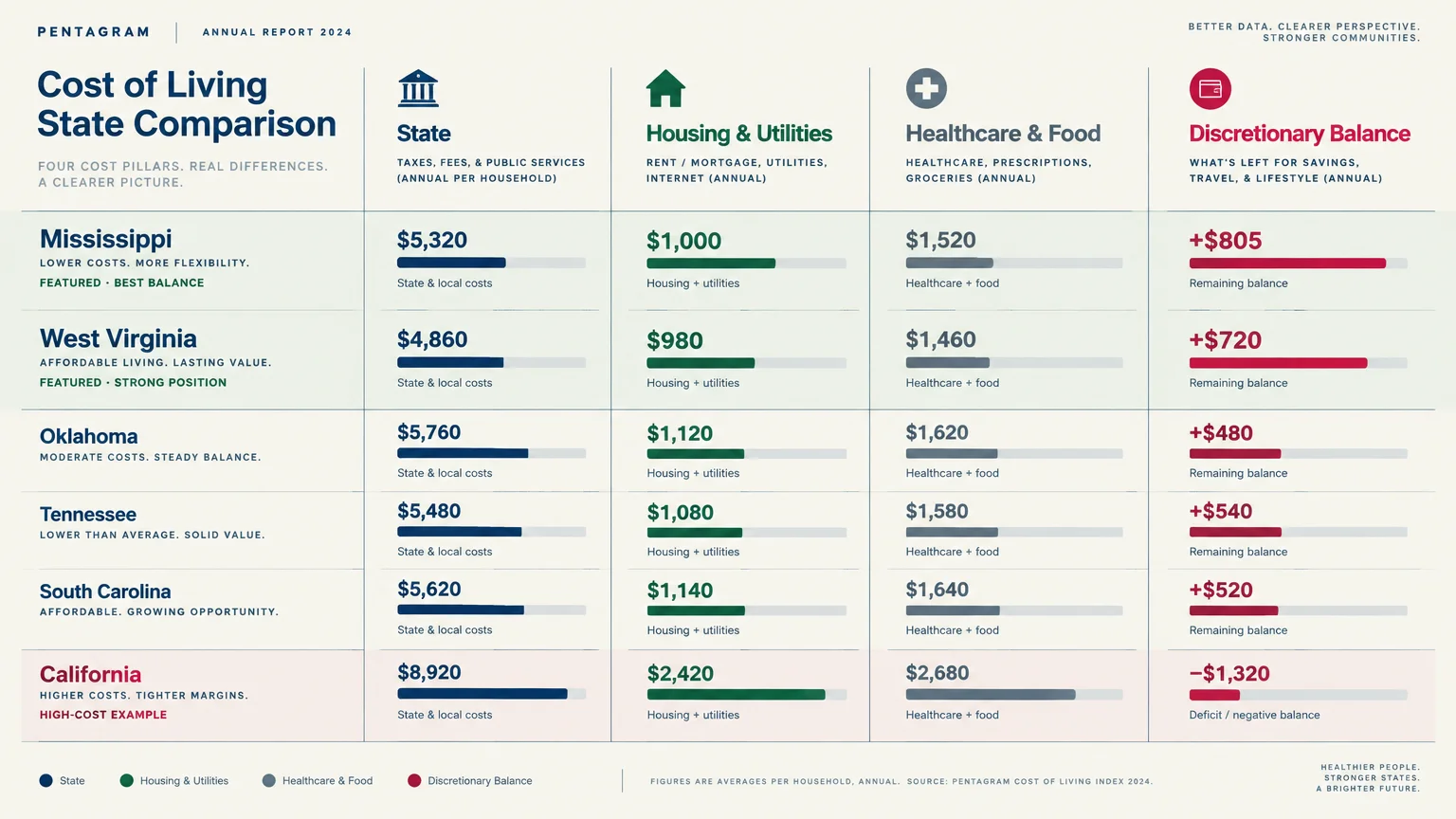
The table below summarizes monthly costs across all ten states for a single retiree. Compare how housing shifts your remaining monthly cushion.
| State | Housing & Utilities | Healthcare | Food & Transport | Discretionary Buffer | Feasibility |
|---|---|---|---|---|---|
| Mississippi | $1,000 | $385 | $730 | +$805 | Comfortable |
| West Virginia | $980 | $400 | $710 | +$850 | Comfortable |
| Arkansas | $1,000 | $380 | $720 | +$810 | Comfortable |
| Ohio | $1,160 | $390 | $760 | +$580 | Stable |
| Pennsylvania | $1,300 | $410 | $790 | +$420 | Stable |
| Florida | $1,620 | $400 | $830 | +$100 | Tight |
| Texas | $1,570 | $410 | $820 | +$140 | Tight |
| Arizona | $1,600 | $390 | $810 | +$110 | Tight |
| California | $2,260 | $420 | $910 | -$700 | Deficit |
| New York | $2,170 | $430 | $830 | -$550 | Deficit |

Cheapest States to Retire vs High-Cost Realities
Data from the Missouri Economic Research and Information Center highlights stark regional divisions. Southern and Midwestern states boast cost-of-living indices 12% to 15% below the national benchmark.
In contrast, northeastern and Pacific states exceed that benchmark by 15% to 40%. Housing alone drives nearly 70% of this regional disparity.
When you spend less than 30% of your income on shelter, your financial stress plummets. In Mississippi or Arkansas, rent consumes roughly 25% of a $3,000 budget.
In California or New York, rent consumes over 60% of your total check. That distortion leaves virtually nothing for nutritious food, prescriptions, or dental emergencies.
Common Retirement Traps When Relocating
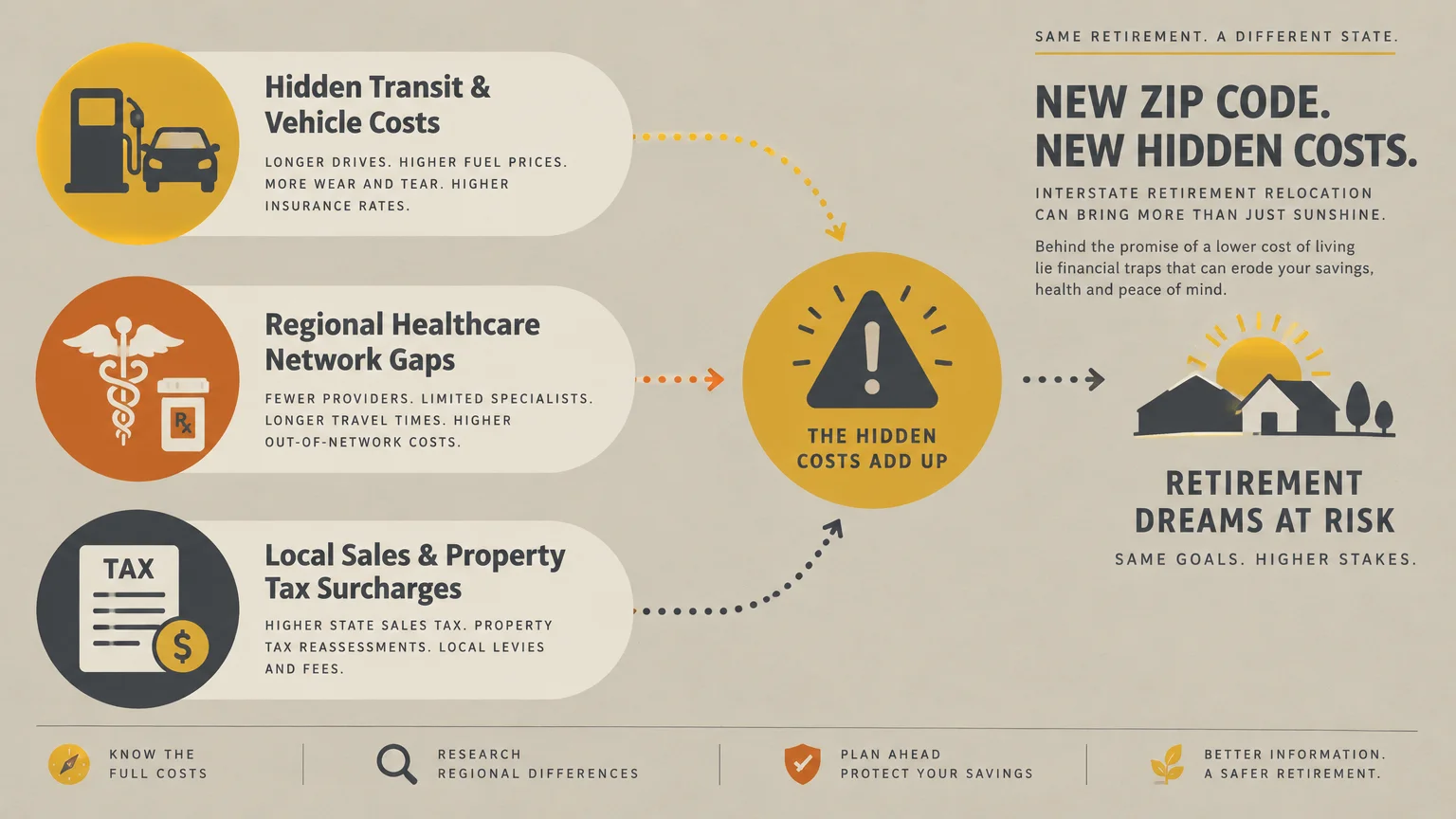
Relocating to stretch a fixed income solves many financial headaches. However, moving without researching secondary expenses can ruin your plans.
Many seniors relocate purely for zero income taxes. States without income taxes often compensate with higher sales taxes, steep vehicle registration fees, or elevated utility rates.
Another hazard involves health insurance provider networks. Moving across state lines requires changing your Medicare Advantage or Part D plans during valid enrollment windows.
You can explore consumer protection tools at the Consumer Financial Protection Bureau to understand how hidden costs impact long-term assets.
Never underestimate the value of your social network. Moving away from adult children or longtime neighbors can create unexpected transportation and caregiving costs later.

When to Consult a Professional
Deciding where and how to spend your retirement involves legal and tax complexities. Certain situations warrant expert counsel before packing moving boxes.
Consult a free State Health Insurance Assistance Program (SHIP) counselor before moving. They help you compare local medical coverage and avoid drug formulary pitfalls.
An elder law attorney clarifies state residency rules, healthcare directives, and Medicaid eligibility requirements. Medicaid rules vary significantly between jurisdictions.
A fee-only financial planner calculates your exact tax exposure. They confirm whether moving truly produces net savings after accounting for moving expenses.
Frequently Asked Questions About Retiring on $3,000 a Month
Can a married couple comfortably retire on $3,000 a month?
A couple faces higher medical premiums and grocery bills on that amount. Two Medicare Part B premiums claim $370 monthly, making low-cost states like West Virginia essential.
Do states still tax Social Security benefits?
Only eight states retain taxes on Social Security for select income brackets. However, a single filer earning $36,000 falls below the taxable exemption threshold in nearly all of them.
What percentage of my budget should go toward housing?
Financial planners recommend keeping housing costs at or below 30% of gross income. On a $3,000 monthly budget, aim for rent and utilities under $900.
How does Medicare Part B affect my take-home pay?
The standard $185 monthly premium is deducted automatically from your Social Security benefit. You never see that money in your checking account.
Take Control of Your Retirement Blueprint
A $3,000 monthly income offers true financial security if you select the right zip code. Look closely at your regional expenses and consider whether moving could give you breathing room.
Review your latest Social Security statement, calculate your exact medical expenses, and build a localized budget. The right location turns a tight fixed income into an abundant retirement.
Information in this article reflects current rules as of the publication date and may change. Always confirm benefit details directly with Social Security Administration, Medicare.gov, or relevant government agencies before making decisions.
Last updated: February 2026. Medicare and Social Security rules change annually—always verify current details at official government sources.