An unexpected bump in your monthly Social Security check sounds like pure relief after months of high grocery bills. Yet a larger gross payout often triggers hidden expenses that quietly erode your gains.
The upcoming Social Security cost-of-living adjustment alters far more than just your base deposit. It ripples directly through your healthcare premiums, federal tax obligations, and daily spending power.
Understanding these shifting financial mechanisms helps you protect your retirement cash flow before surprises hit your bank account. Here is exactly what the numbers mean for your personal balance sheet.
The Mechanics Behind the 2027 COLA Projection
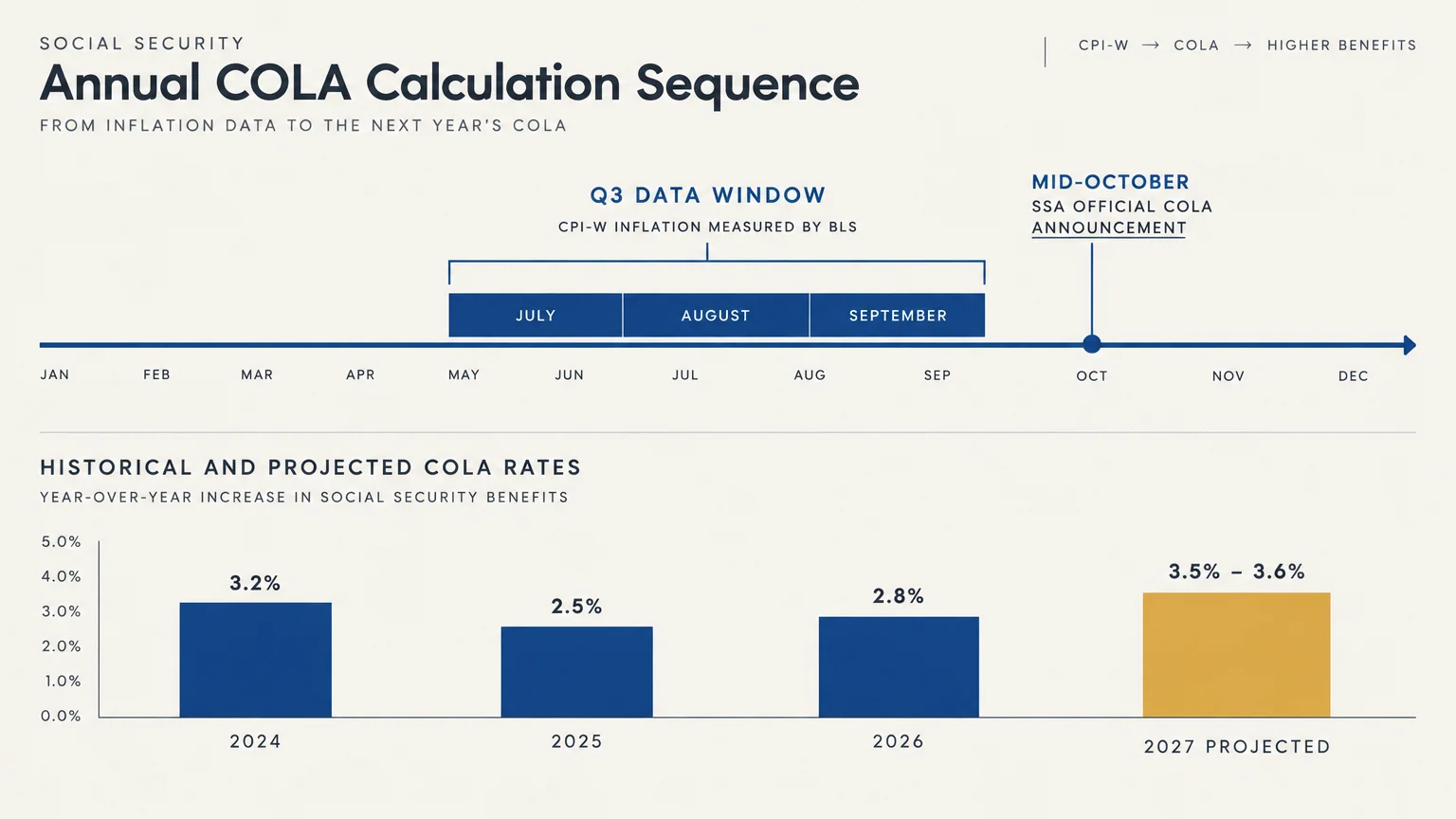
The Social Security Administration calculates this annual boost using data from the Bureau of Labor Statistics. They measure price changes during the third quarter, spanning July, August, and September.
Specifically, officials compare the Consumer Price Index for Urban Wage Earners and Clerical Workers (CPI-W) against the prior year. The agency officially unveils the final percentage in mid-October.
Leading nonpartisan senior advocacy groups monitor these numbers monthly to produce reliable estimates. Both The Senior Citizens League and AARP currently project the 2027 COLA to land between 3.5% and 3.6%.
This follows modest prior adjustments of 2.8% in 2026, 2.5% in 2025, and 3.2% in 2024. Over 75 million Americans will see their checks reflect these adjustments.
Most recipients receive their higher payment in January. However, Supplemental Security Income (SSI) recipients see their adjustment on December 31 because New Year’s Day is a federal holiday.

1. Your Gross Monthly Benefit Check
The headline number in any cost-of-living update represents your gross benefit increase. A projected boost of 3.5% to 3.6% provides a noticeable lift to regular monthly deposits.
For the average retired worker, this percentage adds approximately $70 to $75 each month. Over an entire calendar year, that bump delivers nearly $900 in additional gross income.
You can verify your current base benefit anytime through your personal profile on the Social Security Administration website. This baseline determines your precise dollar gain.
Do not build your household spending around this raw gross figure, however. Several mandatory deductions occur before that money ever arrives in your checking account.
Treating gross numbers as spendable cash creates an immediate shortfall in your monthly cash flow. You must evaluate the deductions scheduled to claim portions of that raise.
2. Medicare Part B Deductions and the Net Payout
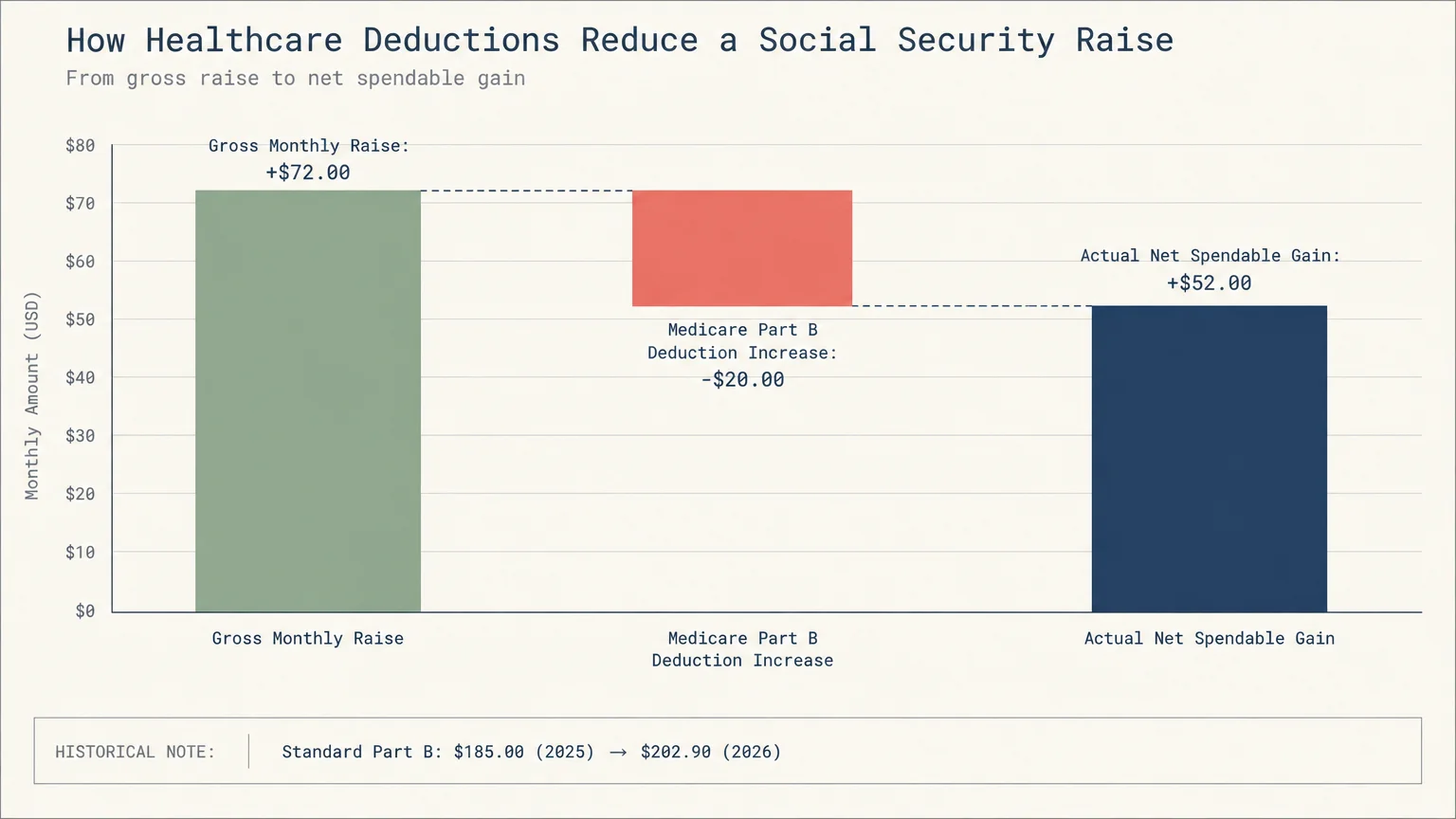
Most retirees never see their complete Social Security raise because healthcare deductions take a bite first. The standard Medicare Part B premium is withheld directly from your monthly payment.
The Centers for Medicare & Medicaid Services (CMS) announces Part B premiums shortly after Social Security reveals its numbers. These premiums consistently rise alongside general medical inflation.
The standard Part B premium climbed from $185.00 monthly in 2025 to $202.90 in 2026. Any subsequent increase for the upcoming cycle directly absorbs part of your gross raise.
A $72 gross monthly raise quickly shrinks if your Part B premium rises by $15 or $20. Your take-home gain may amount to only $50 per month.
You can track evolving medical costs and review plan options directly on Medicare.gov. Factoring this deduction into your forecasts prevents painful budgeting surprises.
A federal rule known as the “Hold Harmless” provision prevents your net Social Security check from decreasing year-over-year. Yet whenever a COLA exceeds 3%, that rule rarely provides meaningful protection.

3. The Federal Tax Torpedo on Social Security
A larger benefit check can trigger an unexpected tax bill by pushing you past static income limits. Federal taxation of Social Security benefits relies on a formula called “combined income.”
Combined income equals your adjusted gross income, plus nontaxable interest, plus exactly half of your Social Security benefits. Congress established these thresholds decades ago without indexing them to inflation.
Individual tax filers with combined income between $25,000 and $34,000 must pay income tax on up to 50% of their benefits. Exceeding $34,000 subjects up to 85% of benefits to taxation.
For married couples filing jointly, the 50% threshold begins at just $32,000. Any combined income above $44,000 exposes up to 85% of your benefits to federal taxes.
Every annual social security COLA increase pushes thousands of unsuspecting seniors across these unindexed thresholds. Financial planners call this sudden spike in tax liability the “tax torpedo.”
You can review official filing rules and withholding instructions through the IRS Retirement Plans portal. Submitting Form W-4V helps you avoid owing money in April.
“The goal of retirement is to live off your assets—not live off your regrets.”

4. Higher Medicare Surcharges (IRMAA Brackets)
Retirees with moderate to high incomes face an additional complication known as IRMAA. The Income-Related Monthly Adjustment Amount applies surcharges to Part B and Part D premiums.
Social Security uses tax returns from two years prior to determine your IRMAA tier. Cumulative cost-of-living raises push your overall income upward year after year.
Exceeding an IRMAA tier by a single dollar triggers the entire surcharge for the full year. That single extra dollar can cost you hundreds of dollars in added healthcare premiums.
Combining higher benefits with required minimum distributions (RMDs) from retirement accounts often creates this accidental threshold breach. Proper tax bracket management protects you from this costly outcome.
“It’s not how much money you make, but how much money you keep, how hard it works for you, and how many generations you keep it for.” — Robert Kiyosaki

5. Retirement Earnings Test Limits for Working Seniors
If you collect Social Security before reaching Full Retirement Age (FRA) while working, the COLA brings welcome news. The annual announcement adjusts the Retirement Earnings Test exempt limits upward.
In 2026, the early retirement earnings limit stood at $24,480 per year. The government temporarily withholds $1 in benefits for every $2 earned above that cap.
During the specific year you reach Full Retirement Age, a more generous threshold applies. That limit reached $65,160 in 2026, withholding $1 for every $3 earned above the mark.
A higher cost-of-living adjustment expands these limits, allowing you to earn more wages from employment without losing benefit checks. Once you reach full retirement age, all earnings caps disappear entirely.
Any benefits withheld under this test are not lost forever. The Social Security Administration recalculates your monthly benefit at your full retirement age to credit those withheld sums back.
6. Adjustments to the Maximum Taxable Wage Base
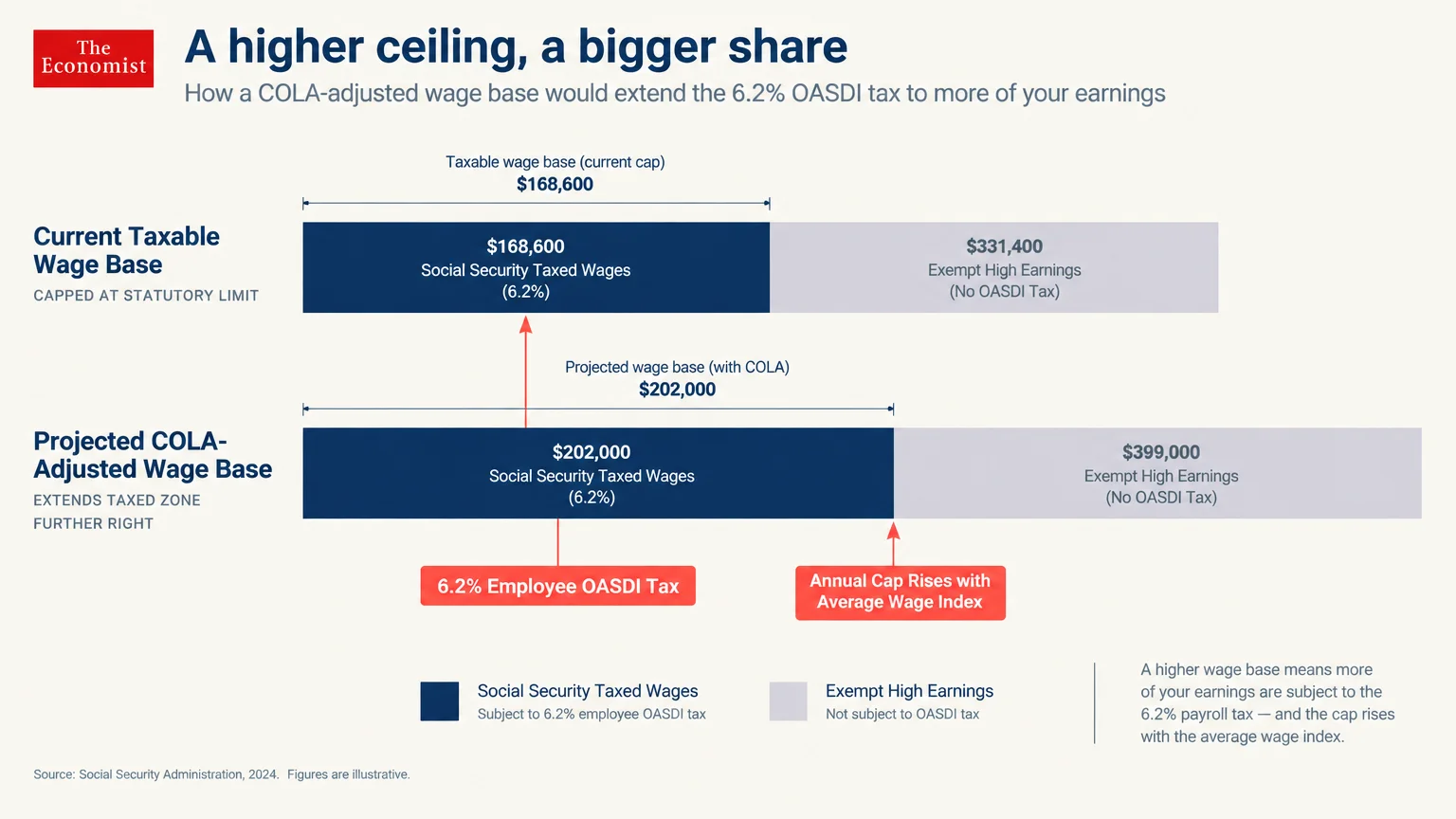
The annual announcement also impacts high earners who are still employed and planning their retirement transitions. The maximum amount of wages subject to Social Security payroll tax adjusts upward each fall.
Workers paid the 6.2% OASDI payroll tax on earnings up to $184,500 during 2026. Higher inflation pushes this wage cap upward for future tax years.
If your annual earnings exceed this threshold, the adjustment increases your overall payroll tax burden. That means less take-home pay during your final working years.
However, paying taxes on higher earnings also raises your lifetime average wage base. This calculation can translate into a slightly higher primary insurance amount once you eventually claim benefits.
7. Benefit Cliffs in Essential Assistance Programs
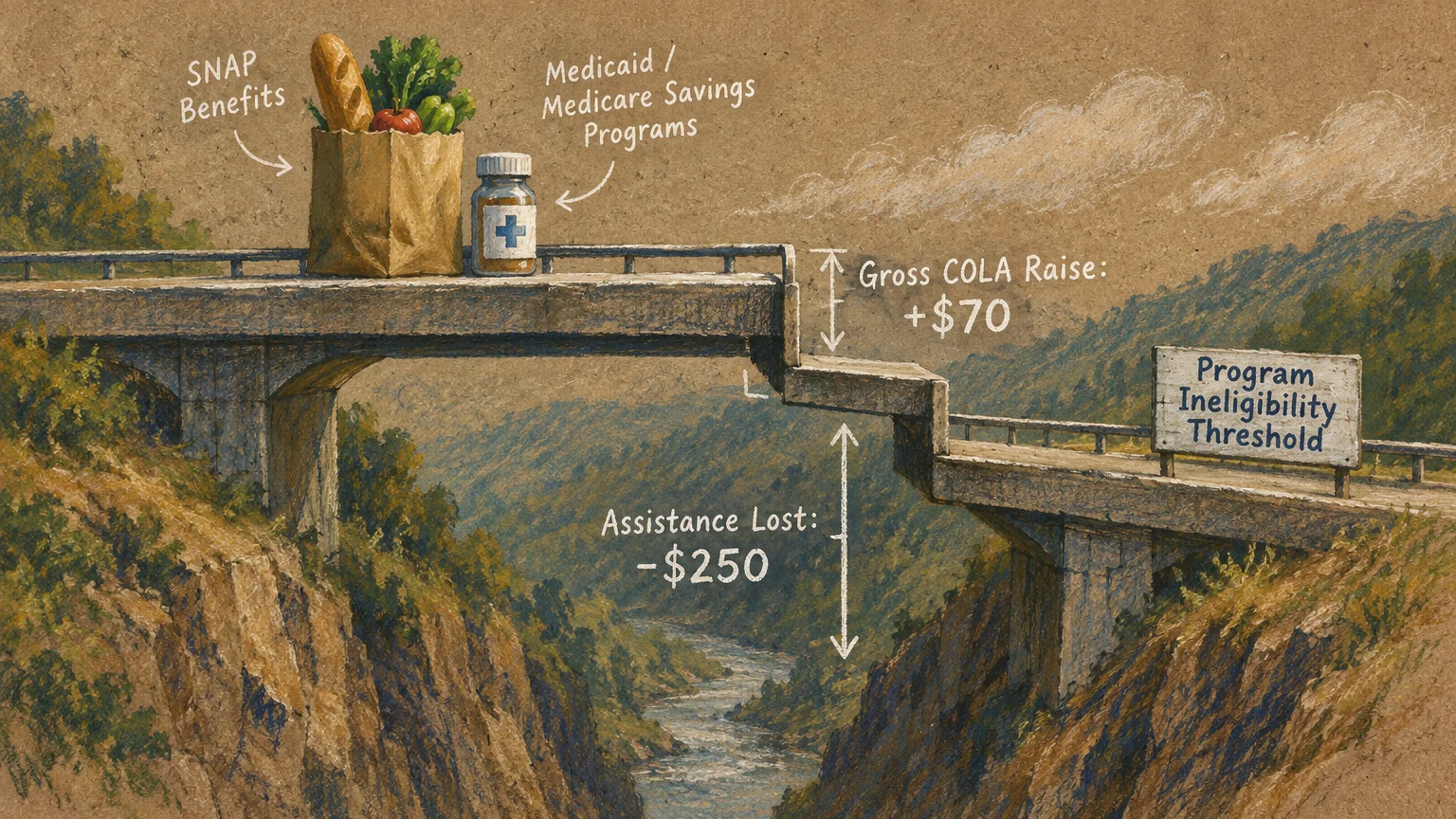
The most devastating consequence of an annual raise falls upon low-income seniors enrolled in safety-net programs. Public assistance programs rely on rigid monthly income caps to determine ongoing eligibility.
Programs like Medicaid, the Supplemental Nutrition Assistance Program (SNAP), and Medicare Savings Programs (MSP) enforce strict limits. A modest social security raise 2027 can push recipients above those thresholds.
Gaining $70 in monthly Social Security can cause an individual to lose hundreds of dollars in SNAP grocery assistance. It can also eliminate eligibility for Medicare Extra Help with prescription drug copays.
Seniors walking this financial tightrope can explore community support tools via BenefitsCheckUp. Local agencies can frequently help you protect your eligibility through deductible expense reporting.
Always notify your case managers whenever your income changes. Proactive reporting helps you avoid unexpected overpayment penalties or sudden benefit terminations.

8. Your Retirement Portfolio Drawdown Strategy
The COLA announcement 2027 provides a clear snapshot of persistent consumer inflation trends. Financial planners use this benchmark to recalibrate annual portfolio distribution models for their clients.
If living expenses outpace your net Social Security raise, you may feel tempted to pull extra cash from investments. Over-withdrawing from a 401(k) or IRA during market downturns accelerates sequence-of-returns risk.
Incorporate flexible guardrails into your retirement budget planning instead of taking static withdrawals. Trimming discretionary travel or luxury spending preserves your principal investments during inflationary periods.
Allow your guaranteed income sources to handle your non-negotiable living essentials like utilities, housing, and healthcare. Keep your portfolio withdrawals dedicated to flexible expenses that you can adjust when inflation flares.
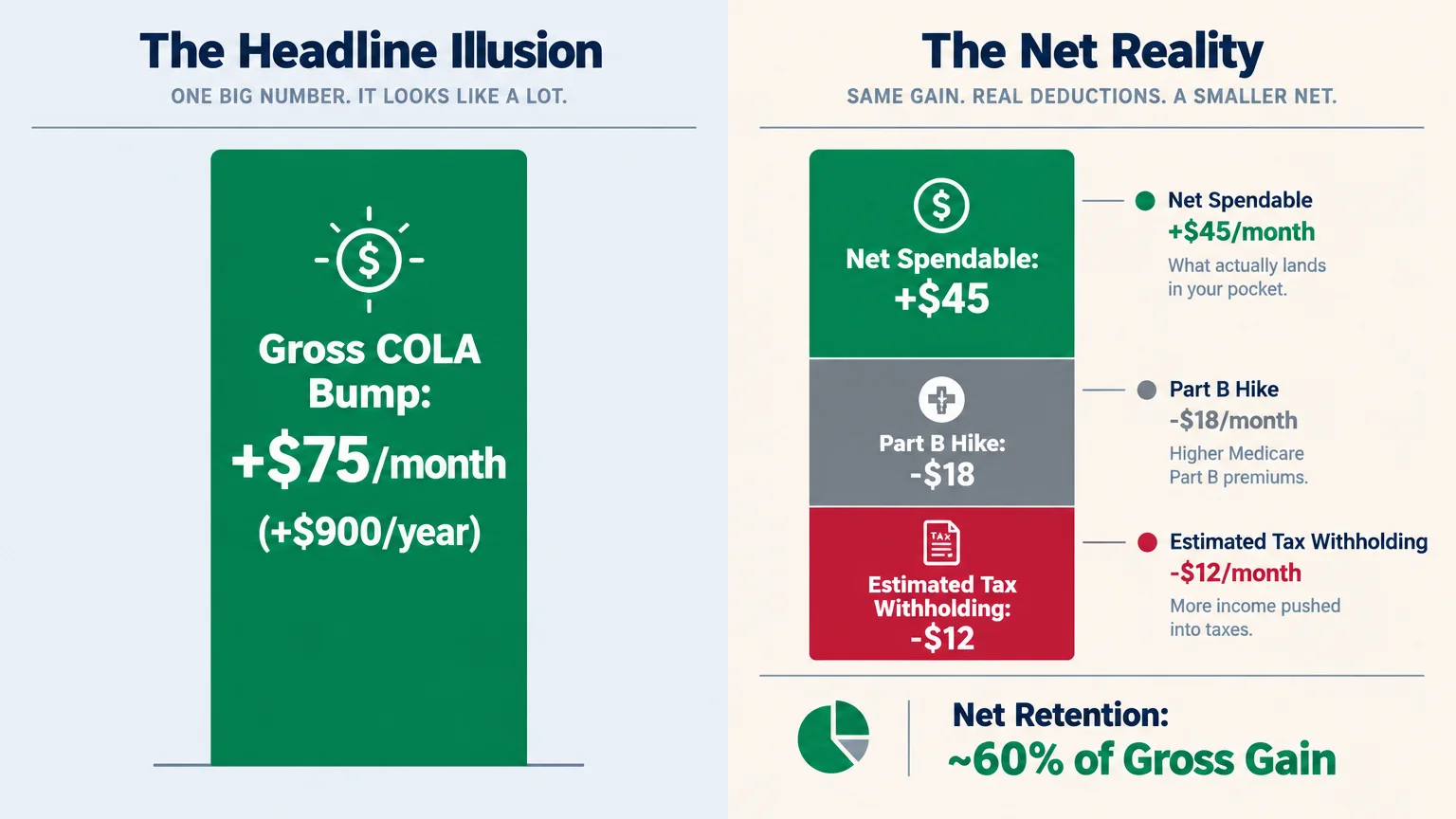
Comparing the Budget Impacts: Gross Gains vs. Real Net Income
To visualize how these interacting rules affect real households, consider three typical retiree profiles. Each background experiences the annual adjustment in a markedly different way.
| Retiree Profile | Projected Gross COLA Gain | Primary Offsetting Factors | Estimated Real Budget Impact |
|---|---|---|---|
| Low-Income Senior Receives SSI & SNAP |
+$30 to +$40 / month | Potential reduction in monthly SNAP food benefits; MSP cliff risks | Neutral to Negative: Net purchasing power often declines without proactive advocacy. |
| Middle-Class Household Social Security + Modest IRA |
+$70 to +$75 / month | Medicare Part B premium increase; entry into federal tax torpedo brackets | Modestly Positive: Real take-home gain lands between $35 and $50 monthly. |
| Affluent Retiree Social Security + Large RMDs |
+$120 to +$140 / month | 85% benefit tax rate; risk of crossing next IRMAA surcharge threshold | Highly Variable: Net gain erased entirely if an IRMAA tier is breached. |
This comparison shows that your gross raise rarely equals the money landing in your pocket. Evaluating your specific tax bracket and healthcare deductions reveals your true spending limit.

Common Retirement Traps to Avoid After the Announcement
Many seniors celebrate the autumn announcement and immediately adjust their discretionary spending upward. Falling into this pattern before seeing your January deposit can destabilize your household accounts.
Review these four common traps to safeguard your finances:
- Spending the gross boost early: Never commit funds before your December COLA notice details your exact Medicare deductions and net deposit.
- Ignoring state tax liabilities: Several states still tax Social Security benefits under distinct thresholds that differ from federal rules.
- Skipping Medicare Open Enrollment: Failing to compare Part D drug plans during autumn open enrollment allows rising copays to wipe out your raise.
- Overlooking unindexed combined income: Forgetting that extra income exposes more of your benefit checks to federal income taxes.
Dodging these traps preserves your disposable cash flow. A disciplined approach ensures that inflation adjustments work for your household rather than against it.

When to Consult a Professional
Deciphering government benefit formulas can become overwhelming when multiple income streams collide. Consulting a qualified specialist provides personalized clarity tailored to your assets.
A State Health Insurance Assistance Program (SHIP) counselor provides free, unbiased guidance regarding Medicare choices and premium assistance programs. They help lower-income retirees navigate dangerous benefit cliffs.
If you manage substantial traditional IRA balances alongside Social Security, consult a fee-only fiduciary financial advisor. They design Roth conversion schedules and withdrawal guardrails that keep you below damaging IRMAA thresholds.
An elder law attorney is invaluable if you rely on Medicaid for long-term care supports. They ensure modest income increases do not jeopardize critical community waivers or nursing home assistance.
Frequently Asked Questions
When will the Social Security Administration officially announce the 2027 COLA?
The agency announces the official percentage during the second week of October. The release follows the publication of September inflation data by the Bureau of Labor Statistics.
Does a COLA increase apply to Medicare Advantage plans?
No, the COLA applies strictly to Social Security and Supplemental Security Income benefits. Private insurance companies set Medicare Advantage premiums and out-of-pocket copays separately each calendar year.
Will the social security raise 2027 automatically increase my state taxes?
It depends entirely on your home state. While most states exempt Social Security entirely, a minority tax benefits using state-specific income limits.
What happens if Medicare Part B premium increases exceed my COLA raise?
The federal Hold Harmless provision ensures your net Social Security check will not decrease from one year to the next. Your net benefit simply remains flat.
Next Steps for Your Retirement Budget
Log into your personal Social Security account this autumn to inspect your official benefit verification statement. Review your upcoming Medicare Part B deduction and consider updating your voluntary tax withholding on Form W-4V.
Retirement rules and benefit amounts vary based on individual work history, income, and circumstances. This article provides general guidance only. Consult a SHIP counselor, financial advisor, or elder law attorney for advice specific to your situation.
Last updated: February 2026. Medicare and Social Security rules change annually—always verify current details at official government sources.