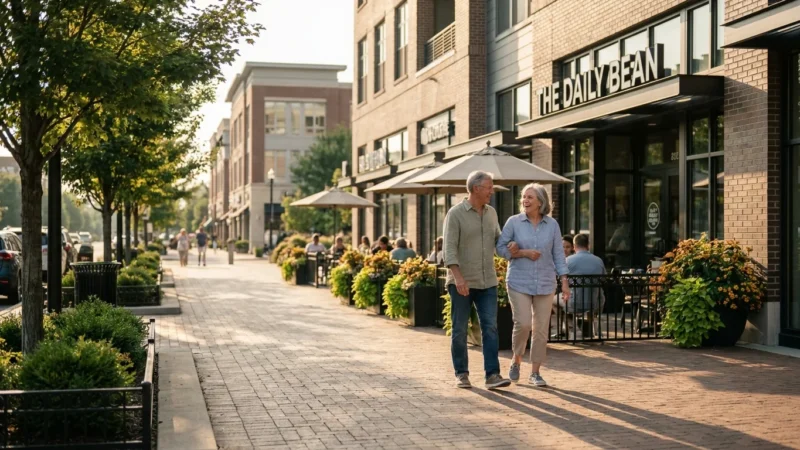
Moving to an unfamiliar city after decades in one neighborhood often brings unexpected isolation. The best communities for retirees solve this challenge by offering instant social connections rather than just sunny weather.
Choosing friendly places to retire ensures your neighbors notice when you need a hand. Finding a true retirement community feel protects your physical health and emotional well-being as you age.
If you want close knit towns with authentic warmth, these 12 destinations excel at welcoming newcomers into everyday local life.
What Creates a Genuine Sense of Community in Retirement?
A zip code does not create connection on its own. True community requires spaces where people cross paths regularly without an appointment.
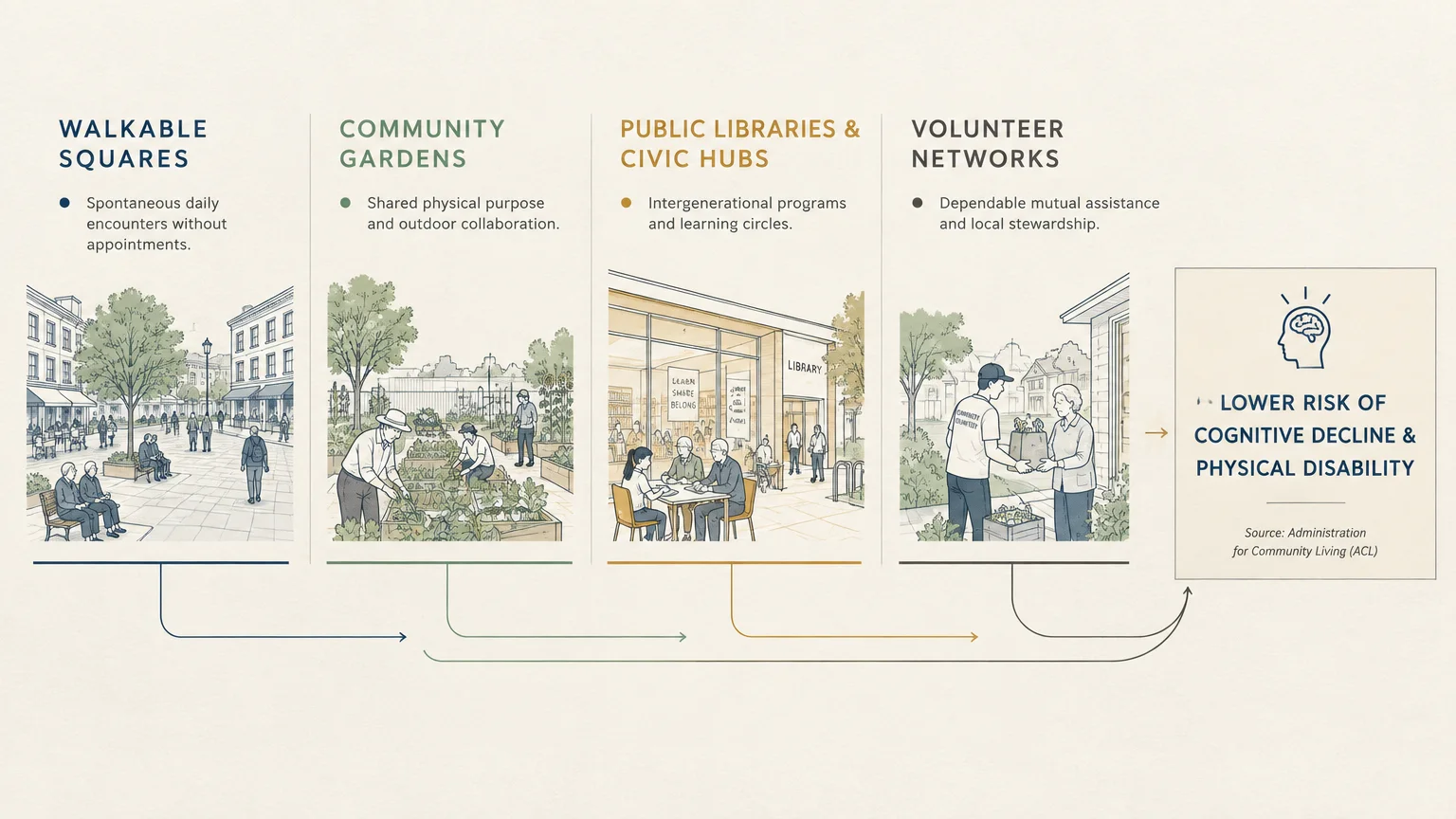
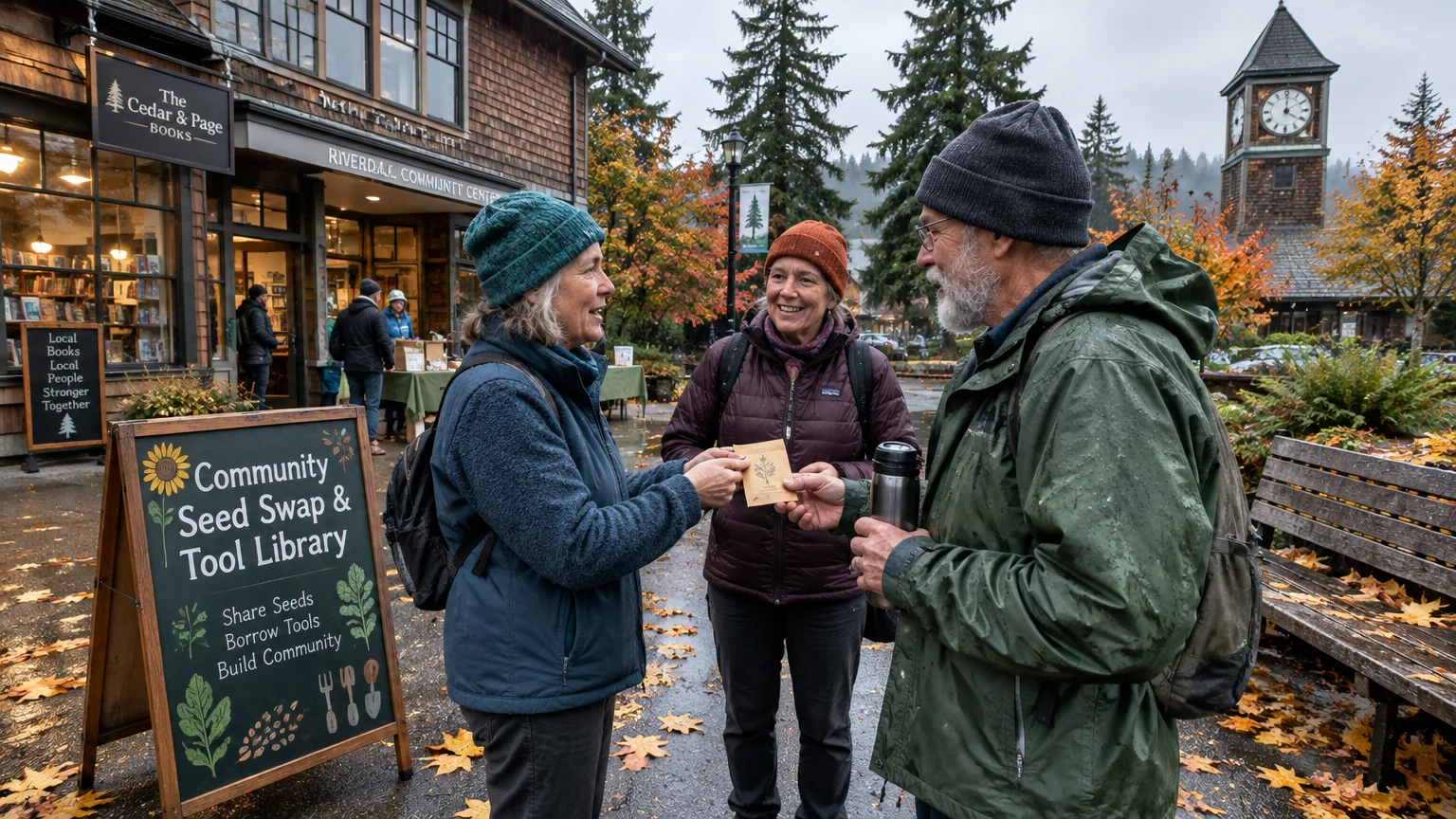
Walkable town squares, community gardens, libraries, and active volunteer networks form the social backbone of a healthy town. These gathering points turn casual acquaintances into dependable friends.
“Don’t simply retire from something; have something to retire to.” — Harry Emerson Fosdick
When you evaluate where to retire, look closely at everyday civic interaction. Friendly towns foster intergenerational bonds and offer rich opportunities for civic participation.
According to resources from the Administration for Community Living, local social engagement directly lowers the risk of cognitive decline and physical disability in older adults.

Mid-Atlantic and Northeast Towns with Deep Roots
1. Lancaster, Pennsylvania
Lancaster balances historic charm with modern conveniences. While the surrounding county holds over 500,000 residents, the downtown core functions like an intimate village.
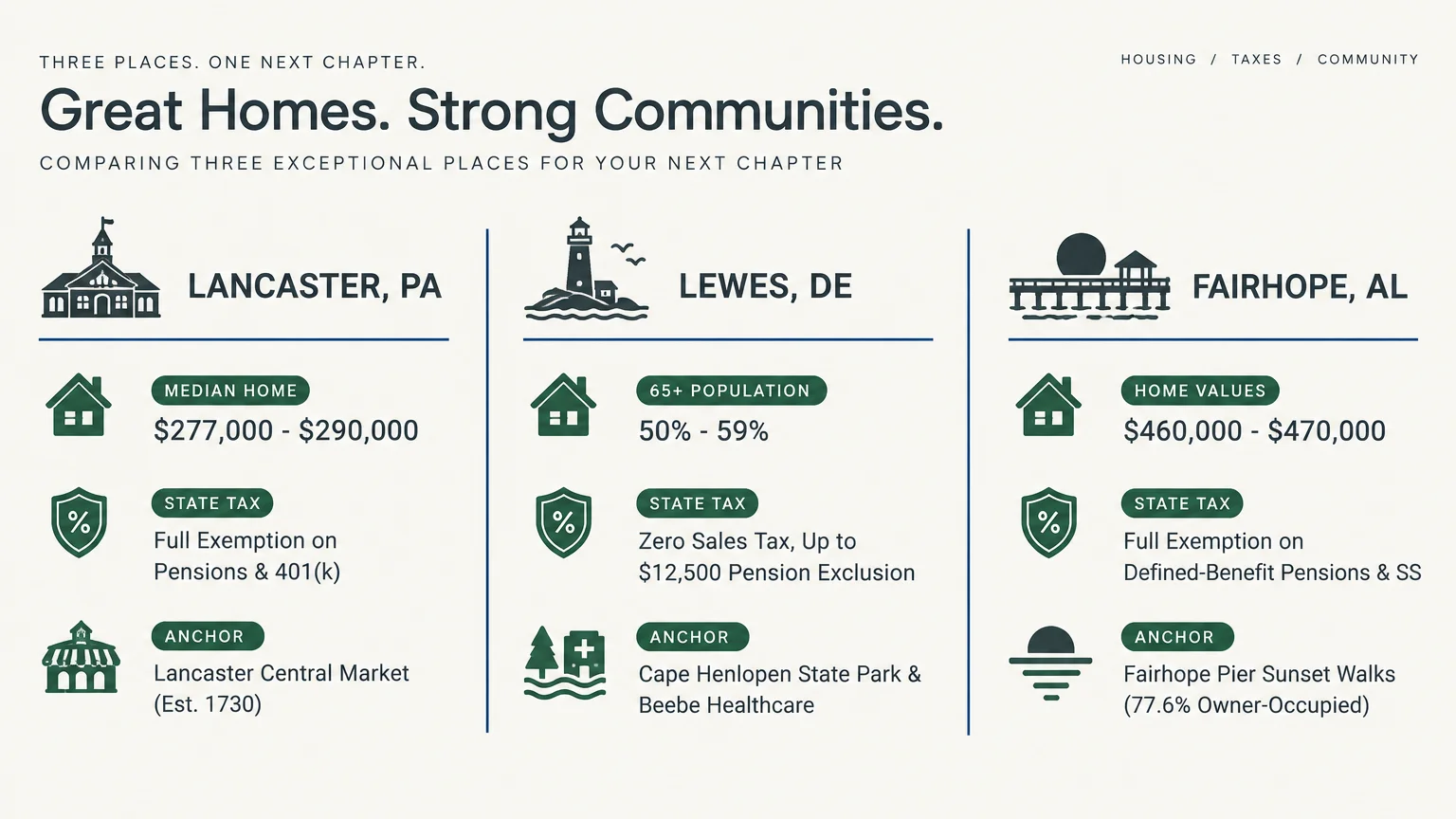
Retirees gather every week at the Lancaster Central Market. Operating since 1730, this indoor market provides fresh regional food and serves as the town’s premier social crossroads.
Healthcare access remains exceptional thanks to Penn State Health and Lancaster General Health. Median home sales prices sit comfortably between $277,000 and $290,000, keeping housing accessible.
Pennsylvania also delivers extraordinary tax benefits. The state completely exempts Social Security, public and private pensions, and 401(k) or IRA distributions from its 3.07% income tax.
2. Lewes, Delaware
Lewes rests peacefully along the Delaware Bay. Adults aged 65 and older make up between 50% and 59% of the municipal population, creating a built-in peer group.
You will find instant companionship through local civic life. Residents bond over conservation projects at Cape Henlopen State Park and historical preservation efforts downtown.
The Beebe Healthcare system anchors the town with comprehensive clinical facilities. You can easily walk or bike along the canal to local bakeries, bookshops, and pharmacies.
Delaware charges zero state or local sales tax and does not tax Social Security benefits. The state excludes up to $12,500 of annual pension income per person aged 60 and older.
Southern Havens with Front-Porch Hospitality
3. Fairhope, Alabama
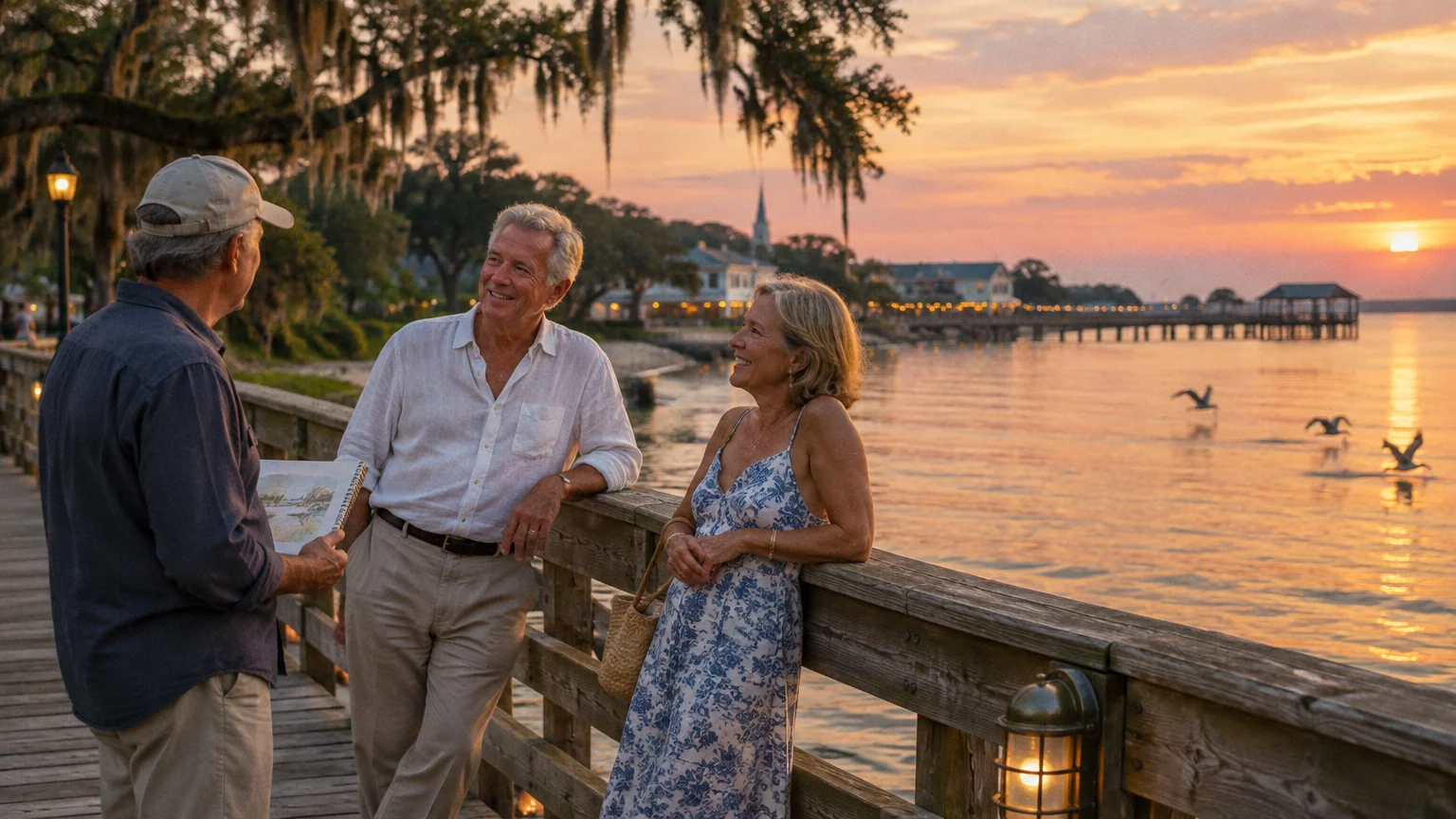
Fairhope perches on the coastal bluffs of Mobile Bay under canopies of Spanish moss. The city retains a cherished tradition of civic pride and open hospitality.
Baldwin County maintains an owner-occupied housing rate of roughly 77.6%. This residential permanence prevents the transient atmosphere found in typical resort areas.
Average single-family home values range from $460,000 to $470,000. Alabama protects your nest egg by fully exempting defined-benefit pensions and Social Security from state income tax.
Locals assemble at the Fairhope Municipal Pier each evening to share sunset views over the water. Monthly art walks encourage neighbors to stroll and converse downtown.
4. Beaufort, South Carolina
Beaufort captures classic South Carolina Lowcountry charm without commercial chaos. Antebellum homes and centuries-old moss oaks surround a quiet downtown waterfront.
Henry C. Chambers Waterfront Park serves as the town’s shared backyard. Retirees gather on shaded swings to watch boats cruise down the Beaufort River.
The Osher Lifelong Learning Institute at the University of South Carolina Beaufort offers dozens of peer-led courses each term. Beaufort Memorial Hospital supplies trusted acute healthcare.
South Carolina provides generous retirement income deductions for seniors. The state also exempts all Social Security benefits from state income taxation.
5. Abingdon, Virginia
Abingdon sits in the scenic Blue Ridge foothills of southwest Virginia. The town celebrates traditional Appalachian crafts, storytelling, and outdoor recreation.
The historic Barter Theatre anchors local social life. Residents gather before performances, volunteer as greeters, and attend regular patron roundtables.
Outdoor enthusiasts congregate along the Virginia Creeper Trail. Neighbors frequently team up for morning walks and cycling excursions through the mountain countryside.
Johnston Memorial Hospital delivers modern clinical services close to town. Virginia exempts all Social Security benefits from state income taxes, preserving your monthly budget.

Sunbelt and Western Communities Built on Connection
6. Green Valley, Arizona
Green Valley lies twenty miles south of Tucson in the Santa Cruz Valley. Roughly 80% of local households belong to Green Valley Recreation.
This shared recreation entity manages 15 community centers and 24 pickleball courts. More than 60 chartered social and hobby clubs cater to over 23,000 member residents.
Whether you practice lapidary, woodworking, or community gardening, you enter an established circle of friends immediately. Organized neighborhood watch groups ensure regular personal check-ins.
Pima County offers reliable regional bus systems and specialized transit. Arizona exempts Social Security benefits and up to $2,500 of military or civil service pensions from state tax.
7. Prescott, Arizona
Prescott rests at an elevation of 5,300 feet in northern Arizona’s pine country. The mountain setting spares you from intense desert heat while preserving year-round sunshine.
The Courthouse Plaza forms the beating heart of civic life. Summer musical performances, craft fairs, and winter holiday festivals pull the entire town together outdoors.
Yavapai Regional Medical Center provides comprehensive inpatient and surgical care. A dense network of fraternal organizations, gardening clubs, and veteran associations actively recruits newcomers.
Historic downtown streets feature independent coffee shops where regulars meet daily. Prescott offers the ideal retirement community feel for those who love four gentle seasons.
8. Georgetown, Texas
Georgetown sits just north of Austin and holds the title of the Most Beautiful Town Square in Texas. Restored Victorian architecture frames active local storefronts.
The vast Sun City Texas community integrates smoothly into the larger municipality. Retirees frequently serve on city advisory boards, volunteer in public schools, and direct community theater productions.
St. David’s Georgetown Hospital delivers award-winning cardiac and orthopedic care. Texas levies zero state personal income tax, maximizing the yield of your retirement accounts.
You can verify federal tax baseline rules on your benefits through the official Social Security Administration website before planning your relocation budget.
Midwest and Northwest Towns with Strong Civic Pride
9. Traverse City, Michigan
Traverse City hugs the crystal-clear waters of Grand Traverse Bay. The community relies on cooperative values and mutual support rather than seasonal tourism alone.
The Oryana Community Co-op has operated since 1973 as a vibrant hub for healthy living. Older adults volunteer across miles of local conservation trails and at the historic City Opera House.
Munson Healthcare runs a renowned regional medical center in the middle of town. Crisp winter weather does not keep people indoors; neighbors gather for snowshoeing and indoor book clubs.
Michigan exempts Social Security benefits from state income taxation. The state also provides substantial tax deductions on private and public retirement distributions for qualifying seniors.
10. Decorah, Iowa
Decorah nestles into the rolling limestone bluffs of northeastern Iowa’s Driftless Area. Rich Scandinavian roots inspire widespread community generosity and civic participation.
Luther College infuses the town with lectures, orchestral performances, and athletic events. Retirees audit classes for free and mentor undergraduate students through campus partnerships.
Winneshiek Medical Center, partnered with the Mayo Clinic Health System, provides world-class local care. Neighbors connect regularly at the Oneota Community Food Co-op and Vesterheim Museum.
Iowa completely exempts retirement income from state taxation. Eligible residents pay zero state income tax on pensions, 401(k) distributions, and IRA withdrawals.
11. Sequim, Washington
Sequim sits inside the rain shadow of the Olympic Mountains. The town receives just 16 inches of annual precipitation, defying the Pacific Northwest’s rainy reputation.
Community life centers on working lavender farms, family agriculture, and the paved Olympic Discovery Trail. Volunteerism powers the Sequim Food Bank, local animal rescues, and community gardens.
Olympic Medical Center in nearby Port Angeles secures dependable regional healthcare. Washington charges zero personal income tax on wages, pensions, or investment accounts.
Friendly conversations flow naturally at local farm stands and coffee counters. The sunny microclimate makes outdoor social gatherings practical across all twelve months.
12. Brevard, North Carolina
Brevard lies in Transylvania County, affectionately known as the Land of Waterfalls. It appeals directly to outdoor lovers, classical musicians, and lifelong learners.
The Brevard Music Center stages world-class summer concerts where neighbors picnic on open lawns. Brevard College opens its campus for continuing education and athletic events.
Transylvania Regional Hospital handles emergency and routine specialty care close to town. Volunteer trail maintainers, Master Gardeners, and craft guilds welcome new arrivals with open arms.
North Carolina exempts Social Security benefits from state taxation. Flat state income tax rates keep your remaining retirement income predictable year after year.
“The goal of retirement is to live off your assets—not live off your regrets.”
Comparing Community Anchors and Financial Factors
Selecting where to retire requires balancing social warmth with your financial comfort. The following table contrasts key community drivers, healthcare facilities, and tax advantages across all twelve destinations.
| Town & State | Primary Gathering Hub | Key Healthcare Provider | Major State Tax Advantage |
|---|---|---|---|
| Lancaster, PA | Lancaster Central Market | Penn State Health | 100% tax exemption on retirement income |
| Lewes, DE | Historic Canalfront & State Park | Beebe Healthcare | No sales tax; excluded pension income |
| Fairhope, AL | Fairhope Pier & Downtown Arts Walk | Thomas Hospital | Exempts pensions and Social Security |
| Beaufort, SC | Waterfront Park & USCB OLLI | Beaufort Memorial Hospital | Large senior retirement deductions |
| Abingdon, VA | Barter Theatre & Creeper Trail | Johnston Memorial Hospital | Social Security fully tax-exempt |
| Green Valley, AZ | 15 GVR Recreation Centers | Santa Cruz Valley Regional Hospital | No state tax on Social Security |
| Prescott, AZ | Courthouse Plaza Square | Yavapai Regional Medical Center | No state tax on Social Security |
| Georgetown, TX | Victorian Historic Town Square | St. David’s Georgetown Hospital | No state individual income tax |
| Traverse City, MI | Oryana Co-op & Bay Trails | Munson Medical Center | Social Security exempt; pension deductions |
| Decorah, IA | Oneota Co-op & Luther College | Winneshiek Medical Center | Zero state tax on all retirement income |
| Sequim, WA | Lavender Farms & Discovery Trail | Olympic Medical Center | No state individual income tax |
| Brevard, NC | Brevard Music Center | Transylvania Regional Hospital | Social Security exempt from state tax |

Managing Healthcare and Medicare During a Relocation
Relocating to a new county or state directly affects your healthcare coverage. You must plan your insurance transition carefully to prevent dangerous lapses in care.
Moving outside your current plan’s service area triggers a Medicare Special Enrollment Period (SEP). This window allows you to switch Medicare Advantage plans or return to Original Medicare.
Your SEP generally begins the month before you move and continues for two full months afterward. Visit Medicare.gov to review plans available in your target zip code.
The standard Annual Open Enrollment Period (AEP) runs every year from October 15 through December 7. Changes finalized during AEP take effect on January 1.
If you use Medicare Advantage, you can also alter coverage during the Medicare Advantage Open Enrollment Period. That window runs from January 1 through March 31 annually.
Costly Mistakes to Avoid When Moving for Community
Relocating based solely on glossy brochures often leads to costly buyer remorse. Protect your transition by avoiding these common oversights:
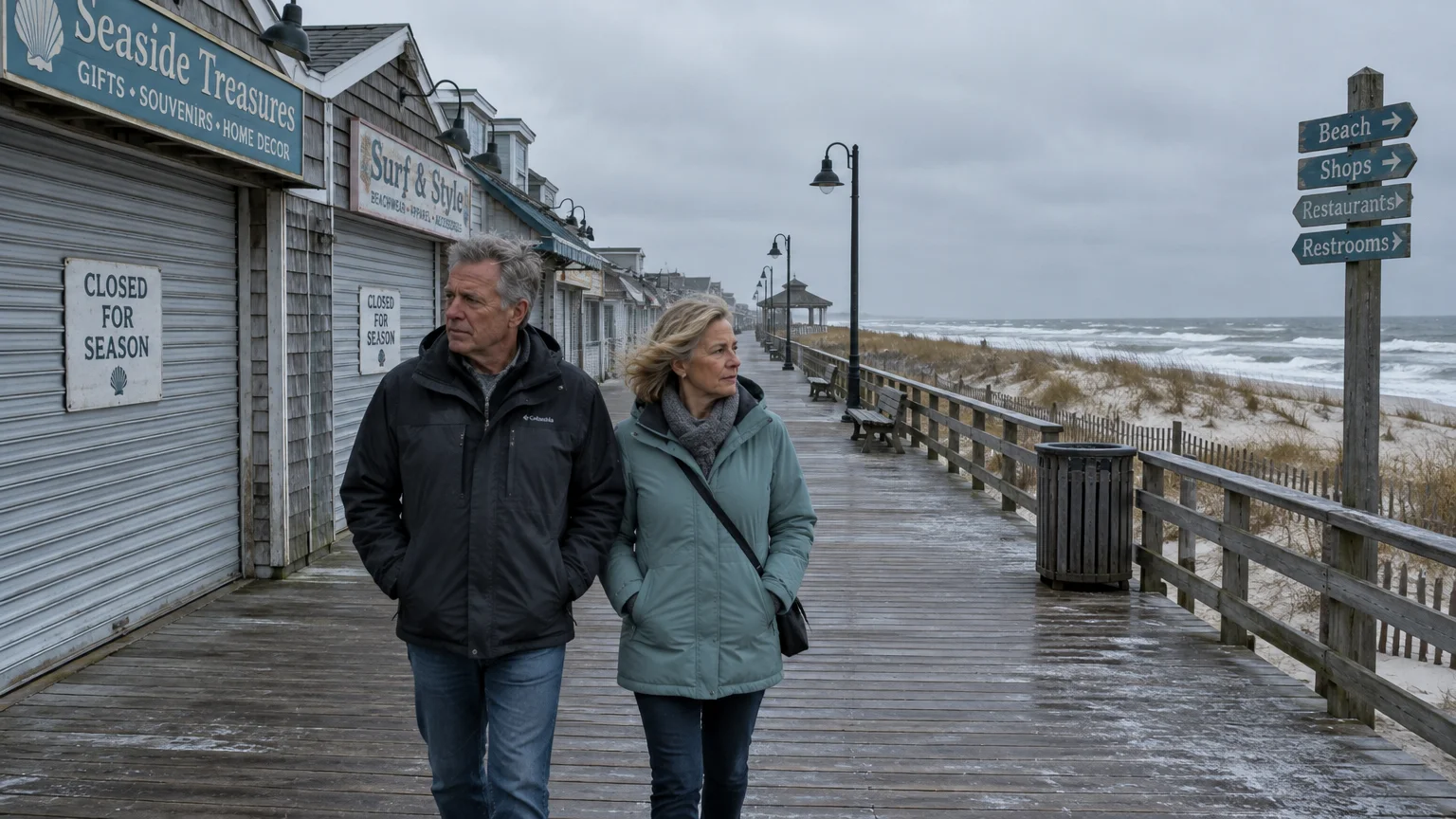
- Moving before experiencing the town during its worst seasonal weather.
- Assuming friendly neighbors will knock on your door without you joining local clubs.
- Overlooking hospital travel times and specialist availability for chronic conditions.
- Failing to calculate property tax rates, transfer taxes, and home insurance costs.
- Buying a home immediately rather than renting for six months to evaluate neighborhoods.
Renting a short-term apartment first allows you to test daily life without permanent commitment. You can check the noise, traffic, and social opportunities firsthand.
Community organizations tracked by the National Council on Aging can help you locate senior center programs before signing a lease.

Don’t DIY These Decisions
Major interstate relocations involve complex legal, tax, and healthcare adjustments. Navigating these transitions without professional guidance can trigger unexpected tax bills or lost benefits.
Consult a fee-only financial planner to review how moving states impacts your retirement withdrawals. State tax exemptions differ widely regarding distributions from traditional IRAs and 401(k) accounts.
Work with an elder law attorney licensed in your new home state. You must update your advance directives, healthcare proxy, and powers of attorney to match local statutes.
Connect with a State Health Insurance Assistance Program (SHIP) counselor before your move. These trained specialists provide free, unbiased guidance regarding local Medicare Advantage and Medigap availability.
Frequently Asked Questions
How do I make friends quickly after retiring to a new town?
Join organized volunteer groups, hobby clubs, or community gardens during your first month. Consistent attendance at weekly activities creates natural friendships far faster than waiting for casual introductions.
Does my Medicare coverage transfer automatically when I move to another state?
Original Medicare Part A and Part B travel with you nationwide without changing your benefits. However, Medicare Advantage and Part D prescription plans tie to specific counties, requiring a plan change.
What is the best way to evaluate a town’s community feel before buying?
Rent a home in the area for three to four weeks during the off-season. Spend mornings at public libraries, attend city council meetings, and converse with patrons at local diners.
How many states exempt Social Security benefits from state income tax?
Over 40 states completely exempt Social Security benefits from state taxation. Only eight to nine states still tax any portion of your monthly Social Security benefit.
Next Steps for Your Move
Finding close knit towns that match your personality requires patience, research, and boots-on-the-ground exploration. Begin by narrowing your selection to two or three target destinations from this list.
Schedule an extended visit during an off-peak month to experience the town when tourists leave. Walk the public squares, visit the community centers, and talk directly with the people who live there.
Information in this article reflects current rules as of the publication date and may change. Always confirm benefit details directly with Social Security Administration, Medicare.gov, or relevant government agencies before making decisions.
Last updated: February 2026. Medicare and Social Security rules change annually—always verify current details at official government sources.