Waiting on a Social Security Disability Insurance (SSDI) decision can create immense financial stress, especially with initial claims averaging 184 days to process. The Social Security Administration denies roughly 65% of initial applications, often because adjudicators lack clear, objective evidence to evaluate a disability. You can drastically reduce delay by submitting a comprehensive disability claim paperwork checklist from day one. Gathering complete medical records, employment details, and tax documentation prevents claims examiners from putting your application on hold while hunting down missing paperwork. Taking charge of these disability application requirements puts your claim on the fast track, helping you secure your monthly benefits and protect your retirement assets much faster.
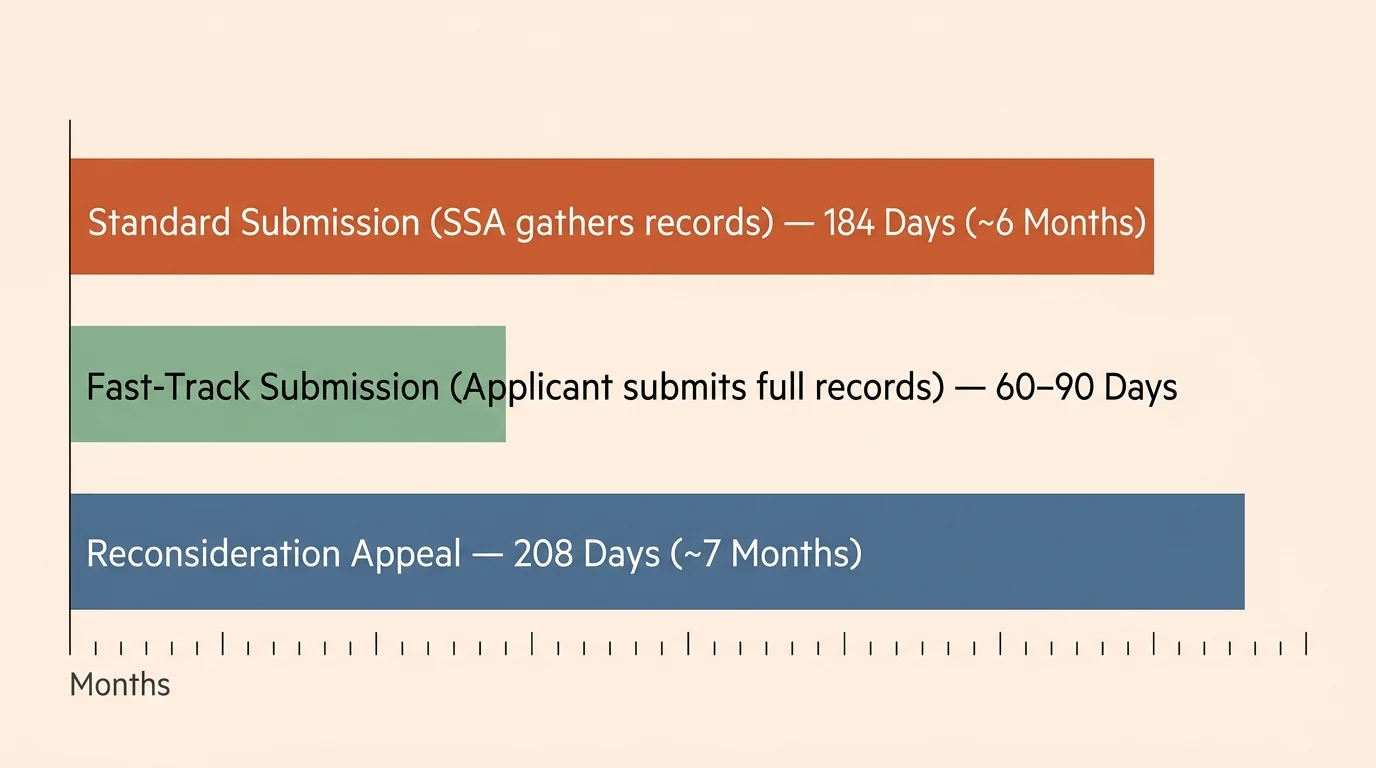
Why Paperwork Delays Cost You Months of SSDI Benefits
The primary reason disability claims stall inside state Disability Determination Services (DDS) offices is incomplete record collection. When you submit your initial application, the Social Security Administration (SSA) assigns a claims examiner to gather medical records from every doctor, hospital, clinic, and therapist you listed. Healthcare facilities often take weeks—sometimes months—to fulfill third-party record requests from government agencies. If a medical provider fails to respond, your application sits on an examiner’s desk in administrative limbo.
The financial consequences of these administrative bottlenecks are substantial. In 2026, the average monthly SSDI payment for a disabled worker ranges from $1,630 to $1,635, with maximum benefits reaching up to $4,152 per month for high earners. Every month your claim lags in processing is a month you must cover living expenses out of pocket without income replacement.
Federal law imposes a mandatory five-month waiting period before SSDI benefit payments begin; your payment eligibility starts in the sixth full month after your established onset date of disability. If paperwork omissions lead to an initial denial, you enter a lengthy appeals process that stretches your wait time dramatically:
- Initial Application Stage: Averages 184 days for an initial decision.
- Reconsideration Appeal Stage: Adds an average of 208 days if your initial claim receives a denial.
- Administrative Law Judge (ALJ) Hearing: Requires an additional wait averaging 267 days to secure a hearing date and ruling.
By compiling a complete package of documents for Social Security disability prior to filing, you remove the burden of record retrieval from the examiner. Handing the SSA a decision-ready file allows adjudicators to review objective medical evidence immediately, which drastically improves your chances of early approval.
| Application Strategy | Average Initial Decision Time | Common Cause of Delay | Impact on Claim Outcome |
|---|---|---|---|
| Standard Submission (SSA gathers records) | 184 Days (~6 Months) | Slow response times from hospitals and medical records departments. | Higher initial denial rate (approx. 65%) due to missing files. |
| Fast-Track Submission (Applicant submits full records) | 60–90 Days | Minimal; processing relies strictly on internal SSA evaluation times. | Higher rate of initial approval due to clear, complete evidence. |
| Reconsideration Appeal (If initially denied) | 208 Days (~7 Months) | Gathering updated medical reports and addressing initial gap reasons. | Only 12–15% of claims earn approval at reconsideration without fresh records. |
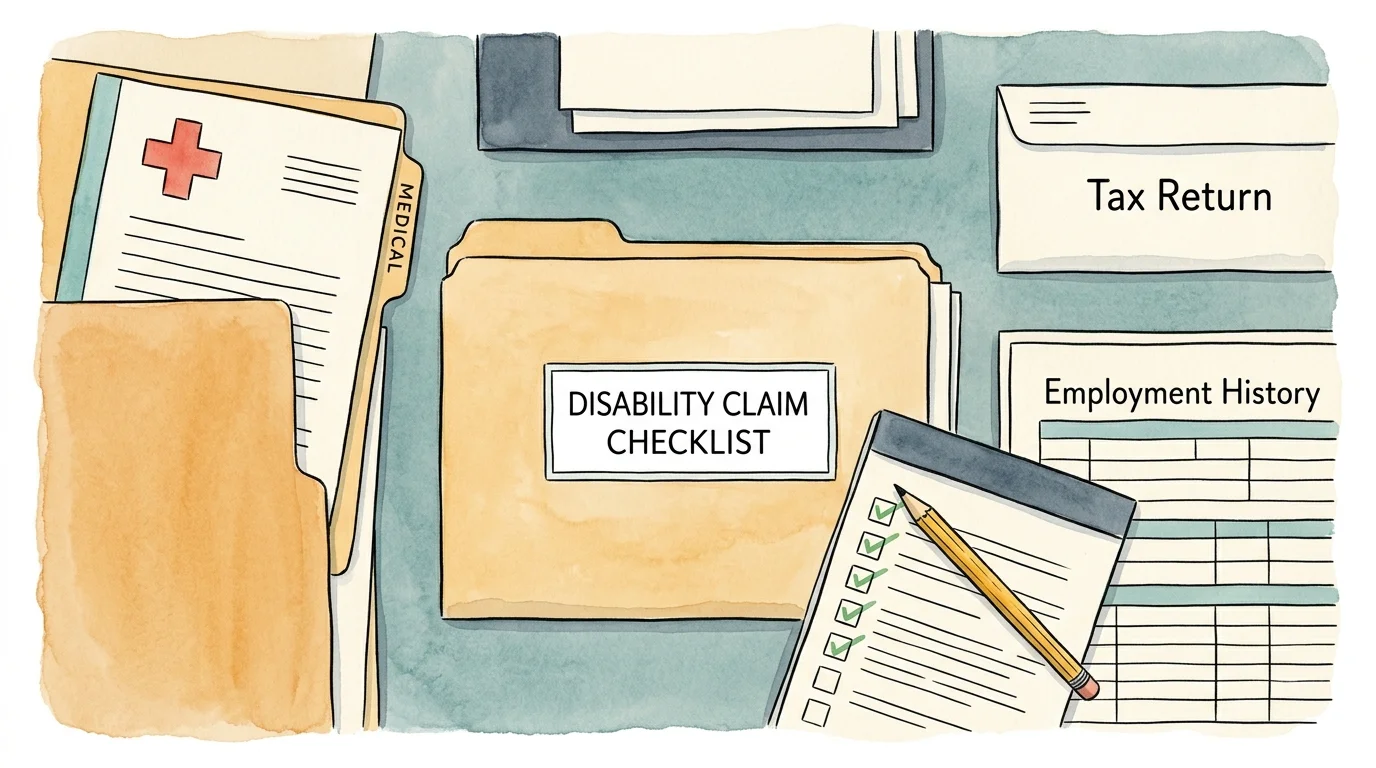
10 Essential Documents for Your Disability Claim Paperwork Checklist
To keep your application moving smoothly through the system, prepare these ten crucial documents before initiating your claim online, over the phone, or in person at your local SSA field office.
1. Certified Proof of Age and Citizenship
The SSA must verify your identity, age, and legal status before evaluating medical qualifications. Submit your original birth certificate or a certified copy issued by the vital statistics office in your birth state. If you were born outside the United States, provide certified proof of U.S. citizenship or lawful alien status, such as a U.S. Passport, Certificate of Naturalization, or permanent resident card. Uncertified photocopies are automatically rejected, which pauses your claim processing instantly.
2. Detailed 15-Year Work History Summary (Form SSA-3369-BK)
The SSA evaluates disability based on your inability to perform past work or adjust to other gainful employment. You must document every job you held over the 15 years prior to becoming disabled. Complete Form SSA-3369-BK (Work History Report) with granular detail. For each role, outline exact job duties, physical requirements—such as hours spent standing, walking, or sitting—and the maximum weight you lifted routinely. Providing clear details prevents the SSA from misclassifying past work as light duty when it actually required heavy labor.
3. Recent Tax Documents and Proof of Earnings
Your earning history determines your SSDI insured status and calculates your monthly payment amount. Include your W-2 forms from the previous calendar year. If you were self-employed, provide complete IRS Form 1040 tax returns along with Schedules C and SE. These financial records prove that you paid Federal Insurance Contributions Act (FICA) taxes, earned required work credits, and stayed below the Substantial Gainful Activity (SGA) limit prior to your disability onset date.
4. Adult Disability Report (Form SSA-3368)
Form SSA-3368 serves as the master blueprint for your medical claim. It documents your medical conditions, physical and mental limitations, ongoing treatments, and full employment timeline. Fill out every section completely; omitting contact details for a treating physician or leaving dates blank forces claims examiners to reach out to you for clarification, adding unnecessary weeks to the review timeline.
5. Complete Directory of Medical Sources
Instead of listing general hospital names, build a detailed directory of every healthcare provider involved in your treatment since your condition forced you to stop working. Include the full names of attending physicians, primary care doctors, specialists, physical therapists, and mental health professionals. List exact clinic street addresses, phone numbers, fax numbers, patient account numbers, and the precise dates of your appointments. Correct fax numbers allow SSA staff to send electronic record requests instantly.
6. Objective Medical Evidence and Diagnostic Test Results
Subjective statements about pain are insufficient on their own; the SSA requires “objective medical evidence from an acceptable medical source.” Contact the medical records departments at your treatment facilities and request certified copies of diagnostic test results. Essential records include:
- Imaging Reports: X-rays, Magnetic Resonance Imaging (MRI) scans, Computerized Tomography (CT) scans, and PET scans.
- Laboratory Findings: Blood work panels, pathology reports, biopsy results, and genetic testing.
- Functional Testing: Cardiac stress tests, pulmonary function tests, electromyograms (EMG), and nerve conduction studies.
- Operative Notes: Complete surgical reports, discharge summaries, and post-operative evaluations.
7. Residual Functional Capacity (RFC) Assessments from Treating Physicians
A Residual Functional Capacity (RFC) form is one of the most powerful documents for speeding up SSDI applications. While treating physicians often write brief notes stating a patient is “disabled,” the SSA routinely ignores such statements because disability determination remains an administrative legal decision. Instead, ask your treating specialist to complete an RFC assessment form tailored to your specific condition (e.g., physical, mental, or spinal). The RFC details exact physical limits, such as how many minutes you can sit without pain, how many pounds you can lift, and how frequently your symptoms would cause job absences. A well-supported RFC from a treating doctor carries significant weight during adjudication.
8. Comprehensive Prescription History and Treatment Logs
Submit a complete history of all medications prescribed for your condition. Print an official prescription profile from your pharmacy showing drug names, exact dosages, prescribing physicians, and refill history. Include notes regarding side effects, such as severe drowsiness, nausea, or cognitive impairment. Demonstrating strict adherence to prescribed medical treatments proves to the SSA that your condition persists despite active medical intervention.
9. Military Discharge Papers (DD Form 214)
If you served in the U.S. Military, submit copy 4 of your DD Form 214 (Certificate of Release or Discharge from Active Duty). Veterans who acquired a disability during active service may qualify for expedited claim processing through the SSA’s Wounded Warriors program or Military Service Casualty provisions. Furthermore, VA disability compensation records can serve as supporting evidence, although SSA rules require an independent evaluation.
10. Workers’ Compensation or Public Disability Award Documents
If your disability resulted from a workplace injury or if you receive benefits through state disability programs, submit official settlement agreements, award notices, and payment stubs. SSDI rules dictate that total combined public benefits and disability payments cannot exceed 80% of your average current earnings prior to disability. Providing these financial documents upfront allows the SSA to calculate any required benefit offsets accurately without delaying your initial payment approval.
“The goal of retirement is to live off your assets—not live off your regrets.”

Errors That Cost Retirees Thousands
Filing for disability benefits while transitioning into retirement requires careful financial navigation. Small missteps during the application phase can stall your payments or trigger permanent benefit reductions.
One of the costliest errors is earning income above the Substantial Gainful Activity (SGA) threshold while applying for benefits. For 2026, the monthly SGA income limit for non-blind applicants is $1,690 per month ($2,830 per month for statutorily blind applicants). Earning even a few dollars above this limit leads to an immediate non-medical, technical denial of your application, regardless of how severe your medical condition is.
Another frequent mistake involves stopping medical treatment while your claim is pending. Applicants often drop medical coverage or skip doctor visits due to financial strain after losing job income. However, gaps in medical records signal to SSA examiners that your condition may have improved or stabilized. Continue seeking low-cost community health treatment or charity care options to maintain a continuous, documented record of your impairment.
Finally, avoid filing for early Social Security retirement benefits at age 62 without understanding how it interacts with SSDI. While taking early retirement provides immediate cash flow while you wait for disability processing, it permanently reduces your baseline retirement benefit by up to 30%. If your SSDI claim is subsequently approved, the SSA will convert your early retirement benefit to a full, unreduced SSDI benefit retroactive to your onset date. However, if your SSDI claim receives a final denial, you remain locked into reduced early retirement payments for life.

When to Get Expert Help
Navigating disability claims paperwork while managing severe health issues can easily overwhelm applicants and family members. Knowing when to engage professional assistance protects your income and ensures compliance with SSA regulations.
Consider consulting a professional under the following circumstances:
- Working with a Disability Advocate or Attorney: If your initial claim is denied, hiring a accredited disability representative or ERISA/disability lawyer drastically improves your appeal odds. Disability representatives work on a contingency fee basis regulated by federal law, meaning they receive payment only if you win backpay benefits.
- Navigating Medicare Transition via SHIP: Disabled individuals under age 65 become eligible for Medicare coverage after receiving 24 months of SSDI payments. Consult a State Health Insurance Assistance Program (SHIP) counselor to understand enrollment timelines, Medicare Advantage choices, and Supplemental policy options during this transitional window.
- Consulting an Elder Law Attorney or Financial Advisor: If you hold significant IRA balances, 401(k) assets, or pension options, consult a financial professional before filing. Proper asset structuring prevents tax surprises and coordinates SSDI income alongside long-term retirement withdrawal strategies. Additional resources regarding senior income planning are available at USA.gov Retirement Resources and AARP.
Frequently Asked Questions About Documents for Social Security Disability
How far back should my medical records go for an SSDI application?
Your medical records should cover at least 12 months prior to your alleged onset date (the date your disability prevented you from working). However, if your medical condition developed over a longer period, gathering 24 to 36 months of specialty medical records, surgical reports, and diagnostic imaging provides a stronger baseline of medical evidence.
What happens if a healthcare facility charges a fee to release my records?
Many states pass laws requiring medical providers to provide free copies of records to patients requesting them for Social Security disability claims. If a provider charges steep fees, submit your disability application along with exact provider contact details. The SSA will then request the records directly, as government agencies generally possess statutory authorization to obtain records without upfront fee burdens on the applicant.
Can I work part-time while compiling my disability application requirements?
You can work part-time provided your gross monthly earnings stay below the 2026 Substantial Gainful Activity (SGA) threshold of $1,690 per month ($2,830 for blind individuals). However, the SSA also examines whether the physical or mental effort required for your part-time job demonstrates an ability to perform full-time work, so consult a specialist before working during the claim period.
How does the 5-month waiting period impact my first SSDI payment check?
Federal law dictates that SSDI benefit payments begin in the sixth full calendar month after your established onset date of disability. For instance, if the SSA establishes that your disability began on January 15, your 5-month waiting period runs from February through June. Your first payable month is July, and because Social Security pays benefits one month in arrears, your first check will arrive in August.
Taking Action on Your SSDI Application
Speeding up an SSDI application comes down to proactive organization and thorough evidence gathering. Rather than waiting for claims examiners to request records on your behalf, take control of the timeline by creating a complete document folder containing your medical, work, and personal financial history. Start by contacting your medical providers today to request certified copies of diagnostic reports and RFC statements, ensuring your disability application requirements are fully met prior to your formal submission.
Organizing your paperwork today safeguards your long-term retirement security and eliminates unnecessary administrative delays. Retain duplicates of every form, letter, and medical file you submit to the SSA, and send all physical paperwork via certified mail with return receipt requested to track your filing status step by step.
Retirement rules and benefit amounts vary based on individual work history, income, and circumstances. This article provides general guidance only. Consult a SHIP counselor, financial advisor, or elder law attorney for advice specific to your situation.
Last updated: February 2026. Medicare and Social Security rules change annually—always verify current details at official government sources.