Your December Social Security cost-of-living adjustment (COLA) notice reveals your exact monthly income for the coming year. Reviewing this document carefully ensures you catch unexpected deductions before your first January deposit arrives.
The Social Security Administration has announced a 3.6% boost for 2027 benefits, averaging an extra $75 each month. However, rising healthcare expenses can quickly erode that anticipated raise.
Taking ten minutes to audit your one-page letter protects your retirement cash flow and flags costly clerical errors early. Here is your roadmap to decoding every line of your personal statement.
1. Verify Your Gross Monthly Benefit Against the 3.6% COLA Increase
The top section of your benefit notice shows your new gross monthly payment. This figure represents your total entitlement before any mandatory or voluntary deductions come out.
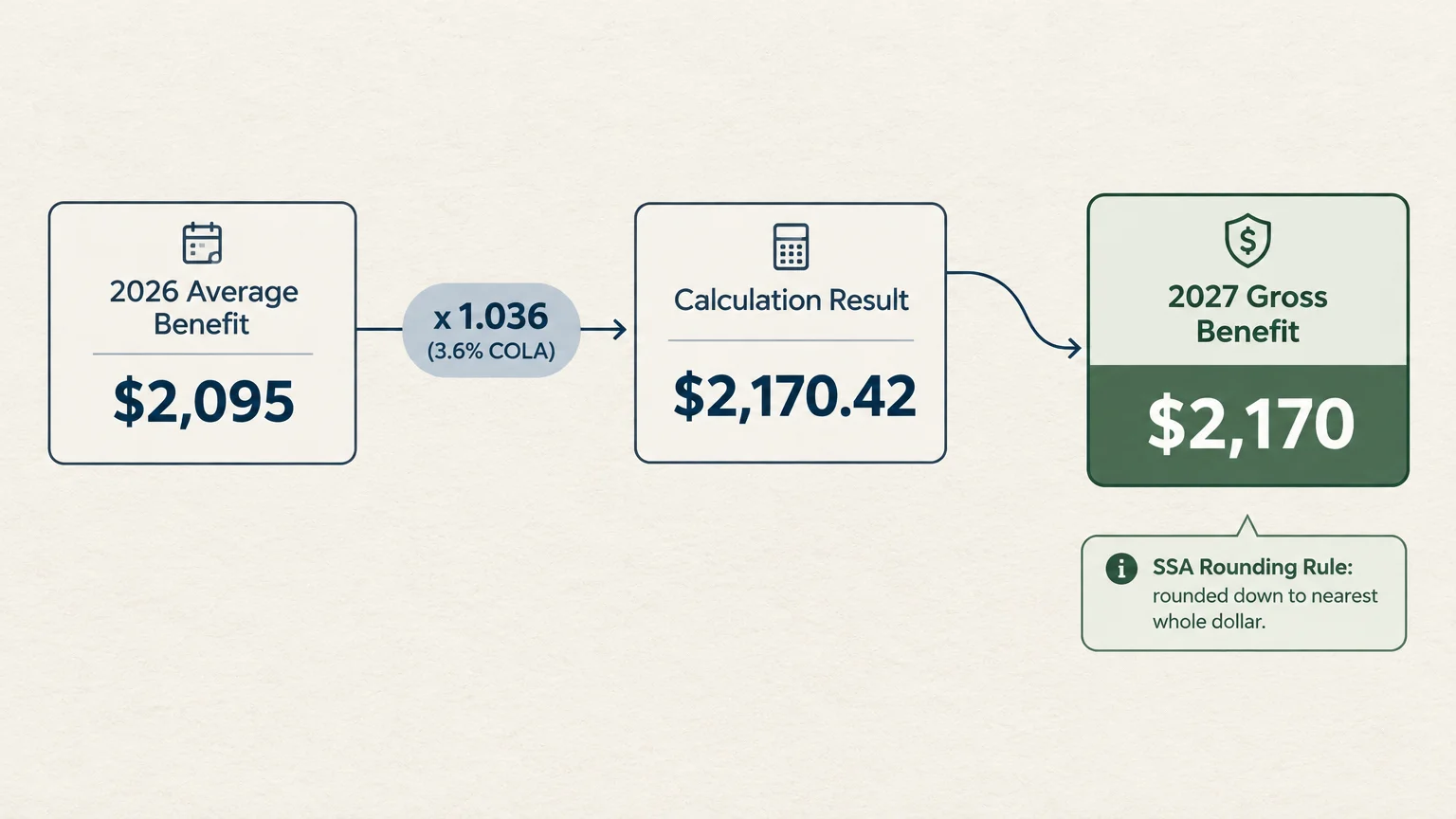
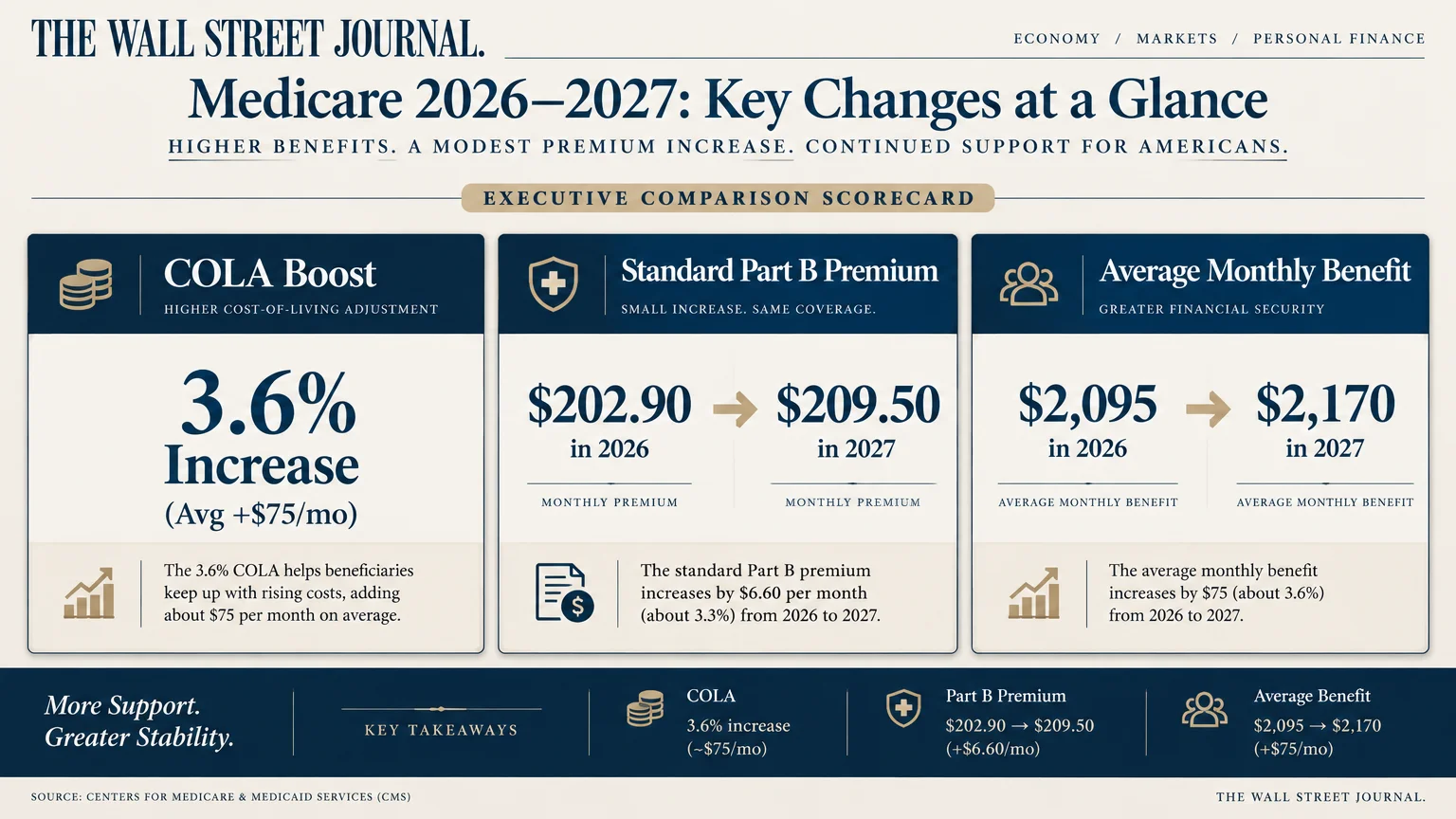
For 2027, the Social Security Administration established a 3.6% increase. This adjustment raises the average retired worker benefit from approximately $2,095 to $2,170 per month.
You can check the arithmetic yourself using your current monthly benefit statement. Multiply your 2026 gross benefit by 1.036 to calculate your expected baseline.
Keep in mind that Social Security applies precise rounding formulas to benefit calculations. The agency rounds the resulting benefit down to the nearest ten cents during intermediate steps.
Your final monthly check is then rounded down to the nearest whole dollar amount. If your gross benefit does not match this calculation, contact your local field office immediately.
Nearly 72 million retirement beneficiaries and 7.3 million Supplemental Security Income recipients see adjustments this cycle. Spotting math errors early prevents compounding headaches throughout the upcoming tax year.
Your gross monthly amount stems from your Primary Insurance Amount, calculated from your highest 35 years of indexed earnings. The annual COLA permanently ratchets up this baseline for the rest of your life.
If you delayed claiming benefits past your full retirement age, your 3.6% boost applies to your entire augmented benefit. That includes all accrued delayed retirement credits earned up to age 70.
Your gross benefit serves as the primary benchmark for all secondary retirement calculations. Lenders and assistance programs evaluate your raw eligibility based entirely on this pre-deduction number.
Double-checking this initial figure gives you complete confidence before reviewing secondary line items. Save this calculation in your annual retirement binder for future tax planning.
2. Check the Projected Medicare Part B Premium Deduction
Many retirees experience shock when their bank deposit increases by less than the full 3.6% adjustment. The culprit is almost always your standard Medicare Part B monthly premium.
The federal government automatically deducts your healthcare premium from your monthly retirement benefit. If Part B premiums rise, that deduction absorbs a slice of your raise.
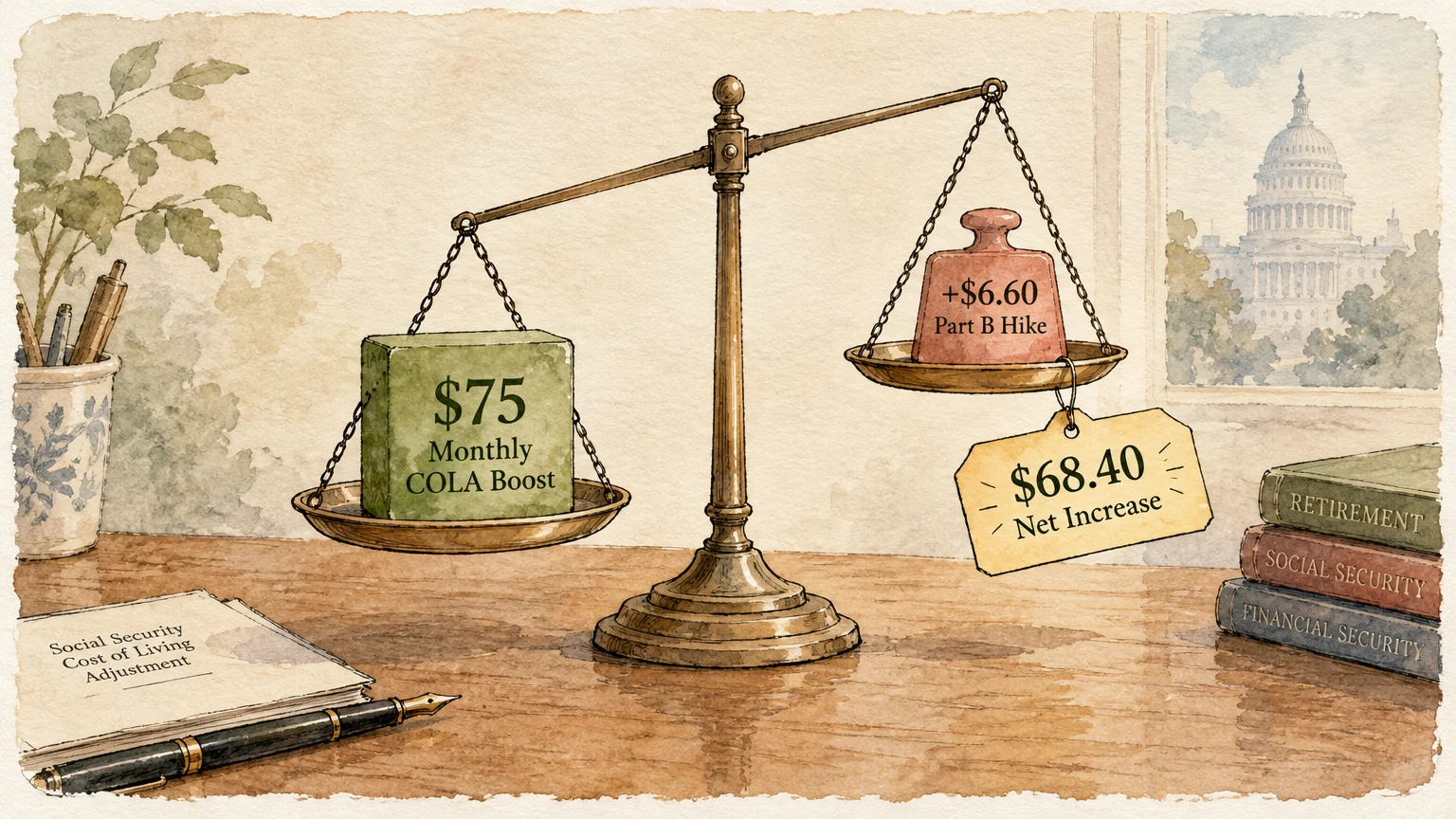
The standard Medicare Part B premium was $202.90 per month in 2026. Trustees project the standard 2027 premium will climb to $209.50 per month.
That projected $6.60 monthly hike trims the average $75 gross increase down to roughly $68.40. Your personal notice displays your exact Part B deduction in the center breakdown section.
Retirees with low fixed incomes might wonder about the statutory hold harmless provision. This legal protection prevents Social Security net benefits from decreasing due solely to Part B hikes.
Because the 3.6% raise comfortably exceeds the projected $6.60 premium increase, the hold harmless rule will not apply for most seniors in 2027. Your net check will still increase year over year.
Retirees enrolled in Medicare Advantage plans may see separate adjustments if their specific plan charges an additional monthly premium. Check whether your private plan fee is deducted directly from Social Security.
Remember that the Part B deductible also resets every January. Factoring in both your monthly premium and your annual deductible ensures realistic out-of-pocket medical projections.
Always visit Medicare.gov during open enrollment to examine your overall healthcare coverage. Understanding these deductions helps you build an accurate net monthly spending plan.
If you qualify for state Medicaid or Medicare Savings Programs, your state may cover this premium entirely. Verify that your notice reflects zero deduction if your state pays your Part B bill.
3. Audit Your Notice for Surprise IRMAA Surcharges
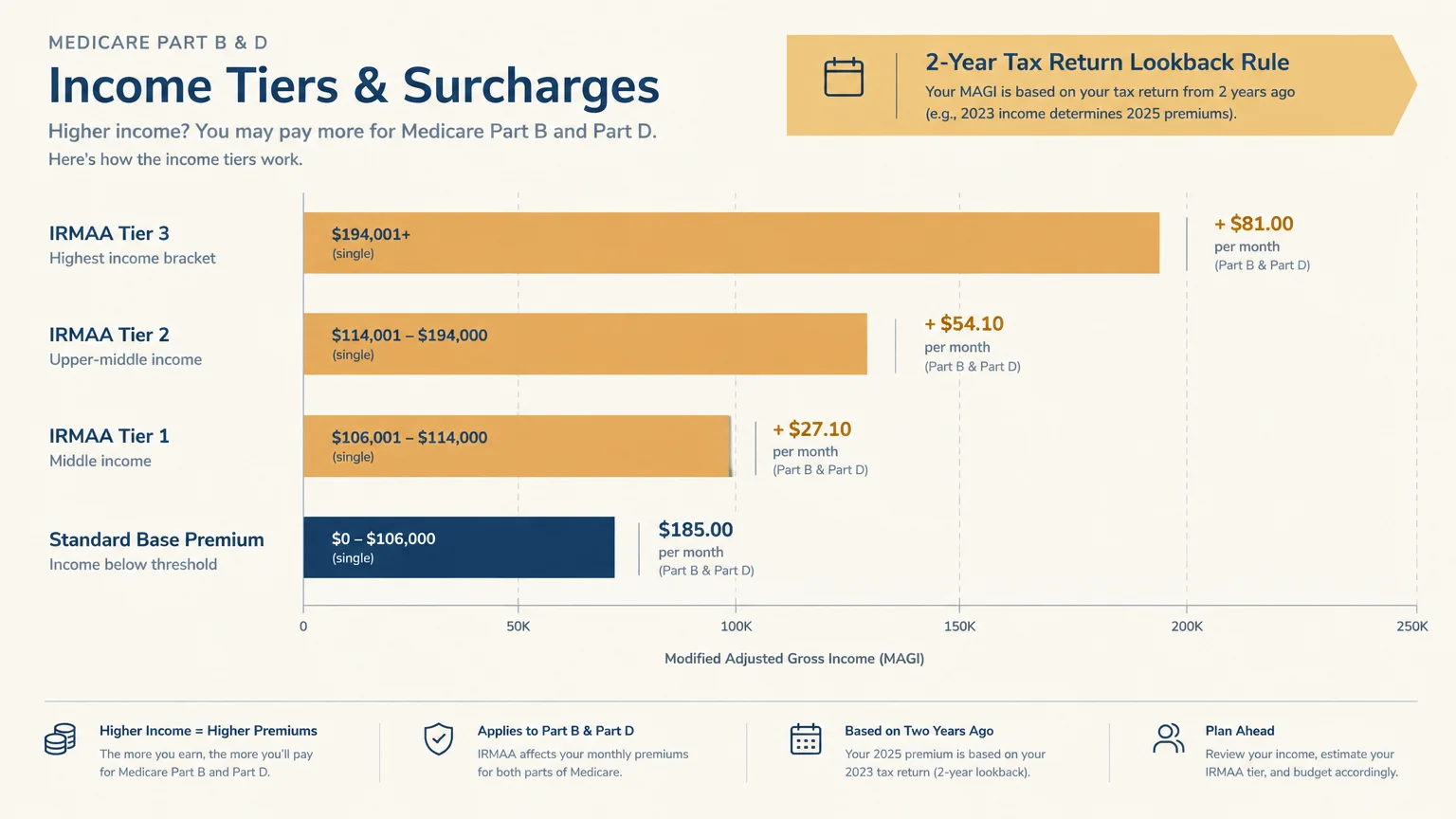
Higher-earning retirees must pay close attention to the Income-Related Monthly Adjustment Amount (IRMAA). This surcharge imposes extra fees on both Medicare Part B and Medicare Part D.
The Social Security Administration determines your 2027 IRMAA status using your 2025 federal tax returns. They examine your modified adjusted gross income from two years prior.
If you sold a home, converted a traditional IRA, or cashed in investments during 2025, your income might cross into surcharge territory. Your December notice lists these surcharges as separate line items.
Surcharges follow tiered income brackets that create sharp fiscal cliffs. Crossing a threshold by a single dollar triggers the entire surcharge for that tier.
Fortunately, you do not have to accept an incorrect surcharge without a fight. If your income dropped due to retirement, divorce, or spousal death, you can request an immediate reconsideration.
Submit Form SSA-44 directly through the Social Security Administration alongside proof of your life-changing event. Winning an appeal removes the surcharge and restores your full monthly benefit.
The Social Security Administration recognizes eight specific life-changing events for an IRMAA appeal. These include marriage, divorce, job loss, work reduction, pension cessation, and loss of income-producing property.
Filing your appeal promptly allows the agency to recalculate your premiums before January disbursements. Successful appeals trigger retroactive refunds for any overpaid surcharge amounts.
Document everything thoroughly, including employer separation letters, final pay stubs, or death certificates. The agency can retroactively reimburse excess premiums collected while your appeal remains pending.
Do not wait until spring to challenge an erroneous IRMAA determination. Filing your appeal in December prevents unnecessary cash outflow during the first quarter.
4. Confirm Voluntary Federal and State Tax Withholding
Social Security benefits become taxable once your combined provisional income crosses modest federal thresholds. Many retirees choose voluntary tax withholding to avoid huge tax bills in April.
Your COLA notice itemizes any federal income tax withheld from your monthly checks. Review this deduction to ensure the amount aligns with your broader retirement tax strategy.
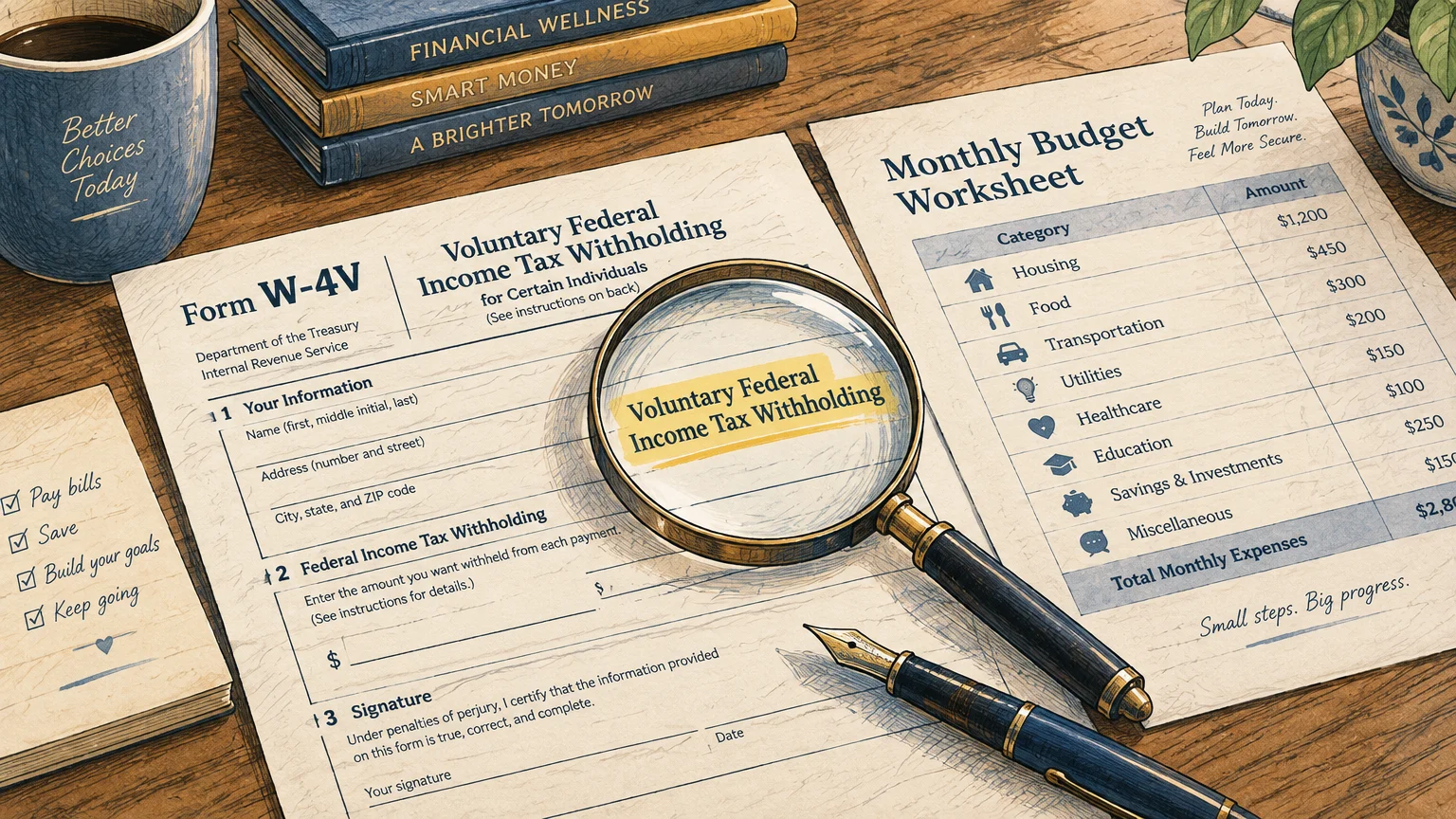
The federal government permits voluntary withholding rates of 7%, 10%, 12%, or 22%. You can modify your chosen percentage at any time by filing Form W-4V.
Failing to adjust withholding when benefits increase can accidentally push you into an underpayment penalty. Review guidelines on IRS Retirement Plans to ensure proper tax compliance.
Your provisional income equals your adjusted gross income plus non-taxable interest plus one-half of your Social Security benefits. Crossing $25,000 for single filers or $32,000 for couples exposes benefits to taxation.
Keep in mind that tax-exempt municipal bond interest still counts toward your provisional income calculation. Many seniors inadvertently cross taxation thresholds because they assume tax-free bonds are entirely invisible to the formula.
Adjusting your Form W-4V takes approximately two weeks for the Social Security Administration to process. Submitting updates before mid-December guarantees proper withholding on your initial January deposit.
Certain states also tax retirement benefits under specific criteria. Check your net benefit breakdown to ensure state deductions reflect your legal residence and personal elections.
If you recently moved across state lines in retirement, ensure your former state is not still deducting revenue. Updating your address with the agency stops unauthorized state withholdings immediately.
“The goal of retirement is to live off your assets—not live off your regrets.”
5. Pinpoint Your Exact 2027 Benefit Payment Dates
Your December notice highlights the specific calendar date your revised payment begins. Beneficiaries do not all receive their monthly deposits on the same day.
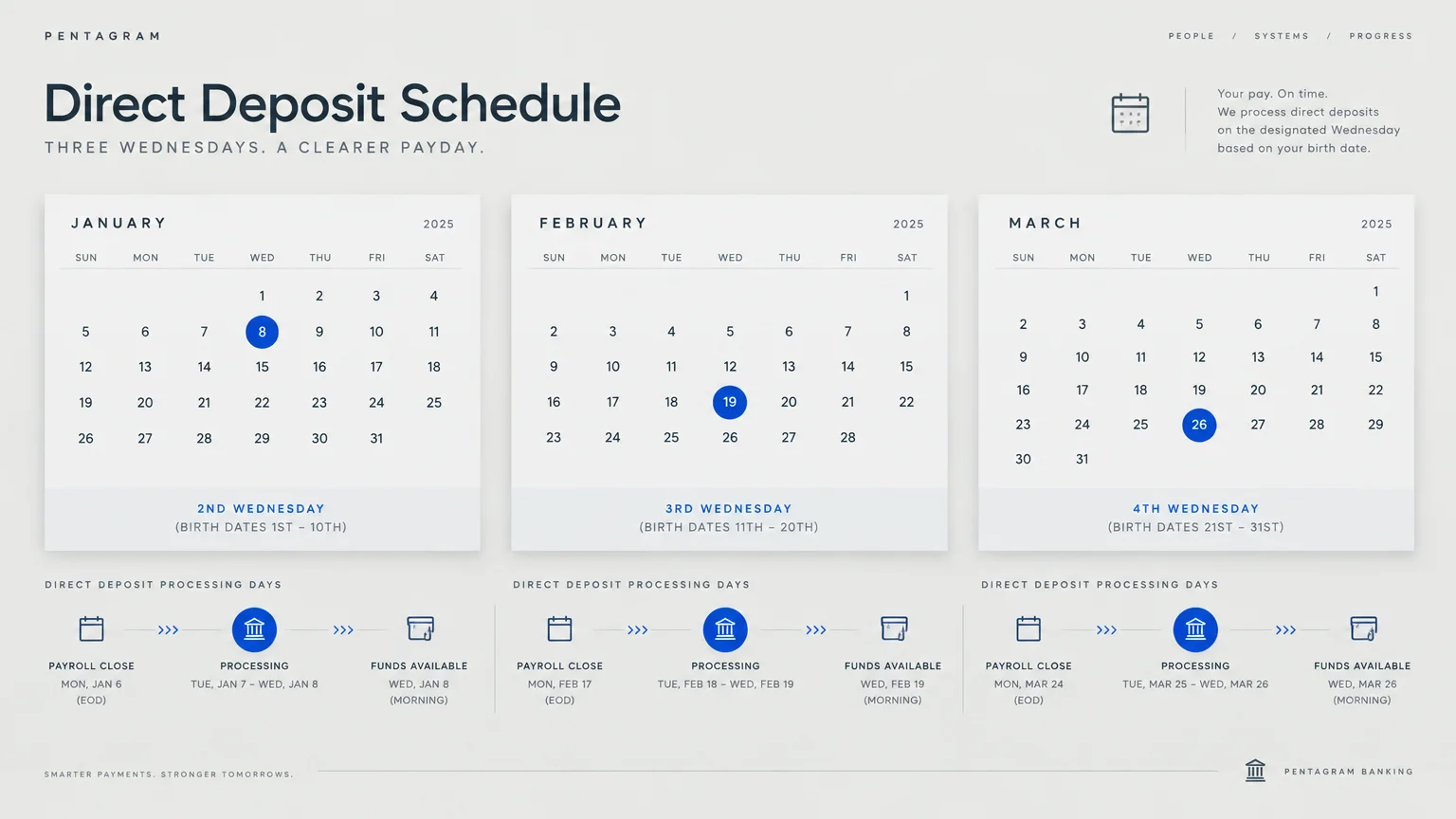
The Social Security Administration distributes recurring retirement payments across three Wednesdays each month. Your exact distribution date depends entirely upon your day of birth.
- Birthdays on the 1st through 10th: Paid on the second Wednesday of January 2027.
- Birthdays on the 11th through 20th: Paid on the third Wednesday of January 2027.
- Birthdays on the 21st through 31st: Paid on the fourth Wednesday of January 2027.
Beneficiaries receiving Supplemental Security Income follow a different schedule entirely. SSI recipients will see their 2027 increase arrive on December 31, 2026, because January 1 is a federal holiday.
Those who filed for Social Security benefits prior to May 1997 also receive payments on a separate timeline. These long-term beneficiaries receive deposits on the third day of each month.
If your scheduled payment date falls on a bank holiday, your financial institution deposits your funds on the preceding business day. This safeguard ensures uninterrupted access to your living funds.
If your payment fails to arrive on your assigned Wednesday, wait three mailing days before calling the agency. Banks occasionally hold electronic transfers briefly during post-holiday reconciliations.
Knowing your precise arrival date allows you to synchronize recurring household bills seamlessly. Mark this date on your calendar to prevent overdraft fees during early January bill cycles.
Verify your direct deposit routing and account numbers printed at the bottom of the form. Report bank account changes at least thirty days before your scheduled disbursement date.

6. Review the Earnings Test Thresholds if You Work in Retirement
Working while collecting benefits before reaching full retirement age triggers the retirement earnings test. Exceeding government limits leads to temporary benefit withholding.
For 2027, the earnings cap for workers under full retirement age rises to $25,560. The agency withholds $1 in benefits for every $2 earned above that mark.
If you reach full retirement age during 2027, the earnings threshold climbs significantly to $67,920. In that specific year, the agency deducts $1 for every $3 earned above the limit.
The earnings restriction vanishes completely starting the exact month you attain full retirement age. You can earn unlimited wages thereafter without sacrificing a dime of benefits.
Additionally, the wage cap subject to the 6.2% Social Security payroll tax rises to $192,300 in 2027. Higher earners must account for this adjusted payroll cap in their annual financial projections.
Withheld earnings test benefits are not permanently lost to the government. The agency recalculates your monthly check at full retirement age to credit you for previously withheld sums.
If you earn more than the 2027 limits, notify the agency before January begins. Proactive reporting prevents the agency from unexpectedly withholding entire monthly checks later in the year.
Self-employed retirees must remember that net earnings count toward the test, not gross business receipts. Keep meticulous quarterly profit and loss statements ready to document your exact earnings.
Notifying the agency in advance about expected earnings prevents sudden demand letters later. Proactive reporting keeps your cash flow predictable and manageable.
7. Cross-Check Other Reductions and Voluntary Deductions
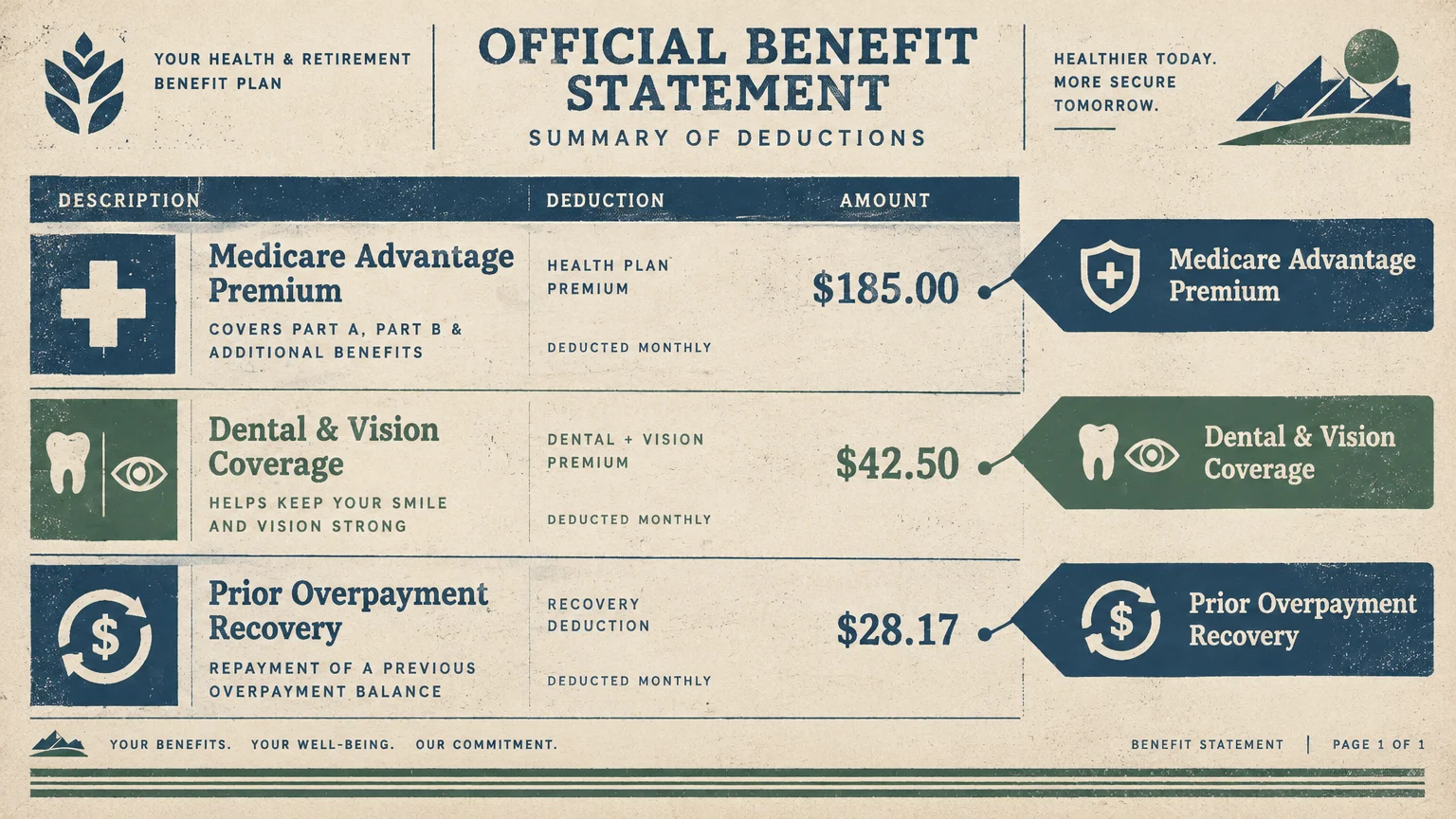
Your one-page notice contains separate entries for miscellaneous voluntary and involuntary withholdings. Scrutinizing these lines prevents administrative mistakes from siphoning your monthly cash flow.
Retirees enrolled in stand-alone Medicare Part D prescription drug plans often choose direct premium deduction. Confirm that your 2027 drug plan premium matches your annual enrollment confirmation letter.
If you switched prescription drug plans during autumn open enrollment, watch for timing delays. Early January checks occasionally reflect your old insurer’s premium before records synchronize.
If you have past federal student loans or back taxes, government garnishments may appear here. Court-ordered child support or alimony obligations also reduce your final net check.
Involuntary garnishments from federal student loans or overdue taxes cannot reduce your benefit below statutory safety thresholds. Review your statement carefully to verify that statutory garnishment caps were respected.
Voluntary deductions for optional dental or vision insurance plans also appear in this itemized summary. Verify that these recurring fees match your renewal contracts for the upcoming plan year.
Furthermore, review lines reflecting the Windfall Elimination Provision or Government Pension Offset if you receive a public pension. Ensuring these offsets match your verified service records prevents substantial financial losses.
Tools from the Consumer Financial Protection Bureau can help you evaluate garnishment rules and debt priorities. Never ignore an unexplained deduction on your official statement.
If an erroneous deduction appears, request an audit from your local claims representative immediately. Keeping past award letters handy expedites resolution.

8. Access Your Notice Early Through Your Online Account
You do not need to wait beside your physical mailbox for your official document to arrive. Paper statements mail out in batches across the entire month of December.
Beneficiaries who establish an online account can view their personalized notice starting in late November 2026. That gives you up to three weeks of advance notice before mailboxes fill up.
To receive your notice online instead of by mail, register your account by November 18, 2026. This paperless deadline allows the agency to update your communication preferences in time.
Log into your account and navigate directly to the Message Center tab. You can activate automated email or text message notifications so you know the exact minute your file posts.
Creating your online profile requires verifying your identity through Login.gov or ID.me. Complete this step ahead of the November 18, 2026, paperless deadline to prevent system lockouts.
Once logged in, save an electronic copy of your benefit verification letter to your personal computer. This digital file acts as legal income verification whenever you apply for loans or leases.
Digital access also shields your sensitive personal information from mail theft and postal delays. You can download and save a digital PDF copy directly to your encrypted home records.
If you missed the November paperless deadline, you can still view your digital notice online. Both digital and mailed paper notices contain identical data points and deduction breakdowns.
Having an active online profile also enables rapid password resets and direct deposit updates. It represents your most powerful self-service tool for managing lifetime retirement benefits.
“It’s not how much money you make, but how much money you keep, how hard it works for you, and how many generations you keep it for.” — Robert Kiyosaki
2026 vs. 2027 Key Social Security Changes at a Glance
Evaluating year-over-year figures provides crucial context for your upcoming household budget. Compare the verified changes taking effect across the retirement landscape below.
These adjustments directly influence how much money reaches your checking account each month. Use this quick reference guide to verify your printed statement figures.
| Benefit Metric | 2026 Baseline | 2027 Adjusted Value | Financial Impact |
|---|---|---|---|
| Cost-of-Living Adjustment (COLA) | 2.8% | 3.6% | Larger baseline boost to offset living costs |
| Average Retired Worker Benefit | $2,095 / month | $2,170 / month | Average increase of approximately $75 monthly |
| Standard Medicare Part B Premium | $202.90 / month | $209.50 / month (projected) | Estimated deduction increase of $6.60 monthly |
| Earnings Limit (Under Full Retirement Age) | $24,480 / year | $25,560 / year | Can earn $1,080 more before benefit withholding |
| Earnings Limit (Year Reaching Full Retirement Age) | $65,160 / year | $67,920 / year | Can earn $2,760 more in months prior to FRA |
| Social Security Maximum Taxable Wage Base | $184,500 / year | $192,300 / year | Cap on earnings subject to 6.2% tax rises by $7,800 |
| Total Beneficiaries Impacted | ~75 Million | ~76 Million | Covers nearly 72M retired and 7.3M SSI recipients |
These numbers highlight why reviewing your statement line by line remains essential. Even small increases in premiums or earnings thresholds modify your annual bottom line.
Revisiting your budget in December prevents surprise cash crunches when the new year begins. Small adjustments today protect your long-term capital preservation.
Costly Mistakes to Avoid
Navigating benefit statements can feel overwhelming when numbers change across multiple categories. Steer clear of these common pitfalls when evaluating your December notice.
Confusing Gross Benefit with Net Take-Home Pay: Do not budget based on your gross figure. Your net deposit reflects Medicare premiums, IRMAA surcharges, and voluntary tax withholdings.
Building a household budget on your pre-deduction number leads to immediate cash flow deficits. Always plan your recurring monthly expenses around the final deposited figure.
Missing the IRMAA Appeal Window: Assuming high-income surcharges are permanent costs thousands of dollars annually. If your income dropped in 2025 or 2026, file Form SSA-44 immediately.
Failing to appeal forces you to pay inflated Medicare premiums throughout the entire calendar year. Gathering your life-event documents in December protects your hard-earned income.
Discarding Your Official Paper Notice: Many public housing authorities, mortgage lenders, and property tax relief programs require official benefit verification. Store this paper statement in a safe deposit box or fireproof safe.
Ordering official replacement letters from the government often takes weeks during peak winter periods. Keeping your original December mailing readily accessible prevents administrative delays.
Falling for Imposter Scams: Fraudsters frequently call retirees in December claiming they must pay a fee to activate their COLA. The Social Security Administration never charges fees to apply standard statutory adjustments.
Hang up immediately if a caller demands personal financial data or banking details. The government communicates benefit changes through secure official letters and verified online portals.
Overlooking Withholding Adjustments: Higher gross benefits can trigger higher taxable percentages on your combined retirement income. Failing to adjust withholding now could generate an unwanted tax surprise in April.
Reviewing your tax withholdings annually ensures you stay ahead of federal and state liabilities. A quick adjustment on Form W-4V prevents costly underpayment penalties next tax season.

Don’t DIY These Decisions
While reading your benefit notice is straightforward, resolving discrepancies often requires professional insight. Certain complex situations warrant immediate consultation with accredited specialists.
Medicare Counselors (SHIP): If your notice reflects unexpected Part B or Part D adjustments, contact your local State Health Insurance Assistance Program. SHIP counselors provide free, unbiased guidance on Medicare appeals and low-income assistance programs.
A certified SHIP advisor helps you understand coverage options and appeal invalid premium surcharges. Their localized assistance ensures you avoid costly gaps in essential healthcare coverage.
Fee-Only Financial Planners: If your COLA boost threatens to trigger higher Medicare surcharges or capital gains brackets, consult a fiduciary advisor. A certified financial planner helps you optimize withdrawals from taxable, tax-deferred, and Roth accounts.
Strategic retirement distributions shield your Social Security benefits from unnecessary income taxation. A professional planner ensures your investment drawdowns align with your living needs.
Elder Law Attorneys: Consult an elder law specialist if government pension offsets impact survivor benefits or Medicaid long-term care eligibility. Legal counsel ensures proper documentation and asset protection strategies.
Attorneys help protect spousal assets while navigating strict government entitlement rules. Their legal guidance shields your estate from unforeseen regulatory penalties.
Social Security Claiming Specialists: Contact an experienced benefits consultant if you suspect errors in your primary insurance amount. They verify historical earnings records and ensure proper credit for lifetime contributions.
A claiming specialist audits your lifetime earnings record to uncover missing wages or incorrect credits. Correcting past reporting errors permanently boosts your monthly lifetime baseline.
Frequently Asked Questions About the COLA Notice
Here are answers to the most common questions retirees ask when evaluating their annual adjustment notice.
Why is my net Social Security increase smaller than the 3.6% COLA?
The 3.6% COLA applies directly to your gross benefit, not your deposited check. Increases in Medicare Part B premiums and other deductions reduce the final net gain deposited into your bank account.
When will I see the 2027 COLA increase reflected in my bank account?
Social Security retirement beneficiaries will see the increase in their regular January 2027 deposits. SSI recipients receive their increased payment on December 31, 2026, due to the New Year holiday.
How can I get a replacement copy if I lose my December notice?
You can access and print an official replacement notice anytime through your online account. Log in, select the Message Center, and download your benefit verification letter directly.
Can I appeal the IRMAA surcharge listed on my COLA notice?
Yes, you can appeal if your income dropped due to a qualifying life-changing event. Submit Form SSA-44 with supporting tax or employer documentation to request an immediate reduction.
Does the COLA increase automatically trigger higher taxes on my benefits?
It can, because federal provisional income thresholds remain unindexed for inflation. If your higher benefit pushes your provisional income over $25,000 as a single filer, up to 85% of benefits may face taxation.
Taking Charge of Your Retirement Income
Your personal COLA notice provides vital intelligence for your household budget. Dedicating a few minutes to verify each calculation puts you in complete control of your retirement finances.
Log into your personal account today to ensure your contact preferences and banking details remain accurate. A little proactive planning now guarantees a smooth transition into 2027.
Information in this article reflects current rules as of the publication date and may change. Always confirm benefit details directly with Social Security Administration, Medicare.gov, or relevant government agencies before making decisions.
Last updated: October 2026. Medicare and Social Security rules change annually—always verify current details at official government sources.