A single missed tax rule or healthcare deadline can quietly siphon thousands of dollars from your hard-earned nest egg. Conducting a disciplined annual money review ensures your investments, healthcare plans, and legacy wishes stay aligned with current federal regulations.
Taking deliberate control of your finances once each year eliminates nagging anxiety. It gives you the confidence to enjoy your daily life, knowing your wealth remains fully protected.
Walk through this comprehensive retiree financial checklist to audit your accounts, optimize your withdrawals, and protect your financial independence year after year.

1. Recalculate Your Safe Withdrawal Rate and Spending Plan
Market swings and inflation shifts alter the sustainability of your portfolio over time. Reassessing your annual withdrawal rate keeps your principal intact without forcing unnecessary lifestyle sacrifices.
Many financial planners recommend dynamic withdrawal strategies rather than rigid distribution formulas. Dynamic guardrails let you increase distributions during bull markets and trim spending slightly after market pullbacks.
Tying annual withdrawals to portfolio performance dramatically reduces sequence-of-returns risk. It guarantees that temporary market downturns do not permanently deplete your core savings.
Use proven yearly financial planning tips to distinguish essential living costs from discretionary spending. This clear separation shows you exactly where to trim if markets experience unexpected volatility.

2. Audit Required Minimum Distributions (RMDs) and Optimize QCDs
Missing a distribution from a tax-deferred retirement account triggers severe federal penalties. Under the SECURE 2.0 Act, your starting age for RMDs is age 73, rising to age 75 in 2033.
The excise tax penalty for a missed RMD is 25 percent of the required sum. You can reduce that penalty to 10 percent if you correct the oversight within two years.
If you are 70½ or older, consider utilizing Qualified Charitable Distributions (QCDs). You can transfer funds directly from a traditional IRA to an eligible 501(c)(3) charity completely tax-free.
The QCD limit is $108,000 per individual, directly satisfying your RMD without increasing your adjusted gross income.
Review current withdrawal thresholds on the IRS Retirement Plans portal before finalizing your year-end distributions.

3. Rebalance Your Asset Allocation and Maintain Cash Reserves
Extended market rallies can leave your nest egg with heavier equity exposure than your risk profile warrants. Conversely, sharp market pullbacks might leave you underinvested right when equities offer strong long-term value.
Conduct a thorough retirement account review to bring your asset allocation back to your target benchmarks. Trimming appreciated equities locks in gains and bolsters your stable fixed-income holdings.
Maintain a dedicated cash reserve covering one to two years of basic living expenses in secure accounts. This liquid cushion prevents you from liquidating equities during temporary market corrections.
“The goal of retirement is to live off your assets—not live off your regrets.”

4. Review Medicare Coverage and Prescription Drug Plans
Health needs and prescription formularies shift every single year. Staying on autopilot with your health coverage can cost you thousands of dollars in unexpected medical expenses.
The Medicare Annual Enrollment Period runs from October 15 through December 7 each year. During this window, you can freely switch Medicare Advantage plans or choose a different Part D prescription drug plan.
Enrollees already in Medicare Advantage have an additional open enrollment window from January 1 to March 31. This period lets you switch Advantage plans or return to Original Medicare.
The standard Medicare Part B monthly premium is $185.00, and the annual deductible is $257.
The Inflation Reduction Act caps out-of-pocket prescription drug costs under Part D at $2,000 annually. It also completely eliminates the coverage gap and offers monthly payment smoothing options.
Compare your specific prescriptions and doctor networks using the official Medicare Plan Finder tool. Annual comparisons frequently reveal significant savings on identical medications.
5. Check Income Surcharges (IRMAA) and Tax Bracket Creep
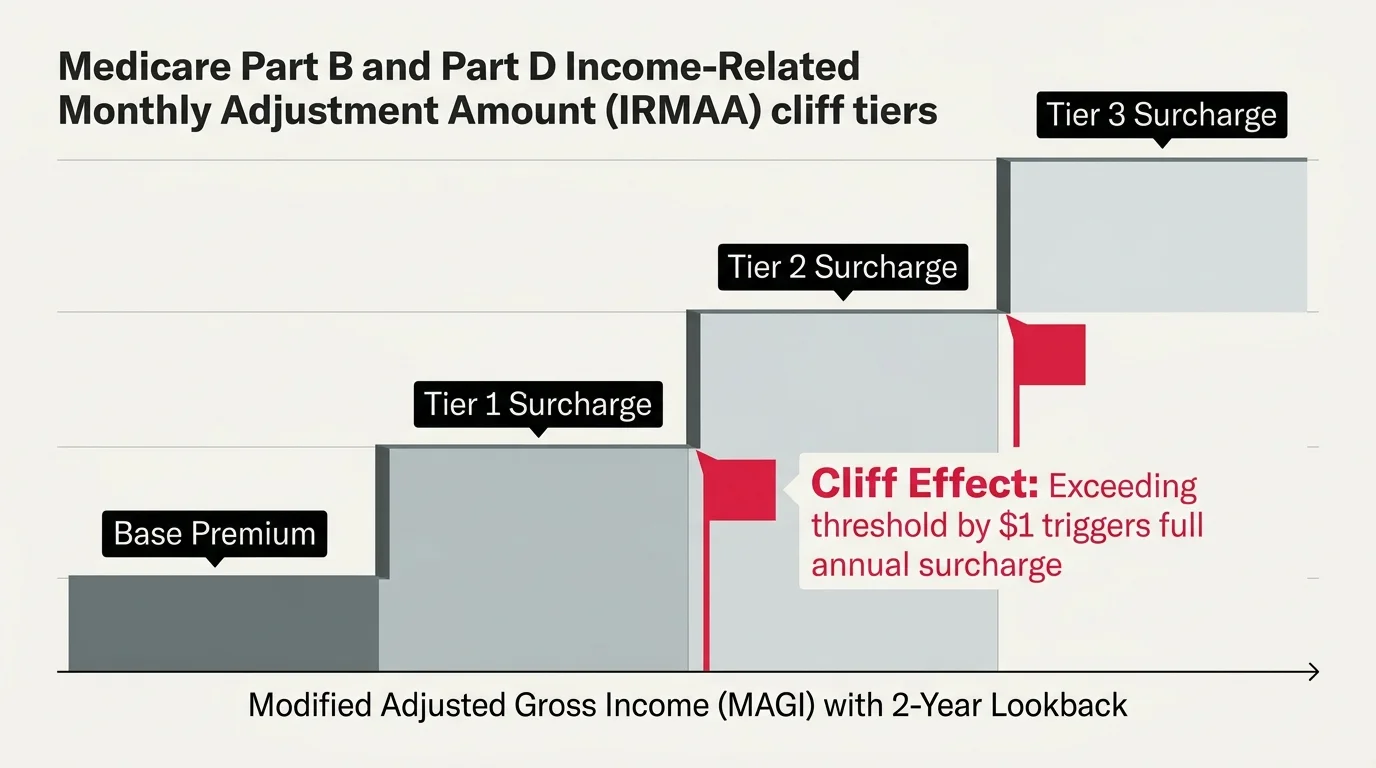
High-income retirees often encounter an unexpected cost known as the Income-Related Monthly Adjustment Amount (IRMAA). This federal surcharge raises your monthly Medicare Part B and Part D premiums based on past earnings.
The government evaluates your modified adjusted gross income using a strict two-year tax lookback period. Your current Medicare premiums reflect the tax return you filed two calendar years ago.
Surcharges apply when income exceeds $106,000 for single tax filers or $212,000 for married couples filing jointly. Crossing a threshold by a single dollar triggers the surcharge for all twelve months.
Plan your capital gains and Roth conversions carefully to avoid bumping into higher premium brackets. Taxpayers aged 65 and older also gain an additional standard deduction of $1,600 per married spouse or $2,000 for singles.

6. Verify Social Security Earnings Limits and Benefit Adjustments
Regular cost-of-living adjustments help preserve your purchasing power against persistent inflation. Social Security and Supplemental Security Income benefits increased by 2.5 percent to assist beneficiaries with everyday expenses.
If you collect benefits before your Full Retirement Age while working, monitor the Retirement Earnings Test closely. Exceeding the annual earnings threshold causes the government to withhold a portion of your monthly benefit checks.
The earnings limit is $23,400 for workers younger than their FRA for the entire year. The government temporarily withholds $1 in benefits for every $2 earned above that limit.
Check your official earnings record and projected future payouts directly through the official Social Security Administration website. Identifying and correcting past wage reporting errors safeguards your baseline monthly income.
7. Audit Primary and Contingent Beneficiary Designations
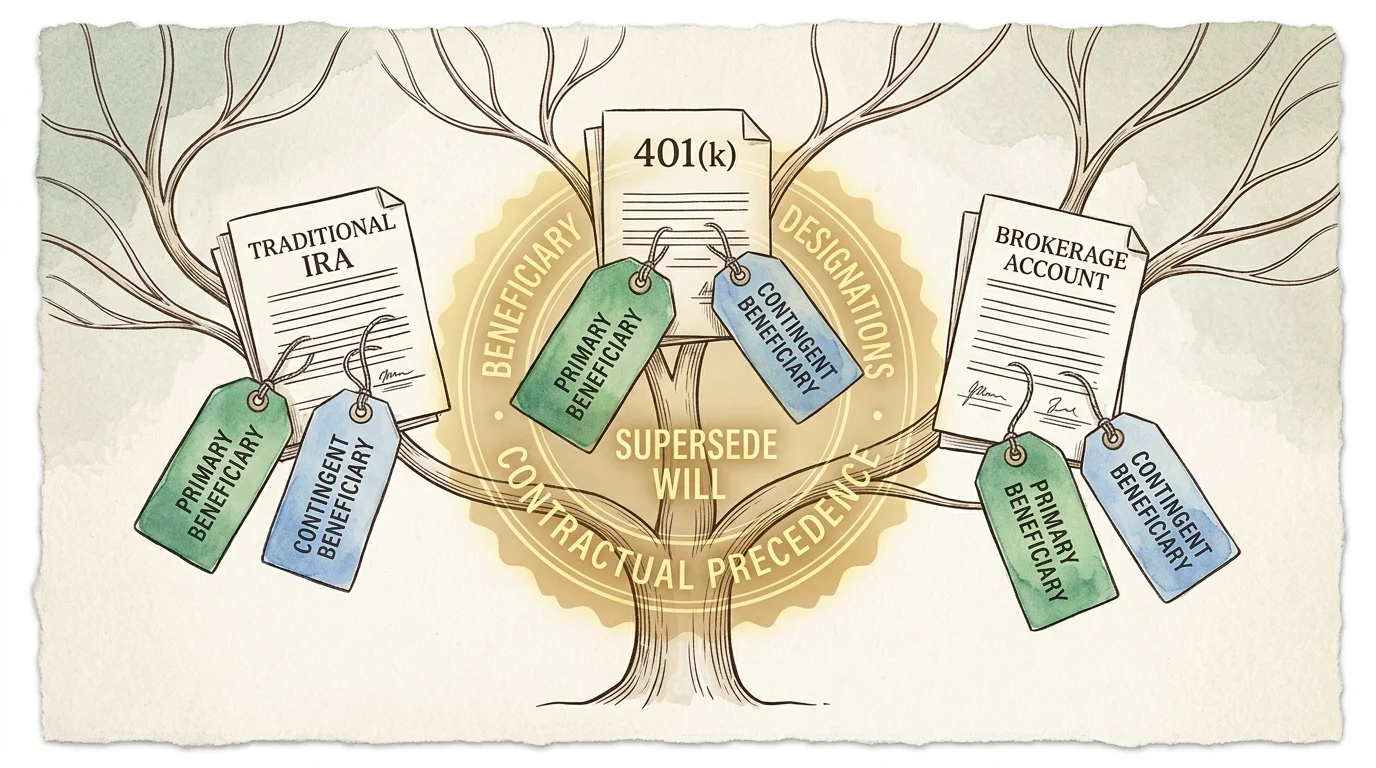
Many retirees assume their last will and testament governs where every single asset transfers after death. In reality, beneficiary designations on retirement accounts, annuities, and life insurance policies legally override your written will.
Marriages, divorces, births, and deaths require immediate revisions to your transfer-on-death arrangements. Outdated forms can accidentally transfer your hard-earned wealth to an ex-spouse or unintended family member.
Confirm that you have listed primary and contingent beneficiaries on every account. Designating contingent beneficiaries ensures your assets transfer directly to your chosen heirs without expensive probate court proceedings.

8. Evaluate Insurance Coverage and Long-Term Care Exposure
Insurance needs change dramatically once you transition from building wealth to preserving your nest egg. Holding expensive life insurance policies meant to replace employment wages may no longer serve your family.
Review your homeowners and auto policies to ensure liability coverage aligns with your accumulated net worth. Adding an umbrella policy provides valuable liability protection against catastrophic legal claims at an affordable cost.
Re-evaluate your family plan for potential long-term care needs, whether using private policies, hybrid annuities, or personal savings. Custodial care represents one of the largest unfunded expenses facing older American households.

9. Consolidate Forgotten Accounts and Review Financial Fees
Working across multiple employers over several decades often leaves behind scattered retirement accounts. Managing multiple orphan accounts increases administrative complexity and leaves your investments vulnerable to forgotten fees.
Consolidating old accounts into a single rollover IRA simplifies tracking and improves tax coordination. An annual money review for retirees gives you complete clarity over your investments while eliminating unnecessary statements.
Scrutinize the underlying expense ratios of your mutual funds, exchange-traded funds, and financial advisory charges. Reducing unnecessary fees by even half a percent keeps thousands of extra dollars growing in your nest egg.
“It’s not how much money you make, but how much money you keep, how hard it works for you, and how many generations you keep it for.” — Robert Kiyosaki

10. Update Estate Documents and Digital Asset Directives
Comprehensive estate planning extends far beyond distributing physical property and financial assets. Every retirement financial health check must confirm that your power of attorney designations reflect your current trusted decision-makers.
Ensure your healthcare proxies, living wills, and durable financial powers of attorney comply with state laws. Banks occasionally reject legal documents executed decades ago without recent notarized validation.
Assemble a secure master inventory of online passwords, bank portals, and subscription accounts. Placing these records in an encrypted password vault equips your executor to manage your affairs without delay.

Retirement Withdrawal Strategies Compared
Evaluating withdrawal frameworks helps you balance current spending with portfolio longevity. The comparison table below highlights common distribution strategies and their ideal applications.
| Strategy | Adjustment Method | Portfolio Risk | Best Suited For |
|---|---|---|---|
| 4% Rule | Adjusts initial dollar distribution annually for inflation | Moderate | Retirees seeking predictable, steady baseline income |
| Dynamic Guardrails | Increases withdrawals in up years; trims during market downturns | Low | Households with flexible, discretionary annual spending |
| Fixed Percentage | Takes a set percentage of the remaining balance each year | Moderate-High | Portfolios focused primarily on long-term generational wealth |
| Bucket Strategy | Segments assets into cash reserves, bonds, and growth stocks | Low | Risk-averse retirees who value visual income stability |
Errors That Cost Retirees Thousands
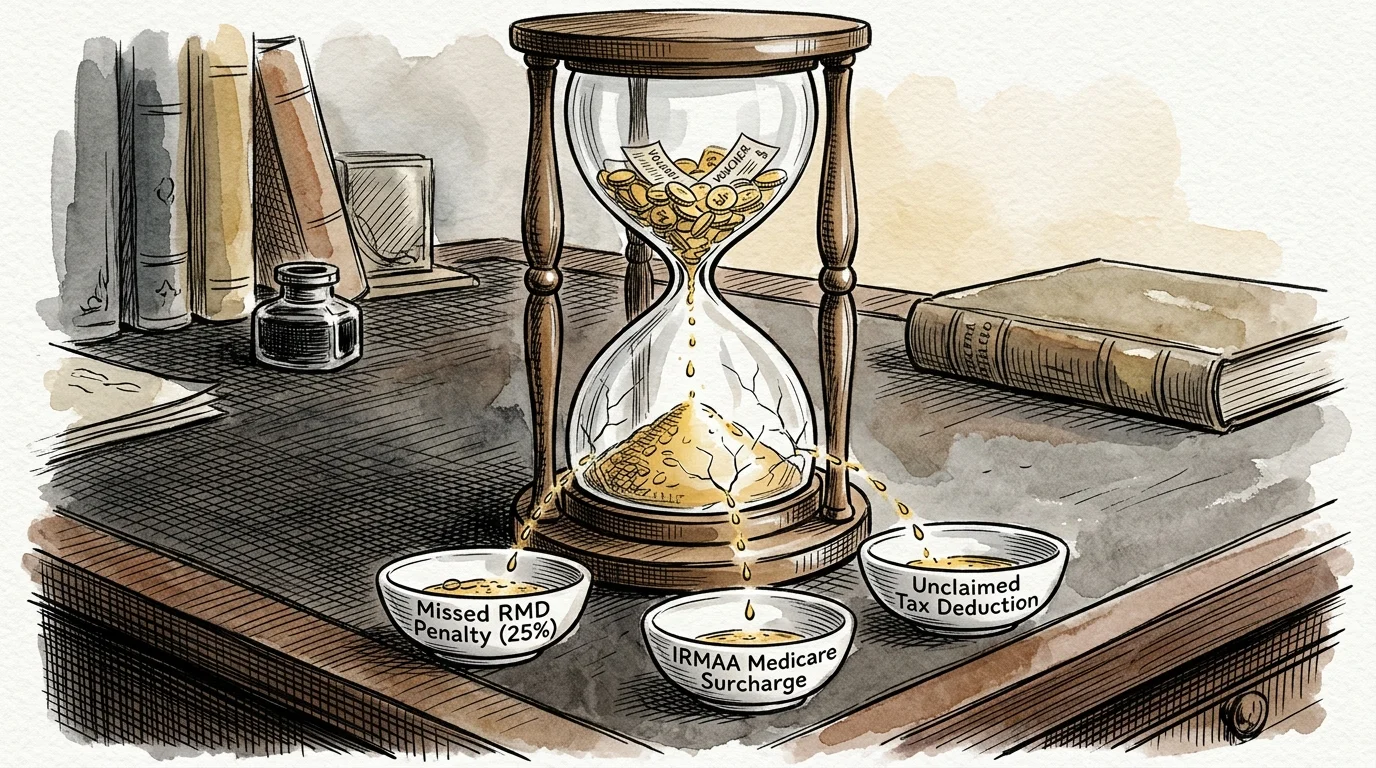
Overlooking key administrative dates and federal rules can lead to expensive penalties. Here are the most common financial blunders retirees make during their yearly reviews:
- Ignoring Medicare Formularies: Allowing drug plans to auto-renew without verifying that maintenance medications remain covered at reasonable copay tiers.
- Missing Distribution Deadlines: Forgetting annual RMD deadlines on inherited or traditional retirement accounts, triggering excise taxes.
- Triggering IRMAA Surcharges: Generating excessive taxable income from property sales or large Roth conversions that push premiums into surcharge territory.
- Leaving Beneficiaries Outdated: Neglecting beneficiary forms after major family life events, which overrides intentions outlined in wills.
Avoiding these common missteps preserves thousands of dollars in capital each year. A brief annual review catches these oversights before they trigger permanent financial harm.

When to Get Expert Help
While managing your own financial check-in is empowering, certain complex decisions warrant specialized professional advice. Working with vetted professionals provides valuable clarity and prevents expensive legal or tax missteps.
Consult a State Health Insurance Assistance Program (SHIP) counselor for objective, unbiased guidance regarding Medicare plan options. You can locate local assistance through the Eldercare Locator network.
Partner with a fee-only fiduciary financial advisor when structuring complex distribution plans or coordinating tax-efficient withdrawals. Fiduciary advisors hold a legal obligation to put your financial interests first.
Hire an experienced elder law attorney to establish trusts, review powers of attorney, and plan for potential Medicaid qualification. Professional legal counsel ensures your directives withstand future legal challenges.
Frequently Asked Questions
What is the best month to perform an annual retirement check-in?
Late autumn is often ideal because you can review Medicare options during the open enrollment period. This timing also allows you to calculate year-end RMDs and execute charitable distributions before December 31.
How does the $2,000 Medicare Part D out-of-pocket cap impact my budget?
The cap sets a firm ceiling on what you spend out-of-pocket for covered prescription drugs each calendar year. It protects seniors taking high-cost specialty medications from catastrophic pharmacy expenses.
Can I appeal an IRMAA surcharge if my income has recently decreased?
Yes, you can submit IRS Form SSA-44 to request a reduction based on qualifying life-changing events. Qualifying events include retirement, divorce, the death of a spouse, or the loss of income-producing property.
What should I do if I missed taking my full RMD for the year?
Withdraw the required balance immediately and file IRS Form 5329 requesting a penalty waiver for reasonable cause. Correcting the distribution promptly reduces the excise penalty from 25 percent down to 10 percent.
Taking Action on Your Finances
Schedule a recurring calendar reminder each autumn to complete this ten-point financial review. Consistent annual maintenance protects your accumulated wealth and ensures a calm, confident retirement journey.
Retirement rules and benefit amounts vary based on individual work history, income, and circumstances. This article provides general guidance only; consult a SHIP counselor, financial advisor, or elder law attorney for advice specific to your situation.
Last updated: February 2026. Medicare and Social Security rules change annually—always verify current details at official government sources.