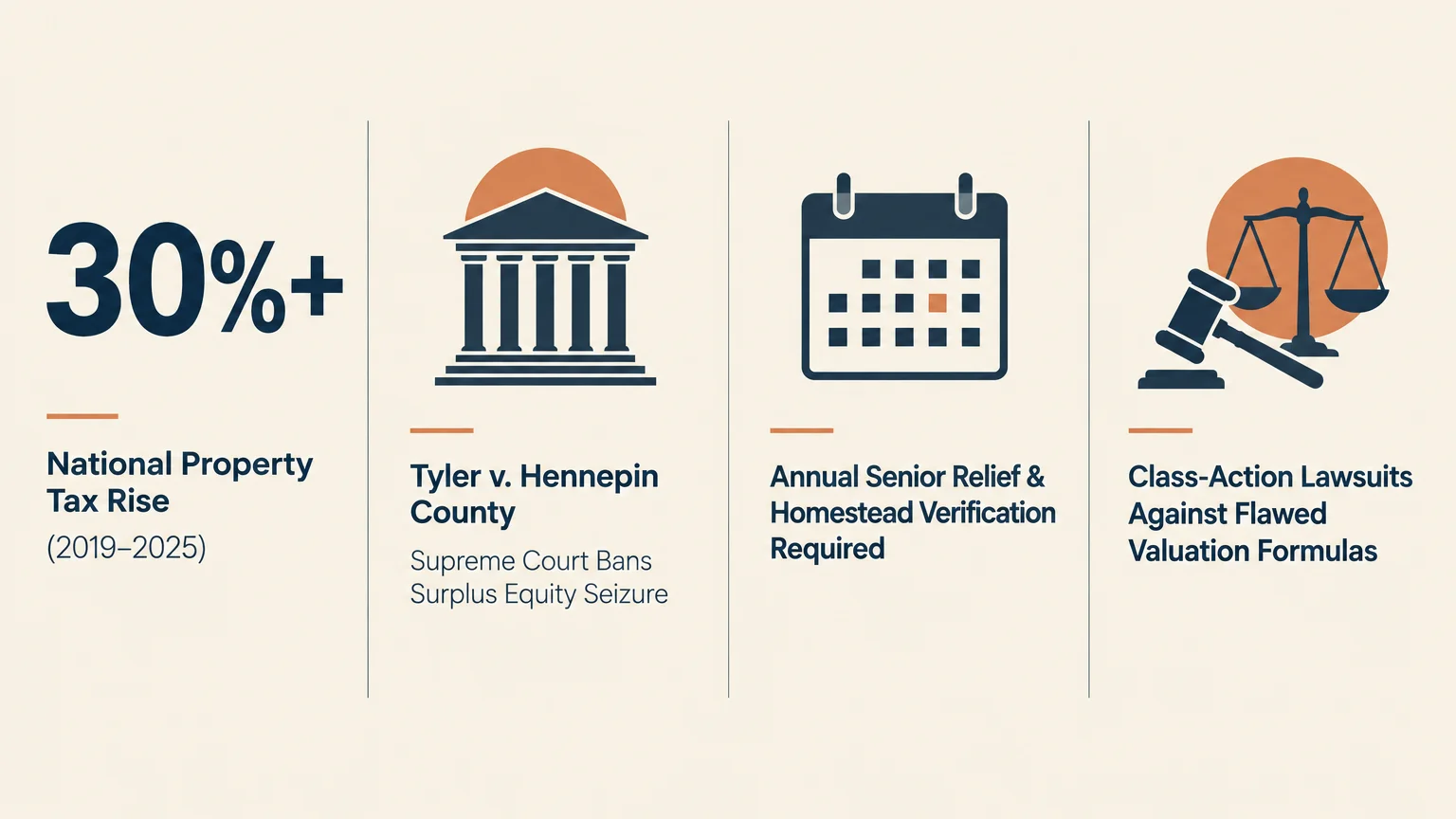
Nationwide property taxes surged more than 30 percent in recent years, pushing average annual bills to $4,427. That dramatic spike severely outpaces annual Social Security cost-of-living adjustments.
Rising assessments threaten older Americans living on fixed retirement budgets. Rather than quietly selling their longtime homes, thousands of retirees are taking county appraisal boards and tax collectors to court.
These legal battles span nationwide challenges against flawed assessment formulas, withheld tax freezes, and unconstitutional equity seizures. Knowing what is happening equips you to challenge your own local bill and claim vital tax relief.
What You Need to Know
- Property taxes rose over 30 percent nationally between 2019 and 2025, heavily impacting seniors on fixed incomes.
- Retirees across multiple states are launching class-action lawsuits over aggressive assessments, administrative delays, and home equity seizures.
- The U.S. Supreme Court established that local governments cannot keep surplus equity from foreclosed tax sales.
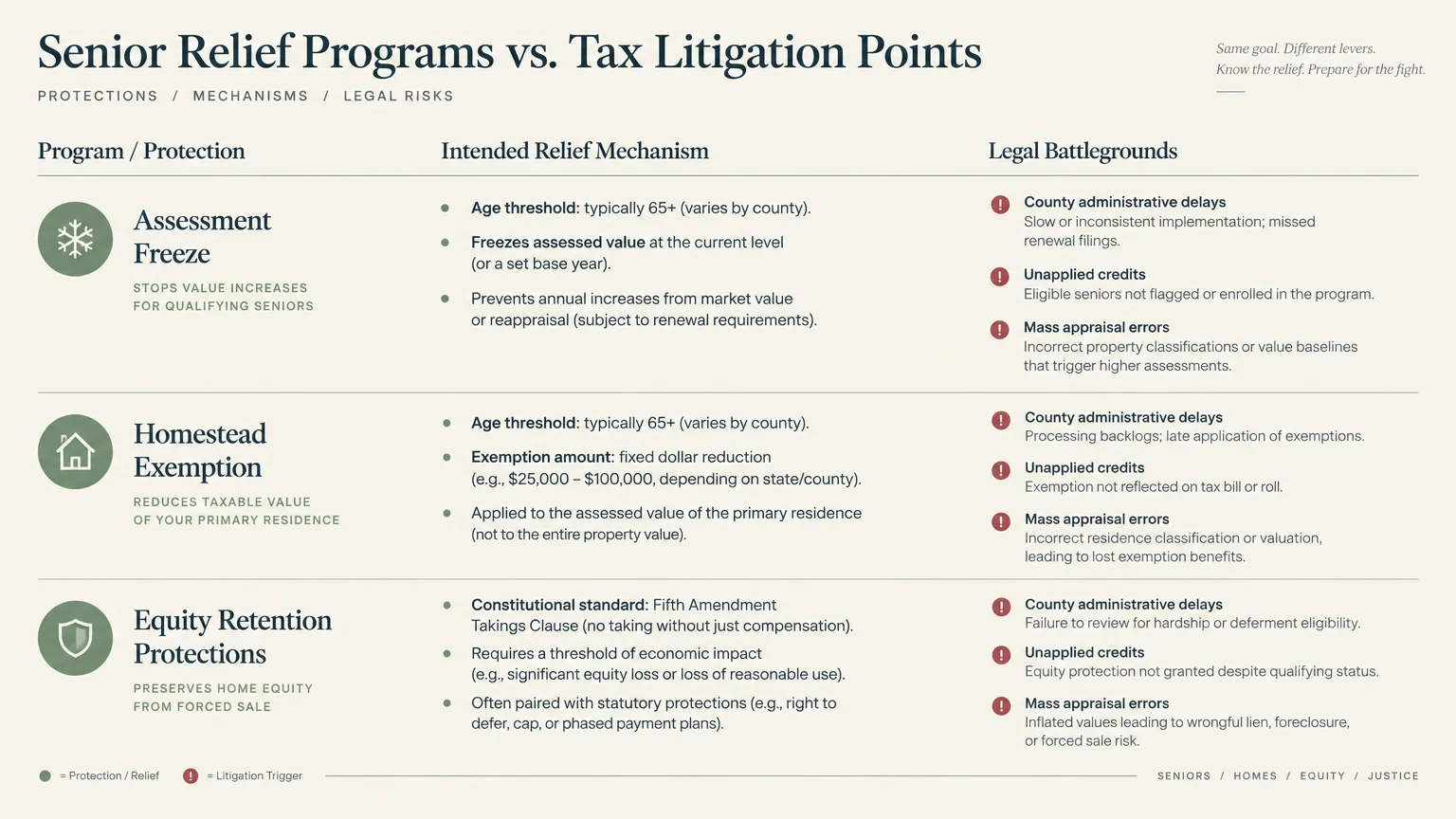
- State-level senior tax freezes and homestead exemptions offer critical savings, but you often must apply and verify eligibility annually.
- Filing a timely property tax appeal can protect your retirement nest egg from unlawful appraisal surges.
The Property Tax Crisis Facing Retirees
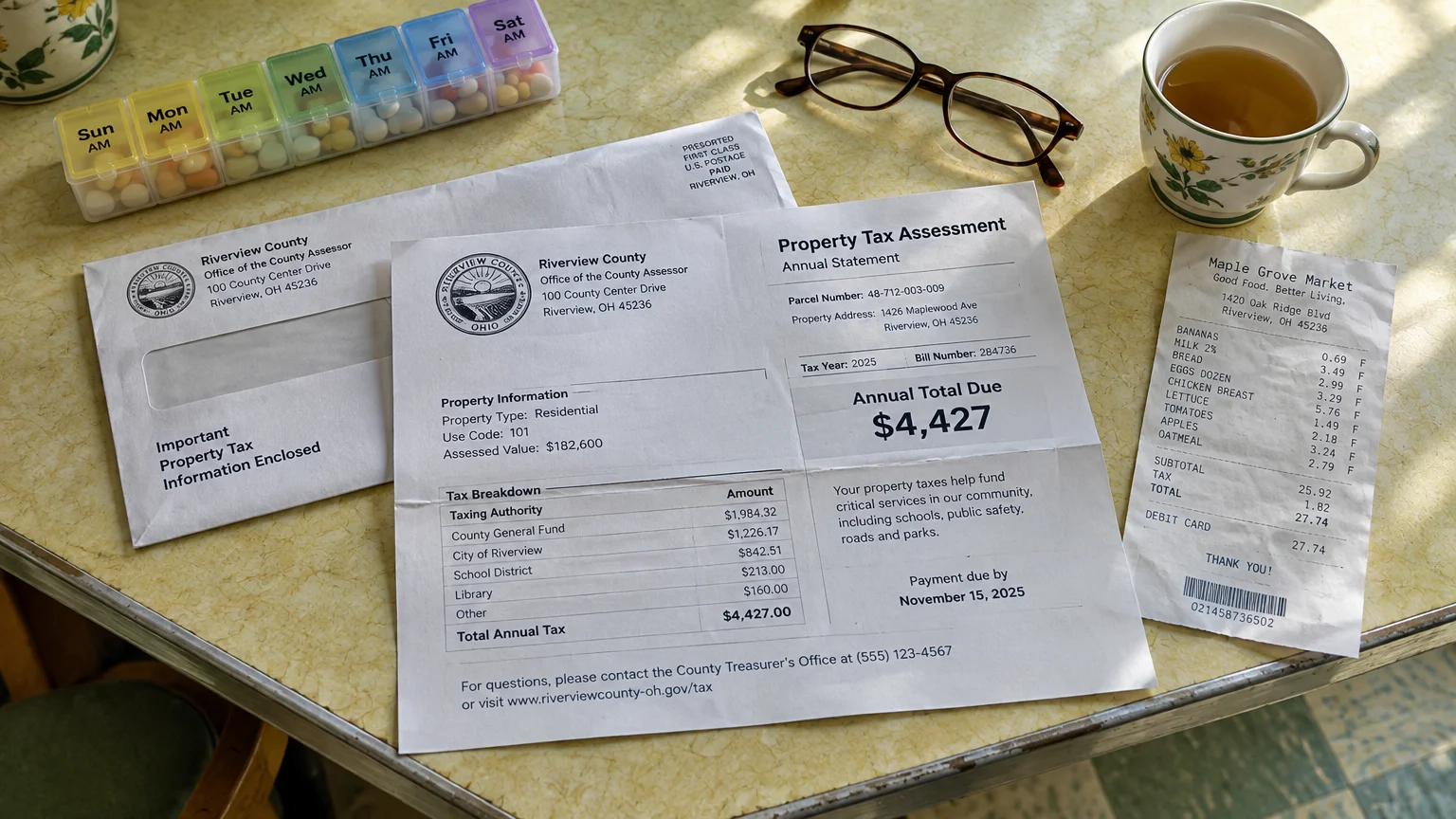
Property tax hikes seniors face have reached an unsustainable tipping point. According to national real estate data from ATTOM, the average annual single-family property tax bill climbed to $4,427.
In high-cost areas, tax bills easily surpass $8,000 to $10,000 every single year. For homeowners on fixed Social Security incomes, an unexpected $1,500 tax increase erases months of grocery and medication money.
Rising home values look fantastic on paper. Unfortunately, unrealized equity does not buy groceries or cover prescription copays.
When municipal assessors dramatically raise values, millage rates rarely drop enough to offset the spike. This dynamic forces older homeowners into financial distress.
“The goal of retirement is to live off your assets—not live off your regrets.”
A benchmark 2023 U.S. Supreme Court ruling, Tyler v. Hennepin County, changed the legal landscape. The court unanimously ruled that local governments cannot seize homes for unpaid taxes and pocket the surplus equity.
That 9–0 decision affirmed that keeping extra equity violates the Fifth Amendment’s Takings Clause. Emboldened by this legal precedent, retiree coalitions now fight abusive local taxing practices nationwide.
12 States Where Retirees Are Suing Over Property Tax Hikes
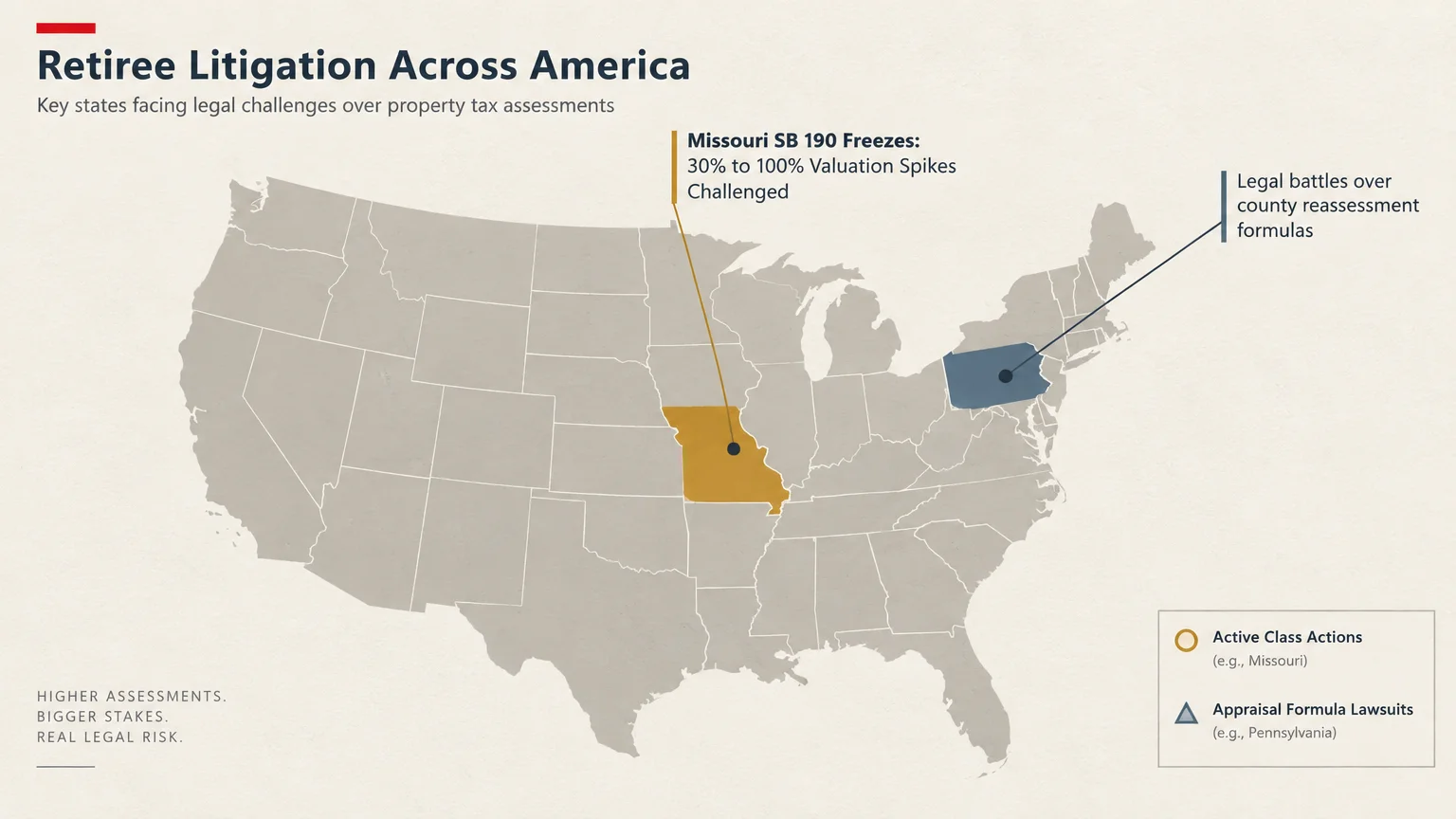
Retirees are no longer absorbing erratic tax hikes in silence. In these 12 states with rising property taxes, senior homeowners are challenging county assessors, flawed state formulas, and predatory tax systems in court.
1. Missouri: Fighting Flawed Freezes and Extreme Valuation Spikes
Missouri passed Senate Bill 190 to allow local counties to freeze property taxes for seniors aged 62 and older. However, administrative implementation sparked swift legal action.
In July 2025, retirees filed a class-action lawsuit against St. Louis County and the City of St. Louis. The lawsuits allege officials used faulty calculation formulas that improperly reduced or denied tax credits to eligible seniors.
Across the state in Jackson County, tens of thousands of homeowners filed mass appeals and legal actions. The county’s flawed reassessments triggered valuation spikes between 30 percent and 100 percent on longtime residents.
Elderly homeowners on modest pensions suddenly faced four-figure tax hikes overnight. The ongoing retirees property tax lawsuit challenges both the county’s appraisal methodology and its rushed appeals process.
2. Pennsylvania: Challenging Antiquated Base Years and Reverse Appeals
Pennsylvania uses an unusual “base-year” property assessment system that keeps property values frozen until a county conducts a mass reassessment. Allegheny County has not reassessed all properties since 2012.
Instead of countywide updates, local school districts exploited the system by filing “reverse appeals” on recently purchased homes. This aggressive tactic targeted downsizers and retirees who moved into smaller properties.
Homeowners sued Allegheny County over the unfair tax burdens created by this uneven system. In August 2026, a county judge ordered a full countywide reassessment to be finished by 2027.
The lawsuit highlighted how unadjusted assessments shift heavier tax loads onto older residents while leaving commercial owners underassessed. Retirees now demand fair valuation standards statewide.
3. Montana: Reassessment Lawsuits Over 46 Percent Surges
Montana underwent biennial property reappraisals that blindsided fixed-income households. The Montana Department of Revenue’s assessments caused residential property values to surge by an average of 46 percent.
Retirees living in fast-growing rural areas faced immediate financial shock. In response, homeowners launched multiple legal actions, including a 2026 class-action filing in Madison County District Court.
The lawsuit challenges the Department of Revenue’s appraisal modeling as unconstitutional and non-uniform. Plaintiffs argue the state favored commercial and industrial taxpayers while shifting the primary tax burden onto residential homeowners.
Many senior plaintiffs testified they may lose homes they built decades ago. The outcome could force Montana to overhaul its biennial residential appraisal formula completely.
4. Illinois: Striking Down Unconstitutional Tax Sales in Cook County
Cook County operates one of the most punitive property tax systems in the United States. Older homeowners in South and West Chicago neighborhoods have borne the brunt of volatile tax bills.
In 2026, a federal court held Cook County liable under 42 U.S.C. § 1983. The court determined the county ran an unconstitutional tax sale process that systematically stripped homeowners of equity without fair compensation.
The practice disproportionately devastated elderly and minority residents who fell behind on relatively small tax debts. Private tax-lien buyers routinely acquired deed titles worth hundreds of thousands of dollars for pennies on the dollar.
At the same time, Cook County faces legal scrutiny over severe administrative backlogs. Thousands of qualifying seniors wait years to receive approvals for the Senior Freeze Exemption.
5. New York: Contesting the Decades-Old Fractional Tax System
New York City’s property tax structure has long faced criticism for favoring wealthy condo owners over middle-class outer-borough homeowners. In 2024, the New York Court of Appeals revived a historic legal challenge.
The lawsuit, Tax Equity Now NY v. City of New York, asserts the city’s four-decade-old fractional tax system violates state law and the federal Fair Housing Act. Retirees in Brooklyn, Queens, and the Bronx pay effective tax rates far higher than owners of luxury Manhattan penthouses.
Senior homeowners on fixed incomes argue the city’s valuation caps distort reality. Modest single-family homes face aggressive assessment increases while high-value multi-unit buildings enjoy statutory assessment shields.
The revived litigation forces municipal leaders to confront structural tax inequality. A court-ordered restructuring could finally provide meaningful senior property tax relief across New York’s five boroughs.
6. Michigan: Ending Excess Equity Theft After Foreclosures
Michigan has stood at the center of national litigation regarding tax foreclosures. Following the state Supreme Court’s landmark Rafaeli ruling, county governments faced additional legal reckonings.
In Pung v. Isabella County, federal courts addressed counties that foreclosed on elderly taxpayers and pocketed all auction proceeds. In several cases, counties took entire properties over debts as small as a few hundred dollars.
Elderly residents and their surviving heirs successfully sued to recover stolen home equity. Michigan lawmakers modified state recovery procedures, but legal challenges over unpaid restitution and interest continue.
These cases guarantee that a minor property tax delinquency cannot strip away decades of accumulated home wealth. Retirees now have enforceable federal claims if local treasurers attempt equity theft.
7. Delaware: Upheaval Over Court-Ordered Reassessments
Delaware previously operated without comprehensive property reassessments for over three decades. After educational equity lawsuits found the outdated rolls unconstitutional, the state finally conducted countywide reassessments.
The updated valuations led to massive residential sticker shock for older homeowners who had lived in their homes since the 1980s. To cushion the blow, New Castle County school districts attempted to split commercial and residential rates.
Commercial landlords and business coalitions immediately sued, claiming the split tax rates violated Delaware’s constitutional uniformity rules. This legal clash leaves senior homeowners caught in the crossfire.
If the courts invalidate the split-rate structure, residential homeowners could absorb an even larger share of local school taxes. Retiree coalitions are monitoring the court proceedings closely to defend their residential caps.
8. Florida: Ballot Controversies and Homestead Battles
Florida represents a primary retirement haven, but soaring home prices and insurance costs have strained household budgets. To offer relief, state leaders proposed constitutional amendments to expand the homestead exemption.
In 2026, former municipal officials filed a lawsuit in Leon County Circuit Court challenging proposed ballot language. The lawsuit argues that ballot summaries misleadingly concealed how higher exemptions shift tax burdens onto local services.
While the state battles over whether to raise standard homestead exemptions from $50,000 to $150,000, retirees face appraisal hikes on non-homestead properties. Seniors renting accessory apartments or secondary family homes face sharp assessment jumps.
The legal fight demonstrates how hard local municipalities fight to maintain their tax revenues. Florida retirees must actively track legislative amendments and local millage votes to safeguard their retirement security.
9. Texas: Mass Appraisal Lawsuits and Historic Relief Reforms
Texas boasts no personal state income tax, but its local property taxes rank among the highest in the nation. Explosive population growth caused appraised values to spike across major metro appraisal districts.
Homeowner pushback resulted in record volumes of formal appraisal protests and lawsuits against appraisal districts. Frustrated retirees successfully pushed lawmakers to deliver structural legislative reform.
Texas voters approved Proposition 4, an $18 billion tax relief package. The constitutional measure raised the standard school homestead exemption to $100,000 and expanded it to $110,000 for seniors aged 65 and older.
Crucially, Texas maintains a strict constitutional freeze on school property taxes for older homeowners. When county appraisal districts misapply these exemptions, retirees frequently win relief through formal appraisal review boards.
10. Georgia: Assessment Caps and Appeal Clashes in Atlanta
Metro Atlanta experienced explosive home valuation increases over recent years. Fulton, DeKalb, and Gwinnett County homeowners saw their assessed values skyrocket despite modest local inflation.
Older homeowners on fixed incomes flooded county boards of equalization with appraisal challenges. Retirees argued that mass computer appraisal algorithms created fictional property values that ignored deferred home maintenance.
Lawmakers responded by advancing legislation that permanently caps homestead assessment increases to the rate of general inflation. Taxpayer lawsuits pushed local appraisal offices to clean up valuation backlogs.
Georgia seniors can also apply for county-specific senior exemptions that eliminate educational taxes once they reach age 62 or 65. Winning these protections often requires navigating a complex administrative appeal.
11. Nebraska: The Grassroots Tax Revolt and School Levy Battles
Nebraska maintains some of the highest effective property tax rates in the American Midwest, typically ranging between 1.5 percent and 1.7 percent. Agricultural retirees and fixed-income suburbanites have voiced frustration for years.
Citizen groups launched legal ballot petitions to cap property taxes, forcing the state legislature into emergency special sessions. The legal battles centered on hard statutory caps for local school district taxing authority.
School boards challenged legislative efforts to restrict their revenue, arguing caps harm public education. Senior groups countered that property taxes were actively taxing older Nebraskans out of their houses.
The continuing battle in Lincoln demonstrates that legislative caps frequently emerge from persistent legal threats. Retirees in Nebraska continue pushing for dedicated income tax credits to offset their high property payments.
12. California: Proposition 19 Backlash and Inheritance Lawsuits
California seniors enjoy property tax stability under Proposition 13, which caps annual assessment increases at two percent. However, the passage of Proposition 19 in 2020 triggered widespread legal friction.
Proposition 19 eliminated key protections for family-inherited homes. Unless an adult child moves into the primary residence within one year, the state reassesses the property to full market value.
Retiree coalitions and taxpayer associations filed lawsuits and initiative petitions to repeal these restrictive inheritance rules. Seniors argue the law forces families to liquidate generational homes just to pay higher taxes.
At the same time, older Californians are actively utilizing Proposition 19’s base-year transfer rule. This provision lets homeowners aged 55 and older transfer their lower tax assessment to a replacement home anywhere in the state.
“It’s not how much money you make, but how much money you keep, how hard it works for you, and how many generations you keep it for.” — Robert Kiyosaki
Comparing State Senior Property Tax Relief and Legal Battles
Every state approaches senior property tax relief through different legal structures. Understanding how these protections work helps you identify potential errors on your county tax bill.
| State | Primary Legal / Policy Issue | Key Senior Relief Mechanism | Eligibility Starting Age |
|---|---|---|---|
| Missouri | Senate Bill 190 implementation lawsuits | County-level property tax freeze | Age 62+ |
| Pennsylvania | Base-year assessment equity lawsuits | Property Tax/Rent Rebate Program | Age 65+ |
| Montana | Biennial residential valuation challenges | Property Tax Assistance Program (PTAP) | All ages (income-tested) |
| Illinois | Unconstitutional tax sales (§ 1983 liability) | Senior Citizen Assessment Freeze | Age 65+ ($65k income cap) |
| New York | Fractional tax system equity litigation | Enhanced STAR Exemption & SCHE | Age 65+ |
| Michigan | Foreclosure equity theft restitution | Principal Residence Exemption & Poverty Relief | Age 65+ (homestead) |
| Delaware | First reassessment in 30 years; rate challenges | Senior School Property Tax Credit | Age 65+ |
| Florida | Constitutional ballot language litigation | Homestead Exemption & Senior Add-on | Age 65+ (local option) |
| Texas | Mass appraisal challenges; Prop 4 reforms | $110,000 exemption & school tax freeze | Age 65+ |
| Georgia | Inflation caps & appraisal board disputes | School tax exemptions (county-level) | Age 62 or 65+ |
| Nebraska | School levy caps & petition legal fights | Homestead Exemption for Seniors | Age 65+ |
| California | Proposition 19 inheritance restrictions | Prop 13 cap & base-year transfer | Age 55+ |
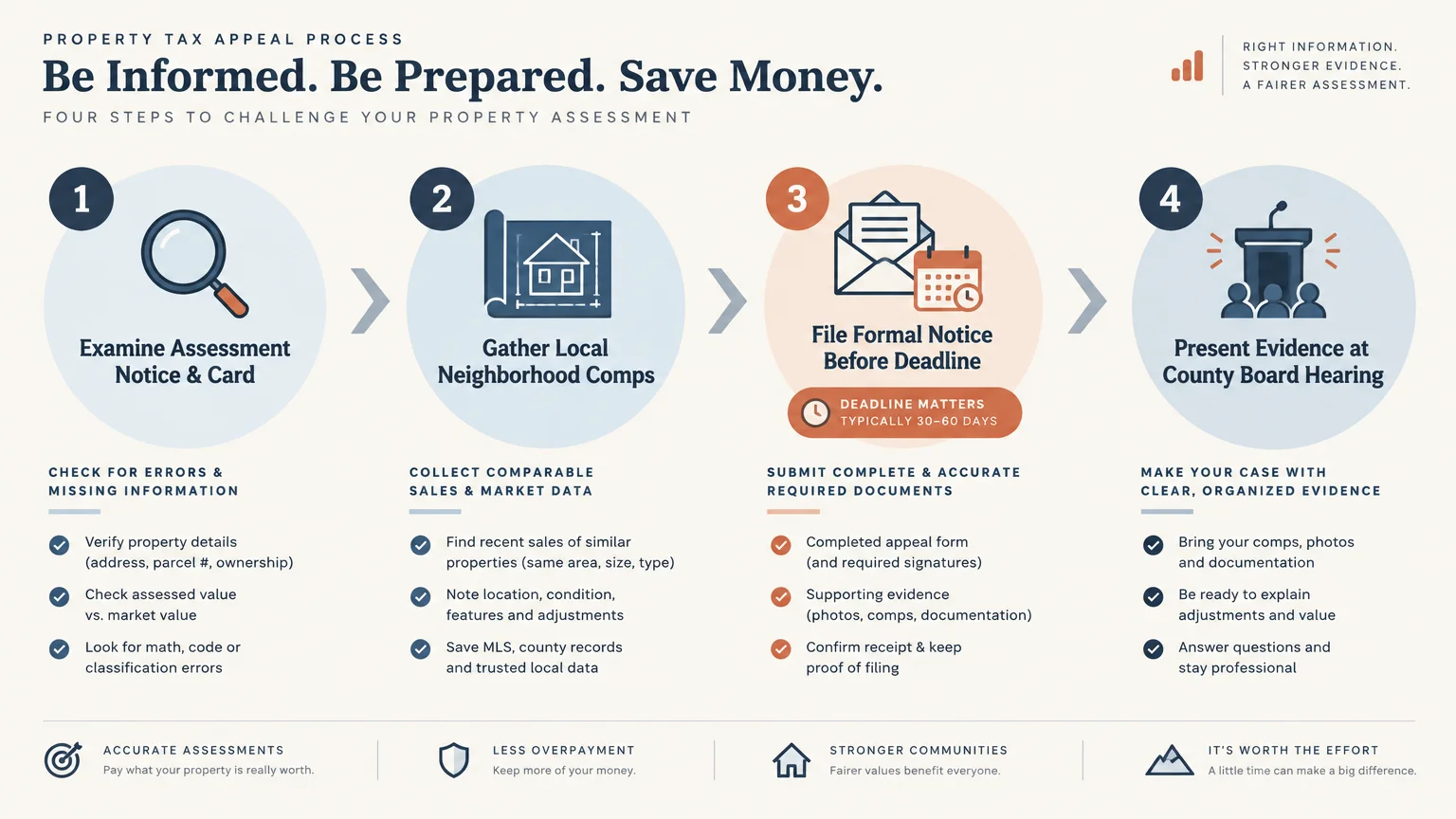
Step-by-Step: How to Appeal an Unfair Property Valuation
You do not need to hire an expensive litigation team to challenge an inflated tax bill. Most property tax appeal retirees pursue are resolved through straightforward administrative steps.
Appraisal districts make widespread mistakes because they evaluate thousands of homes simultaneously using automated algorithms. Following these practical steps allows you to present a compelling protest.
- Obtain your property record card: Visit your local assessor’s office or website to pull your complete file. Check for factual errors such as incorrect square footage, extra bathrooms, or phantom improvements.
- Track strict appeal deadlines: Most jurisdictions give you just 30 to 45 days after mailing assessment notices to file a formal appeal. Missing this calendar cutoff forfeits your legal right to dispute that year’s taxes.
- Gather comparable sales data: Identify three to five similar homes in your immediate neighborhood that sold recently for less than your assessed value. Adjust for differences in lot size, layout, and age.
- Document deferred maintenance: Municipal computer models assume your home is in pristine condition. Photograph needed roof replacements, aging foundations, outdated electrical panels, or plumbing problems.
- Attend the informal hearing: Many counties offer an informal conference with an appraiser before formal board hearings. Present your factual errors and photos calmly to request an immediate valuation reduction.
Common Retirement Traps with Property Taxes
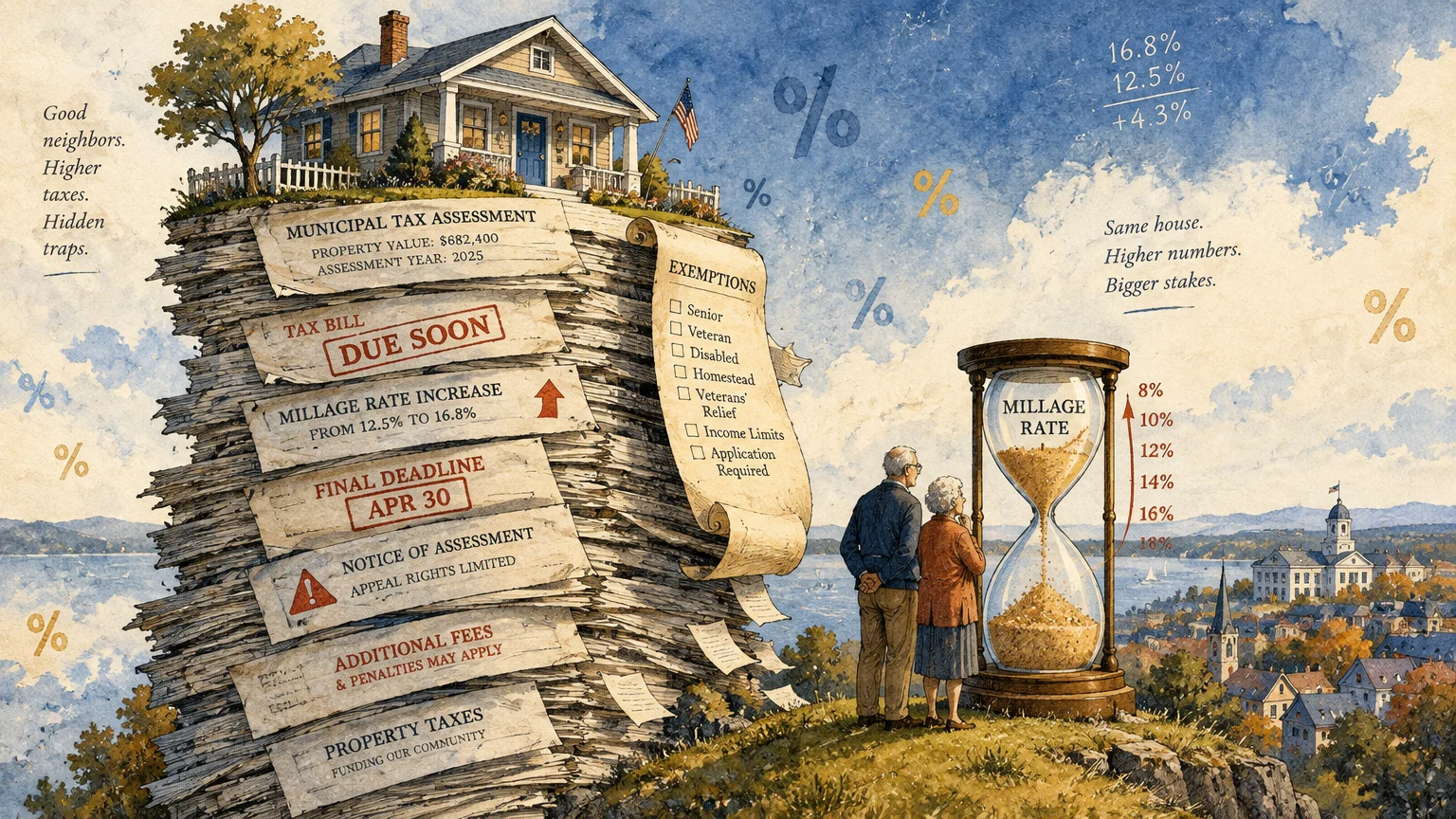
Retirees often leave thousands of dollars on the table because they do not understand local tax laws. Avoiding these four common mistakes protects your budget.
Failing to reapply annually: Many states require seniors to renew their senior assessment freezes or circuit-breaker exemptions every year. If you miss the annual paperwork deadline, your assessment jumps back to full market rate.
Assuming home equity cannot be lost: Even after the Supreme Court’s ruling on equity theft, tax liens incur massive statutory penalties. Never ignore delinquent tax notifications or assume the county will work around your fixed budget.
Overlooking local school tax exemptions: In many states, school taxes make up more than half of your total property tax bill. Several counties allow seniors to eliminate the school operations portion entirely once they reach a qualifying age.
Ignoring deed transfer consequences: Adding your adult children to your home deed can trigger unintended property reassessments or forfeit your homestead exemption. Always consult an attorney before altering property titles.

When to Consult a Professional
While many homeowners can file basic appeals on their own, complex valuation disputes warrant expert guidance. Consider working with specialized professionals when significant money is at stake.
If your home features unique architectural elements, substantial acreage, or commercial mixed uses, hire an independent licensed real estate appraiser. An objective appraisal report carries heavy evidentiary weight before county boards.
When dealing with estate planning, deed transfers, or Medicaid look-back rules, consult a qualified elder law attorney. An experienced attorney prevents you from accidentally forfeiting valuable homestead exemptions or triggering reassessments.
To identify untapped public benefits and local property tax relief, visit the NCOA BenefitsCheckUp resource. The Consumer Financial Protection Bureau also provides detailed budgeting tools to help navigate housing costs.
If your tax bill is tied up in countywide class-action litigation, contact local taxpayer advocacy groups or legal aid organizations. Many non-profit clinics assist qualifying seniors with free legal representation during property tax disputes.
You can also review broad retirement assistance programs and housing rights through official channels like USA.gov Retirement Resources and guidance from AARP.
Frequently Asked Questions About Property Tax Lawsuits and Senior Relief
Can a county legally take all the equity in my home for unpaid taxes?
No, the U.S. Supreme Court ruled in Tyler v. Hennepin County that seizing surplus equity beyond the tax debt violates the Constitution. Local governments may only collect the taxes, penalties, and interest owed.
What is a senior property tax freeze?
A senior property tax freeze locks your home’s assessed value at a specific base year. As long as you remain eligible and reside in the property, tax increases are limited to local millage adjustments.
Do I have to reapply for senior property tax exemptions every year?
In many jurisdictions, yes. While standard homestead exemptions often roll over automatically, income-tested senior freezes usually require annual income verification to prove you remain below statutory thresholds.
Will filing a property tax appeal cause the county to raise my taxes?
In the vast majority of cases, no. An appeal board evaluates whether your assessment exceeds fair market value, and boards rarely increase valuations during a homeowner-initiated protest.
How does a property tax circuit breaker program work?
A property tax circuit breaker prevents your property tax bill from overloading your income, similar to an electrical breaker. If your tax bill exceeds a specific percentage of your household income, the state issues a rebate or tax credit.
Take Control of Your Property Tax Bill
Rising property taxes do not have to drive you out of the home you spent decades paying off. Check your property record card this week, review your local assessment deadlines, and verify you receive every homestead exemption available.
Retirement rules and benefit amounts vary based on individual work history, income, and circumstances. This article provides general guidance only. Consult a SHIP counselor, financial advisor, or elder law attorney for advice specific to your situation.
Last updated: February 2026. Medicare and Social Security rules change annually—always verify current details at official government sources.