California offers world-class sunshine, coastal breezes, and dramatic mountain peaks, but its soaring housing prices and steep taxes push many retirees away. You can capture that same vibrant lifestyle elsewhere without draining your nest egg.
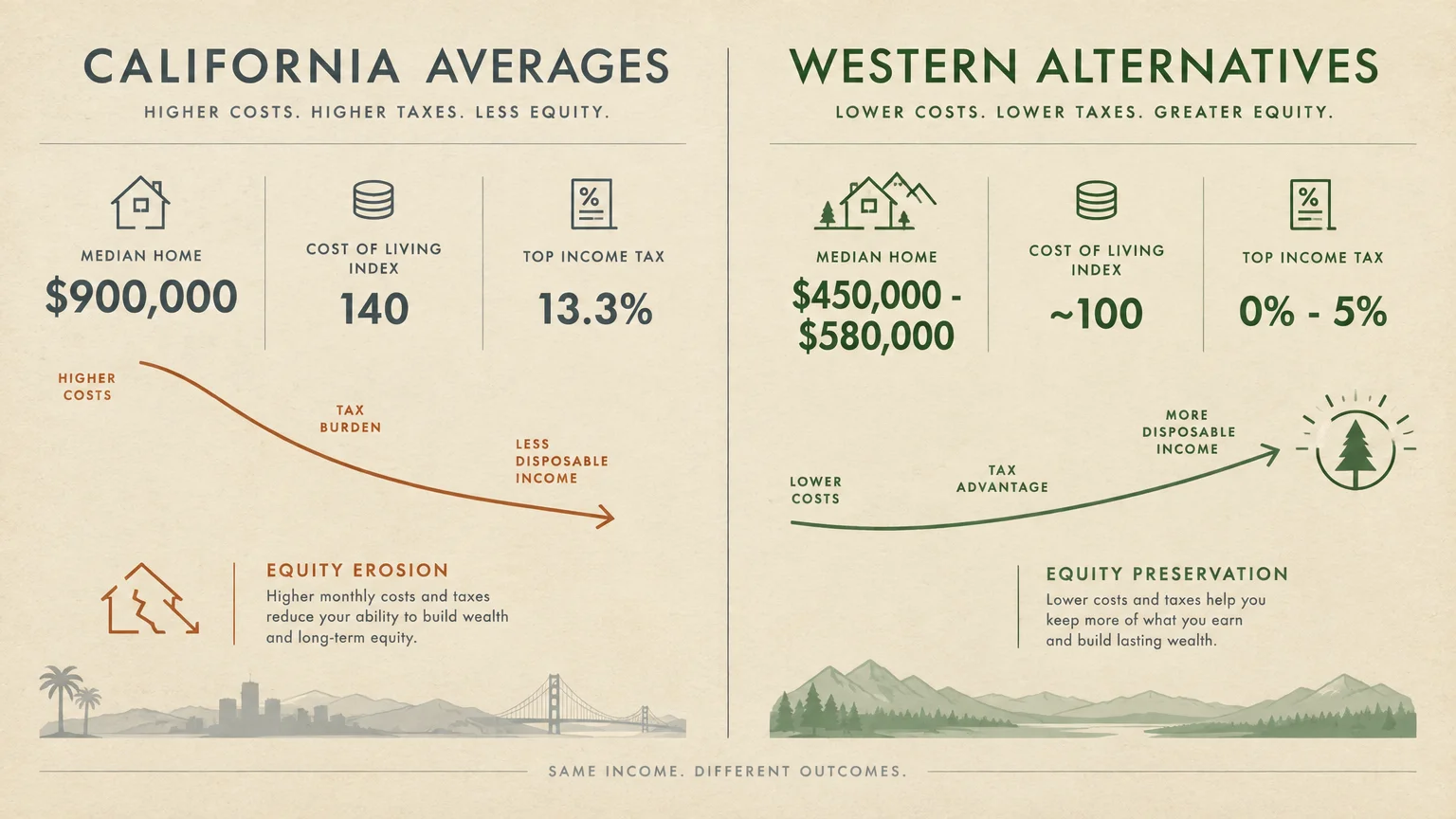
Statewide median home prices in California sit near $900,000, while top state income taxes reach 13.3%. Moving beyond state borders allows you to cut your everyday living expenses substantially.
These eleven retirement towns deliver familiar vineyards, sunny high deserts, and picturesque mountain views at a fraction of the cost. You keep the golden years you envisioned while protecting your hard-earned retirement assets.

Key Takeaways for Relocating Retirees
- Dramatic housing relief: Alternatives like Las Cruces and Grand Junction cut typical California real estate costs by half or more.
- Zero income tax options: Nevada, Washington, and Texas offer zero personal income tax on distributions, pensions, and investments.
- Medicare transitions: Relocating out of state triggers a Medicare Special Enrollment Period, but Medigap underwriting protections vary by state.
- Authentic climate twins: Microclimates across the American West mirror California’s diverse landscapes, from rainshadow coastlines to high-desert valleys.
Why Retirees Seek California-Like Climate Retirement Spots
California living carries an undeniable allure, yet the financial reality strains even well-funded retirement portfolios. The state cost-of-living index tracks near 140, driven heavily by elevated utility bills and steep grocery tabs.
According to the California Association of Realtors, single-family home prices statewide hover between $880,000 and $910,000. These figures make downsizing or buying a retirement retreat prohibitively expensive for many seniors.
Tax burdens add another layer of pressure. While California shields Social Security benefits, it taxes distributions from traditional IRAs, 401(k) plans, and pensions as ordinary income at rates up to 13.3%.
Smart relocation allows you to unlock trapped home equity and preserve your monthly cash flow. Reviewing retirement budgets through the Consumer Financial Protection Bureau (CFPB) reveals how lower living costs extend asset longevity.
“It’s not how much money you make, but how much money you keep, how hard it works for you, and how many generations you keep it for.” — Robert Kiyosaki

1. Reno and Carson City, Nevada: Sierra Nevada and Lake Tahoe Twin
Reno and Carson City sit right against the eastern slope of the Sierra Nevada. You enjoy quick access to alpine ski slopes and crystalline mountain waters without California price tags.
Median home sale prices in the Reno area hover between $570,000 and $580,000. That gives you immediate savings compared to nearby Truckee or South Lake Tahoe.
Nevada levies zero state personal income tax. Your Social Security benefits, pension payouts, and retirement account withdrawals remain completely untouched by state tax authorities.
The region delivers four distinct seasons with over 300 sunny days each year. Winter brings crisp mountain air, while summer afternoons stay dry and warm.
2. Prescott, Arizona: Gold Country and Sierra Foothills Charm
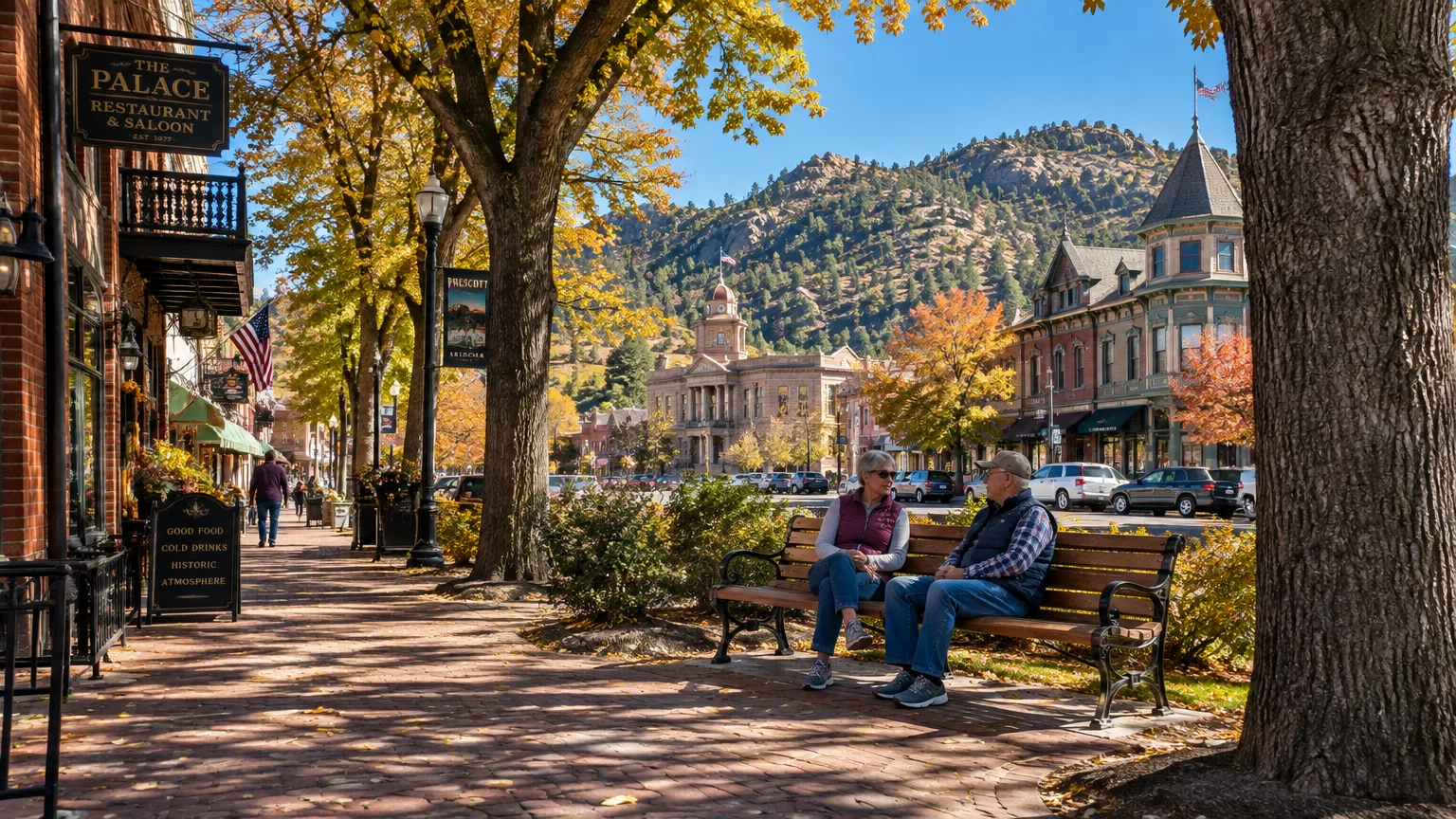
Nestled at an elevation of 5,300 feet, Prescott feels remarkably like California’s historic Gold Country towns such as Nevada City or Sonora. Ponderosa pines shade historic Victorian homes and active town squares.
The local climate shatters typical desert stereotypes. Prescott avoids extreme southern Arizona heat, enjoying mild summer highs in the upper eighties and light, scenic winter snowfalls.
Median home prices in Prescott track between $585,000 and $610,000. You gain quality mountain architecture at prices far lower than California foothill enclaves.
Arizona charges a flat 2.5% state income tax rate and completely exempts Social Security benefits. This favorable tax code protects your monthly fixed income.
3. Las Cruces, New Mexico: Palm Springs High Desert Magic
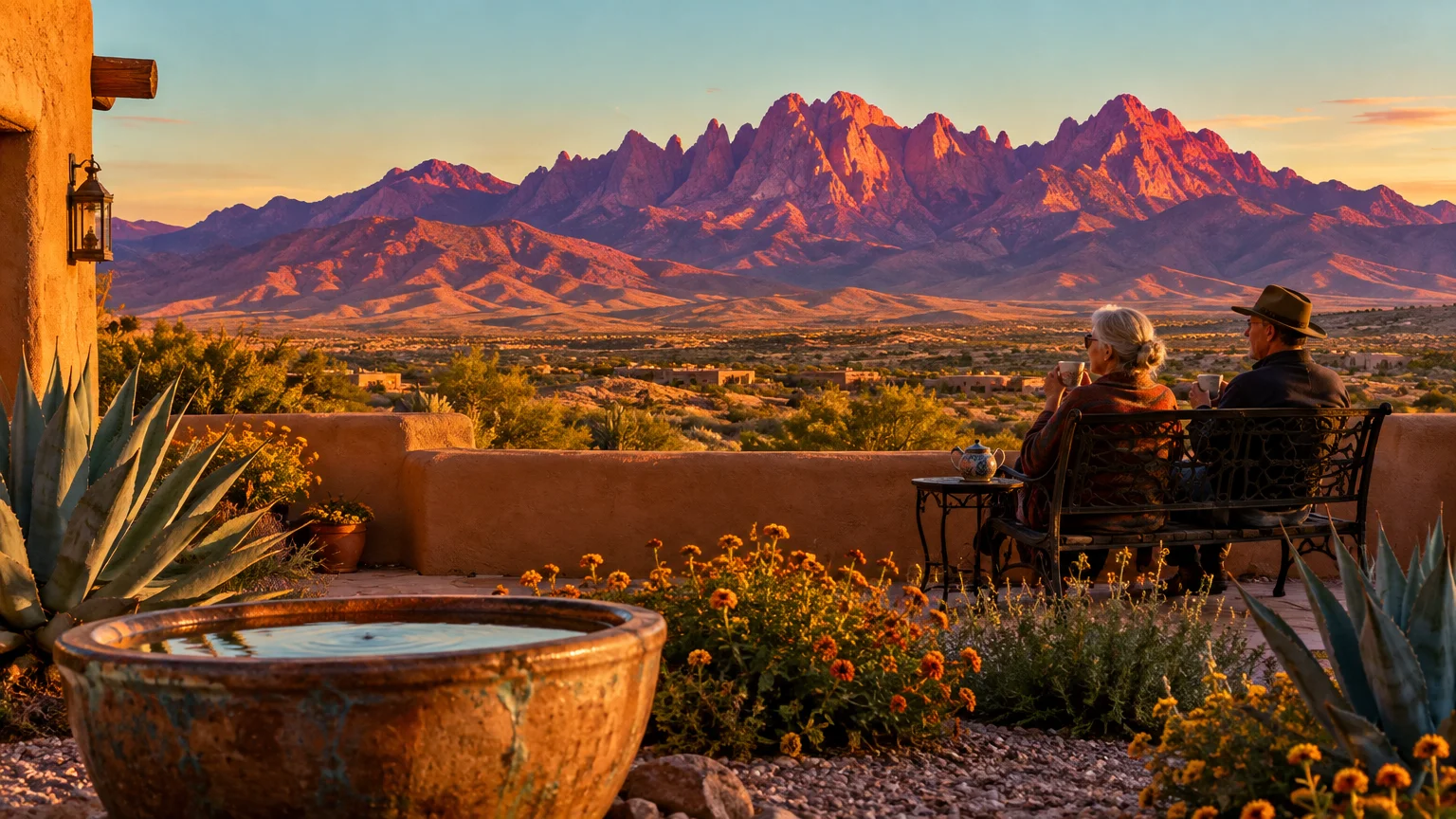
Las Cruces offers dramatic views of the Organ Mountains alongside wide desert skies. It captures the warm, palm-accented resort atmosphere of Palm Springs without the excessive luxury expenses.
Median home sale prices sit between $290,000 and $310,000. You can purchase a spacious, modern single-family home for roughly one-third of California’s statewide median price.
New Mexico exempts Social Security income for single filers with adjusted gross incomes under $100,000 and joint filers under $150,000. Most middle-income retirees pay zero state tax on their benefits.
Seniors enjoy an active outdoor lifestyle centered around hiking trails, golf courses, and cultural festivals. Mild winter temperatures average in the low sixties, making outdoor recreation easy year-round.

4. Grand Junction and Palisade, Colorado: Central Valley Wine Country
Located on Colorado’s western slope, Grand Junction and neighboring Palisade resemble California’s fertile agricultural valleys. Local vineyards, peach orchards, and red sandstone canyons line the picturesque Colorado River.
Median home prices in the Grand Junction area sit between $400,000 and $420,000. These price points make quiet rural living accessible to relocating seniors.
Colorado enforces a flat 4.4% income tax rate but offers generous exemptions for older adults. Taxpayers aged 65 and older deduct all taxable Social Security income plus up to $24,000 of other retirement earnings.
The Grand Valley stays substantially warmer and drier than Colorado’s Front Range. You enjoy mild winters, long gardening seasons, and thriving farm-to-table culinary scenes.

5. Walla Walla, Washington: Napa and Sonoma Wine Valley Ambiance
Walla Walla captures the early romance and agricultural beauty of Napa Valley from three decades ago. Rolling hills, over 120 artisan wineries, and historic downtown streets welcome residents.
Local real estate remains remarkably affordable compared to northern California wine hubs. Median home prices range between $420,000 and $490,000 across the valley.
Washington State levies zero personal state income tax. Retirees retain all earnings from traditional IRAs, 401(k) distributions, private pensions, and investments.
Eastern Washington enjoys warm, sunny summers and dry, crisp autumns. The local community provides a sophisticated arts culture anchored by Whitman College and renowned regional dining.

6. St. George, Utah: Coachella Valley Red Rock Oasis
St. George features stunning red rock bluffs, lush golf fairways, and native palm trees. It mirrors the relaxed resort lifestyle of Palm Desert and La Quinta.
Homes in St. George average between $540,000 and $560,000. This pricing delivers master-planned community living at substantial discounts compared to Riverside County communities.
Utah levies a flat 4.65% state income tax. However, the state provides a targeted Social Security credit that eliminates or sharply reduces tax bills for low-to-middle income couples.
The area provides mild winter temperatures with almost no snowfall. World-class hiking at Zion National Park sits less than an hour from your front door.

7. Sequim, Washington: Coastal California Sun in the Northwest
Sequim defies the rainy stereotype of the Pacific Northwest. Tucked into the rainshadow of the Olympic Mountains, Sequim receives only about 16 inches of annual rainfall, matching sunny Los Angeles.
Lavender fields, quiet beaches, and gentle ocean breezes give the area a Central Coast feel. Median home sale prices track between $480,000 and $530,000.
You enjoy the benefits of Washington’s zero-income-tax policy. This ensures your retirement income stays in your pocket rather than flowing to state revenues.
Sequim provides a mild maritime climate that prevents extreme summer heat and severe winter freezes. Active seniors enjoy kayaking, cycling the Olympic Discovery Trail, and exploring coastal state parks.
8. Ashland and Medford, Oregon: Mendocino Foothills and Rogue Valley Living
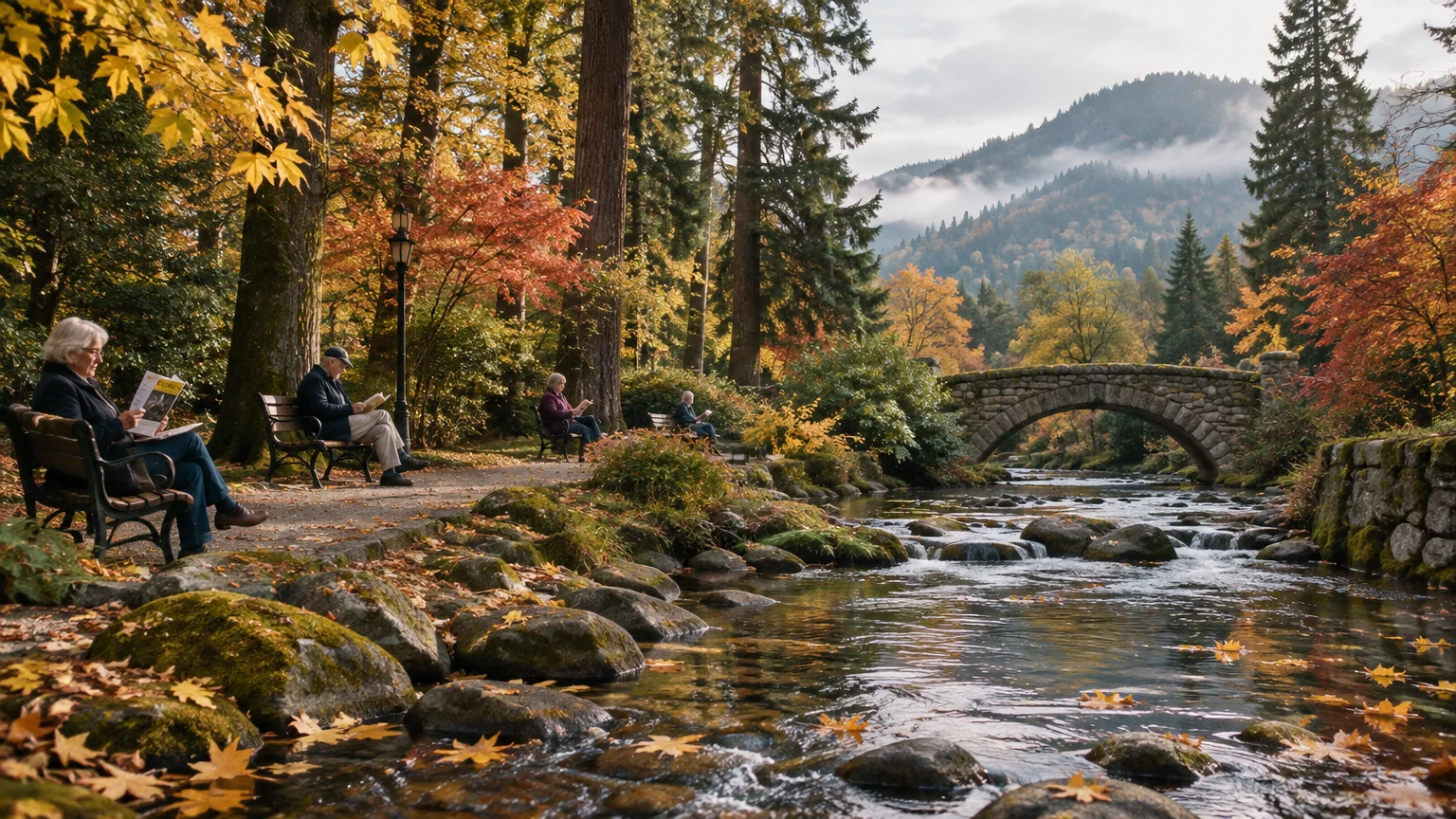
Oregon’s Rogue Valley blends cultural vibrancy with evergreen landscapes reminiscent of Mendocino or Sonoma counties. Ashland hosts the world-famous Oregon Shakespeare Festival, while Medford supplies extensive regional healthcare networks.
Median home prices in Medford average around $400,000, while Ashland’s historic neighborhoods command between $550,000 and $620,000. Both options sit well below coastal California averages.
Oregon charges zero state sales tax, lowering your day-to-day shopping and dining expenses. The state also fully exempts all Social Security retirement benefits from state taxation.
The region experiences warm, dry summers and mild, green winters. Outdoor enthusiasts enjoy easy access to the Rogue River, local wineries, and scenic mountain trails.

9. Fredericksburg, Texas: Paso Robles of the Hill Country
Fredericksburg blends German pioneer roots with a rapidly expanding wine corridor along Highway 290. Rolling oak-covered hills and tasting rooms create an atmosphere remarkably similar to Paso Robles.
Median home values range between $430,000 and $490,000. You gain access to upscale boutiques, award-winning bakeries, and historic limestone homes.
Texas levies zero personal state income tax, shielding pensions and retirement distributions. However, you must budget for higher effective property taxes, which typically run between 1.4% and 1.9%.
Spring wildflowers carpet the roadsides, and autumn brings comfortable afternoon breezes. The town maintains exceptional medical facilities and a welcoming, close-knit community spirit.

10. Cottonwood and the Verde Valley, Arizona: Central Coast Wine Trails
Located just twenty minutes from Sedona, Cottonwood and the Verde Valley mirror California’s Santa Ynez Valley wine country. Historic Old Town Cottonwood features bustling tasting rooms, bistros, and galleries.
Median home prices in Cottonwood range from $420,000 to $460,000. This provides an affordable alternative to high-priced Sedona real estate.
Residents enjoy Arizona’s low 2.5% flat tax and total exemption on Social Security payments. Lower utility rates and reasonable living costs keep monthly budgets predictable.
Sitting at 3,300 feet of elevation, Cottonwood avoids the extreme summer heat of Phoenix. The Verde River runs through town, offering kayaking, birding, and riverside walking paths.
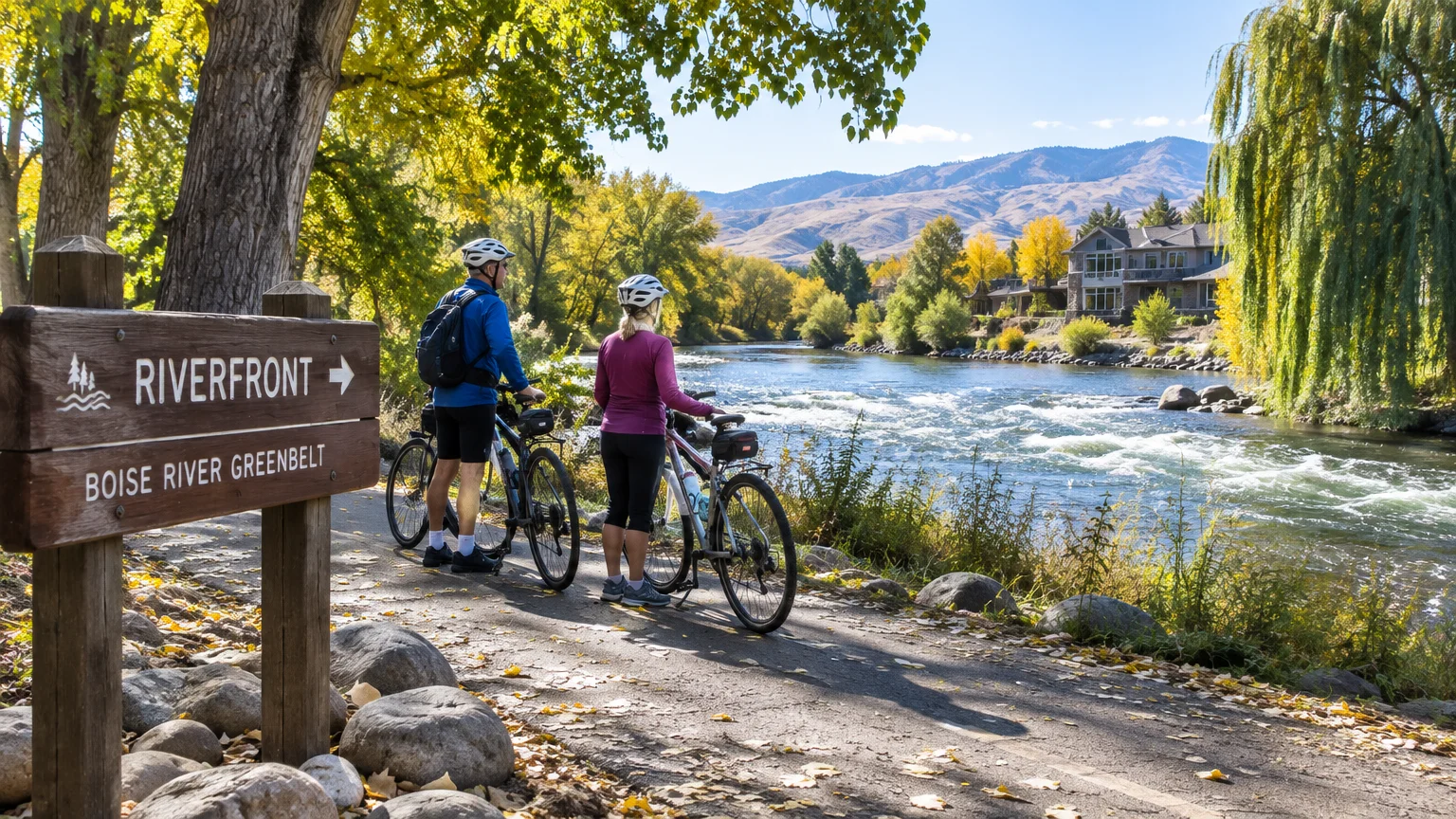
11. Boise and Eagle, Idaho: Sacramento River Valley Lifestyle
The Boise metropolitan area shares the river-centric charm and tree-shaded beauty of Sacramento and Folsom. A 25-mile paved Greenbelt winds along the Boise River through downtown parks and wildlife reserves.
Median home sale prices in the Boise metro area hover between $520,000 and $545,000. Surrounding suburbs like Eagle offer peaceful master-planned communities near foothill trails.
Idaho features a flat individual income tax rate of 5.695% and fully exempts Social Security benefits. Retirees can check eligibility for additional senior support programs through BenefitsCheckUp.
Boise experiences four distinct, sunny seasons with low humidity and mild winters. Retirees enjoy a thriving downtown culinary scene, regional medical centers, and immediate mountain recreation.
“Don’t simply retire from something; have something to retire to.” — Harry Emerson Fosdick
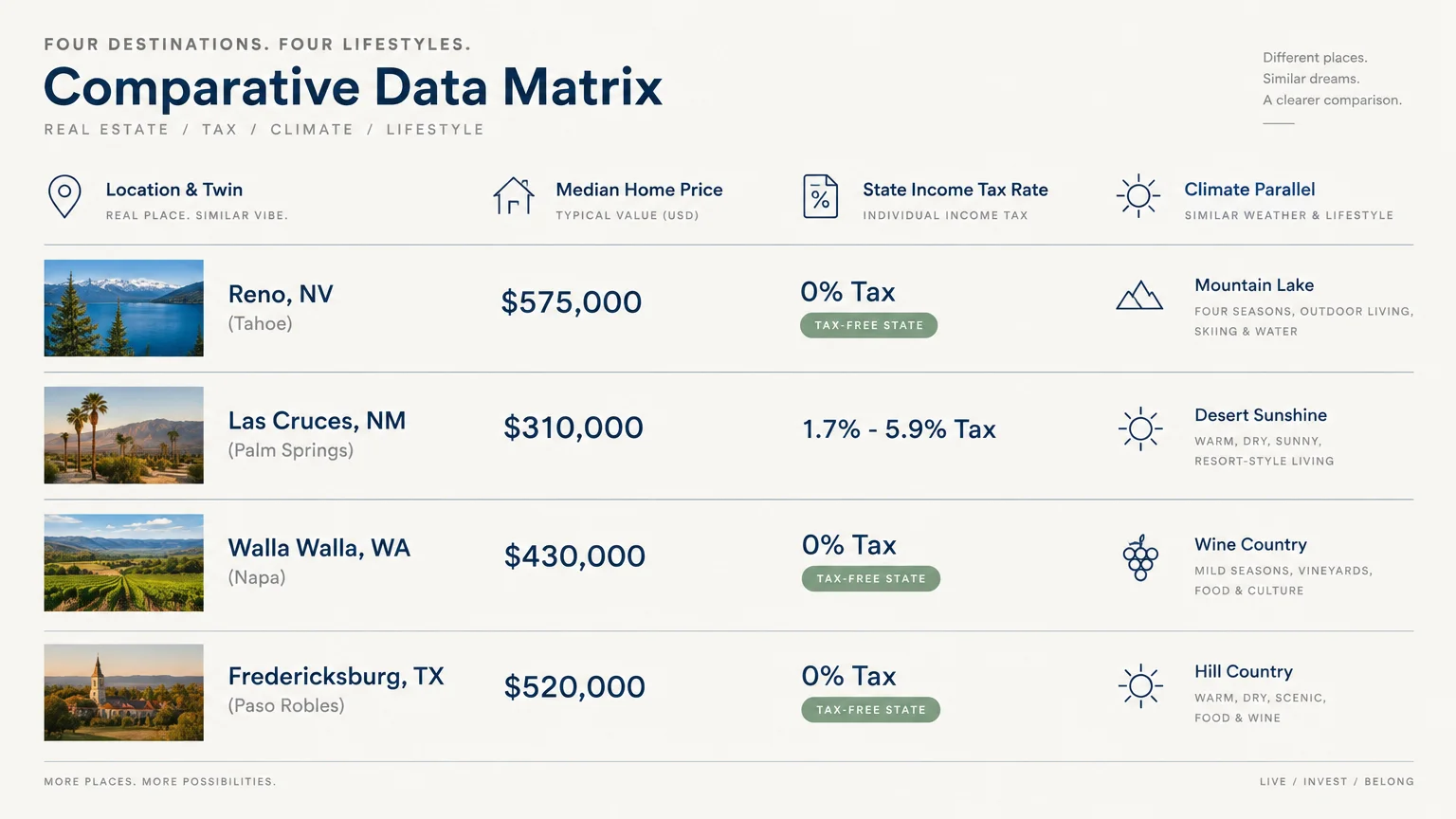
Comparing the Best California Alternatives for Retirees
Comparing potential destinations across multiple financial criteria helps you evaluate true relocation affordability. Review the key figures below to see how each town stacks up against California benchmarks.
| Destination | California Vibe Match | Median Home Price | State Income Tax | Social Security Tax |
|---|---|---|---|---|
| California Baseline | Baseline Comparison | $880,000–$910,000 | 1.0%–13.3% | Exempt |
| Reno / Carson City, NV | Lake Tahoe & Sierra Nevada | $570,000–$580,000 | 0.0% | Exempt |
| Prescott, AZ | Gold Country & Foothills | $585,000–$610,000 | 2.5% flat | Exempt |
| Las Cruces, NM | Palm Springs High Desert | $290,000–$310,000 | 1.7%–5.9% | Exempt (under AGI cap) |
| Grand Junction, CO | Central Valley Orchards | $400,000–$420,000 | 4.4% flat | Exempt (age 65+) |
| Walla Walla, WA | Napa & Sonoma Wine Country | $420,000–$490,000 | 0.0% | Exempt |
| St. George, UT | Coachella Valley Resorts | $540,000–$560,000 | 4.65% flat | Tax credit available |
| Sequim, WA | Sunny Central Coast | $480,000–$530,000 | 0.0% | Exempt |
| Medford / Ashland, OR | Mendocino & North Coast | $400,000–$620,000 | 4.75%–9.9% | Exempt |
| Fredericksburg, TX | Paso Robles Wine Trail | $430,000–$490,000 | 0.0% | Exempt |
| Cottonwood, AZ | Santa Ynez Valley | $420,000–$460,000 | 2.5% flat | Exempt |
| Boise / Eagle, ID | Sacramento River Valley | $520,000–$545,000 | 5.695% flat | Exempt |
These numbers highlight how much capital you can unlock by choosing affordable alternatives to California. Lower home prices free up equity, while lower income tax rates protect long-term cash flows.
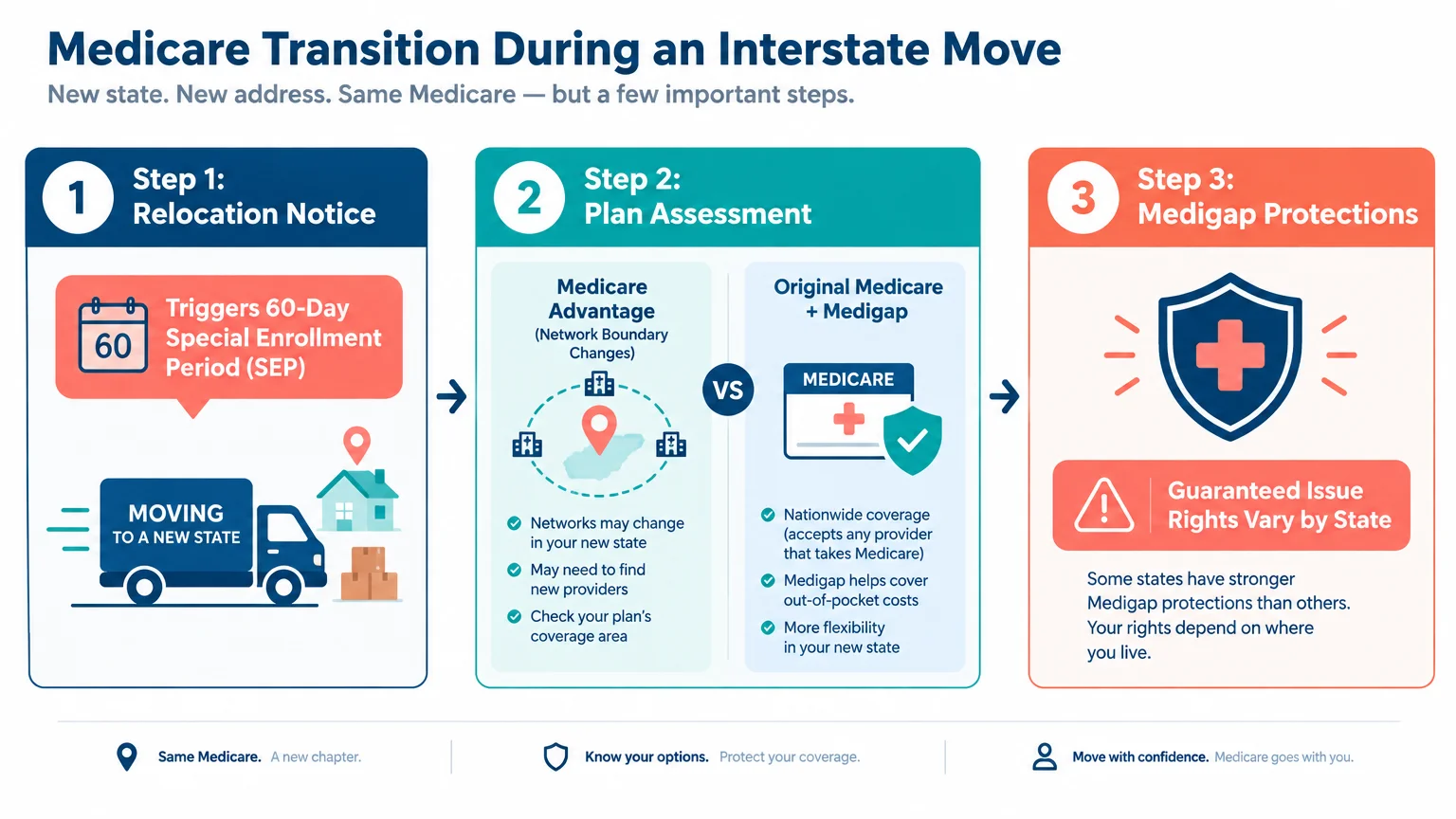
Navigating Medicare and Health Coverage When Moving Out of State
Relocating to a new state requires careful management of your healthcare coverage. Moving across county or state lines triggers a Medicare Special Enrollment Period (SEP).
Your SEP starts the month before your move and extends for two full months after you relocate. This window allows you to select a new Medicare Advantage plan or switch back to Original Medicare.
You can compare regional carrier networks and prescription drug formularies directly on Medicare.gov. Research local hospital ratings and in-network primary physicians before finalizing your move.
Medigap supplemental policies work differently than Medicare Advantage plans. Original Medicare and Medigap travel with you nationwide, but premium costs adjust based on your new zip code.
California offers an annual Birthday Rule allowing residents to switch Medigap plans without medical underwriting. Most destination states, including Arizona, Texas, and Utah, do not provide this protection.
If you leave California with a Medigap plan, you might face medical screening if you decide to change policies later. Keep your existing supplemental coverage intact unless you thoroughly review new state regulations.
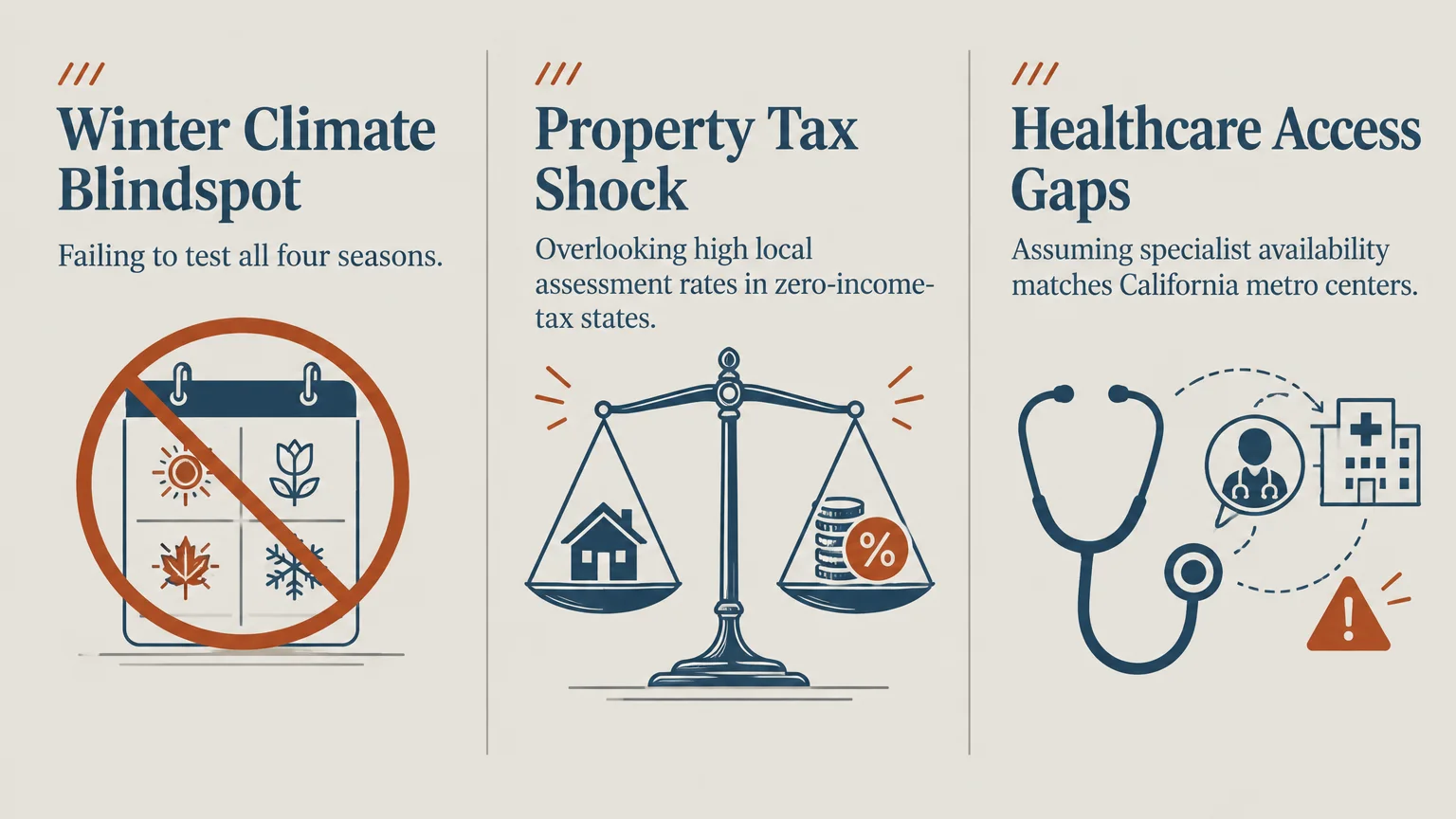
Don’t Make These Common Relocation Mistakes
Relocating in retirement involves more than just finding scenic views and pleasant weather. Avoid these common oversights to ensure a seamless transition.
- Ignoring overall tax structures: Zero income tax states often fund services through higher property taxes or sales taxes. Calculate your total annual tax burden rather than focusing on income taxes alone.
- Overlooking local healthcare capacity: Rural retirement towns like California look charming, but regional hospitals may sit miles away. Verify specialized medical facilities and physician availability before buying.
- Failing to rent first: Vacationing in a community differs vastly from living there year-round. Rent for six months to experience local winter temperatures, tourist crowds, and daily pace.
- Disregarding family travel logistics: Moving further from children and grandchildren increases travel costs. Choose destinations with nearby regional airports and dependable flight connections.
Consulting official resources on the Social Security Administration (SSA) website helps you update your official address and coordinate federal benefits smoothly.
Frequently Asked Questions
What is the most affordable alternative to California with warm weather?
Las Cruces, New Mexico, offers the lowest entry price, with median home values near $300,000. It delivers 320 days of sunshine, mild winters, and substantial tax relief on retirement benefits.
Do any California alternatives offer zero state income tax?
Nevada, Washington, and Texas impose zero state personal income tax. They exempt all distributions from IRAs, 401(k) accounts, private pensions, and Social Security earnings.
How does moving out of state affect my Social Security payments?
Your Social Security payment amount does not change when moving between states. However, your net take-home pay may rise if your new state exempts retirement income from state taxes.
Can I transfer my California Medigap plan to another state?
Yes, standard Medigap plans offer nationwide coverage through any Medicare-participating doctor. However, your insurance company will adjust your monthly premium based on your new residential zip code.
Taking Action on Your Retirement Move
Finding a way to retire somewhere like California cheaper lets you enjoy sunny days, scenic wine trails, and active communities while protecting your savings. Schedule a scouting trip to your favorite locations and test the local lifestyle firsthand.
Information in this article reflects current rules as of the publication date and may change. Always confirm benefit details directly with Social Security Administration, Medicare.gov, or relevant government agencies before making decisions.
Last updated: February 2026. Medicare and Social Security rules change annually—always verify current details at official government sources.