Skyrocketing living expenses and crowded metros are pushing older Americans away from traditional retirement mega-hubs. You can protect your hard-earned savings by moving to vibrant small cities that pair high-quality healthcare with lower everyday taxes.
Recent retirement migration trends show an unmistakable shift toward communities with fewer than 75,000 residents. These energetic destinations balance rich cultural amenities with relaxed, neighborly living at accessible price points.
Whether you crave mountain vistas, coastal breezes, or historic downtowns, smaller communities offer immense value. Here are ten small cities with growing retiree populations this year that deserve a spot on your shortlist.
Why Small Cities Dominate Today’s Retirement Migration Trends
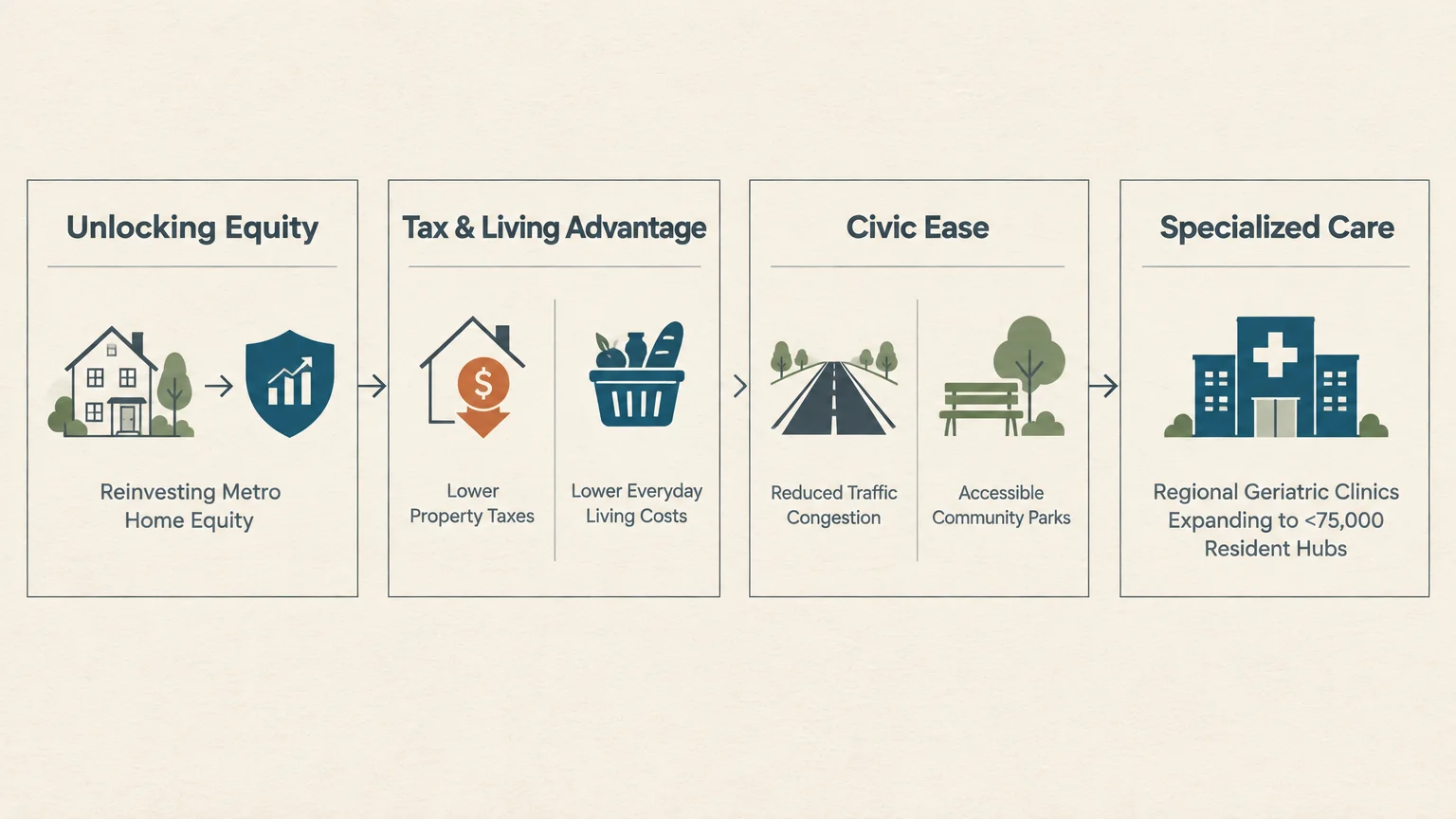
Runaway housing inflation in major metropolitan areas forces many seniors to rethink their long-term budgets. Selling a high-value home in an expensive suburb lets you unlock substantial equity for your post-career investments.
Small cities often feature significantly lower property taxes and everyday living costs. That financial breathing room helps shield your fixed income from broader economic volatility.
Beyond personal finances, infrastructure in smaller municipalities minimizes the daily headaches of heavy traffic and overcrowded public venues. You spend less time stuck at intersections and more time enjoying local parks, clubs, and volunteer groups.
Healthcare accessibility also drives this nationwide movement. Leading regional hospital networks continue expanding specialized geriatric clinics into smaller regional centers to serve the aging population.
Careful financial planning makes these geographical transitions seamless. You can explore the tools offered by the Consumer Financial Protection Bureau to understand how housing equity impacts your overall nest egg.
“Don’t simply retire from something; have something to retire to.” — Harry Emerson Fosdick
10 Small Cities With Growing Retiree Populations
The fastest growing retirement cities share key attributes: strong community cohesion, quality medical care, and scenic geography. The following ten towns stand out as top choices for older adults seeking an upgraded lifestyle.
1. Punta Gorda, Florida
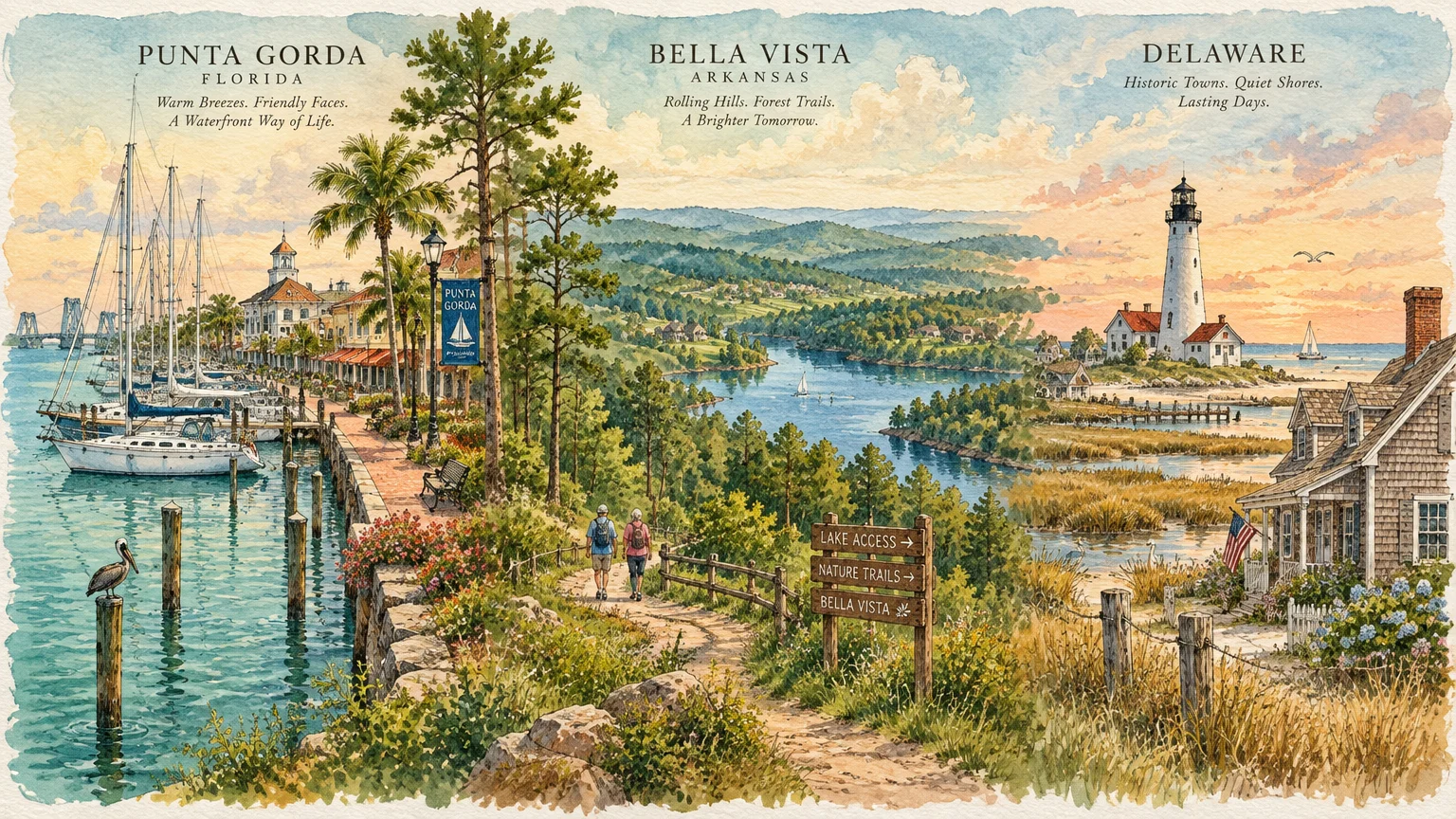
Nestled along Charlotte Harbor on Florida’s southwest coast, Punta Gorda offers waterfront living without the crushing congestion of Naples or Fort Myers. Its historic downtown features pedestrian-friendly brick streets lined with independent restaurants and marinas.
Nearly half of the city’s residents are seniors, creating an immediate and welcoming peer network. You will find miles of harborfront trails and vibrant community sailing organizations.
Florida levies no state personal income tax, which preserves more of your retirement distributions. ShorePoint Health Punta Gorda provides comprehensive cardiology and orthopedic services close to home.
2. Bella Vista, Arkansas
Located in the rolling Ozark Mountains, Bella Vista began as a summer resort and evolved into an outdoor haven. Today, it ranks among the most popular retirement cities for retirees who love active recreation.
The community boasts seven private golf courses, seven pristine lakes, and dozens of miles of multi-use trails. Membership in the property owners association grants low-cost access to state-of-the-art fitness and recreation centers.
Arkansas exempts Social Security benefits from state income taxes and maintains reasonable property tax rates. Nearby Bentonville provides world-class art at Crystal Bridges Museum alongside excellent regional medical hubs.
3. Lewes, Delaware
Lewes sits where Delaware Bay meets the Atlantic Ocean, offering timeless maritime charm and historic 18th-century architecture. It is an ideal seaside destination for retirees seeking coastal beauty without wild boardwalk commotion.
Delaware ranks as one of the most tax-friendly states in the Mid-Atlantic region. The state levies no sales tax, provides generous pension exclusions, and keeps local real estate taxes exceptionally low.
Beebe Healthcare operates a primary hospital and specialized cancer center directly inside Lewes. Cape Henlopen State Park borders the town, providing gentle biking trails, beaches, and pristine saltwater fishing.
4. Traverse City, Michigan
If you prefer four distinct seasons and lakeside beauty, Traverse City provides an extraordinary backdrop on Grand Traverse Bay. Known for its cherry orchards and vineyards, this northern Michigan town attracts culturally active seniors.
The city features a bustling downtown with farm-to-table dining, local bookstores, and the historic City Opera House. The surrounding waters provide sailing in summer, while winters feature quiet snowshoeing and cross-country skiing.
Munson Healthcare anchors the region with an award-winning hospital system that specializes in cardiology and stroke care. Michigan exempts Social Security benefits and offers substantial retirement income subtractions for qualified individuals.
5. Green Valley, Arizona
Situated twenty miles south of Tucson in the Santa Cruz Valley, Green Valley is an unincorporated community designed for active adults. Surrounded by the Santa Rita Mountains, it provides dry desert air and over 300 days of annual sunshine.
Green Valley Recreation manages more than a dozen community centers featuring heated swimming pools, pickleball courts, and woodworking shops. The community caters specifically to older adults looking for social engagement and low-maintenance living.
Housing remains far more affordable than in Scottsdale or Phoenix suburbs. The Santa Cruz Valley Regional Hospital and extensive clinics in Tucson ensure comprehensive specialty care is always within reach.
6. Fredericksburg, Texas
Set in the heart of the Texas Hill Country, Fredericksburg combines deep German heritage with an acclaimed wine industry. Its picturesque Main Street features limestone historic buildings, craft shops, and authentic European bakeries.
The town draws retirees seeking a relaxed pastoral atmosphere coupled with sophisticated culinary and arts offerings. Enchanted Rock State Natural Area sits just north of town, offering stunning hiking and panoramic vistas.
Texas has no state income tax, making it a favorite for pension-reliant households. Hill Country Memorial Hospital consistently earns high national marks for patient satisfaction and quality surgical care.
7. New Bern, North Carolina
New Bern is a riverfront town situated at the confluence of the Neuse and Trent rivers. Established in 1710, North Carolina’s first colonial capital features grand historic homes draped in Spanish moss.
Boaters and anglers thrive here thanks to direct access to the Pamlico Sound and the Atlantic Intracoastal Waterway. The walkable historic district hosts community festivals, farmer markets, and live music throughout the year.
Housing costs remain below the national average, making it accessible for budget-conscious home buyers. CarolinaEast Medical Center delivers advanced surgical, heart, and cancer care directly within the city limits.
8. Grand Junction, Colorado
Grand Junction sits on Colorado’s Western Slope, surrounded by red rock canyons, fruit orchards, and the Grand Mesa. It offers a milder climate and lower elevation than the state’s central mountain resort towns.
Retirees enjoy mountain biking, hiking, and exploring the Colorado National Monument without the steep living costs of Boulder or Denver. The surrounding Grand Valley wine country provides charming weekend outings and community social events.
The city serves as the primary medical hub between Denver and Salt Lake City, featuring St. Mary’s Medical Center. Colorado provides a generous pension and retirement income tax deduction for residents aged 65 and older.
9. Abingdon, Virginia
Tucked into the Blue Ridge Mountains of Southwest Virginia, Abingdon pairs traditional Appalachian hospitality with an acclaimed regional arts scene. It is home to the historic Barter Theatre and the trailhead of the famous 34-mile Virginia Creeper Trail.
The town center showcases brick sidewalks, preserved 18th-century architecture, and independent artisan shops. Community events and seasonal street festivals encourage deep social connections among new and lifelong residents.
Abingdon features home prices well below the national median, providing exceptional purchasing power for relocators. Johnston Memorial Hospital, a modern regional facility, offers comprehensive cardiology, oncology, and emergency medical services.
10. Coeur d’Alene, Idaho
Coeur d’Alene combines alpine lake scenery with clean, well-maintained public parks and community marinas. Located in northern Idaho, it offers a tranquil lifestyle centered around water sports, golf, and mountain exploration.
The town’s revitalized downtown features boutique shopping, cozy lakeside bistros, and a popular public beach. Tubbs Hill nature area provides peaceful hiking trails right along the shoreline in the center of town.
Idaho exempts Social Security payments from state income taxes and maintains reasonable property assessments. Kootenai Health provides advanced tertiary care, trauma services, and heart health programs to the entire northern panhandle.
“The goal of retirement is to live off your assets—not live off your regrets.”

Comparing Costs and Amenities Across Top Retirement Towns
Evaluating potential relocation targets requires balancing housing values, tax burdens, and natural surroundings. The comparison table below highlights critical metrics for each of these ten destinations.
| City & State | Approx. Population | Median Home Value | State Income Tax on Social Security | Primary Lifestyle Highlight |
|---|---|---|---|---|
| Punta Gorda, FL | 20,500 | $365,000 | No State Income Tax | Harbor boating & warm winters |
| Bella Vista, AR | 31,000 | $325,000 | Exempt | Golf courses & mountain trails |
| Lewes, DE | 3,400 | $545,000 | Exempt | No sales tax & coastal history |
| Traverse City, MI | 15,800 | $410,000 | Exempt | Lake Michigan bays & cultural arts |
| Green Valley, AZ | 22,000 | $285,000 | Exempt | Active adult centers & dry heat |
| Fredericksburg, TX | 11,500 | $520,000 | No State Income Tax | Hill Country vineyards & heritage |
| New Bern, NC | 31,500 | $275,000 | Exempt | Navigable rivers & historic downtown |
| Grand Junction, CO | 68,000 | $395,000 | Exempt (with limits) | Canyon hiking & sunny climate |
| Abingdon, VA | 8,200 | $245,000 | Exempt | Mountain scenery & performing arts |
| Coeur d’Alene, ID | 56,000 | $515,000 | Exempt | Alpine lake recreation & clean air |
Home prices fluctuate depending on neighborhood selection and proximity to waterfront or mountain amenities. Always compare overall living expenses rather than focusing solely on median purchase prices.

Errors That Cost Retirees Thousands During a Move
A poorly planned relocation can jeopardize your financial peace of mind. Reviewing common pitfalls helps you preserve capital and avoid unnecessary headaches.
- Overlooking local healthcare provider networks: Relocating across state lines can invalidate your current Medicare Advantage health plan. You must verify whether your doctors participate in regional provider panels via Medicare.gov before signing real estate contracts.
- Focusing solely on income taxes: Zero income tax states often generate revenue through high property taxes or elevated local sales taxes. Always calculate your total tax footprint before committing to a purchase.
- Skipping an off-season trial stay: Visiting a destination only during optimal weather leaves you blind to seasonal hardships. Rent for a month during summer heatwaves or freezing winter storms to test your genuine tolerance.
- Underestimating relocation logistics: Cross-country moving services, utility transfer fees, and vehicle registration adjustments add up rapidly. Failing to budget for these closing expenses depletes your cash emergency reserves.
- Ignoring public transit and walkable layouts: Aging comfortably requires thinking ahead to years when driving long distances may become difficult. Choosing a home far from grocery stores and pharmacies can isolate you later in life.
Avoiding these costly missteps keeps your retirement nest egg intact. Give yourself ample time to research every municipal ordinance and healthcare provider network before packing boxes.

When to Get Expert Help Before Relocating
Relocating across county or state lines introduces legal, healthcare, and tax complexities that you should not navigate alone. Professional counsel ensures your move goes smoothly without unforeseen financial setbacks.
State Health Insurance Assistance Programs (SHIP) provide free, personalized counseling to help you transition your Medicare coverage. Speaking with a counselor protects you from gaps in essential prescription drug or specialist coverage.
You can identify local support systems and certified community services using the federal Eldercare Locator database. This resource connects you directly with Area Agencies on Aging in your prospective destination.
Consult a certified financial planner or tax accountant to establish legal domicile correctly in your new home state. Some states require strict residency proofs before releasing you from their personal income tax rolls.
Estate planning laws also vary widely across different jurisdictions. An elder law attorney can review your wills, healthcare directives, and powers of attorney to confirm they remain valid under new state codes.
Finally, confirm that your benefit checks and address changes are processed securely through the official Social Security Administration website. Never rely on unofficial third parties to manage your federal benefits.
Frequently Asked Questions About Retiree Relocation
How does moving to a new state affect my Social Security benefits?
Your federal Social Security monthly benefit amount does not change based on where you live inside the United States. However, state taxation policies vary, as some states tax benefits while others completely exempt them.
What happens to my Medicare coverage when I move to another city?
Original Medicare Part A and Part B cover you nationwide at any hospital or clinic accepting Medicare patients. If you carry a Medicare Advantage or Part D plan, you usually must enroll in a new plan serving your new service area.
How do I test a new city before buying a home?
Sign a three-month or six-month lease during the region’s least pleasant weather season. This trial allows you to explore neighborhoods, shop at local markets, and meet everyday residents before committing substantial capital.
Are small cities safe choices for long-term aging in place?
Many small cities offer exceptional community safety, less traffic, and dedicated senior centers that rival larger suburbs. You should always confirm that emergency response times and specialized medical clinics are within a short drive of your home.
Taking Your Next Steps
Transitioning into a smaller community can reduce your living expenses while significantly improving your overall quality of life. Start by picking two or three cities from this list that match your preferred climate and leisure pursuits.
Plan extended scouting visits to explore residential neighborhoods, tour regional medical facilities, and talk with local retirees. Taking methodical, well-researched steps guarantees you find a comfortable home tailored to your lifestyle goals.
Information in this article reflects current rules as of the publication date and may change. Always confirm benefit details directly with Social Security Administration, Medicare.gov, or relevant government agencies before making decisions.
Last updated: February 2026. Medicare and Social Security rules change annually—always verify current details at official government sources.