Sitting still does not fit your retirement vision. If you crave daily movement, scenic trails, and energetic peers, choosing the right zip code makes all the difference.
Many retirees find traditional retirement enclaves too quiet and isolated. You need a thriving base that champions physical fitness, outdoor recreation, and lifelong learning alongside accessible healthcare.
This comprehensive guide highlights 11 outstanding American towns designed for an invigorating lifestyle. Explore these dynamic communities where outdoor adventure and healthy longevity take center stage.
What Defines a Great Town for Active Seniors?
Relocating during retirement involves more than finding low tax rates or sunny weather. An active lifestyle demands robust community infrastructure that encourages daily movement.
The best towns offer accessible outdoor spaces for walking, cycling, and water recreation. They also maintain well-organized adult athletic leagues, conservation groups, and community fitness centers.
According to the National Institute on Aging, regular aerobic exercise and strength training significantly reduce the risk of chronic conditions. Choosing a town built around activity helps you sustain those habits effortlessly.
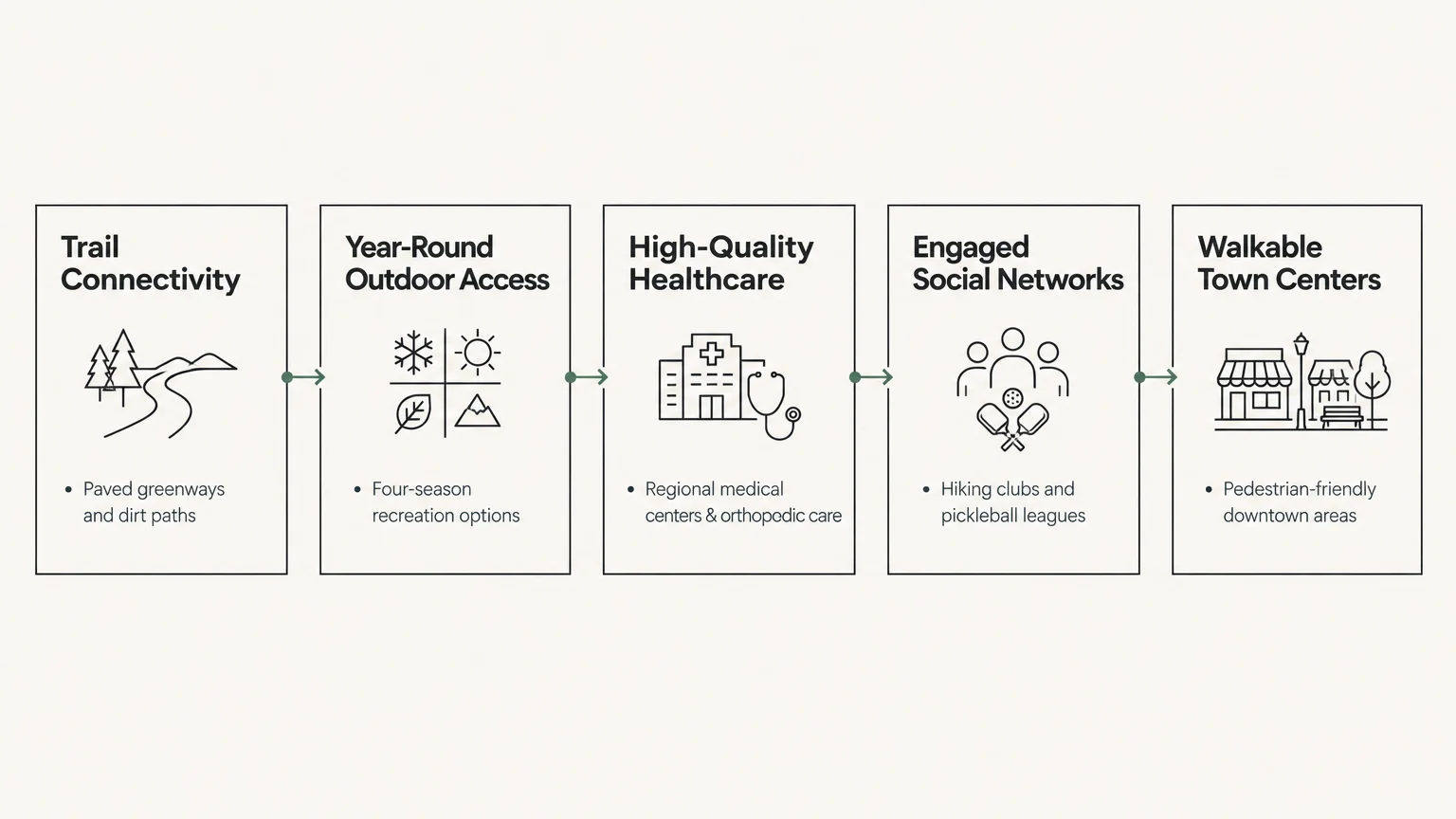
When evaluating potential destinations, focus on these critical lifestyle pillars:
- Trail Connectivity: Paved greenways and maintained dirt paths that you can access from residential neighborhoods.
- Year-Round Outdoor Access: Four-season recreation options, including winter sports or shaded summer paths.
- High-Quality Healthcare: Proximity to premier regional medical centers and specialized orthopedic care.
- Engaged Social Networks: Active hiking clubs, pickleball leagues, volunteer opportunities, and continuing education programs.
- Walkable Town Centers: Pedestrian-friendly downtown areas with farm-to-table dining, local markets, and cultural venues.
Evaluating these factors ensures your new hometown supports your physical vitality for decades to come.
“Don’t simply retire from something; have something to retire to.” — Harry Emerson Fosdick
11 Dynamic Towns for Active Seniors
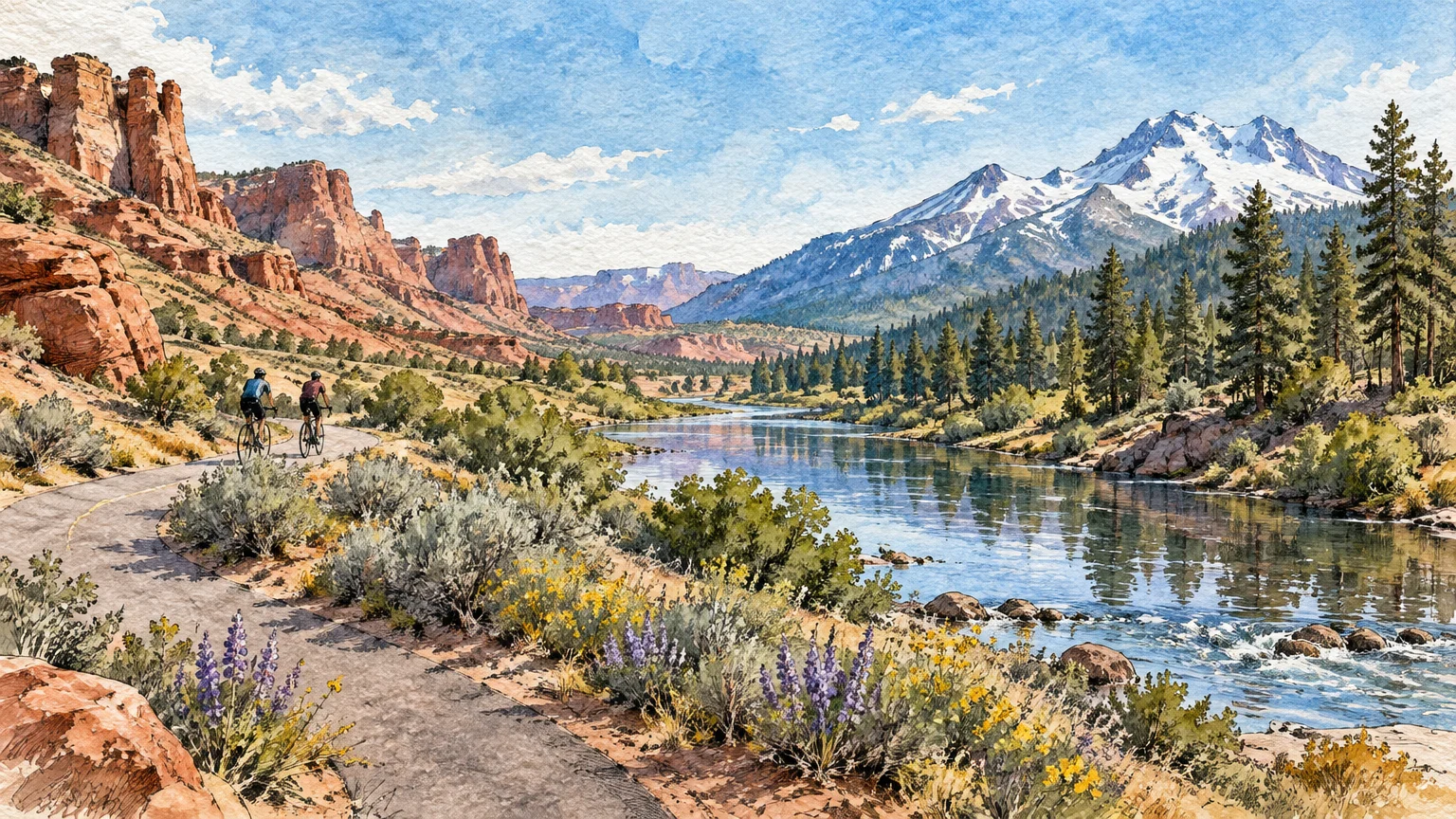
These 11 American towns stand out for their breathtaking scenery, dedicated athletic infrastructure, and energetic peer groups. Each location offers a distinctive flavor of outdoor recreation.
1. Bend, Oregon
Nestled against the eastern edge of the Cascade Range, Bend serves as a paradise for outdoor enthusiasts. High desert sunshine warms the city for nearly 300 days each year.
You can spend your mornings fly-fishing on the Deschutes River and your afternoons snowshoeing at Mt. Bachelor. The town boasts dozens of miles of paved river trails directly accessible from central districts.
Local recreation centers host thriving pickleball leagues, masters swim programs, and indoor rock climbing clinics. Cycling paths crisscross the entire community, making errands achievable on two wheels.
St. Charles Health System provides advanced medical and surgical care right in town. This ensures that you stay close to emergency support and specialty medicine as you age.
2. St. George, Utah
St. George combines striking red rock vistas with mild winter temperatures. Located in southwestern Utah, this city offers year-round golfing across more than a dozen premier courses.
Hiking enthusiasts enjoy immediate proximity to Snow Canyon State Park and Zion National Park. The paved Virgin River Trail system provides miles of level, scenic walking and biking routes.
The city famously hosts the annual Huntsman World Senior Games each autumn. This premier event attracts thousands of competitive athletes over age 50 from across the globe.
Healthcare access is anchored by Intermountain St. George Regional Hospital. The facility offers comprehensive cardiology, oncology, and orthopedic services to the growing senior population.
3. Traverse City, Michigan
Traverse City proves that active retirement communities thrive along freshwater shores. Positioned on the southern edge of Grand Traverse Bay, this town is an aquatic wonderland.
During the warmer months, you can kayak, paddleboard, or sail across pristine, sheltered waters. The 25-mile TART Trail network provides flat, paved cycling paths through forests and shorelines.
Winter brings cross-country skiing, fat-tire snow biking, and snowshoeing through Sleeping Bear Dunes National Lakeshore. The cold weather rarely keeps local residents indoors.
Munson Healthcare operates an award-winning regional medical center right in the heart of town. It ranks consistently among the top heart hospitals in the Midwest.
4. Asheville, North Carolina
Asheville rests in the heart of the Blue Ridge Mountains, providing endless mountain adventures. Cool mountain breezes make summer hikes comfortable, while winters remain relatively temperate.
Retirees enjoy rapid access to the Appalachian Trail and scenic overlooks along the Blue Ridge Parkway. The French Broad River offers gentle waters for kayaking and paddleboarding.
Beyond trail exploration, Asheville delivers a vibrant artistic culture and celebrated culinary scene. The Osher Lifelong Learning Institute at UNC Asheville provides non-credit classes and social clubs.
Mission Hospital provides extensive specialized clinical care, including advanced emergency medicine and orthopedic surgery. Active adults appreciate having access to high-caliber medical resources nearby.
5. Boise, Idaho
Boise seamlessly blends sophisticated urban amenities with rugged backcountry access. The city center sits along the base of the scenic Boise Foothills.
The crown jewel of the city is the 25-mile Boise River Greenbelt. This tree-lined, paved trail links waterfront parks, wildlife habitats, and downtown dining spots.
Just above the city, the Ridge to Rivers trail network offers over 190 miles of hiking and biking paths. In winter, downhill and Nordic skiing await 40 minutes away at Bogus Basin.
Healthcare providers like St. Luke’s Regional Medical Center and Saint Alphonsus offer top-rated clinical services. Their specialized geriatric and orthopedic clinics cater to athletic adults.
6. Prescott, Arizona
Unlike the sweltering desert valleys to the south, Prescott sits at a comfortable mile-high elevation. This unique geography creates a mild four-season climate without severe temperature extremes.
Prescott features more than 400 miles of multi-use trails winding through pine forests and granite dells. Kayakers and anglers frequently gather at Watson Lake and Willow Lake.
The historic downtown square hosts regular farmers markets, folk festivals, and community square dancing. Social clubs and volunteer organizations offer fast pathways for newcomers to make lasting friends.
Yavapai Regional Medical Center provides primary and emergency care within the city limits. Specialized cardiac and joint replacement programs support active seniors seeking swift recoveries.
7. Fort Collins, Colorado
Fort Collins sits at the foot of the Rocky Mountain foothills and holds a Platinum-level Bicycle Friendly Community rating. Wide, separated bike paths span across the entire municipal area.
Nearby Horsetooth Reservoir provides an expansive venue for open-water swimming, boating, and scenic stand-up paddleboarding. Poudre Canyon offers thrilling white-water rafting and trout fishing minutes from town.
Colorado State University enriches the local culture with athletic events, lectures, and lifelong learning courses. The community exudes an infectious, energetic college-town spirit year-round.
UCHealth Poudre Valley Hospital delivers nationally recognized emergency, orthopedic, and cardiovascular services. The healthcare network makes preventive care convenient and widespread across northern Colorado.
8. Chattanooga, Tennessee
Tucked into the Tennessee River Valley, Chattanooga has reinvented itself as an adventure hub. The city appeals strongly to outdoor lifestyle retirees seeking tax-friendly living.
The 16-mile Tennessee Riverpark serves as a scenic arterial route for walkers, runners, and casual cyclists. Nearby Lookout Mountain offers challenging trail runs and breathtaking panoramic valley vistas.
Tennessee levies no state personal income tax, protecting your retirement savings and distributions. The low cost of living allows you to spend more on recreational pursuits.
Erlanger Health System operates high-volume tertiary care and trauma centers in the metro area. Local wellness centers coordinate fitness programs tailored to mature adults.
9. Sarasota, Florida
If your version of an active retirement features salty breezes and white sand, Sarasota delivers exceptional quality. Situated on the Gulf Coast, this coastal city focuses on recreation.
The Legacy Trail offers over 18 miles of paved, continuous cycling from Sarasota south to Venice. Nathan Benderson Park provides world-class rowing, walking loops, and outdoor fitness equipment.
Pickleball and tennis facilities operate year-round in city parks and master-planned neighborhoods. Sarasota also houses premier golf courses with challenging layouts for all skill levels.
Sarasota Memorial Hospital consistently ranks among the top healthcare systems in the nation. It provides specialized heart, vascular, and orthopedic care tailored to active seniors.
10. Port Townsend, Washington
Located on the northeastern tip of the Olympic Peninsula, Port Townsend attracts maritime lovers and nature enthusiasts. The Victorian seaport overlooks the Puget Sound and Admiralty Inlet.
Sailing, sea kayaking, and coastal rowing define the local water culture. Fort Worden Historical State Park offers miles of wooded walking paths and sandy beaches.
The town sits within the Olympic rain shadow, receiving significantly less rainfall than Seattle. This microclimate allows for more comfortable days outside during the fall and spring.
Jefferson Healthcare operates a modern critical-access hospital with dedicated physical therapy and surgical wings. The close-knit community ensures responsive, personalized care for every resident.
11. Charlottesville, Virginia
Charlottesville rests in the scenic foothills of the Southwest Mountains near the Shenandoah National Park. It combines deep historical roots with an energetic outdoor culture.
The Rivanna Trail creates a continuous 20-mile pedestrian loop around the city perimeter. Cyclists and equestrians enjoy quiet country lanes winding past historic estates and lush vineyards.
The University of Virginia enriches the city with athletic competitions, theatrical performances, and academic workshops. Retirees frequently take advantage of tuition waivers for auditing university lectures.
UVA Health is an internationally recognized academic medical center located directly in town. Its world-class geriatricians and orthopedic specialists ensure unmatched clinical care.

Comparing the Top Active Retirement Towns
Selecting your ideal destination requires balancing physical topography, climate, and healthcare accessibility. The following table compares these 11 locations across key lifestyle metrics.
| Town | Primary Outdoor Activities | Climate Profile | Key Healthcare Anchor |
|---|---|---|---|
| Bend, OR | Skiing, fly fishing, hiking, trail cycling | High desert; cool winters, dry sunny summers | St. Charles Health System |
| St. George, UT | Golf, canyon hiking, cycling, pickleball | Arid desert; hot summers, mild sunny winters | Intermountain St. George Regional |
| Traverse City, MI | Sailing, kayaking, cross-country skiing | Four seasons; snowy winters, temperate summers | Munson Healthcare |
| Asheville, NC | Mountain hiking, river paddling, trail cycling | Mountain temperate; mild summers, crisp winters | Mission Hospital |
| Boise, ID | Greenway cycling, trail running, skiing | Semi-arid; four distinct seasons, sunny summers | St. Luke’s Regional Medical |
| Prescott, AZ | Pine trail hiking, lake paddling, golf | Four-season mild; cool winters, pleasant summers | Yavapai Regional Medical Center |
| Fort Collins, CO | Paved cycling, reservoir paddling, hiking | Sunny semi-arid; snowy winters, mild summers | UCHealth Poudre Valley Hospital |
| Chattanooga, TN | Riverwalk running, climbing, lake boating | Humid subtropical; mild winters, warm summers | Erlanger Health System |
| Sarasota, FL | Beaches, pickleball, coastal rowing, golf | Subtropical; humid warm summers, warm dry winters | Sarasota Memorial Hospital |
| Port Townsend, WA | Sailing, coastal hiking, sea kayaking | Maritime rain-shadow; mild winters, cool summers | Jefferson Healthcare |
| Charlottesville, VA | Foothills hiking, country cycling, golf | Mid-Atlantic humid; crisp winters, warm summers | UVA Health |
Costly Mistakes to Avoid When Relocating
Relocating in retirement is a major financial and logistical decision. Avoiding typical oversights will protect your retirement nest egg and personal happiness.
1. Overlooking Winter Weather Reality: Visiting a mountain town during peak summer gives an incomplete picture. Spend time in the town during January to confirm you can manage icy roads and cold spells.
2. Forgetting Healthcare Network Limits: Even if a town has a reputable hospital, verify that your specific insurance plan covers local doctors. Research hospital ratings on Medicare.gov before committing to a home purchase.
3. Underestimating Everyday Living Costs: Outdoor recreation hubs often carry high property taxes, utility expenses, and housing prices. Balance recreational amenities against long-term affordability to ensure your funds last.
4. Buying Property Immediately: Many retirees buy a home quickly, only to discover the neighborhood lacks social connection. Renting for six to twelve months allows you to evaluate neighborhoods before making a purchase.
How to Test-Drive an Active Retirement Community
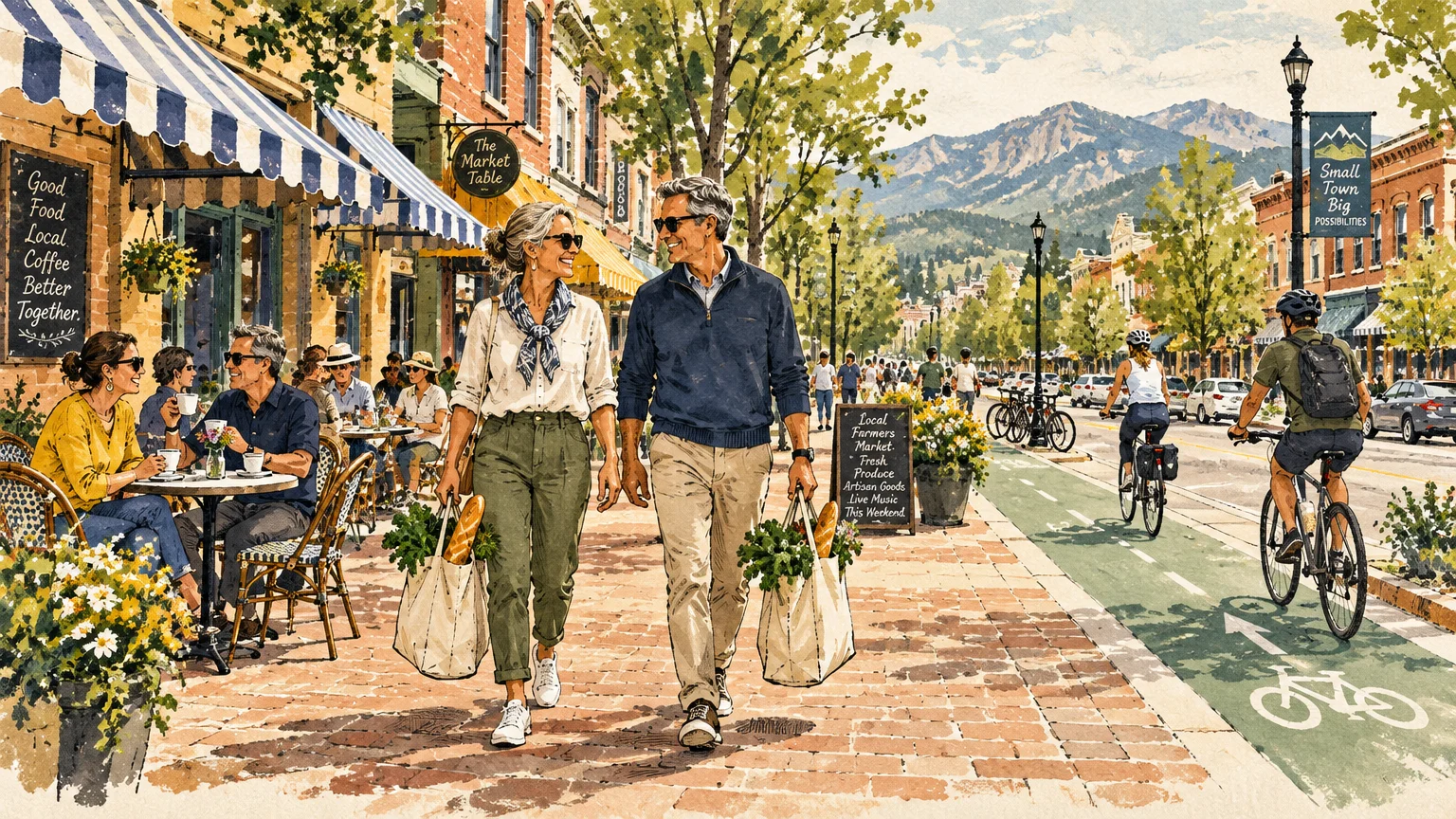
Never pack up your life based solely on tourism brochures and internet articles. You must experience daily municipal rhythms as a temporary local resident.
Book a rental property in a residential neighborhood rather than a resort hotel. Walk the local grocery stores, visit the library, and test the morning traffic patterns.
Drop in on local fitness classes, pickleball open-play courts, and hiking clubs. Talk with current retirees to hear their honest experiences regarding local services and weather.
Consult livability assessments through organizations like AARP to analyze walkability, transit options, and housing diversity. A community that supports you during your active sixties should also accommodate you well into your eighties.
Frequently Asked Questions
What qualifies a town as a healthy retirement destination?
Healthy towns feature expansive outdoor recreation spaces, low pollution levels, and strong community engagement. They also provide convenient access to comprehensive medical systems and wellness programs.
How does high elevation affect active seniors?
Towns located above 4,000 feet, like Prescott or Bend, feature thinner air that requires cardiovascular adaptation. Seniors with pulmonary or heart conditions should consult their doctor before relocating to higher elevations.
Are active retirement communities more expensive than standard towns?
Desirable outdoor amenities frequently drive up local real estate demand and property taxes. However, towns like Chattanooga and Prescott provide lower costs of living compared to coastal metropolitan centers.
Can I maintain an active lifestyle without living in a resort town?
Yes. Many mid-sized university towns and regional medical hubs offer excellent trail systems and athletic centers at a fraction of the cost found in traditional mountain or ski resorts.
Embracing Your Next Chapter
Retirement offers you the freedom to design each day around the activities that bring you joy and vitality. Finding a hometown that matches your athletic passions makes consistent physical health feel natural and rewarding.
Take your time visiting prospective towns, test out their trails, and speak with local residents. The right community will challenge your body, stimulate your mind, and surround you with genuine friends.
Retirement rules and benefit amounts vary based on individual work history, income, and circumstances. This article provides general guidance only. Consult a SHIP counselor, financial advisor, or elder law attorney for advice specific to your situation.
Last updated: February 2026. Medicare and Social Security rules change annually—always verify current details at official government sources.