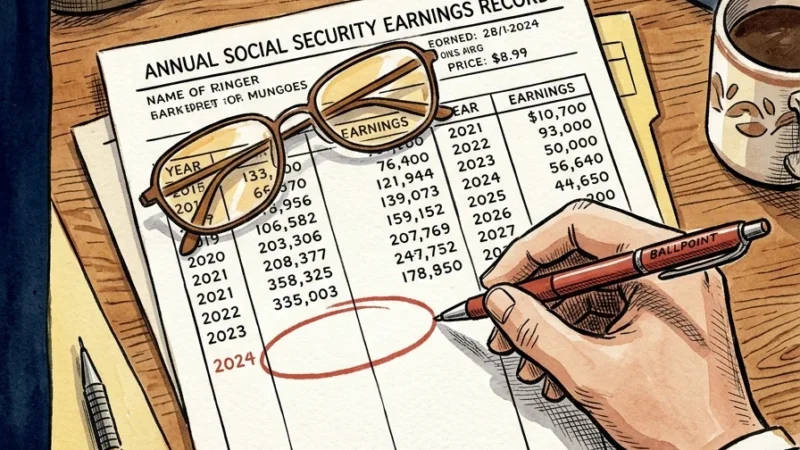
Every trip to the grocery store or pharmacy counter shapes your view of the economy. When daily expenses climb faster than your monthly income, election issues become deeply personal financial decisions.
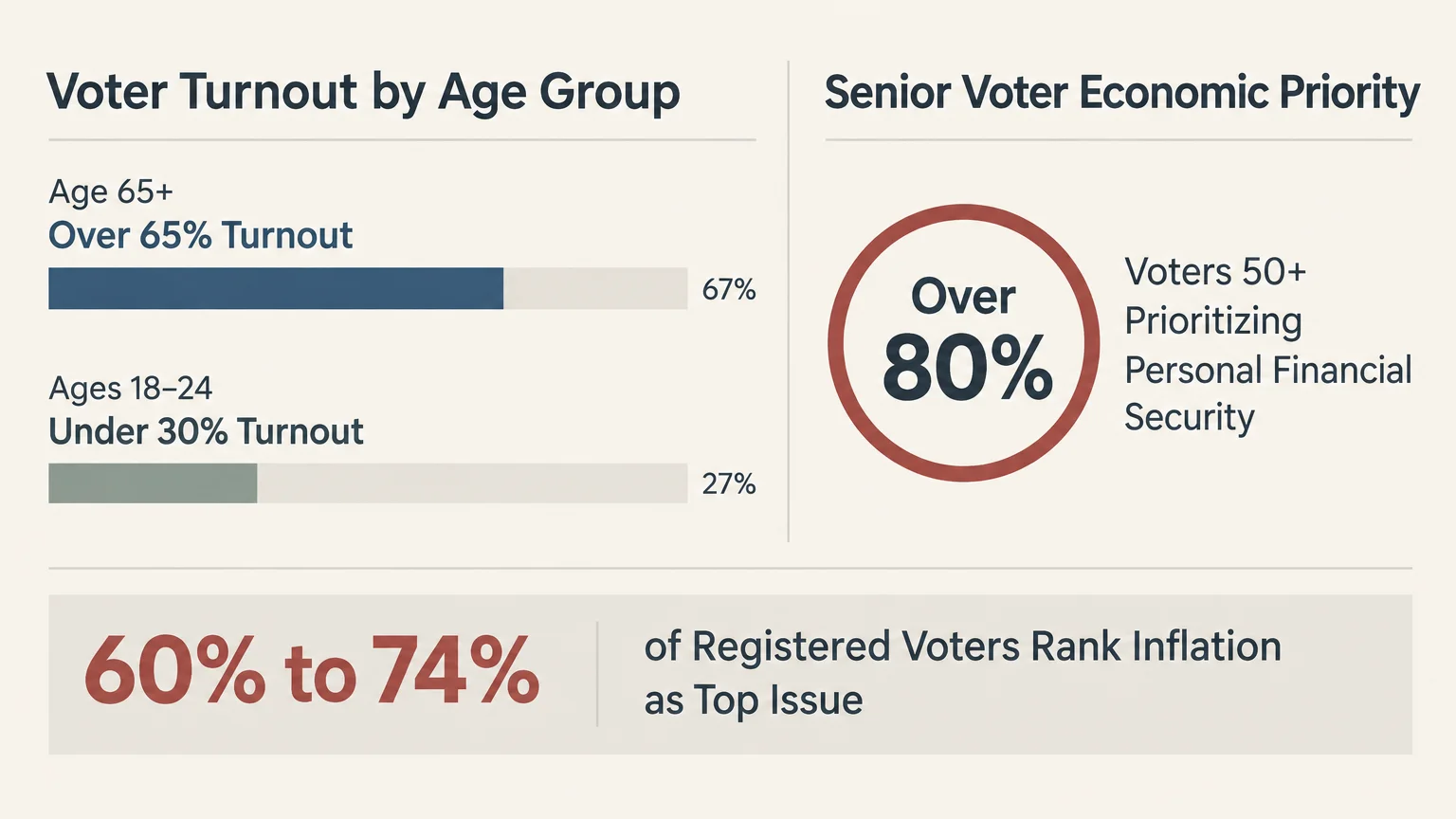
Recent polling reveals that between 60% and 74% of registered voters rank price inflation as their chief concern at the ballot box. For older Americans living on fixed incomes, these price pressures threaten long-term security.
Understanding which specific expenses erode your purchasing power helps you take control of your budget; it also clarifies what policies truly serve your household. Here is why the cost of living dominates the voting booth.
The Ballot Box Reality: Why Everyday Costs Drive Senior Turnout
Older adults show up to vote at higher rates than any other demographic in the United States. In midterm and federal elections, turnout among voters aged 65 and older routinely surpasses 65%.
By comparison, younger voters aged 18 to 24 often turn out at rates below 30%. Because older Americans cast ballots reliably, their economic concerns shape national political debates.
Extensive research from AARP shows that more than 80% of voters aged 50 and older evaluate candidates through the lens of personal financial security.
Voter concerns about prices reflect urgent monthly math rather than abstract political theory. When basic utilities and groceries rise, fixed-income budgets break.
Research shows inflation and voter behavior are directly connected. When families feel financially pinched, pocketbook issues overshadow almost every other topic during debates.
Social Security COLA Versus the True Cost of Living
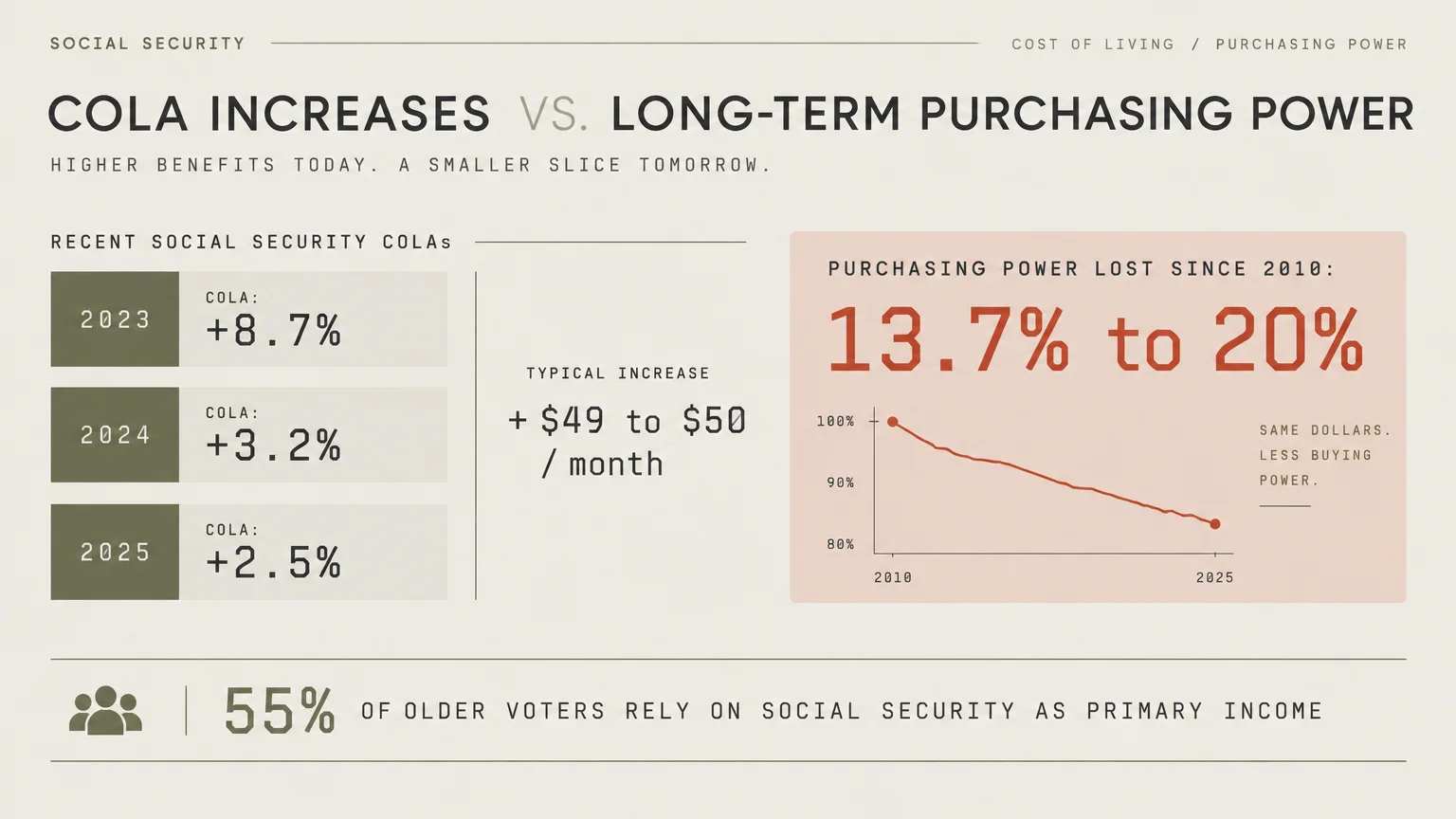
For 2025, the Social Security Administration instituted a 2.5% Cost-of-Living Adjustment (COLA). That adjustment added roughly $49 to $50 per month to the typical retiree benefit.
While an increase helps, it pales alongside cumulative price increases accumulated over recent years. Earlier adjustments of 8.7% in 2023 and 3.2% in 2024 offered brief relief before new expenses arrived.
Research from The Senior Citizens League indicates Social Security benefits have lost between 13.7% and 20% of their purchasing power since 2010.
This steady erosion occurs because the index used to calculate annual COLAs fails to track senior spending patterns. Retirees spend far more on medical care and shelter than typical working adults.
Roughly 55% of older voters rely on Social Security as their primary source of income. When benefit checks fail to keep up with real-world expenses, voters register their frustration at the polls.
The cost of living political impact becomes undeniable when millions of retirees watch their monthly cushion evaporate.
Healthcare Price Volatility: Part B Hikes and Out-of-Pocket Caps
Healthcare represents one of the most volatile categories in any retirement budget. Even small policy adjustments create immediate ripple effects across your bank account.
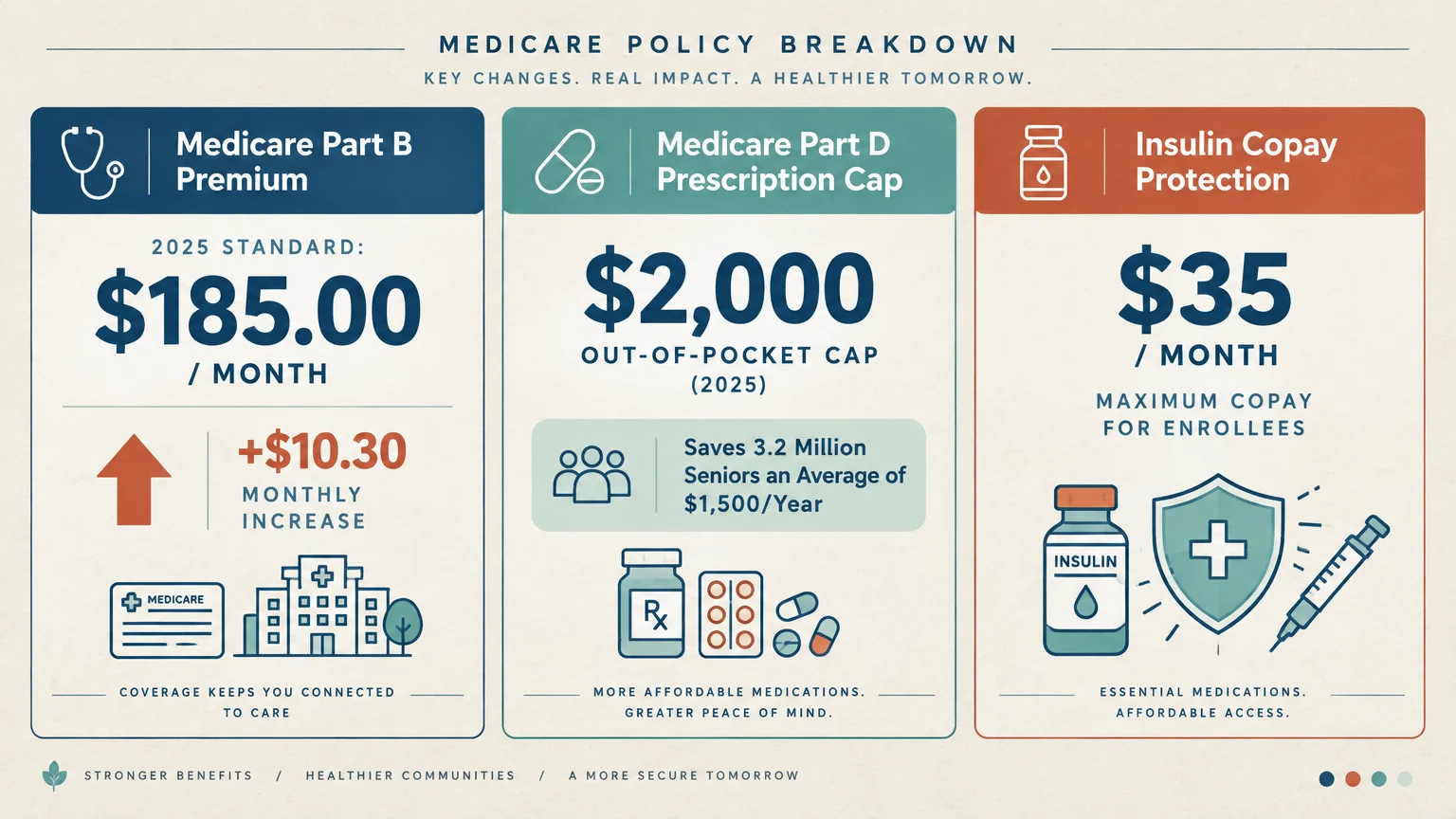
For 2025, the standard monthly premium for Medicare Part B jumped to $185.00—an increase of $10.30 each month. Because this premium comes directly out of Social Security, it immediately consumes part of your COLA.
However, recent federal reforms have introduced notable relief for prescription medications. The Inflation Reduction Act established a hard $2,000 out-of-pocket spending cap on Medicare Part D prescriptions starting in 2025.
This $2,000 ceiling saves an estimated 3.2 million beneficiaries an average of $1,500 annually. It eliminates the catastrophic spending phase that once devastated household budgets.
Furthermore, insulin copayments remain capped at $35 per month for Medicare enrollees. You can review and compare these benefits through official resources at Medicare.gov.
Despite these legislative wins, prescription drug plan premiums and specialty medication tiers continue to fluctuate. Many older adults still fear unexpected health diagnoses that could deplete their life savings.

Shelter, Property Taxes, and Long-Term Care Realities
Housing costs make up more than one-third of the Consumer Price Index. For older adults, shelter expenses have become one of the primary affordability driving election issues.
Even retirees who paid off their mortgages decades ago face dramatic increases in property taxes and home insurance. In several regions, annual homeowners insurance rates have climbed by 20% to 40% in just two years.
Renters face an even steeper climb. Landlords regularly pass along rising maintenance, energy, and financing costs through aggressive lease renewals.
Long-term care costs present another massive hurdle for aging households. According to national industry surveys, the median cost for assisted living has climbed to $6,200 per month.
That comes out to $74,400 annually, an expense that quickly exhausts standard retirement savings accounts. For families navigating care decisions, these figures feel overwhelming.
Seniors wishing to remain in their homes face equally steep price tags. The national median hourly rate for non-medical home care aides has climbed to $35 per hour.
Hiring an aide for 44 hours per week now costs over $80,000 each year. These realities make economic issues in elections a matter of personal survival for families managing aging parents.

Grocery Bills: The Compounding Daily Squeeze
The cumulative price of groceries has risen more than 20% to 25% since 2020. While the annual rate of food inflation has slowed down, prices have not returned to prior baselines.
You still pay significantly more for eggs, poultry, fresh produce, and coffee than you did four years ago. That persistent plateau creates compounding anxiety every time you visit the checkout counter.
Working families can sometimes pick up extra overtime hours to cover growing grocery bills. Retirees living on fixed pensions or Social Security checks do not possess that flexibility.
As a result, older shoppers frequently trade down to generic brands or eliminate healthy specialty foods entirely. When voters see high register totals week after week, their dissatisfaction transfers directly to candidates.
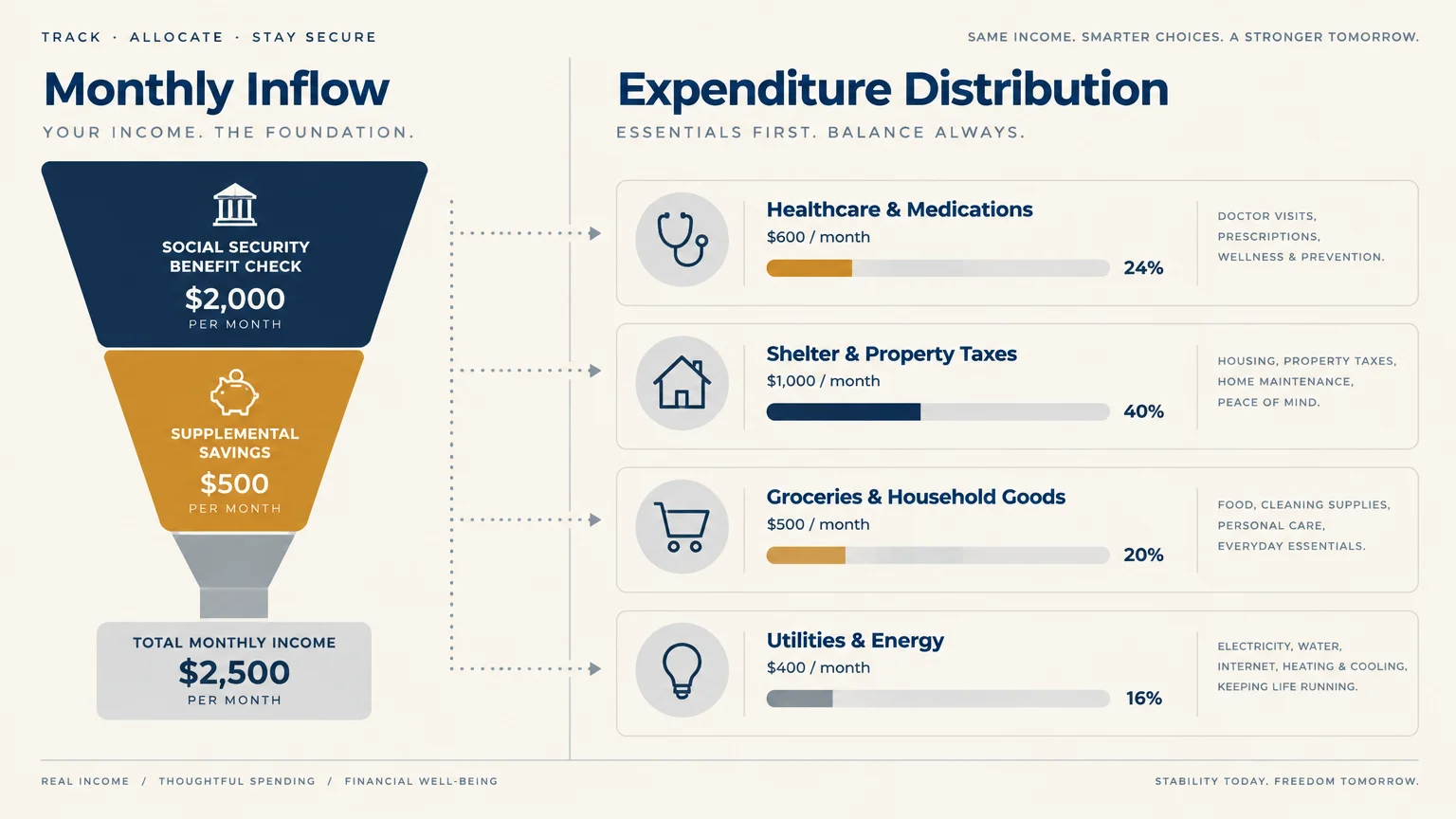
Tracking Fixed Income Against Surging Senior Costs
To understand why prices dictate voter choices, examine how essential retirement expenses compare to annual income adjustments.
| Expense Category | Recent Price Trend | Direct Impact on Retiree Budgets |
|---|---|---|
| Social Security COLA | 2.5% increase for 2025 | Adds ~$49/month; often consumed by Part B premium hikes and groceries. |
| Medicare Part B Premium | $185.00/month (up $10.30) | Deducted directly from monthly Social Security checks before deposit. |
| Prescription Drugs (Part D) | $2,000 annual out-of-pocket cap | Significant relief for chronic illness, saving qualifying seniors ~$1,500/year. |
| Assisted Living Facility | $6,200/month median cost | Requires $74,400 annually, forcing rapid liquidation of retirement assets. |
| Home Care Aides | $35/hour national median | Full-time in-home care exceeds $80,000 per year for aging in place. |
| Food at Home (Groceries) | Up 20%–25% cumulatively since 2020 | Forces dietary compromises and reduces monthly discretionary spending. |
These stark figures explain why abstract economic reports do not comfort retirees. When essential services outpace your annual raise, preserving your wealth requires defensive action.
“The goal of retirement is to live off your assets—not live off your regrets.”
Taking control of your finances means understanding where your money goes; it also means actively mitigating price increases wherever local programs and tax codes allow.
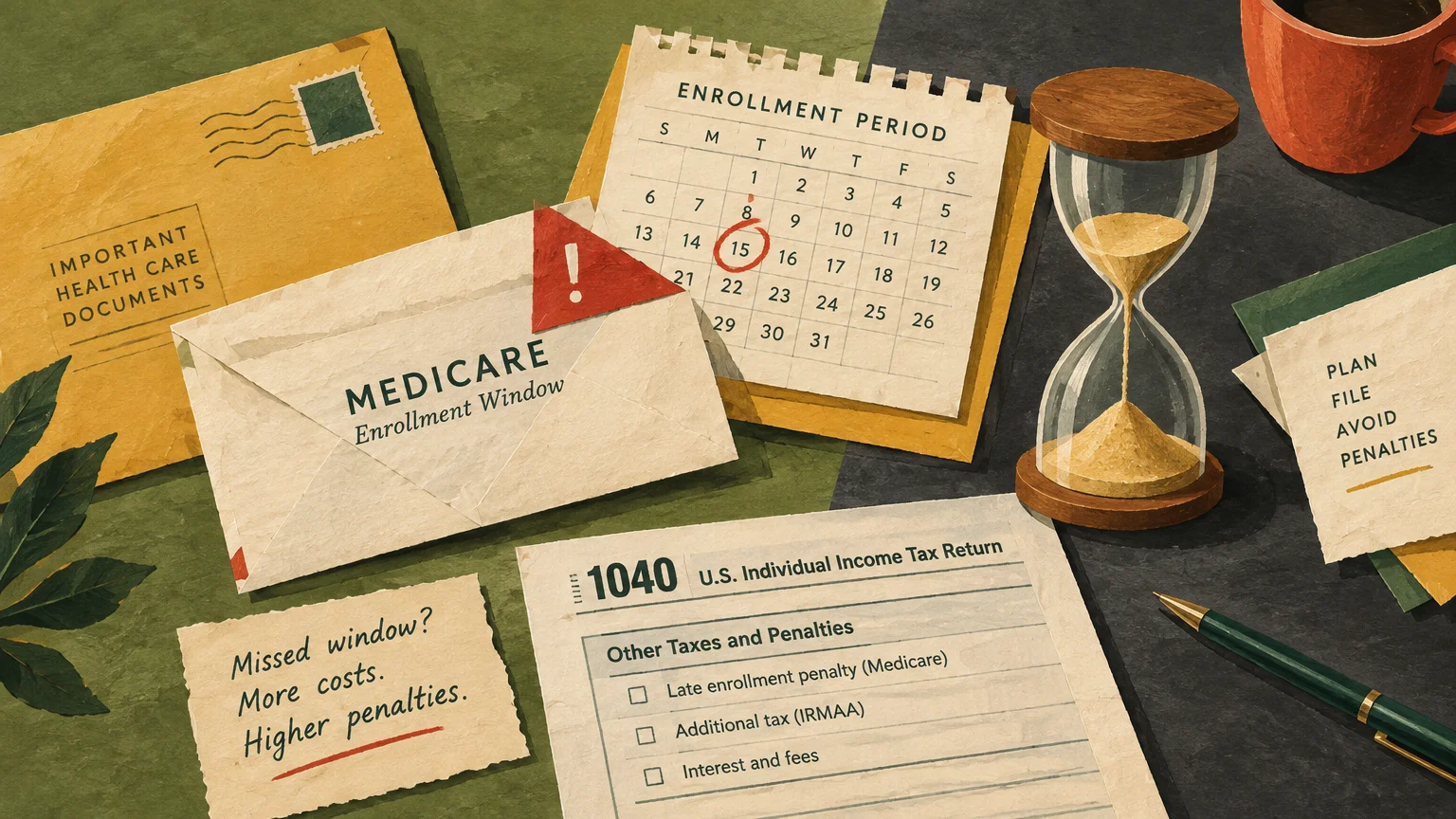
Errors That Cost Retirees Thousands
High inflation makes financial missteps far more painful than during periods of low interest rates. Avoiding common errors can protect thousands of dollars in annual purchasing power.
- Ignoring the Medicare Annual Enrollment Period: Many seniors let their Part D plans roll over automatically. Insurers alter formularies and premiums annually, meaning an unchanged plan could cost you thousands in unexpected medication copays.
- Failing to Claim Local Property Tax Exemptions: Most counties offer senior homestead exemptions or property tax freezes for homeowners aged 65 and older. Failing to submit the paperwork means paying full price unnecessarily.
- Claiming Social Security Too Early Out of Panic: Claiming benefits at 62 locks in a permanent reduction of up to 30% compared to full retirement age. That permanently impairs your ability to handle inflation later in life.
- Leaving Emergency Reserves in Non-Yielding Accounts: Keeping substantial cash in traditional checking accounts causes inflation to erode its value. High-yield savings accounts and Treasury bills currently offer significantly better protection.
By correcting these mistakes, you build a stronger barrier against price shocks. Small administrative steps frequently unlock substantial annual savings.

Practical Strategies to Protect Your Purchasing Power
While you cannot control national economic trends, you can adjust your household strategy. Start by auditing recurring utility bills and shopping your supplemental health insurance annually.
Explore municipal tax deferral programs if rising property values threaten your homeownership. Many local tax assessors allow seniors to defer property tax increases until the property sells.
Re-evaluate your investment asset allocation with inflation in mind. Holding a measured allocation of dividend-growing equities and short-term Treasuries helps preserve purchasing power over multi-decade retirements.

When to Get Expert Help
Navigating complex benefit programs and tax strategies can prove challenging without professional guidance. Knowing when to call in an expert prevents costly trial-and-error mistakes.
Consider working with a State Health Insurance Assistance Program (SHIP) counselor if you feel confused by Medicare coverage options. SHIP provides free, unbiased, one-on-one counseling to help you compare plans.
If you need help identifying utility assistance, property tax freezes, or supplemental nutrition programs, visit BenefitsCheckUp. This free tool from the National Council on Aging connects seniors to thousands of aid programs.
For estate preservation and asset protection against long-term care costs, consult an elder law attorney. They can structure legal trusts and review Medicaid eligibility guidelines before care crises strike.
Finally, a fee-only fiduciary financial planner can model your retirement income against various inflation rates. Fiduciaries legally must act in your best interest, helping you optimize Social Security claiming dates and withdrawals.
Frequently Asked Questions About Senior Expenses and Voting
Why does inflation affect retirees more heavily than younger workers?
Retirees live largely on fixed incomes that do not adjust as flexibly as wages. Furthermore, senior spending concentrates heavily in healthcare and housing—two sectors that consistently experience above-average inflation.
Does the Social Security COLA cover true healthcare inflation?
Rarely. The COLA calculation relies on the CPI-W index, which tracks urban wage earners rather than retirees. This formula underweights medical expenses and property taxes relative to typical senior budgets.
How does the 2025 Medicare Part D cap help lower my yearly costs?
The $2,000 cap establishes a hard maximum on out-of-pocket spending for covered prescription drugs. Once you reach $2,000 in a calendar year, you pay nothing further for covered formulary medications.
Where can older adults find assistance with property taxes and utilities?
Contact your county tax assessor to ask about senior homestead exemptions or circuit-breaker tax credits. For energy costs, apply for the Low-Income Home Energy Assistance Program (LIHEAP) through your local community action agency.
Protecting Your Financial Independence Today
Economic conditions and political debates will continue to evolve, but your immediate focus should remain on protecting your cash flow. Take time this week to review your prescription drug plan, check for local senior tax exemptions, and examine your utility statements.
Voting gives you a voice in national policy, while personal vigilance secures your everyday independence. This article is for informational purposes only and does not constitute financial, legal, or medical advice. Medicare rules, Social Security benefits, and tax laws change regularly—verify current details at Medicare.gov, SSA.gov, or with a licensed professional.
Last updated: February 2026. Medicare and Social Security rules change annually—always verify current details at official government sources.