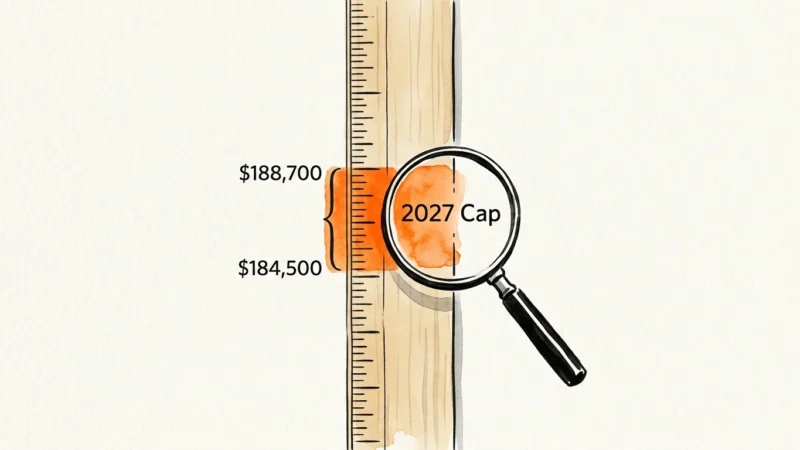
A single missing year on your earnings history can quietly shrink your monthly retirement checks for the rest of your life. Performing a routine annual audit protects the hard-earned money you spent decades building.
The federal government calculates your monthly payout based on your highest thirty-five earning years. Even a tiny clerical error or unreported wage can permanently drag down your lifetime financial security.
Taking fifteen minutes each year to review your records ensures your future income stays completely accurate; it also safeguards your profile against sophisticated identity thieves.
The Bottom Line Up Front
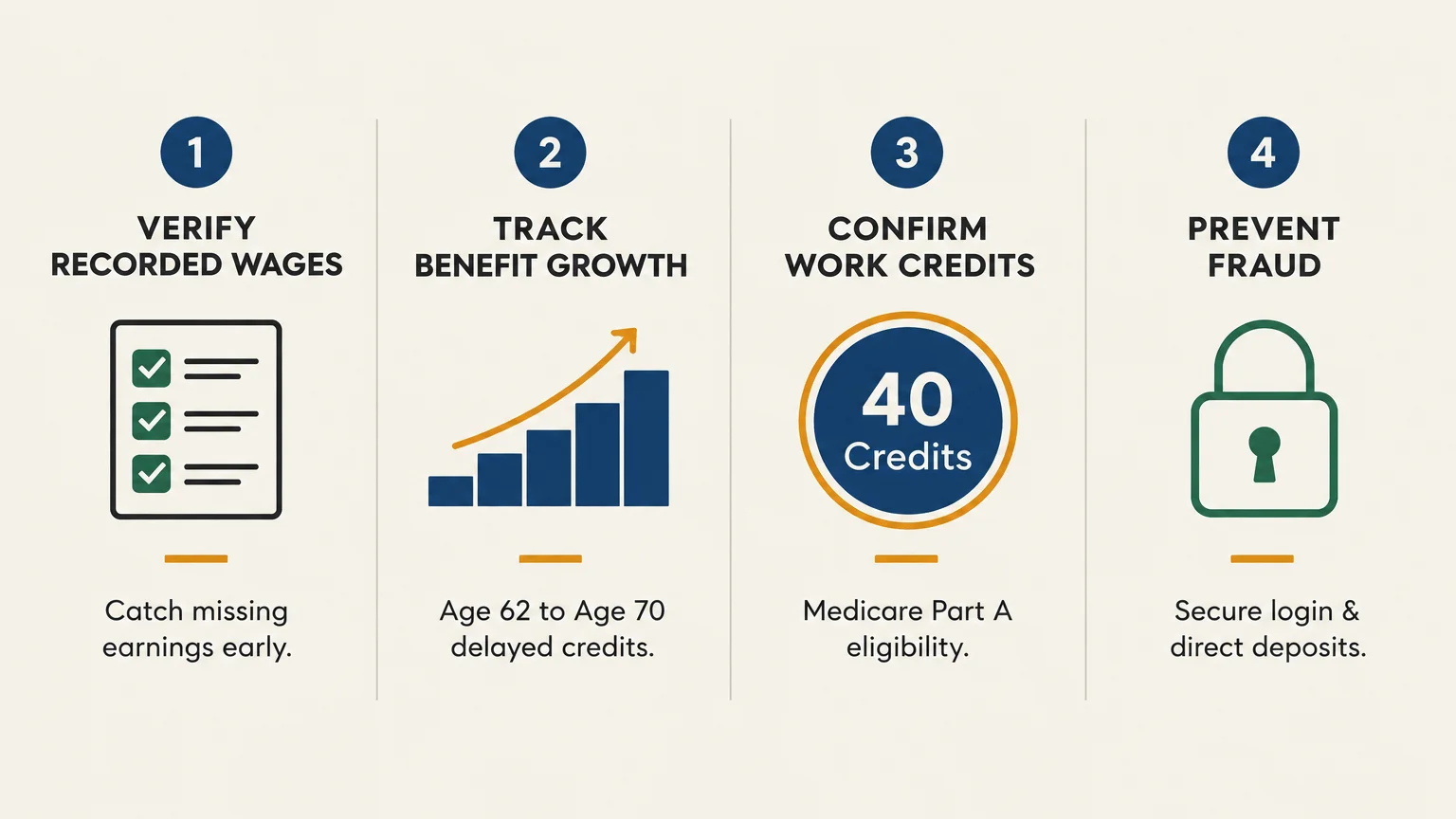
A yearly review of your retirement profile ensures you receive every dollar you earned while locking out digital impostors.
- Verify recorded wages: Catch missing or misreported earnings before correction windows close.
- Track benefit growth: Monitor how delayed retirement credits increase your monthly income between ages 62 and 70.
- Confirm your credits: Ensure you have accumulated the forty credits necessary for retirement and premium-free Medicare Part A.
- Prevent identity fraud: Secure your online profile so scammers cannot divert your deposits.
1. Your Certified Earnings Record
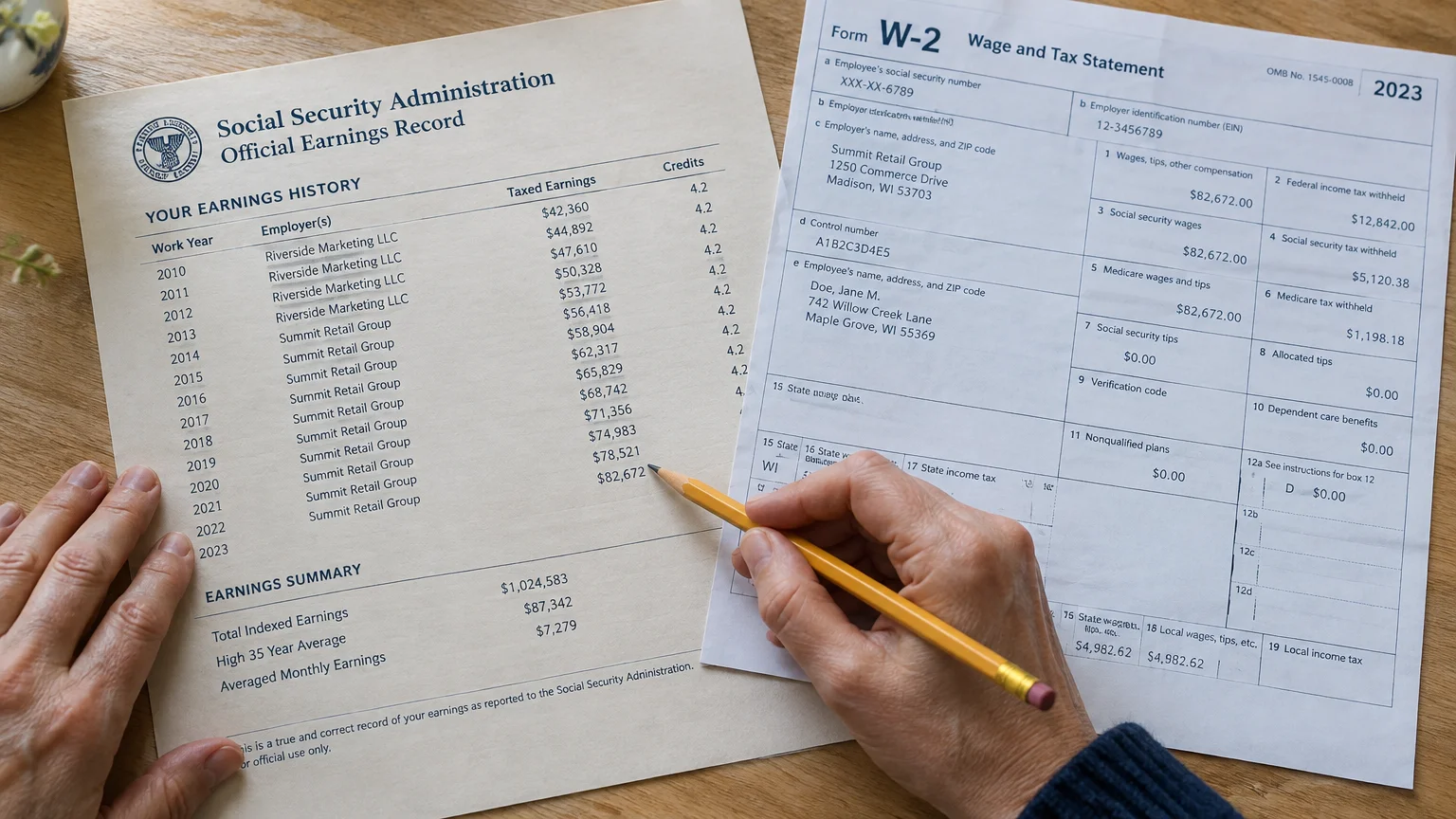
Your monthly retirement benefit relies entirely on the wages reported under your Social Security number over your career. When you log into your my Social Security account, locate your certified earnings history first.
Compare each reported year against your filed W-2 forms or federal tax returns. Employers occasionally submit incorrect figures or typo-ridden payroll reports that shortchange your official record.
If a year shows zero earnings or displays a number lower than your actual pay, your eventual benefit calculation drops. The Social Security Administration indexes your thirty-five highest-earning years to determine your basic payout.
Uncorrected zeroes dilute your average wage index, which costs you real money every single month in retirement. Catching mistakes early makes resolving them far simpler because old payroll documents become harder to retrieve over time.
Technically, federal regulations impose a time limit of three years, three months, and fifteen days to correct recorded wages. Fortunately, the agency allows corrections past this deadline if you provide definitive tax records like W-2s.
Make sure you check earnings record entries for any recent job transitions or bonus payments. Missing wage reports happen most frequently during years when you changed employers or worked multiple jobs.
2. Your Social Security Benefit Estimate Across Key Claiming Ages
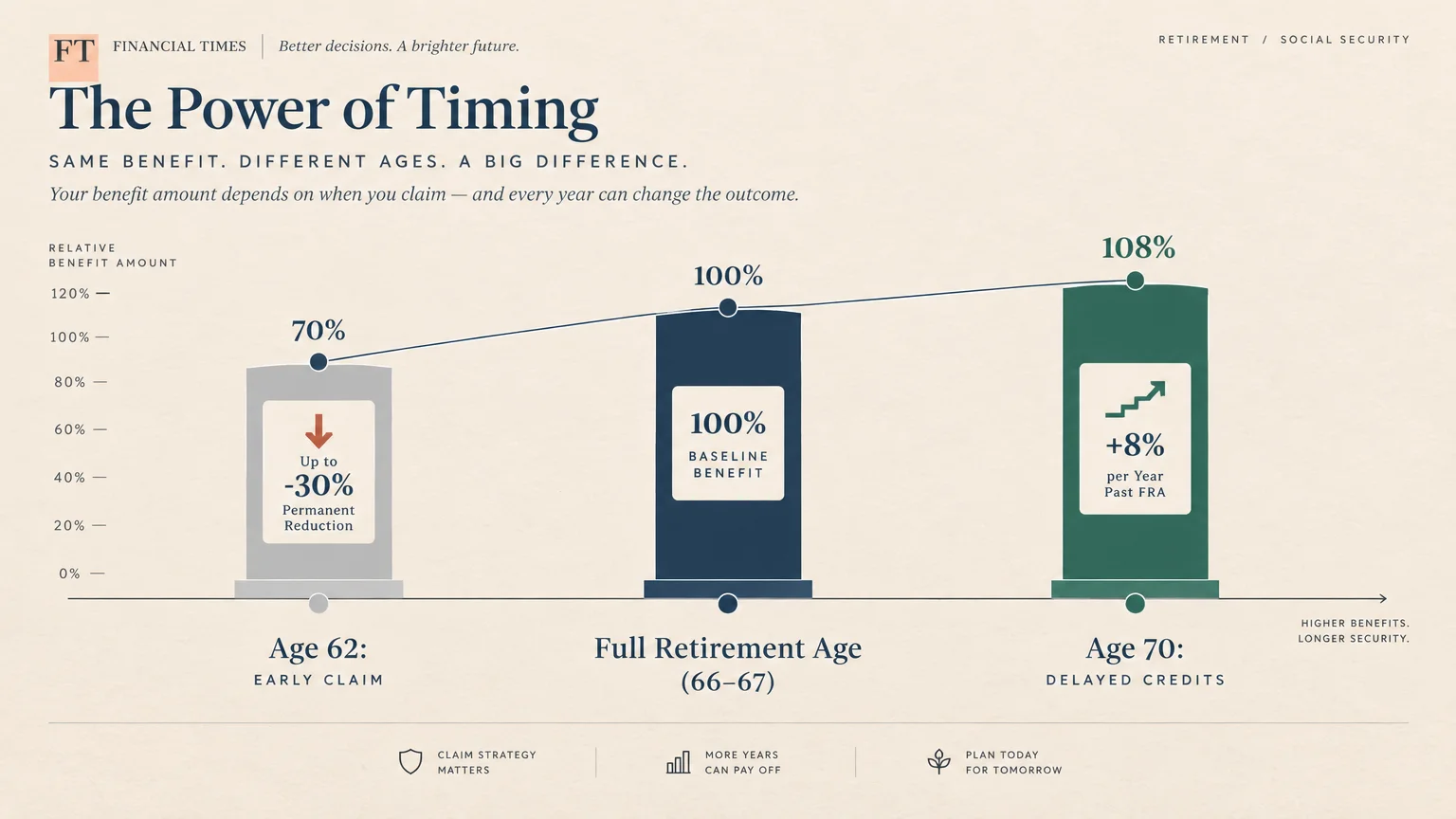
Your annual review should always examine your projected payouts across different claiming ages. The agency calculates your Social Security benefit estimate for age sixty-two, Full Retirement Age, and age seventy.
Full Retirement Age sits between sixty-six and sixty-seven, depending on the year you were born. Claiming at sixty-two triggers a permanent reduction of up to thirty percent compared to your full baseline.
Delaying benefits past your Full Retirement Age earns you delayed retirement credits. Your monthly check increases by eight percent for each year you wait up to age seventy.
Checking these projections annually helps you decide whether working another year significantly alters your retirement lifestyle. You can also model custom scenarios using the official Social Security Retirement Estimator.
Projected numbers change as your recent earnings enter the system and national cost-of-living adjustments take effect. Seeing these numbers evolve allows you to coordinate withdrawals from your 401(k) or IRA accounts effectively.
Remember that benefit estimates assume you will continue earning your current income until your selected claiming age. If you plan to retire early or reduce your work hours, your actual payout will be slightly lower.

3. Work Credits and Medicare Eligibility Milestones
To qualify for retirement benefits, you must accumulate at least forty work credits throughout your working life. You can earn a maximum of four credits per year based on your covered earnings.
In 2026, you earn one credit for each $1,810 of covered wages. That means earning $7,240 secures your maximum four credits for the calendar year.
Verifying your accumulated credits is critical if you spent time outside the workforce caring for children or elderly parents. It is equally important if you immigrated to the United States mid-career.
These forty credits do more than unlock your monthly retirement check. They also guarantee that you qualify for premium-free Medicare Part A hospital coverage when you turn sixty-five.
Falling short by even one single credit forces you to pay hundreds of dollars per month for Part A hospital care. An annual review ensures you never encounter an unexpected coverage gap when enrolling in Medicare.

4. Direct Deposit Details and Contact Information
Stolen benefits represent one of the fastest-growing financial crimes targeting older Americans today. Identity thieves often breach personal computers to redirect direct deposit routing numbers to prepaid debit cards.
When you conduct your Social Security annual review, inspect your active banking details carefully. Verify that the listed bank name, routing number, and account number match your current primary checking account.
Confirm your physical mailing address and telephone number on file as well. The government still sends sensitive notifications, tax forms, and account change verifications via the United States Postal Service.
If a criminal alters your mailing address, you might miss warnings about fraudulent benefit claims filed in your name. Keeping your contact details current guarantees you receive instant postal alerts whenever account updates occur.

5. Federal Tax Withholding Preferences
Many retirees discover with shock that Social Security benefits are often subject to federal income taxation. Depending on your combined household income, the government may tax up to eighty-five percent of your monthly benefits.
Combined income includes your adjusted gross income, nontaxable interest, and half of your total annual Social Security payment. If this sum exceeds modest statutory thresholds, you will owe tax on your benefits.
You can instruct the agency to withhold federal income taxes automatically from your check using IRS Form W-4V. You can choose a flat withholding rate of seven, ten, twelve, or twenty-two percent.
Reviewing your withholding rate annually protects you from an unwelcome tax liability when filing your return. Adjusting your rate also prevents you from facing underpayment penalties from the Internal Revenue Service.

6. Potential Reductions and Public Pension Offsets
If you worked for a state agency, public school district, or municipal government, your standard benefits may face special statutory reductions. Two federal rules frequently catch retirees off guard: the Windfall Elimination Provision and the Government Pension Offset.
The Windfall Elimination Provision reduces your personal retirement benefit if you receive a pension from non-covered employment where you did not pay Social Security taxes. Your standard online estimate may not reflect this reduction until you apply.
The Government Pension Offset reduces spousal or survivor benefits by two-thirds of your government pension amount. In many cases, this offset eliminates spousal payments entirely.
Your annual account review provides the perfect opportunity to verify whether your earnings history reflects covered or non-covered wages. Recognizing these offsets early helps you build a realistic household budget without relying on phantom income.

7. Account Security and Login Credentials
Creating and actively monitoring your SSA online account is your strongest defense against cybercriminals. If you do not claim your account online, an identity thief can register it using stolen personal data.
Federal portals now require modern credential systems like Login.gov or ID.me to access records. Log in once a year to ensure your multifactor authentication methods and backup phone numbers remain active.
Change your password if you suspect any device compromise, and review recent account login timestamps. The Social Security Administration maintains audit logs that indicate when someone accesses your digital record.
Maintaining an active login deters identity thieves from filing fraudulent claims under your identity. It puts you in direct control of your government benefits years before you decide to retire.
“The goal of retirement is to live off your assets—not live off your regrets.”
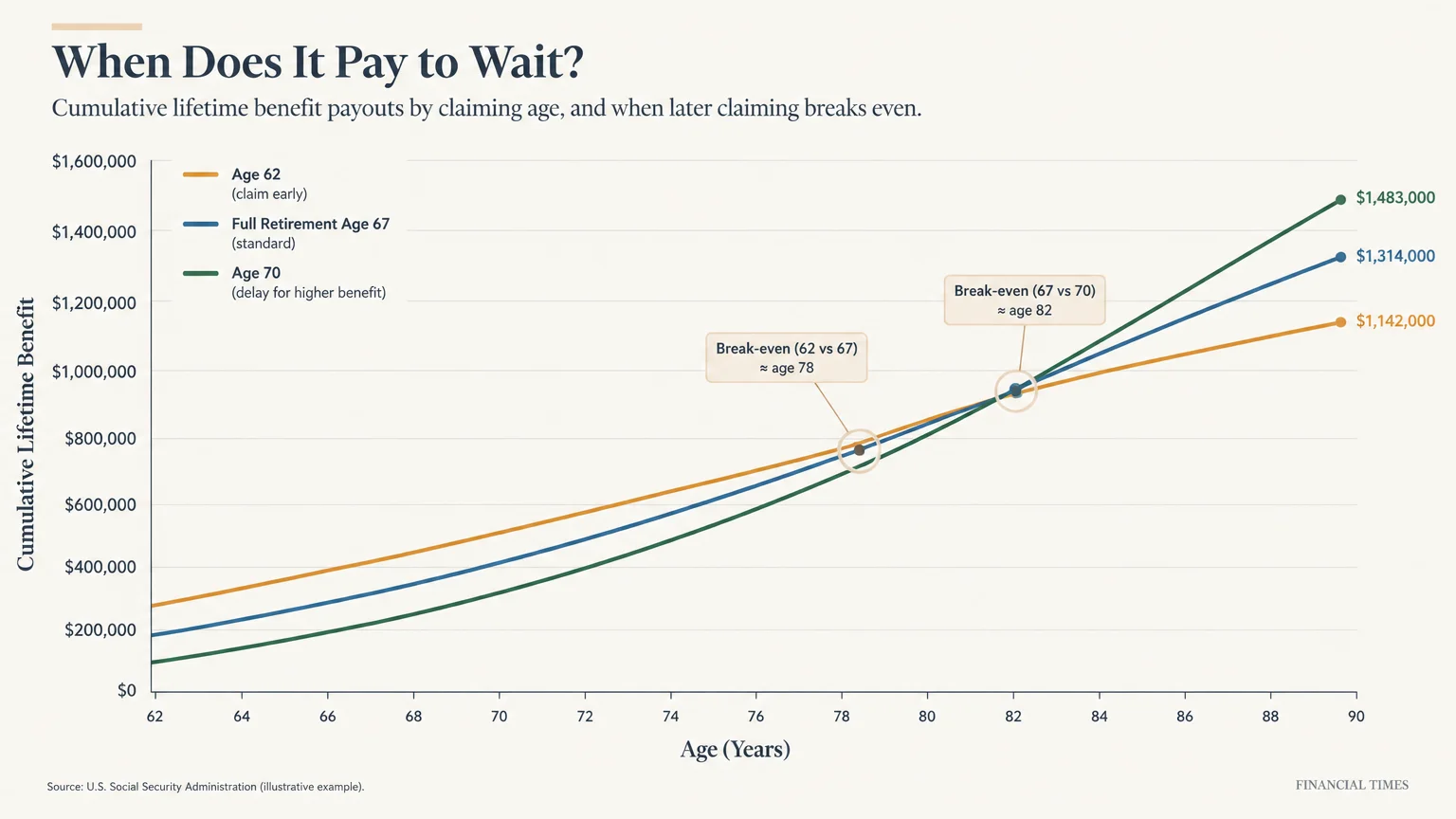
Comparing Lifetime Payouts by Claiming Age
Your annual review should weigh the trade-offs of claiming early versus waiting for higher monthly checks. The table below illustrates the impact on a hypothetical $2,000 monthly benefit at Full Retirement Age.
| Claiming Age | Monthly Payout ($2,000 Baseline) | Percentage of Full Benefit | Key Financial Trade-Off |
|---|---|---|---|
| Age 62 | $1,400 | 70% | Permanent 30% reduction; benefits subject to annual earnings limit test. |
| Age 67 (FRA) | $2,000 | 100% | Full baseline Primary Insurance Amount; no earnings penalty applies. |
| Age 70 | $2,480 | 124% | Maximum monthly check; 8% annual delayed credits; higher survivor payout. |
Waiting until age seventy provides the highest guaranteed monthly income for the remainder of your life. However, claiming earlier may make sense if you face health challenges or need funds immediately to retire.

Don’t Make These Mistakes
Never assume your employer reported your wages accurately to the federal government. Clerical errors, name changes after marriage, and inverted digits in your Social Security number happen regularly across corporate payroll systems.
Avoid tossing away your tax documents immediately after filing your return. Retain copies of your W-2 forms and filed Schedule SE documents indefinitely in a secure digital file.
Do not wait until age sixty-two to create your online profile. Setting up your digital credentials today prevents fraudulent actors from creating an account in your name.
Never rely solely on your baseline benefit estimate without factoring in healthcare costs and taxes. Explore retirement planning tools from the Consumer Financial Protection Bureau to understand how claiming choices impact your total cash flow.
Do not ignore missing earnings reports from secondary freelance jobs or part-time consulting gigs. Every dollar of self-employment income you pay taxes on should count toward boosting your lifetime payout.

When Professional Advice Is Worth It
While monitoring your account annually is a solo task, complex family situations often warrant specialized professional counsel. Coordinating benefits between spouses, ex-spouses, and dependent children requires careful mathematical modeling.
A fee-only financial planner or specialized Social Security claiming expert can calculate optimal claiming dates for couples. If one spouse earned significantly more, maximizing survivor benefits through delayed claiming can safeguard the surviving partner.
Consult an elder law attorney or tax specialist if you expect substantial non-covered public pensions subject to government offsets. Professional guidance prevents costly filing mistakes that cannot be reversed once your decision becomes final.
You should also seek expert advice if you are navigating a divorce after ten or more years of marriage. A specialist can help you claim divorced spousal benefits without affecting your former spouse’s payments.
Frequently Asked Questions
How do I correct an error on my earnings record?
To fix an error on your earnings record, submit Form SSA-7008 along with your proof of earnings. You must provide copies of your W-2 forms, tax returns, or pay stubs from the disputed years.
How often does Social Security update earnings records?
The agency updates your earnings record annually after employers file their year-end wage reports with the Internal Revenue Service. Most workers see their prior year wages reflected on their record by late autumn.
Does checking my benefit estimate affect my credit score?
No, reviewing your Social Security statement has zero impact on your credit score. The Social Security Administration does not report account reviews or benefit inquiries to consumer credit bureaus.
Can I check my earnings record if I am self-employed?
Yes, your self-employment income appears on your earnings record after the IRS processes your annual tax return. The agency records your net earnings from Schedule SE subject to self-employment taxes.
What happens if I cannot log into my SSA account?
If you lose access to your Login.gov or ID.me credentials, use the account recovery options on the login screen. You can also call the agency or visit your local Social Security field office for identity verification.
Take Action on Your Account Today
Set an annual recurring calendar reminder today to complete your review. Taking fifteen minutes every year protects your future cash flow and preserves the benefits you worked a lifetime to secure.
Log into your account this week to verify your earnings and confirm your contact details. Proactive oversight gives you complete confidence that your retirement foundation remains rock solid.
Information in this article reflects current rules as of the publication date and may change. Always confirm benefit details directly with Social Security Administration, Medicare.gov, or relevant government agencies before making decisions.
Last updated: February 2026. Medicare and Social Security rules change annually—always verify current details at official government sources.