An unexpected expense can quickly derail a carefully planned fixed retirement budget. Fortunately, verified federal, state, and charitable programs provide rapid relief to protect your savings.
When sudden healthcare costs, broken furnaces, or utility rate spikes arrive, you do not have to face them without support. Targeted grants and emergency funds stand ready to cover these critical bills.
Knowing which agency to contact can save you thousands of dollars while protecting your monthly cash flow. Discover how these essential relief options provide the stability you deserve.
Immediate Relief: Local Hotlines and Rapid-Response Networks
When an urgent bill arrives, you need fast answers without waiting weeks for standard bureaucratic processing. Community-level helplines connect you directly with case managers who manage emergency discretionary funds.
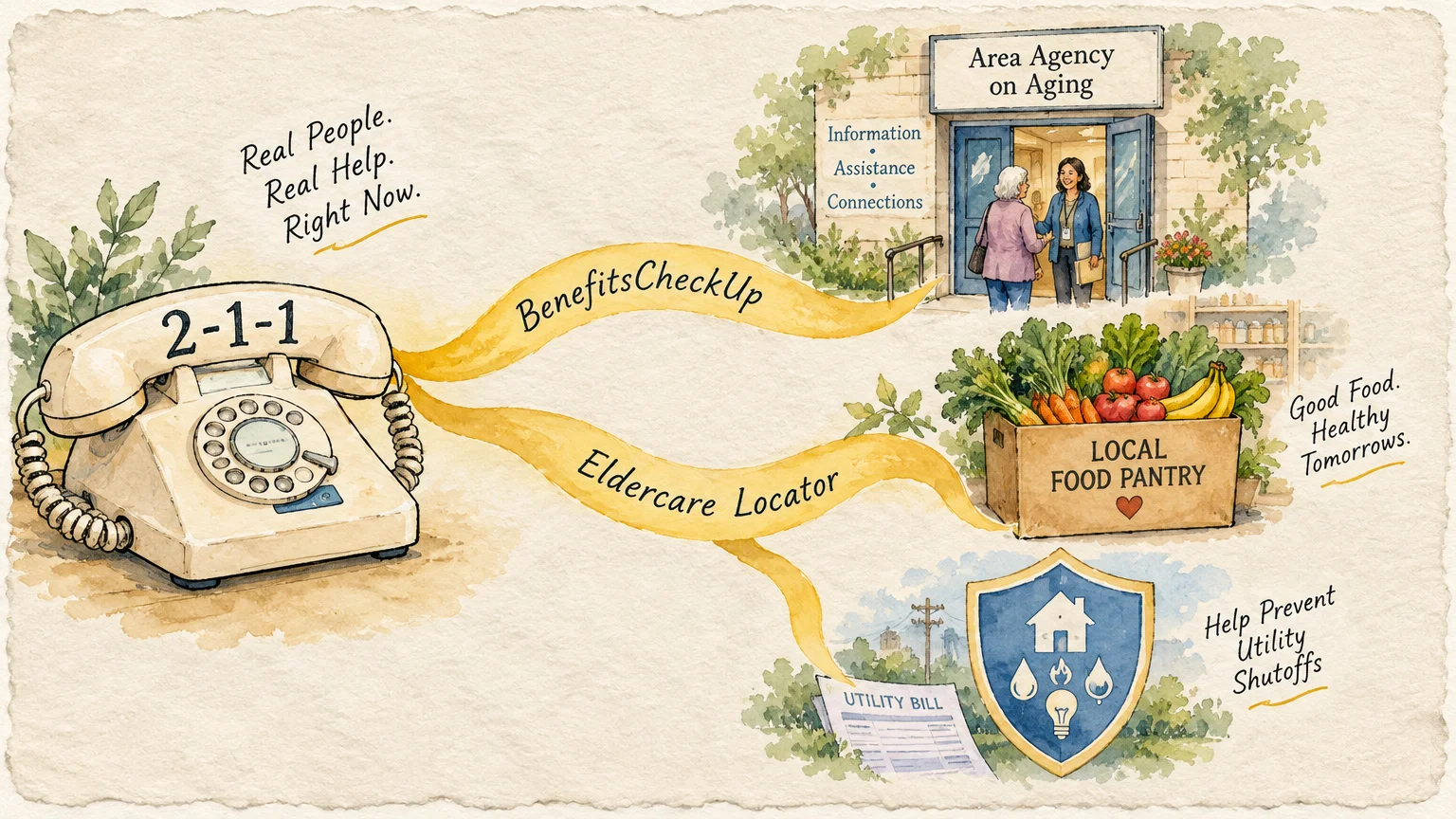
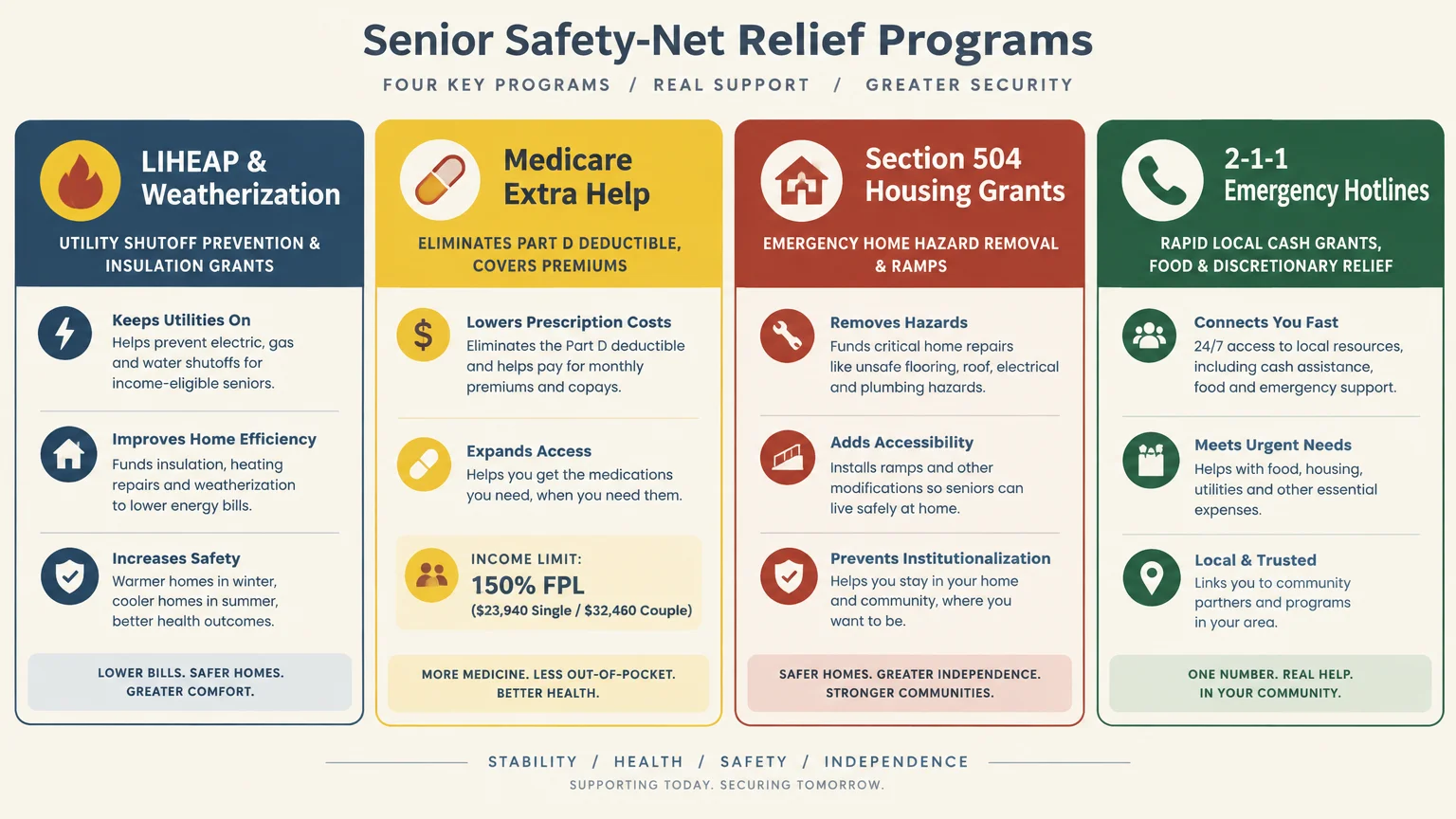
Dialing 2-1-1 connects you to operators who track real-time funding for local rent, utility shutoff prevention, and emergency food supplies. Community action agencies and regional charities route emergency resources through this single referral number.
You can also reach out to your local Area Agency on Aging through the Eldercare Locator. This public service directs older adults to specialized local programs designed to resolve sudden financial shortfalls.
Area Agencies on Aging often manage short-term emergency grants for groceries, urgent medical transport, and emergency home accessibility modifications. Their staff can evaluate your situation and authorize fast-track assistance.
Another excellent screening resource is BenefitsCheckUp, a free tool developed by the National Council on Aging. The system matches your household income and location against thousands of local, state, and national aid opportunities.
Take time to gather your latest bank statements, pension award letters, and recent billing notices before calling. Having your documentation prepared expedites review and speeds up the delivery of emergency assistance seniors need.
Managing Sudden Medical and Prescription Drug Costs
Medical emergencies create some of the steepest unexpected expenses for older households. Even with Medicare, high copays, specialized prescriptions, and out-of-network fees can strain your reserves.
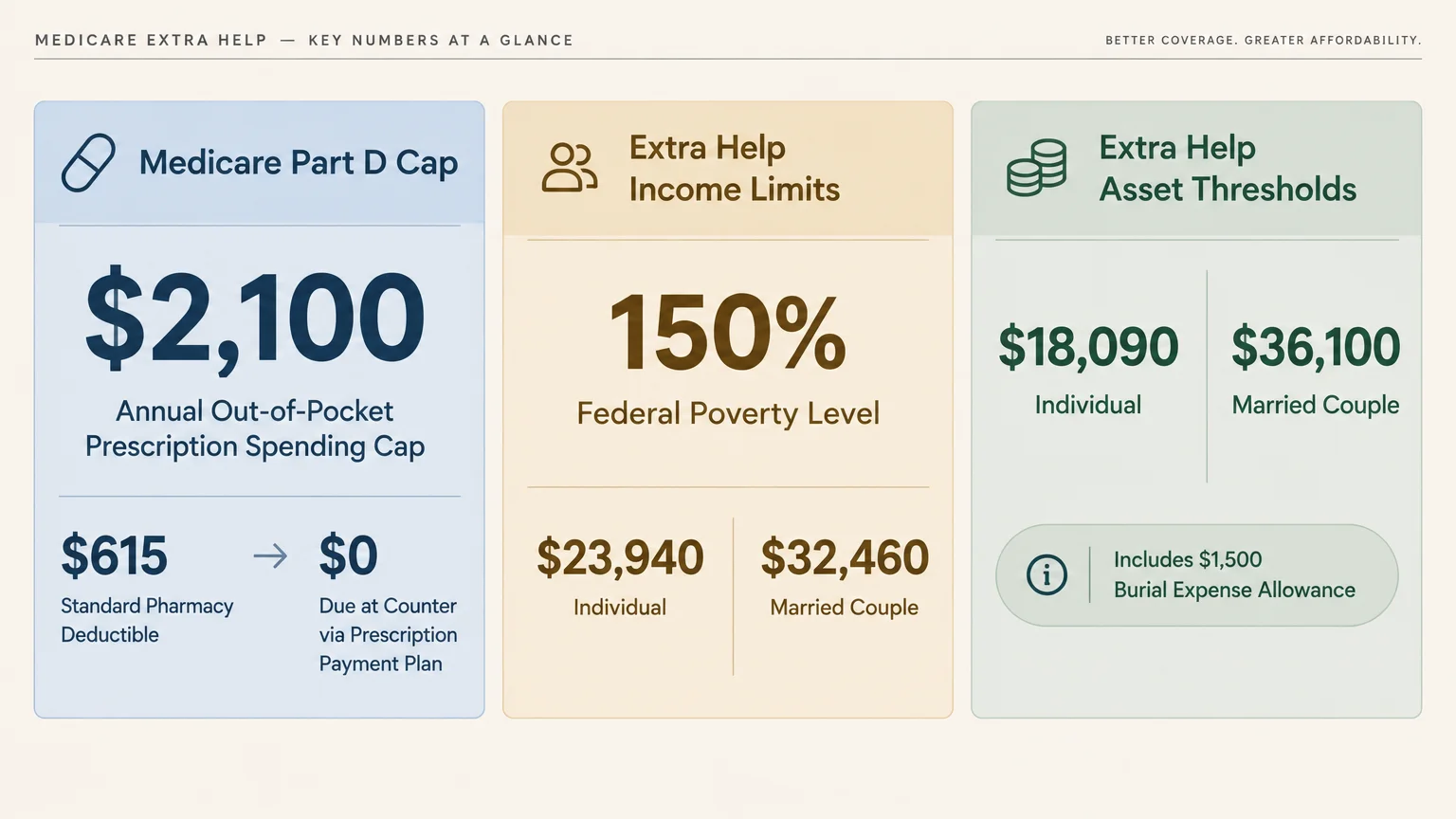
Medicare Part D limits your annual out-of-pocket spending on covered prescription medications to $2,100. This statutory cap provides substantial relief if you take expensive specialty drugs for chronic conditions.
The standard Part D pharmacy deductible sits at $615; however, you can manage this upfront cost through the Medicare Prescription Payment Plan. This voluntary option allows you to spread out-of-pocket prescription expenses into predictable monthly payments throughout the calendar year.
Under this arrangement, you pay $0 at the pharmacy counter when picking up covered medications. Your Part D plan calculates a monthly bill that caps your immediate cash drain.
If your income falls within lower thresholds, look into the Medicare Part D Extra Help program. Extra Help covers your Part D monthly premium, erases your annual deductible, and substantially lowers your copayments.
To qualify for Extra Help, your annual income cannot exceed 150% of the Federal Poverty Level. That threshold equals $23,940 annually for an individual and $32,460 for a married couple.
Your countable assets must remain at or below $18,090 for an individual or $36,100 for a couple. These asset limits include a standard $1,500 per-person allowance specifically reserved for burial expenses.
You can also turn to the Qualified Medicare Beneficiary program if you struggle to pay standard Medicare premiums. The standard Part B premium is $202.90 per month, which the state covers completely under this benefit.
Qualified Medicare Beneficiary assistance also pays your Part A and Part B deductibles, copayments, and coinsurance amounts. Learn more about enrollment rules directly on Medicare.gov.
Federal monthly income guidelines limit individual applicants to $1,350 and couples to $1,824, after applying the standard general income disregard. Asset limits stand at $9,950 for individuals and $14,910 for married couples.
If you face unexpected hospital charges, request an application for charity care under IRS Section 501(r). Non-profit hospitals must maintain financial assistance policies that reduce or eliminate bills for qualifying patients.
Utility Bill Relief and Emergency Home Weatherization
Extreme summer heat and harsh winter cold often trigger utility bills that shock a fixed retirement income. Utility providers must abide by strict winter moratoriums and emergency intervention protocols before disconnecting essential services.
The Low Income Home Energy Assistance Program, known as LIHEAP, distributes federally funded grants directly to energy providers on your behalf. These grants resolve past-due heating or cooling balances without requiring repayment.
LIHEAP also administers crisis intervention grants to restore disconnected utilities or repair failing heating units during dangerous weather. Eligibility caps at the greater of 150% of the Federal Poverty Level or 60% of your State Median Income.
For a single retiree living alone, 150% of the Federal Poverty Level equals $23,940 in annual gross income. Married senior households meet this benchmark with incomes at or below $32,460.
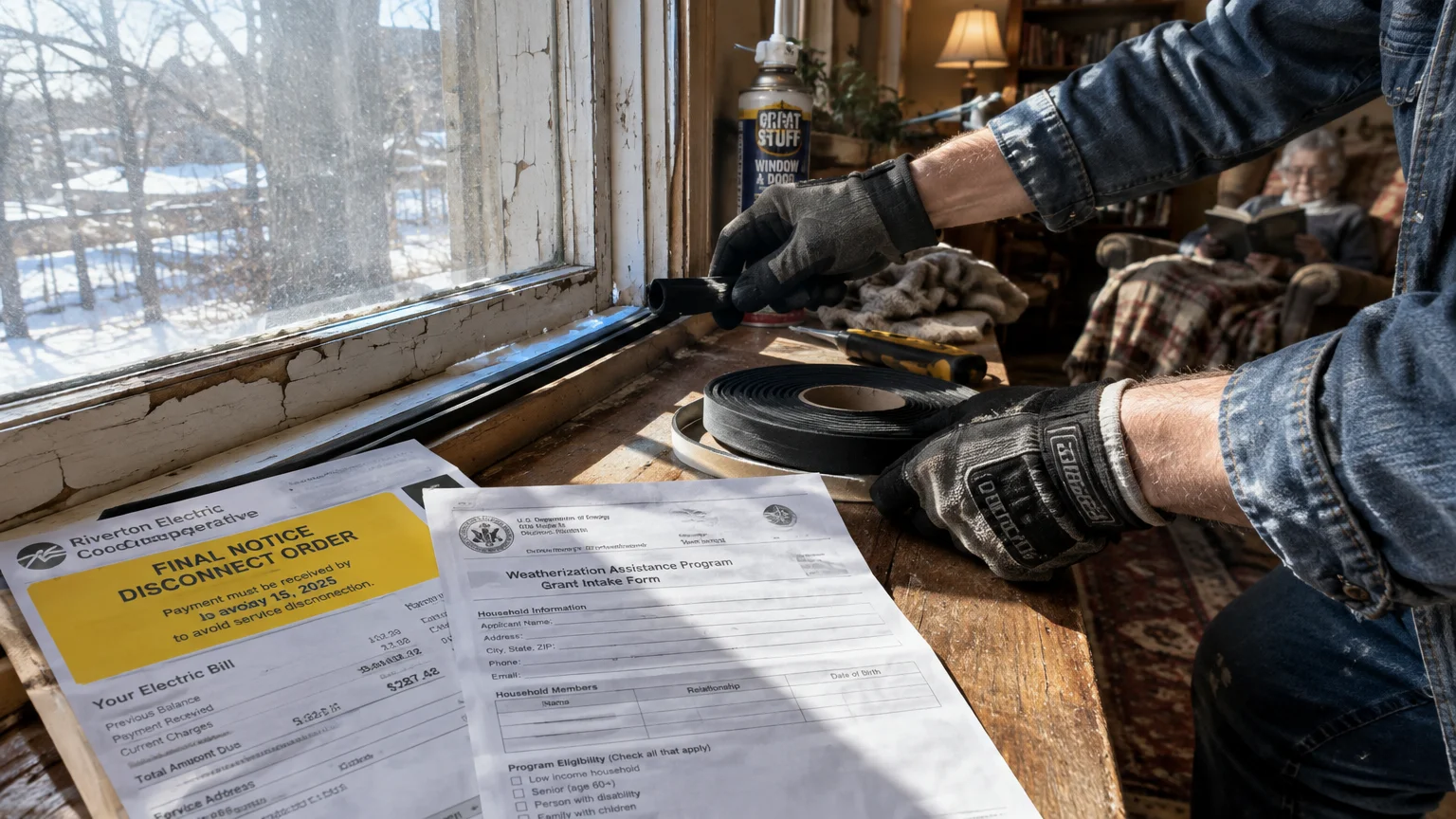
To permanently reduce power bills, explore the Weatherization Assistance Program managed by the U.S. Department of Energy. This program installs energy-efficient upgrades, replaces damaged furnaces, and seals drafty insulation entirely free of charge.
Eligible households save an average of $372 or more each year on residential energy expenses. Families earning up to 200% of the Federal Poverty Level qualify for these extensive home improvements.
The 200% threshold allows single seniors with incomes up to $31,920 and married couples up to $43,280 to participate. Recipients of Supplemental Security Income automatically satisfy the financial guidelines for weatherization aid.
Maintaining telephone and internet access is vital for telehealth visits, prescription refills, and family check-ins. The Federal Communications Commission Lifeline program provides a monthly discount of up to $9.25 on broadband or phone bills.
Residents living on qualifying Tribal lands receive a larger monthly telecommunications discount of up to $34.25. While the Affordable Connectivity Program exhausted its funding, Lifeline continues to accept applications.
You qualify for Lifeline if your annual household income stays at or below 135% of the Federal Poverty Level. That equals $21,546 annually for an individual or $29,214 for a married couple.
Participating in Medicaid, Supplemental Nutrition Assistance, or Supplemental Security Income grants automatic qualification for Lifeline discounts. Contact your current service provider to request an enrollment form.
Emergency Home Repair Grants for Critical Housing Hazards
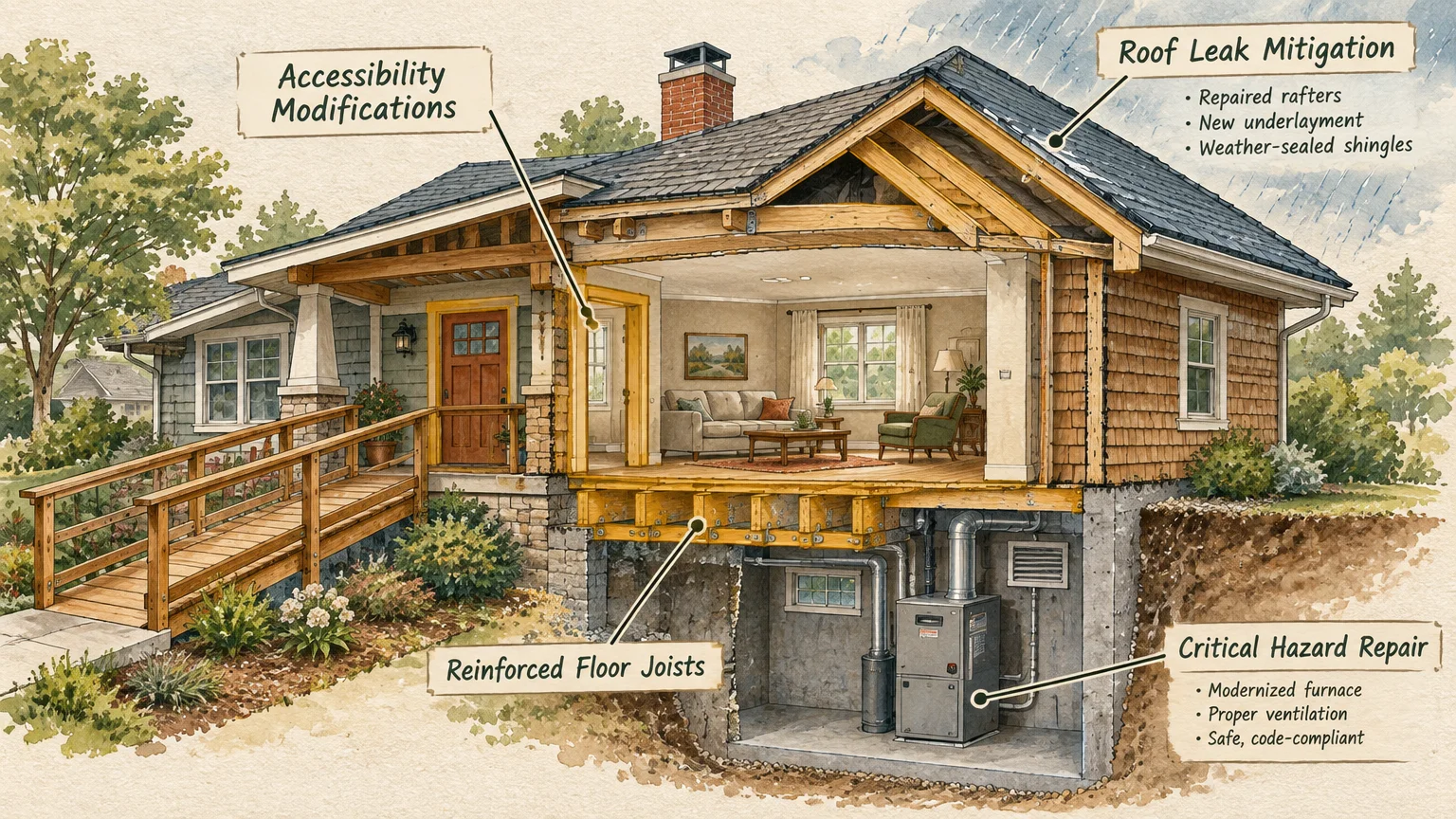
Homeownership offers long-term stability, but unexpected structural failures present major financial emergencies. A leaking roof, damaged plumbing line, or failed water heater can exhaust cash reserves rapidly.
The United States Department of Agriculture operates the Section 504 Home Repair Program to assist rural homeowners. This initiative targets very-low-income residents who earn below 50% of the Area Median Income.
If you are age 62 or older, you can receive outright grants of up to $10,000 to eliminate safety hazards. The grant carries a lifetime maximum and requires no repayment if you remain in the home for three full years.
The USDA Section 504 program also provides low-interest repair loans of up to $40,000. These specialized loans feature a fixed 1% interest rate spread over a 20-year repayment schedule.
Older homeowners can combine the $10,000 hazard-removal grant with a $40,000 low-interest loan. This combination delivers up to $50,000 in comprehensive funding to fix major structural defects and install wheelchair ramps.
Suburban and urban homeowners should check with their municipal Community Development Block Grant offices. Local agencies allocate federal block grants to repair code violations and fix heating infrastructure for older residents.
Direct Cash Assistance and Essential Income Support
When unexpected expenses consume every discretionary dollar, basic living necessities can quickly become unaffordable. Federal income programs provide critical monthly cash supplements to stabilize low-income seniors.
The Social Security Administration manages Supplemental Security Income to help adults aged 65 and older. This benefit delivers monthly financial assistance to seniors who maintain minimal assets and limited lifetime earnings.
Eligible individuals can receive up to $994 per month in federal cash assistance. Qualifying married couples can receive maximum monthly payments of $1,491.
Federal rules restrict countable resources to $2,000 for an individual applicant and $3,000 for married couples. Your primary residence, personal vehicle, and ordinary household goods do not count toward these strict resource limits.
If you face a sudden loss of income, you can request an emergency advance payment through your Social Security field office. Agency administrators can issue immediate funds if you face imminent threats to your safety or shelter.
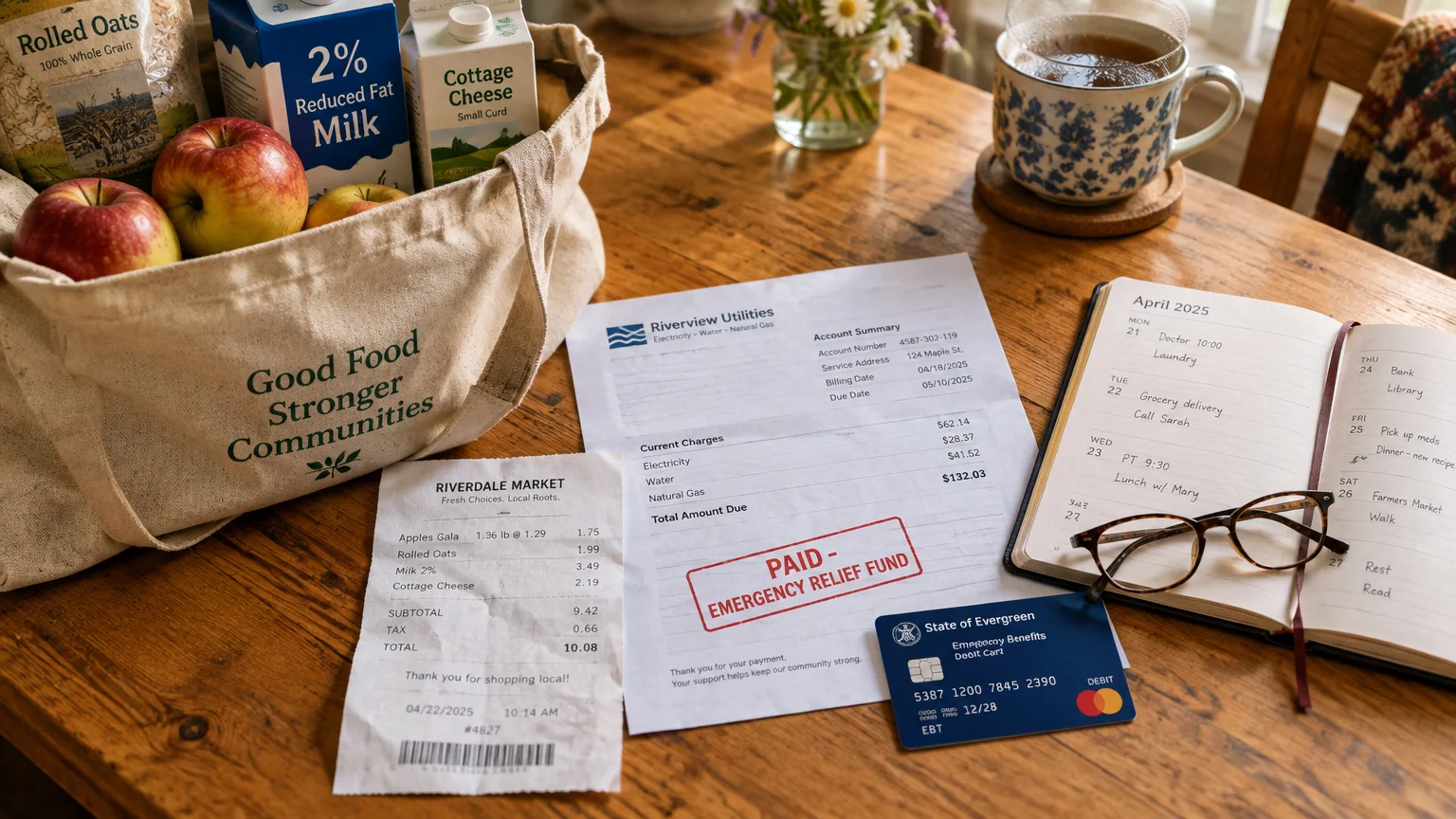
Unexpected bills also make grocery shopping difficult, leaving many older adults with empty cupboards. Enrolling in the Supplemental Nutrition Assistance Program delivers monthly food funds loaded onto an electronic benefit card.
Many states operate the Senior Farmers’ Market Nutrition Program to provide coupons for fresh, locally grown produce. Check with your local senior center to pick up seasonal food vouchers and utility bill help seniors rely on.
Comparing Major Senior Emergency Assistance Programs
Reviewing program parameters side by side helps you prioritize which applications to submit first. The table below details key benefits, financial limits, and practical application methods.
| Program Name | Expense Covered | Income & Asset Limits | Application Method |
|---|---|---|---|
| LIHEAP | Heating, cooling, and utility shutoff prevention | Up to 150% FPL ($23,940 single) or 60% State Median Income | Local Community Action Agency or state social services office |
| Weatherization (WAP) | Free insulation, furnace repair, and energy audits | Up to 200% FPL ($31,920 individual / $43,280 couple) | Regional Department of Energy partner organizations |
| Medicare Extra Help | Part D drug deductibles, premiums, and copays | Income ≤ 150% FPL; assets ≤ $18,090 ind. / $36,100 couple | Social Security Administration website or paper application |
| Medicare Savings (QMB) | Part B premium ($202.90), deductibles, and coinsurance | Income ≤ $1,350/mo ind.; assets ≤ $9,950 ind. / $14,910 couple | State Medicaid or medical assistance department |
| USDA Section 504 | Home repairs, hazard removal, and access ramps | Age 62+; income below 50% Area Median Income | USDA Rural Development regional office |
| FCC Lifeline | $9.25/mo off home phone, cell, or internet service | Income ≤ 135% FPL ($21,546 ind.) or enrollment in SNAP/Medicaid | National Verifier portal or service provider |
| Supplemental Security Income | Monthly cash payments up to $994 ind. / $1,491 couple | Countable assets under $2,000 ind. / $3,000 married couple | Social Security Administration local field office |
Every program listed in this table maintains strict operational rules, but local administrators exercise leeway during declared emergencies. Always ask caseworkers for expedited processing if you face an active disconnection notice.
Don’t Make These Mistakes
Panic often leads people to make quick choices that worsen their financial strain over the long term. Avoiding these common missteps preserves your financial independence and retirement security.
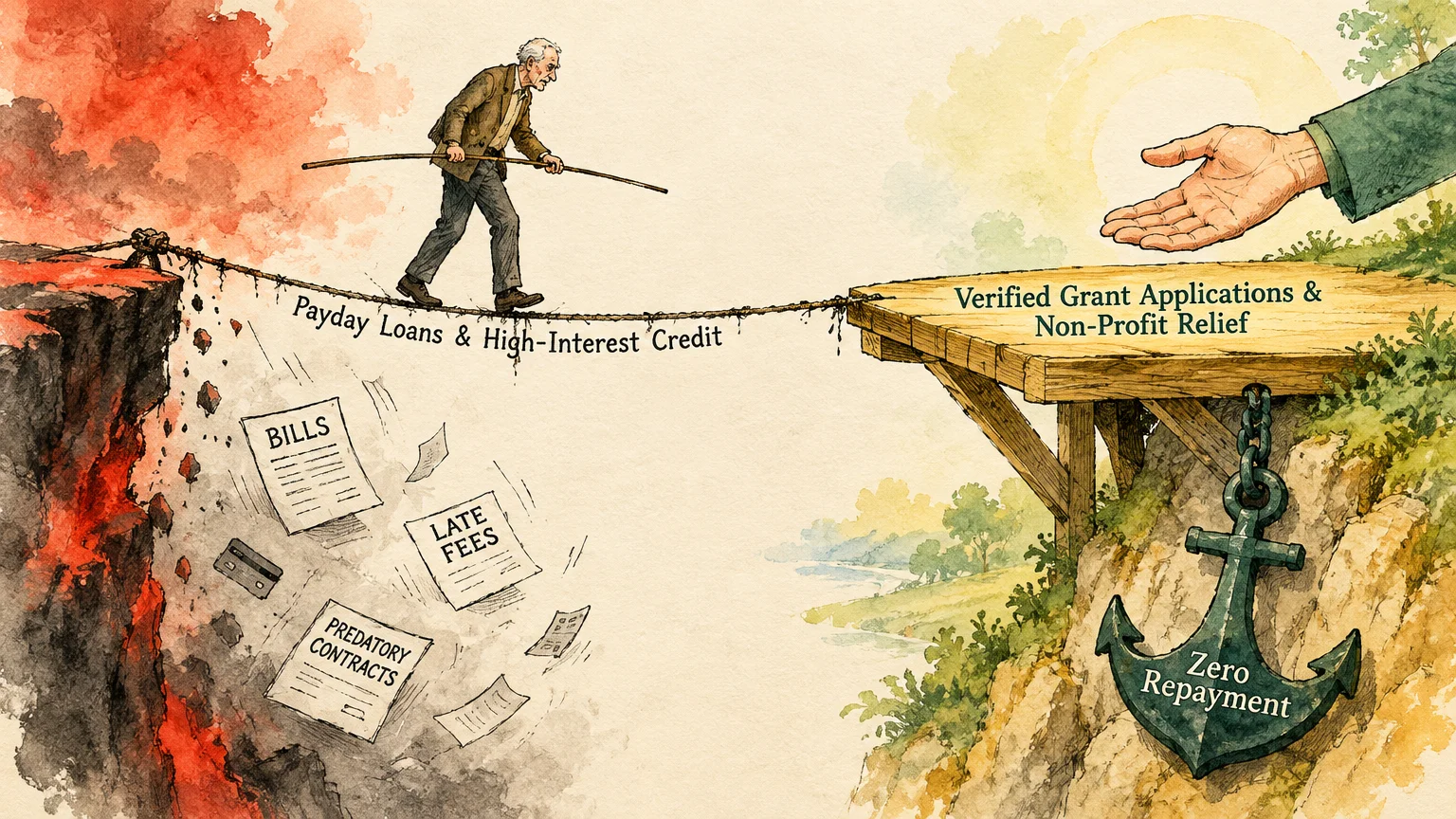
- Relying on High-Interest Credit or Payday Loans: Taking out title loans or using high-rate credit cards to pay unexpected medical bills creates compounding debt. You should negotiate a zero-interest payment plan with providers before turning to commercial borrowing.
- Assuming Your Home Disqualifies You: Many seniors never apply for aid because they believe owning a home or vehicle disqualifies them. Most federal emergency assistance programs completely exclude your primary residence and one personal vehicle from asset calculations.
- Waiting Until Services Get Cut Off: Reaching out to utility companies only after receiving a shutoff notice restricts available options. Inform your utility company as soon as you realize you cannot pay the upcoming balance.
- Paying Medical Bills Before Essential Living Costs: Medical debts do not carry the immediate consequence of an eviction or a utility disconnection. Always prioritize shelter, food, and essential utilities over unsecured healthcare charges.
- Overlooking Local Faith-Based and Private Charities: St. Vincent de Paul, The Salvation Army, and local church groups maintain discretionary emergency funds. These community groups frequently pay overdue electric bills or purchase prescription medications directly for seniors in crisis.
Steering clear of these costly traps prevents short-term financial emergencies from spiraling into permanent instability. Protect your existing assets by insisting on public support before spending down your final liquid savings.

When Professional Advice Is Worth It
Navigating the complex guidelines of multiple public assistance programs can feel overwhelming during stressful times. Enlisting professional assistance clarifies your choices and prevents costly application denials.
State Health Insurance Assistance Program counselors offer free, unbiased guidance on Medicare options. A SHIP counselor helps you contest erroneous medical bills, file appeals, and enroll in the Qualified Medicare Beneficiary program.
If you face substantial long-term care charges or Medicaid spend-down issues, consult an elder law attorney. An experienced attorney can structure your assets properly to preserve resources for a surviving spouse.
Housing counselors certified by the Department of Housing and Urban Development provide invaluable support if you fall behind on property taxes. They negotiate loan modifications, identify local tax relief programs, and help you avoid predatory lending schemes.
When selecting professional advisors, verify their credentials and confirm they maintain a strict fiduciary obligation to protect your interests. Free community navigators often provide the same level of expertise as paid consultants.
Frequently Asked Questions About Senior Emergency Assistance
Can I receive emergency utility aid if I rent my home?
Yes, renters can qualify for LIHEAP and local energy assistance programs if utility costs are billed directly to them. If utilities are included in your rent, programs often provide rent relief to prevent eviction.
Will emergency assistance reduce my monthly Social Security retirement checks?
No, receiving grants from LIHEAP, weatherization assistance, or charitable utility funds will not lower your Social Security retirement benefits. Grants and non-profit crisis assistance are not counted as earned income.
What should I do if my application for emergency assistance gets denied?
Request a written explanation detailing the exact reason for the denial and the formal appeal deadline. Contact an advocate through your local Area Agency on Aging to help you file a timely appeal.
Are emergency home repair grants available to seniors living in cities?
While USDA Section 504 grants serve rural areas, urban seniors can access emergency repair grants through municipal housing agencies. These initiatives use Community Development Block Grants to address urgent structural hazards.
Protecting Your Long-Term Financial Well-Being
A single unexpected bill should never undermine decades of hard work and careful financial discipline. Tapping into emergency funds elderly households qualify for allows you to overcome sudden setbacks without draining your retirement savings.
“The goal of retirement is to live off your assets—not live off your regrets.”
Begin by listing your urgent expenses, then contact 2-1-1 or your regional Area Agency on Aging today. Prompt action unlocks specialized grants, lowers your monthly expenses, and restores peace of mind to your retirement years.
Retirement rules and benefit amounts vary based on individual work history, income, and circumstances. This article provides general guidance only. Consult a SHIP counselor, financial advisor, or elder law attorney for advice specific to your situation.
Last updated: October 2026. Medicare and Social Security rules change annually—always verify current details at official government sources.