Personal finance host Dave Ramsey does not mince words about federal retirement benefits. He calls Social Security a broken, mathematical disaster that cannot serve as your primary safety net.
Recent government projections highlight the urgency behind his blunt warning. The latest reports show trust fund reserves could face deep automatic cuts by the early 2030s.
You cannot control what politicians in Washington decide to do. You can, however, take five proven steps today to protect your retirement income from future shortfalls.

Why Dave Ramsey Warns Against Relying on Social Security
Dave Ramsey often reminds listeners that Social Security was never meant to fund a comfortable lifestyle. He urges Americans to treat the program as supplemental income rather than a full retirement plan.
Ramsey also points out that your benefits vanish when you die, leaving nothing behind for your heirs. He argues that building personal wealth offers far better control over your family’s financial future.
Demographics explain much of the trouble facing the system today. In 1960, roughly five workers paid taxes for every retired person collecting checks.
By 2026, that ratio dropped to just 2.9 workers per beneficiary. Fewer workers paying into the system creates an unsustainable balance over time.
Understanding the Social Security Trust Fund Shortfall
The Social Security trust fund faces a severe cash crunch in the coming decade. Official projections show the Old-Age and Survivors Insurance fund will deplete its reserves in late 2032.
If Congress takes no action before that date, ongoing taxes will cover only 78 percent of promised benefits. That shortfall would trigger an automatic 22 percent cut for millions of retirees.
Dual-income couples could lose thousands of dollars each year if benefit cuts take effect. Here is how the key trust funds compare under the latest government data.
| Trust Fund Program | Depletion Timeline | Payable Percentage | Projected Benefit Cut |
|---|---|---|---|
| Retirement and Survivors (OASI) | Fourth Quarter 2032 | 78% | 22% reduction |
| Combined Funds (OASDI) | Third Quarter 2034 | 83% | 17% reduction |
| Disability Insurance (DI) | Solvent past 2100 | 100% | 0% reduction |
5 Ways to Prepare for Future Benefit Cuts
You do not need to wait for Congress to fix the system. Taking direct action now helps you build a secure financial foundation.
1. Max Out Your Catch-Up Contributions
If you are age 50 or older, federal tax rules allow you to save extra money each year. You can use these catch-up limits to build a strong personal nest egg quickly.
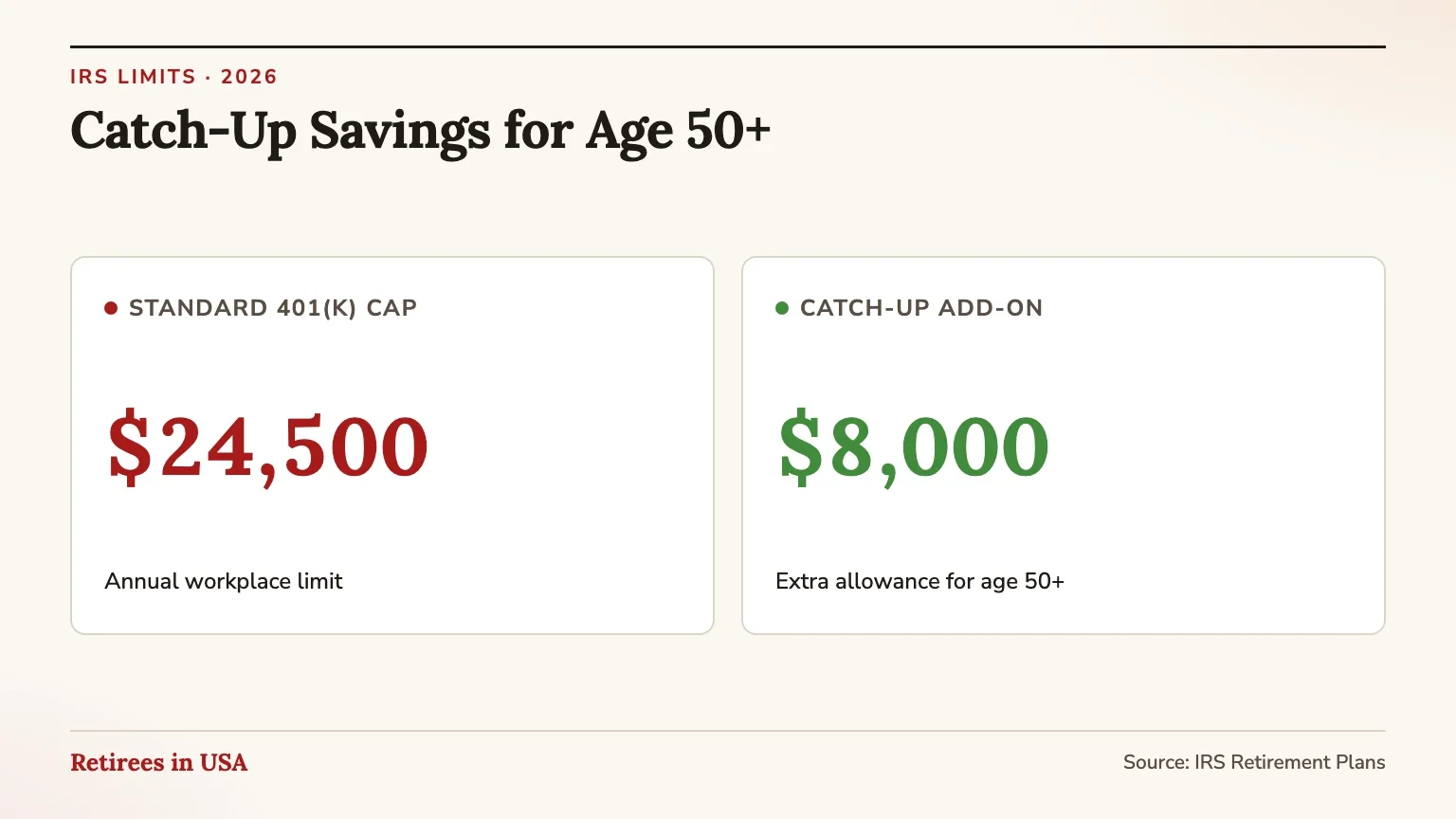
For 2026, you can put up to $24,500 into a workplace 401(k), plus an $8,000 catch-up contribution. Savers ages 60 to 63 can contribute even more under special super catch-up rules.
You can review updated contribution caps on the IRS Retirement Plans page. Directing extra income into tax-advantaged accounts weakens your dependence on government checks.
2. Enter Retirement Completely Debt-Free
Eliminating debt removes your biggest monthly expenses before you stop working. When you owe nothing on cars or credit cards, your monthly income needs drop dramatically.
Ramsey strongly recommends paying off your mortgage before you retire. Owning your home free and clear provides peace of mind that market swings cannot erase.
3. Build Multiple Streams of Retirement Income
Relying on a single income source leaves you vulnerable to sudden legislative changes. Spreading your wealth across several assets gives you greater financial security.
Consider dividend-paying index funds, real estate rentals, or casual consulting work. Each additional stream shields your household budget from potential cuts to federal programs.
4. Weigh Your Claiming Age Carefully
Ramsey often tells people to claim benefits early at age 62 and invest the money. However, economic data shows this tactic does not work for everyone.
A study from the National Bureau of Economic Research found that over 90 percent of Americans gain more lifetime spending by waiting until age 70.
Claiming at age 62 permanently cuts your check by up to 30 percent compared to full retirement age. Delaying past full retirement age earns you an extra 8 percent each year until age 70.
You can estimate your monthly payments across different claiming ages using the Social Security Administration planning tools. Base your decision on your personal health, family history, and other savings.
5. Prepare for Rising Healthcare Expenses
Healthcare represents one of the largest budget items you will face in your senior years. Medicare Part B premiums rise regularly, and the government deducts them directly from your benefit check.
For 2026, the standard Part B premium is $202.90 per month, rising to $209.40 in 2027. You can review coverage choices and out-of-pocket costs at Medicare.gov.
If you are still working and have a high-deductible health plan, fund a Health Savings Account before enrolling in Medicare. An HSA offers tax-free growth and tax-free withdrawals for qualified medical expenses.
Don’t Make These Mistakes
Avoiding common planning errors is just as important as saving money. Watch out for these traps as you prepare your retirement strategy:
- Assuming Social Security checks will cover all your basic living expenses.
- Claiming early at age 62 without a clear plan to invest the checks.
- Forgetting that up to 85 percent of your benefits may face federal taxes.
- Ignoring Medicare premium increases when calculating future income needs.
“The goal of retirement is to live off your assets—not live off your regrets.”

When Professional Advice Is Worth It
Social Security claiming rules involve complex math and survivor benefit trade-offs. Working with a fee-only fiduciary advisor can help you pick the optimal claiming strategy for your household.
You can also consult a State Health Insurance Assistance Program counselor for free guidance on Medicare options. Getting expert help ensures you do not leave money on the table.
Frequently Asked Questions
Will Social Security go broke and pay nothing?
No, the program will not disappear. Even if the reserves run dry, ongoing payroll taxes will still cover about 78 percent of promised benefits.
Should I claim benefits at age 62 if cuts are coming?
Claiming early locks in a permanent cut of up to 30 percent right away. For most people, delaying benefits provides a higher guaranteed monthly payout that protects against inflation.
How much money should I invest for retirement each month?
Ramsey suggests investing 15 percent of your gross income into tax-advantaged retirement accounts. Consistent investing over time helps you build a nest egg that replaces government benefits.
Focus on the steps you can control today rather than political debates you cannot influence. Start by reviewing your latest benefit estimate and setting clear savings goals.
This article is for informational purposes only and does not constitute financial, legal, or medical advice. Medicare rules, Social Security benefits, and tax laws change regularly—verify current details at Medicare.gov, SSA.gov, or with a licensed professional.
Last updated: November 2026. Medicare and Social Security rules change annually—always verify current details at official government sources.