Average and Maximum Payment Benchmarks for 2027
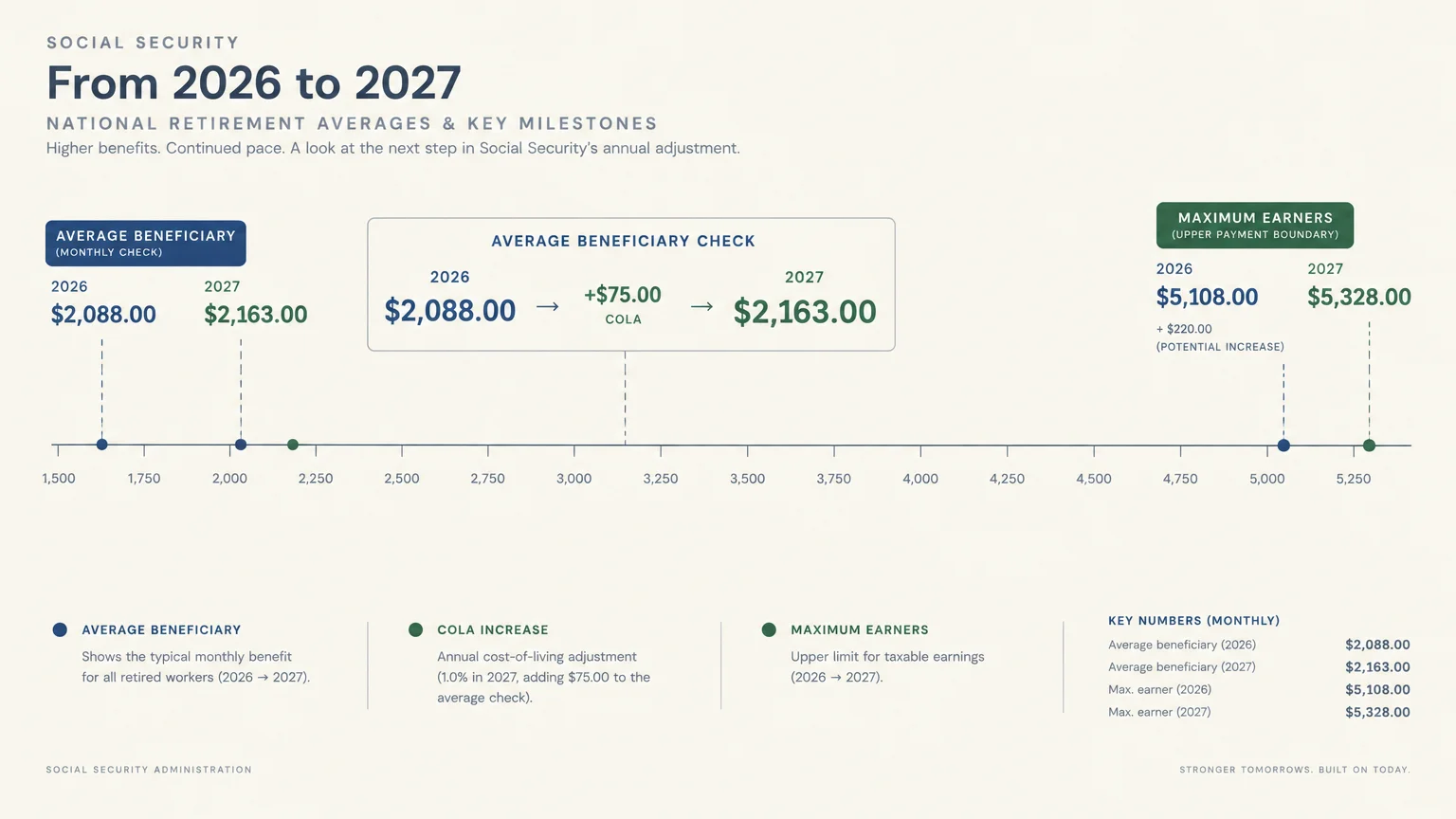
The estimated average monthly check for a retired worker was approximately $2,088 throughout 2026. The 3.6% adjustment raises that national average by $75.00, pushing it to roughly $2,163.00 in 2027.
Over the year, an average retiree receives an additional $900.00 in total gross retirement benefits. That provides substantial relief compared to the previous year’s smaller percentage adjustment.
Supplemental Security Income recipients also see their maximum statutory payment limits climb on December 31, 2026. These maximums rise to $1,029.00 for eligible individuals and $1,544.00 for eligible couples.
For essential persons providing necessary care to SSI recipients, the maximum federal monthly limit increases to $516.00. These SSI increases take effect one business day before regular retirement benefits update.
Workers currently paying into the system will also see changes in the maximum taxable earnings limit. The taxable wage base rises from $184,500 in 2026 to $192,300 in 2027.
Earnings up to $192,300 will face the standard 6.2% Social Security payroll tax. Any wages earned beyond that threshold remain exempt from further Social Security payroll taxation.
The Medicare Part B Deduction: How Rising Healthcare Costs Affect Net Checks
Your gross COLA raise never tells the entire story regarding your actual take-home pay. For millions of retirees, the Centers for Medicare & Medicaid Services deducts Part B premiums directly from Social Security.
In 2026, the standard monthly Medicare Part B premium stood at $202.90, alongside a $283 annual deductible. The 2026 Medicare Trustees Report projected the 2027 standard premium to rise by $6.60 to roughly $209.50.
The annual Part B deductible is likewise projected to climb to $292 in 2027. Independent forecasters warn that faster healthcare spending could push standard Part B premiums higher, potentially between $216 and $219.
CMS typically announces final, official Medicare Part B premium rates in November. You can check official updates directly on Medicare.gov once the government releases final figures.
Whenever your Medicare Part B premium rises, that increase gets subtracted from your Social Security raise first. Only the remaining cash lands in your bank account each month.
Keeping close tabs on your net benefit prevents uncomfortable surprises when the January deposit arrives. Always base your upcoming household budget on net receipts rather than gross percentages.





The increase ain’t Shit because the $54–$72 and $108 is being taken away instantly through your Medicare payments so what increase you really telling citizens about. In fact Medicare will be more expensive so Citizens are being exploited with a huge Mask on your faces saying that an increase is coming. Yea it’s coming through Medicare Payments
Stop emailing me 😡. I unsubscribed so much 😡. Stop it😡
Do not need this info yet
Not old enough currently
$3000 and then I’m gonna come again I wanna know how his $3000 Social Security to make you is 3000 now I need to know give me a holler
It sure would been nice if the $997 was given out as that would have helped all of us who live on a fixed income. You came up with a total for the year with the amount given each month. The amount you mentioned barely covers grociers/ulities for couple months. What are we suppose to do the rest of the year? If the $997 wasn’t a scam by the GOVERNMENT giving so many people hope and be able to make it each month. The last week of each month I eat peanut butter and jelly sandwiches, ceral, beans and etc just like so many people. All of you don’t care as all of you are eating a steak with the works. So we are suppose to be happy with this raise. Thanks a lot
Last year after taxes and insurance increased my check was a whopping 3.50 a week extra. Yes 14.00 higher. What ever happened to no tax on Social Security. Which I’m still paying at 76 years old and working part time to make ends meet.
You get the cost of living raise but your raise is off set by Medicare charges. The raise should be added after Medicare charges your Social Security income.