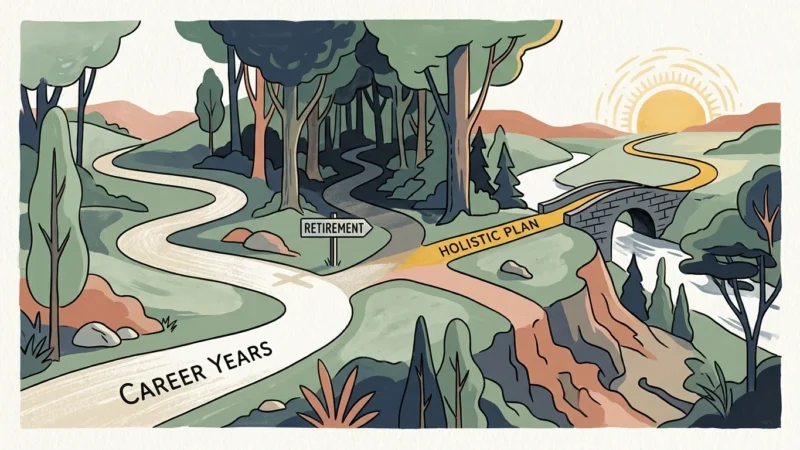
You spent decades chasing deadlines, but complete leisure can feel surprisingly hollow after a few months. Stepping back into work on your own terms provides purpose, sharp focus, and extra spending cash.
Nearly a quarter of American retirees now re-enter the workforce, choosing roles that eliminate corporate politics. They prioritize community, personal passions, and schedule flexibility over climb-the-ladder stress.
Discover the seven enjoyable retirement jobs seniors genuinely love waking up for each morning. These roles offer rewarding routines and practical perks without sacrificing your hard-earned freedom.
Why Retirees Are Returning to Work on Their Own Terms
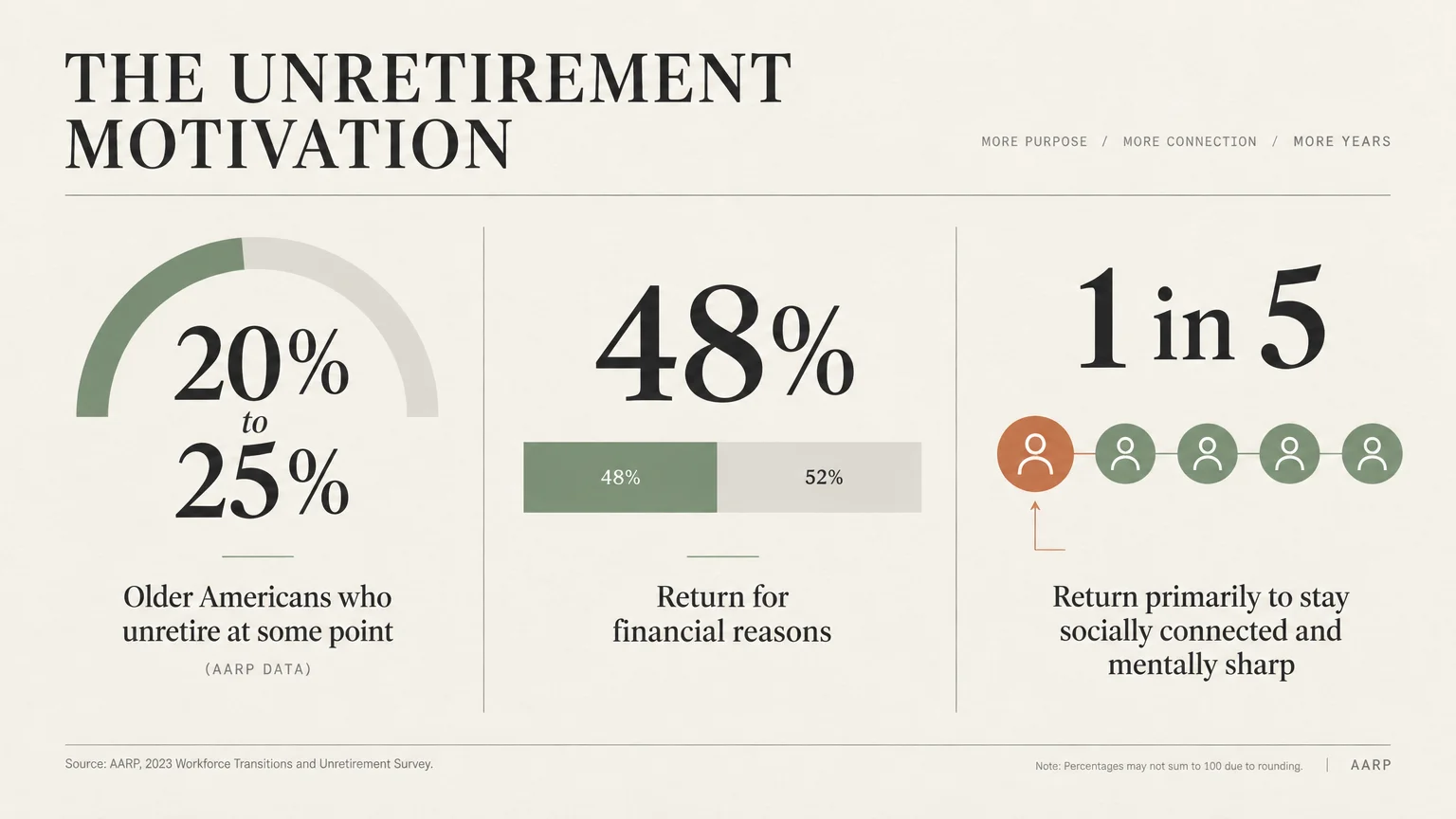
Data from AARP indicates that between 20% and 25% of older Americans unretire at some point. While roughly 48% cite financial reasons, one in five returns primarily to stay socially connected and mentally sharp.
Workplace demands look vastly different when you no longer need to build a career. You can choose jobs based purely on personal interest, team camaraderie, and low day-to-day pressure.
Stepping into a secondary career lets you set boundaries that protect your lifestyle. You decide how many hours you work, which seasons you take off, and what environments suit your health.
“Don’t simply retire from something; have something to retire to.” — Harry Emerson Fosdick
Retiree job satisfaction peaks when positions offer autonomy, fresh air, or social engagement. The following positions stand out because older adults consistently rate them as fun, sustainable, and truly fulfilling.

1. Local Tour Guide or Historical Docent
If you love local history and storytelling, working as a tour guide offers an ideal social outlet. You lead small groups through museums, historical districts, botanical gardens, or architectural landmarks.
According to the Bureau of Labor Statistics, tour guides earn a median wage of approximately $18.33 per hour. Many guides also collect cash tips, which can boost your hourly take-home pay substantially.
This role keeps you physically active through regular walking without strenuous heavy lifting. You interact with eager travelers from around the world who appreciate your regional expertise.
Most organizations schedule docents for specific shifts, allowing you to work two or three half-days each week. You share your enthusiasm for culture while keeping your afternoons and evenings open.

2. School District Substitute Teacher or Aide
School districts across the nation face severe staffing shortages and eagerly welcome experienced older adults. Short-term substitute teachers earn between $18 and $21 per hour depending on regional budgets.
Substitute teaching provides unmatched schedule flexibility. Automated booking systems let you accept or decline assignments on your smartphone the evening before or morning of class.
You can work exclusively on Tuesdays and Thursdays, or take entire months off during travel seasons. You never have to attend faculty committee meetings, create lesson plans, or grade homework.
If managing an entire classroom feels overwhelming, consider working as a paraprofessional or library aide. These support positions focus on one-on-one student reading, specialized mentoring, or quiet administrative assistance.

3. Public Library Assistant
Public libraries provide quiet, orderly environments centered on community learning. Library assistants and technicians earn a median wage of roughly $16 to $18 per hour.
Daily tasks include reshelving books, organizing incoming media, and assisting patrons with catalog searches. You might also help visitors navigate public computers or coordinate community book clubs.
The work provides gentle physical movement as you walk through aisles and manage returns. It is low-stress, mentally stimulating, and free from aggressive sales quotas or corporate chaos.
Libraries also value reliability and calm customer service, traits experienced retirees have in abundance. Most library systems offer predictable, recurring shifts that fit easily around family commitments.

4. Golf Course Marshal or Starter
For avid golfers, working at a local municipal course or private resort is a dream retirement post. Starters manage tee times at the first hole, while marshals monitor pace of play across the fairways.
Hourly wages often sit near state minimums, but the primary appeal lies in non-cash compensation. Most golf facilities provide complimentary green fees, free driving range access, and pro-shop merchandise discounts.
Free rounds of golf can save an enthusiastic player hundreds of dollars every month. The role also provides hours of outdoor fresh air and effortless socialization with fellow golf enthusiasts.
Shifts often start early in the morning, leaving your afternoons completely free. You finish your shift, grab lunch at the clubhouse, and play nine holes before heading home.
5. State or National Park Campground Host
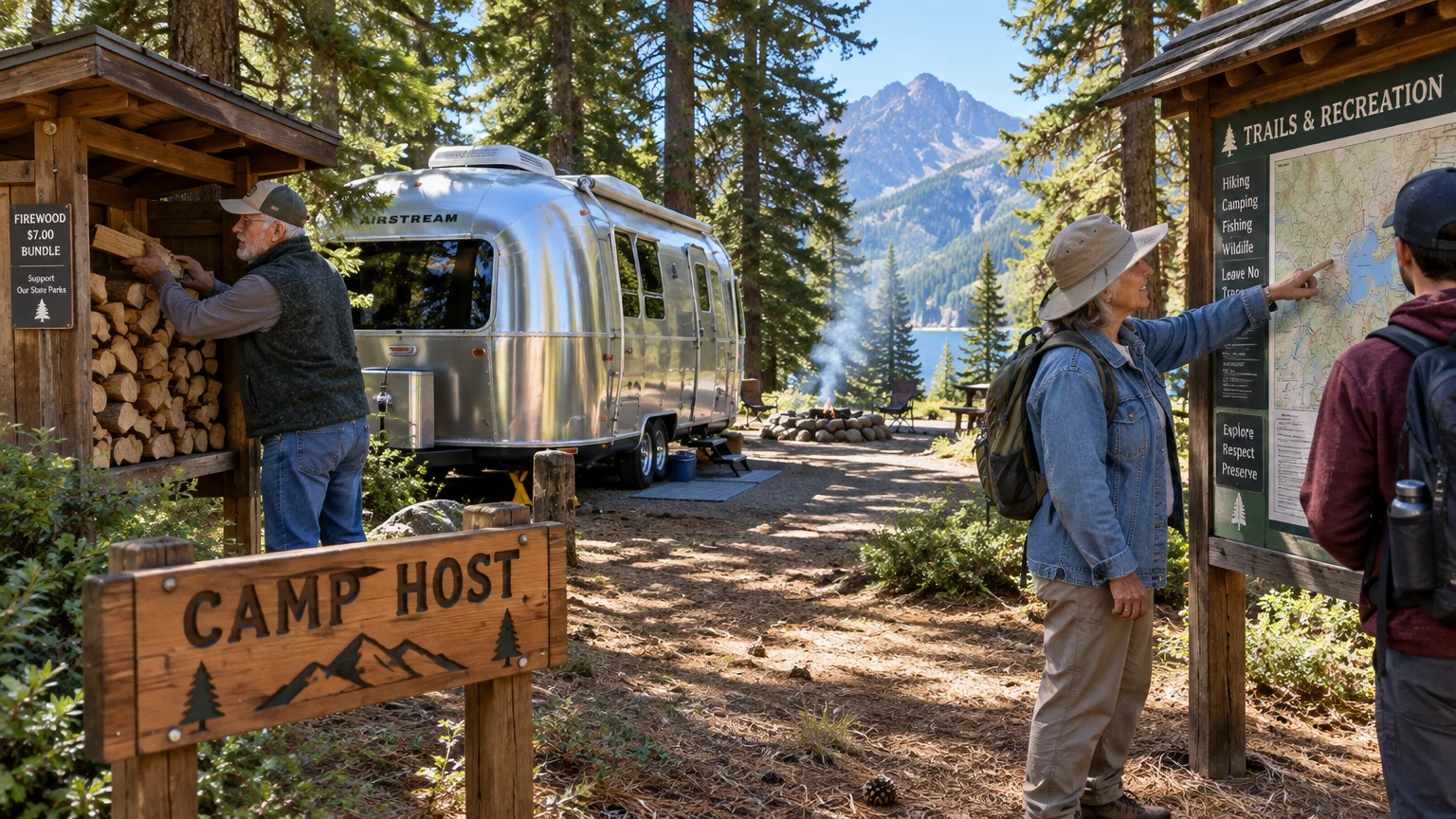
Campground hosting suits retirees who travel in recreation vehicles or love spending time in pristine nature. Hosts live on-site in state parks, national forests, or federal recreation areas for several months.
In exchange for welcoming campers and answering questions, you receive a free campsite with full utility hookups. The IRS generally considers employer-provided lodging on business premises for employer convenience as non-taxable fringe benefits.
Your responsibilities center on answering visitor questions, providing trail maps, and monitoring site cleanliness. You act as the welcoming face of the park while camping amidst lakes, mountains, or forests.
This role lets you explore majestic natural regions without paying lodging fees. It transforms a standard camping road trip into a purposeful, communal adventure.

6. Professional Pet Sitter or Dog Walker
Caring for neighborhood pets turns animal companionship into a profitable, flexible endeavor. The Bureau of Labor Statistics notes animal caretakers earn a median wage between $15 and $17 per hour.
Independent pet sitters who build a private client base often charge $25 to $35 per 30-minute walk. You can choose to walk one dog at a time or provide overnight house-sitting services.
Walking dogs provides consistent, low-impact cardiovascular exercise that supports joint mobility and heart health. Spending time with animals also lowers blood pressure and elevates your daily mood.
You decide which pets you accept, avoiding large, aggressive animals that could pull you off balance. You can pause your services anytime family visits or vacation plans arise.

7. Garden Center Associate
If you find peace working with soil and plants, retail nurseries offer deeply satisfying seasonal roles. You spend your shifts watering perennials, arranging displays, and guiding home gardeners toward successful plantings.
Nurseries offer valuable employee discounts, often saving you 20% to 40% on landscape supplies, seeds, and tools. These savings make home gardening projects substantially more affordable.
The work keeps your hands busy and your body moving throughout the day in open-air greenhouses. You trade gardening tips with enthusiastic customers and learn advanced horticultural techniques from master gardeners.
Garden center work is naturally seasonal, peaking during spring and early summer. This schedule leaves you with quiet winters to travel, relax, or pursue indoor hobbies.
Comparing the Most Enjoyable Retirement Jobs
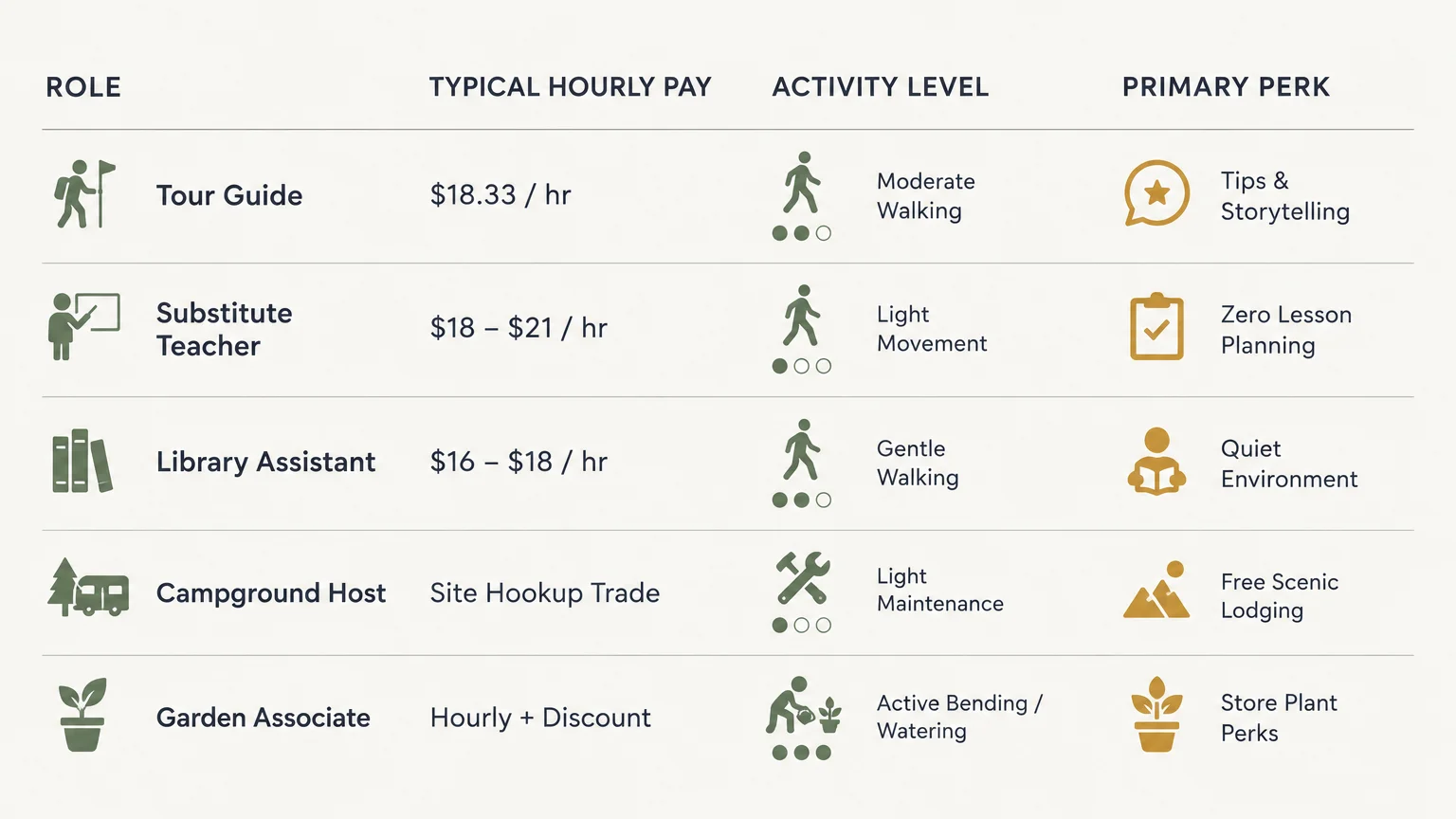
Choosing the best role depends on your physical energy, financial objectives, and lifestyle priorities. Use this comparison to identify which option aligns best with your retirement routine.
| Job Title | Typical Pay & Perks | Physical Activity | Primary Benefit |
|---|---|---|---|
| Tour Guide | $18.33/hr + tips | Moderate walking | Social storytelling |
| Substitute Teacher | $18.00–$21.00/hr | Light to moderate | Schedule control |
| Library Assistant | $16.00–$18.00/hr | Light standing | Peaceful environment |
| Golf Course Marshal | Minimum wage + free golf | Low (cart-based) | Free recreation |
| Campground Host | Free site hookups / stipend | Moderate outdoor | Nature immersion |
| Dog Walker | $15.00–$25.00/walk | Active walking | Daily exercise |
| Garden Associate | $14.00–$17.00/hr + discounts | Moderate lifting | Plant discounts |

Costly Mistakes to Avoid When Going Back to Work
Earning an income in retirement provides financial breathing room, but mismanaging federal rules can trigger unexpected penalties. Protect your finances by understanding how wages interact with public benefits.
If you collect Social Security before reaching your Full Retirement Age (FRA), your earnings face strict caps. Review the official earnings limits established by the Social Security Administration before starting work.
In 2026, the annual earnings limit for workers below FRA is $24,480 ($2,040 monthly). The SSA withholds $1 in benefits for every $2 you earn above that threshold.
During the year you reach FRA, the 2026 limit jumps to $65,160 ($5,430 monthly) before your birth month. In that specific window, the SSA deducts $1 for every $3 earned over the cap.
Once you reach your FRA—age 67 for anyone born in 1960 or later—the earnings penalty vanishes completely. You can earn unlimited wages without losing a single dollar of your monthly benefit.
Another major trap involves healthcare coverage rules established by Medicare.gov. Many retirees mistakenly drop or delay Medicare Part B after taking a part-time job.
Part-time employer health insurance rarely meets federal standards for creditable primary coverage. To delay Part B without penalty, your employer must have 20 or more employees and offer active group coverage.
Failing to maintain proper Medicare Part B coverage triggers a permanent 10% penalty for every 12-month delay. Always verify your coverage status with benefits administrators before adjusting Medicare enrollments.
Frequently Asked Questions About Working in Retirement
Will working part-time permanently reduce my Social Security benefits?
No, withheld benefits are not permanently lost. When you attain Full Retirement Age, the SSA recalculates your benefit upward to credit back the withheld amounts.
Can I contribute to an IRA using part-time retirement wages?
Yes, you can contribute to a Traditional or Roth IRA as long as you have earned wage income. Investment returns, pensions, and Social Security payments do not count as earned income for IRA limits.
How many hours do most working retirees log each week?
Most working seniors work between 10 and 20 hours per week. This balance provides supplemental cash and regular social interaction without compromising personal travel or leisure schedules.
Are campground host amenities subject to federal income tax?
Generally, no. Lodging provided on employer premises for the employer’s operational convenience meets IRS standards for tax-free fringe benefits.
Retirement should never feel like an all-or-nothing proposition between high-stress employment and total isolation. Choose a role that feeds your curiosity, protects your physical well-being, and keeps life fun.
Information in this article reflects current rules as of the publication date and may change. Always confirm benefit details directly with Social Security Administration, Medicare.gov, or relevant government agencies before making decisions.
Last updated: February 2026. Medicare and Social Security rules change annually—always verify current details at official government sources.