You pay your monthly Medicare premiums, yet you may be leaving hundreds of dollars in clinical care on the table each year. Medicare covers dozens of preventive tests, vaccines, and visits at zero out-of-pocket cost to you.
Federal rules waive your Part B deductible and copayments for essential wellness services when you see participating providers. Despite these cost waivers, millions of older adults skip their annual appointments and miss out on early health detections.
Understanding which screenings carry zero copays shields your retirement budget while protecting your long-term vitality. Here is your definitive guide to claiming every preventive dollar Medicare owes you this year.
The Free Preventive Care You Already Pay For
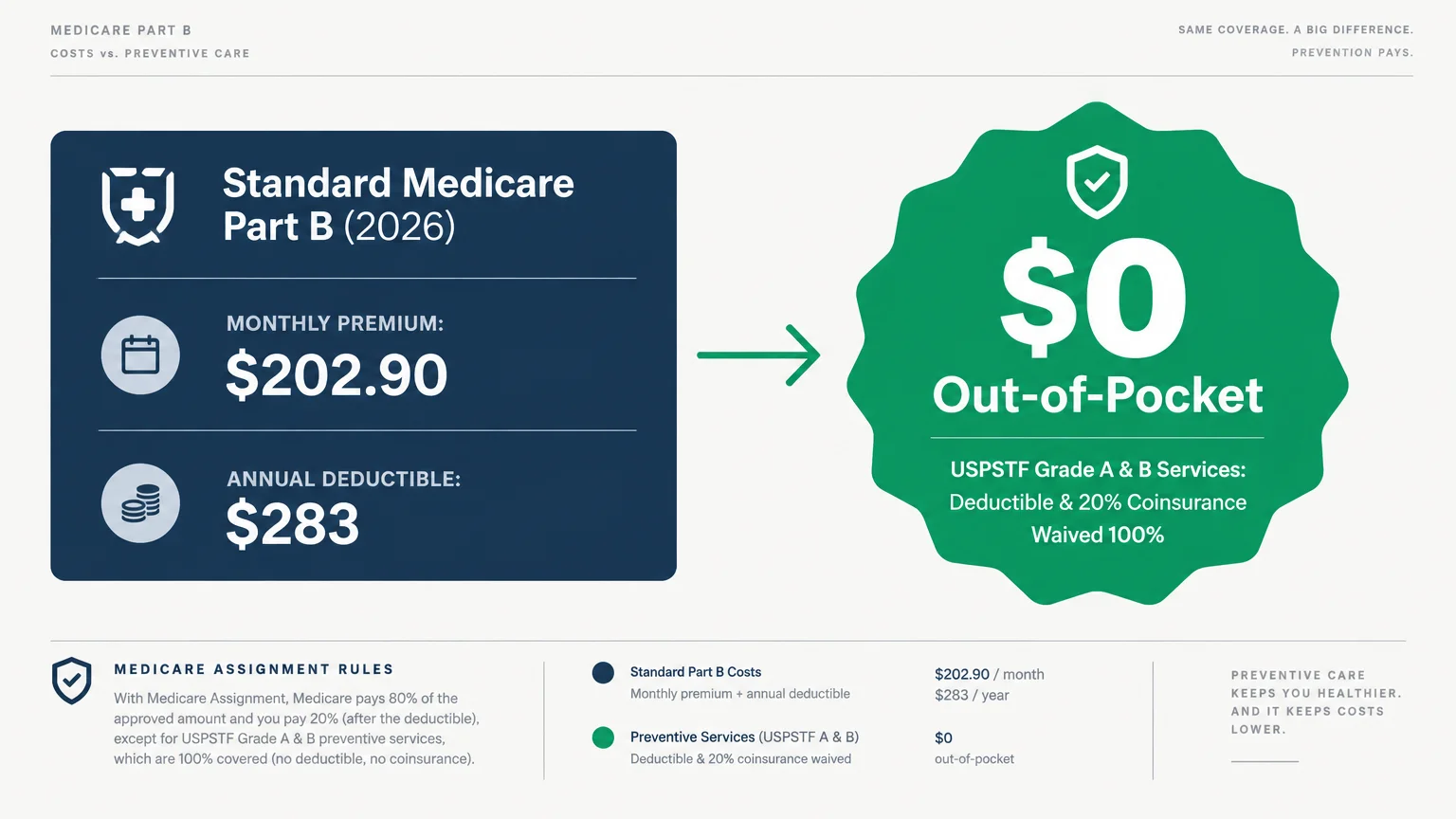
Every enrollee in Medicare Part B contributes monthly toward baseline health coverage. In 2026, the standard Part B monthly premium is $202.90, alongside an annual deductible of $283.
Many retirees avoid scheduling appointments because they worry about triggering that $283 deductible. Fortunately, federal regulations waive the deductible and the 20% coinsurance for qualified preventive care.
The Affordable Care Act mandates that Medicare provide 100% coverage for services graded A or B by the U.S. Preventive Services Task Force. This framework ensures you pay nothing for early detection tests that preserve your health.
You only qualify for these $0 benefits if your medical provider accepts Medicare assignment. When a doctor accepts assignment, they agree to accept Medicare’s approved reimbursement rate as full payment.
If you see a non-participating provider, you might face excess charges or out-of-pocket copays. Always confirm assignment with the receptionist before you sit down in the examination room.
Official directories on Medicare.gov allow you to verify your doctor’s participating status within seconds. Taking this simple step ensures your preventive services remain entirely free.
The Annual Wellness Visit vs. The Routine Physical Trap
Medicare offers two distinct introductory and maintenance wellness consultations at no cost. Navigating their rules carefully keeps you from paying surprise out-of-pocket medical bills.
Within your first 12 months of enrolling in Medicare Part B, you qualify for the introductory “Welcome to Medicare” visit. This one-time evaluation reviews your medical history, updates your immunizations, and checks vital baseline statistics.
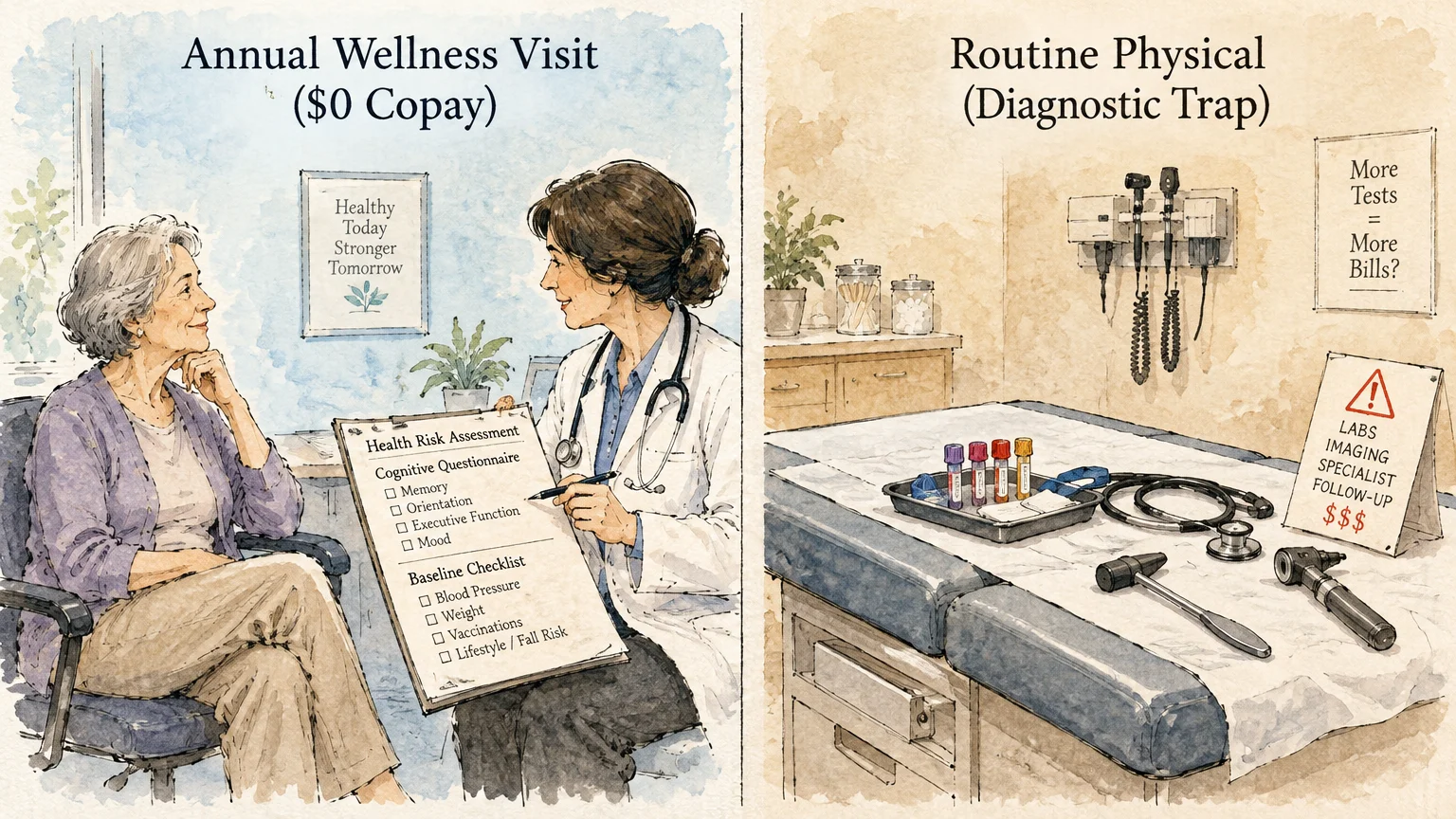
Once you complete your first year on Part B, you earn access to the Medicare Annual Wellness Visit. You can schedule this comprehensive appointment once every 12 months at zero cost.
Clinical data shows that fewer than half of eligible beneficiaries—between 20% and 45%—schedule their Annual Wellness Visit each year. By skipping this meeting, retirees forfeit vital health planning that costs them nothing.
During the wellness visit, your physician calculates your health risks, evaluates cognitive function, and drafts a personalized prevention schedule. The provider checks your blood pressure, calculates body mass index, and screens for potential memory impairments.
Here is where many retirees walk into an expensive billing trap. Original Medicare does not cover a traditional, hands-on, head-to-toe physical exam.
The Annual Wellness Visit is a conversational planning session, not an invasive clinical examination. If you ask your doctor to examine a sore knee or adjust your prescription medications, the appointment changes.
Your physician must legally bill an Evaluation and Management code alongside the wellness encounter. That additional code immediately triggers the $283 Part B deductible and standard 20% coinsurance.
To avoid unexpected charges, state your intentions clearly when booking the appointment. Say: “I want to schedule my Medicare Annual Wellness Visit, and I want to cover only the preventive checklist today.”
If you need your doctor to evaluate a chronic illness or new symptom, schedule a separate diagnostic visit on another day. This simple separation keeps your preventive assessment completely free.

Zero-Dollar Vaccines: Navigating Part B vs. Part D
Vaccines protect older adults against severe complications, yet confusing insurance rules historically caused seniors to skip their immunizations. Today, changes under the Inflation Reduction Act guarantee zero-dollar cost-sharing for critical adult shots.
Understanding which card to present at the pharmacy counter ensures you never receive an accidental bill. Medicare splits its vaccine coverage across Part B and Part D.
Original Medicare Part B covers four specific immunizations with zero deductible and zero copayment. These include your seasonal flu shot, all approved COVID-19 boosters, and pneumococcal vaccines against pneumonia.
Part B also covers Hepatitis B vaccines at no cost for beneficiaries assessed at medium-to-high risk. For these specific shots, present your red, white, and blue Medicare card at the clinic or pharmacy.
All other adult vaccines recommended by the Advisory Committee on Immunization Practices fall under Medicare Part D prescription plans. Federal law requires Part D plans to provide these vaccines with zero cost-sharing.
This mandate covers high-cost immunizations that previously forced retirees to spend hundreds of dollars out of pocket. You now pay $0 for the two-dose Shingrix shingles vaccine, respiratory syncytial virus (RSV) shots, and Tdap boosters.
Under CMS guidelines, your Part D plan must provide recommended vaccines at $0 even if administered by an out-of-network pharmacy. This rule protects you from surprise charges while you travel across the country.
Always hand the pharmacist your standalone Part D card or Medicare Advantage card when receiving shingles, RSV, or tetanus injections. Presenting the wrong card creates administrative denials and unnecessary billing headaches.

Essential Cancer Screenings Covered at 100%
Early detection transforms cancer survival rates, and Medicare funds several high-value screenings at zero cost. Taking advantage of these screenings prevents minor health irregularities from developing into life-threatening emergencies.
Medicare covers colorectal cancer screenings beginning at age 45. Beneficiaries at average risk can receive a screening colonoscopy once every 10 years at no cost.
If your personal or family history places you at high risk, Medicare covers your colonoscopy every 2 years. Medicare also covers non-invasive stool DNA tests, such as Cologuard, once every 3 years.
Retirees previously feared non-invasive stool tests because a positive result required a follow-up colonoscopy billed at diagnostic rates. Medicare updated these rules to eliminate that financial penalty.
If your stool DNA or blood-based biomarker screening returns an abnormal result, Medicare covers the subsequent colonoscopy as a $0 preventive screening. You will not pay a copay or coinsurance for that diagnostic follow-up procedure.
Medicare covers annual low-dose computed tomography (CT) scans to screen for lung cancer at zero cost. This benefit serves individuals aged 50 to 77 who show no symptoms of lung disease.
To qualify, you must currently smoke or have quit within the past 15 years, with a cumulative tobacco history of at least 20 pack-years. You must also obtain a written order from your physician following a shared decision-making consultation.
For women, Medicare covers one baseline screening mammogram between ages 35 and 39. After turning 40, female beneficiaries qualify for an annual screening mammogram once every 12 months at no charge.
Medicare also covers cervical cancer screenings, including Pap tests and pelvic exams, once every 24 months for average-risk women. High-risk women or those of childbearing age with abnormal histories receive annual coverage.

Overlooked Screenings and Behavioral Counseling Services
Beyond cancer screenings, Medicare Part B includes a robust collection of behavioral and metabolic services. These underutilized benefits help you manage lifestyle factors before they turn into chronic conditions.
If your doctor diagnoses you with diabetes or kidney disease, you qualify for free Medical Nutrition Therapy. This benefit provides individualized nutritional counseling with a registered dietitian or certified nutrition professional.
Medicare also extends nutrition therapy to beneficiaries within 36 months of receiving a kidney transplant. Your dietitian helps you design meal plans that stabilize blood glucose levels and preserve organ function.
Medicare covers up to two blood glucose screenings per year for individuals exhibiting diabetes risk factors. Qualifying risk factors include high blood pressure, abnormal cholesterol levels, obesity, or a family history of diabetes.
Heart disease remains the leading health challenge for older adults, making cardiovascular benefits vital. Medicare covers full blood tests for cholesterol, lipid, and triglyceride levels once every 5 years at zero cost.
You also qualify for an annual cardiovascular behavioral therapy visit with your primary care provider. This session focuses on lowering blood pressure through diet, physical activity, and stress management.
Mental health screenings are equally accessible under your Part B coverage. Medicare provides a free 15-to-30-minute annual depression screening conducted in your doctor’s office.
If your screening reveals depressive symptoms, your doctor can connect you immediately to therapeutic resources and clinical support. Medicare also provides an annual screening for alcohol misuse during your primary care visit.
If your provider identifies unhealthy drinking patterns, Medicare covers up to four structured counseling sessions each year. These sessions offer private, professional support without requiring a copayment.
For tobacco users, Medicare funds up to eight face-to-face smoking and tobacco cessation counseling sessions every 12 months. Quitting tobacco reduces your risk of cardiovascular events, regardless of how long you have smoked.
“The goal of retirement is to live off your assets—not live off your regrets.”
Comparison: Key Preventive Benefits and Coverage Rules
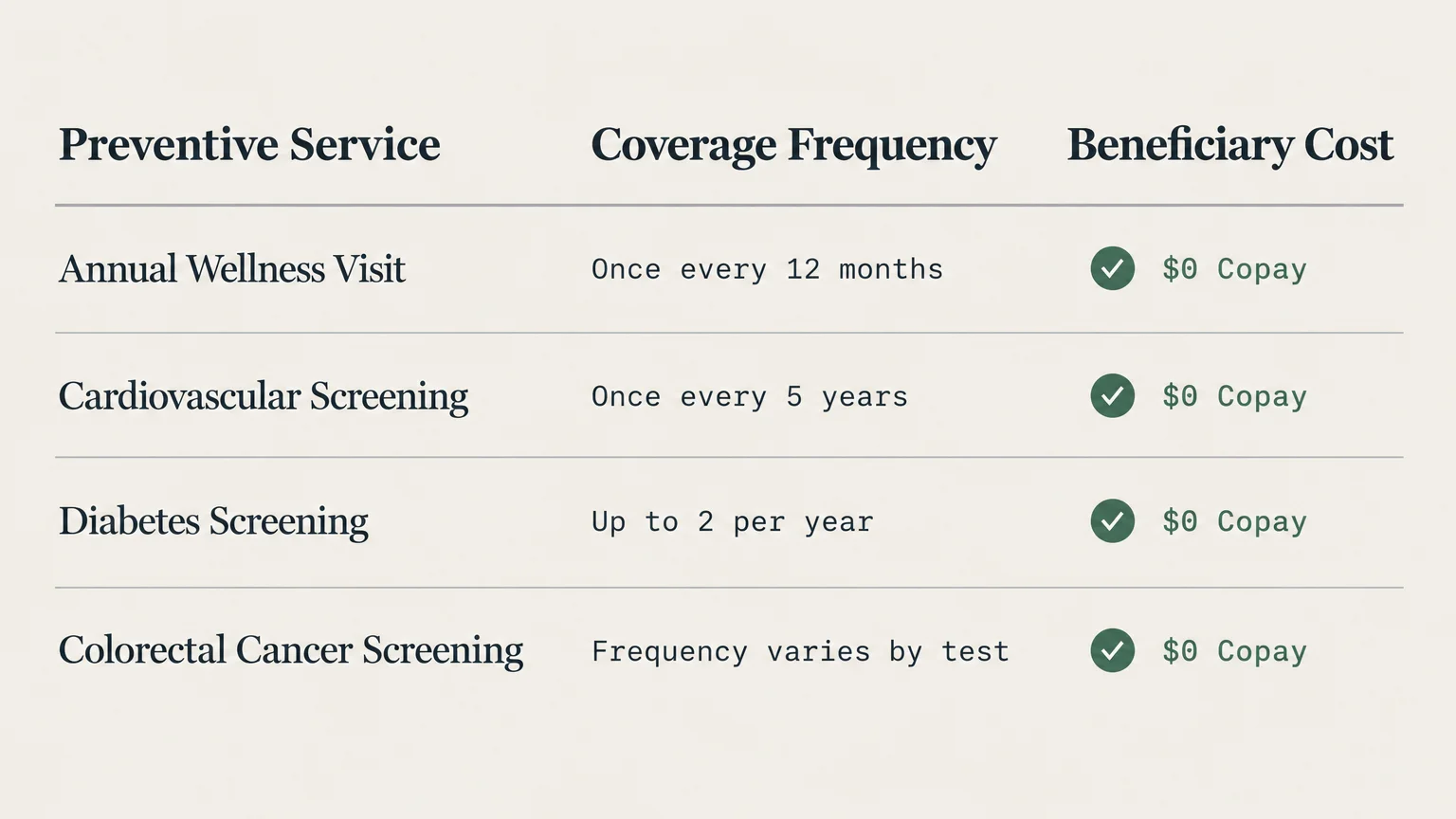
Reviewing coverage parameters in advance helps you coordinate care with your medical team. The table below outlines common preventive benefits, their Medicare parts, and their eligibility rules.
| Preventive Service | Medicare Part | Coverage Frequency | Out-of-Pocket Cost |
|---|---|---|---|
| “Welcome to Medicare” Visit | Part B | Once during first 12 months of Part B | $0 (Deductible waived) |
| Annual Wellness Visit | Part B | Once every 12 months (after year one) | $0 (Deductible waived) |
| Flu and COVID-19 Vaccines | Part B | Annually or as updated by CDC | $0 |
| Shingles (Shingrix) and RSV | Part D | Per recommended immunization schedule | $0 (No deductible or copay) |
| Screening Colonoscopy | Part B | Every 10 years (average) or 2 years (high risk) | $0 (Includes follow-up after stool test) |
| Screening Mammogram | Part B | Once every 12 months (age 40+) | $0 |
| Low-Dose CT Lung Screening | Part B | Annually (Ages 50–77 with 20 pack-year history) | $0 |
| Medical Nutrition Therapy | Part B | Annual hours based on clinical need | $0 (For diabetes or kidney disease) |
| Cardiovascular Lipid Blood Panel | Part B | Once every 5 years | $0 |
| Tobacco Cessation Counseling | Part B | Up to 8 sessions per 12-month period | $0 |
Every service listed above carries zero cost-sharing under standard Medicare rules. Make sure your clinic files these appointments under preventive billing codes to avoid errors.

Medicare Advantage Perks: The Use-It-or-Lose-It Dilemma
If you enroll in a Medicare Advantage (Part C) plan, you likely receive supplemental benefits beyond Original Medicare. Private insurers advertise these extra perks heavily to attract new retirees during open enrollment.
In 2026, 91% of individual Medicare Advantage enrollees have access to fitness benefits like SilverSneakers. Additionally, 68% receive over-the-counter allowance cards, and 65% have access to post-discharge meal benefits.
Despite wide availability, millions of enrollees never use these perks. According to the Commonwealth Fund’s Value of Medicare Survey, 30% of Medicare Advantage enrollees did not use any supplemental benefits last year.
Utilization remains shockingly low for dental and vision benefits as well. The survey revealed that only 42% of enrollees used their dental benefits, and only 41% utilized vision care.
A 2025 study in JAMA Network Open discovered that 46% of enrollees were unaware their plan even offered dental or vision coverage. Insurers collect revenue for these benefits while enrollees pay out of pocket elsewhere.
Understanding recent regulatory updates is critical for managing your supplemental benefits. CMS originally planned a rule requiring insurers to mail a personalized mid-year notice listing your unused benefits each summer.
However, CMS paused that requirement in September 2025 and officially rescinded it in May 2026. Your insurance company is no longer legally required to remind you about unused funds or perks.
Because plans will not notify you, you must proactively manage your coverage. Check your plan’s Evidence of Coverage document through your insurer’s portal to see what allowances you hold.
Over-the-counter allowance cards frequently expire at the end of each quarter or calendar year. Use your quarterly credits to purchase bandages, vitamins, and dental supplies before your balance resets to zero.
If your plan includes gym memberships or transportation stipends, integrate them into your regular routine today. Unused supplemental allowances vanish permanently on December 31.
Nonprofit programs like the National Council on Aging can help you evaluate your coverage details. Taking initiative prevents valuable plan benefits from going to waste.

Costly Mistakes to Avoid
Even small administrative misunderstandings can turn a free Medicare service into an out-of-pocket expense. Guarding against common mistakes keeps your medical bills at zero.
Never ask your doctor’s office for an “annual physical” when scheduling an appointment. Staff will bill a physical as an unassigned commercial exam, leaving you responsible for the entire balance.
Always specify that you want your “Medicare Annual Wellness Visit.” Confirm with the scheduling clerk that they are entering the specific G-code for Medicare wellness care.
Do not wait past your first year to claim your initial introductory visit. The “Welcome to Medicare” visit expires precisely 12 months after your Part B effective date.
Avoid presenting the wrong insurance card at the pharmacy counter. Present your red, white, and blue Part B card for flu and COVID-19 shots, but use your Part D drug card for shingles and RSV vaccines.
Do not ignore in-network restrictions if you use a Medicare Advantage plan. Unlike Original Medicare, Advantage plans restrict free preventive services to contracted network providers.
Finally, never assume your doctor knows which tests carry zero cost. Double-check your eligibility intervals for mammograms, colonoscopies, and lipid panels before arriving at the laboratory.
“The best time to plan for retirement was 20 years ago. The second best time is today.”

Don’t DIY These Decisions
Navigating Medicare coverage rules, billing codes, and plan designs can overwhelm even the most organized retiree. Professional guidance helps you avoid costly errors while maximizing your benefits.
Your State Health Insurance Assistance Program (SHIP) offers free, unbiased counseling from trained Medicare experts. SHIP counselors receive federal funding and do not sell insurance or earn commissions.
They can review your medical summary notices, explain denied claims, and help you file appeals if a clinic incorrectly charges for preventive care. Reach out to your local SHIP office whenever a billing dispute arises.
If you face complex income or asset considerations, consult a fee-only certified financial planner. A planner helps structure retirement withdrawals to avoid high-income Medicare surcharges, known as IRMAA.
Low-income retirees should explore state assistance programs using screening engines like BenefitsCheckUp. You might qualify for Medicare Savings Programs that pay your Part B premiums and prescription costs.
When long-term health decline or chronic illness enters the picture, an elder law attorney provides invaluable counsel. They help establish healthcare proxies, living wills, and asset protections before major medical crises emerge.
Frequently Asked Questions About Free Medicare Benefits
Does Medicare pay for a traditional physical exam every year?
No, Original Medicare does not cover a traditional, head-to-toe routine physical exam. It covers an Annual Wellness Visit, which focuses on cognitive health, lifestyle risks, and prevention planning.
Why did I receive a bill after my free Annual Wellness Visit?
You likely discussed a new health symptom or managed an existing chronic illness during the appointment. When a doctor diagnoses or manages conditions, they must bill a separate diagnostic code that triggers your Part B deductible.
Are shingles and RSV vaccines completely free under Medicare?
Yes, all adult vaccines recommended by the ACIP carry zero cost-sharing under Medicare Part D plans. You pay nothing for your shingles and RSV shots when you present your Part D prescription card.
Do unused Medicare Advantage over-the-counter funds roll over to next year?
No, over-the-counter allowances do not roll over into the following calendar year. Most plans reset your allowance monthly or quarterly, meaning any unused dollars disappear permanently if not spent.
Take Action Before Your Benefits Reset
Your Medicare benefits represent a significant investment in your retirement health. Call your primary care physician today to schedule your Annual Wellness Visit or outstanding cancer screenings.
If you belong to a Medicare Advantage plan, log into your member portal tonight to review your supplemental allowances. Spending your quarterly funds on essential health items keeps your hard-earned money working for you.
Information in this article reflects current rules as of the publication date and may change. Always confirm benefit details directly with Social Security Administration, Medicare.gov, or relevant government agencies before making decisions.
Last updated: November 2026. Medicare and Social Security rules change annually—always verify current details at official government sources.