Surging winter heating bills and holiday expenses can strain a fixed retirement budget. Taking on flexible seasonal work provides immediate financial breathing room without locking you into a rigid corporate schedule.
Roughly 40% of older Americans continue working after claiming their Social Security benefits. Nearly 19.1% of adults age 65 and older remain actively engaged in the American workforce today.
Generating winter side income allows you to cover rising utility costs, fund travel plans, or pad your emergency savings. Here are ten practical ways retirees are boosting their cash flow this season.

What You Need to Know
Winter brings unique, high-demand earning opportunities that fit older adults seeking control over their weekly schedules. You can select assignments that align with your physical stamina, professional background, and personal comfort.
Balancing part-time work with your retirement benefits requires keeping careful track of your gross earnings. The key is understanding how seasonal income interacts with Social Security caps and IRS reporting rules.
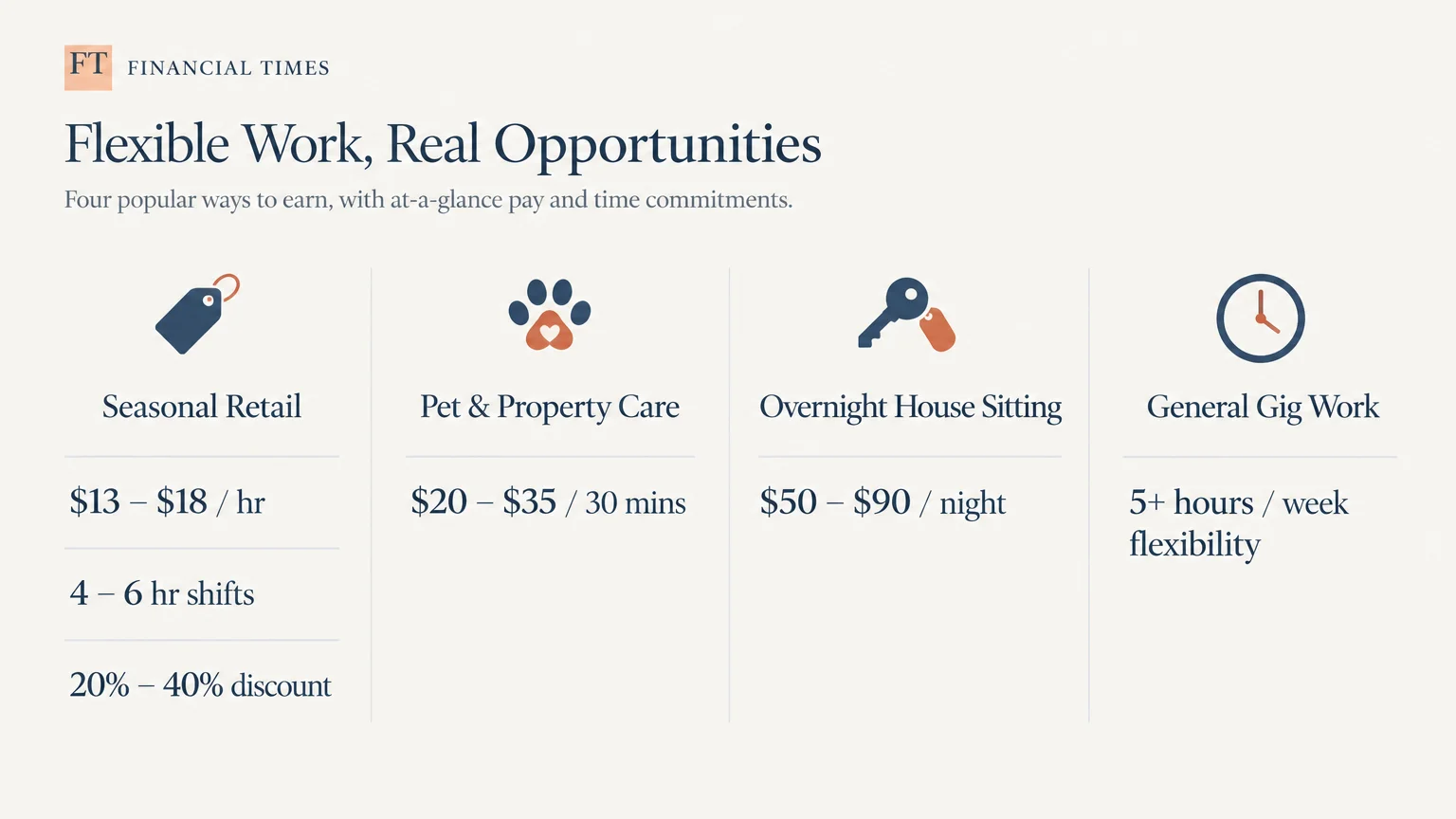
Most winter gigs allow you to work as little as five hours per week. This flexibility ensures you preserve your leisure time while generating dependable supplemental revenue.

1. Seasonal Retail and Boutique Merchandising
Local boutiques, garden centers, and department stores experience massive retail rushes between November and January. Retailers actively recruit mature workers who offer reliability, patience, and strong communication skills.
You can work as a greeter, cashier, stock organizer, or gift wrapper. These positions keep you indoors and sheltered from freezing outdoor weather conditions.
Many retailers offer substantial employee merchandise discounts ranging from 20% to 40%. You can use these discounts to dramatically lower your own holiday gift shopping expenses.
Inquire directly with store managers in late autumn before seasonal advertising spikes. Independent neighborhood gift shops frequently prefer hiring local retirees over temporary agency workers.
Expect hourly pay ranging between $13 and $18 per hour depending on your local minimum wage. Shifts usually run four to six hours, making them easy to manage without causing physical exhaustion.

2. Pet Sitting and Snowbird Property Care
Millions of families travel during the winter holidays to visit relatives or escape freezing northern climates. These homeowners need trustworthy adults to care for their pets and watch their properties.
You can offer daily check-ins to feed cats, walk dogs, collect mail, and water house plants. Checking pipes during bitter cold snaps provides immense value to absent homeowners.
House sitters who stay overnight can easily earn between $50 and $90 per night. Daily drop-in visits generally pay between $20 and $35 for thirty minutes of your time.
Platforms like Rover and TrustedHousesitters make finding neighborhood clients straightforward and secure. You can also advertise your services directly on local community bulletin boards or neighborhood social networks.
This role offers exceptional flexibility because you choose your clients and set your service boundaries. It also provides gentle, daily physical exercise that keeps you active throughout the dark winter months.

3. Performing Arts Ushers and Event Staffing
The winter months represent peak season for performing arts centers, concert halls, and community theaters. Holiday ballets, orchestral performances, and theatrical runs demand extra front-of-house staff to handle crowds.
Ushers take tickets, distribute programs, and guide patrons to their assigned seats before the show begins. Once the performance starts, you can often sit and enjoy the production without paying for expensive tickets.
Civic arenas and convention centers also hire temporary attendants for indoor boat shows, antique expos, and sports tournaments. These roles primarily require a warm smile and basic directional knowledge of the venue.
Pay typically ranges from $14 to $19 per hour with evening and weekend shifts available. Contact your municipal theater box office or venue operations department directly to ask about upcoming seasonal openings.
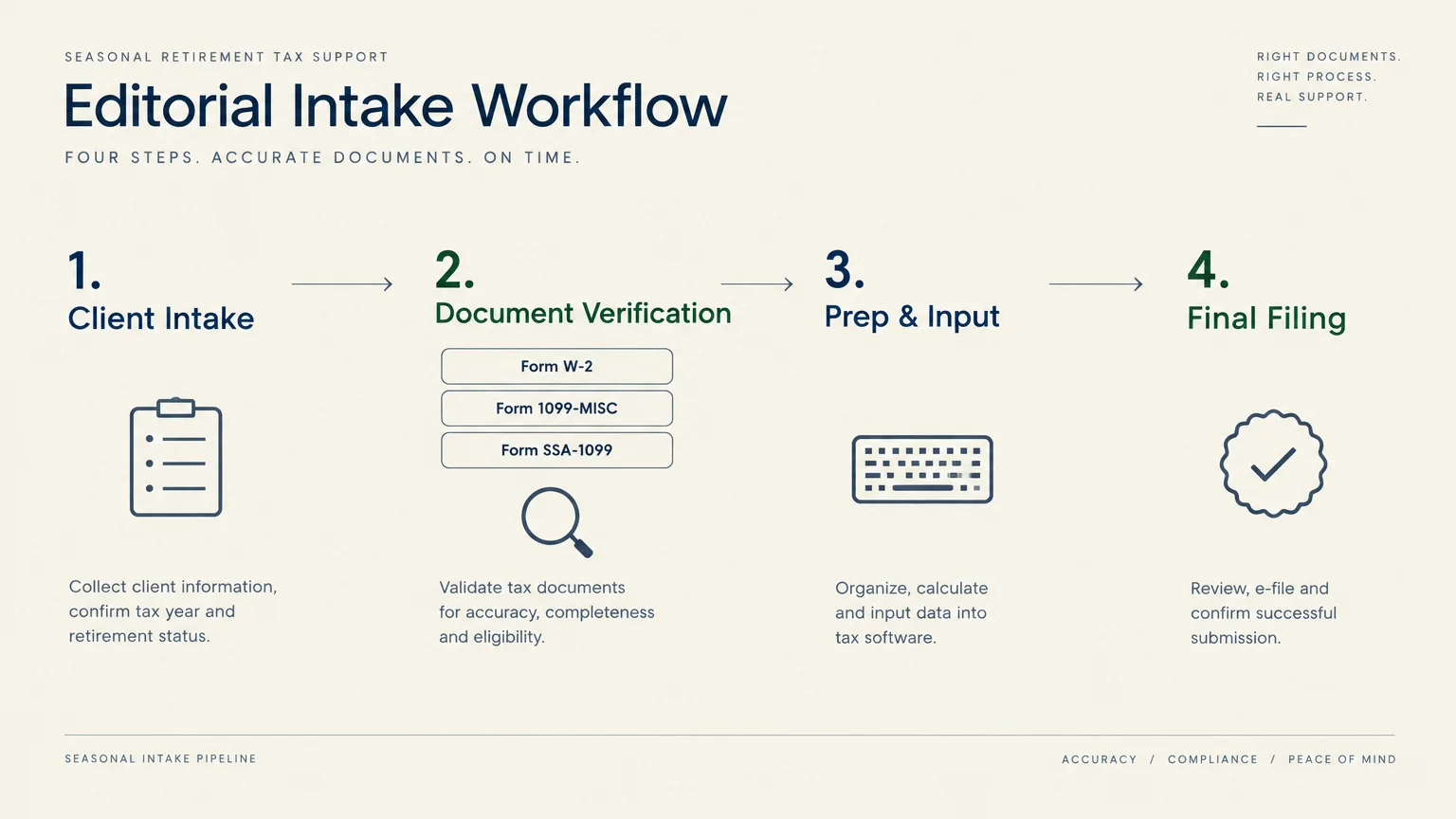
4. Seasonal Tax Preparation and Intake Support
Tax preparation firms and independent accounting offices ramp up hiring dramatically starting in December. Accounting firms need skilled intake coordinators, document scanners, and certified tax preparers for the busy filing season.
If you have an analytical mindset or a career background in finance, this seasonal work provides lucrative pay. Companies like H&R Block and Jackson Hewitt offer training courses that prepare you for certification.
Retirees who prefer non-preparer duties can work as receptionists or client intake specialists. In this capacity, you verify client identification, organize physical documents, and schedule tax appointments.
Client intake specialists earn $15 to $20 per hour, while experienced tax preparers earn $22 to $35 per hour. The season winds down by mid-April, leaving your spring and summer entirely open.
For additional resources on navigating financial topics and work during retirement, review the career guidance offered through AARP.

5. Online Tutoring and English Language Coaching
If you prefer working from the comfort of a warm home office, virtual tutoring offers an ideal avenue. You can teach conversational English to international students or tutor domestic K-12 students in specific academic subjects.
College students also seek writing coaches and proofreaders during December final exams. Platforms like Wyzant, Cambly, and VIPKid connect instructors with students worldwide around the clock.
Tutors generally command between $20 and $50 per hour depending on the subject complexity and grade level. Specialized subjects like calculus, chemistry, and accounting consistently pay higher rates.
You set your own weekly schedule and determine how many individual students you accept. All you need is a reliable computer, a webcam, and a stable broadband internet connection.
“Don’t simply retire from something; have something to retire to.” — Harry Emerson Fosdick

6. Cold-Weather Home Maintenance and Winterizing
Many older homeowners and busy working families struggle with routine cold-weather home preparation tasks. Offering targeted handyman services addresses an urgent neighborhood need as temperatures plummet.
Essential services include installing exterior faucet covers, applying window insulation film, clearing ground-level gutters, and replacing furnace filters. You can also offer minor weatherstripping installation around drafty doors.
Avoid hazardous tasks like climbing onto icy roofs or lifting heavy industrial snow blowers. Focus instead on accessible, high-value preventative maintenance that protects homes from freezing drafts and pipe bursts.
Handyman tasks easily command $30 to $60 per hour depending on your local market. Happy customers will regularly call you back for spring repair projects once warm weather returns.

7. Rideshare Driving, Airport Shuttles, and Grocery Delivery
Holiday travelers create huge demand for reliable transportation to and from regional airports during winter. Operating an independent airport shuttle service for neighbors eliminates the stress of parking lots and surge pricing.
Apps like Uber, Lyft, Instacart, and DoorDash also experience increased demand during harsh winter weather. Many consumers prefer paying delivery fees over driving on cold, dark evenings.
Driving allows you to work strictly when you feel like earning extra cash. You can log on during mild afternoon hours and park your car before hazardous nighttime ice forms.
Keep meticulous logs of your business driving mileage to maximize your tax deductions. For the period between July 1 and December 31, 2026, the IRS standard business mileage rate is 76 cents per mile.
Deducting 76 cents per mile significantly reduces your taxable net income on driving and delivery earnings. Review tax rules through the IRS Retirement Plans portal to protect your financial bottom line.

8. Holiday Catering, Baking, and Culinary Support
Catering businesses, bakeries, and corporate event venues experience intense staffing shortages throughout November, December, and January. Companies require banquet servers, food prep helpers, dishwashers, and delivery drivers for festive parties.
Banquets offer defined evening hours, complimentary gourmet meals, and pooled tip distributions that increase your total take-home pay. Shifts are typically short, lively, and socially engaging.
If you prefer independent work, cottage food laws in most states permit selling homemade baked goods directly to consumers. You can sell specialty holiday cookies, pies, or fruitcakes at winter farmer markets and holiday craft fairs.
Event servers average $16 to $25 per hour when including pooled tips and gratuities. Specialty bakers often clear hundreds of dollars in profit each weekend during peak holiday celebrations.

9. Online Reselling and Wardrobe Decluttering
Winter creates strong consumer demand for quality cold-weather gear, including wool coats, heavy boots, and winter sports equipment. Cleaning out your closets, attic, and basement turns forgotten possessions into spendable cash.
Use platforms like eBay, Poshmark, and Facebook Marketplace to list your vintage collectibles and winter clothing. Take bright, well-lit photographs and write accurate product descriptions to attract serious buyers quickly.
Local consignment stores also purchase designer winter apparel and home decor outright or on consignment. Consignment requires no packaging, shipping, or trip to the post office.
Recent federal updates have reduced tax paperwork burdens for casual online sellers. Following the passage of the One Big Beautiful Bill Act, payment platforms only send Form 1099-K if gross sales exceed $20,000 and 200 transactions.
Selling your own used personal goods at a loss generates tax-free cash flow. This makes decluttering one of the safest financial moves for retirees seeking quick winter money.

10. Remote Customer Care and Virtual Assistance
E-commerce retailers experience massive spikes in order tracking questions, product returns, and gift inquiries during winter. Many online brands hire remote customer support agents to handle emails, live chats, and telephone calls.
These positions allow you to work from your living room while wearing comfortable clothes. You assist shoppers with order updates, process exchanges, and answer shipping questions using web-based software.
Virtual assistant positions also exist for small business owners who need help managing winter calendars and correspondence. You can handle administrative scheduling, draft correspondence, and organize files remotely.
Hourly rates for remote customer service generally range from $15 to $22 per hour. Reliable platforms like FlexJobs and Rat Race Rebellion frequently list verified seasonal positions with flexible shifts.
“The goal of retirement is to live off your assets—not live off your regrets.”
Comparing Winter Side Income Options
Selecting the best winter opportunity depends on your preferred working environment, schedule flexibility, and earning targets. Review this summary table to match your goals with the right seasonal role.
| Winter Side Hustle | Average Hourly Rate | Work Environment | Physical Demand |
|---|---|---|---|
| Seasonal Retail Merchandising | $13 – $18 / hr | Indoor Store | Moderate (standing) |
| Pet Sitting & Property Care | $20 – $35 / visit | Client Homes | Low to Moderate |
| Event Staffing & Ushering | $14 – $19 / hr | Theaters & Arenas | Low to Moderate |
| Seasonal Tax Support | $15 – $35 / hr | Office / Remote | Sedentary |
| Online Tutoring & Coaching | $20 – $50 / hr | Home Office | Sedentary |
| Cold-Weather Home Maintenance | $30 – $60 / hr | Residential | Moderate to High |
| Grocery Delivery & Driving | $15 – $25 / hr | Vehicle / On Road | Moderate |
| Holiday Catering Support | $16 – $25 / hr | Banquet Venues | Moderate to High |
| Online Reselling | Varies by item | Home | Low |
| Remote Customer Service | $15 – $22 / hr | Home Office | Sedentary |
Prioritize indoor roles like online tutoring or remote customer care if winter driving causes anxiety. Choose pet sitting or catering support if you crave energetic social interaction and daily community connection.
Social Security and Tax Rules for Winter Earners
Bringing in extra cash can affect your tax return and your Social Security checks if you claim benefits before reaching Full Retirement Age. Understanding current statutory limits ensures you keep what you earn.
Your Full Retirement Age is 67 if you were born in 1960 or later. Once you reach Full Retirement Age, you can earn an unlimited amount of money without any benefit withholding.
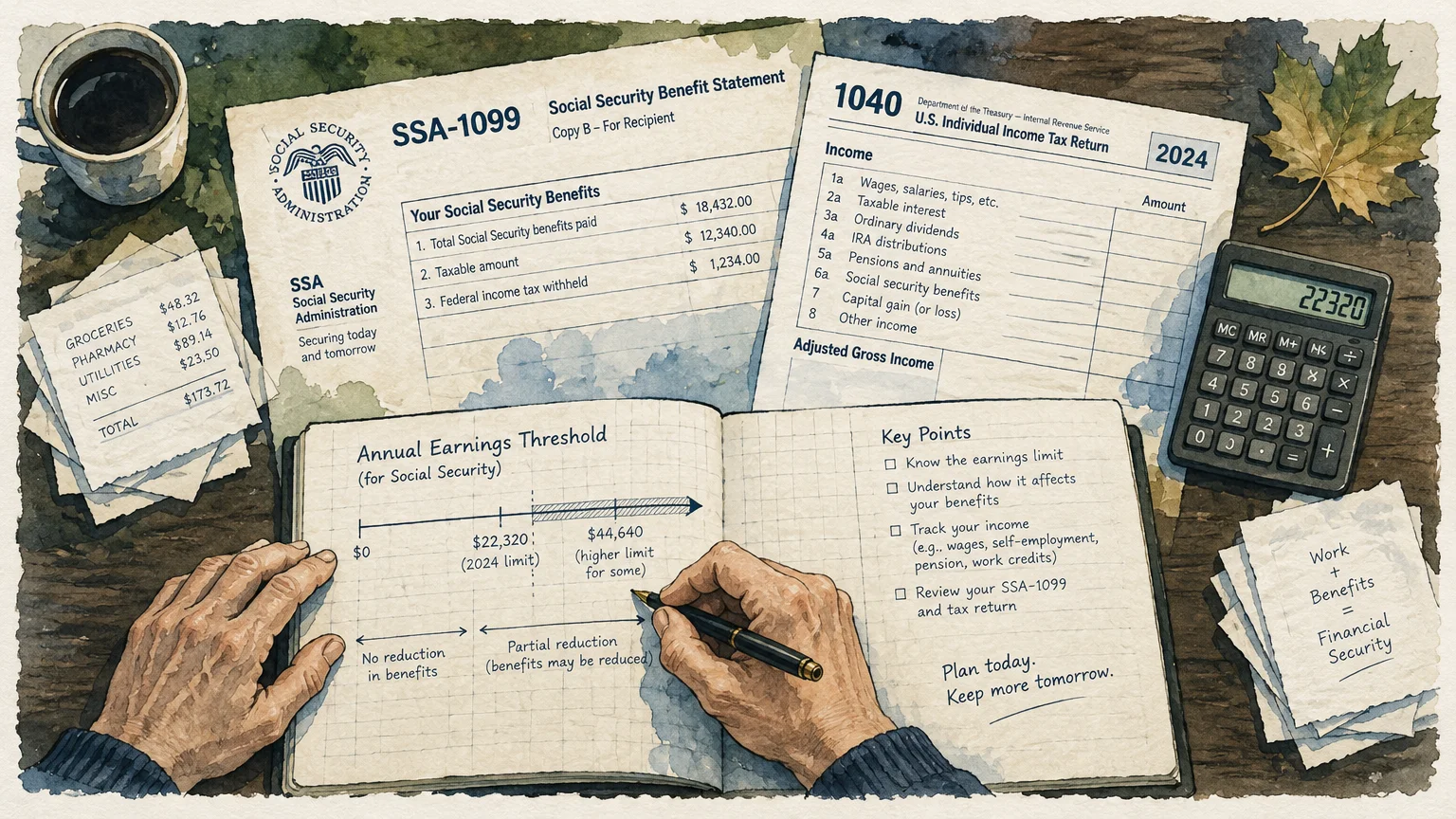
If you collect Social Security and remain under Full Retirement Age all year, the annual earnings test applies. The earnings test limit is $24,480 in 2026 ($2,040 monthly) and rises to $25,560 in 2027 ($2,130 monthly).
The Social Security Administration withholds $1 in benefits for every $2 you earn above these baseline limits. You can monitor your earnings records directly through the official Social Security Administration website.
A higher limit applies during the specific calendar year you reach your Full Retirement Age. In 2026, the SSA withholds $1 for every $3 earned above $65,160 ($5,430 monthly) before your birth month.
That threshold increases to $67,920 in 2027 ($5,660 monthly). Only earnings accumulated prior to the month you reach full retirement age count toward this calculation.
Any benefits withheld under the retirement earnings test are not permanently lost. The SSA automatically recalculates your monthly benefit upward once you achieve Full Retirement Age to credit withheld sums.
The 2027 Social Security Cost-of-Living Adjustment (COLA) provides a 3.6% increase. This adds roughly $75 per month to the average retired worker benefit, bringing it to approximately $2,170 starting in January 2027.
Winter earnings can also help older adults who still need work credits to qualify for Social Security. In 2026, you earn one credit for each $1,890 of covered earnings, rising to $1,970 in 2027.
Pay close attention to updated independent contractor reporting thresholds established under the One Big Beautiful Bill Act. For the 2026 tax year, businesses only issue a Form 1099-NEC or 1099-MISC if they pay you $2,000 or more.
All side gig income remains legally taxable even if a business does not issue you a formal 1099 form. Certain states, such as California, continue enforcing an independent $600 reporting threshold on state tax returns.

Common Retirement Traps to Avoid
Earning extra money during the winter months should enhance your financial security, not complicate it. Be alert to several common financial traps that trap unwary seasonal workers.
Watch out for the Medicare Income-Related Monthly Adjustment Amount, commonly known as IRMAA. Earning significant income can inadvertently push your modified adjusted gross income over statutory brackets, triggering higher Medicare Part B and D premiums.
Remember that independent contractor work does not have income taxes or payroll taxes withheld automatically. You must account for the 15.3% self-employment tax covering Medicare and Social Security contributions.
Failing to make quarterly estimated tax payments on substantial side business profits can result in IRS penalties. Set aside 25% to 30% of your net contractor earnings into a dedicated savings account for taxes.
Another common mistake involves neglecting winter personal safety. Shoveling heavy snow or driving on black ice for gig apps exposes you to serious slip, fall, and vehicular risks.
Always weigh the net compensation of any winter side gig against the physical strain it demands. Protect your physical well-being by choosing climate-controlled assignments that fit your personal health profile.

When to Consult a Professional
Navigating supplemental earnings alongside pensions, annuities, and retirement benefits can require professional input. Knowing when to engage an expert ensures you protect your overall financial picture.
Consult a certified public accountant or enrolled agent if your freelance earnings exceed several thousand dollars. A tax professional helps you track allowable write-offs, including home office deductions and vehicle mileage expenses.
Reach out to a State Health Insurance Assistance Program counselor if you worry about crossing Medicare premium brackets. These trained counselors provide free, unbiased guidance on healthcare costs and income thresholds.
If you receive means-tested government benefits, check eligibility rules before accepting seasonal work. The online screening tool at BenefitsCheckUp helps identify how earned income impacts your support programs.
A fee-only financial planner can help model how seasonal income affects your long-term retirement distribution plan. Professional advice provides peace of mind while you enjoy your newfound cash flow.
Frequently Asked Questions
Will part-time winter earnings reduce my Social Security benefits?
Your benefits will not be reduced if you have reached Full Retirement Age, which is 67 for those born in 1960 or later. If you are younger, benefits are withheld only if your earnings exceed annual statutory limits.
Do I have to pay taxes on winter side hustles under $2,000?
Yes, all earned income is subject to federal and state income tax, regardless of whether you receive a 1099. The $2,000 threshold only dictates when a business must file paperwork with the IRS.
Can seasonal income increase my Medicare premiums?
Yes, if your additional earnings push your modified adjusted gross income over the initial IRMAA income threshold. However, Medicare uses a two-year lookback period, meaning 2026 earnings affect your 2028 premium rates.
What is the easiest winter side gig for retirees with mobility limits?
Remote customer support, online tutoring, and proofreading require zero winter travel and minimal physical exertion. These roles allow you to work from home on your own schedule using a personal computer.
Moving Forward With Your Winter Earnings
Adding a flexible winter side income provides extra security, social connection, and pocket money for the holidays. Choose an opportunity that aligns with your lifestyle, keeps you warm, and respects your daily physical comfort.
Start by testing one gig for a few hours each week before taking on larger seasonal commitments. Taking small, deliberate steps allows you to enjoy the financial rewards of work without sacrificing your retirement freedom.
This article is for informational purposes only and does not constitute financial, legal, or medical advice. Medicare rules, Social Security benefits, and tax laws change regularly—verify current details at Medicare.gov, SSA.gov, or with a licensed professional.
Last updated: November 2026. Medicare and Social Security rules change annually—always verify current details at official government sources.