In 2026, the average Social Security benefit pays roughly $2,074 per month. Relocating to a carefully chosen community allows your monthly check to cover rent, groceries, and utilities with money left over.
After deducting the standard $185 Medicare Part B premium, your net monthly take-home hovers around $1,889. Living comfortably on that fixed income requires low property taxes, affordable rentals, and reasonable medical care.
These twenty standout small towns prove that a peaceful, secure retirement remains entirely within your reach today. Each location provides affordable housing and everyday savings without sacrificing essential community amenities.
Understanding the 2026 Social Security Landscape
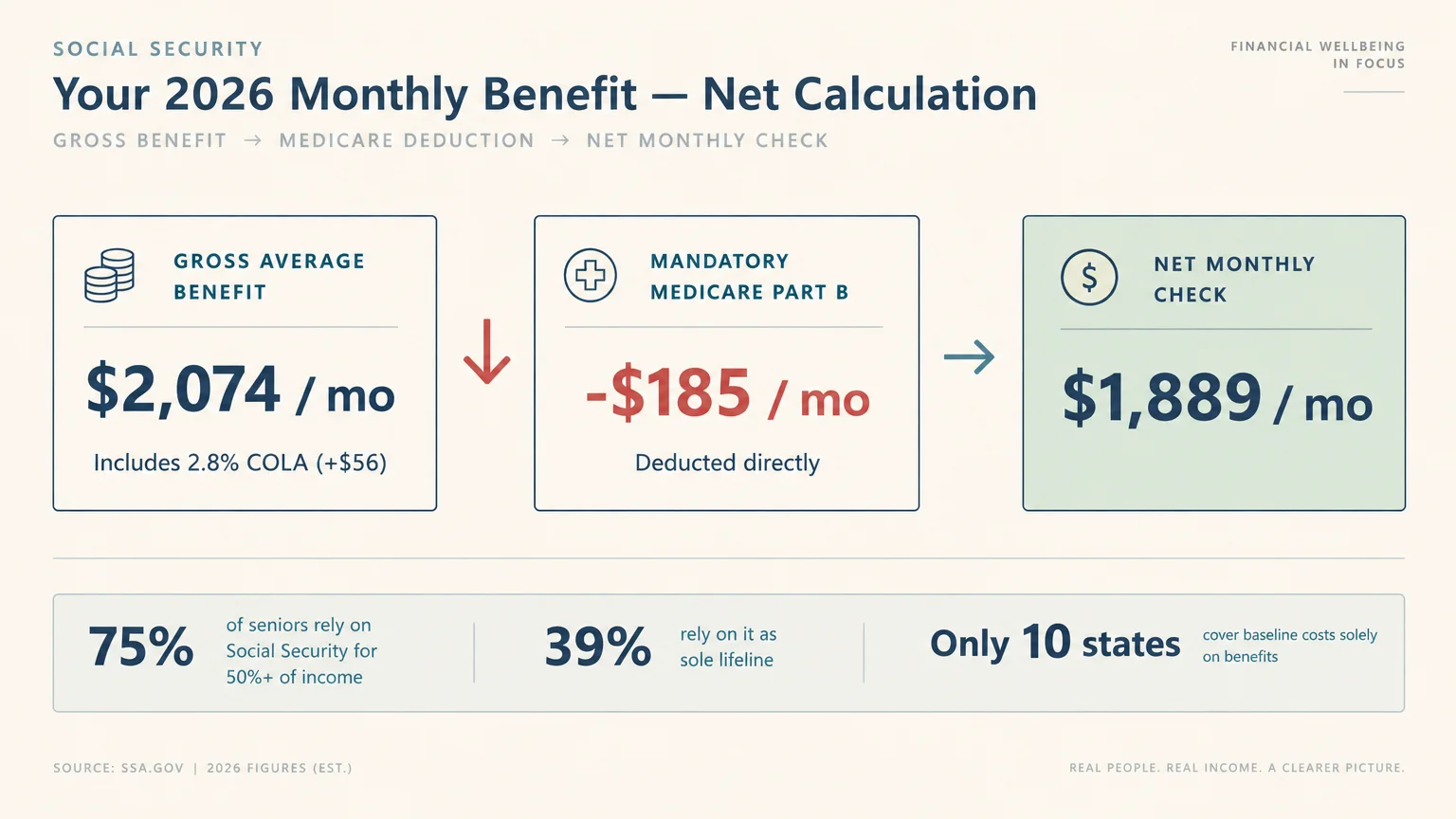
In 2026, the estimated average Social Security retirement benefit reached approximately $2,074 per month following a 2.8 percent cost-of-living adjustment. That extra $56 per month offers modest breathing room against everyday price increases.
However, you must account for mandatory baseline healthcare deductions before budgeting your monthly living expenses. The standard Medicare Part B monthly premium is $185, which the government deducts directly from your benefit check.
That leaves an average net check of approximately $1,889 each month for shelter, food, utilities, and prescriptions. Learn more about benefit estimates at the Social Security Administration website.
According to The Senior Citizens League, roughly 75 percent of older Americans depend on Social Security for over half their income. Even more startling, about 39 percent rely on it as their sole financial lifeline.
Financial analysts at Realtor.com found that Social Security alone covers baseline living costs in only ten states. Finding towns where Social Security covers living costs requires looking beyond expensive metropolitan markets.
Key Criteria for Social Security Affordable Towns 2026
Affordability involves far more than merely finding cheap houses or low apartment rents. To protect your nest egg, you must evaluate complete operational expenses across all essential daily living categories.
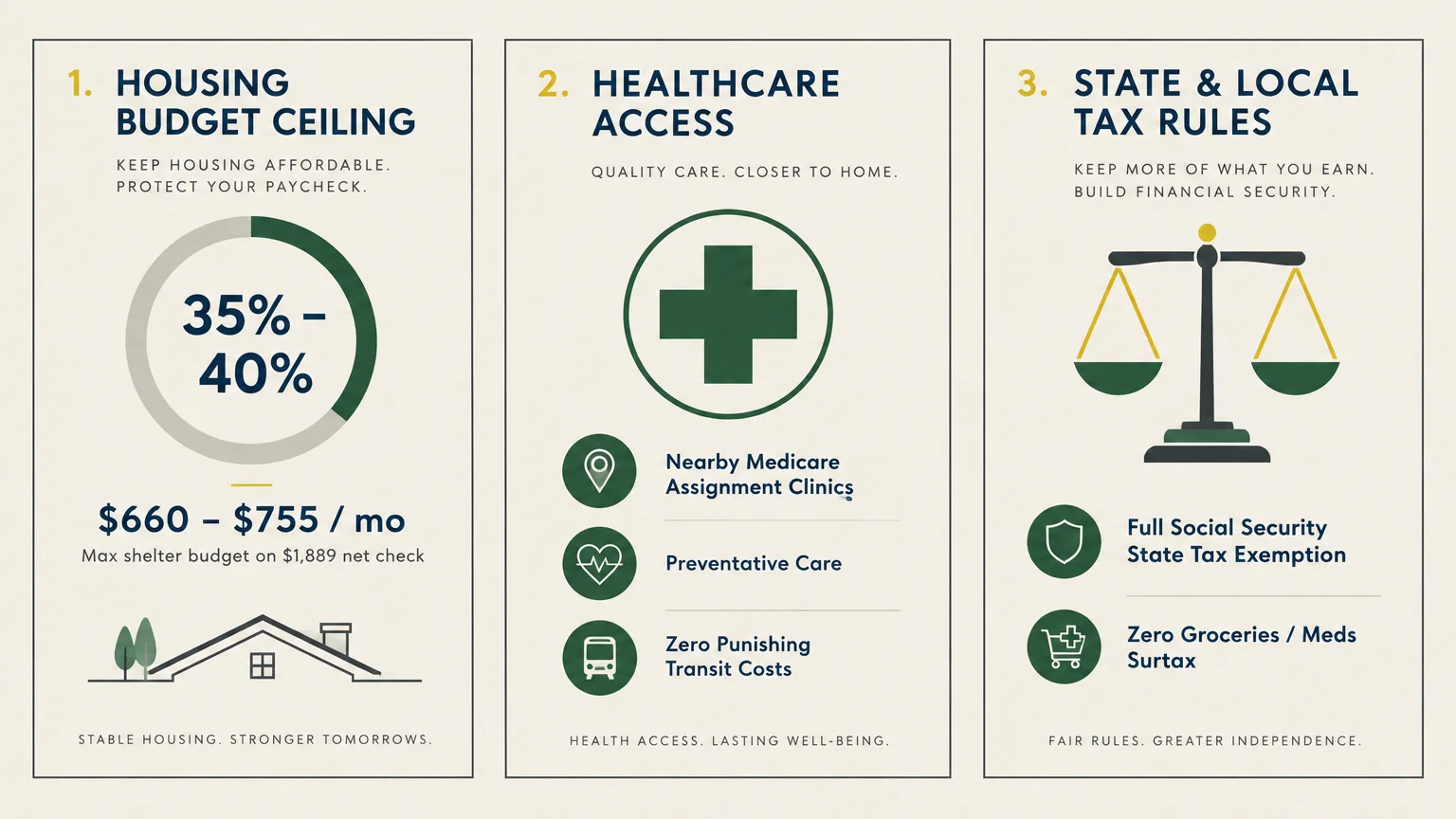
Housing should consume no more than 35 to 40 percent of your monthly net income. On an $1,889 take-home check, your maximum shelter budget sits between $660 and $755 per month.
Healthcare accessibility is equally vital for fixed-income retirees. You need quality clinics nearby that accept Medicare assignments to avoid punishing out-of-pocket transportation and medical bills.
You should also evaluate local tax laws carefully. Several states exempt Social Security benefits entirely from state taxation, while others impose burdensome sales taxes on groceries or medicine.
20 Small Towns Where Social Security Covers the Bills
1. Bluefield, West Virginia
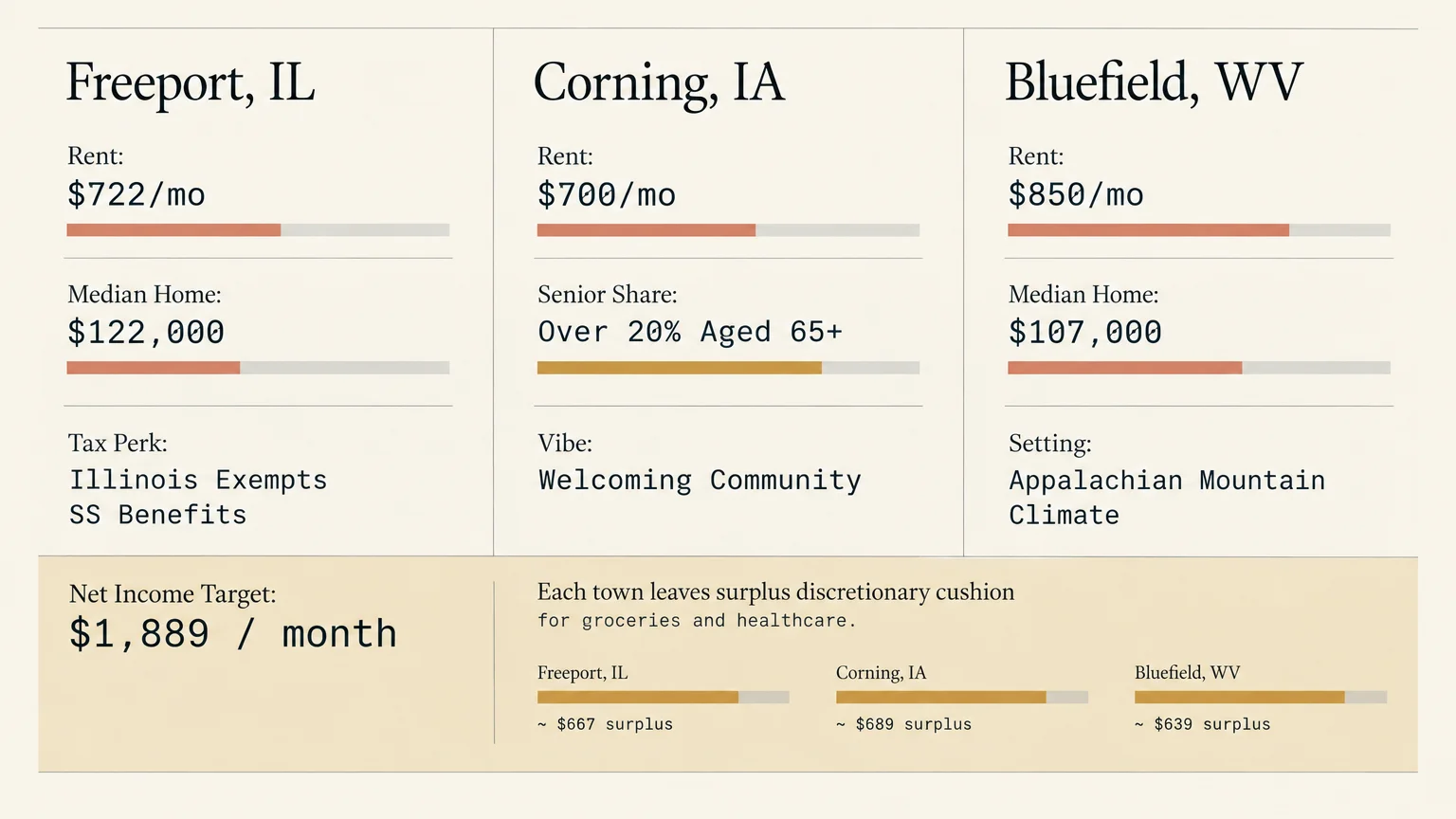
Nestled in the Appalachian Mountains, Bluefield provides incredible mountain scenery alongside exceptional affordability. The town features an average monthly rent of roughly $850, and median home values stay near $107,000.
Your monthly utility bills remain moderate thanks to cool summer breezes at higher elevations. Local healthcare centers offer convenient access to routine treatments without long commutes.
2. Freeport, Illinois
Freeport delivers classic Midwestern charm just two hours west of Chicago. Average apartment rents hover around $722 per month, while median home purchase prices sit near $122,000.
You can enjoy manicured neighborhood parks, a vibrant senior activity center, and comprehensive local clinical care. Illinois also exempts Social Security benefits from state income tax, saving you critical dollars.
3. Corning, Iowa
With adults aged 65 and older making up over 20 percent of its population, Corning welcomes retirees with open arms. Monthly rent averages roughly $700, and tidy single-family houses frequently sell around $140,000.
The town boasts an active community foundation, a restored historic opera house, and quiet residential streets. Iowa completely exempts retirement pension income and Social Security from state taxation.
4. Mountain Home, Arkansas
Surrounded by Norfork Lake and Bull Shoals Lake, Mountain Home ranks among the best towns for fixed income retirees who cherish outdoor recreation. You will encounter low property taxes and typical monthly living expenses between $1,650 and $1,800.
Baxter Health provides award-winning regional medical care right inside city limits. That means you never have to travel far for routine screenings or specialized specialist consultations.
5. Hot Springs Village, Arkansas
Hot Springs Village is a master-planned community offering private recreational amenities at a fraction of standard resort prices. Low Arkansas property tax rates help you keep total monthly housing and utility obligations below $1,850.
Retirees enjoy access to nine private golf courses, eleven pristine lakes, and dozens of walking trails. Abundant fitness clubs make it easy to stay active while managing a tight budget.
6. Foley, Alabama
Located just minutes from Alabama’s Gulf Coast beaches, Foley offers coastal living without exorbitant oceanfront costs. Modest property tax rates and reasonable service costs keep your overall monthly budget well under average retirement checks.
You can explore pleasant downtown walking districts, Tanger Outlets, and South Baldwin Regional Medical Center. Mild winters also eliminate the high seasonal heating bills common to northern states.
7. Johnstown, Pennsylvania
Johnstown provides remarkable value for retirees who appreciate historic architecture and scenic river valleys. Median monthly rental rates sit near $725, keeping housing overhead far below national averages.
Conemaugh Memorial Medical Center serves as a major regional teaching hospital, delivering advanced healthcare within minutes of your home. Pennsylvania also exempts retirement income and Social Security from state income taxes.
8. Danville, Illinois
Situated near the Indiana border, Danville stands out as one of the cheapest towns for Social Security income. Median monthly rents linger near $740, allowing you to cap your shelter expenses easily.
The community features Lake Vermilion, Kickapoo State Recreation Area, and the VA Illiana Health Care System. This regional medical center offers exceptional value if you qualify for veteran benefits.
9. Bay City, Michigan
Positioned along Lake Huron’s Saginaw Bay, Bay City blends maritime history with affordable waterfront living. Average rents run around $780 per month, leaving substantial room for utilities and grocery needs.
You can stroll along the Riverwalk, visit local farmers markets, and access McLaren Bay Region hospital. Michigan eliminates state income tax on Social Security benefits, protecting your take-home check.
10. Cumberland, Maryland
Tucked into the Allegheny Mountains, Cumberland offers breathtaking historic districts and tranquil small-town living. Typical monthly rental costs hover near $790, and median home purchase prices stay around $135,000.
The city anchors the scenic Western Maryland Scenic Railroad and the C&O Canal Towpath. UPMC Western Maryland provides a modern, comprehensive hospital facility right in town.
11. Terre Haute, Indiana
Terre Haute delivers rich cultural amenities without metropolitan price tags. Typical monthly apartment rents run close to $760, which fits comfortably within an average Social Security check.
The community houses Indiana State University, offering local art exhibits, lifelong learning classes, and campus theater productions. Union Hospital provides extensive cardiovascular and senior care programs.
12. Minden, Louisiana
Known for its historic brick streets and flowering dogwoods, Minden presents classic southern charm at bargain rates. Average rental costs hover around $710 per month, keeping fixed-income expenses manageable.
Minden Medical Center delivers reliable local emergency and primary healthcare services. Mild winter temperatures keep heating bills minimal, although you should budget slightly more for summer air conditioning.
13. Coffeyville, Kansas
Coffeyville offers some of the lowest property acquisition costs in the central United States. Rents frequently fall below $680 per month, and median home prices linger near $85,000.
Coffeyville Regional Medical Center provides accessible emergency care, surgical suites, and specialized geriatric care. Kansas recently enacted tax reforms that reduce or eliminate state taxes on retirement benefits.
14. Clovis, New Mexico
Clovis sits in eastern New Mexico, offering high-plains sunshine, low humidity, and very reasonable living costs. Median rents average around $795 per month, allowing your monthly check to stretch further.
Plains Regional Medical Center provides primary health support and diagnostic testing. The dry, sunny climate provides year-round relief if you struggle with joint aches or arthritis.
15. Piqua, Ohio
Located along the Great Miami River, Piqua offers charming Midwestern neighborhoods and steady economic stability. Typical rental costs range between $750 and $810 per month for clean one-bedroom apartments.
The city maintains nine public parks, the historic Johnston Farm, and miles of river trails. Upper Valley Medical Center sits nearby, ensuring dependable emergency and specialized health treatment.
16. Carbondale, Illinois
Carbondale blends youthful energy with peaceful retirement living on the edge of the Shawnee National Forest. Average rents sit around $785 per month, making it a reliable budget option.
Southern Illinois Healthcare operates Memorial Hospital of Carbondale, delivering advanced medical services. Retirees can audit university classes or enjoy outdoor excursions at Giant City State Park.
17. Ogdensburg, New York
Ogdensburg sits on the picturesque St. Lawrence River, offering waterfront living far below New York City costs. Average rents remain near $740 per month, and modest homes often sell below $110,000.
Claxton-Hepburn Medical Center provides essential hospital care, outpatient treatment, and dialysis services. New York State completely exempts Social Security benefits from state income taxation.
18. Shawnee, Oklahoma
Shawnee gives retirees quick access to Oklahoma City while retaining small-town friendliness and rock-bottom prices. Monthly rental costs average roughly $775, keeping your overall housing overhead near 37 percent of benefits.
SSM Health St. Anthony Hospital provides trusted inpatient and outpatient medical services. Oklahoma offers generous retirement income exclusions and boasts some of the lowest property tax rates nationwide.
19. Iron Mountain, Michigan
If you cherish crisp northern air and evergreen forests, Iron Mountain provides an idyllic Upper Peninsula sanctuary. Average rents hover around $730 per month, keeping basic monthly living costs under control.
The Oscar G. Johnson VA Medical Center and Marshfield Medical Center-Dickinson deliver superior healthcare. Outstanding fishing, hiking, and snowshoeing opportunities await right outside your front door.
20. Aberdeen, South Dakota
Aberdeen combines northern plains hospitality with an exceptionally friendly tax climate. Rent averages around $760 per month, and South Dakota imposes zero state personal income tax on any income.
Avera St. Luke’s Hospital delivers comprehensive healthcare services, cancer care, and rehabilitation. The city also features thriving community arts, recreation centers, and clean, safe neighborhoods.
Living Cost Breakdown Across Representative Towns
Examining local monthly estimates highlights how small towns affordable on Social Security help your check stretch further. The table below illustrates sample monthly budgets for a single retiree renting a one-bedroom apartment.
| Town & State | Est. Monthly Rent | Utilities & Food | Total Est. Monthly Cost | Key Retiree Advantage |
|---|---|---|---|---|
| Bluefield, WV | $850 | $520 | $1,620 | Mild mountain summers, low home costs |
| Freeport, IL | $722 | $540 | $1,512 | No state tax on Social Security checks |
| Corning, IA | $700 | $510 | $1,460 | High senior population, peaceful setting |
| Mountain Home, AR | $750 | $530 | $1,530 | Lakeside recreation, regional hospital |
| Foley, AL | $880 | $510 | $1,640 | Near Gulf beaches, low property taxes |
| Johnstown, PA | $725 | $560 | $1,535 | Zero state tax on retirement income |
| Danville, IL | $740 | $530 | $1,520 | Dedicated VA medical center in town |
| Coffeyville, KS | $680 | $490 | $1,420 | Extremely low cost of entry for housing |
| Iron Mountain, MI | $730 | $570 | $1,550 | VA medical center, abundant nature |
| Aberdeen, SD | $760 | $520 | $1,530 | Zero state personal income tax |
These budget estimates include baseline rent, essential utilities, and basic grocery allowances. Every location leaves several hundred dollars from your average Social Security check for discretionary spending or personal savings.
Costly Mistakes to Avoid When Relocating on Social Security
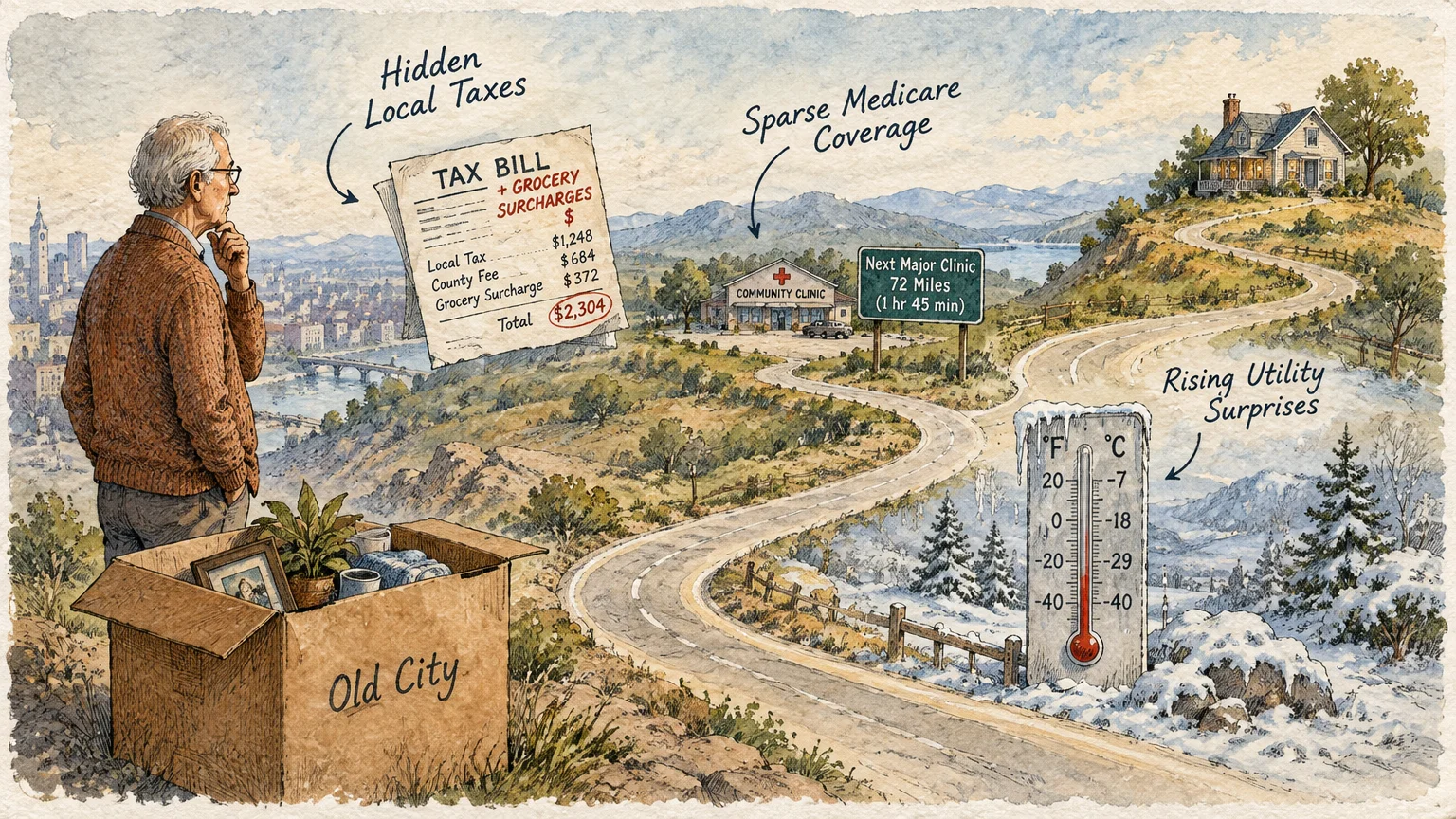
Relocating during retirement involves more than just picking a low-cost house from an online real estate listing. Avoid these common financial traps when searching for the cheapest towns for Social Security income.
- Underestimating Property Tax Adjustments: Homes that look inexpensive can see sudden tax reassessments after purchase. Verify historical millage rates with local county assessors before submitting an offer.
- Ignoring Healthcare Provider Networks: Moving outside your current coverage network can trigger heavy out-of-pocket medical bills. Review doctor availability and plan options on Medicare.gov prior to relocating.
- Overlooking Local Sales Taxes: Some states offset low income taxes with high local sales taxes on food and essentials. Review overall local tax burdens, not just individual state income brackets.
- Neglecting Transportation Realities: Rural small towns rarely feature extensive public transit networks. If you cannot drive, you must budget for taxi services or local volunteer driver programs.
Taking time to calculate these secondary expenses ensures your new town remains genuinely affordable for years to come. You can check eligible assistance programs through BenefitsCheckUp.

Guiding Principles for a Secure Retirement
“The goal of retirement is to live off your assets—not live off your regrets.”
Living comfortably on a fixed income is not about deprivation or sacrifice. It is about intentionally choosing an environment where your financial resources match your lifestyle ambitions.

Don’t DIY These Decisions
Navigating benefit rules, healthcare enrollments, and interstate moves can overwhelm even experienced retirees. Consulting credentialed professionals prevents expensive oversights that permanently impact your financial security.
Connect with a State Health Insurance Assistance Program (SHIP) counselor before finalizing any move. These trained volunteers provide unbiased, free guidance on how relocation alters your Medicare Advantage or Part D drug plans.
Consult an elder law attorney to update wills, healthcare proxies, and powers of attorney for your new state. Legal statutes vary across state lines, making professional legal review essential.
You can locate vetted local support services through the federal Eldercare Locator network. These community specialists help you discover local meal support, transport services, and utility subsidies.
Frequently Asked Questions About Retiring on Social Security
How much is the average Social Security check in 2026?
In 2026, the average monthly Social Security benefit for retired workers is approximately $2,074. After the standard $185 Medicare Part B premium deduction, typical net monthly take-home pay is roughly $1,889.
Which states do not tax Social Security benefits?
Most states do not tax Social Security retirement checks. Over forty states either provide full exemptions or never enacted a personal income tax, allowing you to keep your full monthly distribution.
How do I know if Social Security will cover all my living costs?
Compare your net monthly benefit against the total living costs in your target town. Your housing costs should remain below 40 percent of your monthly check, leaving adequate funds for healthcare, utilities, and groceries.
Can I receive housing assistance on Social Security?
Yes, fixed-income seniors often qualify for federal housing assistance through local public housing authorities. Section 202 Supportive Housing for the Elderly also subsidizes independent apartment living based on your total income.
Start by auditing your latest monthly Social Security statement and listing your indispensable living costs. Once you establish your personal baseline, visit two or three of these communities to experience their neighborhoods firsthand.
Information in this article reflects current rules as of the publication date and may change. Always confirm benefit details directly with Social Security Administration, Medicare.gov, or relevant government agencies before making decisions.
Last updated: February 2026. Medicare and Social Security rules change annually—always verify current details at official government sources.