If rising property taxes and grocery bills threaten your retirement peace of mind, moving overseas can transform your financial future. The average monthly Social Security benefit of approximately $2,000 barely covers rent in most American cities, but it unlocks a luxurious lifestyle in compact nations abroad.
Choosing smaller countries allows you to bypass overcrowded tourist corridors and find hidden value where American pensions stretch the furthest. These eleven compact destinations combine accessible residency permits, excellent healthcare, and remarkably low expenses.
You can trade financial anxiety for coastal strolls and vibrant cultural experiences without draining your nest egg. Discover how your fixed income can secure an abundant, worry-free retirement overseas.
Key Takeaways for Retiring Abroad
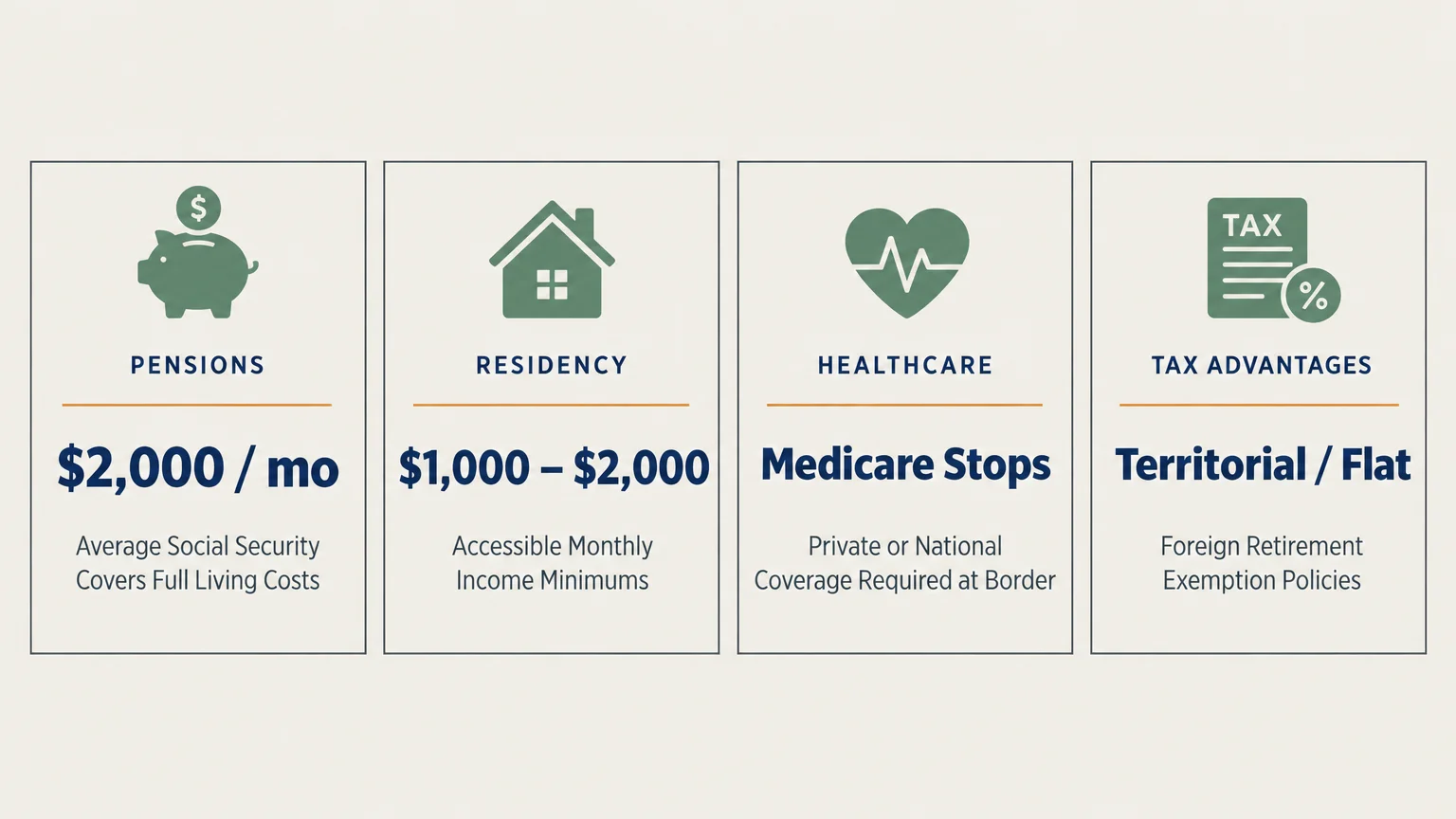
Moving overseas allows you to stretch fixed retirement income significantly further than in the United States. Many nations welcome retirees with low income requirements and generous residency perks.
- Pensions go further: The average monthly Social Security benefit of roughly $2,000 covers total living costs in several scenic nations.
- Residency is accessible: Many small countries set income minimums between $1,000 and $2,000 per month.
- Healthcare changes: Domestic Medicare does not cover routine care outside America, requiring private or local coverage.
- Tax advantages exist: Territorial tax systems and flat rates protect foreign retirement accounts from heavy local taxation.
How Social Security and Healthcare Work Overseas
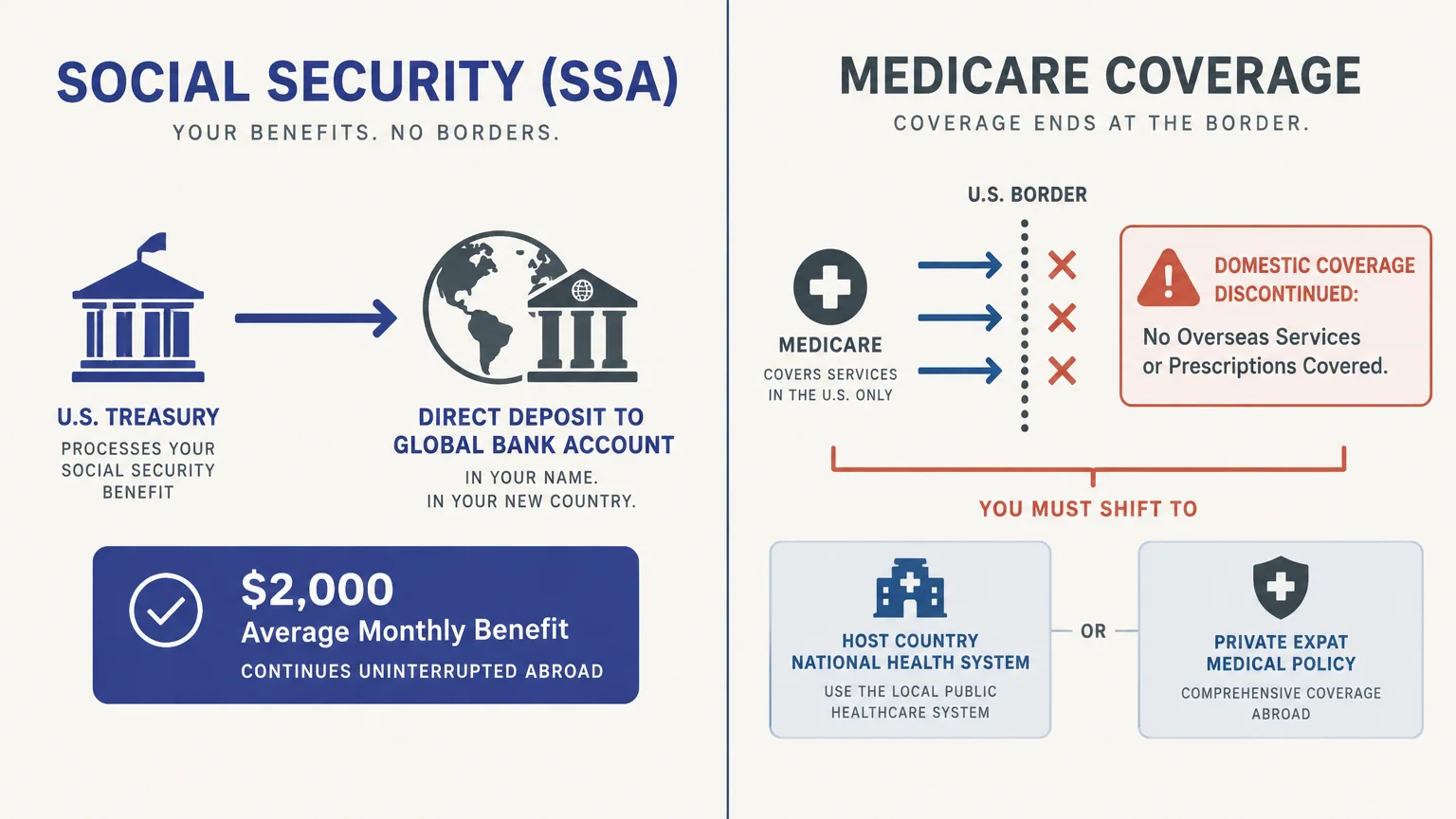
You can legally retire abroad on Social Security without forfeiting your earned monthly benefits. The Social Security Administration (SSA) routinely deposits monthly payments directly into foreign bank accounts across the globe.
The average retired worker benefit reached roughly $2,000 per month in 2025 following recent cost-of-living adjustments. That modest sum often creates substantial purchasing power when you relocate to low cost of living countries for Americans.
Healthcare planning requires extra diligence before you pack your bags. Official rules at Medicare.gov clearly state that domestic Medicare coverage stops at the United States border.
Medicare does not pay for healthcare services or prescription medications obtained overseas. You must budget for private global medical insurance or enroll in your host country’s national health system.

1. Panama: World-Class Pensioner Discounts
Panama remains one of the cheapest countries to retire abroad while offering top-tier amenities. Its famous Visa de Pensionado welcomes anyone with a guaranteed lifetime pension of at least $1,000 per month.
You can even lower that threshold to $750 monthly if you purchase Panamanian real estate valued at $100,000 or more. The application process is straightforward, and the country uses the U.S. dollar as its legal currency.
Panama’s Law No. 6 provides statutory discounts that drastically slash daily expenses for legal retirees. You receive 50 percent off movie tickets and hotel stays, alongside 25 percent off utility bills.
The law also grants 15 to 20 percent discounts on medical consultations and hospital charges. Mountain towns like Boquete and beach enclaves like Coronado offer thriving communities of English-speaking retirees.

2. Costa Rica: Universal Healthcare and Pura Vida
Costa Rica consistently ranks among the best small countries for retirees who crave biodiversity and peaceful living. Its popular Pensionado permit requires a verifiable lifetime pension or Social Security payout of just $1,000 per month.
A population of roughly 5.2 million enjoys political stability and a refreshing lack of a standing military. Expats thrive in the Central Valley, where year-round spring temperatures eliminate high cooling bills.
Approved residents must join the Caja Costarricense de Seguro Social (CAJA) public healthcare system. Your monthly CAJA premium runs between 9 and 11 percent of your declared qualifying income.
This mandatory contribution grants you comprehensive medical care and prescription coverage with no deductibles. Private clinics also provide world-class specialty treatments at a fraction of American prices.

3. Belize: English-Speaking Caribbean Living
Belize provides an effortless cultural transition for North Americans seeking warm Caribbean waters. English serves as the nation’s official language, simplifying real estate contracts, medical visits, and everyday grocery runs.
The Qualified Retirement Program (QRP) welcomes applicants who are at least 40 years of age. You must prove an incoming foreign pension or annuity income of at least $2,000 per month.
The QRP grants extensive tax benefits to accepted retirees. You can import all your personal household effects, a car, and even a boat completely duty-free during your first year.
Living in laid-back coastal hubs like Ambergris Caye or Placencia keeps life simple and unhurried. Your dollars stretch far when you buy fresh tropical produce and locally caught seafood.

4. Albania: Year-Long Stays on the Mediterranean
Albania represents Europe’s ultimate hidden bargain along the sun-drenched Adriatic and Ionian coastlines. Americans can enter visa-free and stay for up to 365 consecutive days without filing advance paperwork.
This generous one-year visitor policy lets you test seaside living before making a permanent legal commitment. Coastal towns like Saranda offer beachfront rentals for less than $450 per month.
To settle long-term, you apply for the Type D Pensioner Permit (Leje Qëndrimi për Pensionistë). You only need to demonstrate stable pension income and an active local residential lease.
Modern supermarkets, friendly locals, and affordable private medical care make daily life comfortable. A retired couple can easily maintain a high standard of living on $1,400 to $1,800 monthly.

5. Georgia: Unmatched Tax Benefits at Europe’s Crossroads
Nestled between the Caucasus Mountains and the Black Sea, Georgia offers an astonishingly low cost of living. U.S. citizens can live and travel visa-free in Georgia for 365 days upon initial arrival.
This welcoming policy makes Georgia one of the easiest destinations on earth for exploring extended retirement. Historic cities like Tbilisi and seaside retreats like Batumi feature vibrant culinary traditions and modern infrastructure.
Georgia operates a territorial personal income tax structure that treats foreign pensions with exceptional generosity. The government generally exempts foreign-source pensions and personal investment income from domestic taxation.
You can rent a renovated apartment in central Tbilisi for roughly $500 per month. Fresh local produce, public transportation, and dining out cost a fraction of American metropolitan equivalents.
6. Dominican Republic: Island Living on a Fixed Budget
The Dominican Republic offers quintessential Caribbean sandy beaches without astronomical island price tags. Under Law 171-07, the government actively courts retirees through an efficient Pensionado residency visa.
You must demonstrate a certified government or corporate pension of at least $1,500 per month. If you bring a legal spouse or dependent, you simply add $250 monthly for each person.
The law exempts qualifying retirees from paying Dominican income taxes on their foreign-sourced retirement funds. You also bypass costly property transfer taxes on your first real estate purchase.
Beach towns like Las Terrenas and Sosúa boast established expat communities and private medical facilities. Many American retirees live comfortably here on less than $2,000 per month.

7. Portugal: European Charm with Manageable Income Thresholds
Portugal delivers Old World European charm, mild winters, and exceptional safety across its varied regions. Its D7 passive income visa remains a favorite for retirees wanting easy access to Europe’s Schengen Area.
The D7 visa ties its baseline financial requirement to the Portuguese national minimum wage. Applicants must demonstrate roughly €870 to €920 per month in passive pension income, plus 50 percent for a spouse.
You must prepare for standard Portuguese progressive tax rates on your foreign income. Portugal closed its flat-rate Non-Habitual Resident (NHR) tax program to new applicants at the end of 2023.
Even with standard taxes, Portugal remains remarkably affordable compared to western European peers. Coastal regions like the Silver Coast offer historic stone cottages and fresh Mediterranean dining on a modest budget.

8. Cyprus: Sunny Living with Favorable Pension Taxes
Cyprus boasts more than 300 days of sunshine annually alongside an English-friendly Mediterranean culture. The island’s Category F permanent residency permit offers an accessible path for self-funded retirees.
The permit requires an independent foreign passive income of roughly €9,568 to €10,000 annually. That equals approximately $850 to $900 per month, plus an additional allowance for your spouse.
Cyprus features one of the most attractive pension tax systems in the entire European Union. You can choose to tax your foreign pension at a flat rate of just 5 percent above basic deductions.
Its modern private healthcare network features British-trained doctors and affordable treatment costs. Coastal cities like Paphos deliver a relaxed seaside lifestyle paired with historic ruins and crystal-clear swimming bays.

9. Mauritius: Safe Tropical Luxury in the Indian Ocean
Mauritius combines pristine coral reefs, political stability, and an enviable standard of healthcare. The country issues a dedicated Retired Non-Citizen Residence Permit valid for ten full years.
Applicants must be at least 50 years of age to qualify for this long-term retirement visa. You must transfer at least $1,500 to $2,000 monthly into a personal Mauritian bank account.
Mauritius levies no estate or inheritance taxes, and foreign-sourced capital gains face zero local taxation. English is widely spoken in government offices, commerce, and advanced private hospitals.
The island nation consistently ranks as the safest country in Africa on global peace indexes. Your retirement income buys beachfront living, championship golf courses, and upscale international dining options.

10. Uruguay: High Living Standards and Direct Permanent Residency
Uruguay stands out in South America for its low corruption, dependable infrastructure, and strong rule of law. The country’s Rentista permit welcomes retirees who show roughly $1,500 monthly in guaranteed income.
Unlike nations requiring years of temporary status, Uruguay lets you apply directly for permanent residency. You receive a legal identity card (Cédula) that grants access to public services.
Uruguay’s private hospital mutual aid systems, known as mutualistas, offer comprehensive healthcare for around $100 monthly. These plans cover preventative visits, prescription drugs, and hospital care without lifetime caps.
Coastal towns like Piriápolis and Atlántida provide scenic tranquility just an hour from Montevideo. You can enjoy reliable drinking water, high-speed fiber internet, and European-style café society.

11. Montenegro: Dramatic Fjords and Low European Costs
Montenegro packs dramatic coastal mountains, Adriatic beaches, and medieval architecture into a tiny European nation. Retirees frequently obtain renewable temporary residency by purchasing residential property within the country.
Montenegro uses the Euro as its de facto currency, simplifying budget calculations and banking transactions. Real estate prices and monthly utility bills run 30 to 50 percent lower than neighboring Croatia.
You can purchase a sea-view apartment in the Bay of Kotor for less than half of what Italian villas cost. Dining out on grilled seafood and local wine remains surprisingly inexpensive.
The nation’s compact size allows you to drive from alpine ski slopes to Mediterranean beaches in three hours. A monthly budget of $1,600 to $2,100 supports a comfortable lifestyle here.
Comparing Monthly Pension Requirements and Costs
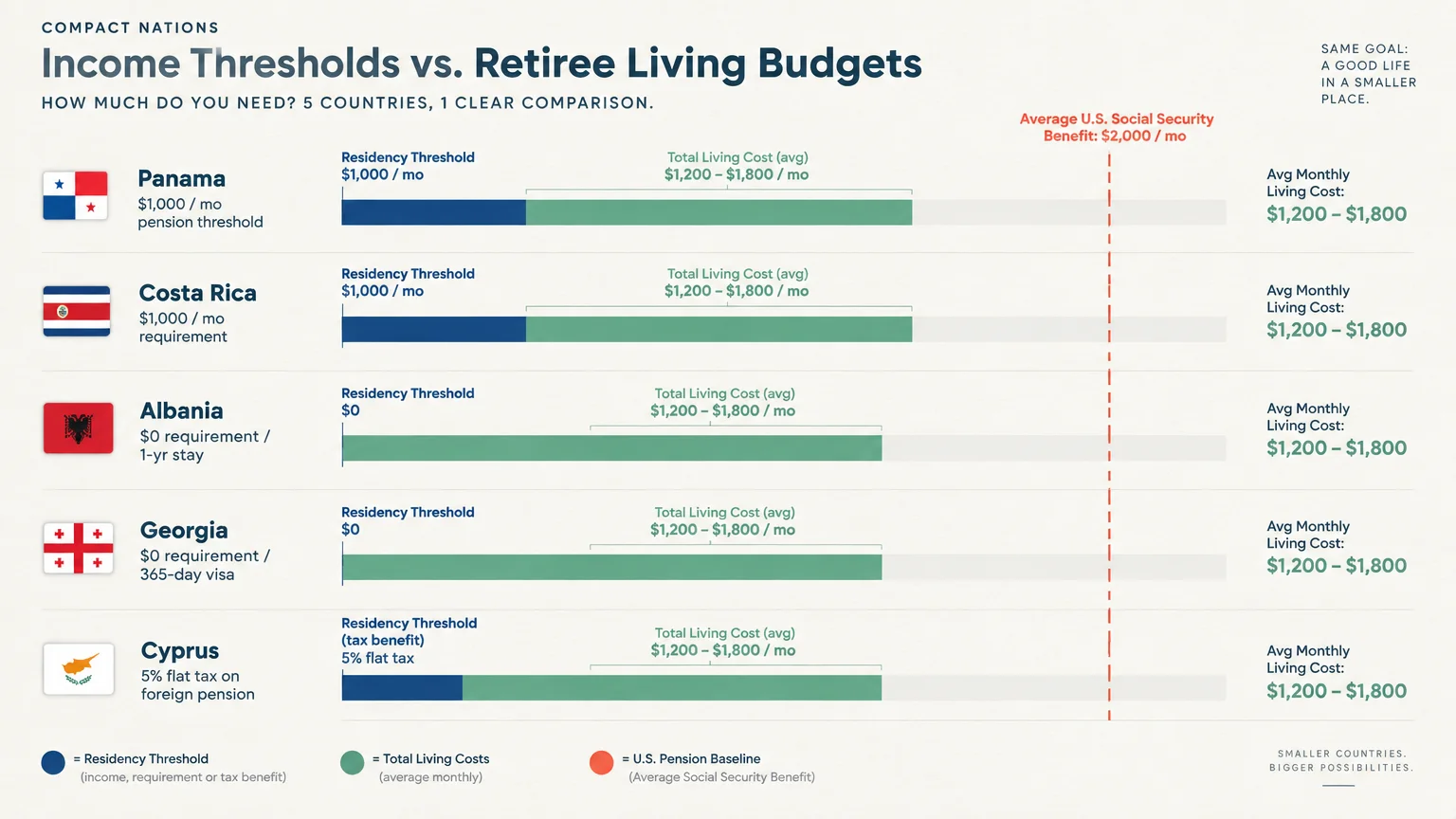
Planning where American pensions go furthest requires balancing visa minimums against actual day-to-day spending. Review the financial benchmarks below to match your budget with your preferred lifestyle.
| Country | Min. Monthly Income for Visa | Est. Monthly Cost (Single Expat) | Key Advantage |
|---|---|---|---|
| Panama | $1,000 USD | $1,600 – $2,200 | Law No. 6 statutory discounts |
| Costa Rica | $1,000 USD | $1,600 – $2,000 | Universal CAJA public healthcare |
| Belize | $2,000 USD | $1,800 – $2,400 | English-speaking Caribbean culture |
| Albania | Proof of stable pension | $1,200 – $1,600 | 365-day visa-free entry for Americans |
| Georgia | None (Visa-free 365 days) | $1,100 – $1,500 | Exemption on foreign pensions |
| Dominican Republic | $1,500 USD | $1,500 – $2,100 | Property tax exemptions |
| Portugal | ~€870 – €920 EUR | $1,900 – $2,600 | Full Schengen Area mobility |
| Cyprus | ~€800 – €850 EUR | $1,700 – $2,300 | 5% flat foreign pension tax option |
| Mauritius | $1,500 – $2,000 USD | $1,800 – $2,400 | 10-year residency permit |
| Uruguay | ~$1,500 USD | $1,800 – $2,500 | Direct pathway to permanent status |
| Montenegro | Property ownership | $1,400 – $1,900 | Euro currency and low property costs |
Living costs reflect comfortable living in safe residential neighborhoods outside central tourist zones. Your actual expenses will vary based on personal housing choices and dining habits.
“Don’t simply retire from something; have something to retire to.” — Harry Emerson Fosdick
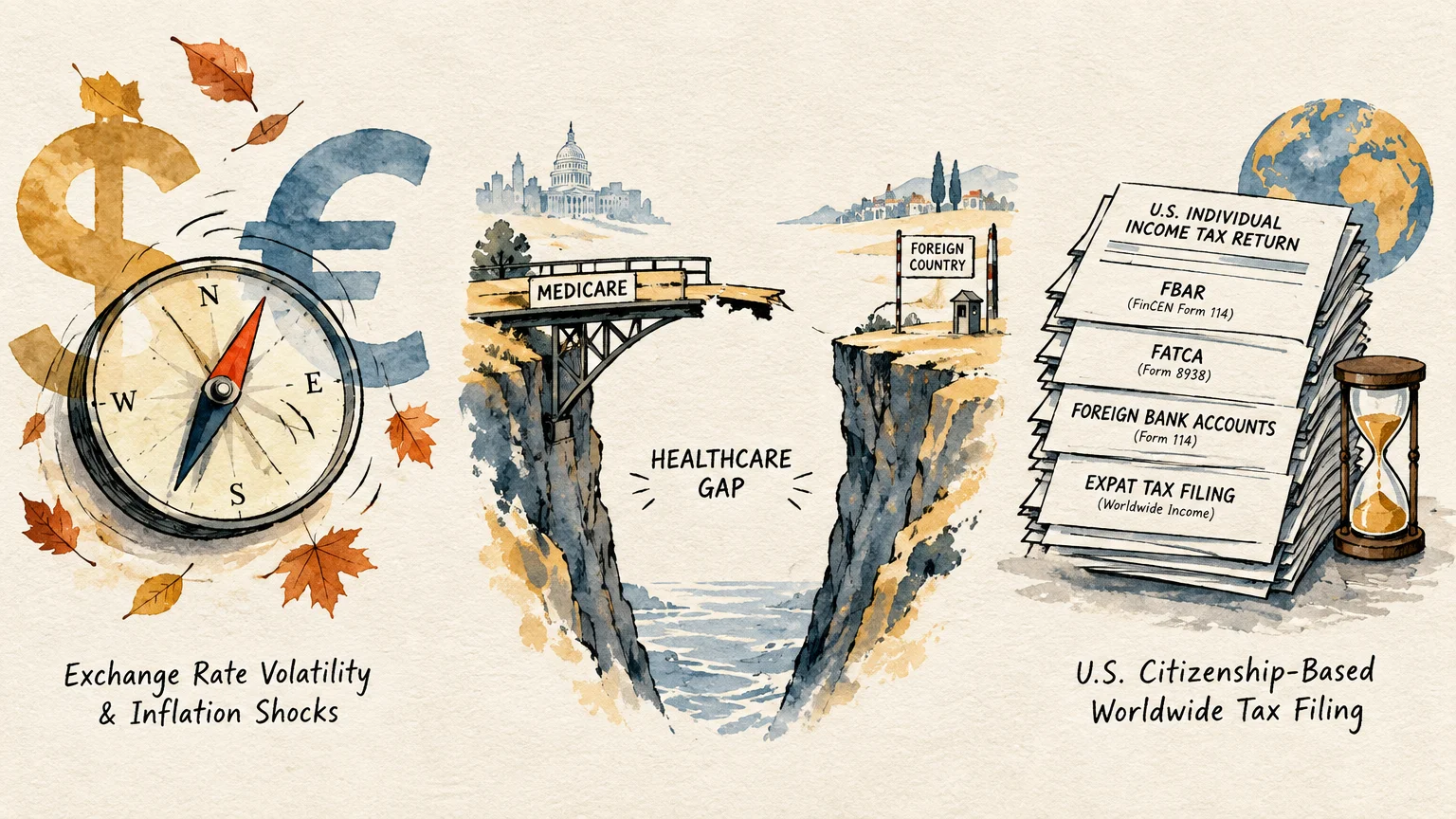
Common Retirement Traps When Moving Overseas
Uprooting your life requires careful coordination to avoid expensive legal and financial surprises. Many retirees rush into relocation without addressing critical administrative details.
One major error involves dropping Medicare Part B to save money while living abroad. If you move back to the United States later, you will face permanent late-enrollment penalties.
Another danger stems from neglecting American tax filing obligations. The United States taxes its citizens on worldwide income, regardless of where they establish residency.
You must file annual U.S. tax returns and report foreign bank balances on FinCEN Form 114 (FBAR). Explore official guidelines at IRS Retirement Plans to maintain full tax compliance.
Finally, avoid buying real estate immediately upon arrival in a new country. Renting for at least six to twelve months ensures that you genuinely enjoy the local climate and culture.

When to Consult a Professional
International retirement introduces complex cross-border considerations that generic travel guides overlook. Working with certified experts protects your hard-earned assets and prevents costly bureaucratic missteps.
You should consult an international tax CPA before moving your primary residency abroad. A knowledgeable accountant helps you optimize foreign tax treaties and avoid double taxation on distributions.
Seek guidance from a local immigration attorney in your destination country to prepare your residency paperwork. They ensure that your background checks, financial affidavits, and translations satisfy local statutes.
Review your overall withdrawal strategy with a fiduciary financial advisor before liquidating domestic assets. The Consumer Financial Protection Bureau (CFPB) offers reliable guidance on planning retirement income streams.
Frequently Asked Questions About Retiring Abroad
Can I receive my Social Security benefits if I move overseas?
Yes, the Social Security Administration sends direct deposits to bank accounts in most countries. Only a few restricted nations, such as Cuba and North Korea, cannot receive payments.
Does Medicare work outside the United States?
No, Medicare does not cover routine medical care, hospitalizations, or prescriptions outside America. You must buy expat health insurance or enroll in your destination’s local health program.
Do I still have to pay U.S. income taxes while living abroad?
Yes, all American citizens must file an annual federal tax return regardless of where they live. You can often utilize the Foreign Tax Credit to reduce double taxation.
Should I keep my U.S. bank accounts open?
Yes, keeping a primary U.S. checking account simplifies credit card payments, investment transfers, and Social Security deposits. Many expats transfer funds periodically to foreign accounts using international transfer services.
Taking Your First Steps Toward an Overseas Retirement
Begin your relocation journey by scheduling an extended scouting trip to your top two destination choices. Rent an apartment, shop at local grocery markets, and talk directly with resident expats.
Take proactive control of your retirement today to ensure your hard-earned pension delivers the lifestyle you deserve. Test your chosen destination thoroughly before making irreversible commitments.
Information in this article reflects current rules as of the publication date and may change. Always confirm benefit details directly with Social Security Administration, Medicare.gov, or relevant government agencies before making decisions.
Last updated: February 2026. Medicare and Social Security rules change annually—always verify current details at official government sources.