You do not need millions in savings to spend your retirement lounging beside sparkling pools or playing championship golf. Across the United States, dozens of active adult enclaves deliver country-club amenities at prices well below national housing averages.
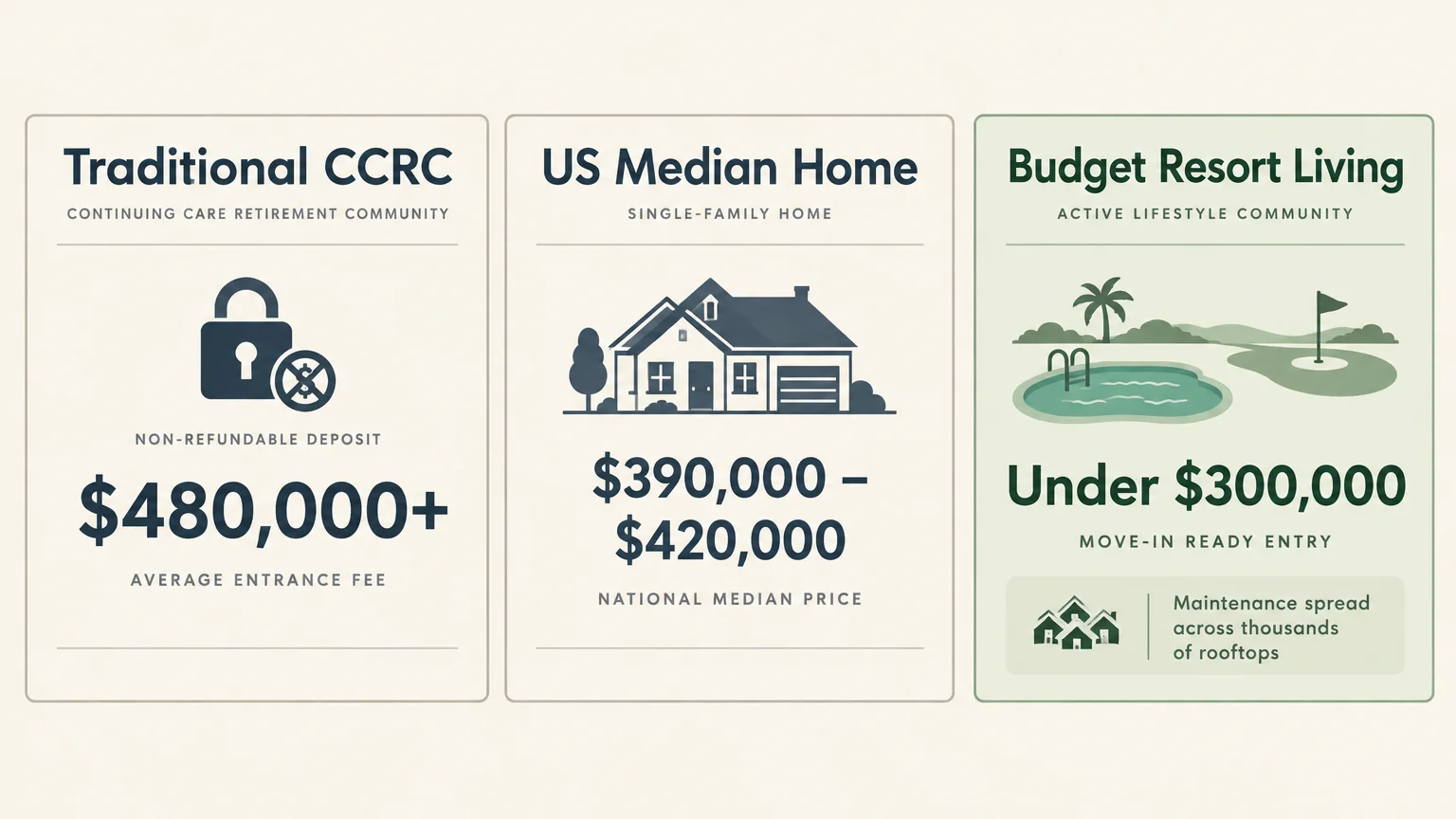
Traditional continuing care retirement communities frequently demand entrance fees exceeding $480,000, alongside punishing monthly maintenance bills. In contrast, budget resort communities let you purchase standalone real estate while keeping your monthly overhead remarkably low.
Exploring these high-value communities unlocks an active, social lifestyle without draining your hard-earned nest egg. Here is how you can secure luxury living on an everyday budget.
Why Resort-Style Senior Living Is More Affordable Than You Think
Many retirees assume that gated entries, private clubhouses, and heated lap pools belong only to luxury enclaves. That assumption causes thousands of buyers to settle for ordinary subdivisions with zero recreation.
Budget resort communities achieve low pricing by spreading maintenance costs across thousands of rooftops. Large master associations negotiate favorable bulk rates for landscaping, cable, and recreational upkeep.
The national median home price sits between $390,000 and $420,000. Dozens of active adult developments offer move-in ready homes starting well under $300,000.
You also sidestep the staggering financial commitments of traditional senior facilities. Independent living in a master-planned development lets you build equity instead of paying non-refundable entry fees.
“The goal of retirement is to live off your assets—not live off your regrets.”
Reviewing community balance sheets before you purchase ensures long-term financial stability. You can examine budget planning resources through the Consumer Financial Protection Bureau (CFPB) to structure your home purchase safely.

15 Incredible Communities Delivering Luxury on a Budget
These fifteen communities combine world-class amenities with accessible real estate. Each location proves that vibrant retirement living remains well within reach.
1. Sun City, Arizona
Del Webb launched Sun City in 1960 as America’s first master-planned active adult community. It remains one of the country’s most affordable retirement destinations.
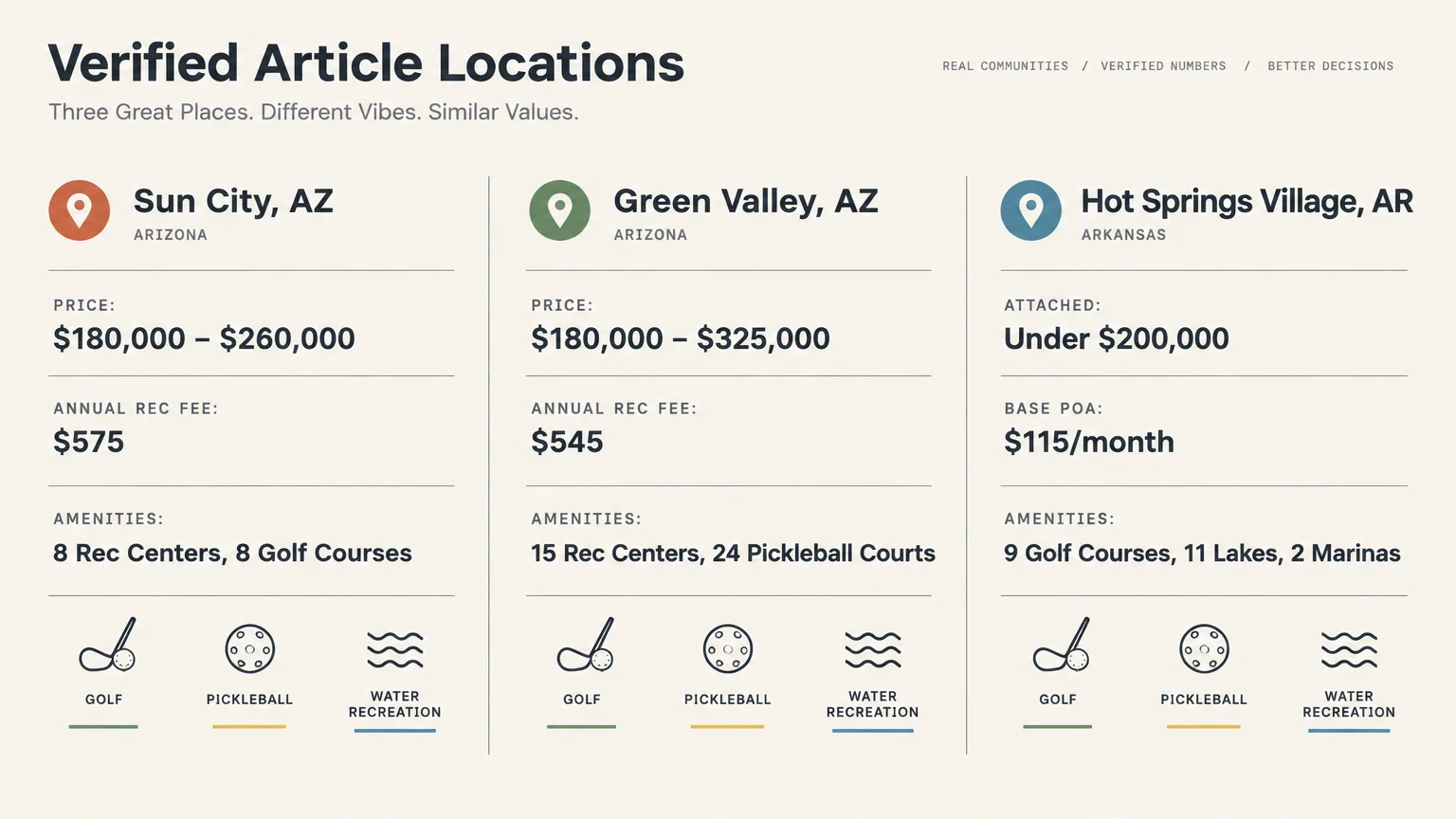
Condos and single-family ranches frequently sell between $180,000 and $260,000. Annual recreation fees run just $575 per property, providing access to eight recreation centers and eight golf courses.
2. Green Valley Recreation (Green Valley, Arizona)
Located south of Tucson against the Santa Rita Mountains, Green Valley offers an unmatched outdoor network. Properties regularly trade between $180,000 and $325,000.
A single annual recreation fee of approximately $545 unlocks 15 recreation centers, dozens of heated pools, and a 24-court pickleball complex. Sunny desert skies make outdoor activities possible year-round.
3. Hot Springs Village, Arkansas
Spanning over 26,000 forested acres in the Ouachita Mountains, Hot Springs Village is the largest gated community in North America. Attached townhomes start under $200,000, with single-family properties averaging $335,000.
Property owners enjoy nine golf courses, 11 pristine lakes, and two full-service marinas. Monthly base Property Owners Association dues run around $115, delivering extraordinary recreational value.
4. On Top of the World (Ocala, Florida)
Central Florida’s On Top of the World proves that resort-style retirement communities do not require multi-million-dollar portfolios. Well-maintained resale homes frequently start below $200,000.
Residents enjoy three golf courses, multiple fitness complexes, and over 175 social clubs. Monthly fees range from $241 to $531 without any costly Community Development District taxes.
5. Sun City Center, Florida
Situated near Tampa Bay, Sun City Center functions as a fully self-contained golf cart town. Median home sales hover comfortably between $250,000 and $315,000.
The central Community Association fee costs roughly $346 per year. That small contribution funds resort-style swimming pools, athletic courts, and cutting-edge craft studios.
6. Fairfield Glade, Tennessee
Perched atop Tennessee’s Cumberland Plateau, Fairfield Glade offers crisp mountain breezes and scenic vistas. Resale condos begin under $175,000, while single-family homes median around $340,000.
Monthly assessments sit between $81 and $137. This modest fee supports five championship golf courses, 11 fishing lakes, and miles of forested hiking trails.
7. Laguna Woods Village, California
Orange County real estate routinely exceeds $1.1 million, but Laguna Woods Village offers a rare coastal bargain. Entry-level cooperative residences frequently start around $200,000.
Monthly fees run between $760 and $938, but they bundle property taxes, exterior maintenance, water, and private transit. The community includes seven clubhouses, five pools, and an equestrian center.
8. Holiday City (Toms River, New Jersey)
Holiday City delivers classic coastal living just minutes from the Atlantic coastline. Single-family detached ranch homes generally sell between $280,000 and $330,000.
Monthly association dues are remarkably low at roughly $50 to $75. Members access private clubhouses, outdoor swimming pools, and dedicated community bus routes.
9. Tellico Village, Tennessee
Nestled along the shores of Tellico Lake, this scenic enclave provides incredible waterfront living against the Great Smoky Mountains. Single-family homes and townhomes start in the low $300,000s.
Property owners pay monthly dues of roughly $160 to $180 to maintain three championship golf courses and a yacht club. Furthermore, Tennessee levies no state personal income tax.
10. Sun City Summerlin (Las Vegas, Nevada)
Perched in the foothills of Spring Mountain, Sun City Summerlin overlooks the vibrant Las Vegas valley. Attached villas and single-family homes routinely start in the low $300,000s.
The master association fee stays around $140 per month. Residents gain access to three golf courses, four massive community centers, and dozens of social clubs.
11. Robson Ranch (Eloy, Arizona)
Robson Ranch delivers luxury retirement living for less between Phoenix and Tucson. Resale homes in this desert retreat start in the high $200,000s to low $300,000s.
The community features a multi-million-dollar clubhouse, creative arts studios, indoor lap pools, and tournament pickleball courts. Modest association fees cover extensive recreational infrastructure.
12. Sun City Texas (Georgetown, Texas)
Located in the scenic Texas Hill Country just north of Austin, Sun City Texas features vast open spaces. Move-in ready cottages and ranches start in the low $300,000s.
Base dues of approximately $115 per month cover three championship golf courses, nature trails, and resort swimming facilities. Texas also offers the advantage of zero state income tax.
13. The Villages of Citrus Hills, Florida
Situated in Florida’s Nature Coast, Citrus Hills sits atop gently rolling terrain high above sea level. Detached homes and maintenance-free villas start in the high $200,000s.
The community features two luxurious health and wellness spas that rival five-star private resorts. You can also explore civic resources through the HUD Senior Housing Portal to understand regional housing standards.
14. Heritage Ranch (Fairview, Texas)
Located northeast of Dallas, Heritage Ranch features a 24-hour guarded security entrance surrounded by mature trees. Comfortable patio homes and ranches start in the mid-$300,000s.
A 24,000-square-foot clubhouse includes an indoor junior Olympic pool, a fitness complex, and casual dining. Residents also enjoy an 18-hole championship golf course designed by Arthur Hills.
15. Savannah Lakes Village, South Carolina
Savannah Lakes Village borders the 71,000-acre Lake Thurmond and pristine state parkland. Building lots and single-family properties start in the mid-$200,000s.
Low monthly dues around $150 support two private golf clubs and a 23,000-square-foot recreation center. Outdoor enthusiasts enjoy lake boating, swimming, bowling, and tennis in a tranquil setting.
Resort Living Cost and Amenity Comparison
Comparing home values and carrying costs side by side helps clarify your true monthly budget. The figures below highlight the exceptional value these popular destinations deliver.
| Community | Starting / Median Home Price | Estimated Monthly Association Dues | Standout Resort Amenities |
|---|---|---|---|
| Sun City, AZ | $180,000 – $260,000 | ~$48/mo ($575/yr RCSC fee) | 8 recreation centers, 8 golf courses, bowling |
| Green Valley, AZ | $180,000 – $325,000 | ~$45/mo ($545/yr GVR fee) | 15 recreation centers, 24 pickleball courts, pools |
| Hot Springs Village, AR | $200,000 – $345,000 | $113 – $116/mo | 9 golf courses, 11 lakes, 2 full marinas |
| On Top of the World, FL | $195,000 – $390,000 | $241 – $531/mo | 3 golf courses, 175+ clubs, zero CDD taxes |
| Fairfield Glade, TN | $175,000 – $340,000 | $81 – $137/mo | 5 championship golf courses, 11 lakes, trails |
| Laguna Woods Village, CA | $200,000 – $450,000 | $760 – $938/mo (bundles taxes/transit) | 7 clubhouses, 5 pools, equestrian center |
| Holiday City, NJ | $280,000 – $330,000 | $50 – $75/mo | Clubhouses, pools, private shuttle service |
Errors That Cost Retirees Thousands
Buying into a resort community without thorough research can trigger unexpected expenses. Avoiding these four common mistakes protects your retirement bankroll.
- Ignoring One-Time Capital Improvement Fees: Many low-fee communities charge capital reserve fees at closing. These fees often range from $1,500 to $6,000, so verify them before making an offer.
- Assuming Golf Is Included: Budget resort communities almost always keep monthly dues low by operating pay-as-you-play golf. Expect to pay discounted resident green fees per round rather than expecting free play.
- Overlooking Sub-HOA Layers: Some master communities have an umbrella fee plus a neighborhood maintenance fee for lawn care. Make sure your agent tallies every layer of mandatory dues.
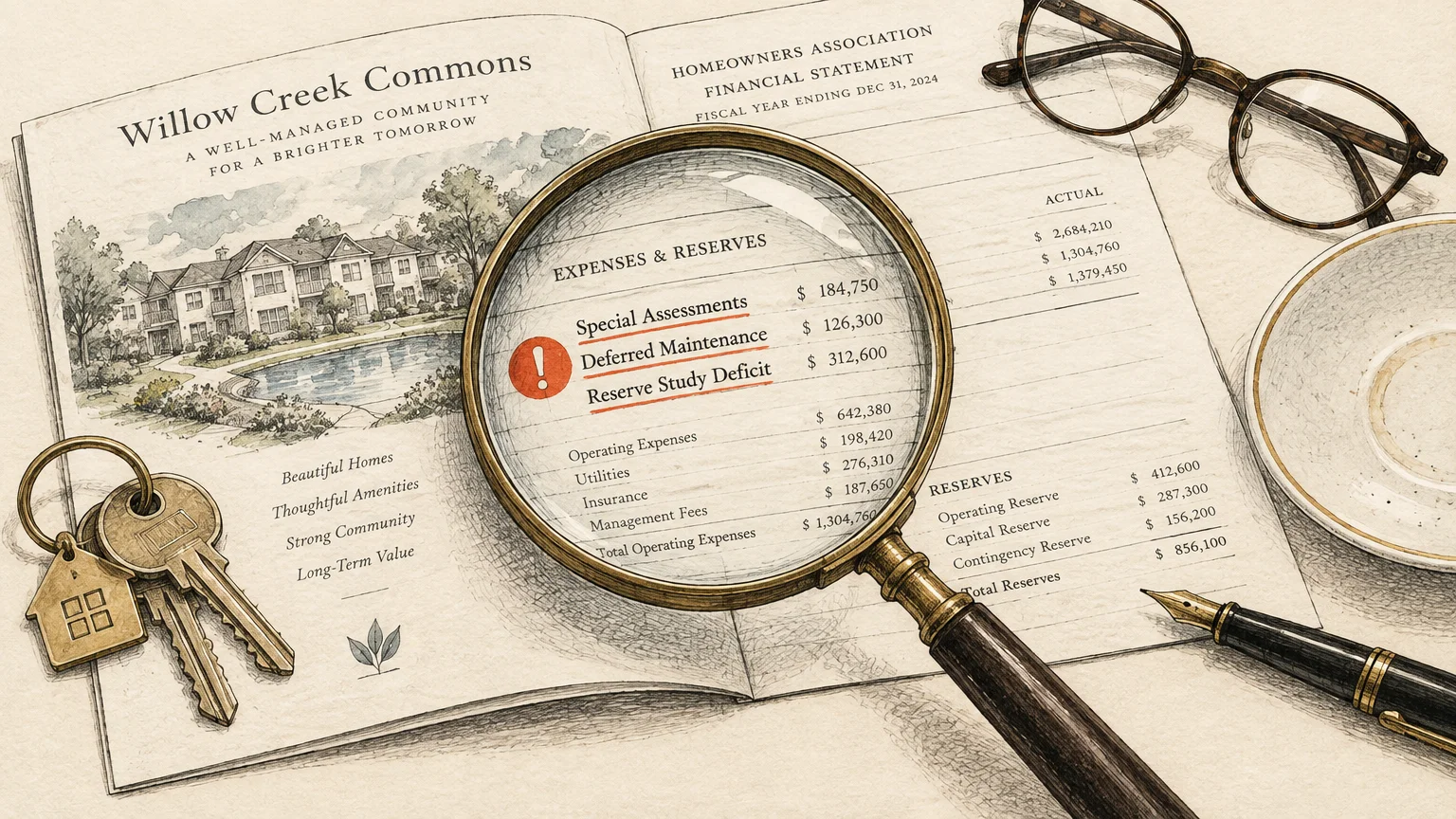
- Skipping the Reserve Study: An underfunded HOA reserve fund leads to surprise special assessments for road paving or roof repairs. Always demand the community’s latest reserve study during contract contingencies.
Staying informed about neighborhood trends helps preserve your wealth. Lifestyle guides from AARP offer valuable advice on managing homeowner obligations during retirement.

When to Get Expert Help
Navigating property deeds, community covenants, and complex association budgets can become overwhelming. Enlisting professional support prevents expensive contractual surprises.
Hire a real estate attorney familiar with the Housing for Older Persons Act (HOPA) before signing. An attorney confirms the community’s legal standing, bylaws, and rental restrictions.
Consult a fee-only financial planner to analyze your post-sale cash flow. A fiduciary ensures your monthly dues, property taxes, and routine living costs align with your retirement income.
Frequently Asked Questions
What is the 80/20 rule in 55+ resort communities?
The federal Housing for Older Persons Act requires at least 80 percent of occupied homes to include one resident aged 55 or older. The remaining 20 percent can be younger adults, depending on local association rules.
Are golf green fees bundled into the monthly dues?
In low-fee resort communities, golf is almost never fully bundled. Instead, residents enjoy heavily discounted daily green fees or purchase optional annual golf passes to keep standard dues low.
Can grandchildren visit and use the resort amenities?
Yes, but communities enforce specific guest policies. Most communities welcome grandchildren for visits up to 30 or 60 days per year and designate specific family hours at swimming pools.
What is an asset preservation or capital transfer fee?
This is a one-time fee assessed to new buyers at closing. The association deposits these funds directly into long-term reserve accounts to fund future infrastructure repairs without raising monthly dues.
Next Steps for Securing Your Resort Retirement
Do not simply browse property listings online; experience these neighborhoods in person. Most master-planned communities offer discounted two- or three-night Discovery Packages that let you test the lifestyle firsthand.
Schedule a visit during the summer or winter off-season to gauge climate realities. Walking the trails, meeting the residents, and speaking with club leaders will show you exactly where you belong.
Information in this article reflects current rules as of the publication date and may change. Always confirm benefit details directly with Social Security Administration, Medicare.gov, or relevant government agencies before making decisions.
Last updated: February 2026. Medicare and Social Security rules change annually—always verify current details at official government sources.