Finding the perfect place to spend your golden years means balancing healthcare access, affordability, and a vibrant community. While massive retirement communities work for some, many older Americans are turning their attention to the senior friendly suburbs USA offers just outside major metropolitan hubs. These communities deliver the cultural amenities and top-tier medical facilities of big cities without the crushing traffic or soaring costs. If you are looking for walkable downtowns, stellar tax advantages, and neighborhoods designed with accessibility in mind, exploring the best suburbs retirees are moving to today will transform your search. We have analyzed healthcare quality, safety metrics, and lifestyle perks to highlight eight exceptional options for your next chapter.
What Makes a Suburb Truly Ideal for Aging?
Before packing up your home and committing to a new zip code, you need to understand what separates a generic housing development from a thriving community for older adults. The criteria for a successful relocation go far beyond a nice golf course or a mild winter. When evaluating locations, you must look at the structural, financial, and medical frameworks of the area.
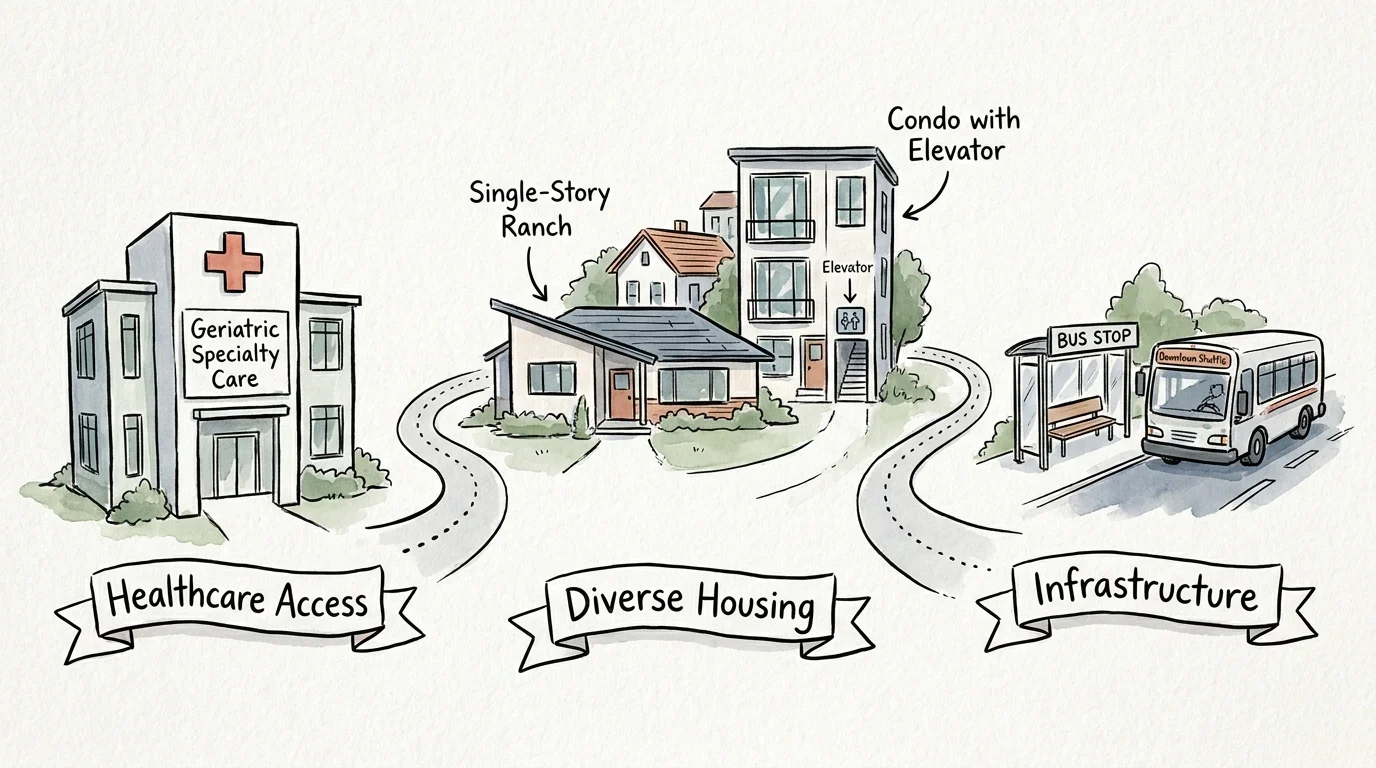
Top-tier retirement destinations share several non-negotiable traits. First, they provide immediate access to comprehensive healthcare systems, including specialized geriatric care. Second, they offer diverse housing stock—meaning you can find single-story homes, condos with elevator access, and continuing care retirement communities all in the same neighborhood. Finally, they feature robust infrastructure that supports independence even if you decide to stop driving. As you explore where to retire suburbs America has developed in recent years increasingly prioritize these functional, age-friendly designs.
The 8 Best Suburbs for Retirees in 2026
We evaluated communities from coast to coast, weighing factors like cost of living, medical infrastructure, recreational opportunities, and local tax policies. Here are the eight standouts offering exceptional quality of life for your retirement years.
1. Cary, North Carolina
Nestled just outside Raleigh and adjacent to the Research Triangle Park, Cary consistently ranks as one of the most desirable towns in the Southeast. For retirees, the primary draw is the unparalleled access to world-class medical facilities, including Duke Health and UNC Health systems. You never have to travel far for specialized treatments or routine preventative care.
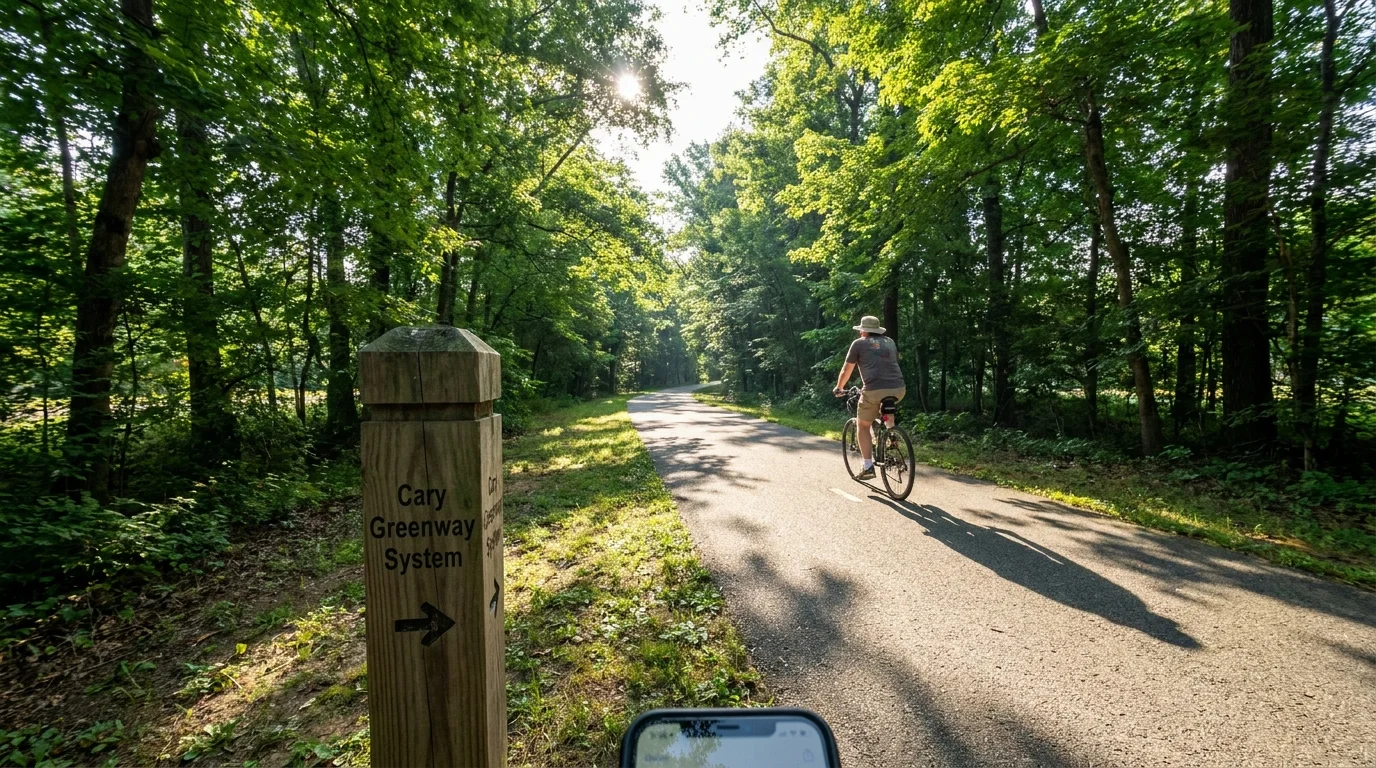
Beyond healthcare, Cary offers an incredibly active lifestyle. The town boasts over 80 miles of paved greenway trails that wind through shaded woodlands, perfect for walking or cycling without navigating heavy road traffic. The climate allows for outdoor activities nearly year-round, and the thriving downtown area features accessible dining and cultural arts venues.
2. Carmel, Indiana
If you prefer four distinct seasons and a strong emphasis on community planning, this suburb north of Indianapolis deserves your attention. Carmel is famous for its extensive network of roundabouts, which significantly reduce severe traffic accidents—a major peace-of-mind factor for older drivers. The city’s infrastructure makes it incredibly easy to navigate.
The Carmel Arts and Design District and the sprawling Monon Trail offer immense walkability. Housing options range from luxury downtown condos to quiet, single-story ranch homes. Furthermore, Indiana offers favorable tax conditions for retirees, exempting Social Security benefits from state income taxes.
3. Franklin, Tennessee
Located just south of Nashville, Franklin provides rich historical charm paired with modern amenities. Tennessee has no state income tax, which immediately stretches your retirement budget further. This allows you to allocate more funds toward travel, hobbies, or legacy planning.
The downtown area is renowned for its preservation, featuring wide, brick-paved sidewalks and locally owned shops. Healthcare is well-supported by the Williamson Medical Center and the broader Nashville medical network just a short drive away. Franklin strikes a perfect balance between a quiet, close-knit community and the vibrant energy of a major cultural hub.
4. Gilbert, Arizona
For those chasing sunshine, Gilbert operates as a premier suburb of the Phoenix metropolitan area. The flat terrain and well-maintained sidewalks make it one of the most accessible suburbs 60+ adults can choose for daily walking and mobility device use. It is consistently ranked among the safest cities in the United States.
Gilbert is home to Mercy Gilbert Medical Center and is surrounded by numerous specialized clinics focusing on senior health. The town features a variety of 55+ active adult communities alongside traditional, multi-generational neighborhoods, giving you complete control over your preferred living environment.
5. Bethesda, Maryland
If budget allows for a higher cost of living, Bethesda offers an elite retirement experience. Situated just outside Washington, D.C., this suburb is a powerhouse for medical care. It is home to the National Institutes of Health (NIH) and Walter Reed National Military Medical Center, putting you at the epicenter of cutting-edge medicine.
Bethesda is highly walkable and features excellent public transportation via the Metro system. If you reach a point where driving is no longer desirable, you will not lose your independence here. The area is rich in arts, lifelong learning opportunities, and diverse culinary scenes.
6. Richardson, Texas
This Dallas suburb is a financial haven for seniors, primarily due to its aggressive property tax relief programs. Texas has no state income tax, but property taxes can be high. However, Richardson offers substantial homestead exemptions for residents over 65, essentially freezing a portion of your school property taxes to protect you from being priced out of your home as values rise.
Beyond the financial perks, Richardson is among the highly rated safe suburbs seniors flock to for peace of mind. It features a robust public transit system (DART) that connects seamlessly to Dallas, and the local Methodist Richardson Medical Center provides award-winning cardiovascular and neurological care.
7. Littleton, Colorado
For the retiree who refuses to slow down, Littleton sits at the base of the Rocky Mountains just south of Denver. The town is managed by the South Suburban Parks and Recreation district, which offers an incredible array of classes, fitness centers, and outdoor excursions specifically tailored to older adults.
The historic downtown is highly walkable, and the RTD light rail provides a stress-free commute into Denver for major sporting events or theater performances. While the altitude takes a brief adjustment period, the dry climate and active community ethos make it an excellent choice for health-conscious retirees.
8. Winter Park, Florida
Moving beyond the standard Florida retirement stereotypes, Winter Park—a suburb of Orlando—offers a refined, culturally rich environment. Known for its extensive tree canopy, chain of lakes, and brick-lined streets, it feels entirely distinct from the tourist-heavy areas of central Florida.
Winter Park is home to Rollins College, which offers extensive lifelong learning programs for seniors. The walkability of Park Avenue provides easy access to cafes, museums, and boutiques. You also benefit from the lack of state income tax and immediate access to the expansive AdventHealth medical network.
Evaluating Your Suburban Housing Options
Once you select a suburb, you must decide how you want to live within it. Suburbs generally offer three distinct paths for retirement housing. Review the comparison below to determine which lifestyle matches your goals and budget.
| Housing Type | Primary Benefits | Potential Drawbacks | Cost Considerations |
|---|---|---|---|
| Single-Family Home | Maximum privacy; space for family visits; complete control over property; multi-generational neighborhood feel. | Total responsibility for interior and exterior maintenance; risk of isolation if mobility declines. | High initial purchase price; variable property taxes; unpredictable maintenance and repair costs. |
| 55+ Active Adult Community | Built-in social network; resort-style amenities (pools, gyms); exterior maintenance usually covered; homes designed for aging. | Restrictive HOA rules; lack of generational diversity; amenities can feel overwhelming if unused. | Moderate to high purchase price; mandatory and rising monthly HOA fees. |
| Condo / Townhome | Minimal exterior maintenance; often located in highly walkable downtown areas; lock-and-leave convenience for travelers. | Shared walls reduce privacy; staircases in townhomes can become obstacles later in life. | Lower purchase price generally; monthly association fees; potential for special assessments. |
Costly Mistakes to Avoid When Relocating
Moving across state lines or even just a few counties over introduces a web of financial and administrative complexities. Avoid these common traps that can derail an otherwise joyful transition.
- Ignoring Medicare Advantage Network Boundaries: Medicare Advantage (Part C) plans are highly regional. If you move out of your plan’s service area, you will be disenrolled. While moving triggers a Special Enrollment Period allowing you to choose a new plan, failing to research the networks in your new suburb can leave you separated from preferred doctors. Always use the Medicare Plan Finder to verify coverage in your target zip code before buying a home.
- Misunderstanding the Total Tax Burden: Many retirees flock to states with no income tax, only to be blindsided by exorbitant property taxes or high local sales taxes. You must evaluate the holistic tax burden. Research the specific municipal tax rates of the suburb, not just the state-level headlines.
- Overlooking In-Home Support Services: Even if you are perfectly healthy today, you must plan for the future. Investigate whether your chosen suburb has a robust network of home health aides, senior transportation services, and meal delivery programs. A beautiful home becomes a prison if local support services are nonexistent.
“The goal of retirement is to live off your assets—not live off your regrets.” — Anonymous
Don’t DIY These Decisions
Relocating in retirement involves liquidating major assets, transferring healthcare coverage, and restructuring your estate plan according to new state laws. You should not handle this transition entirely on your own.
Before you move, consult with a fee-only fiduciary financial advisor to project how the cost of living in your new suburb will impact your portfolio longevity. Additionally, you should reach out to the State Health Insurance Assistance Program (SHIP) in your destination state. These federally backed counselors provide free, unbiased guidance on how your Medicare coverage will translate to your new local network. Finally, utilizing resources like the Eldercare Locator can help you map out local Area Agencies on Aging, ensuring you know exactly what community support is available the day you unpack.
Frequently Asked Questions
Do Medicare Advantage plans transfer if I move to a new suburb in another state?
Generally, no. Medicare Advantage plans operate within specific county or regional networks. If you move out of that geographic service area, you qualify for a Special Enrollment Period to select a new plan in your new location. Original Medicare (Parts A and B), however, is accepted by participating providers nationwide.
How do property tax exemptions for seniors work?
Rules vary drastically by state and municipality. Many senior-friendly suburbs offer a “homestead exemption” or a property tax freeze for residents over age 65. This usually prevents the assessed value of your home from rising for tax purposes, locking in your tax rate. You must actively apply for these exemptions through your local county tax assessor’s office; they are rarely applied automatically.
Should I rent or buy when moving to a new retirement suburb?
Many financial advisors recommend renting for six months to a year when relocating to a new area. Renting allows you to test the community, experience the local traffic patterns, and evaluate the healthcare access without committing a massive portion of your liquidity to real estate. If the suburb does not meet your expectations, you can leave without the hassle of selling a home.
Selecting your retirement home is about far more than weather and real estate prices. It is about positioning yourself in an environment that supports your independence, protects your wealth, and provides daily joy. Take the time to visit these suburbs, walk their downtowns, and speak with current residents. Your next great adventure is waiting.
Retirement rules and benefit amounts vary based on individual work history, income, and circumstances. This article provides general guidance only. Consult a SHIP counselor, financial advisor, or elder law attorney for advice specific to your situation.
Last updated: May 2026. Medicare and Social Security rules change annually—always verify current details at official government sources.